
Chapter 15 The Urinary System 2017 Pearson Education
- Slides: 17
Chapter 15 The Urinary System © 2017 Pearson Education, Inc. Lecture Presentation by Suzanne Long, Monroe Community College
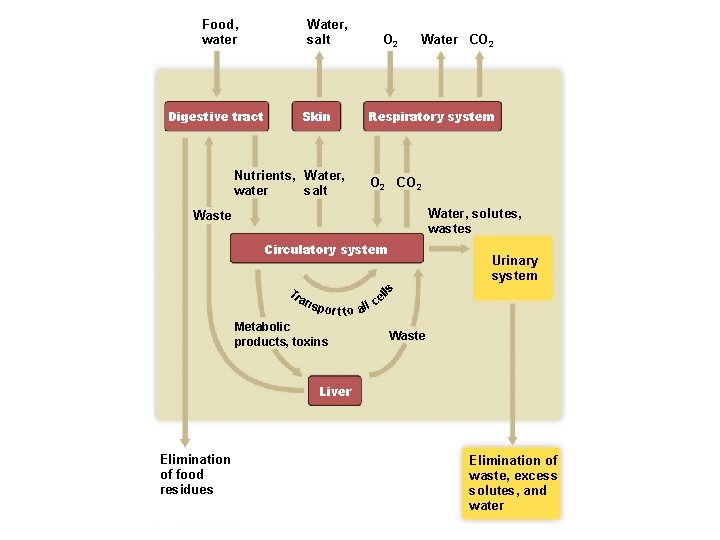
Food, water Water, salt Digestive tract Skin Nutrients, Water, water salt O 2 Water CO 2 Respiratory system O 2 CO 2 Water, solutes, wastes Waste Circulatory system ls ce l Tr an Urinary system sp or t o all t Metabolic products, toxins Waste Liver Elimination of food residues Elimination of waste, excess solutes, and water
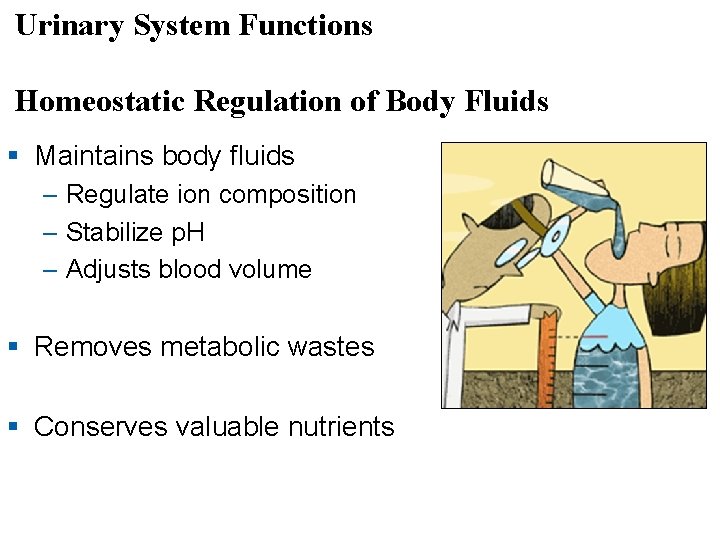
Urinary System Functions Homeostatic Regulation of Body Fluids § Maintains body fluids – Regulate ion composition – Stabilize p. H – Adjusts blood volume § Removes metabolic wastes § Conserves valuable nutrients
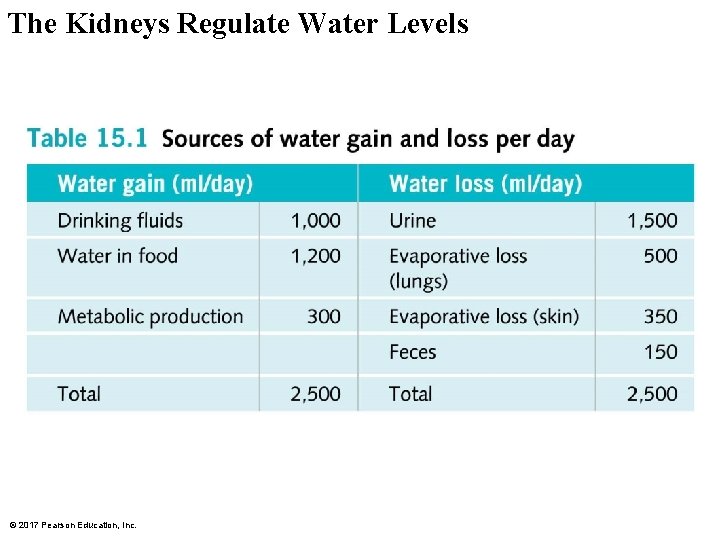
The Kidneys Regulate Water Levels © 2017 Pearson Education, Inc.
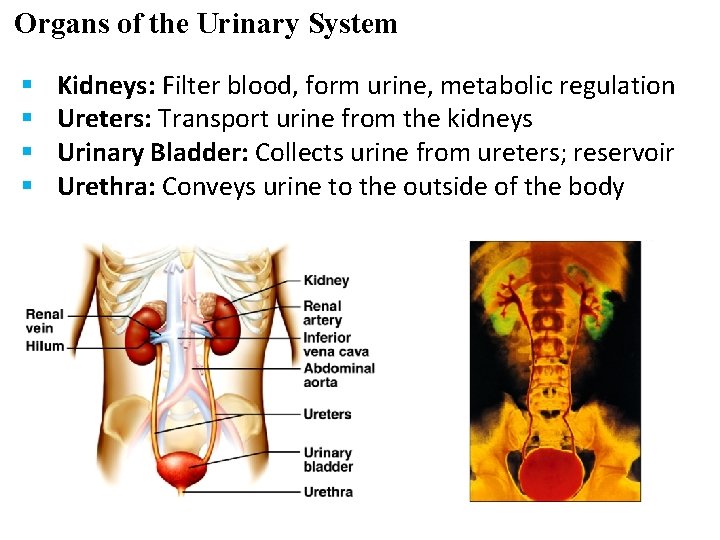
Organs of the Urinary System § § Kidneys: Filter blood, form urine, metabolic regulation Ureters: Transport urine from the kidneys Urinary Bladder: Collects urine from ureters; reservoir Urethra: Conveys urine to the outside of the body
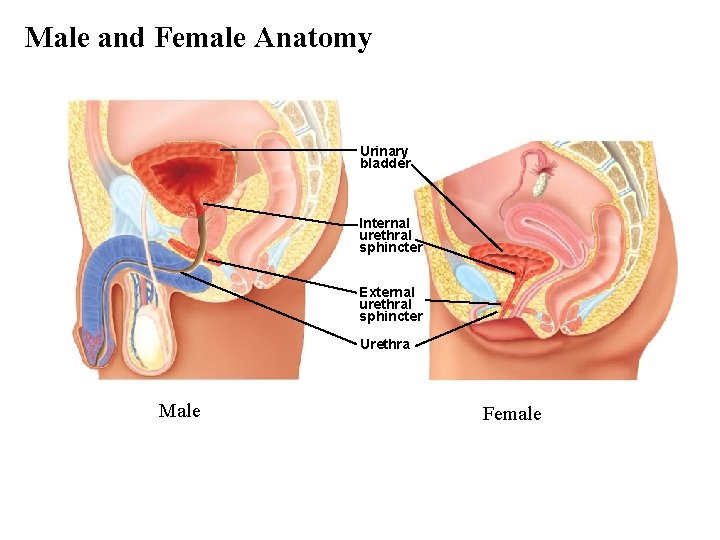
Male and Female Anatomy Urinary bladder Internal urethral sphincter External urethral sphincter Urethra Male Female
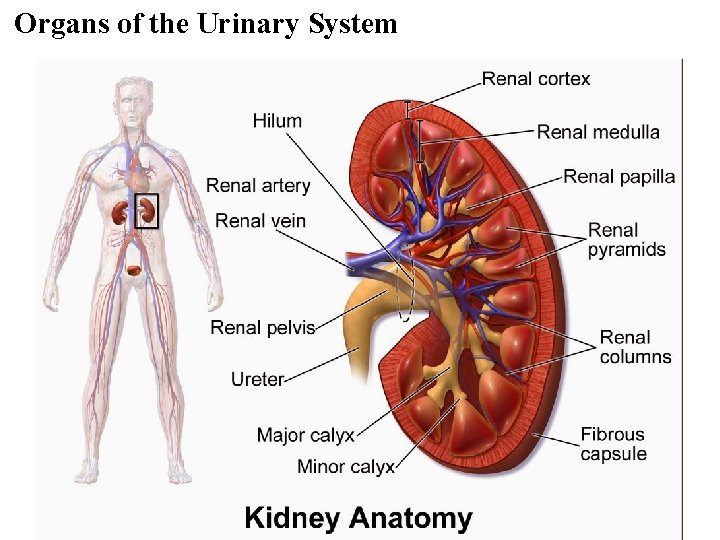
Organs of the Urinary System
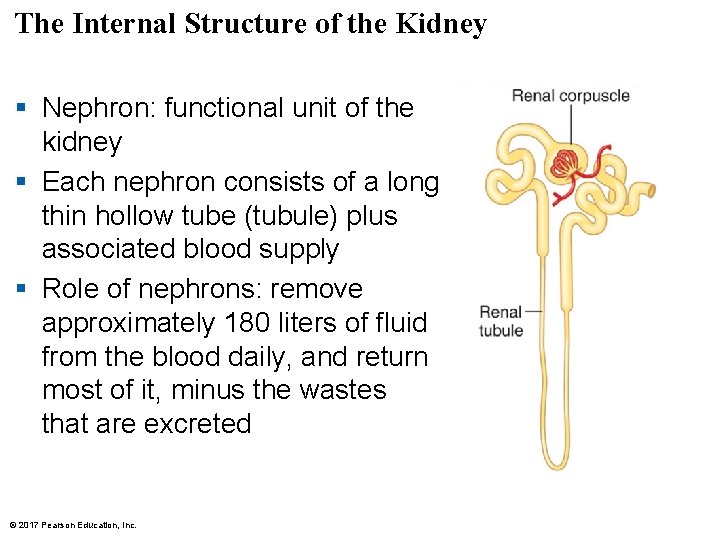
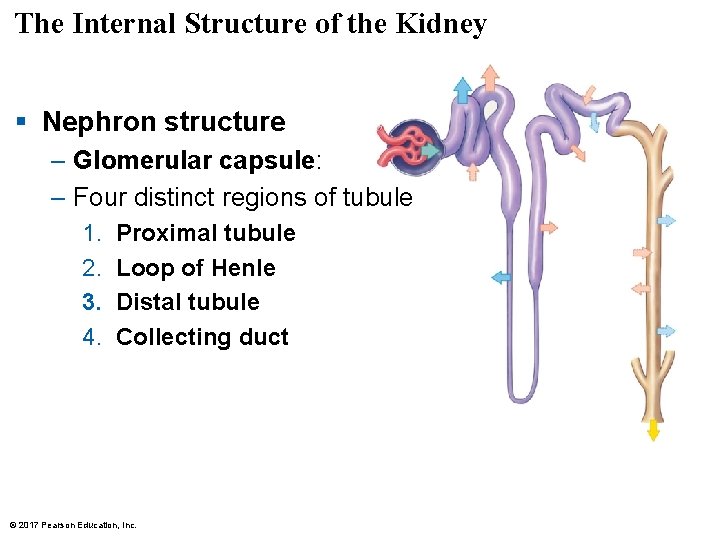
The Internal Structure of the Kidney § Nephron: functional unit of the kidney § Each nephron consists of a long thin hollow tube (tubule) plus associated blood supply § Role of nephrons: remove approximately 180 liters of fluid from the blood daily, and return most of it, minus the wastes that are excreted © 2017 Pearson Education, Inc.
The Internal Structure of the Kidney § Nephron structure – Glomerular capsule: – Four distinct regions of tubule 1. 2. 3. 4. Proximal tubule Loop of Henle Distal tubule Collecting duct © 2017 Pearson Education, Inc.
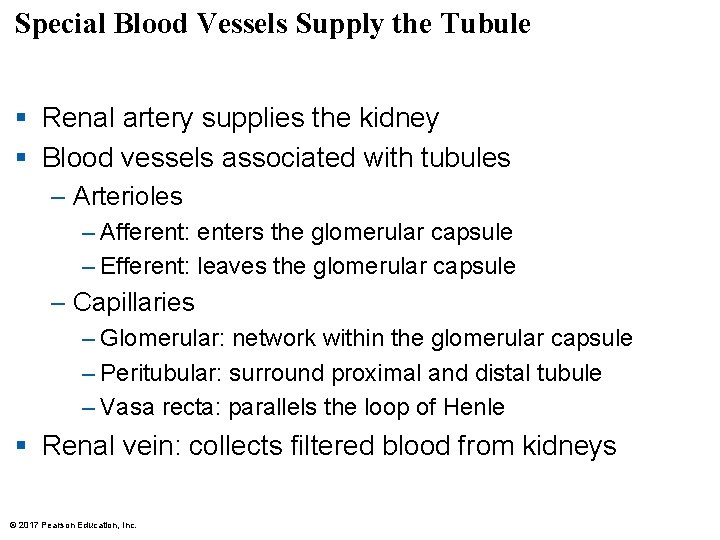
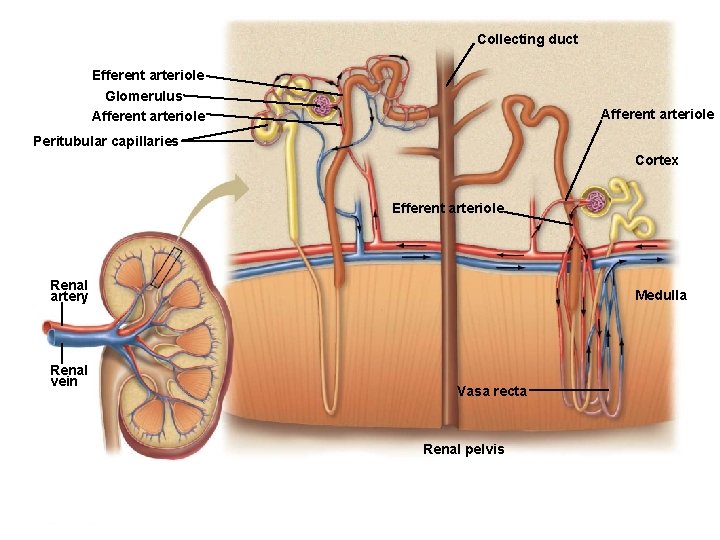
Special Blood Vessels Supply the Tubule § Renal artery supplies the kidney § Blood vessels associated with tubules – Arterioles – Afferent: enters the glomerular capsule – Efferent: leaves the glomerular capsule – Capillaries – Glomerular: network within the glomerular capsule – Peritubular: surround proximal and distal tubule – Vasa recta: parallels the loop of Henle § Renal vein: collects filtered blood from kidneys © 2017 Pearson Education, Inc.
Collecting duct Efferent arteriole Glomerulus Afferent arteriole Peritubular capillaries Cortex Efferent arteriole Renal artery Renal vein Medulla Vasa recta Renal pelvis
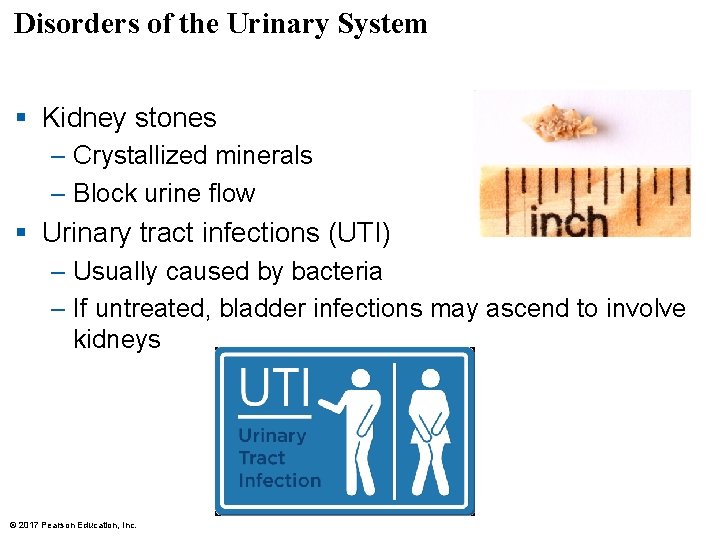
Disorders of the Urinary System § Kidney stones – Crystallized minerals – Block urine flow § Urinary tract infections (UTI) – Usually caused by bacteria – If untreated, bladder infections may ascend to involve kidneys © 2017 Pearson Education, Inc.
Disorders of the Urinary System § Chronic renal failure – Also known as end stage renal disease (ESRD) – ESRD: long-term, irreversible damage leading to >60% reduction in functioning nephrons – Patients may have <10% normal filtering capacity – Results when 1. Renal tubular cells do not receive the nutrients they need 2. Glomerular filtration is blocked for too long – Diabetes may lead to diabetic nephropathy, which often progresses to ESRD © 2017 Pearson Education, Inc.
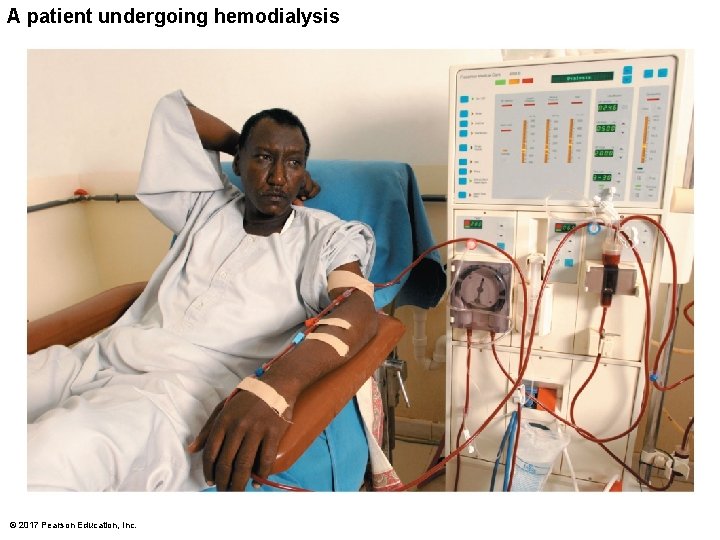
A patient undergoing hemodialysis © 2017 Pearson Education, Inc.
Dialysis Cleanses Blood Artificially § Dialysis: attempts to duplicate function of healthy kidneys § CAPD: continuous ambulatory peritoneal dialysis – Can be done at home – Uses peritoneal cavity for waste and ion removal – Risk of infection § Hemodialysis – Requires several visits/week to a dialysis center – Blood is circulated through a kidney machine © 2017 Pearson Education, Inc.
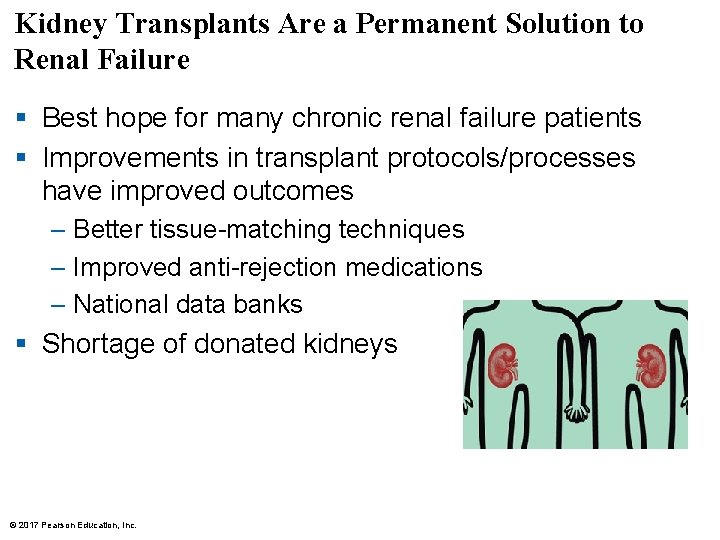
Kidney Transplants Are a Permanent Solution to Renal Failure § Best hope for many chronic renal failure patients § Improvements in transplant protocols/processes have improved outcomes – Better tissue-matching techniques – Improved anti-rejection medications – National data banks § Shortage of donated kidneys © 2017 Pearson Education, Inc.
Urinary Incontinence Is a Loss of Bladder Control § Develops with age due to aging bladder muscles § More common in women – Pregnancy and childbirth – Hormonal changes after menopause – Men: incontinence most often associated with enlarged prostate or prostate cancer § Treatments – Bladder training and various exercises – Management of fluid intake – Medications – Surgery © 2017 Pearson Education, Inc.