
CHAPTER 15 The Atmosphere Lesson 15 1 Earths
- Slides: 23
CHAPTER 15 The Atmosphere
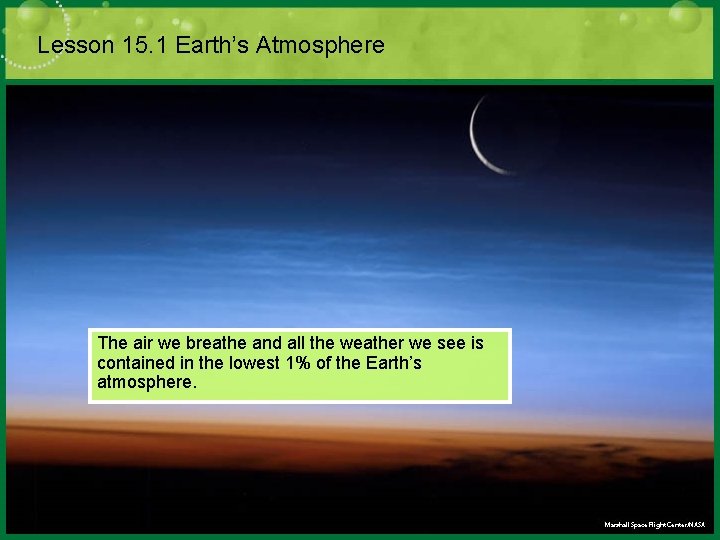
Lesson 15. 1 Earth’s Atmosphere The air we breathe and all the weather we see is contained in the lowest 1% of the Earth’s atmosphere.
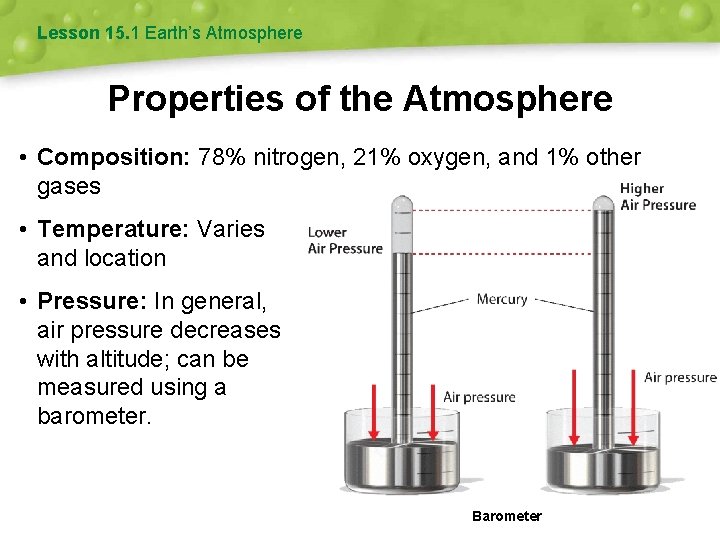
Lesson 15. 1 Earth’s Atmosphere Properties of the Atmosphere • Composition: 78% nitrogen, 21% oxygen, and 1% other gases • Temperature: Varies and location • Pressure: In general, air pressure decreases with altitude; can be measured using a barometer. Barometer
Properties of the Atmosphere Ozone- O 3
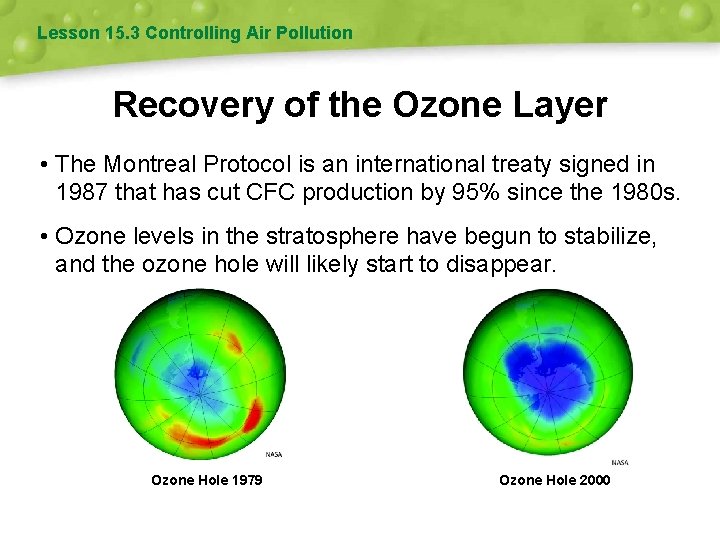
Lesson 15. 3 Controlling Air Pollution Recovery of the Ozone Layer • The Montreal Protocol is an international treaty signed in 1987 that has cut CFC production by 95% since the 1980 s. • Ozone levels in the stratosphere have begun to stabilize, and the ozone hole will likely start to disappear. Ozone Hole 1979 Ozone Hole 2000
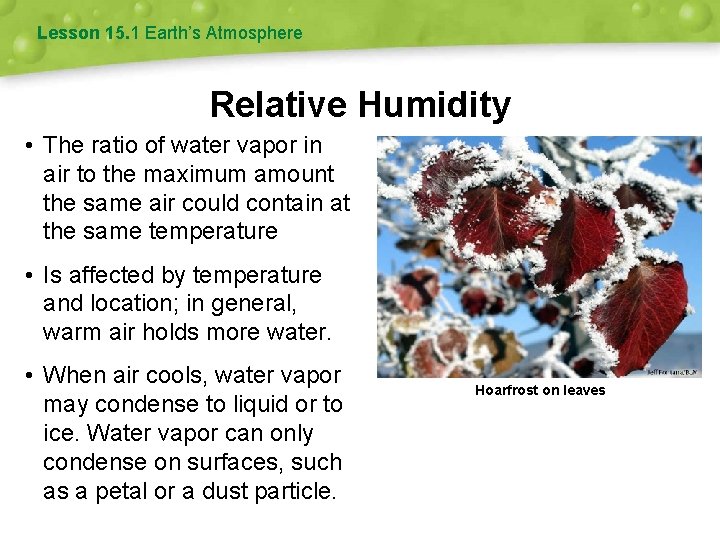
Lesson 15. 1 Earth’s Atmosphere Relative Humidity • The ratio of water vapor in air to the maximum amount the same air could contain at the same temperature • Is affected by temperature and location; in general, warm air holds more water. • When air cools, water vapor may condense to liquid or to ice. Water vapor can only condense on surfaces, such as a petal or a dust particle. Hoarfrost on leaves
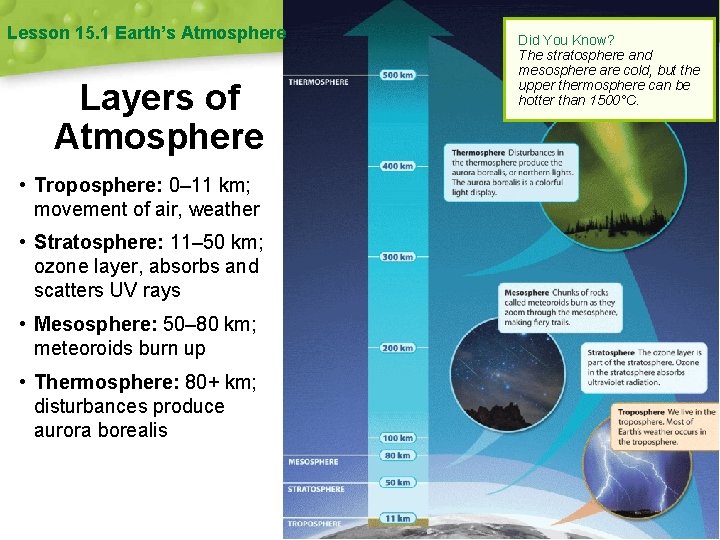
Lesson 15. 1 Earth’s Atmosphere Layers of Atmosphere • Troposphere: 0– 11 km; movement of air, weather • Stratosphere: 11– 50 km; ozone layer, absorbs and scatters UV rays • Mesosphere: 50– 80 km; meteoroids burn up • Thermosphere: 80+ km; disturbances produce aurora borealis Did You Know? The stratosphere and mesosphere are cold, but the upper thermosphere can be hotter than 1500°C.
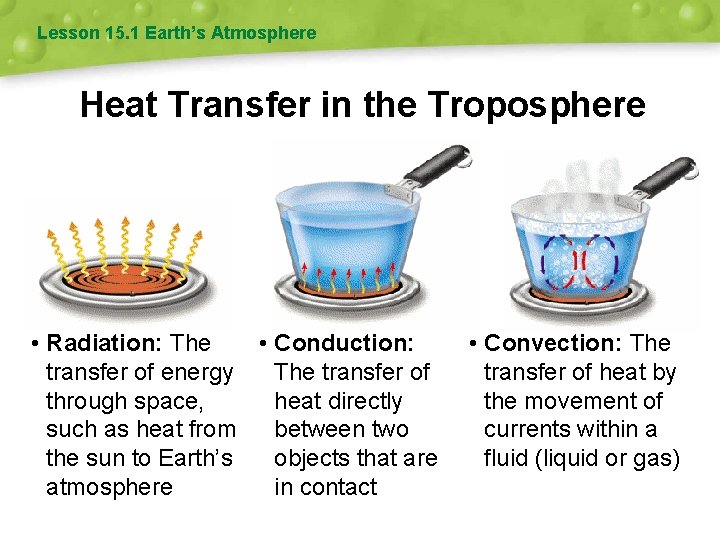
Lesson 15. 1 Earth’s Atmosphere Heat Transfer in the Troposphere • Radiation: The • Conduction: transfer of energy The transfer of through space, heat directly such as heat from between two the sun to Earth’s objects that are atmosphere in contact • Convection: The transfer of heat by the movement of currents within a fluid (liquid or gas)
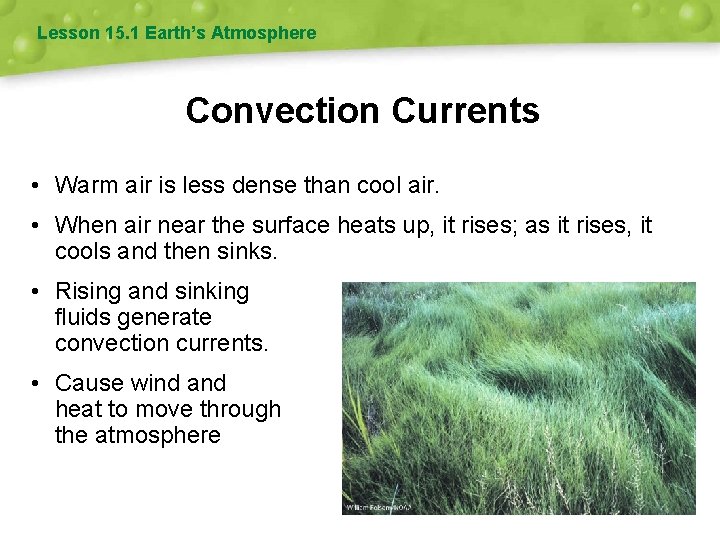
Lesson 15. 1 Earth’s Atmosphere Convection Currents • Warm air is less dense than cool air. • When air near the surface heats up, it rises; as it rises, it cools and then sinks. • Rising and sinking fluids generate convection currents. • Cause wind and heat to move through the atmosphere
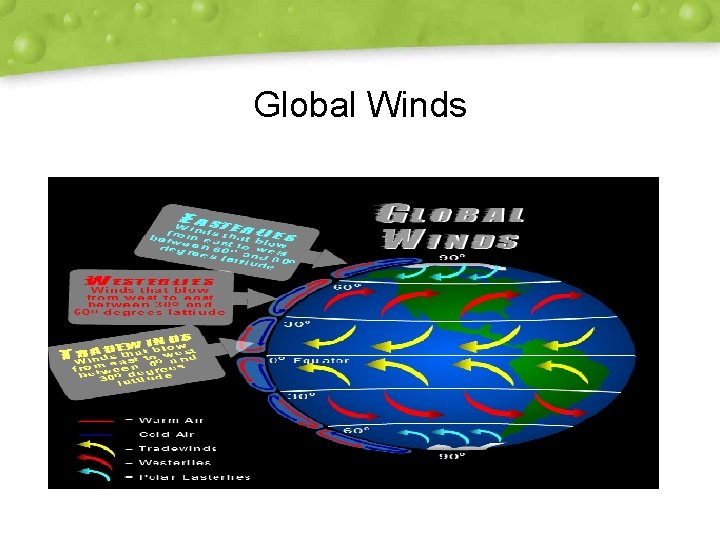
Global Winds
Coriolis Effect https: //youtu. be/i 2 mec 3 vgea. I
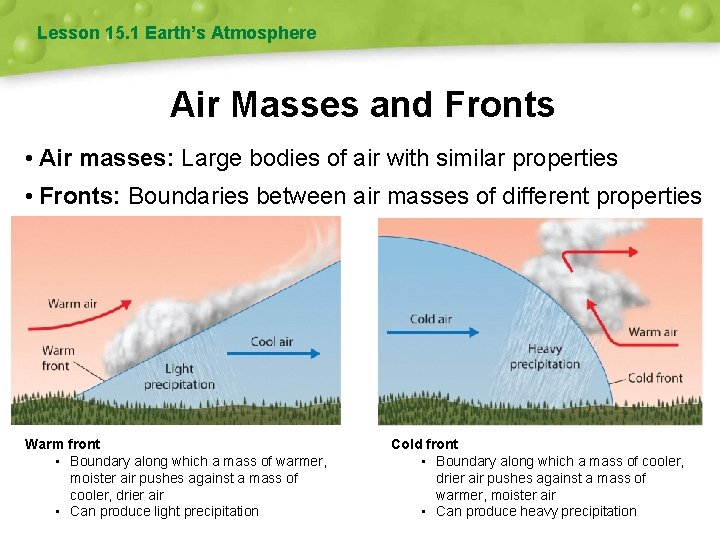
Lesson 15. 1 Earth’s Atmosphere Air Masses and Fronts • Air masses: Large bodies of air with similar properties • Fronts: Boundaries between air masses of different properties Warm front • Boundary along which a mass of warmer, moister air pushes against a mass of cooler, drier air • Can produce light precipitation Cold front • Boundary along which a mass of cooler, drier air pushes against a mass of warmer, moister air • Can produce heavy precipitation
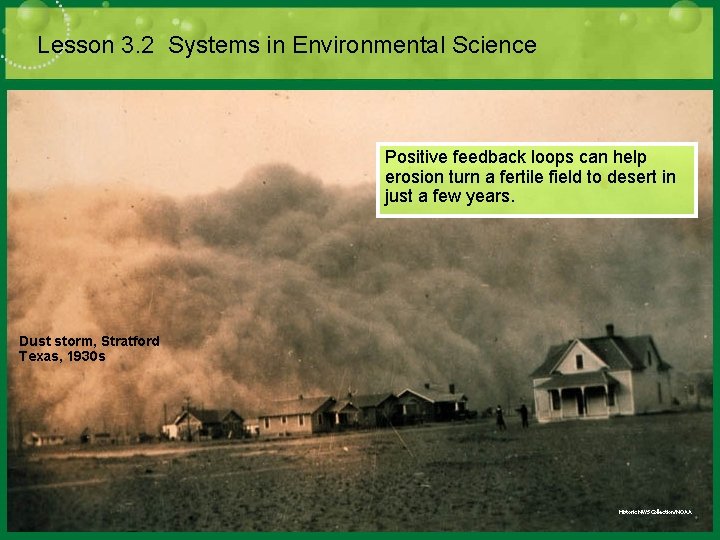
Lesson 3. 2 Systems in Environmental Science Positive feedback loops can help erosion turn a fertile field to desert in just a few years. Dust storm, Stratford Texas, 1930 s
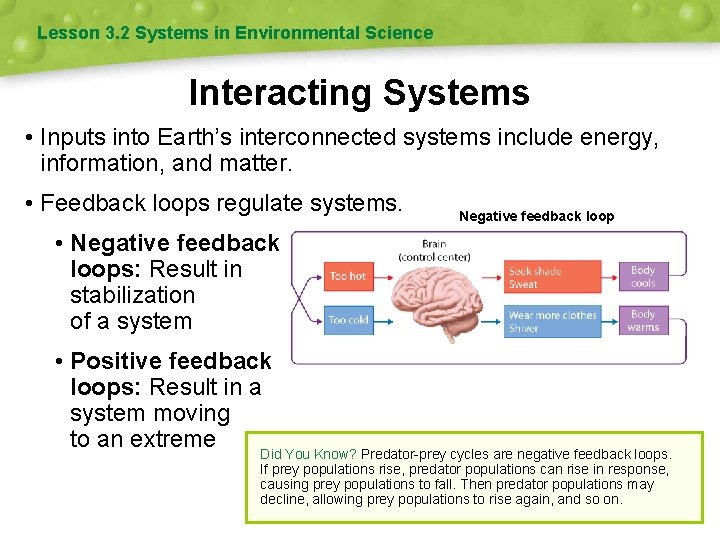
Lesson 3. 2 Systems in Environmental Science Interacting Systems • Inputs into Earth’s interconnected systems include energy, information, and matter. • Feedback loops regulate systems. Negative feedback loop • Negative feedback loops: Result in stabilization of a system • Positive feedback loops: Result in a system moving to an extreme Did You Know? Predator-prey cycles are negative feedback loops. If prey populations rise, predator populations can rise in response, causing prey populations to fall. Then predator populations may decline, allowing prey populations to rise again, and so on.
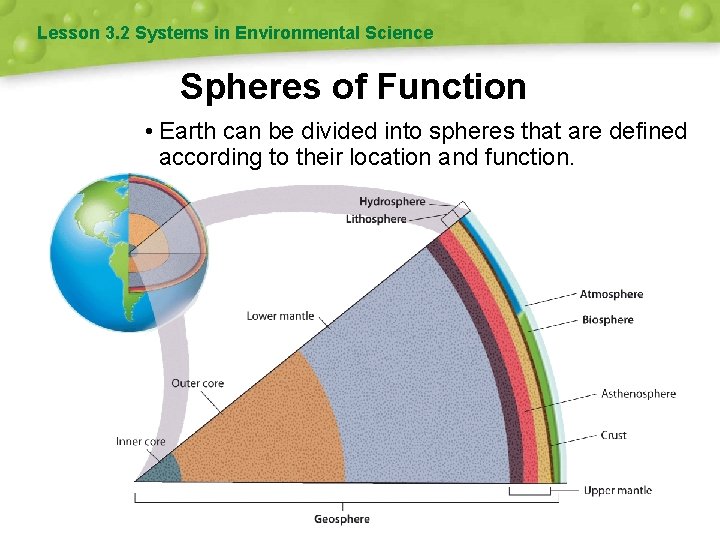
Lesson 3. 2 Systems in Environmental Science Spheres of Function • Earth can be divided into spheres that are defined according to their location and function.
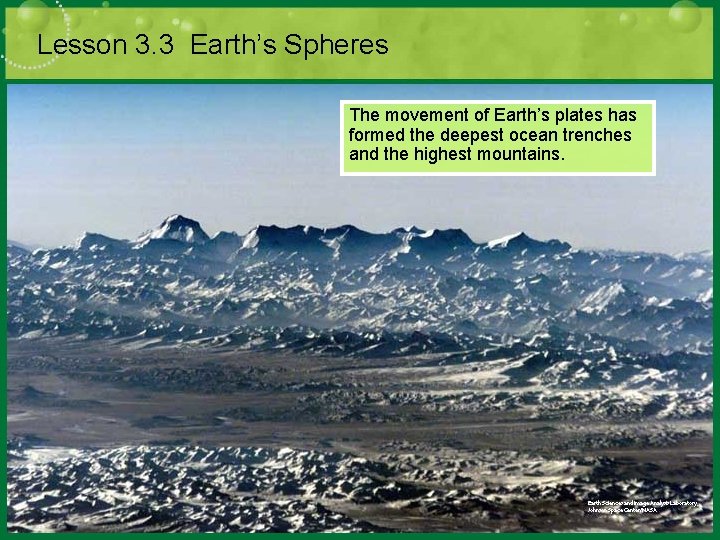
Lesson 3. 3 Earth’s Spheres The movement of Earth’s plates has formed the deepest ocean trenches and the highest mountains.
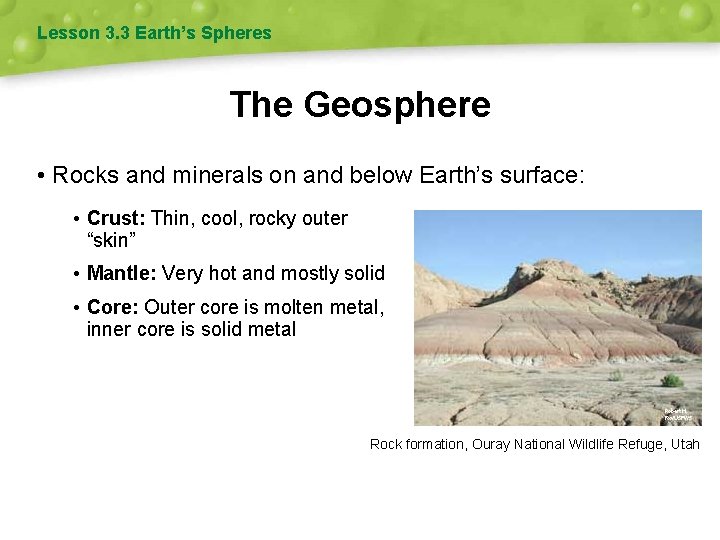
Lesson 3. 3 Earth’s Spheres The Geosphere • Rocks and minerals on and below Earth’s surface: • Crust: Thin, cool, rocky outer “skin” • Mantle: Very hot and mostly solid • Core: Outer core is molten metal, inner core is solid metal Rock formation, Ouray National Wildlife Refuge, Utah
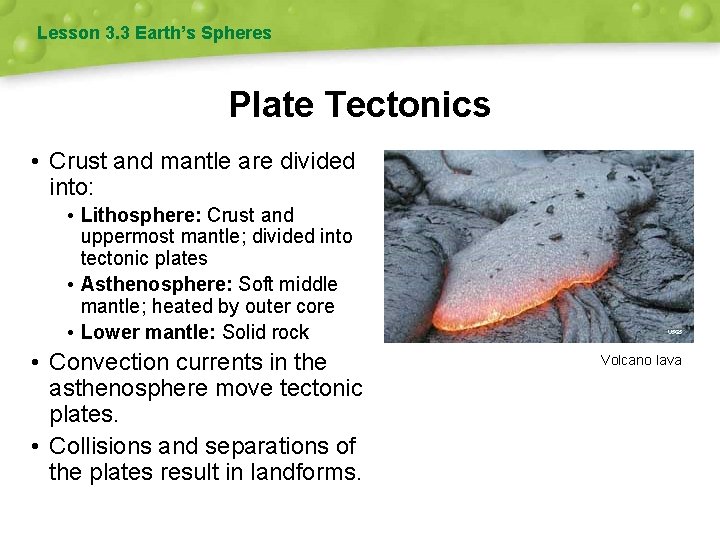
Lesson 3. 3 Earth’s Spheres Plate Tectonics • Crust and mantle are divided into: • Lithosphere: Crust and uppermost mantle; divided into tectonic plates • Asthenosphere: Soft middle mantle; heated by outer core • Lower mantle: Solid rock • Convection currents in the asthenosphere move tectonic plates. • Collisions and separations of the plates result in landforms. Volcano lava
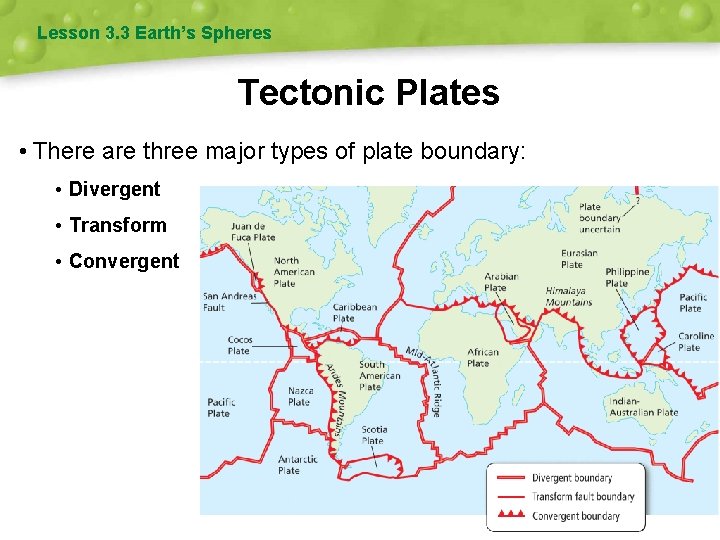
Lesson 3. 3 Earth’s Spheres Tectonic Plates • There are three major types of plate boundary: • Divergent • Transform • Convergent
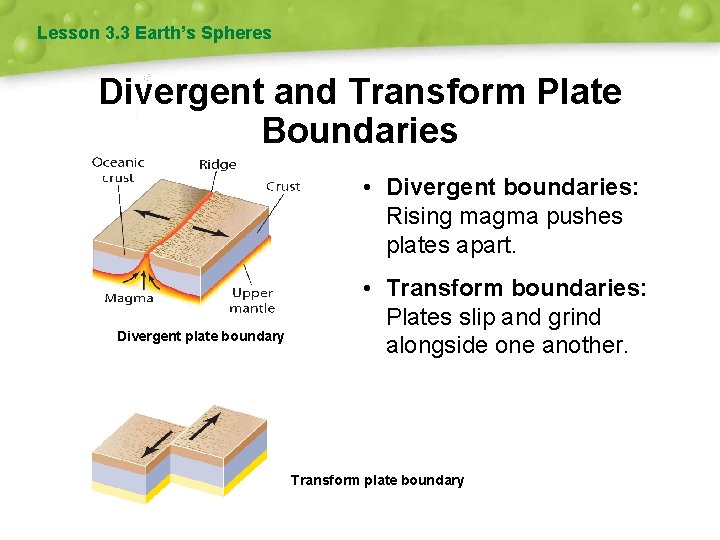
Lesson 3. 3 Earth’s Spheres Divergent and Transform Plate Boundaries • Divergent boundaries: Rising magma pushes plates apart. Divergent plate boundary • Transform boundaries: Plates slip and grind alongside one another. Transform plate boundary
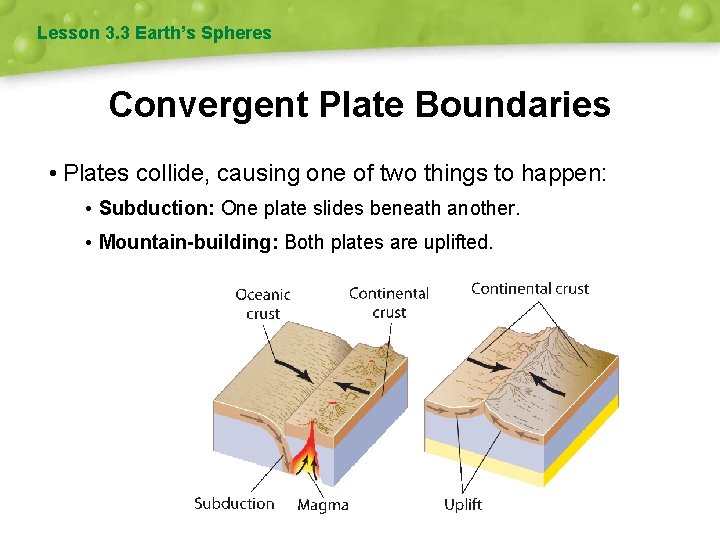
Lesson 3. 3 Earth’s Spheres Convergent Plate Boundaries • Plates collide, causing one of two things to happen: • Subduction: One plate slides beneath another. • Mountain-building: Both plates are uplifted.
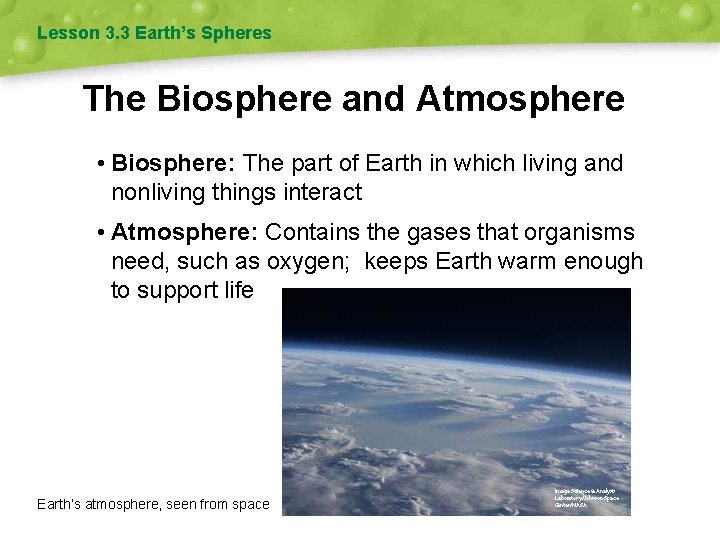
Lesson 3. 3 Earth’s Spheres The Biosphere and Atmosphere • Biosphere: The part of Earth in which living and nonliving things interact • Atmosphere: Contains the gases that organisms need, such as oxygen; keeps Earth warm enough to support life Earth’s atmosphere, seen from space
The cryosphere is the frozen water part of the Earth system. https: //nsidc. org/cryosphere/what-is-the-cryosphere. html