
Chapter 15 Supply Chain Inventory Management The Traditional




- Slides: 15
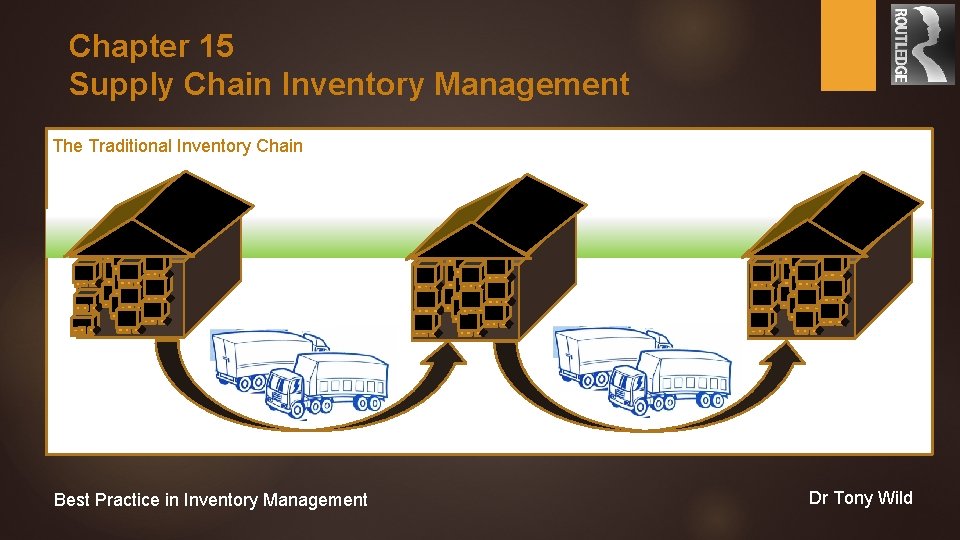
Chapter 15 Supply Chain Inventory Management The Traditional Inventory Chain 16 The Traditional Inventory Chain Best Practice in Inventory Management Dr Tony Wild
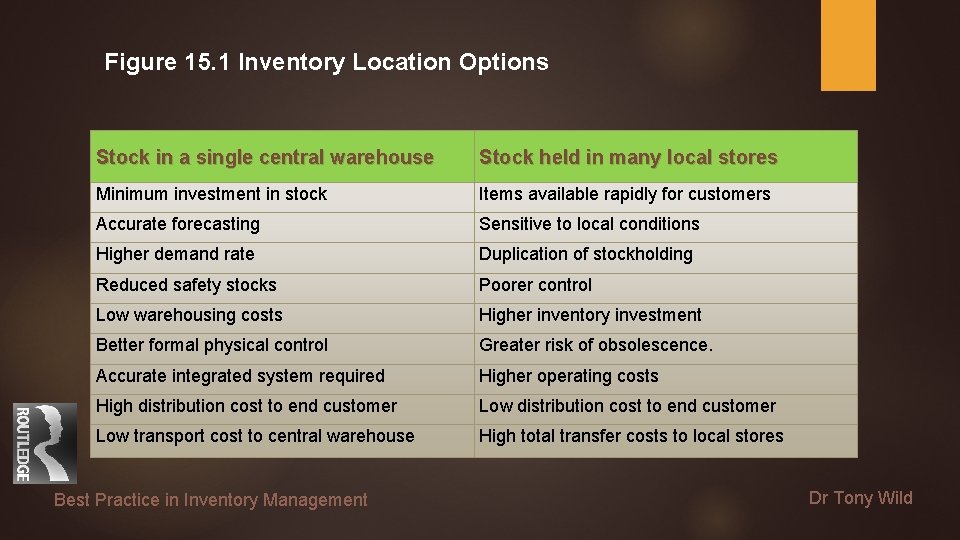
Figure 15. 1 Inventory Location Options Stock in a single central warehouse Stock held in many local stores Minimum investment in stock Items available rapidly for customers Accurate forecasting Sensitive to local conditions Higher demand rate Duplication of stockholding Reduced safety stocks Poorer control Low warehousing costs Higher inventory investment Better formal physical control Greater risk of obsolescence. Accurate integrated system required Higher operating costs High distribution cost to end customer Low transport cost to central warehouse High total transfer costs to local stores Best Practice in Inventory Management Dr Tony Wild
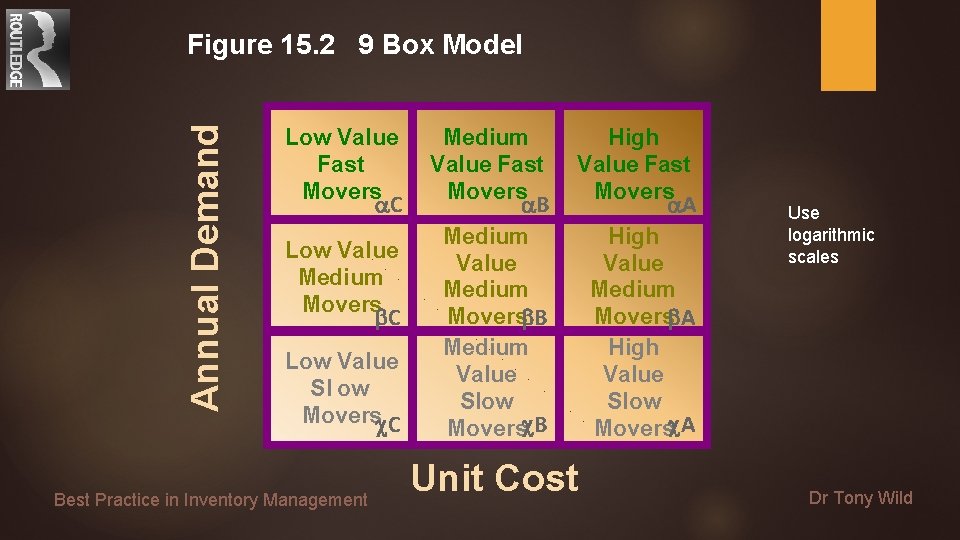
Annual Demand Figure 15. 2 9 Box Model Low Value Fast Movers a. C Low Value Medium Movers b. C Low Value Sl ow Moversc. C Best Practice in Inventory Management Medium Value Fast Movers a. B Medium Value Medium Moversb. B Medium Value Slow Moversc. B High Value Fast Movers a. A High Value Medium Moversb. A High Value Slow Moversc. A Unit Cost Use logarithmic scales Dr Tony Wild
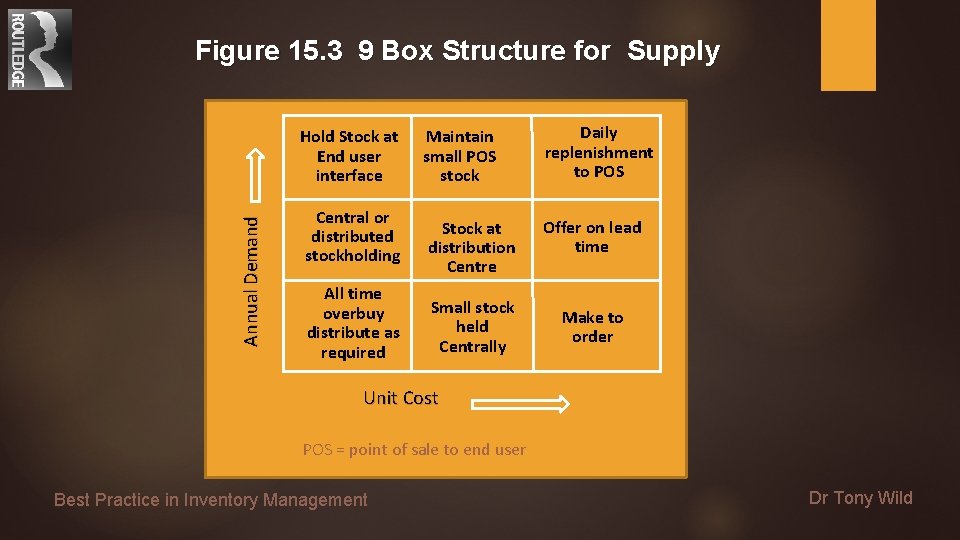
Figure 15. 3 9 Box Structure for Supply Annual Demand Hold Stock at End user interface Central or distributed stockholding All time overbuy distribute as required Maintain small POS stock Daily replenishment to POS Stock at distribution Centre Offer on lead time Small stock held Centrally Make to order Unit Cost POS = point of sale to end user Best Practice in Inventory Management Dr Tony Wild
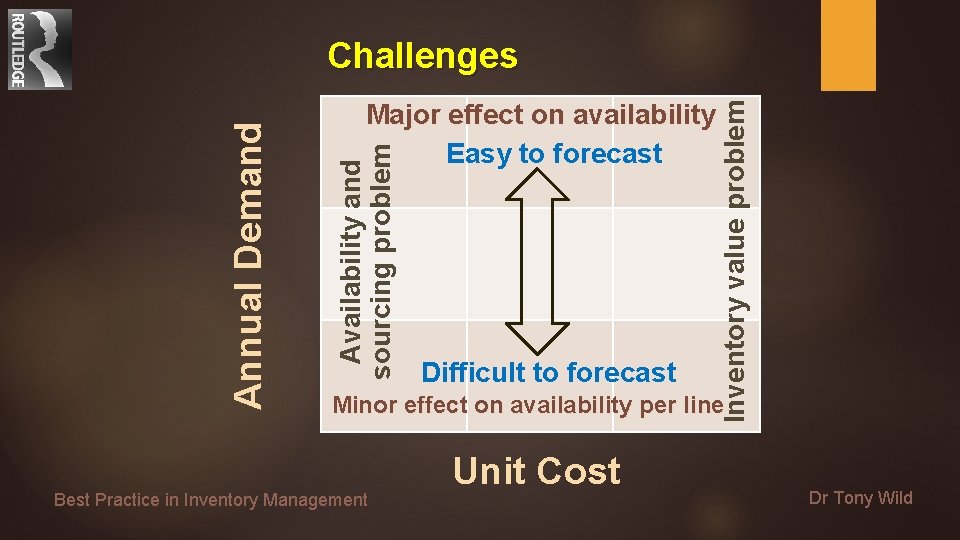
Difficult to forecast Inventory value problem Major effect on availability Easy to forecast Availability and sourcing problem Annual Demand Challenges Minor effect on availability per line Best Practice in Inventory Management Unit Cost Dr Tony Wild
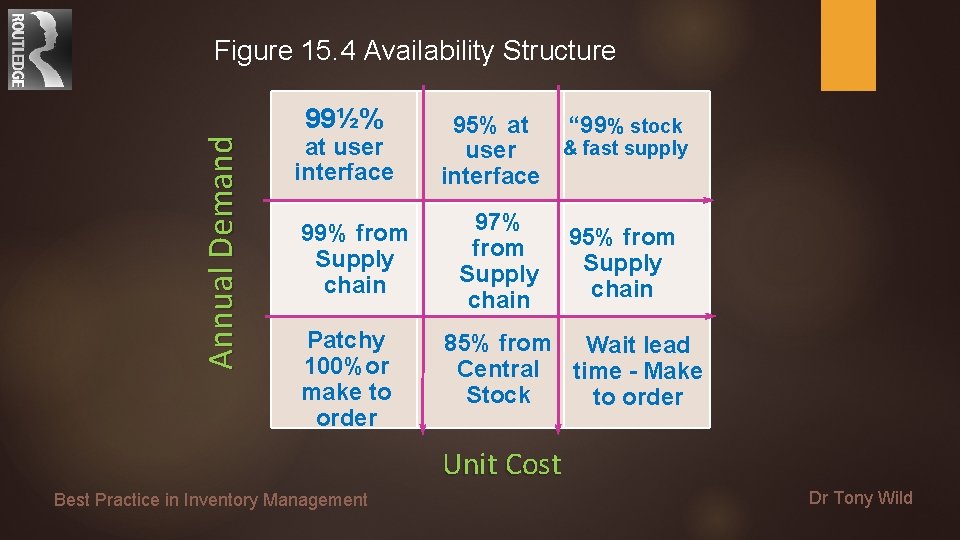
Figure 15. 4 Availability Structure Annual Demand 99½% at user interface 99% from Supply chain Patchy 100%or make to order 95% at “ 99%99½% stock with & fast supply user interface 97% from Supply chain 95% from Supply chain 85% from Wait lead Central time - Make Stock to order Unit Cost Best Practice in Inventory Management Dr Tony Wild
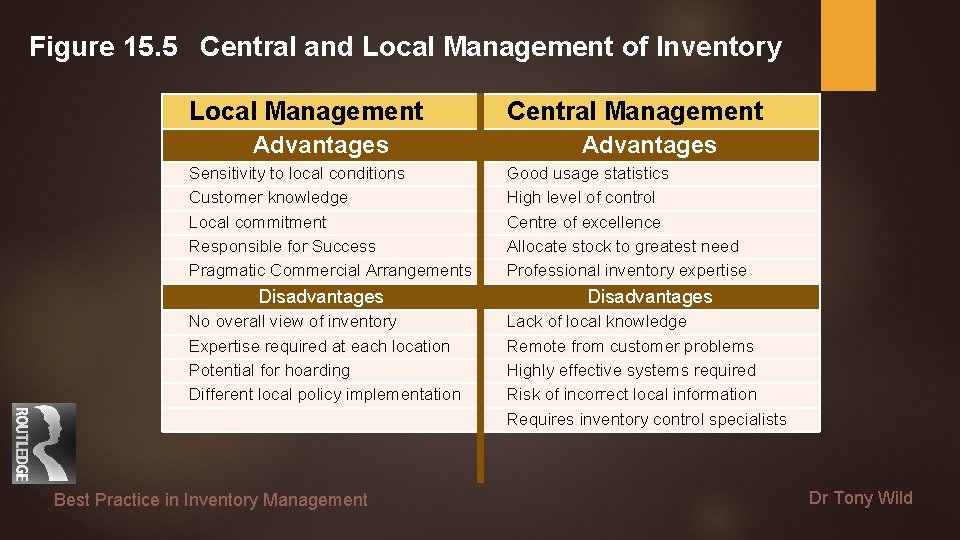
Figure 15. 5 Central and Local Management of Inventory Local Management Advantages Sensitivity to local conditions Customer knowledge Local commitment Responsible for Success Pragmatic Commercial Arrangements Central Management Advantages Good usage statistics High level of control Centre of excellence Allocate stock to greatest need Professional inventory expertise Disadvantages No overall view of inventory Expertise required at each location Potential for hoarding Different local policy implementation Lack of local knowledge Remote from customer problems Highly effective systems required Risk of incorrect local information Requires inventory control specialists Best Practice in Inventory Management Dr Tony Wild
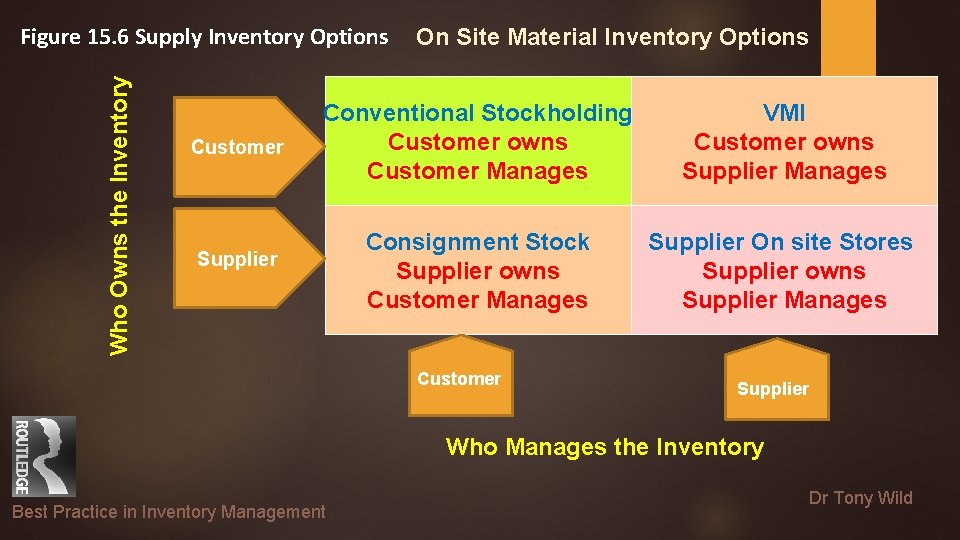
Who Owns the Inventory Figure 15. 6 Supply Inventory Options Customer On Site Material Inventory Options Conventional Stockholding Customer owns Customer Manages VMI Customer owns Supplier Manages Consignment Stock Supplier owns Customer Manages Supplier On site Stores Supplier owns Supplier Manages Supplier Customer Supplier Who Manages the Inventory Best Practice in Inventory Management Dr Tony Wild
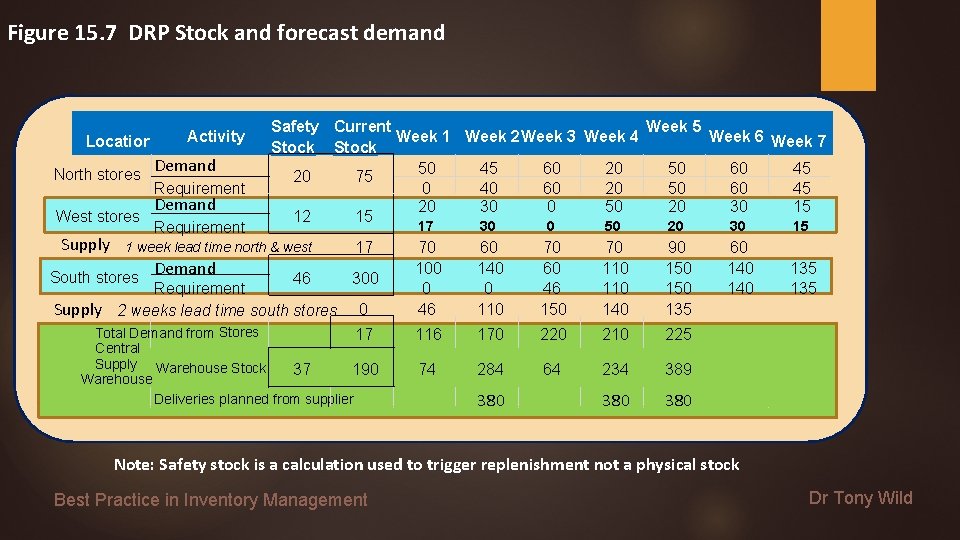
Figure 15. 7 DRP Stock and forecast demand Location North stores West stores Supply Activity Demand Requirement Safety Current Week 5 Week 1 Week 2 Week 3 Week 4 Week 6 Week 7 Stock 50 45 60 20 50 60 45 20 75 0 40 60 20 50 60 45 20 30 0 50 20 30 15 15 12 1 week lead time north & west South stores Demand 46 Requirement Supply 2 weeks lead time south stores 17 300 0 Total Demand from Stores 17 Central Supply Warehouse Stock 37 190 Warehouse Deliveries planned from supplier 17 30 0 50 20 30 15 70 100 0 46 60 140 0 110 70 60 46 150 70 110 140 90 150 135 60 140 135 116 170 220 210 225 74 284 64 234 389 380 380 Note: Safety stock is a calculation used to trigger replenishment not a physical stock Best Practice in Inventory Management Dr Tony Wild
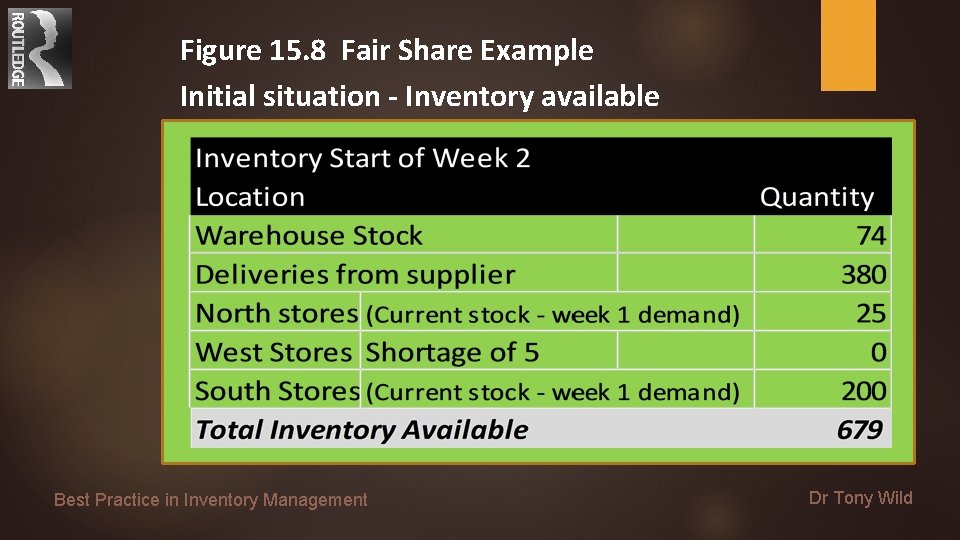
Figure 15. 8 Fair Share Example Initial situation - Inventory available Best Practice in Inventory Management Dr Tony Wild
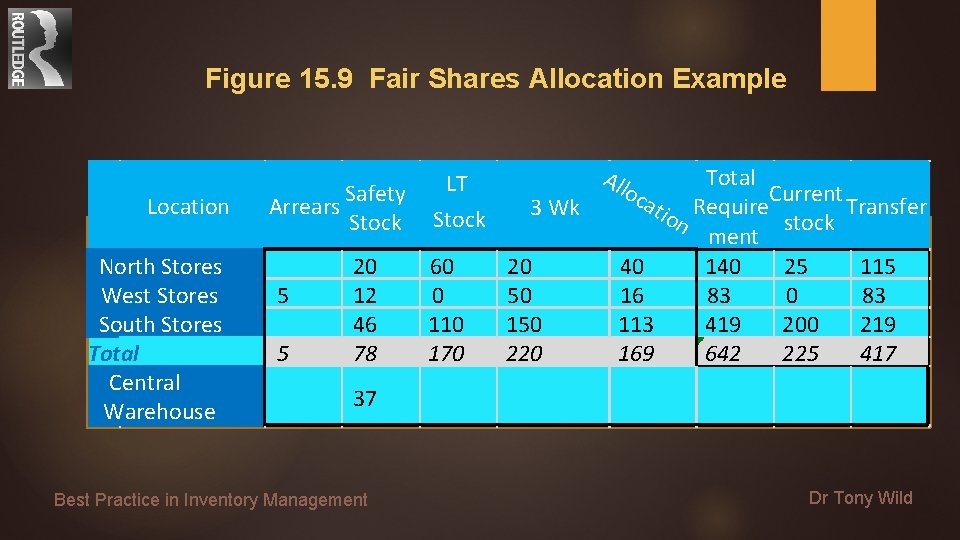
Figure 15. 9 Fair Shares Allocation Example Location North Stores West Stores South Stores Total Central Warehouse Arrears 5 5 LT Safety Stock 20 12 46 78 60 0 110 170 3 Wk 20 50 150 220 All Total ati Require. Current Transfer on stock ment 40 140 25 115 16 83 0 83 113 419 200 219 169 642 225 417 oc 37 Best Practice in Inventory Management Dr Tony Wild
Best Practice in Inventory Management Dr Tony Wild
Best Practice in Inventory Management Dr Tony Wild
Best Practice in Inventory Management Dr Tony Wild
Best Practice in Inventory Management Dr Tony Wild