
Chapter 15 Section 3 SHAPING EVOLUTIONARY THEORY SLIDE
- Slides: 13
Chapter 15 Section 3 SHAPING EVOLUTIONARY THEORY SLIDE 1
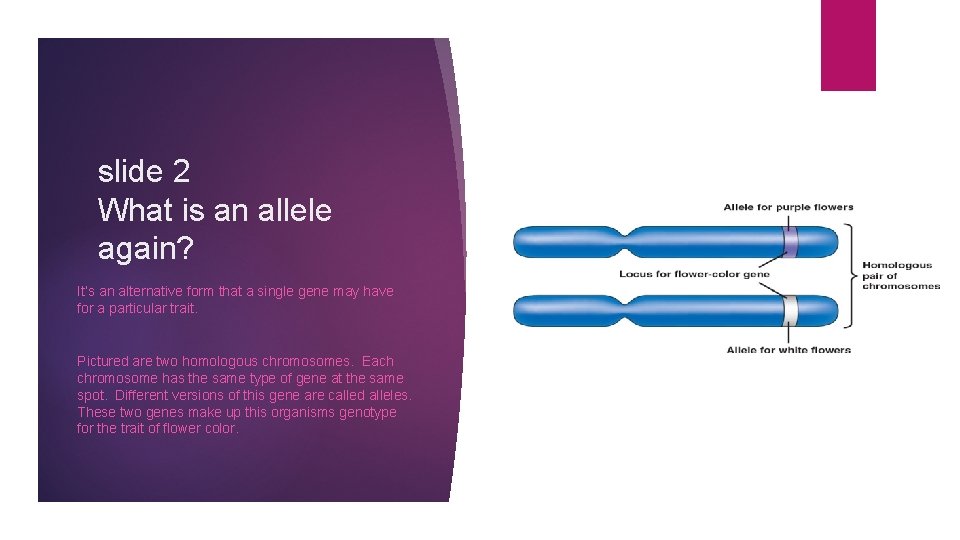
slide 2 What is an allele again? It’s an alternative form that a single gene may have for a particular trait. Pictured are two homologous chromosomes. Each chromosome has the same type of gene at the same spot. Different versions of this gene are called alleles. These two genes make up this organisms genotype for the trait of flower color.
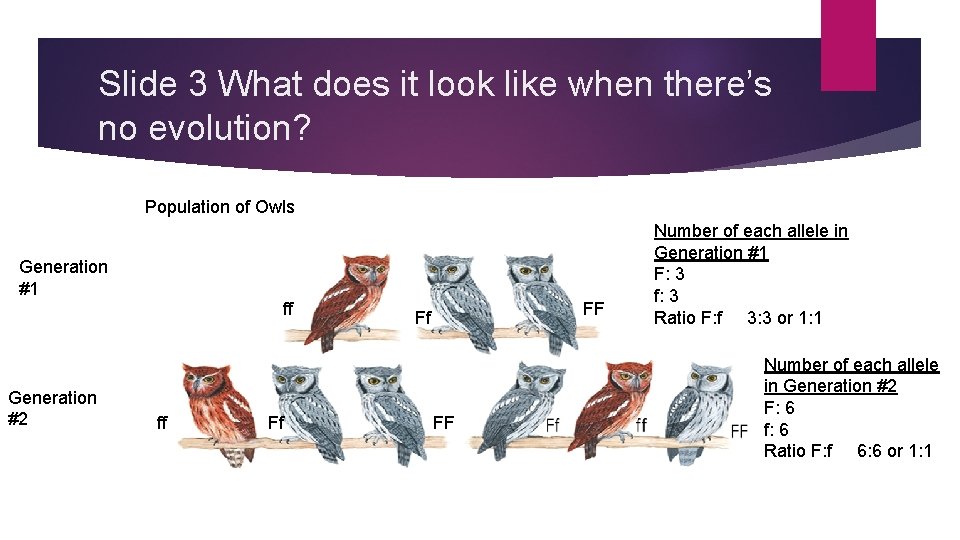
Slide 3 What does it look like when there’s no evolution? Population of Owls Generation #1 ff Generation #2 ff Ff FF Number of each allele in Generation #1 F: 3 f: 3 Ratio F: f 3: 3 or 1: 1 Number of each allele in Generation #2 F: 6 f: 6 Ratio F: f 6: 6 or 1: 1
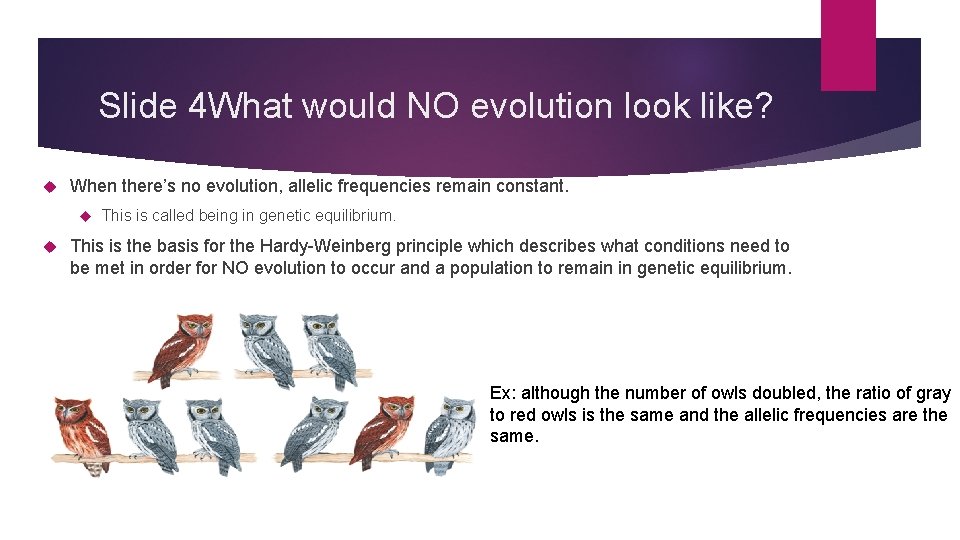
Slide 4 What would NO evolution look like? When there’s no evolution, allelic frequencies remain constant. This is called being in genetic equilibrium. This is the basis for the Hardy-Weinberg principle which describes what conditions need to be met in order for NO evolution to occur and a population to remain in genetic equilibrium. Ex: although the number of owls doubled, the ratio of gray to red owls is the same and the allelic frequencies are the same.
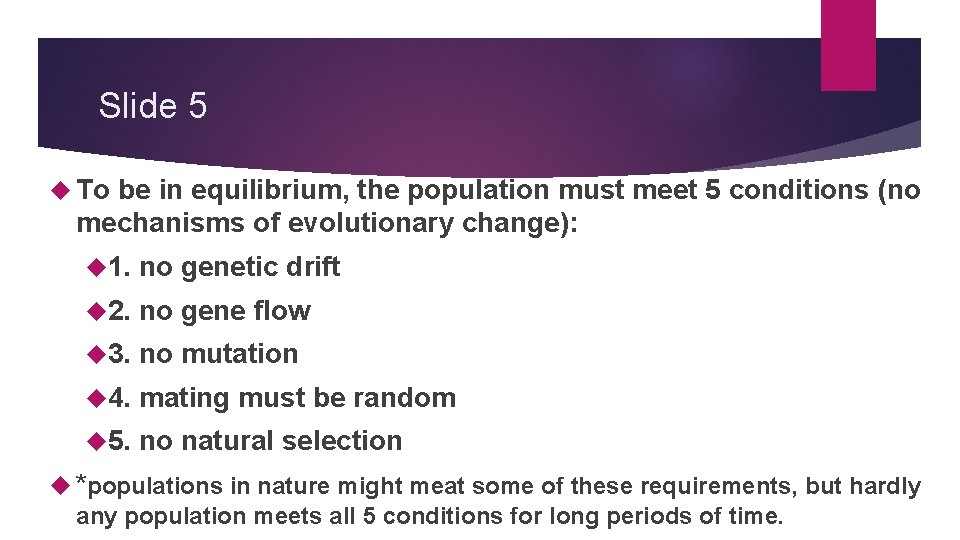
Slide 5 To be in equilibrium, the population must meet 5 conditions (no mechanisms of evolutionary change): 1. no genetic drift 2. no gene flow 3. no mutation 4. mating must be random 5. no natural selection *populations in nature might meat some of these requirements, but hardly any population meets all 5 conditions for long periods of time.
Slide 6: Mechanisms of Evolution: genetic drift Genetic Drift: Any change in the allelic frequencies (# of each kind of allele in the population) that results from chance. These effects are more pronounced in smaller populations.
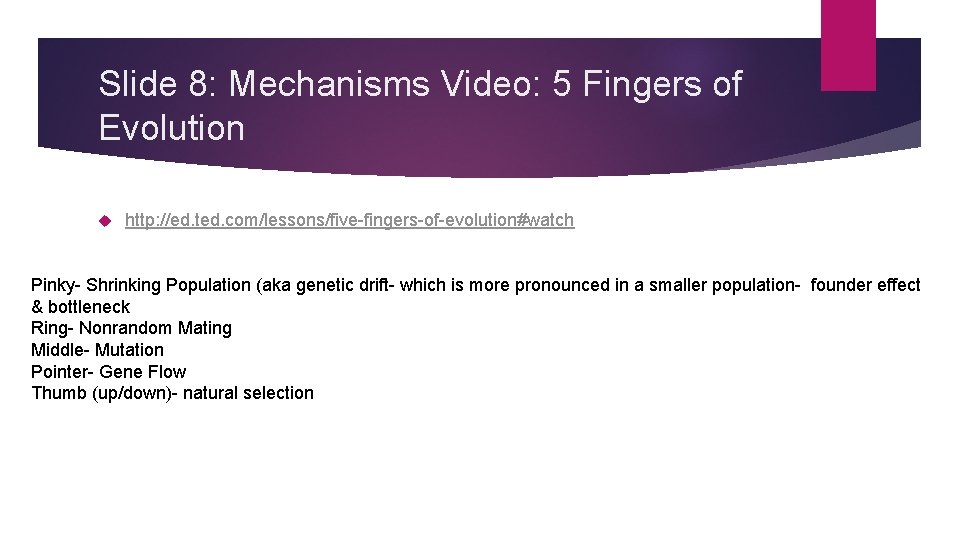
Slide 8: Mechanisms Video: 5 Fingers of Evolution http: //ed. ted. com/lessons/five-fingers-of-evolution#watch Pinky- Shrinking Population (aka genetic drift- which is more pronounced in a smaller population- founder effect & bottleneck Ring- Nonrandom Mating Middle- Mutation Pointer- Gene Flow Thumb (up/down)- natural selection
Slide 7: Mechanisms of Evolution: genetic drift continued Founder Effect- small sample of a population settles in a location separated from the rest of the population. Alleles that were uncommon in the original population might become common in the new population Bottleneck- population declines to a very low # then rebounds. https: //www. youtube. com/watch? v=Q 6 JEA 2 ol. Nts
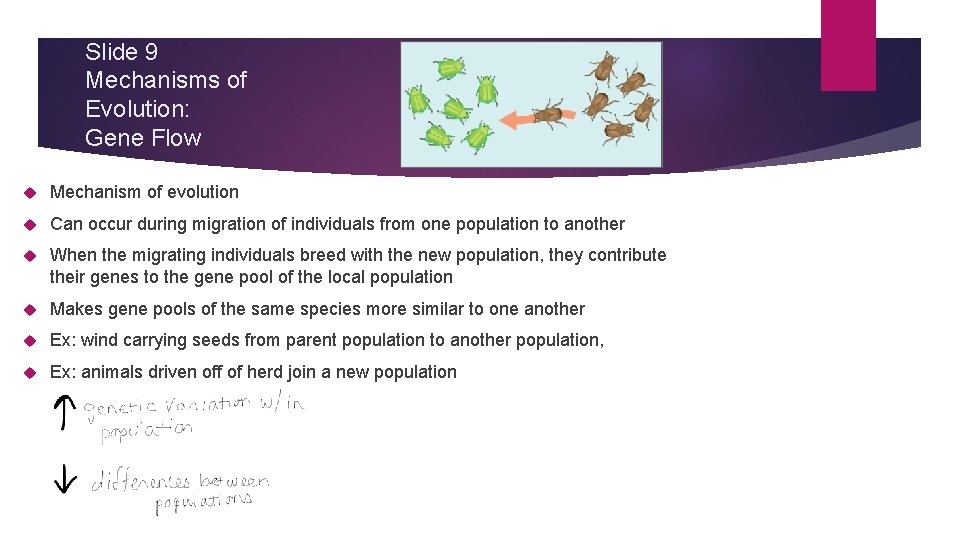
Slide 9 Mechanisms of Evolution: Gene Flow Mechanism of evolution Can occur during migration of individuals from one population to another When the migrating individuals breed with the new population, they contribute their genes to the gene pool of the local population Makes gene pools of the same species more similar to one another Ex: wind carrying seeds from parent population to another population, Ex: animals driven off of herd join a new population
Slide 10: Mechanisms of Evolution: Nonrandom Mating Mechanism of Evolution What would completely random mating look like? Individuals regardless of environment, heredity, or social interaction. Potential mates have an equal chance of being selected. As long as mating was random and no other mechanisms of evolution were happening, no evolution would occur in this population. The result of nonrandom mating is that some individuals have more opportunity to mate than others and thus produce more offspring (and more copies of their genes) than others. It is simply easier to mate with a nearby individual, as opposed to one that is farther away. Also, especially in animals, individuals compete for mates and active selection of mating partners occurs. This goes directly against the concept of randomness.
Slide 11: Mechanisms of Evolution: Mutation Mechanism of evolution Mutation, a driving force of evolution, is a random change in an organism’s genetic makeup, which influences the population’s gene pool. Mutations give rise to new alleles; therefore, they are a source of genetic variation in a population. Mutations may be harmful or benign, but they may also be beneficial.
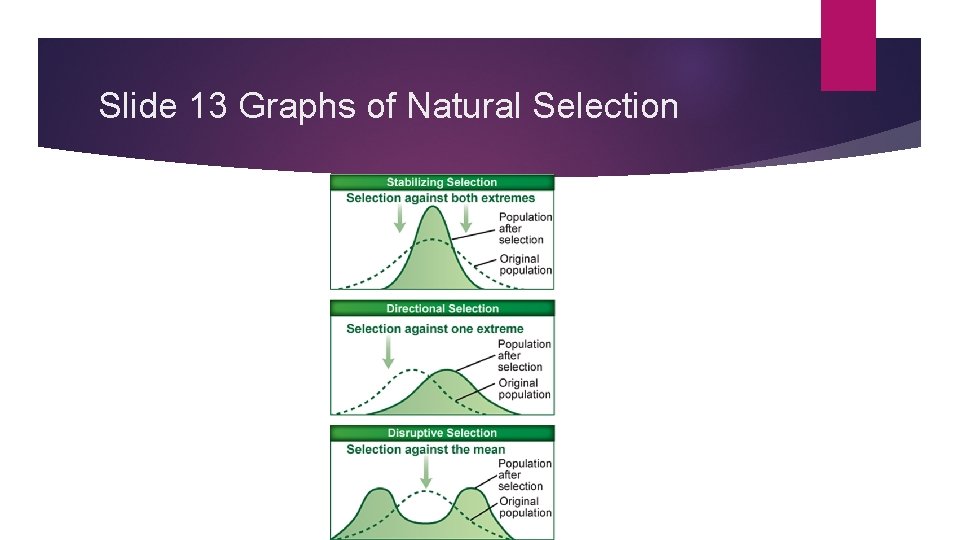
Slide 12: Mechanisms of Evolution: Natural Selection Mechanism of evolution Individuals in a population are not equally adapted to the environment Best traits survive Types of natural selection Directional Stabilizing Disruptive Sexual
Slide 13 Graphs of Natural Selection