
Chapter 15 SECONDARY MARKETS Function of Secondary Markets
- Slides: 10
Chapter 15 SECONDARY MARKETS
Function of Secondary Markets z. Providing security values and required returns z. Providing liquidity
Trading Locations z. Organized Exchanges y. NYSE y. AMEX y. Regional Exchanges z. Over-The-Counter Exchanges
Foreign Stock Exchanges z. United Kingdom y. London Stock Exchange (LSE) z. Germany y. Frankfurt Stock Exchange y. Other regional exchanges (7) z. Japan y. Tokyo Stock Exchange (TSE)
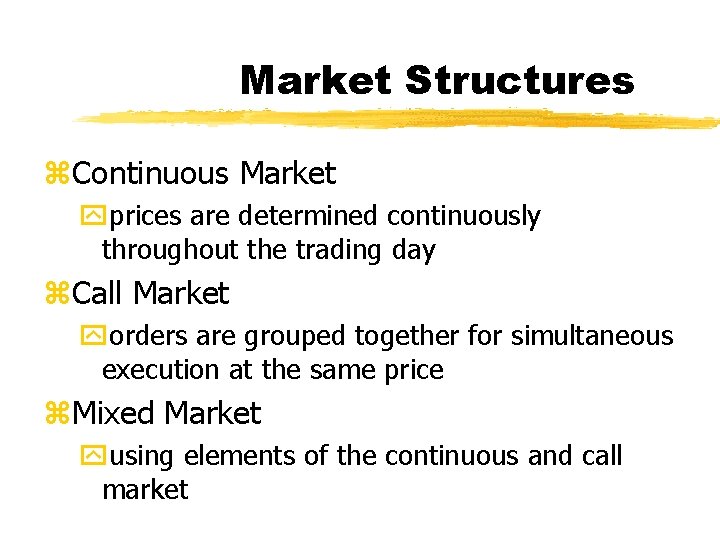
Market Structures z. Continuous Market yprices are determined continuously throughout the trading day z. Call Market yorders are grouped together for simultaneous execution at the same price z. Mixed Market yusing elements of the continuous and call market
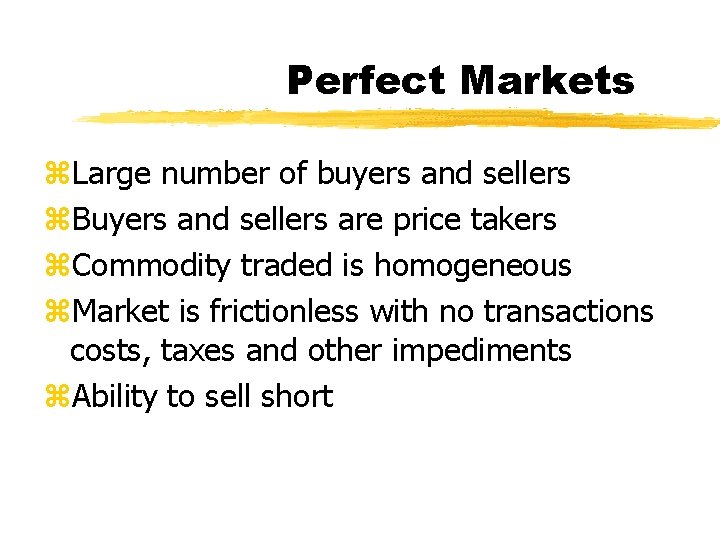
Perfect Markets z. Large number of buyers and sellers z. Buyers and sellers are price takers z. Commodity traded is homogeneous z. Market is frictionless with no transactions costs, taxes and other impediments z. Ability to sell short
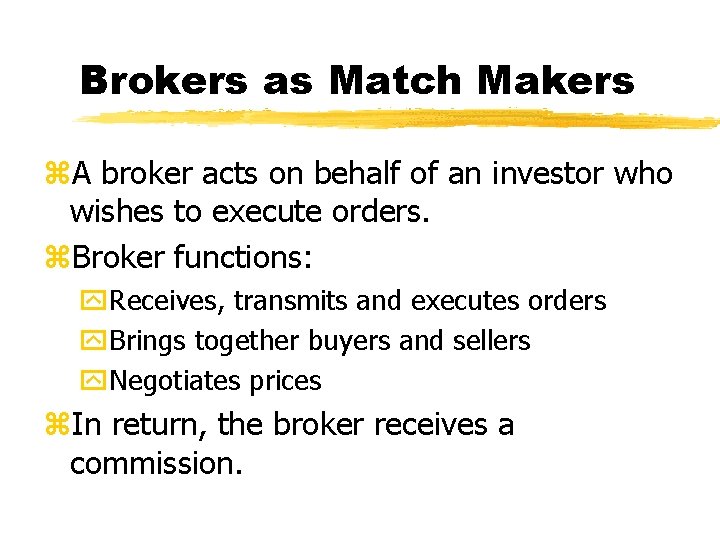
Brokers as Match Makers z. A broker acts on behalf of an investor who wishes to execute orders. z. Broker functions: y. Receives, transmits and executes orders y. Brings together buyers and sellers y. Negotiates prices z. In return, the broker receives a commission.
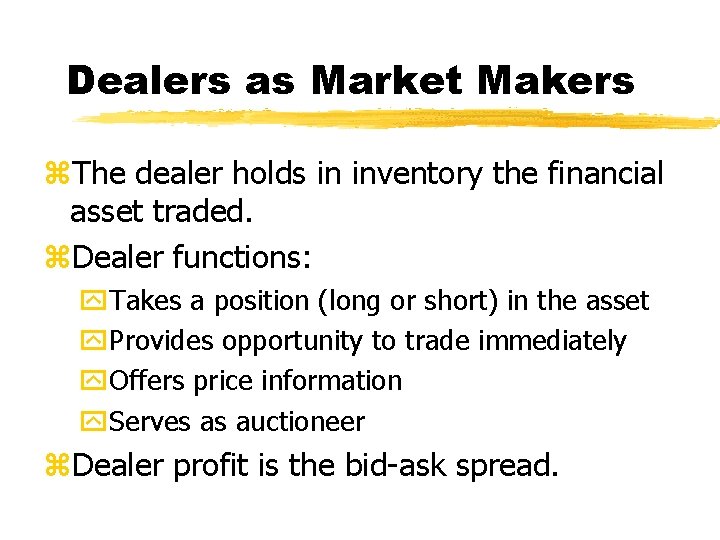
Dealers as Market Makers z. The dealer holds in inventory the financial asset traded. z. Dealer functions: y. Takes a position (long or short) in the asset y. Provides opportunity to trade immediately y. Offers price information y. Serves as auctioneer z. Dealer profit is the bid-ask spread.
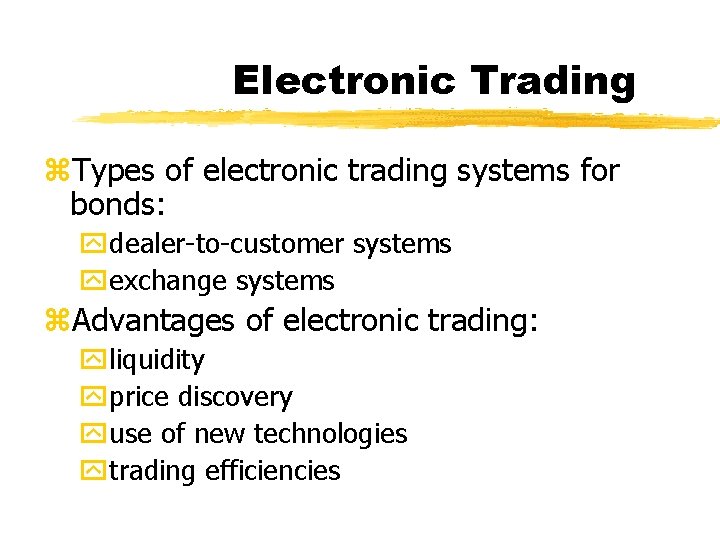
Electronic Trading z. Types of electronic trading systems for bonds: ydealer-to-customer systems yexchange systems z. Advantages of electronic trading: yliquidity yprice discovery yuse of new technologies ytrading efficiencies
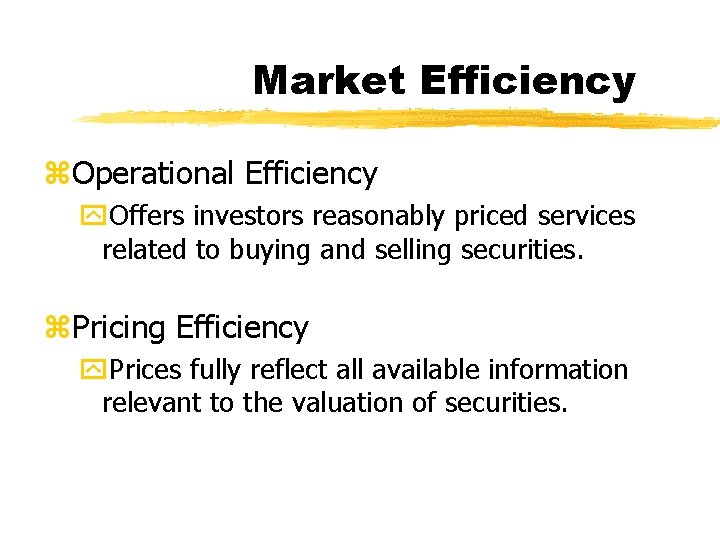
Market Efficiency z. Operational Efficiency y. Offers investors reasonably priced services related to buying and selling securities. z. Pricing Efficiency y. Prices fully reflect all available information relevant to the valuation of securities.