
Chapter 15 Retained Earnings RETAINED EARNINGS Retained earnings
- Slides: 8
Chapter 15 Retained Earnings
RETAINED EARNINGS • Retained earnings is the cumulative net earnings (less losses) that is retained in the business (i. e. , not distributed to shareholders) Retained earnings, opening balance + Net earnings (or - net loss) - Dividends = Retained earnings, ending balance
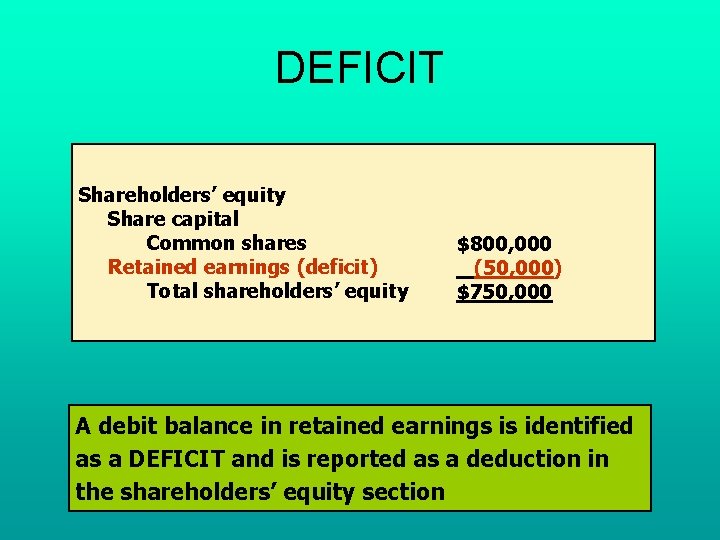
DEFICIT Shareholders’ equity Share capital Common shares Retained earnings (deficit) Total shareholders’ equity $800, 000 (50, 000) $750, 000 A debit balance in retained earnings is identified as a DEFICIT and is reported as a deduction in the shareholders’ equity section
RETAINED EARNINGS RESTRICTIONS • In some cases there may be retained earnings restrictions that make a portion of the balance currently unavailable for dividends • Restrictions result from one or more of the following causes – Legal – Contractual – Voluntary
PRIOR PERIOD ADJUSTMENTS • A prior period adjustment results from 1. the correction of a material error in reporting net income in previously issued financial statements, or 2. changing an accounting principle.
PRIOR PERIOD ADJUSTMENTS • A correction of an error occurs after the books are closed, and relates to a prior accounting period. • A change in an accounting principle occurs when the principle used in the current year is different from the one used in the preceding year.
PRIOR PERIOD ADJUSTMENTS • The cumulative effect of the correction or change (net of income tax) should be – made directly to Retained Earnings; – reported in the current year’s retained earnings statement as an adjustment of the beginning balance of Retained Earnings; – disclosed in a footnote to the financial statements; – corrected and restated in all prior period financial statements presented; and – the corrected amount or new principle should be used in reporting the results of operations of the current year.
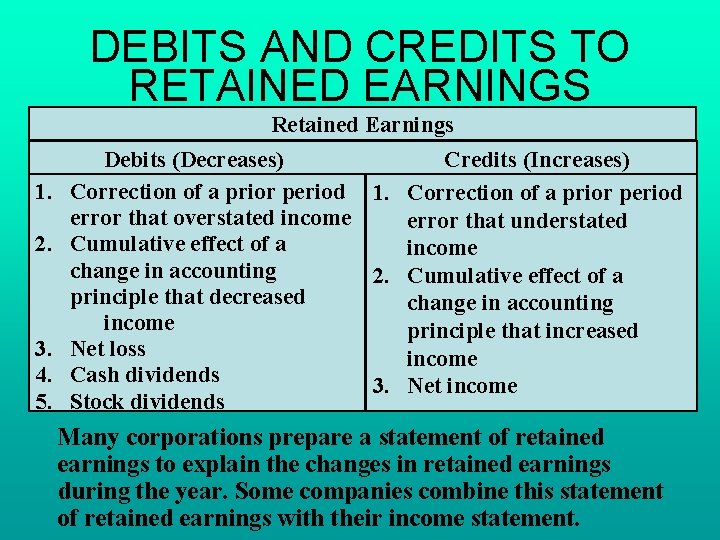
DEBITS AND CREDITS TO RETAINED EARNINGS 1. 2. 3. 4. 5. Retained Earnings Debits (Decreases) Credits (Increases) Correction of a prior period 1. Correction of a prior period error that overstated income error that understated Cumulative effect of a income change in accounting 2. Cumulative effect of a principle that decreased change in accounting income principle that increased Net loss income Cash dividends 3. Net income Stock dividends Many corporations prepare a statement of retained earnings to explain the changes in retained earnings during the year. Some companies combine this statement of retained earnings with their income statement.