
Chapter 15 Pricing Mc GrawHillIrwin Retailing Management 6e
- Slides: 60
Chapter 15 Pricing Mc. Graw-Hill/Irwin Retailing Management, 6/e Copyright © 2007 by The Mc. Graw-Hill Companies, Inc. All rights reserved.
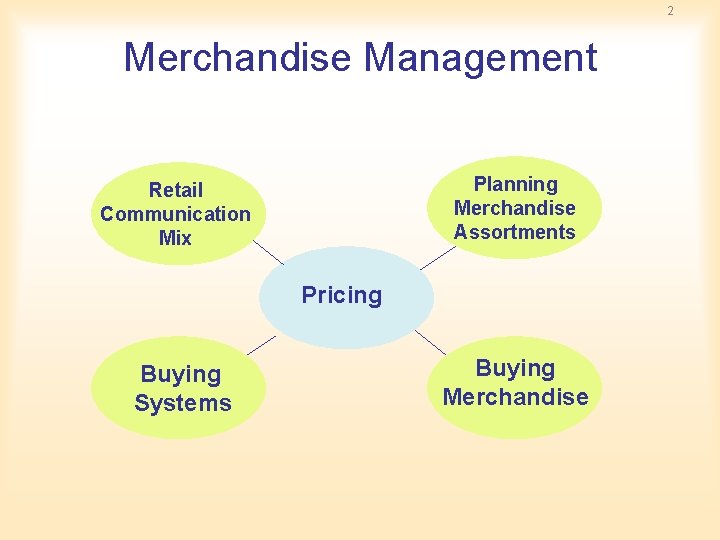
2 Merchandise Management Planning Merchandise Assortments Retail Communication Mix Pricing Buying Systems Buying Merchandise
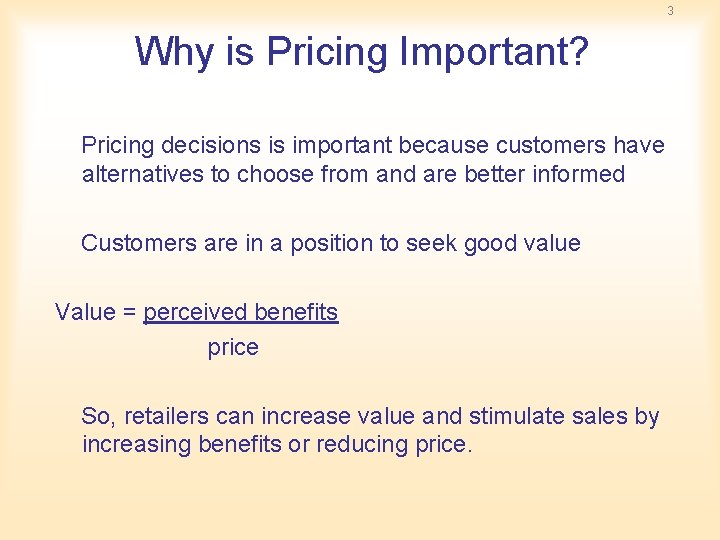
3 Why is Pricing Important? Pricing decisions is important because customers have alternatives to choose from and are better informed Customers are in a position to seek good value Value = perceived benefits price So, retailers can increase value and stimulate sales by increasing benefits or reducing price.
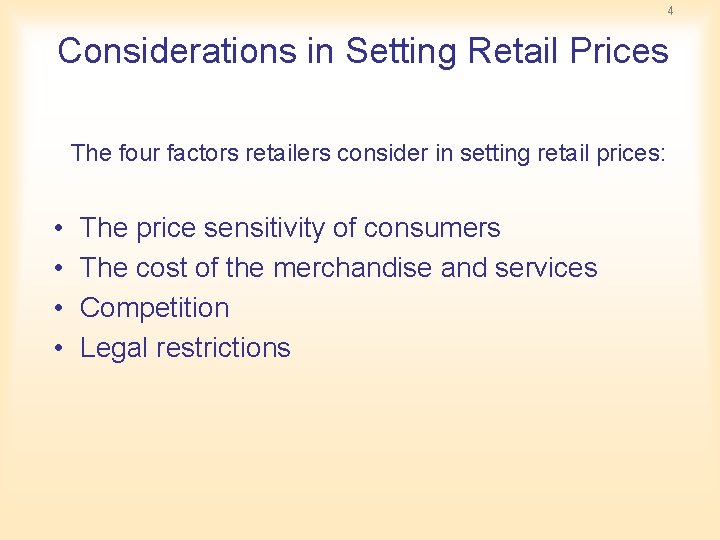
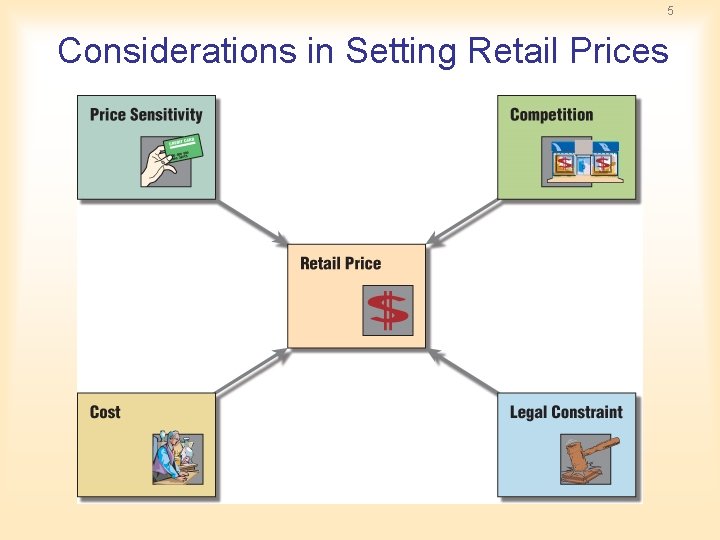
4 Considerations in Setting Retail Prices The four factors retailers consider in setting retail prices: • • The price sensitivity of consumers The cost of the merchandise and services Competition Legal restrictions
5 Considerations in Setting Retail Prices
6 Price Setting Approach Used by Retailers • Need to set price for 1000’s of products many times during year • Set prices based on pre-determined markup and merchandise cost • Make adjustments to markup price based on customer price sensitivity and competition
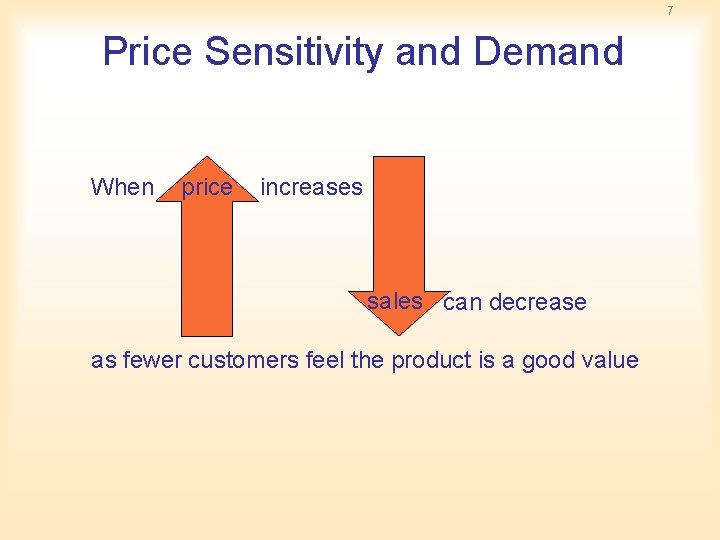
7 Price Sensitivity and Demand When price increases sales can decrease as fewer customers feel the product is a good value
8 Types of Price Discrimination • First Degree – Set unique price for each customer equal to customer’s willingness to pay – Auctions, Personalized Internet Prices • Second Degree – Offer the same price schedule to all customers – Quantity discounts – Coupons – Markdowns Late in Season – Early Bird Special – Over Weekend Travel Discount • Third Degree – Charge different groups different prices – Kids Menu – Seniors Discounts
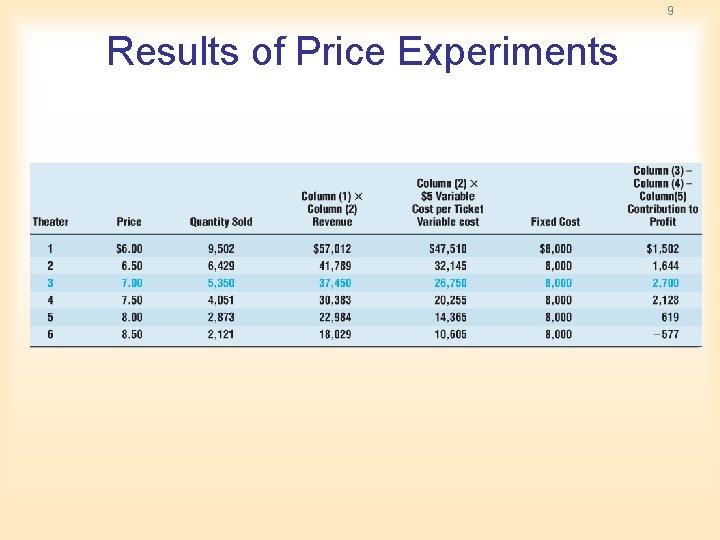
9 Results of Price Experiments
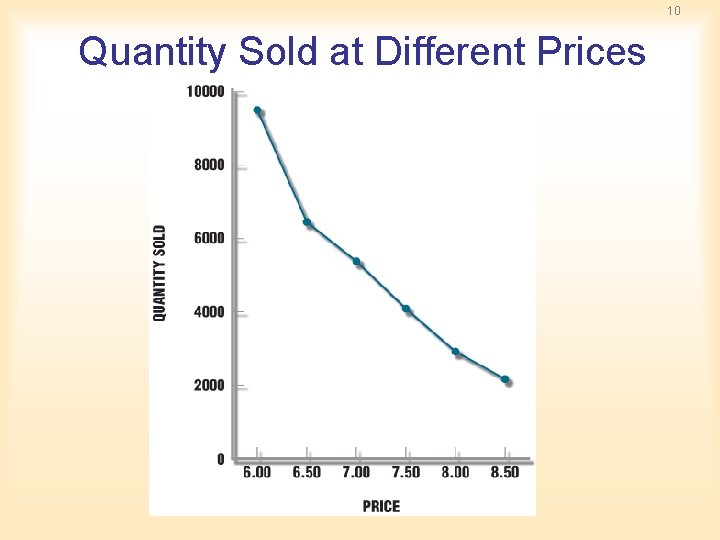
10 Quantity Sold at Different Prices
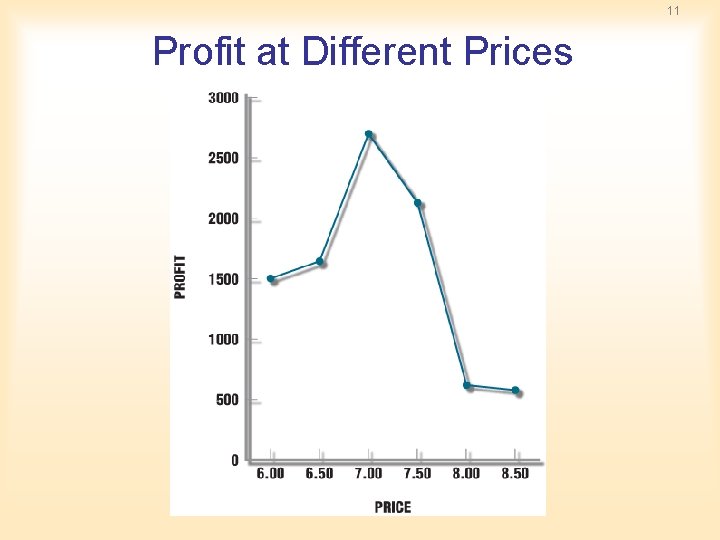
11 Profit at Different Prices
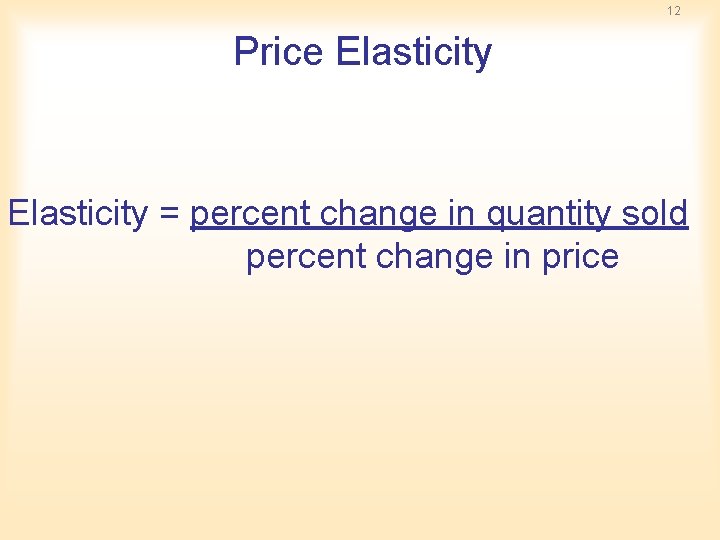
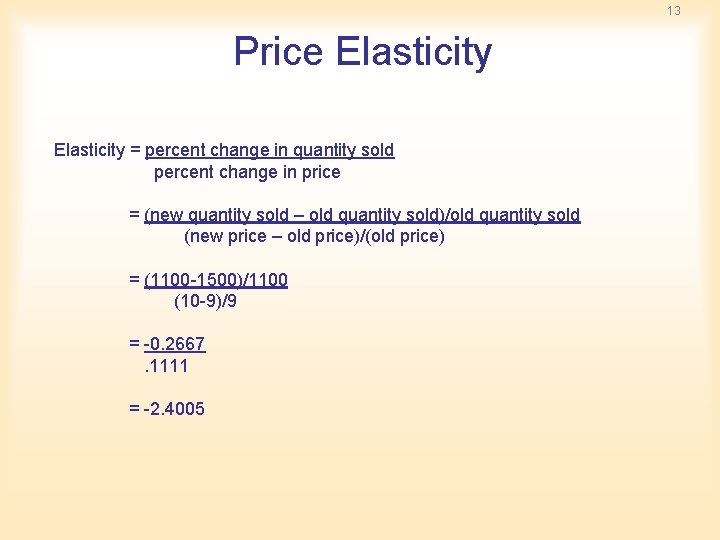
12 Price Elasticity = percent change in quantity sold percent change in price
13 Price Elasticity = percent change in quantity sold percent change in price = (new quantity sold – old quantity sold)/old quantity sold (new price – old price)/(old price) = (1100 -1500)/1100 (10 -9)/9 = -0. 2667. 1111 = -2. 4005
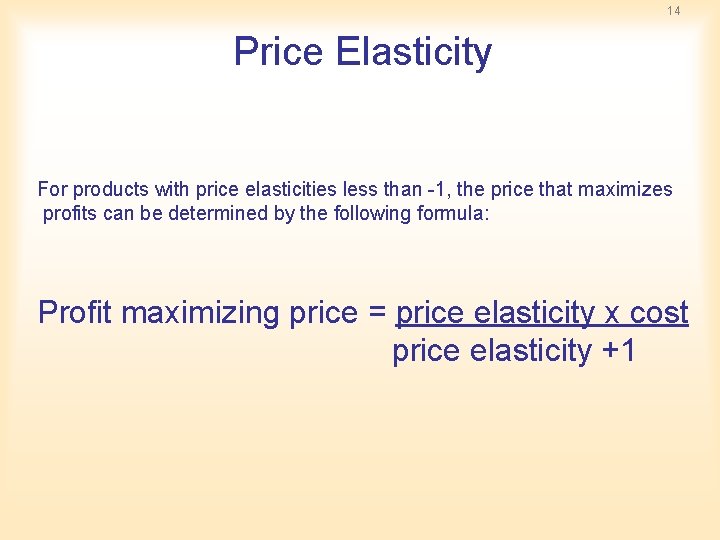
14 Price Elasticity For products with price elasticities less than -1, the price that maximizes profits can be determined by the following formula: Profit maximizing price = price elasticity x cost price elasticity +1
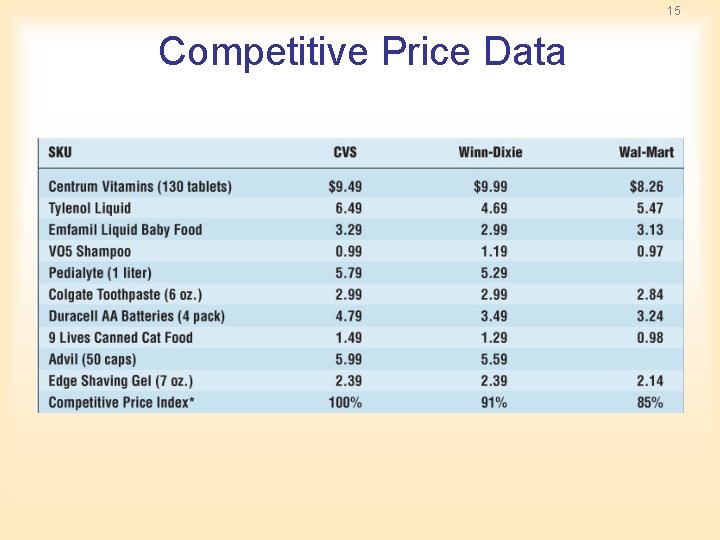
15 Competitive Price Data
16 How Can Retailers Reduce Price Competition? • Develop lines of private label merchandise • Negotiate with national brands manufacturers for exclusive distribution rights • Have vendors make unique products for the retailer Photo. Link/Getty Images
17 Legal and Ethical Pricing Issues Price Discrimination Predatory Pricing Resale Price Maintenance Horizontal Price fixing Bait and Switch tactics Scanned vs. Posted Prices Photo. Disc/Getty Images
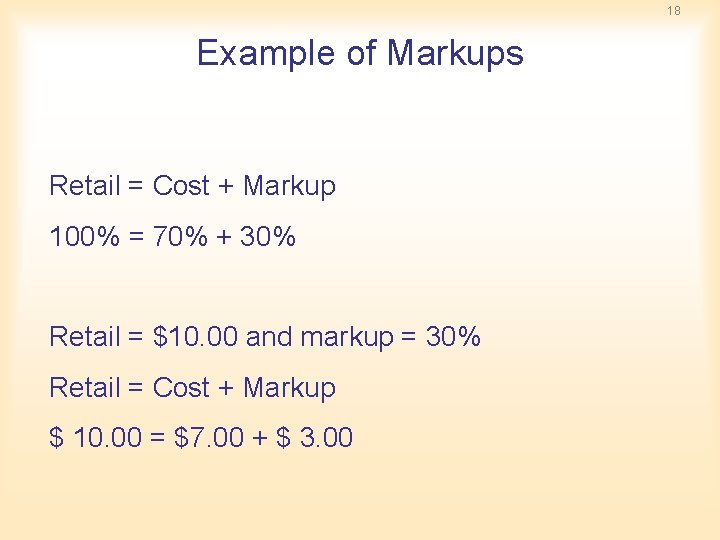
18 Example of Markups Retail = Cost + Markup 100% = 70% + 30% Retail = $10. 00 and markup = 30% Retail = Cost + Markup $ 10. 00 = $7. 00 + $ 3. 00
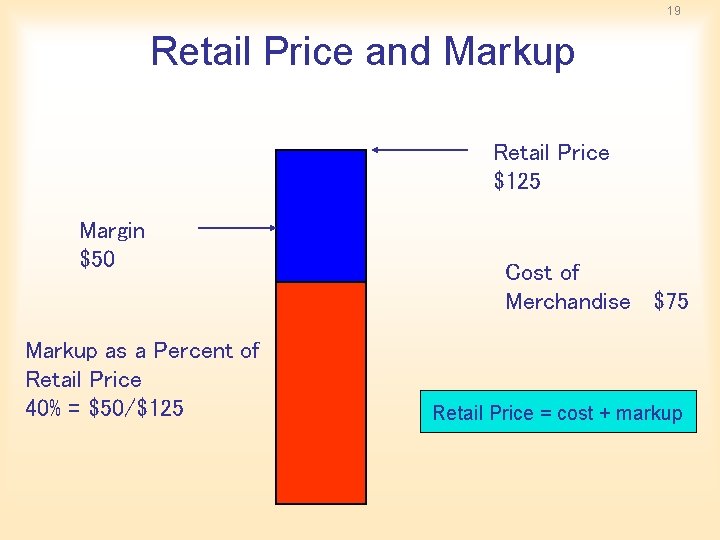
19 Retail Price and Markup Retail Price $125 Margin $50 Markup as a Percent of Retail Price 40% = $50/$125 Cost of Merchandise $75 Retail Price = cost + markup
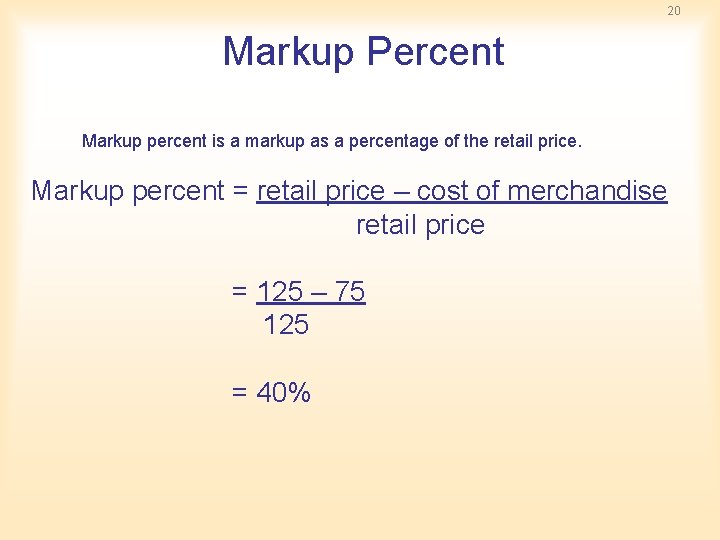
20 Markup Percent Markup percent is a markup as a percentage of the retail price. Markup percent = retail price – cost of merchandise retail price = 125 – 75 125 = 40%
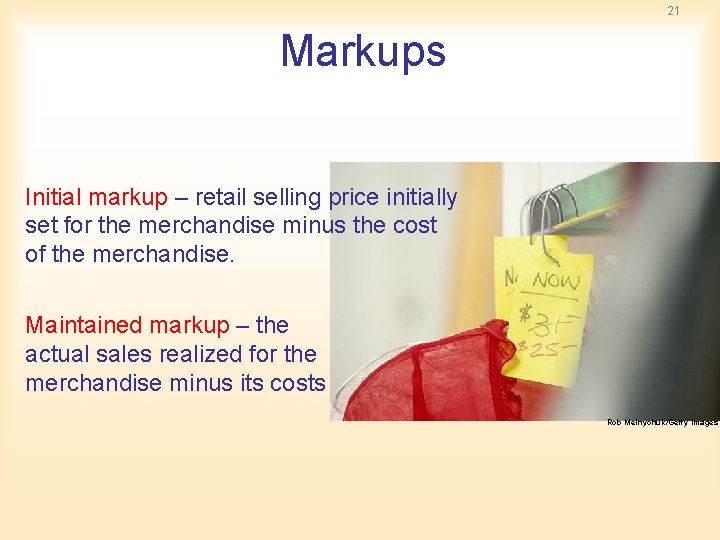
21 Markups Initial markup – retail selling price initially set for the merchandise minus the cost of the merchandise. Maintained markup – the actual sales realized for the merchandise minus its costs Rob Melnychuk/Getty Images
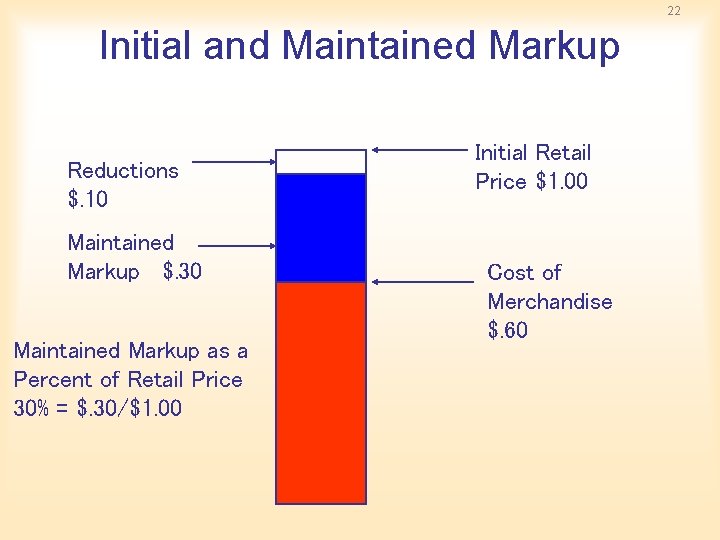
22 Initial and Maintained Markup Reductions $. 10 Maintained Markup $. 30 Maintained Markup as a Percent of Retail Price 30% = $. 30/$1. 00 Initial Retail Price $1. 00 Cost of Merchandise $. 60
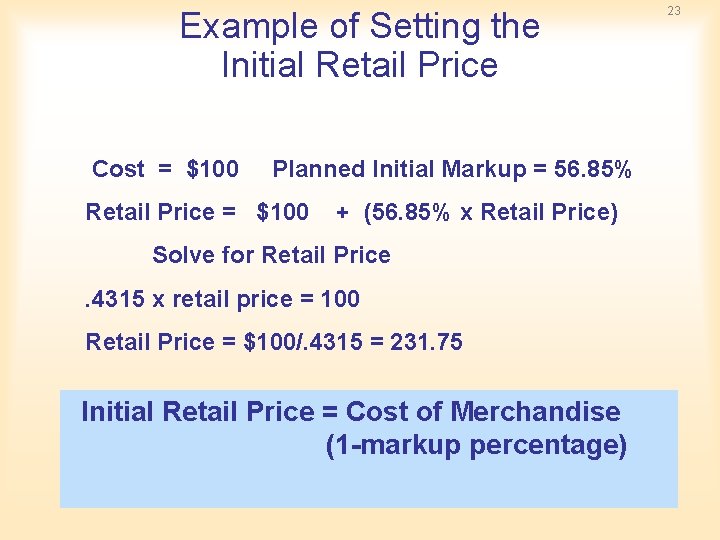
Example of Setting the Initial Retail Price Cost = $100 Planned Initial Markup = 56. 85% Retail Price = $100 + (56. 85% x Retail Price) Solve for Retail Price. 4315 x retail price = 100 Retail Price = $100/. 4315 = 231. 75 Initial Retail Price = Cost of Merchandise (1 -markup percentage) 23
24 Reasons for Taking Markdowns • Get rid of slow-moving, obsolete, uncompetitive priced merchandise • Increase sales and promote merchandise • Generate cash to buy additional merchandise • Increase traffic flow and sale of complementary products generate excitement through a sale
25 Liquidating Markdown Merchandise Photo. Link/Getty Images • Place merchandise on Internet auction site • Sell the remaining merchandise to another retailer • Consolidate the unsold merchandise • Give merchandise to charity • Carry the merchandise over to the next season
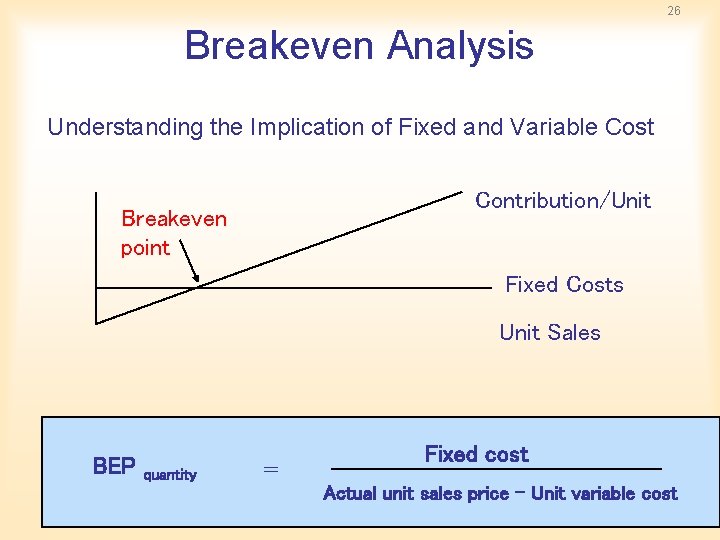
26 Breakeven Analysis Understanding the Implication of Fixed and Variable Cost Contribution/Unit Breakeven point Fixed Costs Unit Sales BEP quantity = Fixed cost Actual unit sales price - Unit variable cost
27 Illustration of Breakeven Analysis American Eagle Outfitter is interested in developing private label cargo pants that will sell for $24. 99. The cost of developing the pants is $400, 000. This includes the cost of salaries, benefits, space for the members of the design team. The variable cost of manufacturing the pants is $13. 00. How many cargo pants does American Eagle Outfitter have to sell to breakeven on its $400, 000 investment?
Cargo Pants Illustration of Breakeven Analysis Breakeven Quantity = Fixed Cost Unit Price – Variable Cost 40, 040 units = Rubber. Ball Productions/Getty Images 28 $400, 000 $24. 99 - $15. 00
Making a Profit on Cargo Pants Illustration of Breakeven Analysis 29 What if American Eagle Outfitter does want to just break even. It wants to make a profit of $100, 000 on the cargo pants. How many units does American Eagle Outfitter need to sell then? Photo. Link/Getty Images
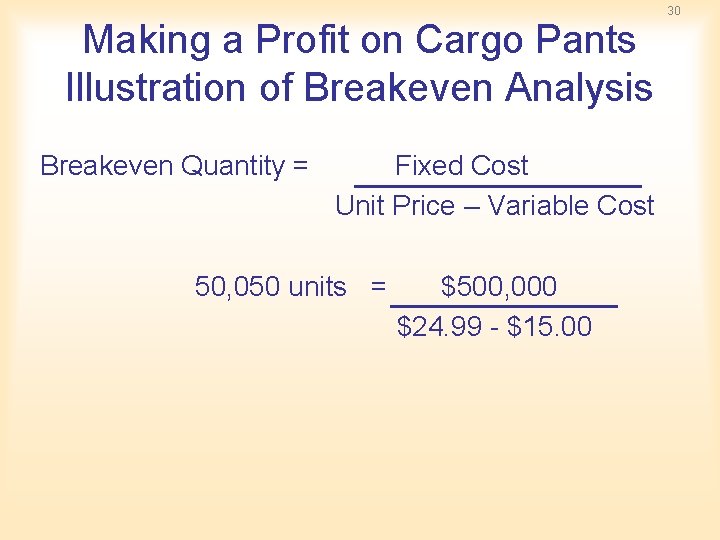
Making a Profit on Cargo Pants Illustration of Breakeven Analysis Breakeven Quantity = Fixed Cost Unit Price – Variable Cost 50, 050 units = $500, 000 $24. 99 - $15. 00 30
Percent Sales Increase Needed to Breakeven on a Price Decrease 31 The Gap has bought 60, 000 women’s tee shirts at $5 a unit. It was originally going to price the tee shirts at $12. 00, but is considering reducing the retail price to $10. 00 – a 16. 67% price reduction. How much does sales have to increase for The Gap to make the same profit at the lower price? © Digital Vision
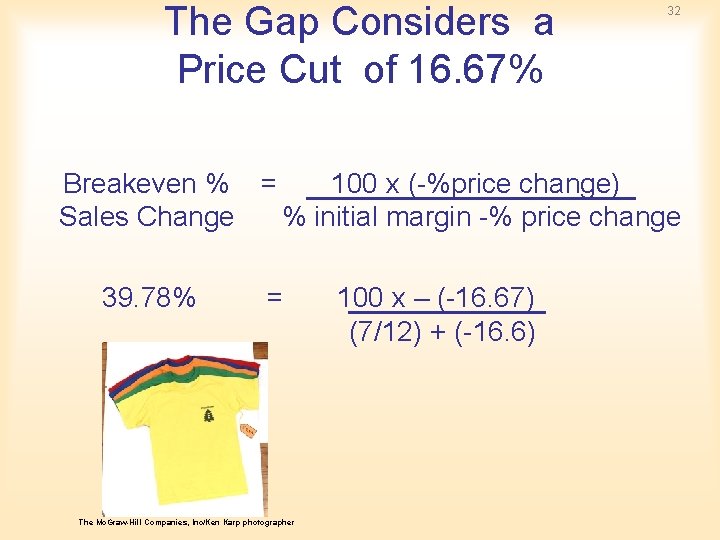
The Gap Considers a Price Cut of 16. 67% 32 Breakeven % = 100 x (-%price change) Sales Change % initial margin -% price change 39. 78% = The Mc. Graw-Hill Companies, Inc/Ken Karp photographer 100 x – (-16. 67) (7/12) + (-16. 6)
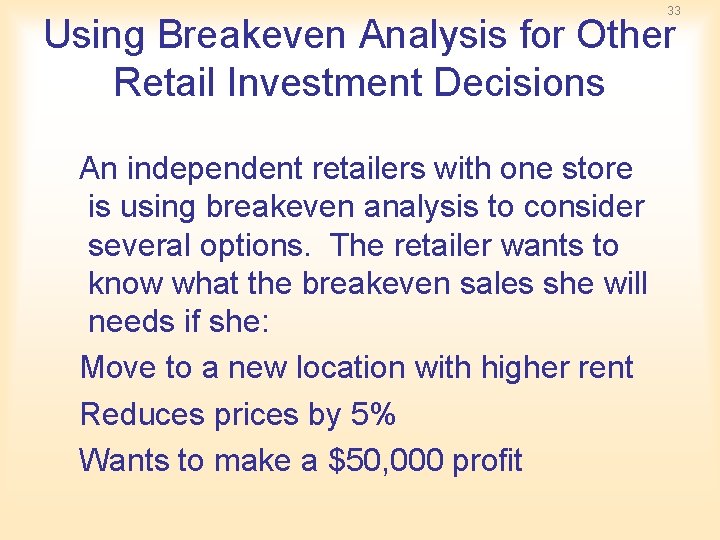
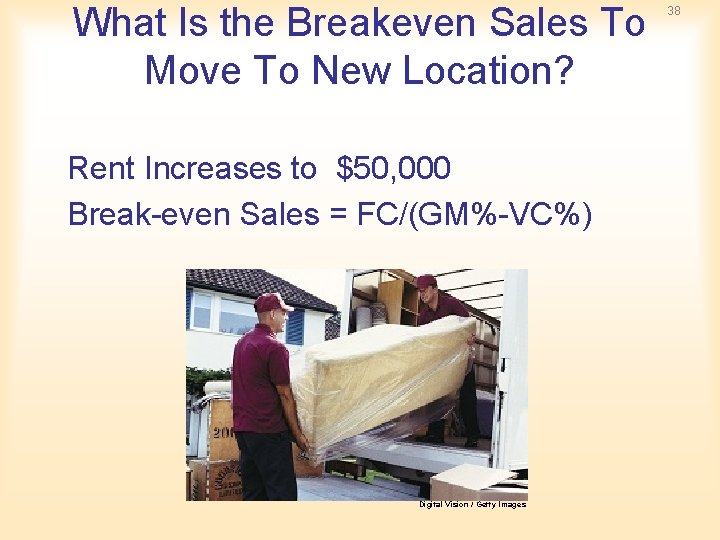
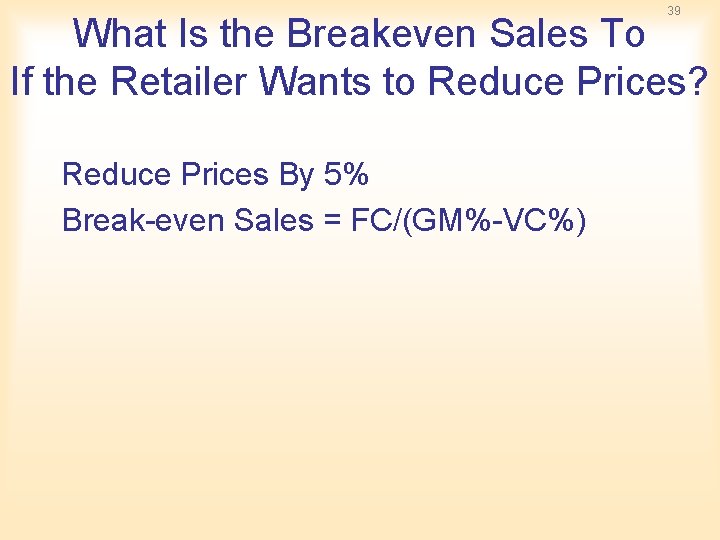
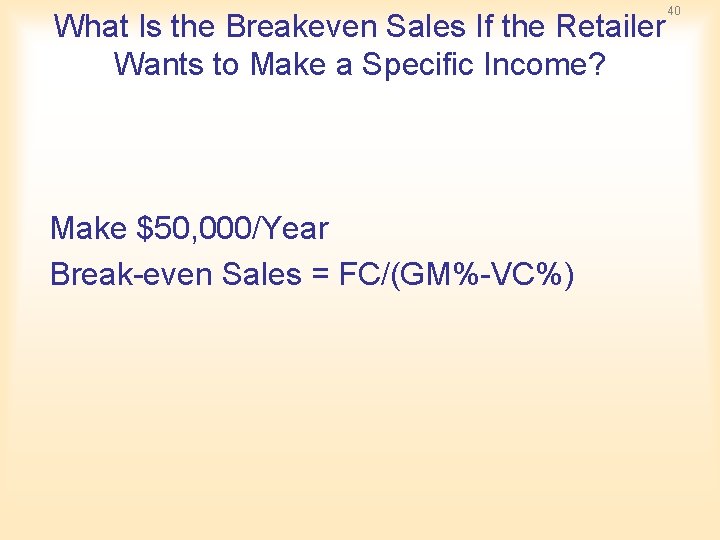
33 Using Breakeven Analysis for Other Retail Investment Decisions An independent retailers with one store is using breakeven analysis to consider several options. The retailer wants to know what the breakeven sales she will needs if she: Move to a new location with higher rent Reduces prices by 5% Wants to make a $50, 000 profit
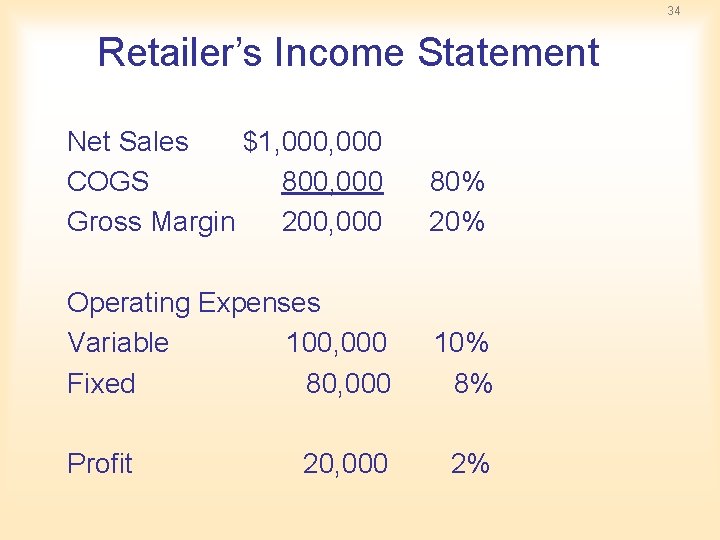
34 Retailer’s Income Statement Net Sales $1, 000 COGS 800, 000 Gross Margin 200, 000 80% 20% Operating Expenses Variable 100, 000 Fixed 80, 000 10% 8% Profit 20, 000 2%
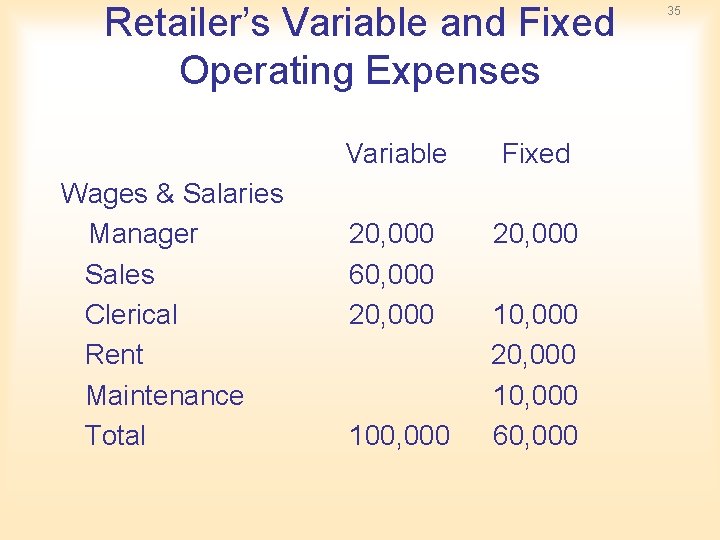
Retailer’s Variable and Fixed Operating Expenses Wages & Salaries Manager Sales Clerical Rent Maintenance Total Variable Fixed 20, 000 60, 000 20, 000 10, 000 60, 000 35
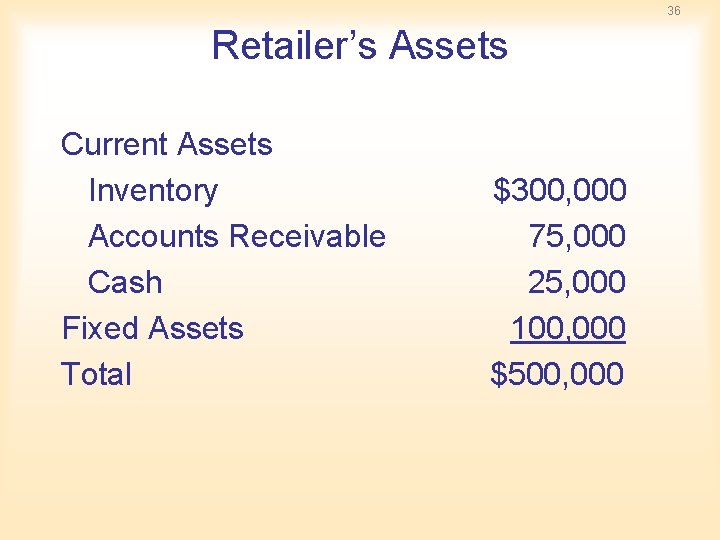
36 Retailer’s Assets Current Assets Inventory Accounts Receivable Cash Fixed Assets Total $300, 000 75, 000 25, 000 100, 000 $500, 000
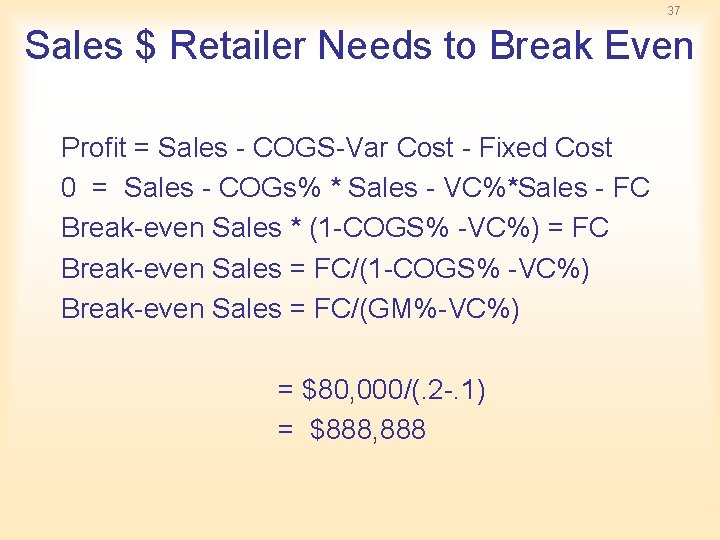
37 Sales $ Retailer Needs to Break Even Profit = Sales - COGS-Var Cost - Fixed Cost 0 = Sales - COGs% * Sales - VC%*Sales - FC Break-even Sales * (1 -COGS% -VC%) = FC Break-even Sales = FC/(1 -COGS% -VC%) Break-even Sales = FC/(GM%-VC%) = $80, 000/(. 2 -. 1) = $888, 888
What Is the Breakeven Sales To Move To New Location? Rent Increases to $50, 000 Break-even Sales = FC/(GM%-VC%) Digital Vision / Getty Images 38
39 What Is the Breakeven Sales To If the Retailer Wants to Reduce Prices? Reduce Prices By 5% Break-even Sales = FC/(GM%-VC%)
What Is the Breakeven Sales If the Retailer Wants to Make a Specific Income? Make $50, 000/Year Break-even Sales = FC/(GM%-VC%) 40
Maximize Profits through Price Discrimination Want Charge Every Customer the Maximum They Are Willing to Pay Problem – Don’t know willingness to pay – With list prices, can’t prevent high willingness to pay customers from buying at low price 41
Solution to Problems in Implementing Price Discrimination • Set prices based on customer characteristics related to willingness to pay • Fashion sensitive customers will pay more so charge higher prices when fashion first introduced – reduce price later in season • Price sensitive customers will expend effort to get lower prices – coupons • Elderly customers eat earlier and are more price sensitive so offer early bird specials 42
43 Types of Price Discrimination • First Degree – Set unique price for each customer equal to customer’s willingness to pay – Auctions • Second Degree – Offer the same price schedule to all customers, but customers have to do something to get lower price • Third Degree – Charge different groups different prices – Markdowns Late in Season – Seniors Discounts
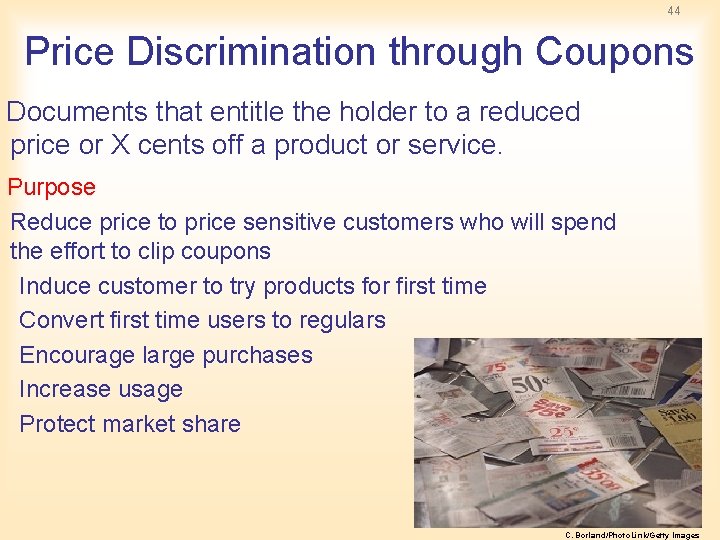
44 Price Discrimination through Coupons Documents that entitle the holder to a reduced price or X cents off a product or service. Purpose Reduce price to price sensitive customers who will spend the effort to clip coupons Induce customer to try products for first time Convert first time users to regulars Encourage large purchases Increase usage Protect market share C. Borland/Photo. Link/Getty Images
Markdowns Are a Form of Price Discrimination 45 Occurs when a firm sells the same product to two or more customers at different prices. Generally illegal with a vendors sells to retailers except: costs are different quantity and functional discounts changing market conditions Generally legal when retailer sells to consumers.
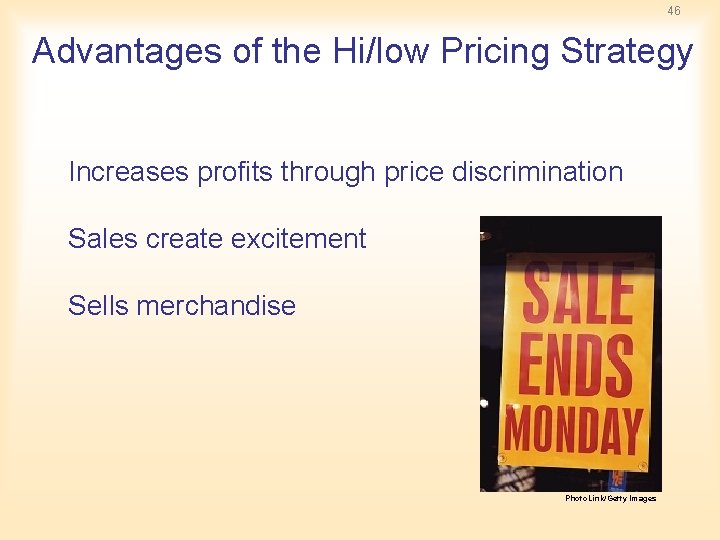
46 Advantages of the Hi/low Pricing Strategy Increases profits through price discrimination Sales create excitement Sells merchandise Photo. Link/Getty Images
47 Hi-Lo Pricing • Most Department Stores, Publix, Kmart • Benefits to Consumer – Spend Time to Find Lowest Price • Benefits to Retailer – Maximize Profits -- Price Discrimination – Problem: Trains People to Buy on Deal
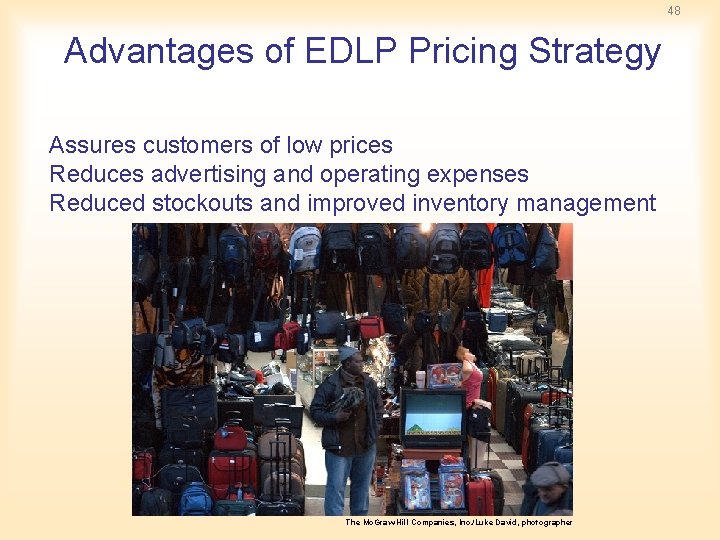
48 Advantages of EDLP Pricing Strategy Assures customers of low prices Reduces advertising and operating expenses Reduced stockouts and improved inventory management The Mc. Graw-Hill Companies, Inc. /Luke David, photographer
49 Everyday Low Pricing • Wal-Mart, Category Specialists, Dillards, Food Lion • Benefits to Consumers – Assured of Low Price on Every Visit – Less Stockouts • Benefits to Retailer – Lower Advertising Expense – Lower Labor Costs
50 Pricing Strategies EDLP • Builds loyalty – guarentees low prices to customers • Lower advertising costs • Better supply chain management – Fewer stockouts – Higher inventory turns Hi-Lo • Higher profits – price discrimination • More excitement • Build short-term sales and generates traffic
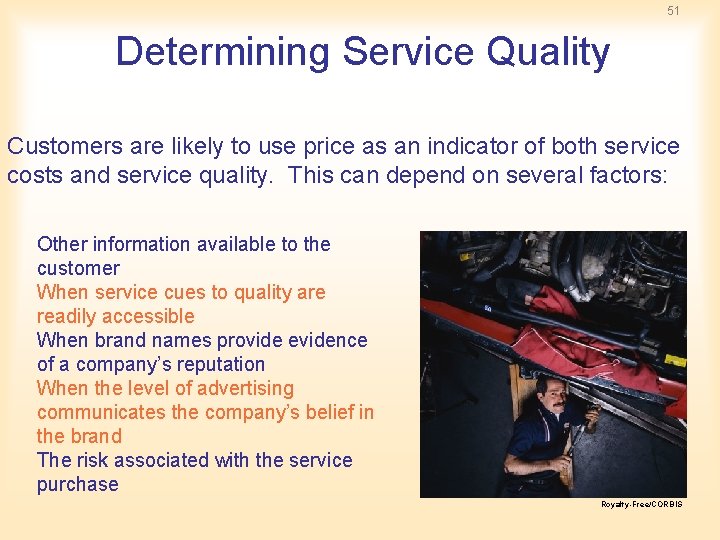
51 Determining Service Quality Customers are likely to use price as an indicator of both service costs and service quality. This can depend on several factors: Other information available to the customer When service cues to quality are readily accessible When brand names provide evidence of a company’s reputation When the level of advertising communicates the company’s belief in the brand The risk associated with the service purchase Royalty-Free/CORBIS
52 Variable Pricing • Application of price discrimination – By location – zone pricing – Early Bird Special – Seniors Discounts – Over Weekend Travel Discount – Quantity Discount • Electronic channel has potential for charging a different price to each customer
53 Using Price to Stimulate Sales • Leader Pricing might attract cherry pickers • Price Lining • Odd Pricing
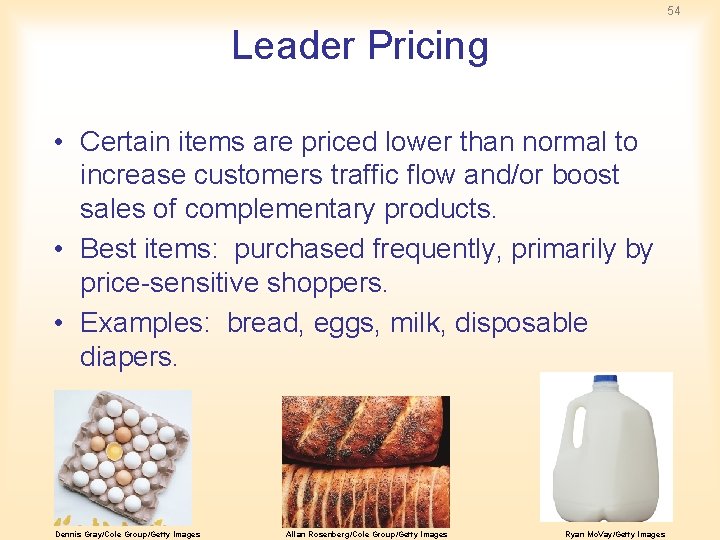
54 Leader Pricing • Certain items are priced lower than normal to increase customers traffic flow and/or boost sales of complementary products. • Best items: purchased frequently, primarily by price-sensitive shoppers. • Examples: bread, eggs, milk, disposable diapers. Dennis Gray/Cole Group/Getty Images Allan Rosenberg/Cole Group/Getty Images Ryan Mc. Vay/Getty Images
55 Price Lining • A limited number of predetermined price points. • Ex: $59. 99 (good), $89. 99 (better), and 129. 99 (best) • Benefits: – Eliminates confusion of many prices. – Merchandising task is simplified. – Gives buyers flexibility. – Can get customers to “trade up. ”
56 Benefits of Price Lining • Confusion that arises from multiple price choices is eliminated • The merchandising talk is simplified • It gives buyers greater flexibility • It gives can be used to get customers to “trade up” to a more expensive model
57 Guidelines for Price-ending Decisions When the price sensitivity of the market is high, it is advantageous to raise or lower prices so they end in high numbers like 9. When the price sensitivity of the market is NOT high, the risk to one’s image of using 9 is likely to outweigh the benefits. Even dollar prices and round numbers are appropriate. Upscale retailers appeal to price-sensitive segments of the market through periodic discounting. Combination strategy works best: break from standard of using round number endings to use 9 endings when communicating discounts and special offers.
58 Odd Pricing • A price that ends in an odd number ($. 57)or just under a round number ($98). • Retailers believe practices increases sales, but probably doesn’t. • Does delineate: – Type of store (downscale store might use it. ) – Sale
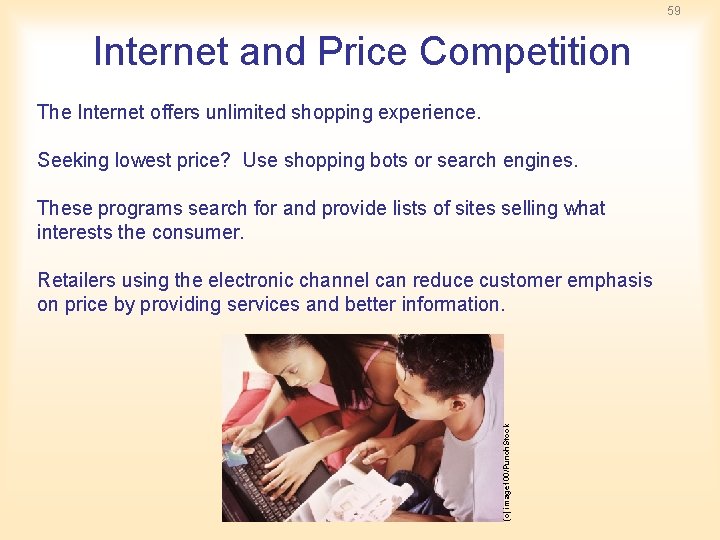
59 Internet and Price Competition The Internet offers unlimited shopping experience. Seeking lowest price? Use shopping bots or search engines. These programs search for and provide lists of sites selling what interests the consumer. (c) image 100/Punch. Stock Retailers using the electronic channel can reduce customer emphasis on price by providing services and better information.
60 The Three Most Important Things in Retailing Location, location Now, it is more : Information, information!!