
Chapter 15 Managing Global Systems Dimensions of International

Chapter 15 Managing Global Systems
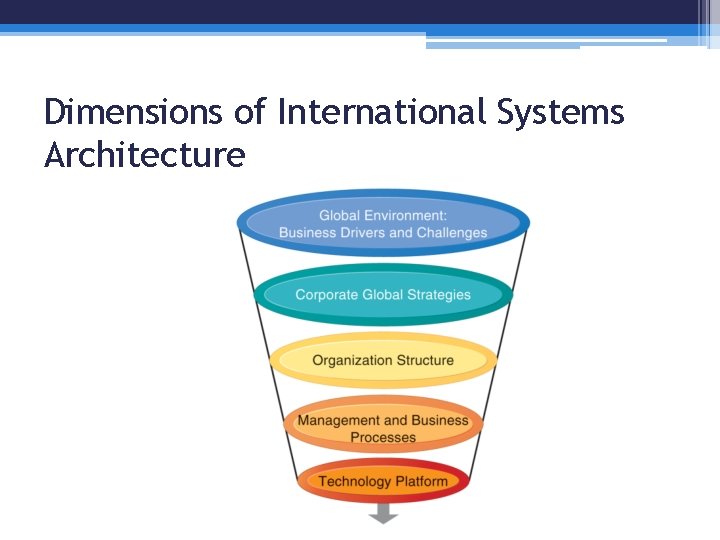
Dimensions of International Systems Architecture
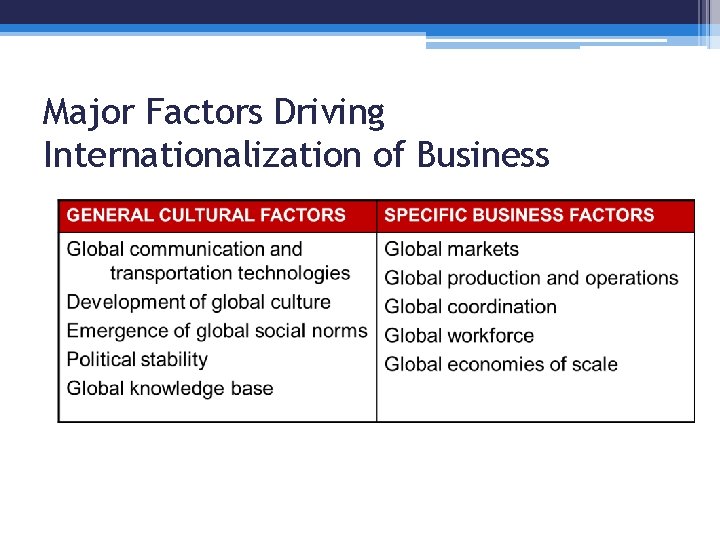
Major Factors Driving Internationalization of Business
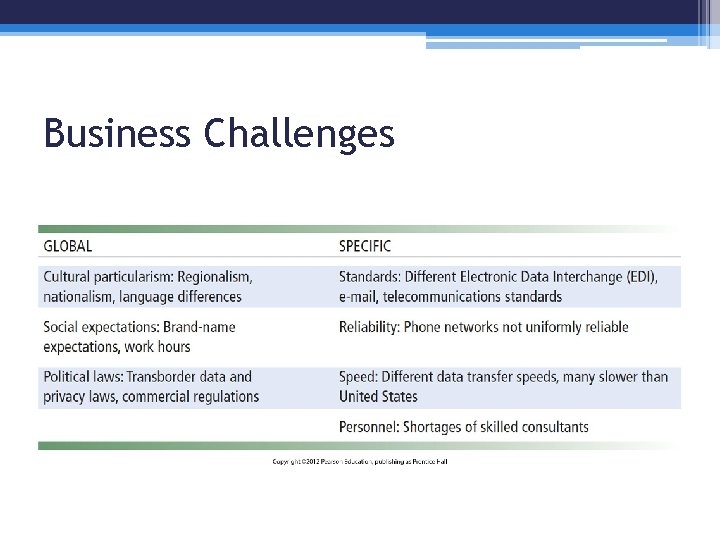
Business Challenges
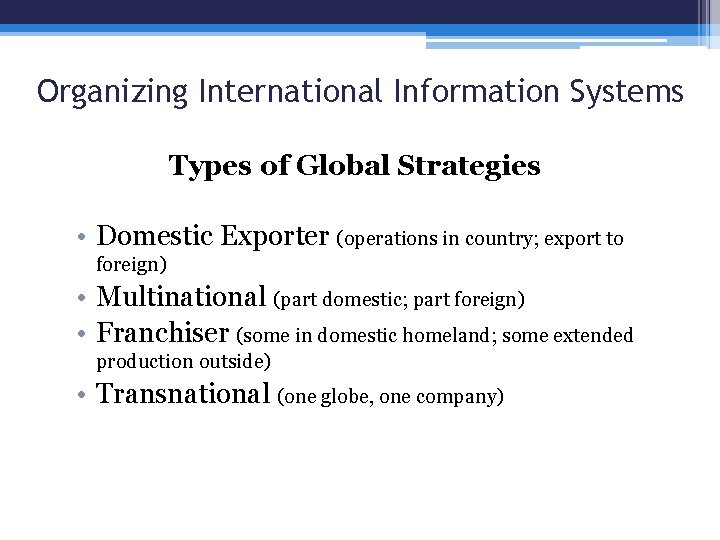
Organizing International Information Systems Types of Global Strategies • Domestic Exporter (operations in country; export to foreign) • Multinational (part domestic; part foreign) • Franchiser (some in domestic homeland; some extended production outside) • Transnational (one globe, one company)
Organizing International Information Systems Types of System Configuration • Centralized (home based) • Duplicated (developed at home base; operations foreign) • Decentralized (each business unit has its own system) • Networked (all participate in development and operations)
Organizing International Information Systems Types of Organizational Structure • Centralized • Decentralized • Coordinated
Global Systems Strategy • Define the core business processes • Identify the core systems to coordinate centrally • Choose an approach (either incremental, grand design, or evolutionary) • Make the benefits clear ▫ Don’t build for the sake of building
Implementation of Global Business Systems • Agree on common user requirements • Introduce changes in business procedures • Coordinate applications development • Coordinate software releases • Encourage local users to support global systems
Technology Issues and Opportunities for Global Value Chains • Standardization of a global computing platform • Finding user-friendly and beneficial software applications • Connectivity
- Slides: 10