
Chapter 15 Lecture Outline The Digestion and Absorption
Chapter 15 Lecture Outline* The Digestion and Absorption of Food Eric P. Widmaier Boston University Hershel Raff Medical College of Wisconsin Kevin T. Strang University of Wisconsin - Madison *See Power. Point Image Slides for all figures and tables pre-inserted into Power. Point without notes. Copyright © The Mc. Graw-Hill Companies, Inc. Permission required for reproduction or display. 1
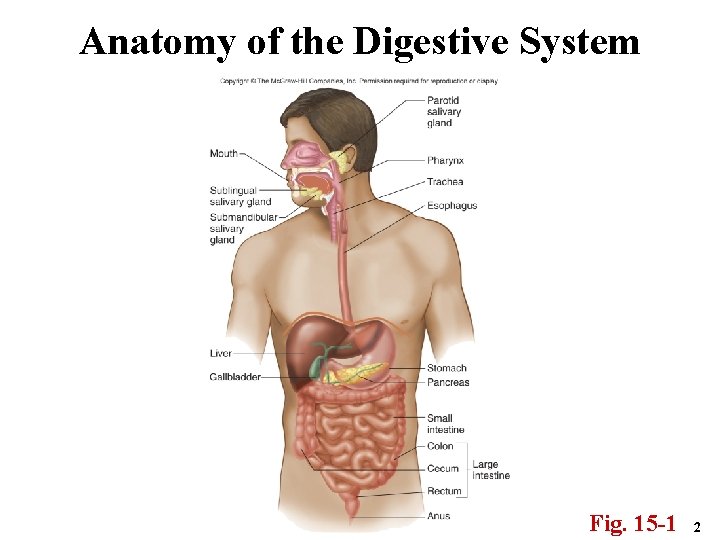
Anatomy of the Digestive System Fig. 15 -1 2
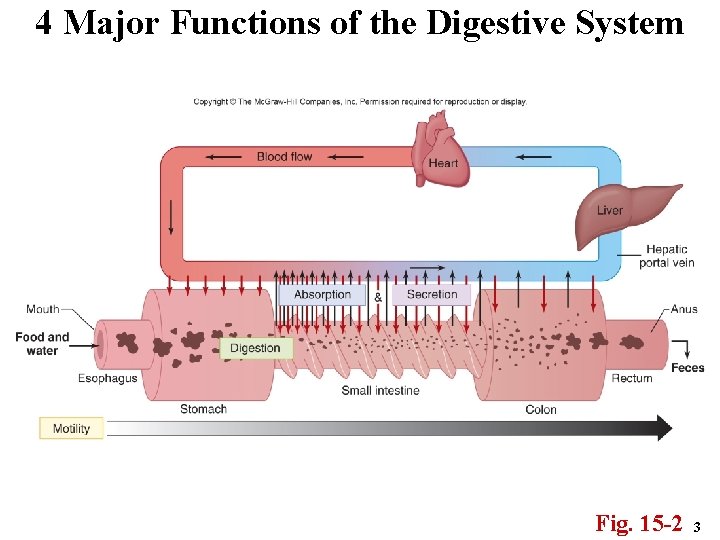
4 Major Functions of the Digestive System Fig. 15 -2 3
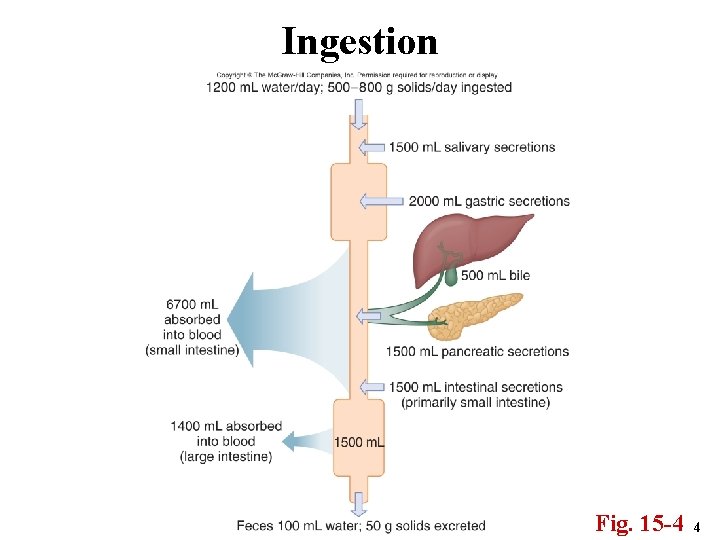
Ingestion Fig. 15 -4 4
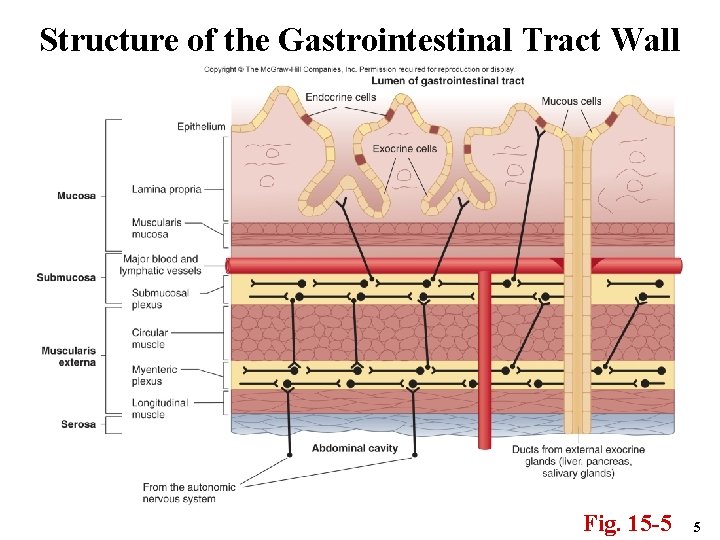
Structure of the Gastrointestinal Tract Wall Fig. 15 -5 5
Absorption in the Small Intestine • The small intestine is anatomically arranged for a large surface area, which enhances the absorption of nutrients. • One of the specialized anatomical structures is the Villi increase surface area and contain blood vessels and lacteal, which play a role in the absorption of nutrients. • Another specialized structure is the microvilli. Microvilli increase surface area and form the brush border. 6
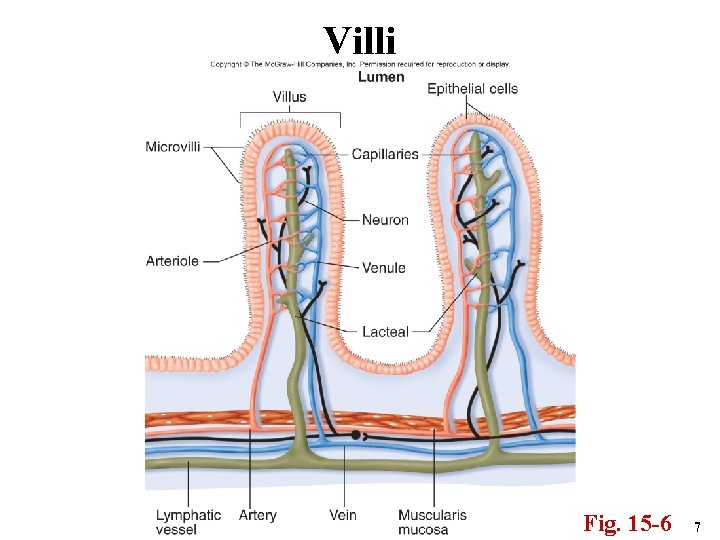
Villi Fig. 15 -6 7
Carbohydrates • Most carbohydrates in the diet are consumed as disaccharides or polysaccharides: – – – Sucrose Lactose Maltose Starch Glycogen Cellulose • Only monosaccharides are absorbed by the intestinal cells for use in the body. • Disaccharides and polysaccharides must be digested to monosaccharides before they can be absorbed for use in the body. 8
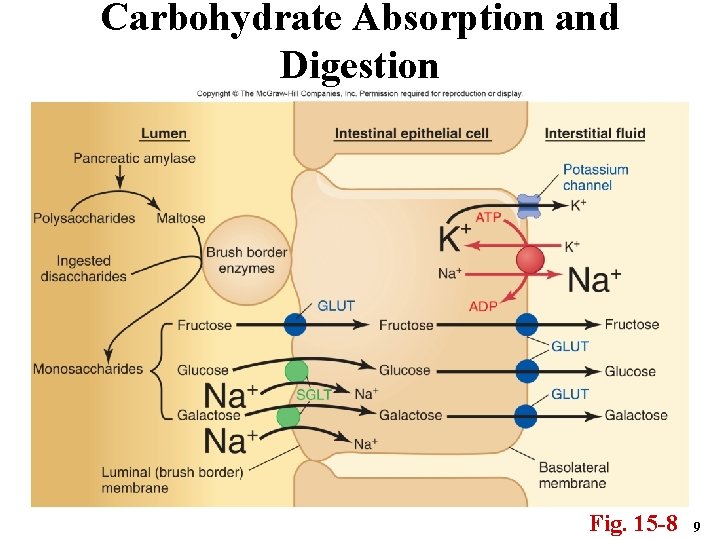
Carbohydrate Absorption and Digestion Fig. 15 -8 9
Carbohydrates 10
Proteins • Proteins are broken down to peptide fragments in the stomach by pepsin, and in the small intestine by trypsin and chymotrypsin, the major proteases secreted by the pancreas. • These fragments are further digested to free amino acids by carboxypeptidase from the pancreas and aminopeptidase, located on the luminal membranes of the small intestine epithelial cells. • The free amino acids then enter the epithelial cells by secondary active transport coupled to Na+. • Short chains of two or three amino acids are also absorbed by a secondary active transport coupled to the hydrogen ion gradient. 11
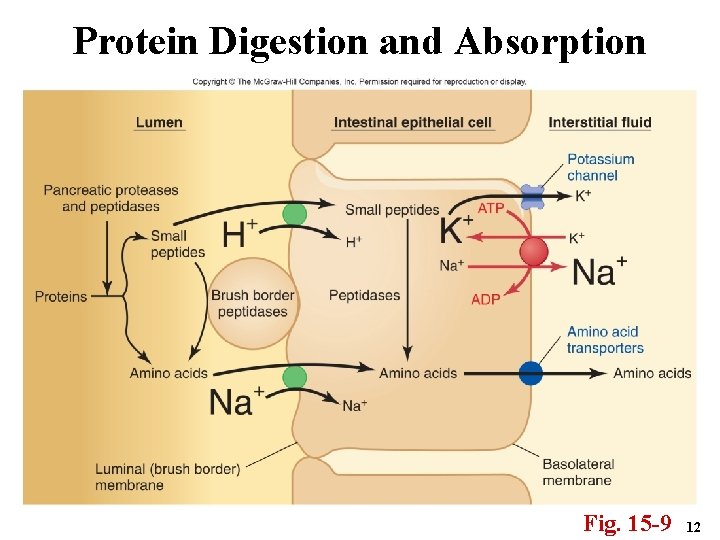
Protein Digestion and Absorption Fig. 15 -9 12
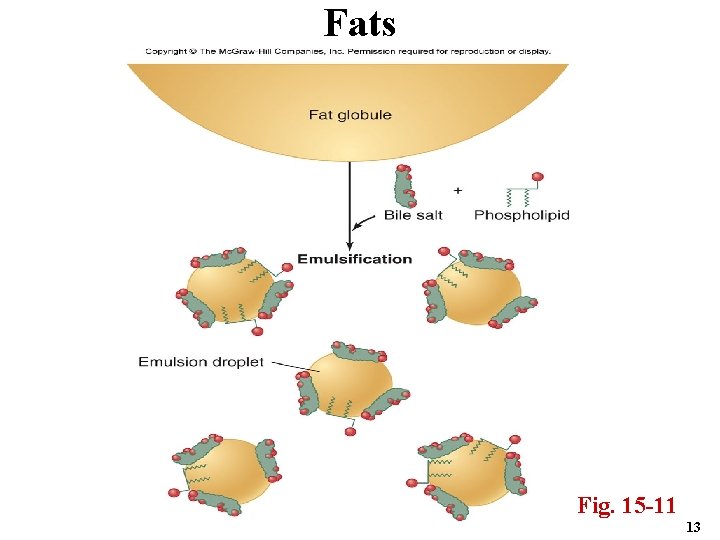
Fats Fig. 15 -11 13
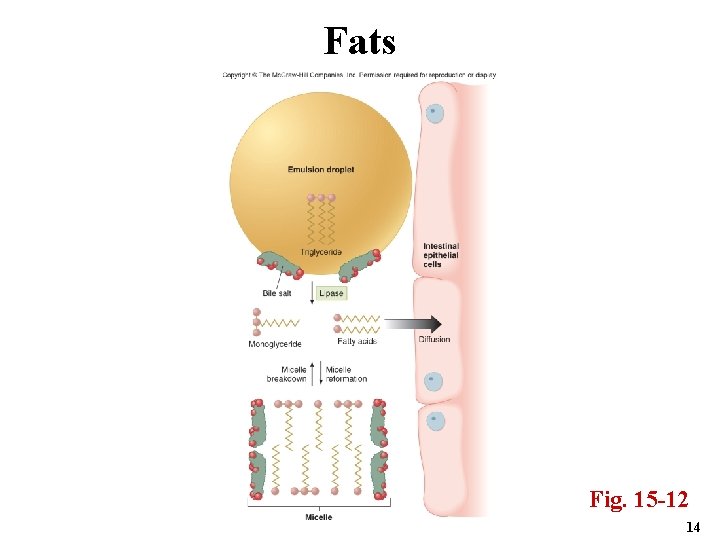
Fats Fig. 15 -12 14

Fats Fig. 15 -13 15
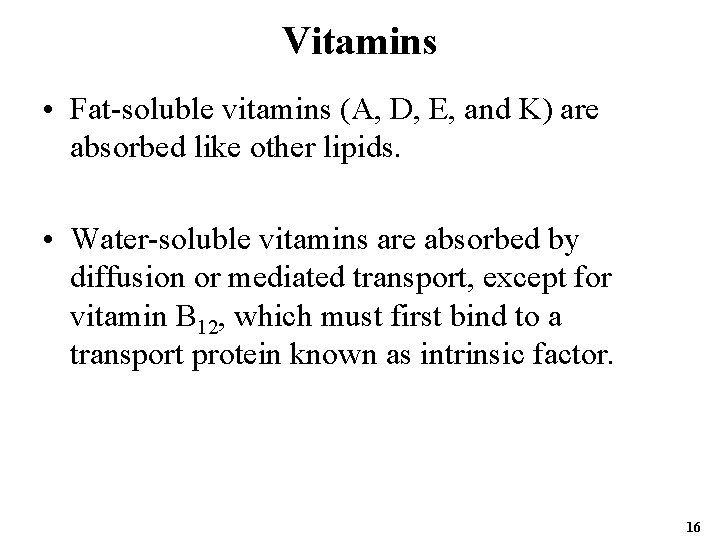
Vitamins • Fat-soluble vitamins (A, D, E, and K) are absorbed like other lipids. • Water-soluble vitamins are absorbed by diffusion or mediated transport, except for vitamin B 12, which must first bind to a transport protein known as intrinsic factor. 16
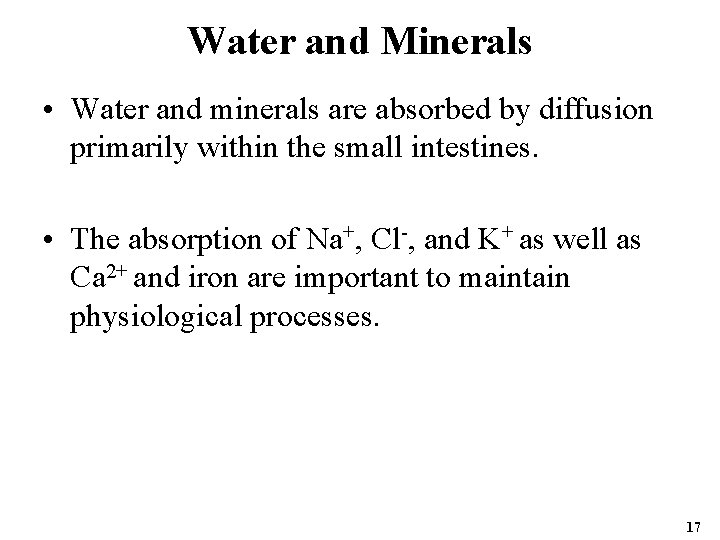
Water and Minerals • Water and minerals are absorbed by diffusion primarily within the small intestines. • The absorption of Na+, Cl-, and K+ as well as Ca 2+ and iron are important to maintain physiological processes. 17
How are Gastrointestinal Processes Regulated? • Control mechanisms of the gastrointestinal system are governed by the volume and composition of the luminal contents, rather than by the nutritional state of the body. • This means that the body is designed to absorb all the nutrients that are ingested, whether or not the body really needs them to function. 18

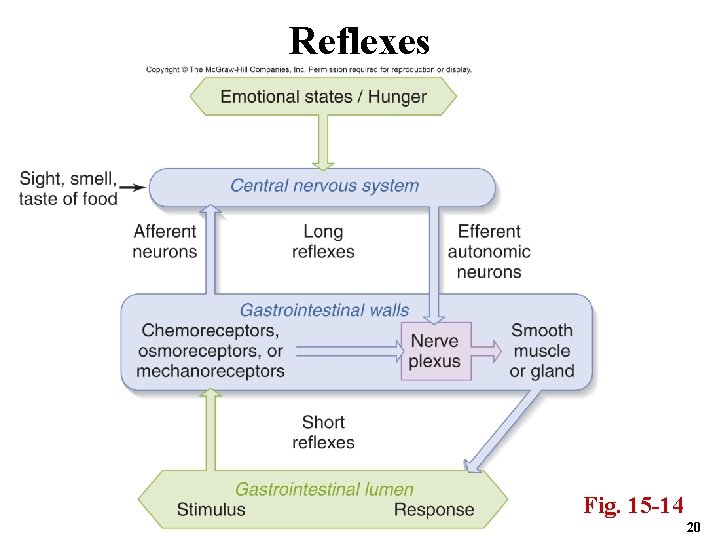
Basic Principles of Control • Neural regulation comes through the CNS and ENS: – Enteric nervous system • Submucosal plexus • Myenteric plexus – CNS contributions to neural control of the GI system through regulation of the SNS and PSNS. • Hormonal regulation 19
Reflexes Fig. 15 -14 20
Mouth, Pharynx, and Esophagus Fig. 15 -15 21
Stomach Fig. 15 -17 22
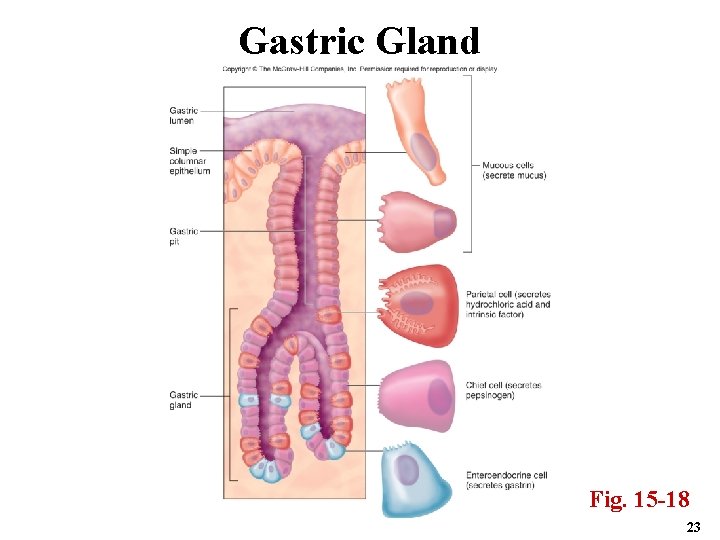
Gastric Gland Fig. 15 -18 23

HCl Production Fig. 15 -19 24
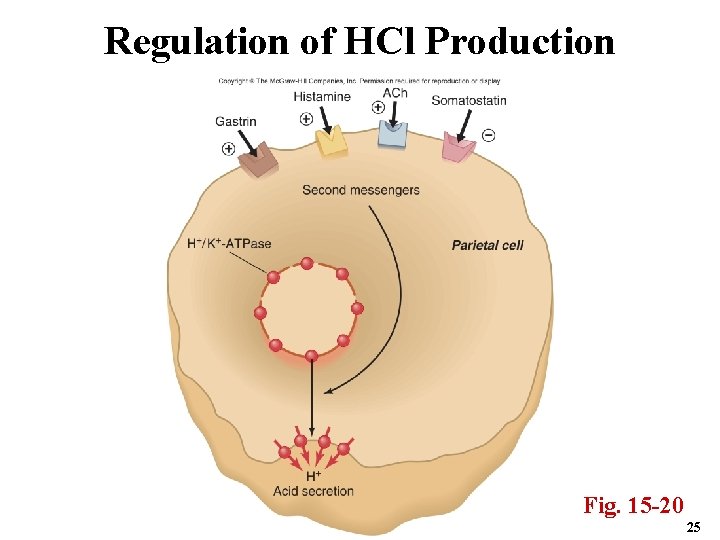
Regulation of HCl Production Fig. 15 -20 25
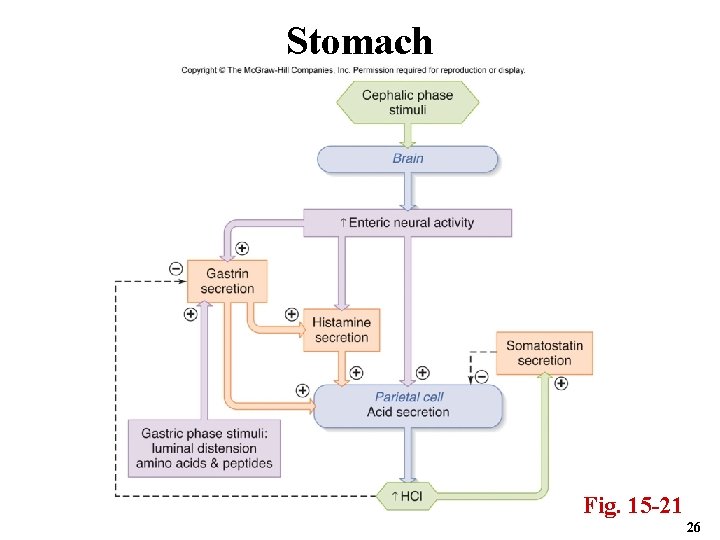
Stomach Fig. 15 -21 26

Stomach Motility Fig. 15 -23 27
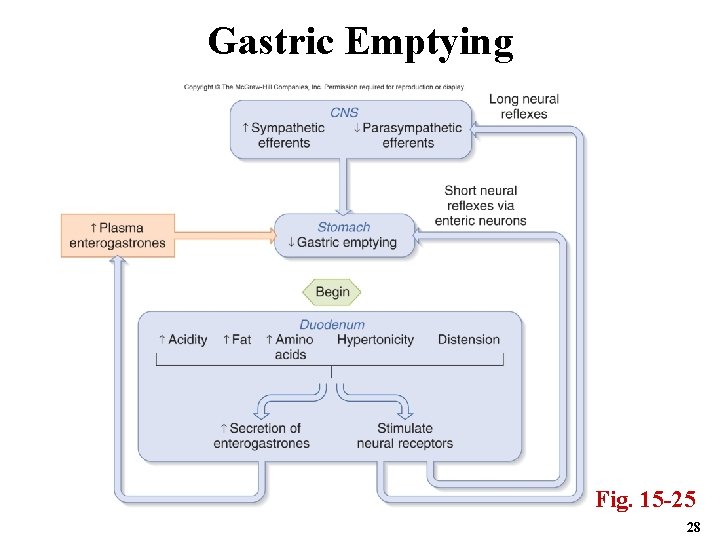
Gastric Emptying Fig. 15 -25 28
Pancreas • The pancreas has both exocrine and endocrine functions. • The exocrine portion produces “pancreatic juice. ” This is rich in bicarbonate as well as digesting enzymes. 29
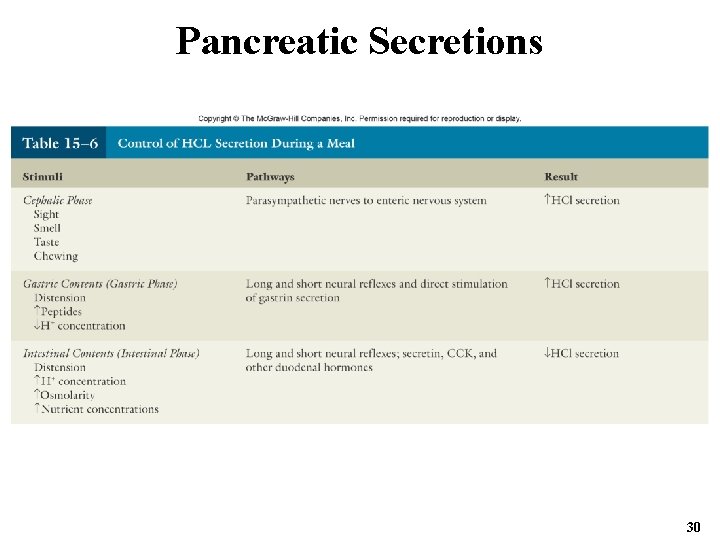
Pancreatic Secretions 30
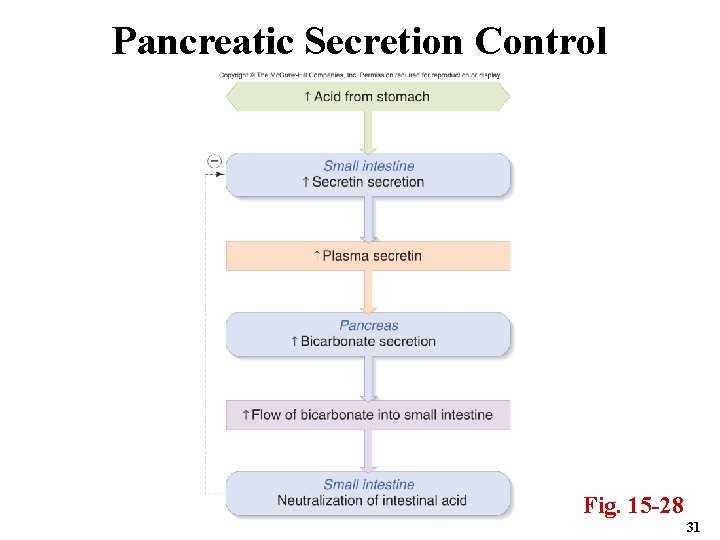
Pancreatic Secretion Control Fig. 15 -28 31
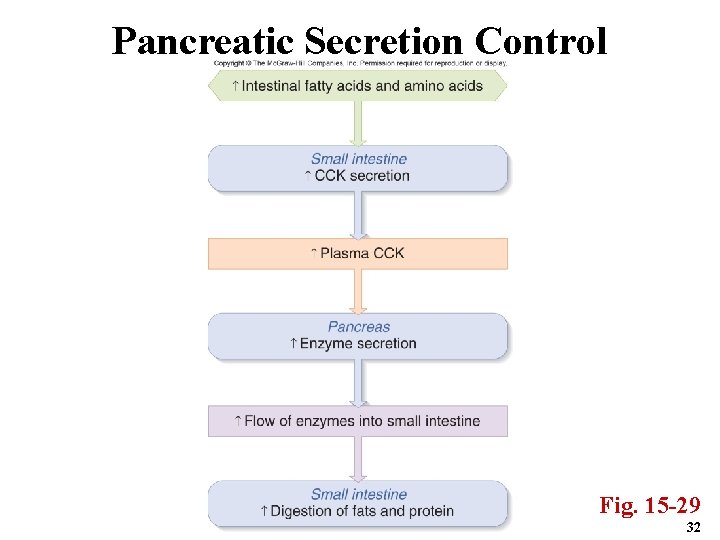
Pancreatic Secretion Control Fig. 15 -29 32
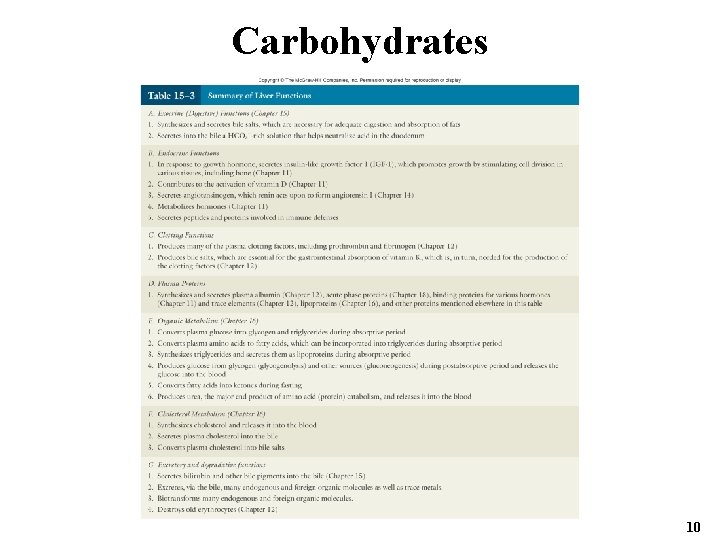
Liver • The liver serves as a secretory organ. One of its major functions is to secrete bile. • The liver also processes and stores nutrients. • The liver also serves as a filter and functions in the removal of old red blood cells which leads to hemoglobin processing and the generation of bilirubin. • The liver is also responsible for the synthesis of plasma proteins (albumin, clotting proteins, angiotensinogen, steroid binding proteins). 33
Hepatic Portal System • The Hepatic Portal System is a specialized vasculature that delivers absorbed nutrients to the liver for processing before they enter the general systemic circulation. • Nutrients are absorbed from the small intestine into mesenteric veins which then carry them to the liver via the hepatic portal vein. 34

Liver Structure Fig. 15 -30 35
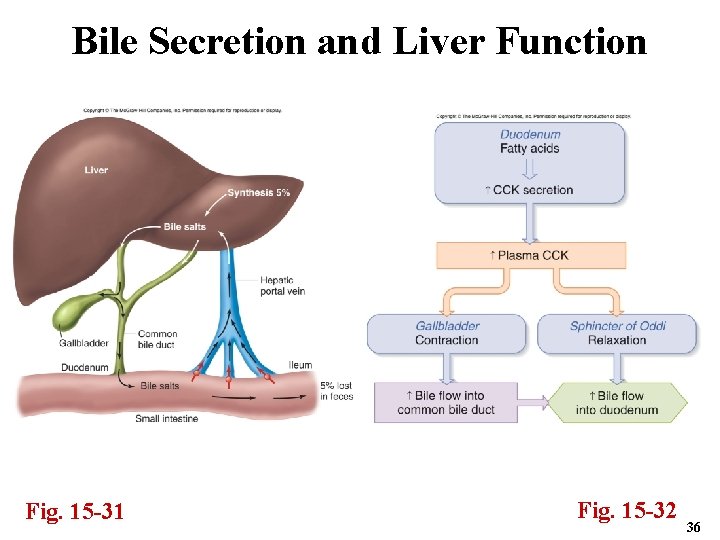
Bile Secretion and Liver Function Fig. 15 -31 Fig. 15 -32 36
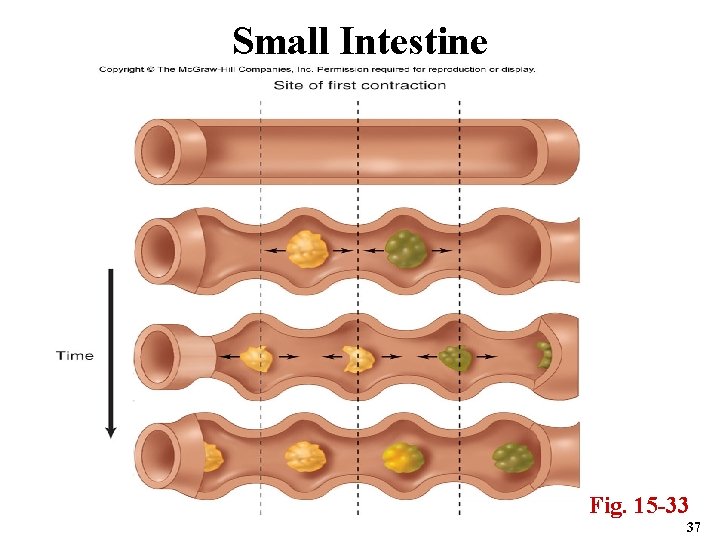
Small Intestine Fig. 15 -33 37
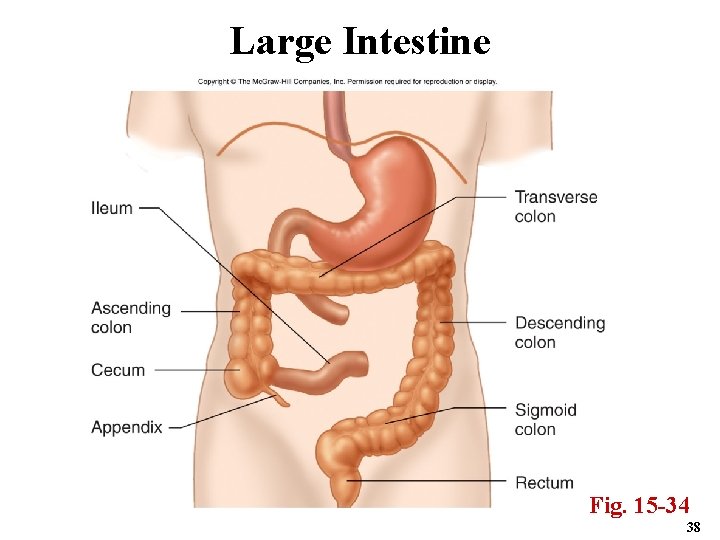
Large Intestine Fig. 15 -34 38
Pathophysiology of the Gastrointestinal Tract • • • Ulcers Vomiting Gallstones Lactose Intolerance Inflammatory Bowel Disease Constipation and Diarrhea 39
Ulcers • Ulcers affects approximately 10% of the population in the USA. • An ulcer is an erosion of the lining of the GI wall. This is usually due to pepsin and acid. This is called a peptic ulcer. • They are most common in the lower part of the stomach and the initial part of the small intestine. • Symptoms include a chronic rhythmic and periodic gnawing or burning pain. This can be alleviated by drinking milk or by using antacids. • If the ulcer is deep enough it can affect the blood vessels and result in bleeding. • In severe cases the hole can go all the way through the wall and allow the contents to leak out into the abdominal cavity. This is called a perforated ulcer. This is very serious and can lead to an infection of the peritoneum (peritonitis) and can be fatal. • Ulcers can be caused by stress, chronic use of aspirin and other non-steroidal anti-inflammatory medications (they decrease mucus and bicarbonate production), chronic alcohol use, the bacteria helicobacter pylori. 40
- Slides: 40