
Chapter 15 Introduction to Systems Development Learning Objectives
Chapter 15 Introduction to Systems Development

Learning Objectives • • • Learn how information systems are developed Understand importance of managing SD process Be familiar with SD process, major phases/steps Be familiar with accountant’s future involvement in SD Identify when alternative approaches to SD work Be acquainted with goals, plans, tasks, tools, and results of systems survey • Understand accountant’s involvement in systems survey
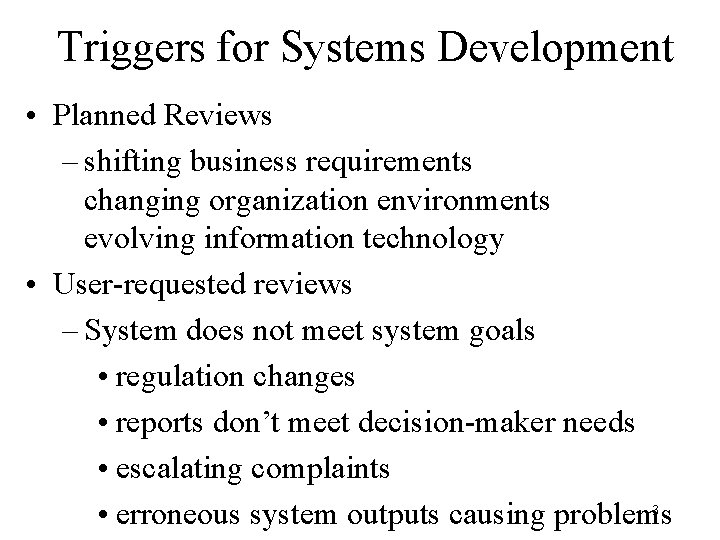
Triggers for Systems Development • Planned Reviews – shifting business requirements changing organization environments evolving information technology • User-requested reviews – System does not meet system goals • regulation changes • reports don’t meet decision-maker needs • escalating complaints 3 • erroneous system outputs causing problems
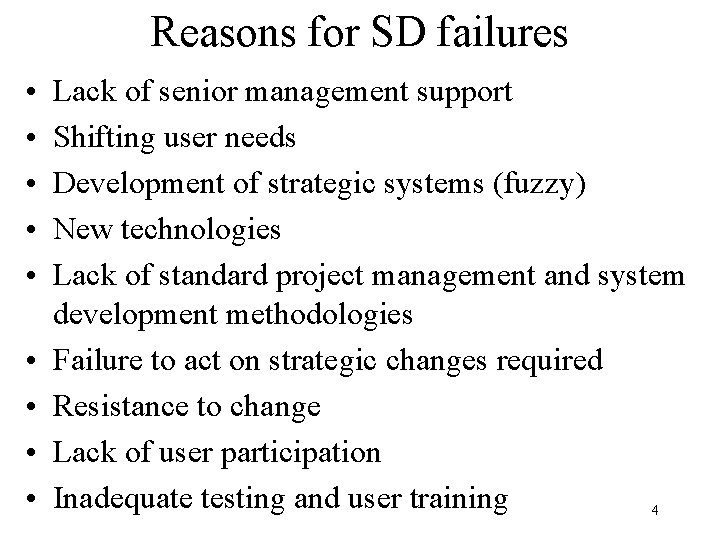
Reasons for SD failures • • • Lack of senior management support Shifting user needs Development of strategic systems (fuzzy) New technologies Lack of standard project management and system development methodologies Failure to act on strategic changes required Resistance to change Lack of user participation Inadequate testing and user training 4
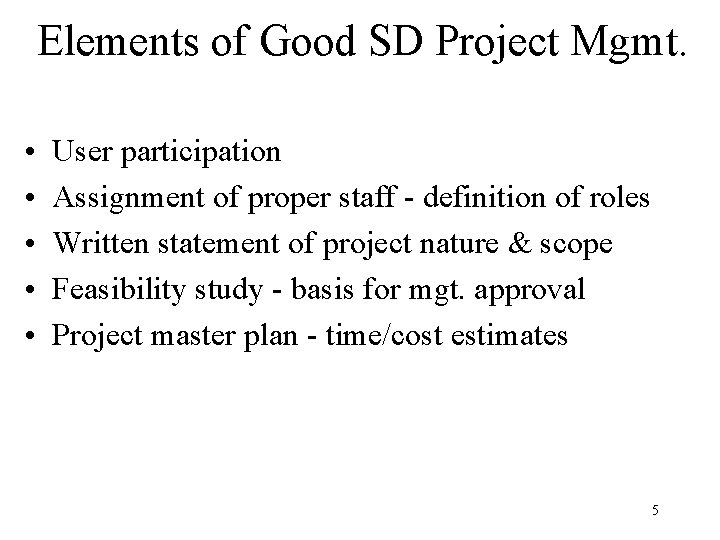
Elements of Good SD Project Mgmt. • • • User participation Assignment of proper staff - definition of roles Written statement of project nature & scope Feasibility study - basis for mgt. approval Project master plan - time/cost estimates 5
Elements of Good SD Project Mgmt. (cont. ) • • Risk management program Division of project into phases Approval of work from phases before proceeding Quality assurance plan 6
Systems Development Methodology • Formalized, standardized, documented set of activities used to manage a SD project • Should be used when information systems are developed, acquired, or maintained 7
SD Methodology Elements • Divide project into processes – starting/ending points – several activities – one or more deliverables – several management control points • Describe reports and other documentation (deliverables) • Require that users, managers, & auditors participate in project. Get signoffs. 8
Systems development life cycle 9
Business Process Reengineering • • Fundamental rethinking of business processes Radical redesign Achieving dramatic improvements Focus on end-to-end business processes 10
Accountant’s Involvement in SD • • • Systems specialist Consultant Staff accountant Internal auditor Independent auditor 11
Alternative Approaches to SDLC • Data-structured development • Object-oriented development • Business Process Reengineering (BPR) – Fundamental rethinking of business processes – Radical redesign 12
Systems Survey • Often called feasibility study or preliminary feasibility study • Set of procedures conducted to determine the feasibility of a potential systems development project • Prepare a systems development plan for projects considered feasible 13
Systems development life cycle 14
System Survey Goals • Determine nature/extent of systems development • Determine scope of problem • Propose course of action that might solve problem • Determine feasibility of any proposed development • Devise detailed plan for conducting analysis • Devise summary plan for entire project 15

16
Accountant’s Involvement in System Survey • • Systems specialist or consultant Staff accountant Internal auditor Independent auditor 17
Feasibility Document • Summary – Introduction – Summary of Findings – Recommendations • Description of Problem • Solution Objectives • Constraints • Preliminary Feasibility Study 18
Feasibility Document (cont. ) • Development Plans – Scope of development – Tasks to be accomplished – Timetable – Systems development team • Potential Solutions • Recommendations • Approvals 19
Feasibility Document - Attachments • • • Requests for Systems Development Memoranda Summaries of Observations Documentation Feasibility Documentation Planning Documents 20
Objectives of Fact Gathering • • Determine whether problem exists Define problem further Determine scope of problem Obtain information to conduct preliminary feasibility study • Devise plan for conducting analysis 21
Types of Feasibility • Technical feasibility: if problem can be solved using available h/w & s/w technology • Operational feasibility: if problem can be solved given the organization’s available personnel and procedures • Economic feasibility: if – costs seem reasonable; (benefits exceed costs) – project compares favorably vs. competing projects 22
Contents of Project Plan • • Scope of Analysis Required tasks & personnel skills Recommended project team and leader Recommended SD organization structure Sources of required information Timetable for completing analysis Estimated analysis costs Timetable/estimated costs for whole project 23
Objectives of Project Plan • Provide means to schedule use of resources • Indicate milestones to monitor project’s progress • Forecast budget, used to authorize project continuation • Furnish guidelines for go/no-go decision • Offer framework by which management can determine reasonableness/completeness of project’s steps 24
Calculating Development Costs • Determine work units; document using work breakdown structure • Determine skill level for each unit • Estimate costs for each unit • Aggregate individual units to determine analysis cost • Assign work units to calendar periods • Estimate miscellaneous costs 25
Learning Objectives • • Learn how information systems are developed Understand importance of managing SD process Be familiar with SD process, major phases/steps Be familiar with accountant’s future involvement in SD • Identify when alternative approaches to SD work • Be acquainted with goals, plans, tasks, tools, and results of systems survey • Understand accountant’s involvement in systems survey
- Slides: 26