
Chapter 15 Injuries as a Community and Public
Chapter 15 Injuries as a Community and Public Health Problem
Introduction • Definitions • Injury • Unintentional injuries • Intentional injuries
Cost of Injuries to Society • Leading cause of death and disability in the world • ~5. 8 million people die from injuries each year • Cost of injuries $500+ billion annually • Fatal injuries • Disabling injuries
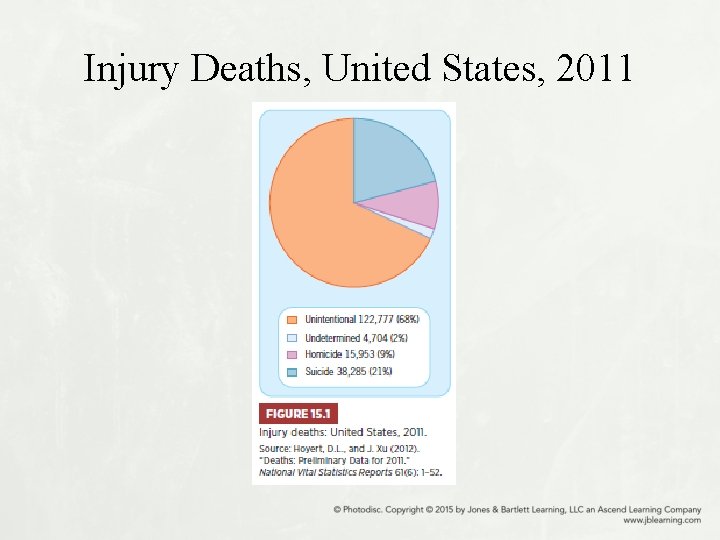
Injury Deaths, United States, 2011
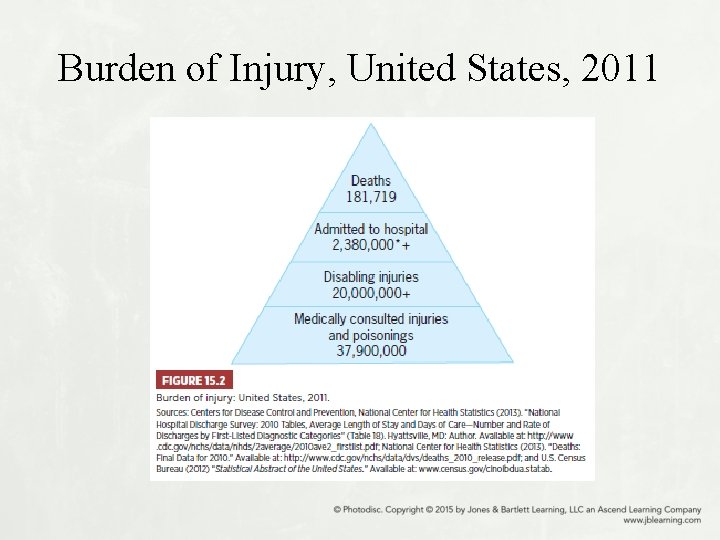
Burden of Injury, United States, 2011
Unintentional Injuries • The cause of nearly two-thirds of all injury-related deaths in the U. S. • Injury prevention or injury control • Unsafe act and unsafe condition • Types of unintentional injuries • • Motor vehicle crashes Poisonings Falls Other types of unintentional injuries
Motor Vehicle Crashes • Leading type of unintentional injury death • Leading cause of nonfatal unintentional injury • Majority of those killed are • • • Drivers Passengers Motorcycle riders Pedestrians Pedalcyclists
Poisonings • Second leading cause of unintentional injury death • Unintentional ingestion of fatal doses of medicines and drugs • Consumption of toxic foods • Exposure to toxic substances in the workplace or elsewhere • Most occur in the home
Falls • Third leading cause of unintentional injury death • Leading cause of injury-related ED visits • Most occur in the home • Disproportionately affect elders
Epidemiology of Unintentional Injuries • Account for large number of early deaths in U. S. • Incapacitation significant problem • High economic impact
Person • Age • Leading cause of death in children and ages 144 • Gender • Males more likely to be involved in fatal unintentional injuries • Minority status
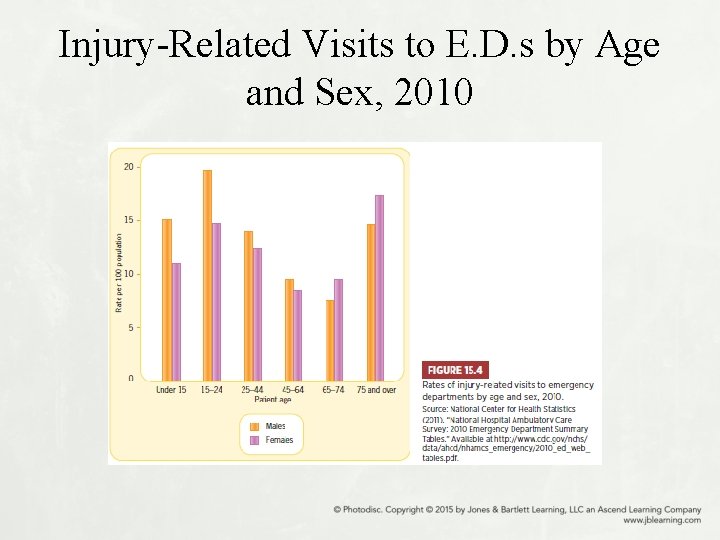
Injury-Related Visits to E. D. s by Age and Sex, 2010
Place • Home • More occur in the home than anyplace else • Recreation/sports area • Highway • Workplace
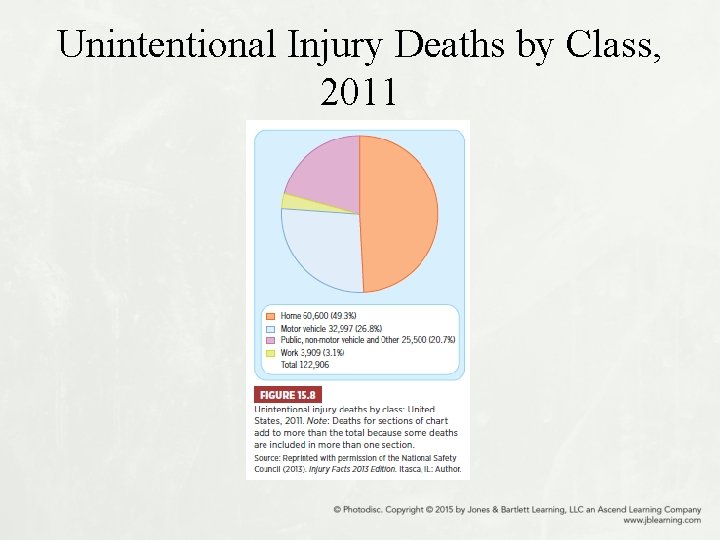
Unintentional Injury Deaths by Class, 2011
Time • Seasonal variations in various causes of unintentional injuries • Days of week • Time of day
Alcohol and Other Drugs as Risk Factors • Alcohol may be most important factor contributing to injuries • Involved in high amount of motor vehicle crashes • Related to speeding, seat belt use, and other behaviors
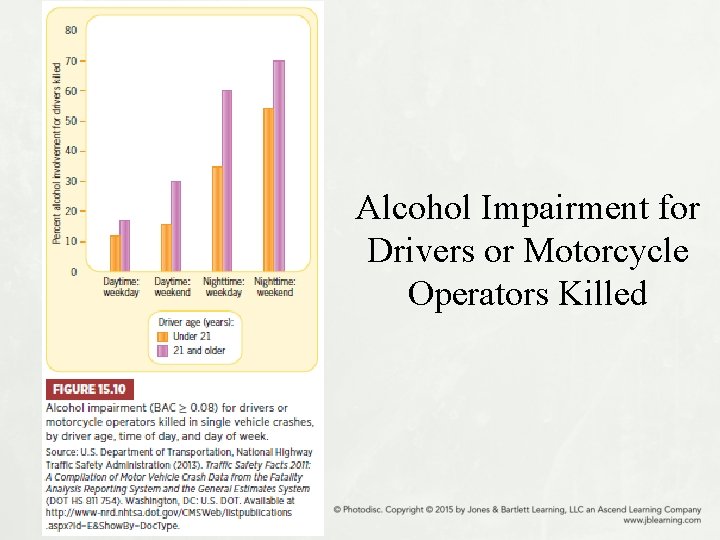
Alcohol Impairment for Drivers or Motorcycle Operators Killed
Prevention through Epidemiology • Early contributors for injury prevention and control • John Gordon • William Haddon, Jr. • Model for unintentional injuries - triangle • Environment, host, and energy producing agent
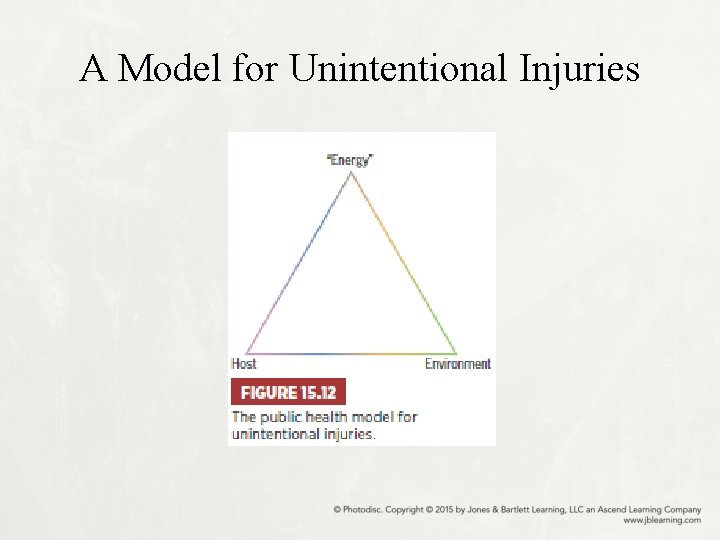
A Model for Unintentional Injuries
Prevention and Control Tactics Based on the Model • Prevent accumulation of energy producing agent • Prevent inappropriate release of excess energy • Placing barrier between host and agent • Separate host from potentially dangerous sources of energy • Other tactics
Community Approaches to Prevention of Unintentional Injuries • Education – process of changing people’s health-directed behavior • Regulation – enacting and enforcing laws to control conduct • Automatic protection – modifying products or environments to reduce risk • Litigation – seeking justice for injury through courts
Intentional Injuries • Outcome of self-directed or interpersonal violence • Staggering community health problem in the U. S.
Types of Intentional Injuries • Assaults, rapes, suicides, homicides • Can be perpetrated against family members, community members, or complete strangers • Costly due to loss of life and productivity, and economic cost to community
Epidemiology of Intentional Injuries • Interpersonal violence disproportionately affects those frustrated, hopeless, jobless, living in poverty, with low-self esteem • More acts committed by males • Firearms increasingly involved • Alcohol and drug use contributes • Perpetrators more likely to have been abused or neglected as children or exposed to violence
Homicide, Assault, Rape, and Property Crimes • Males, blacks, and young people experience highest rates of violent victimization • Less than half of all violent crimes committed are reported to police • 2005 -2010: only 36% of rapes and sexual assaults reported to police
Suicide and Attempted Suicide • Suicide rate for men four times that for women • Suicide rate for young people increased from 2009 -2010 to highest rate in 10+ years • Suicide rates for elder men are highest for any population subgroup
Firearm Injuries and Injury Deaths • Intentional and unintentional acts, firearms third leading cause of injury death • Highest risk for homicide and suicide involving firearms are teenage boys and young men • Guns on college campuses • Absence of detailed federally supported reporting system
Violence in Our Society and Resources for Prevention • Individuals and Violence • Family Violence and Abuse • Child maltreatment • Child abuse • Child neglect • Prevention of child maltreatment • Elder maltreatment and prevention • Intimate partner violence • Prevention of intimate partner violence
Violence in Schools • Victimization rates have remained steady in recent years • Fighting and weapon carrying • Zero tolerance policies • Bullying and being bullied • Safe Schools/Healthy Students Initiative • Youth violence after school
Violence in Our Communities • • • Youth gang violence Costs to the community Community response State response Federal response
Discussion Questions • What levels of prevention can be most effective in reducing violence in communities? • How can unintentional injury rates continue to decline in the coming decades?
- Slides: 31