
Chapter 15 Heterotrophic Nutrition Introduction Heterotrophic nutrition consumes


- Slides: 83
Chapter 15 Heterotrophic Nutrition
• Introduction • Heterotrophic nutrition consumes complex • • • organic food material which originates from autotrophic organisms. There are several forms of heterotrophic nutrition: 1. Holozoic nutrition 2. Saprophytic nutrition 3. Parasitic nutrition 4. Mutualism 5. Commensalism
• 1. Holozoic nutrition – involves the consumption of complex (solid) food which is broken down inside the organism into simple molecules which are then absorbed, • e. g. most animals
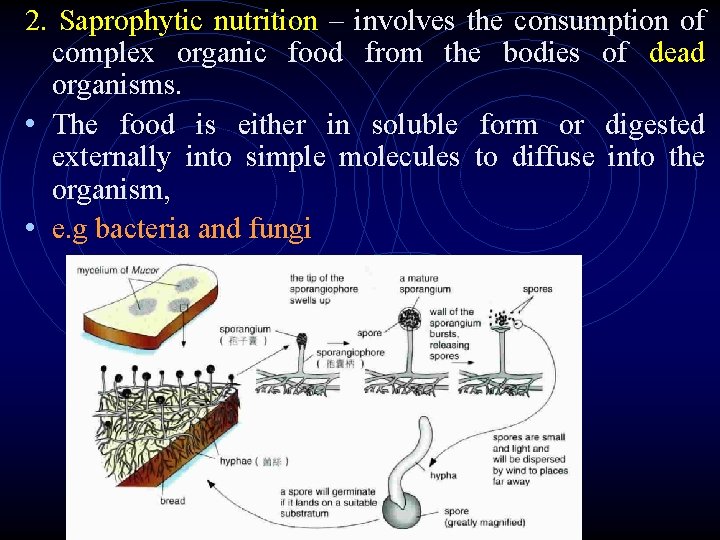
2. Saprophytic nutrition – involves the consumption of complex organic food from the bodies of dead organisms. • The food is either in soluble form or digested externally into simple molecules to diffuse into the organism, • e. g bacteria and fungi
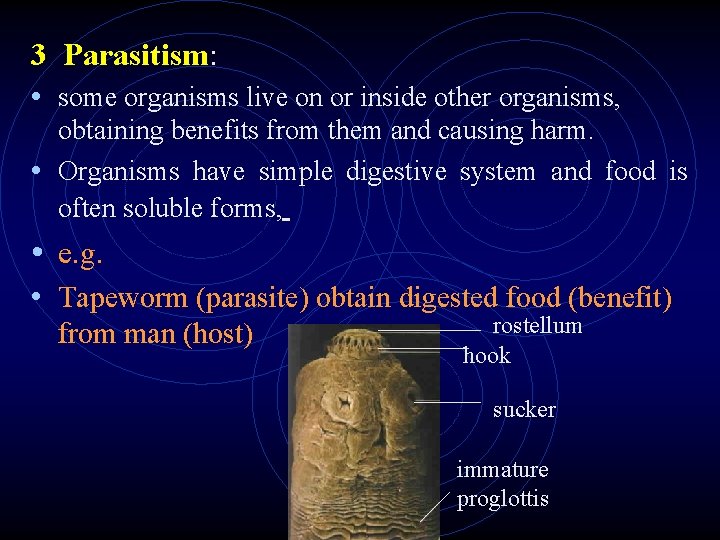
3 Parasitism: • some organisms live on or inside other organisms, obtaining benefits from them and causing harm. • Organisms have simple digestive system and food is often soluble forms, • e. g. • Tapeworm (parasite) obtain digested food (benefit) from man (host) rostellum hook sucker immature proglottis
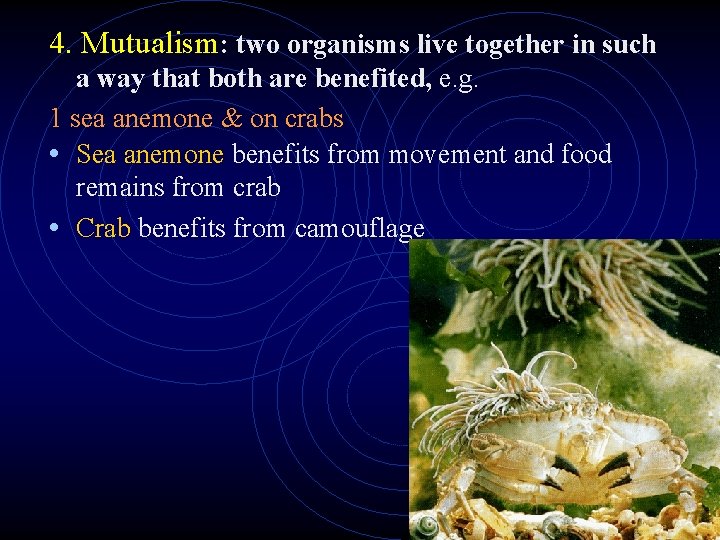
4. Mutualism: two organisms live together in such a way that both are benefited, e. g. 1 sea anemone & on crabs • Sea anemone benefits from movement and food remains from crab • Crab benefits from camouflage
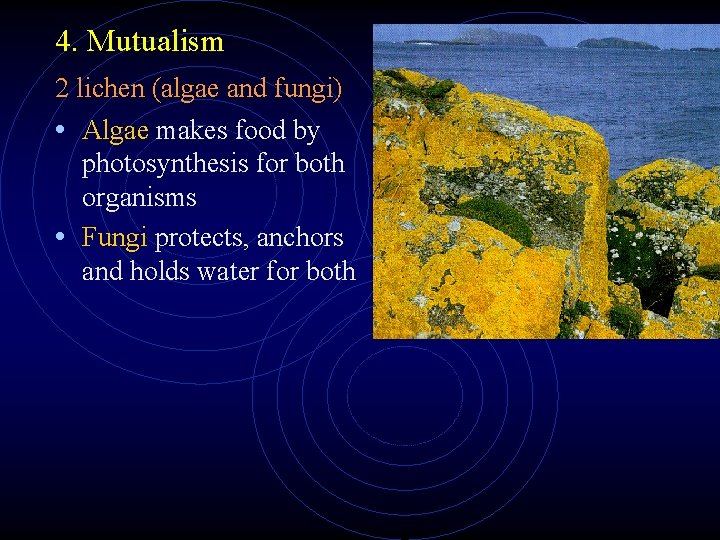
4. Mutualism 2 lichen (algae and fungi) • Algae makes food by photosynthesis for both organisms • Fungi protects, anchors and holds water for both
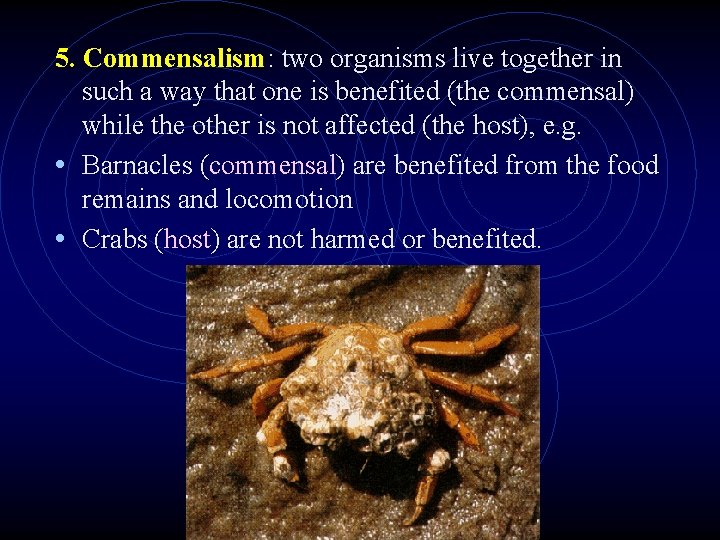
5. Commensalism: two organisms live together in such a way that one is benefited (the commensal) while the other is not affected (the host), e. g. • Barnacles (commensal) are benefited from the food remains and locomotion • Crabs (host) are not harmed or benefited.
• 15. 1 Holozoic Nutrition • Holozoic organisms obtain their energy • • from the consumption of complex organic food which is digested within their bodies. It involves: 1. Obtaining food (ingestion) 2. Ingestion 3. Physical (mechanical) digestion 4. Chemical digestion 5. Absorption 6. Assimilation 7. Elimination (egestion)
• According to the type of food ingested, • • • holozoic organisms are classified into: Herbivores - those feed on plant material Carnivores - those feed on other animals Omnivores - those feed on both plants and animals Fluid feeders - those consume liquid materials Phagotrophs - those (majority) take in solid food
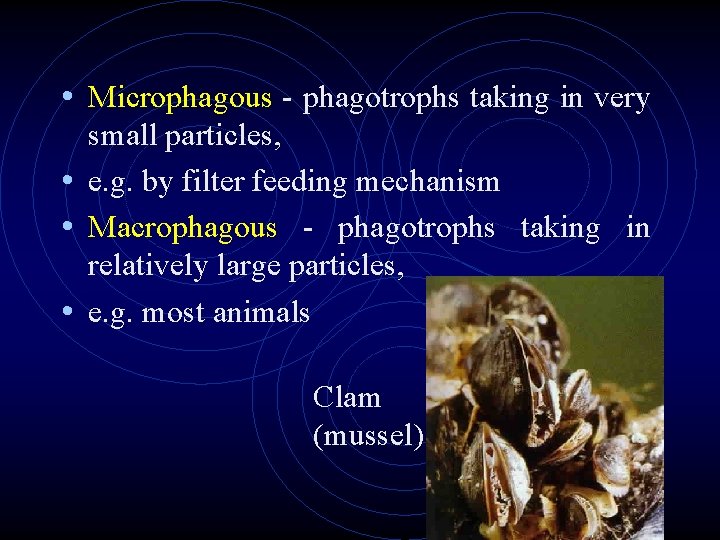
• Microphagous - phagotrophs taking in very small particles, • e. g. by filter feeding mechanism • Macrophagous - phagotrophs taking in relatively large particles, • e. g. most animals Clam (mussel)
• 15. 2 Diet • In mammals carbohydrates and fats are • • needed in relatively large quantities as energy source, and proteins for growth and repair. Vitamins and minerals are required in much smaller quantities for a variety of specific functions. Water is a vital constituent of the diet and roughage is necessary for preventing constipation.
• 15. 2. 1 Carbohydrates and fats (energy requirements) • The energy required by an organism varies with age, sex, size and activity. • Ideally 2/3 from carbohydrates and 1/3 from fats. • A high intake of fats, especially saturated fats, is a contributory factor in causing heart disease.
• 15. 2. 2 Proteins • Main function: as a source of amino acids which are used to synthesized new proteins • Plants are able to synthesize all their own amino acids but animals are more limited. • Thus man requires essential amino acids in the diet. • Although plant food contains proportionately fewer proteins, a properly balanced diet can nevertheless provide all the essential amino acids.
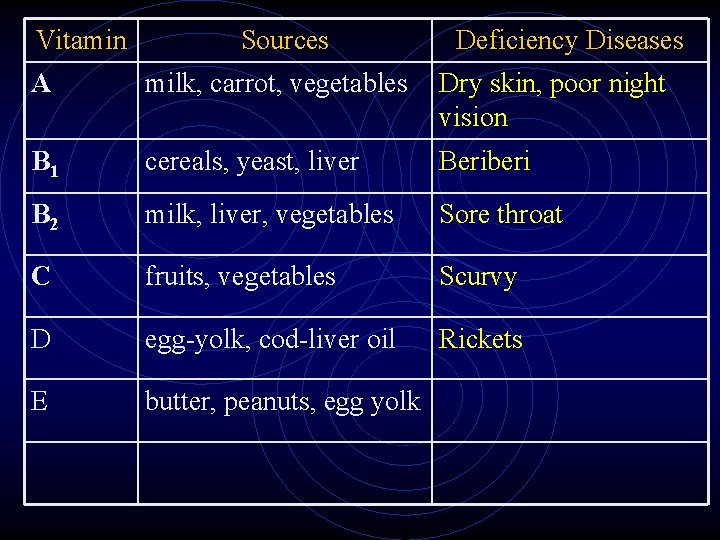
• 15. 2. 3 Vitamins - group of organic • • compounds with the following features: 1. no energy value 2. essential in very small quantities for maintenance of good health 3. not structural materials in body 4. work as cofactors in enzymatic reactions • Two groups of vitamins: • Fat soluble vitamins and • Water soluble vitamins
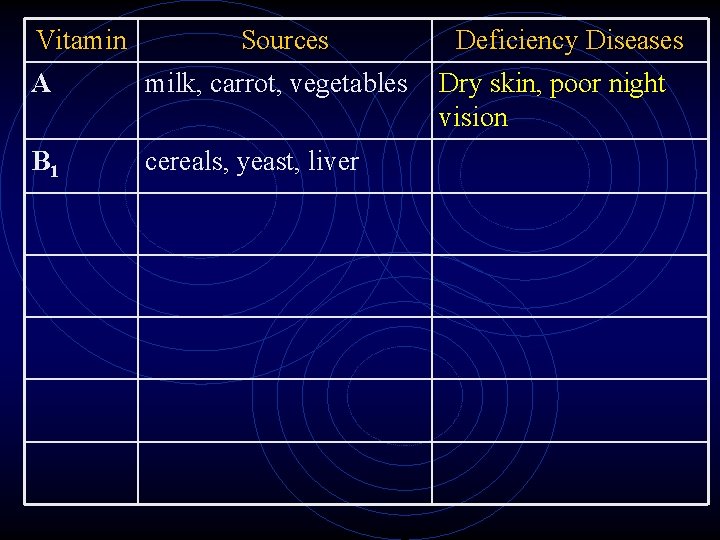
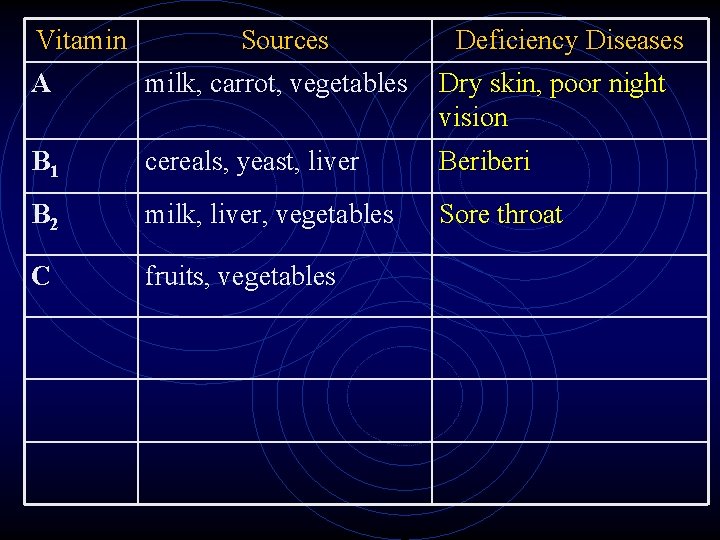
Vitamin Sources Deficiency Diseases
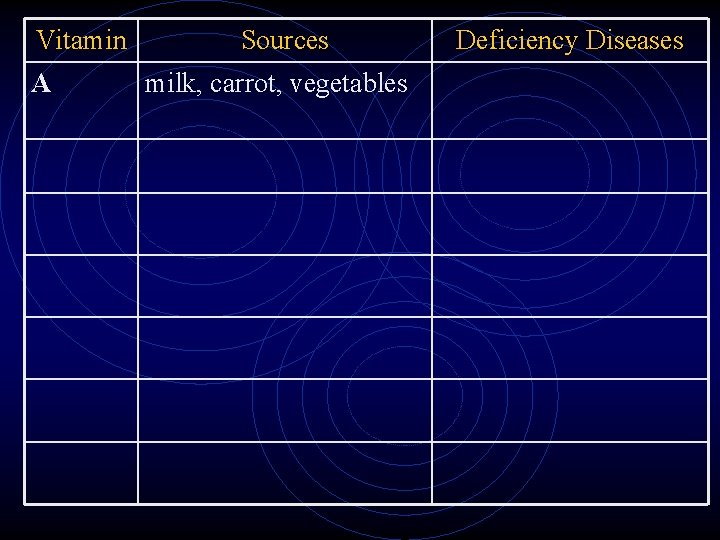
Vitamin A Sources milk, carrot, vegetables Deficiency Diseases
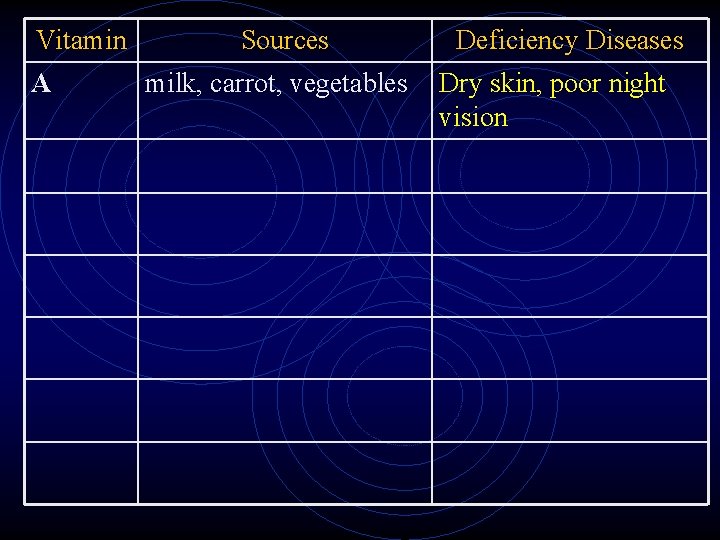
Vitamin A Sources Deficiency Diseases milk, carrot, vegetables Dry skin, poor night vision
Vitamin Sources Deficiency Diseases A milk, carrot, vegetables Dry skin, poor night vision B 1 cereals, yeast, liver
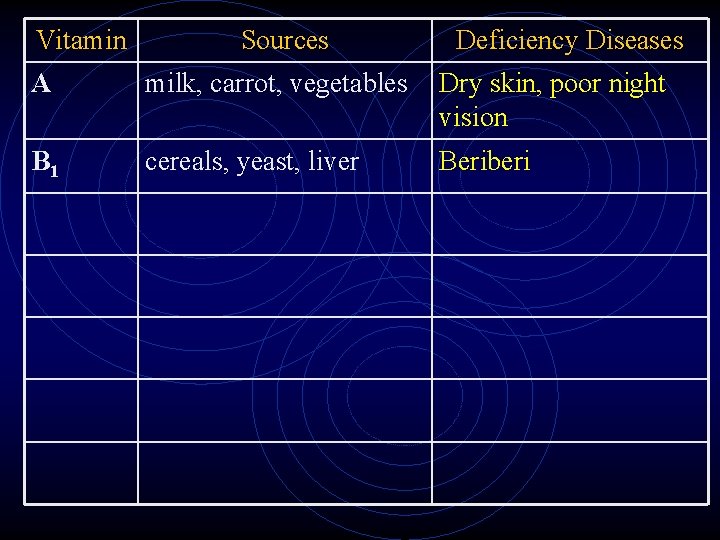
Vitamin Sources Deficiency Diseases A milk, carrot, vegetables Dry skin, poor night vision B 1 cereals, yeast, liver Beriberi
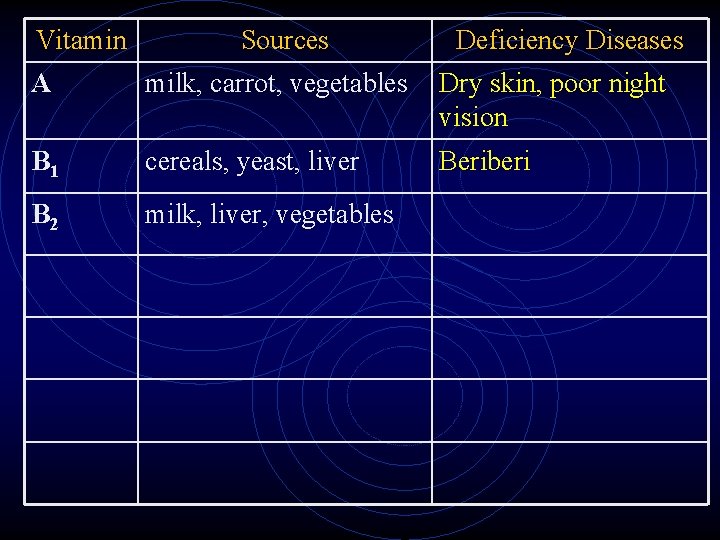
Vitamin Sources Deficiency Diseases A milk, carrot, vegetables Dry skin, poor night vision B 1 cereals, yeast, liver B 2 milk, liver, vegetables Beriberi
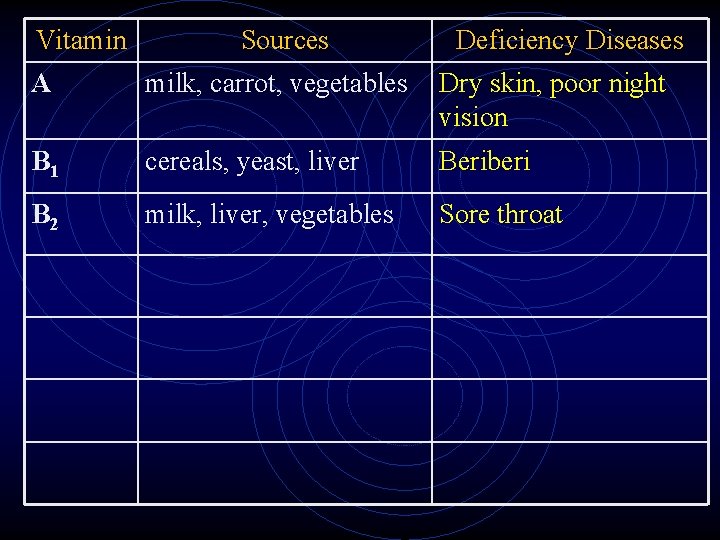
Vitamin Sources Deficiency Diseases A milk, carrot, vegetables Dry skin, poor night vision B 1 cereals, yeast, liver Beriberi B 2 milk, liver, vegetables Sore throat
Vitamin Sources Deficiency Diseases A milk, carrot, vegetables Dry skin, poor night vision B 1 cereals, yeast, liver Beriberi B 2 milk, liver, vegetables Sore throat C fruits, vegetables
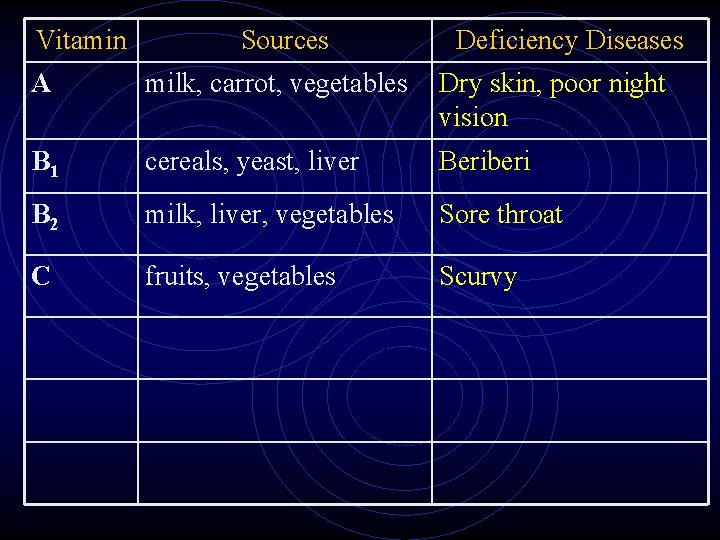
Vitamin Sources Deficiency Diseases A milk, carrot, vegetables Dry skin, poor night vision B 1 cereals, yeast, liver Beriberi B 2 milk, liver, vegetables Sore throat C fruits, vegetables Scurvy
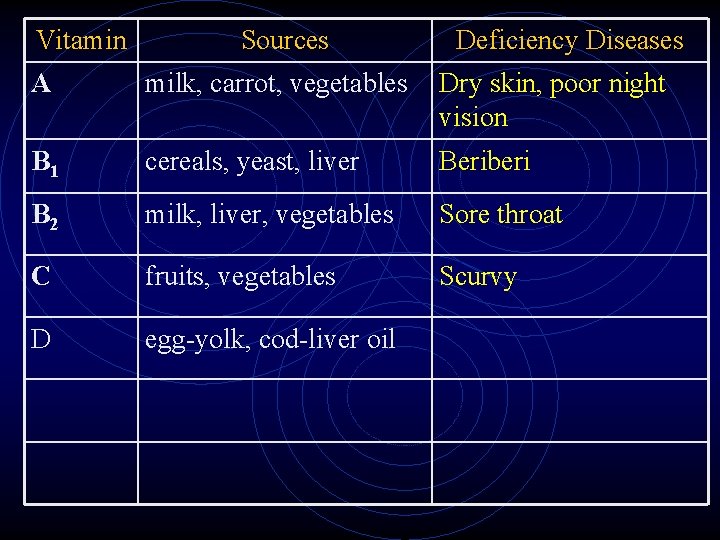
Vitamin Sources Deficiency Diseases A milk, carrot, vegetables Dry skin, poor night vision B 1 cereals, yeast, liver Beriberi B 2 milk, liver, vegetables Sore throat C fruits, vegetables Scurvy D egg-yolk, cod-liver oil
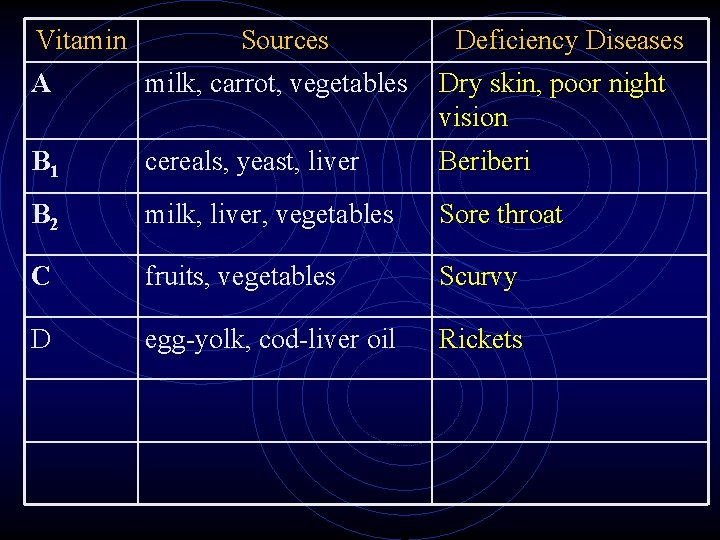
Vitamin Sources Deficiency Diseases A milk, carrot, vegetables Dry skin, poor night vision B 1 cereals, yeast, liver Beriberi B 2 milk, liver, vegetables Sore throat C fruits, vegetables Scurvy D egg-yolk, cod-liver oil Rickets
Vitamin Sources Deficiency Diseases A milk, carrot, vegetables Dry skin, poor night vision B 1 cereals, yeast, liver Beriberi B 2 milk, liver, vegetables Sore throat C fruits, vegetables Scurvy D egg-yolk, cod-liver oil Rickets E butter, peanuts, egg yolk
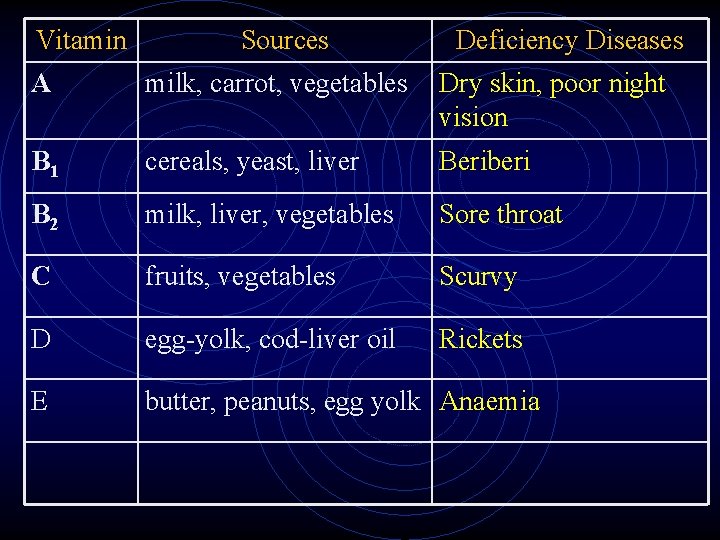
Vitamin Sources Deficiency Diseases A milk, carrot, vegetables Dry skin, poor night vision B 1 cereals, yeast, liver Beriberi B 2 milk, liver, vegetables Sore throat C fruits, vegetables Scurvy D egg-yolk, cod-liver oil Rickets E butter, peanuts, egg yolk Anaemia
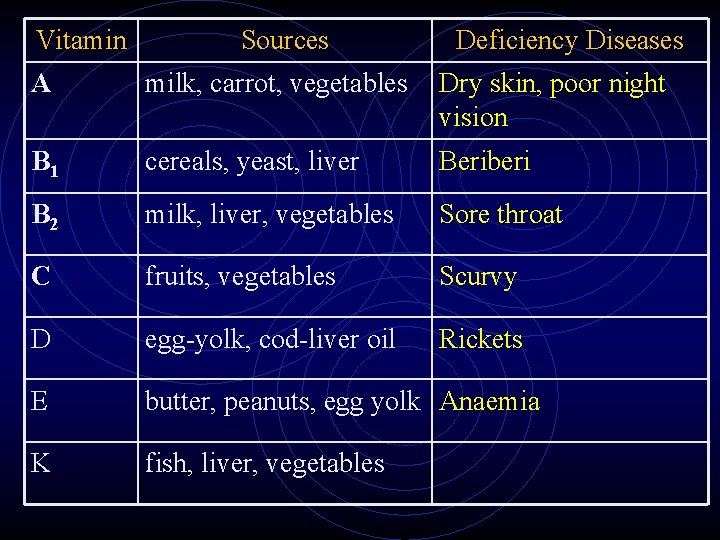
Vitamin Sources Deficiency Diseases A milk, carrot, vegetables Dry skin, poor night vision B 1 cereals, yeast, liver Beriberi B 2 milk, liver, vegetables Sore throat C fruits, vegetables Scurvy D egg-yolk, cod-liver oil Rickets E butter, peanuts, egg yolk Anaemia K fish, liver, vegetables
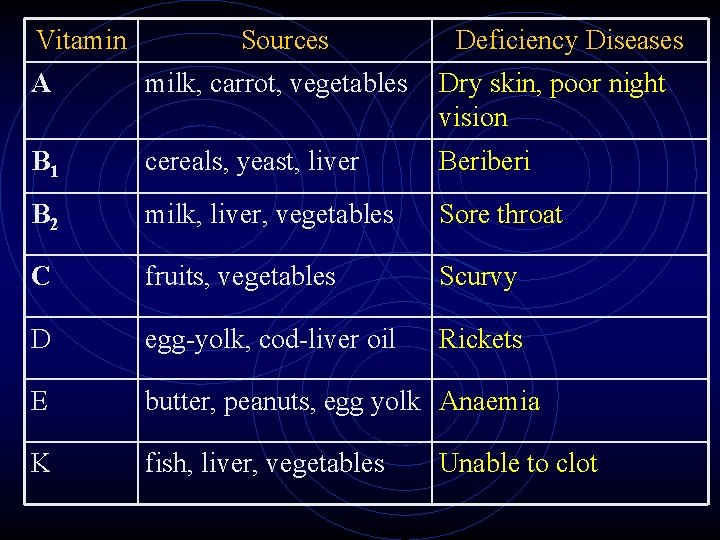
Vitamin Sources Deficiency Diseases A milk, carrot, vegetables Dry skin, poor night vision B 1 cereals, yeast, liver Beriberi B 2 milk, liver, vegetables Sore throat C fruits, vegetables Scurvy D egg-yolk, cod-liver oil Rickets E butter, peanuts, egg yolk Anaemia K fish, liver, vegetables Unable to clot
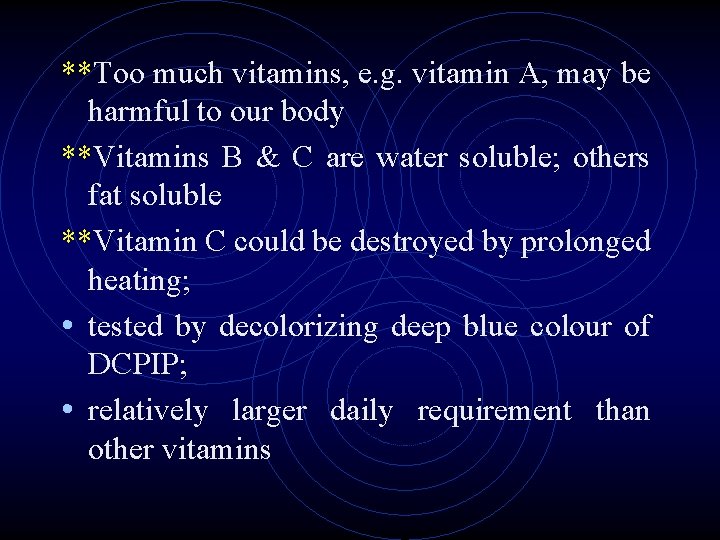
**Too much vitamins, e. g. vitamin A, may be harmful to our body **Vitamins B & C are water soluble; others fat soluble **Vitamin C could be destroyed by prolonged heating; • tested by decolorizing deep blue colour of DCPIP; • relatively larger daily requirement than other vitamins
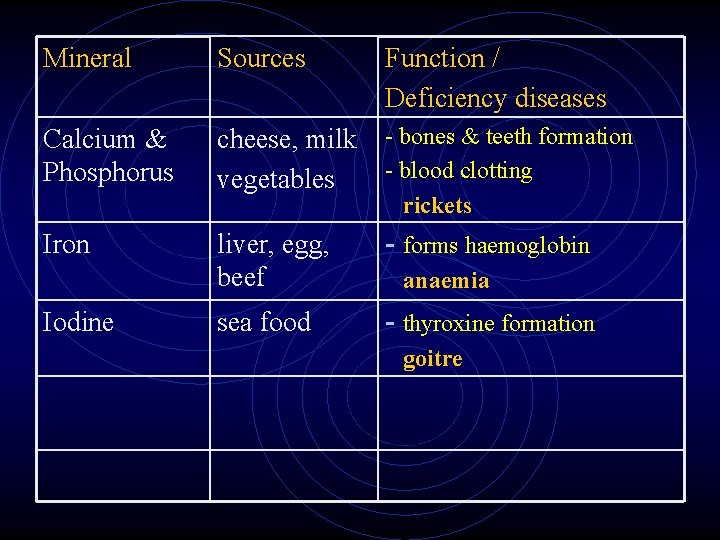
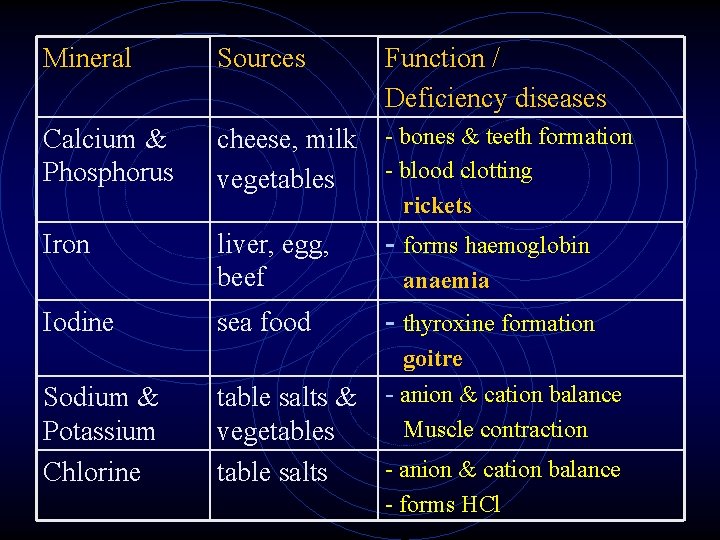
• 15. 2. 4 Minerals • needed to regulate the metabolism of the body • essential for health • needed in small amounts
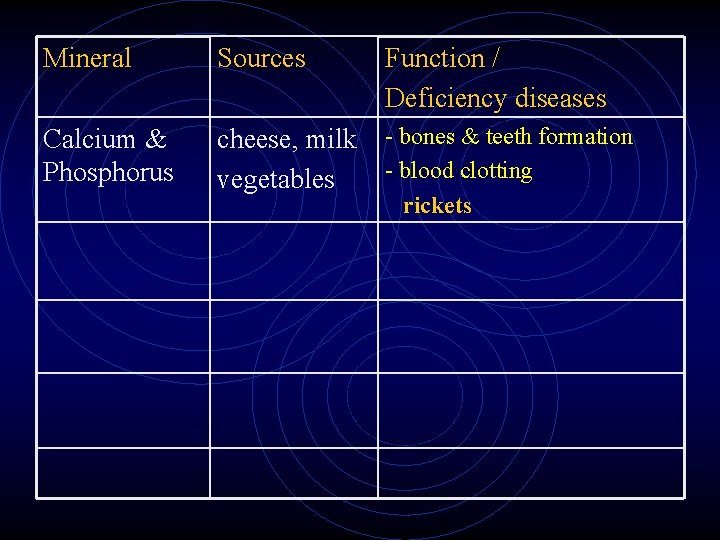
Mineral Sources Function / Deficiency diseases
Mineral Sources Calcium & Phosphorus cheese, milk vegetables Function / Deficiency diseases
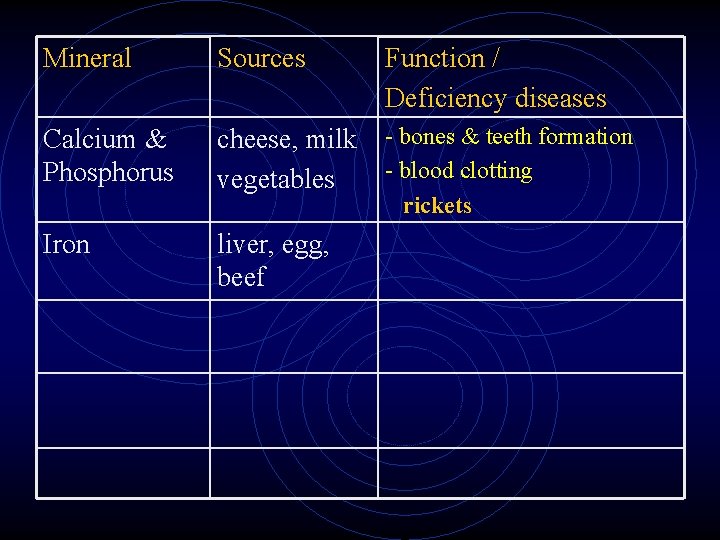
Mineral Sources Function / Deficiency diseases Calcium & Phosphorus cheese, milk vegetables - bones & teeth formation - blood clotting rickets
Mineral Sources Function / Deficiency diseases Calcium & Phosphorus cheese, milk vegetables - bones & teeth formation - blood clotting rickets Iron liver, egg, beef
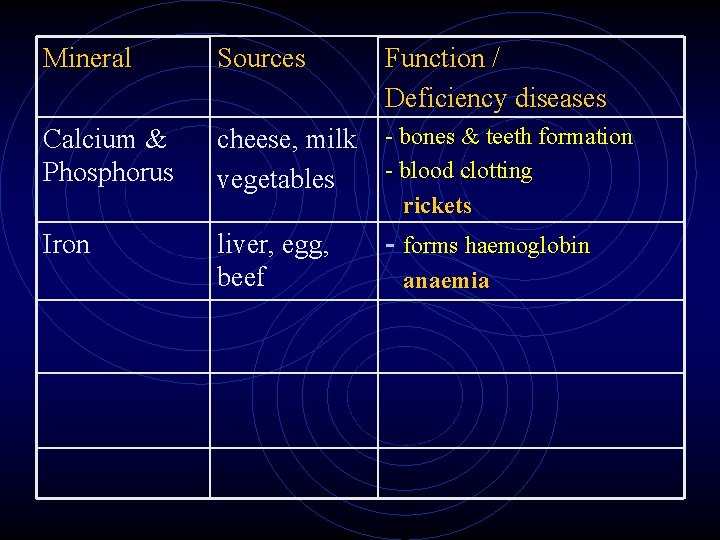
Mineral Sources Function / Deficiency diseases Calcium & Phosphorus cheese, milk vegetables - bones & teeth formation - blood clotting rickets Iron liver, egg, beef - forms haemoglobin anaemia
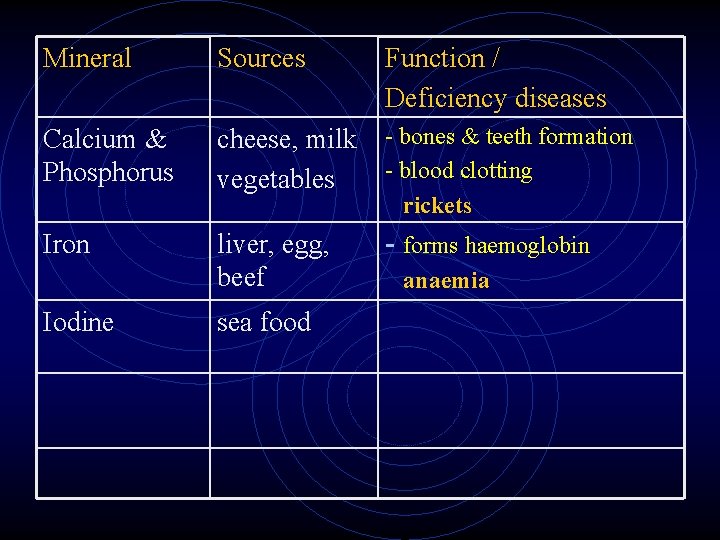
Mineral Sources Function / Deficiency diseases Calcium & Phosphorus cheese, milk vegetables - bones & teeth formation - blood clotting rickets Iron liver, egg, beef - forms haemoglobin Iodine sea food anaemia
Mineral Sources Function / Deficiency diseases Calcium & Phosphorus cheese, milk vegetables - bones & teeth formation - blood clotting rickets Iron liver, egg, beef - forms haemoglobin sea food - thyroxine formation Iodine anaemia goitre
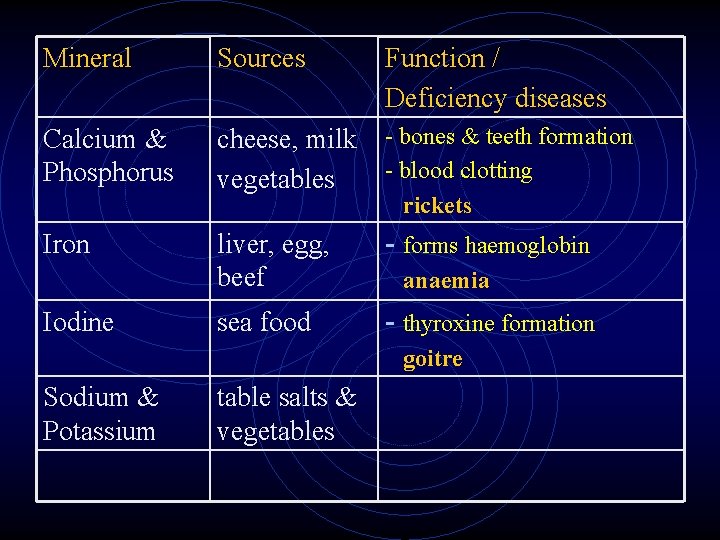
Mineral Sources Function / Deficiency diseases Calcium & Phosphorus cheese, milk vegetables - bones & teeth formation - blood clotting rickets Iron liver, egg, beef - forms haemoglobin sea food - thyroxine formation Iodine anaemia goitre Sodium & Potassium table salts & vegetables
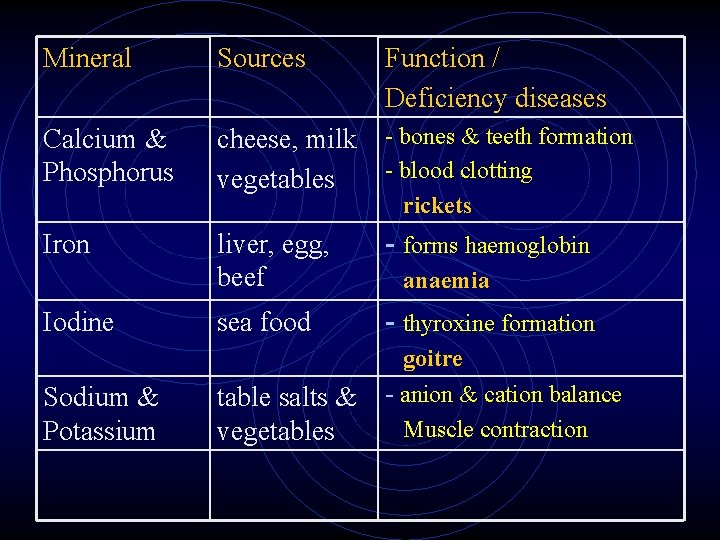
Mineral Sources Function / Deficiency diseases Calcium & Phosphorus cheese, milk vegetables - bones & teeth formation - blood clotting rickets Iron liver, egg, beef - forms haemoglobin Iodine sea food - thyroxine formation Sodium & Potassium goitre table salts & - anion & cation balance Muscle contraction vegetables anaemia
Mineral Sources Function / Deficiency diseases Calcium & Phosphorus cheese, milk vegetables - bones & teeth formation - blood clotting rickets Iron liver, egg, beef - forms haemoglobin sea food - thyroxine formation Iodine Sodium & Potassium Chlorine anaemia goitre table salts & - anion & cation balance Muscle contraction vegetables table salts
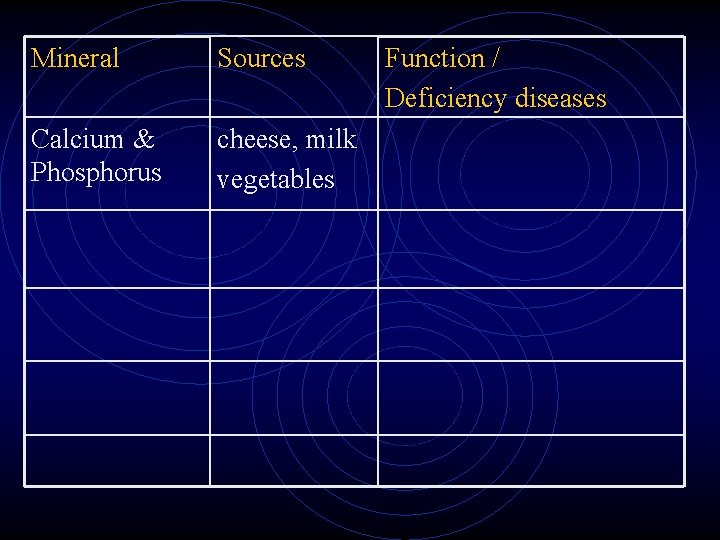
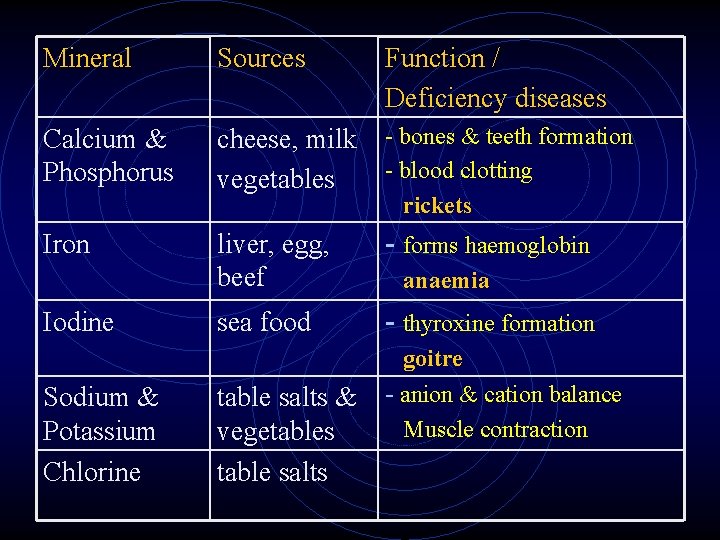
Mineral Sources Function / Deficiency diseases Calcium & Phosphorus cheese, milk vegetables - bones & teeth formation - blood clotting rickets Iron liver, egg, beef - forms haemoglobin sea food - thyroxine formation Iodine Sodium & Potassium Chlorine anaemia goitre table salts & - anion & cation balance Muscle contraction vegetables table salts - anion & cation balance - forms HCl
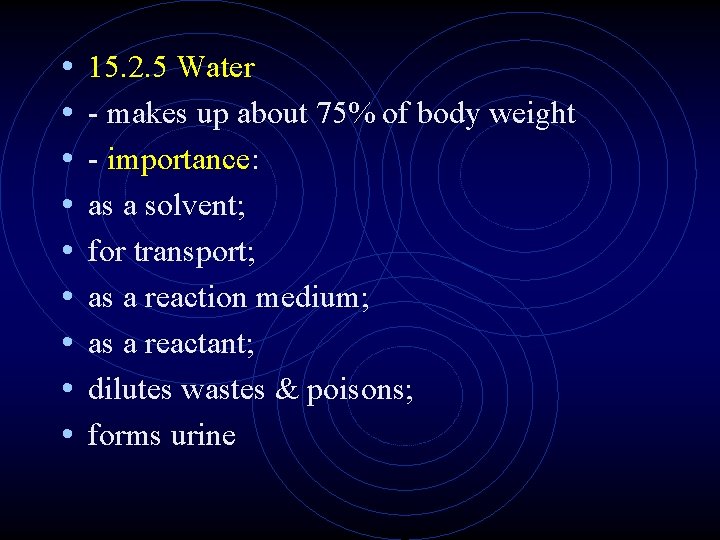
• • • 15. 2. 5 Water - makes up about 75% of body weight - importance: as a solvent; for transport; as a reaction medium; as a reactant; dilutes wastes & poisons; forms urine
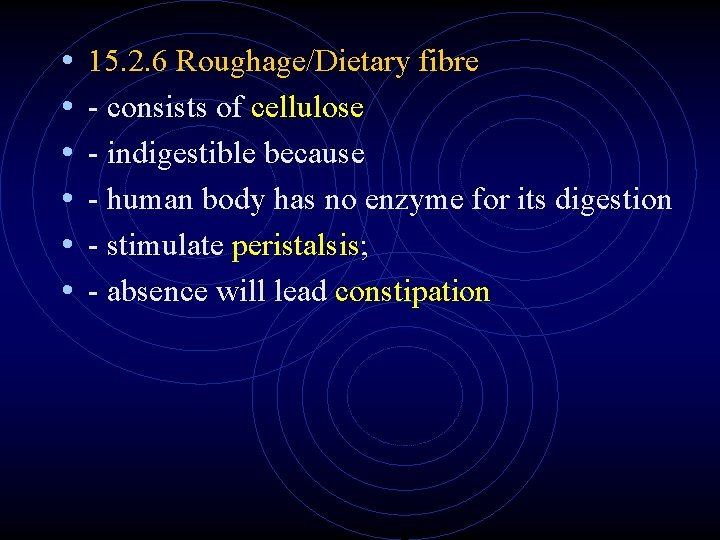
• • • 15. 2. 6 Roughage/Dietary fibre - consists of cellulose - indigestible because - human body has no enzyme for its digestion - stimulate peristalsis; - absence will lead constipation
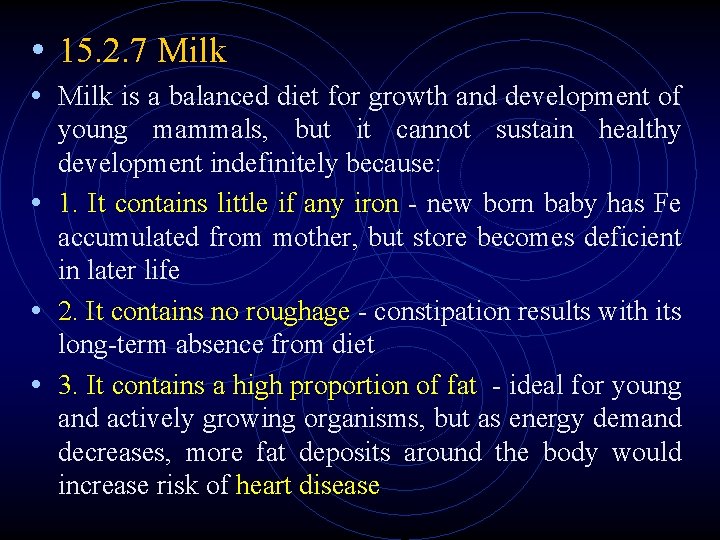
• 15. 2. 7 Milk • Milk is a balanced diet for growth and development of young mammals, but it cannot sustain healthy development indefinitely because: • 1. It contains little if any iron - new born baby has Fe accumulated from mother, but store becomes deficient in later life • 2. It contains no roughage - constipation results with its long-term absence from diet • 3. It contains a high proportion of fat - ideal for young and actively growing organisms, but as energy demand decreases, more fat deposits around the body would increase risk of heart disease
• • Food additives – examples: colourings, preservative, antioxidants, texture enhancers, synthetic flavourings, flavour enhancers and sweeteners
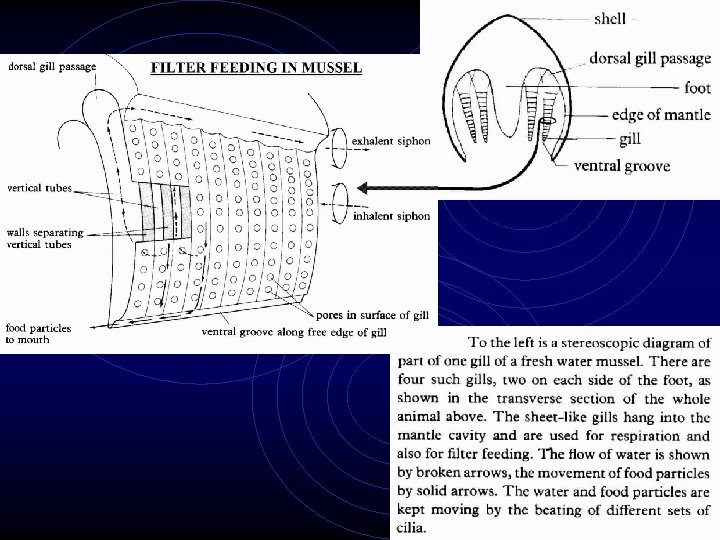
• Feeding mechanisms • Small-particle feeders – • microscopic food, e. g. bacteria, unicellular algae or small invertebrate larvae, etc. , • are eaten by unicellular organisms like amoeba, parameucium • Filter feeding mechanism: microscopic foods are removed from the surrounding water by some form of filtration mechanism, e. g. mussel
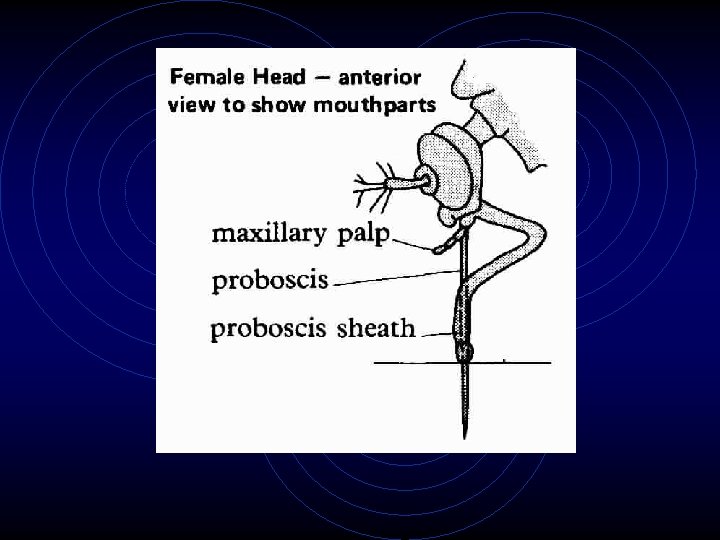
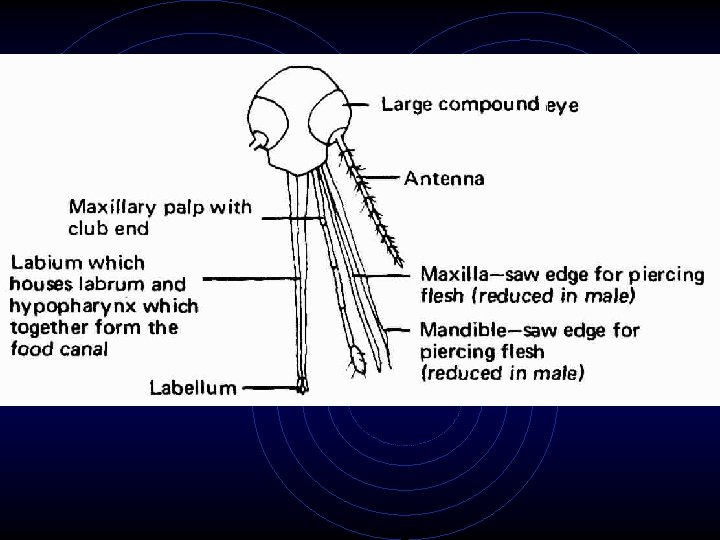
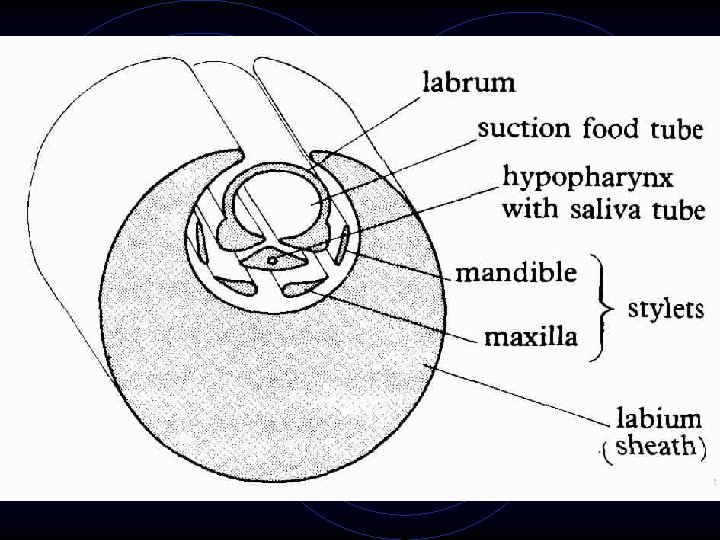
• Large-particle feeders - involving ingestion of particles which are relatively large, e. g. most mammals • Fluid and soft-tissue feeders - a mechanism to pierce their 'host' in some way and then use a specialized suction apparatus for drawing food into their bodies, e. g. mosquito
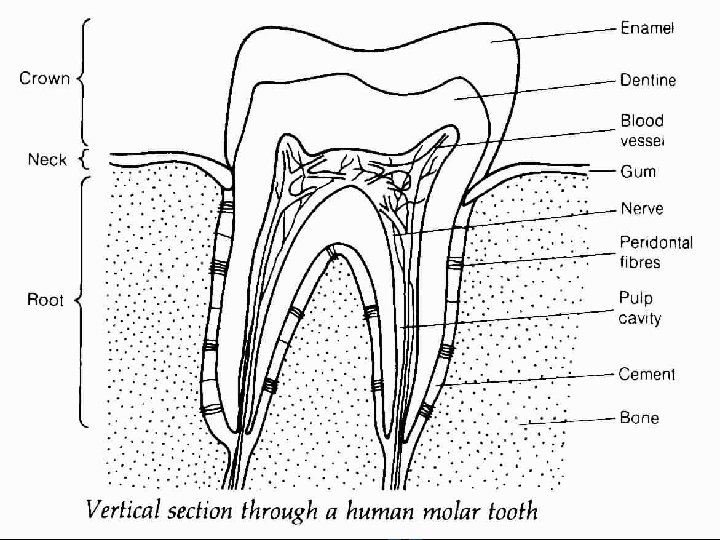
Teeth and dentition in man • The structure of the tooth • enamel • - non-living substance containing 97% calcium salt & 3% organic matter; • - cement forms the root of enamel; • - fibres attach to jawbone for anchorage forming periodontal membrane
• dentine • - hard but softer than enamel; • - with channels of living cytoplasm from pulp cavity • pulp cavity • - contains living cells with blood vessels (supply food & O 2) and nerves (sensation)
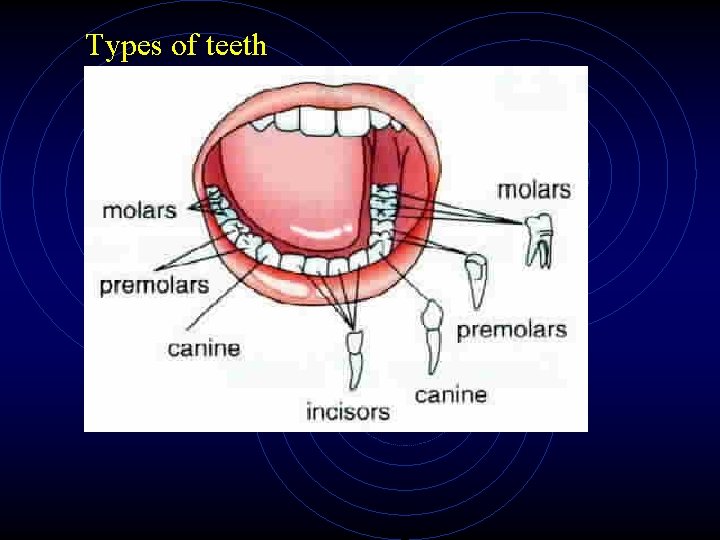
Types of teeth
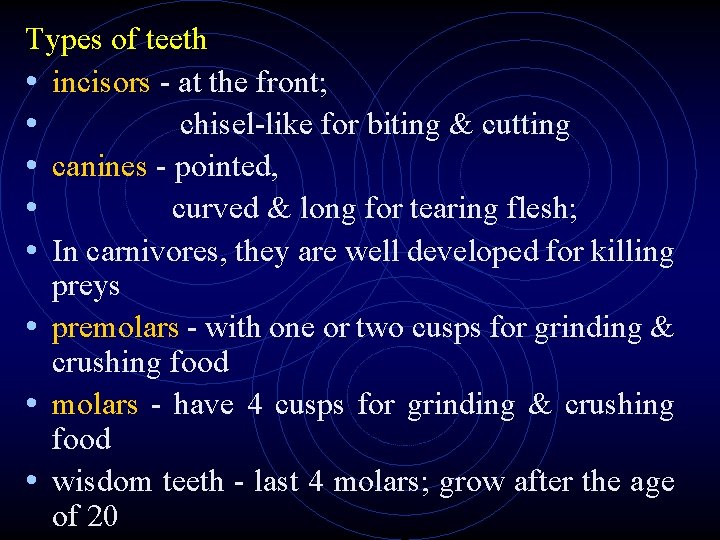
Types of teeth • incisors - at the front; • chisel-like for biting & cutting • canines - pointed, • curved & long for tearing flesh; • In carnivores, they are well developed for killing preys • premolars - with one or two cusps for grinding & crushing food • molars - have 4 cusps for grinding & crushing food • wisdom teeth - last 4 molars; grow after the age of 20
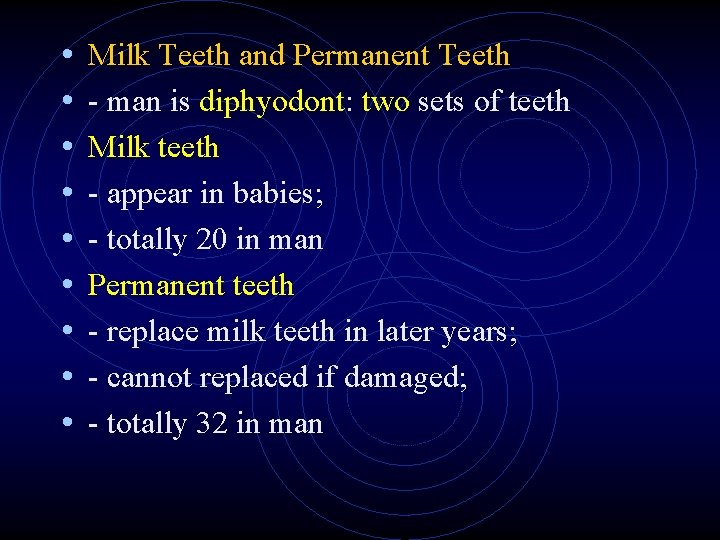
• • • Milk Teeth and Permanent Teeth - man is diphyodont: two sets of teeth Milk teeth - appear in babies; - totally 20 in man Permanent teeth - replace milk teeth in later years; - cannot replaced if damaged; - totally 32 in man
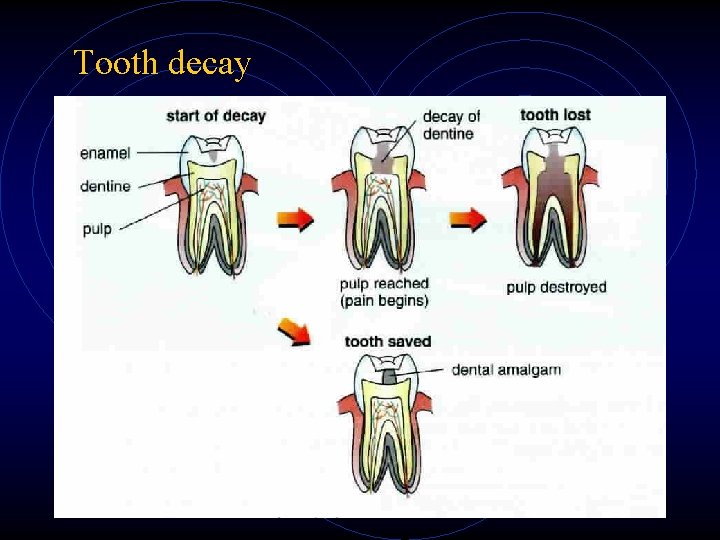
Tooth decay
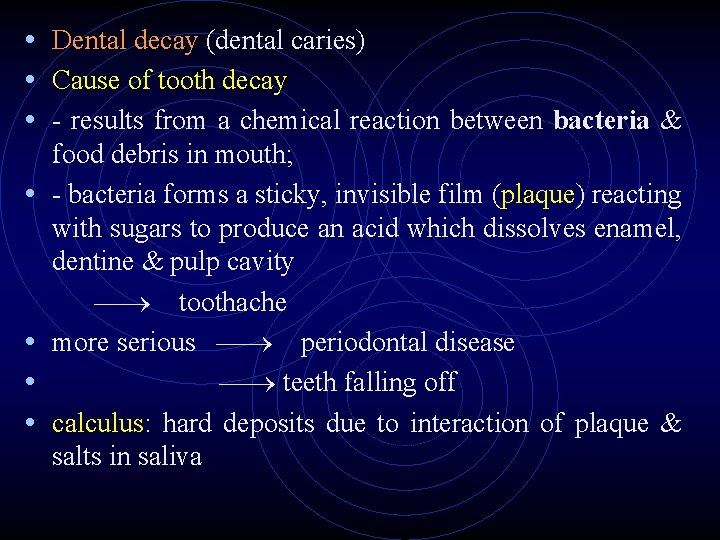
• Dental decay (dental caries) • Cause of tooth decay • - results from a chemical reaction between bacteria & food debris in mouth; • - bacteria forms a sticky, invisible film (plaque) reacting with sugars to produce an acid which dissolves enamel, dentine & pulp cavity toothache • more serious periodontal disease • teeth falling off • calculus: hard deposits due to interaction of plaque & salts in saliva
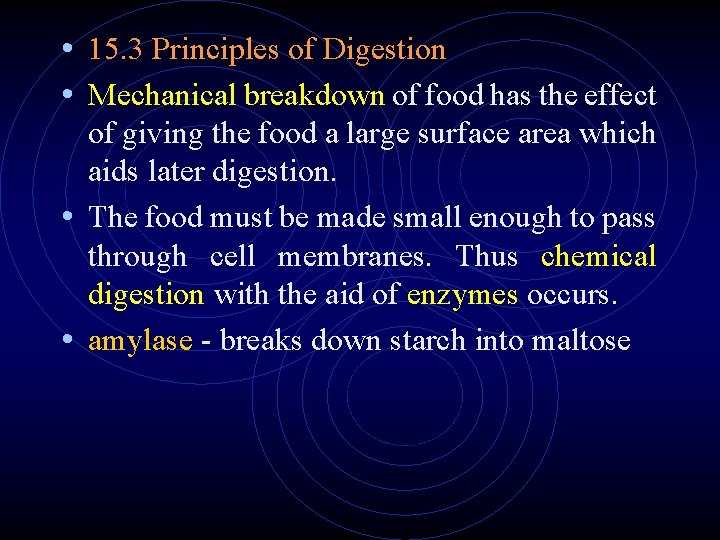
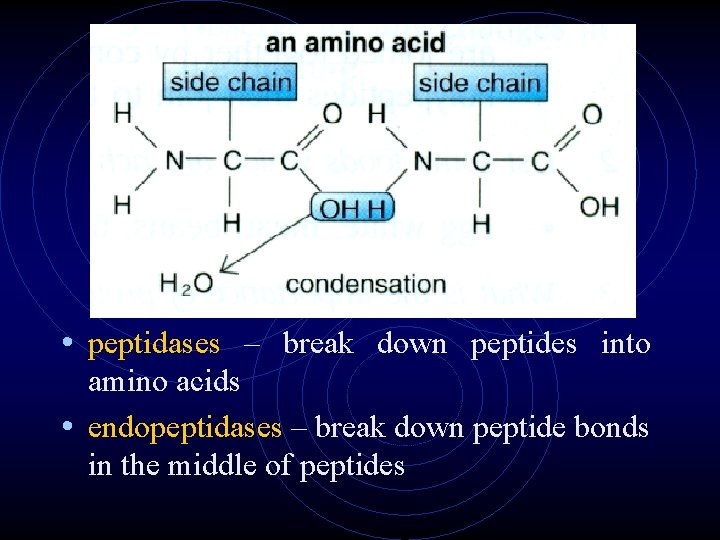
• 15. 3 Principles of Digestion • Mechanical breakdown of food has the effect of giving the food a large surface area which aids later digestion. • The food must be made small enough to pass through cell membranes. Thus chemical digestion with the aid of enzymes occurs. • amylase - breaks down starch into maltose
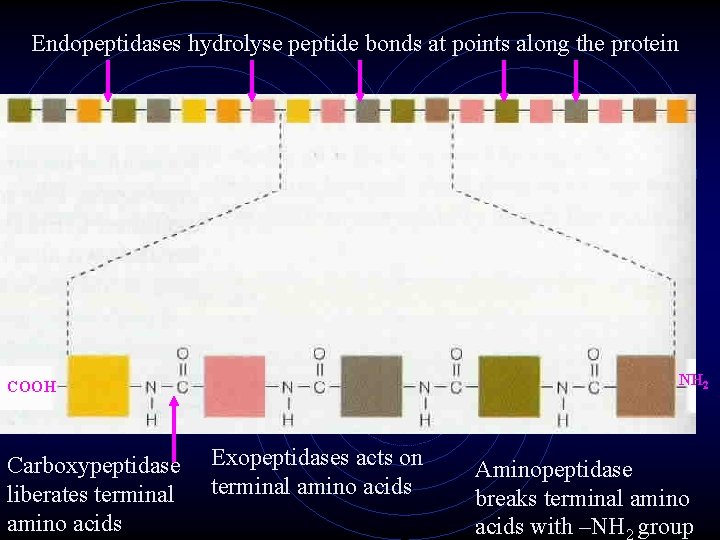
• peptidases – break down peptides into amino acids • endopeptidases – break down peptide bonds in the middle of peptides
Endopeptidases hydrolyse peptide bonds at points along the protein NH 2 COOH Carboxypeptidase liberates terminal amino acids Exopeptidases acts on terminal amino acids Aminopeptidase breaks terminal amino acids with –NH group
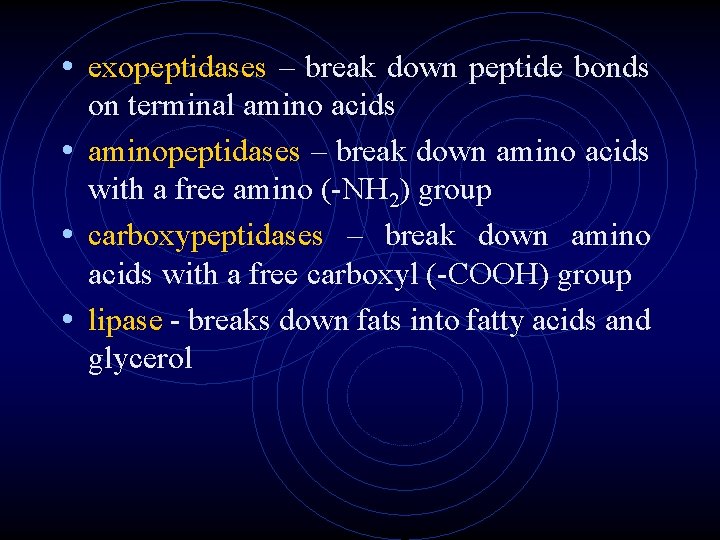
• exopeptidases – break down peptide bonds on terminal amino acids • aminopeptidases – break down amino acids with a free amino (-NH 2) group • carboxypeptidases – break down amino acids with a free carboxyl (-COOH) group • lipase - breaks down fats into fatty acids and glycerol
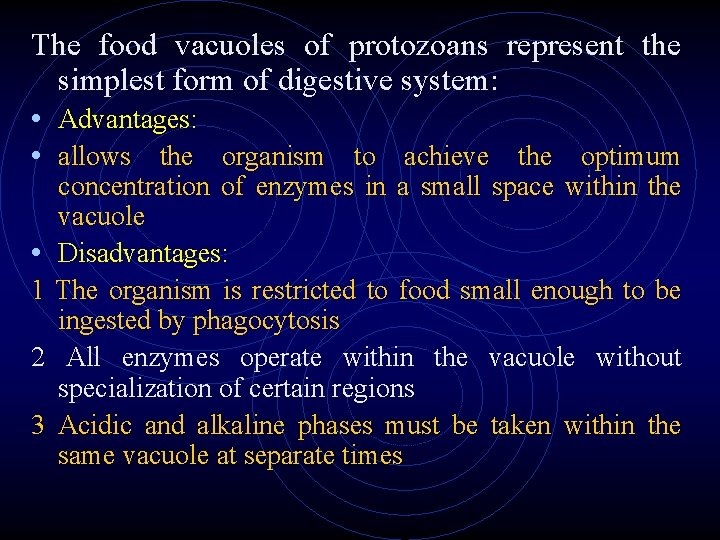
The food vacuoles of protozoans represent the simplest form of digestive system: • Advantages: • allows the organism to achieve the optimum concentration of enzymes in a small space within the vacuole • Disadvantages: 1 The organism is restricted to food small enough to be ingested by phagocytosis 2 All enzymes operate within the vacuole without specialization of certain regions 3 Acidic and alkaline phases must be taken within the same vacuole at separate times
• 15. 4 Digestion in Humans • 15. 4. 1 Digestion in the mouth • Mechanical digestion of food begins in the buccal cavity. The tongue manipulates the food during chewing with saliva produced from 3 pairs of salivary glands.
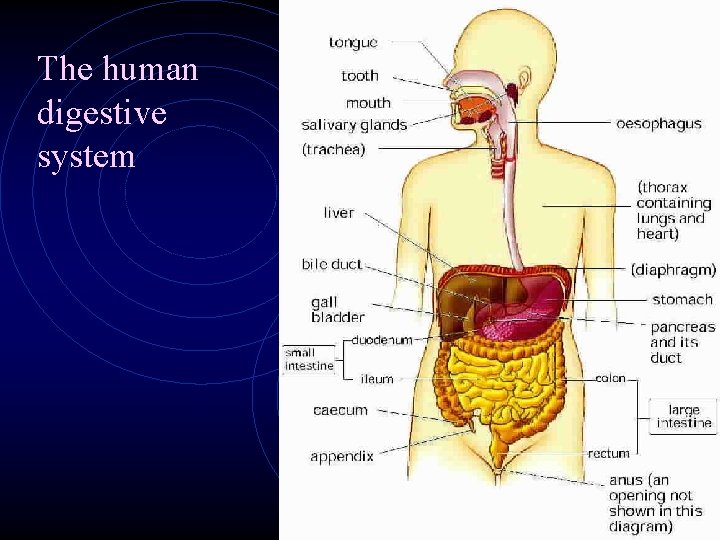
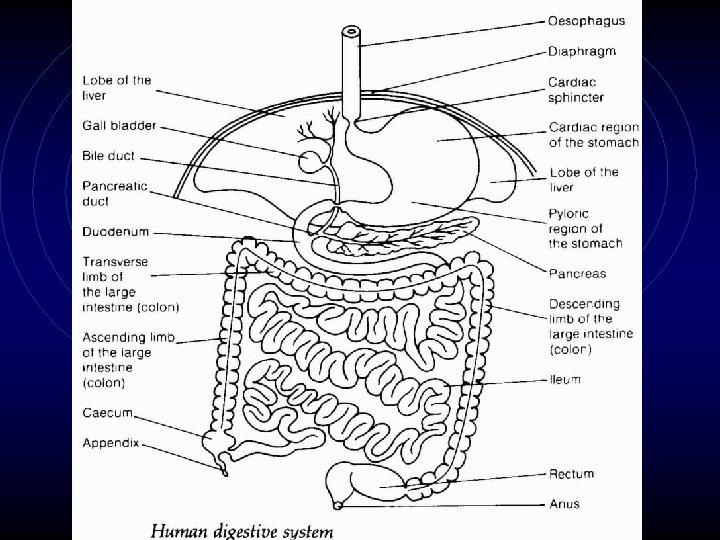
The human digestive system
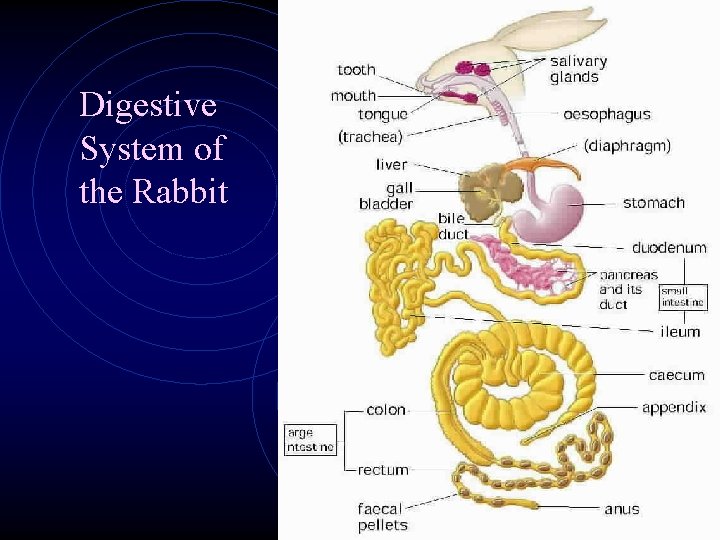
Digestive System of the Rabbit
• • • Saliva contains: 1. Water – over 99% 2. Salivary amylase – enzyme 3. Mineral salts – maintain optimum p. H for amylase 4. Mucin – bind food particles together and lubricates food for swallowing Taste buds allow food to be selected. The thoroughly chewed food (bolus) is passed to the back of the mouth for swallowing.
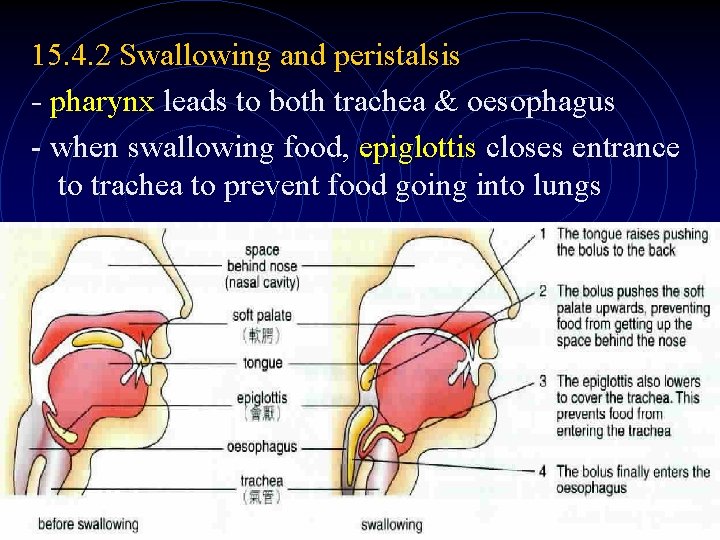
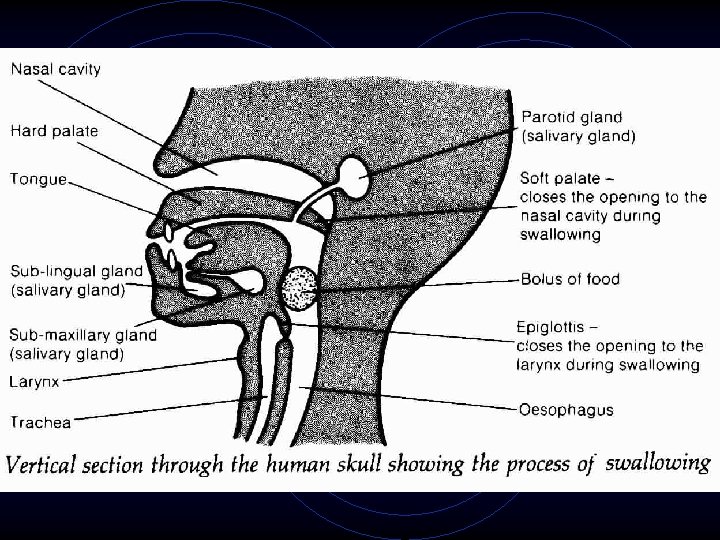
15. 4. 2 Swallowing and peristalsis - pharynx leads to both trachea & oesophagus - when swallowing food, epiglottis closes entrance to trachea to prevent food going into lungs
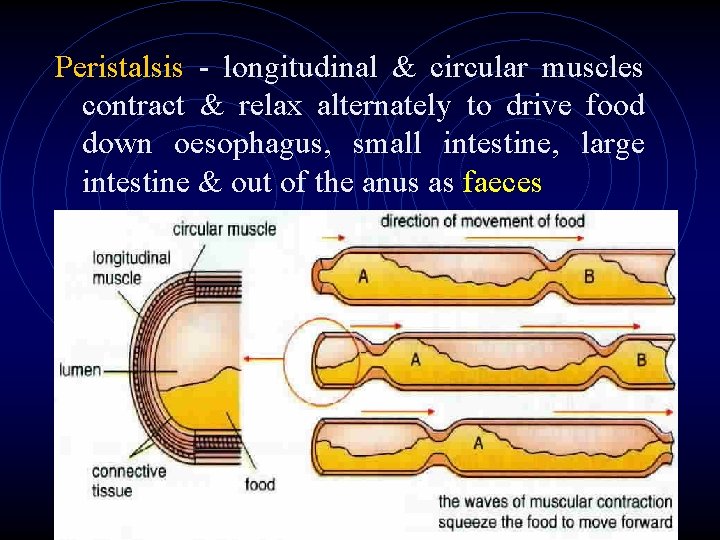
Peristalsis - longitudinal & circular muscles contract & relax alternately to drive food down oesophagus, small intestine, large intestine & out of the anus as faeces
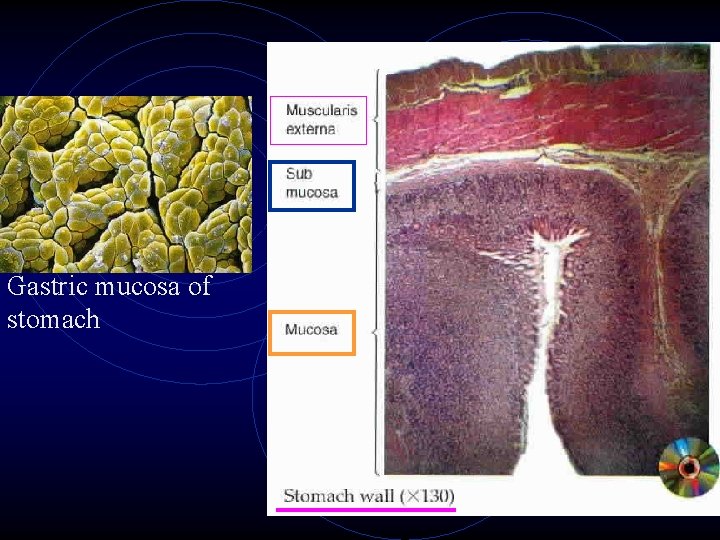
Gastric mucosa of stomach
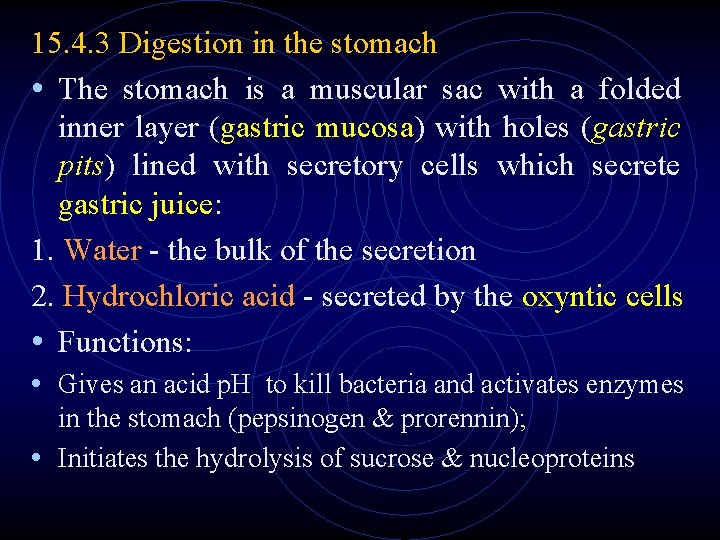
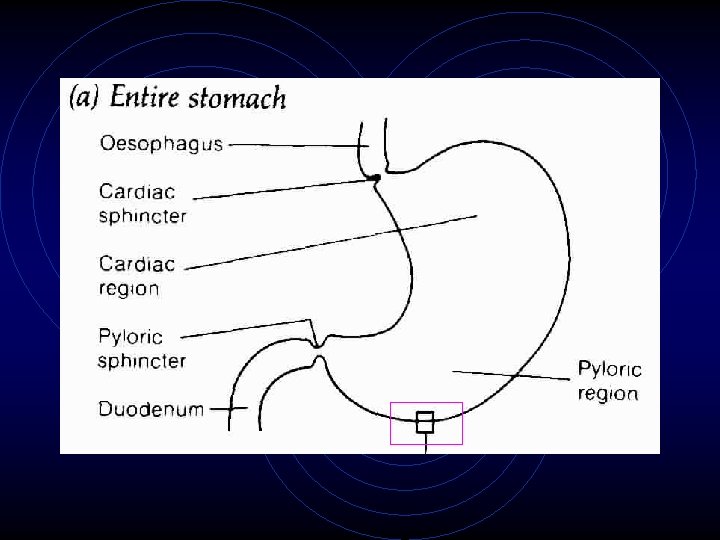
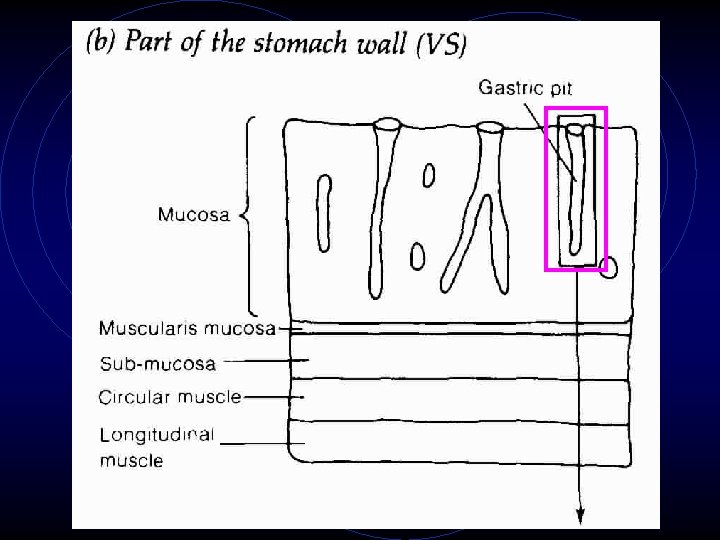
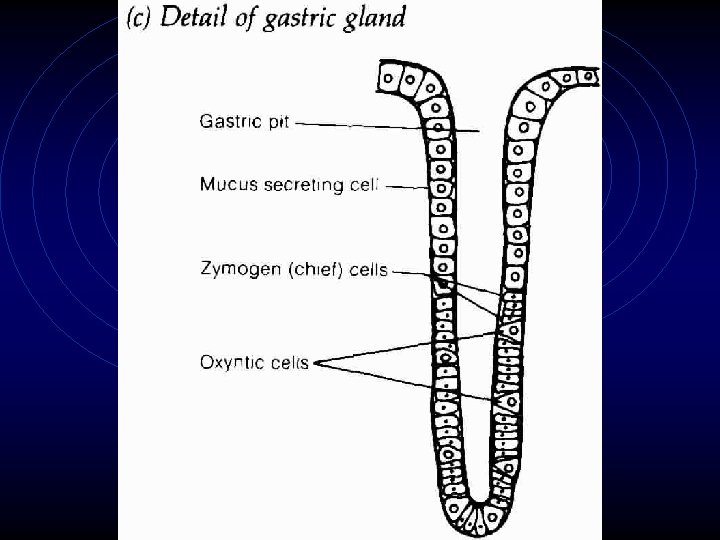
15. 4. 3 Digestion in the stomach • The stomach is a muscular sac with a folded inner layer (gastric mucosa) with holes (gastric pits) lined with secretory cells which secrete gastric juice: 1. Water - the bulk of the secretion 2. Hydrochloric acid - secreted by the oxyntic cells • Functions: • Gives an acid p. H to kill bacteria and activates enzymes in the stomach (pepsinogen & prorennin); • Initiates the hydrolysis of sucrose & nucleoproteins
3. Pepsinogen - secreted by the zymogen (chief cells) in an inactive form to pepsin • It is activated by HCl 4. Prorennin - secreted by zymogen cells; activated by HCl to rennin to coagulate milk by converting caseinogen (soluble protein in milk) to casein (insoluble) 5. Mucus - secreted by goblet cells to produced a protective layer to prevent autodigestion of the gastric mucosa (thus preventing ulcer) • It also lubricates food in the stomach
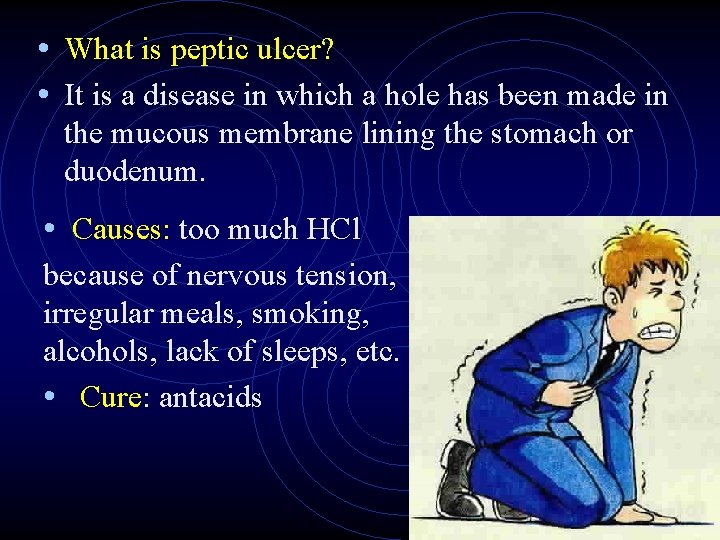
• What is peptic ulcer? • It is a disease in which a hole has been made in the mucous membrane lining the stomach or duodenum. • Causes: too much HCl because of nervous tension, irregular meals, smoking, alcohols, lack of sleeps, etc. • Cure: antacids
• The churning and mixing action of the muscular stomach wall changes the bolus of food into a creamy fluid (chyme). • The chyme from any one meal takes 3 -4 hours to be released little by little into the duodenum. • This provides a continuous supply of food for absorption throughout the period between meals.
15. 4. 4 Digestion in the small intestine • Duodenum: for digestion • Ileum: chiefly for absorption • The walls of the small intestine are folded with villi which contain fibres of smooth muscle. • These muscles regularly contract and relax to mix food and enzymes so as to facilitate absorption. • The digestive juices of the small intestines are: