
CHAPTER 15 Effective Promotion Means Effective Communication Mrs
- Slides: 31
CHAPTER 15: Effective Promotion Means Effective Communication Mrs. Piotrowski Principles of Marketing 1
SECTION 1: PROMOTION AS A FORM OF COMMUNICATION 2
Identify a marketing message you have seen or heard recently. E. V L SO Describe how you received the marketing message. What action or result will occur because of that message? 3 3 3
What is promotion? Promotion is any form of communication that a company uses to inform, persuade, or remind customers about its products or services. It is one of the four elements of the marketing mix. 4
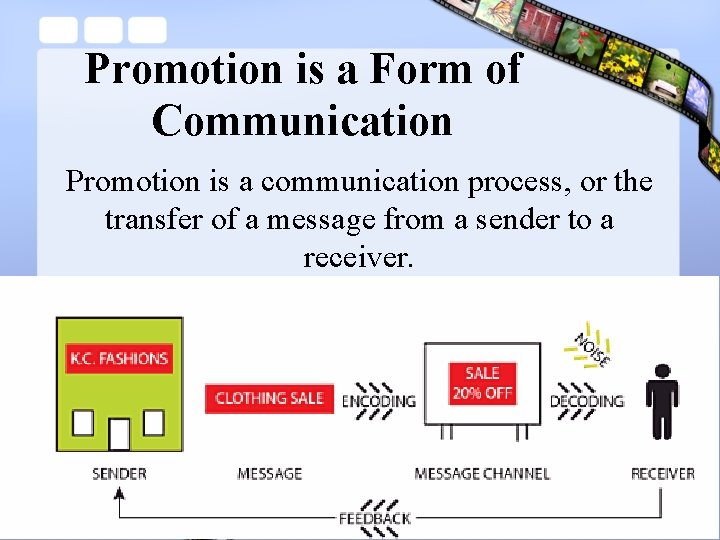
Promotion is a Form of Communication Promotion is a communication process, or the transfer of a message from a sender to a receiver. 5
Promotion is a Form of Communication • The sender is the source of the message being sent (the “who”). • The message is what is being communicated. • When the sender converts an idea into a message that the receiver can understand, it is called encoding. 6
Promotion is a Form of Communication • The vehicle by which the message travels is the message channel (the “how”). • The receiver is the person(s) to whom the message is directed or any person who understands the message that is sent. • Decoding is the process by which the receiver interprets the transmitted language and symbols to comprehend the message. 7
Promotion is a Form of Communication • Any distracting information in the environment that may inhibit or distract from the message is called noise. • Feedback is the receiver’s response to the message. – Feedback can be direct or indirect. 8
The Role of Promotion • Promotion fulfills three main roles for marketing. It can… – INFORM – PERSUADE – REMIND …an audience. 9
Types of Communication • There are two main types of communication used by marketers: 1. Interpersonal communication 2. Mass communication 10
Interpersonal Communication • Interpersonal communication is any personto-person exchange. – Examples include telemarketing calls, in-person sales calls, a customer service desk, in-store salespeople, and online chats. – This tends to be a costly method of communication. 11
Mass Communication • Mass communication attempts to reach a wide audience through media such as radio, television, magazines, and newspapers. – It is much more cost efficient, but is often only a one-way flow of information. 12
SECTION 2: TYPES OF PROMOTION 13
Think of a product you like. E. V L SO Describe the types of promotions used for that product. Do the promotions all communicate the same thing about the product? Which form of promotional activity do you find most effective? Why? 14 14 14
Advertising is any form of paid, nonpersonal communication that uses mass media to deliver a marketer’s message to an audience. 15
Advertising • The major types of media used for advertising are: – Broadcast Media – television and radio commercials – Print Advertising – any paid message run in a magazine or newspaper. – Direct Mail – messages sent to an audience through the mail (junk mail) – Outdoor Advertising – billboards, buses, taxis, benches, sporting events – Ambient Advertising – nontraditional media in the environment of the audience (stickers on bananas) – Internet Advertising – can be targeted by interest and location…the future of advertising? 16
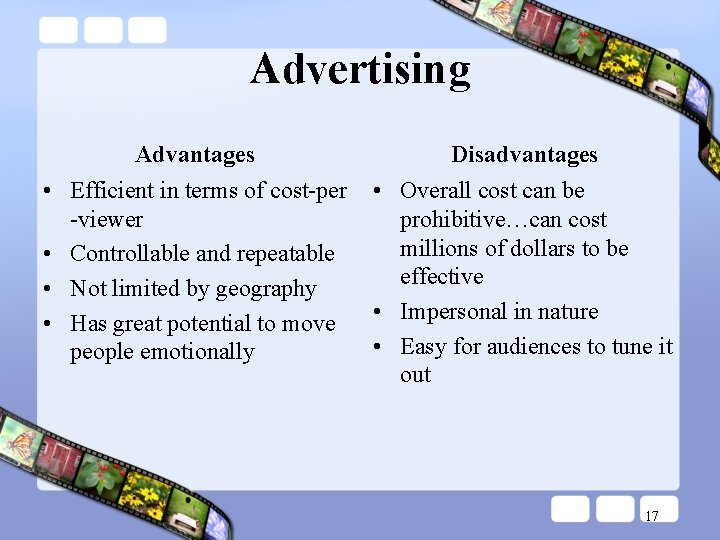
Advertising Advantages Disadvantages • Efficient in terms of cost-per -viewer • Controllable and repeatable • Not limited by geography • Has great potential to move people emotionally • Overall cost can be prohibitive…can cost millions of dollars to be effective • Impersonal in nature • Easy for audiences to tune it out 17
Public Relations • Publicity is any non-paid communication about a product, service, company, or cause. • The effort to reach customers by generating positive publicity is known as public relations (PR). • Although the actual communication is free, companies often have PR departments on the payroll to identify media opportunities. 18
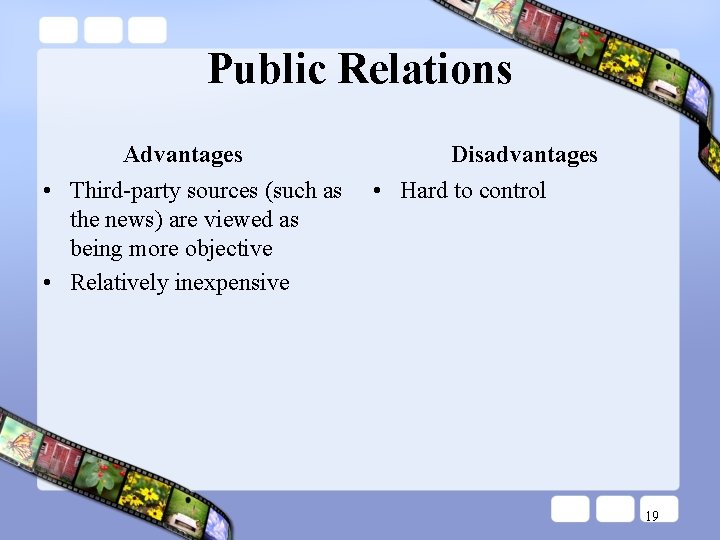
Public Relations Advantages • Third-party sources (such as the news) are viewed as being more objective • Relatively inexpensive Disadvantages • Hard to control 19
Personal Selling • Personal selling is person-to-person communication with a potential customer. • Most commonly used in B 2 B promotion. • Includes salespeople in stores, telemarketers, real estate agents, car dealers, etc. • This is usually used for complicated and relatively expensive products, such as cars, insurance, and homes. 20
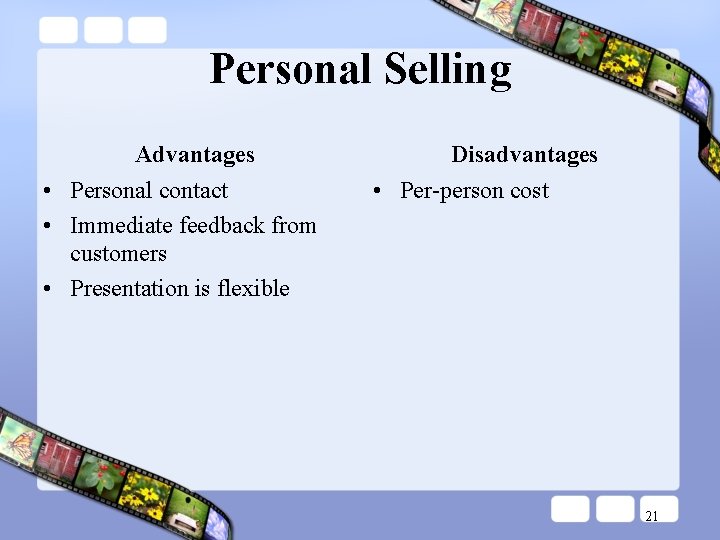
Personal Selling Advantages • Personal contact • Immediate feedback from customers • Presentation is flexible Disadvantages • Per-person cost 21
Sales Promotion • Any activity or material that gives consumers a direct incentive to buy is called sales promotion. • This is commonly used when companies are introducing new products. • Common types of sales promotion include sales, coupons, rebates, free features or options, and giveaways. 22
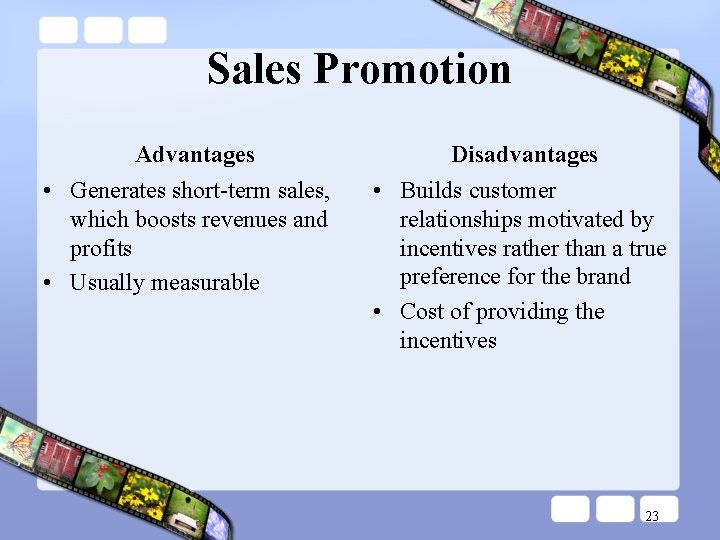
Sales Promotion Advantages • Generates short-term sales, which boosts revenues and profits • Usually measurable Disadvantages • Builds customer relationships motivated by incentives rather than a true preference for the brand • Cost of providing the incentives 23
SECTION 3: MIXING THE PROMOTIONAL PLAN 24
Select a product you own. E. V L SO What types of promotion would you use for the product if you were planning the promotional mix? How would you decide what types of promotion would be the most effective? 25 25 25
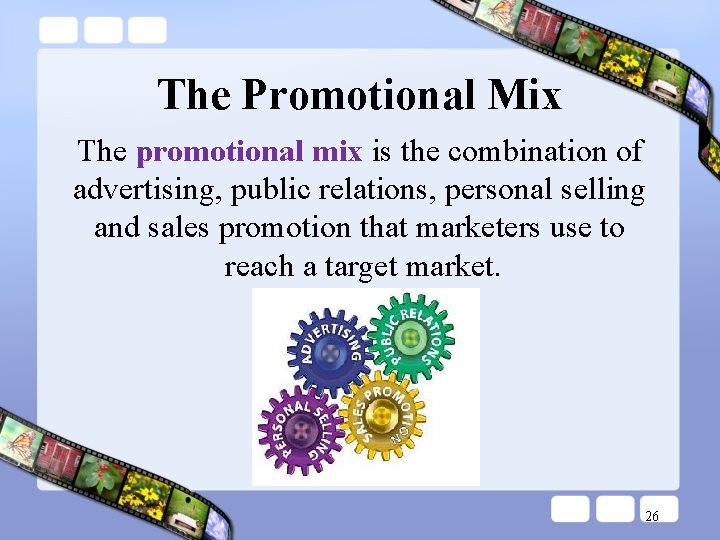
The Promotional Mix The promotional mix is the combination of advertising, public relations, personal selling and sales promotion that marketers use to reach a target market. 26
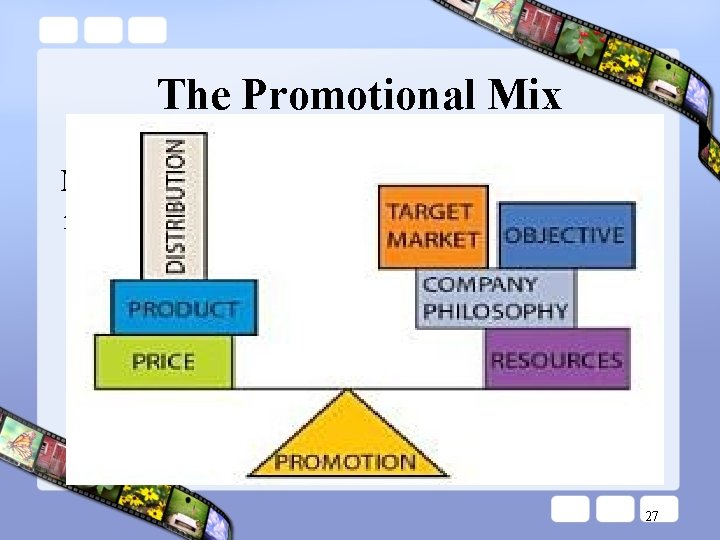
The Promotional Mix Many factors impact promotional plans, which makes developing the right promotional mix a balancing act! 27
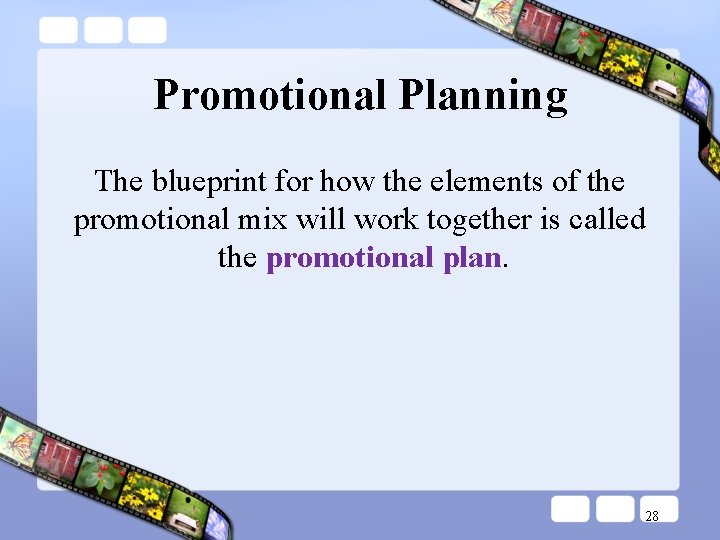
Promotional Planning The blueprint for how the elements of the promotional mix will work together is called the promotional plan. 28
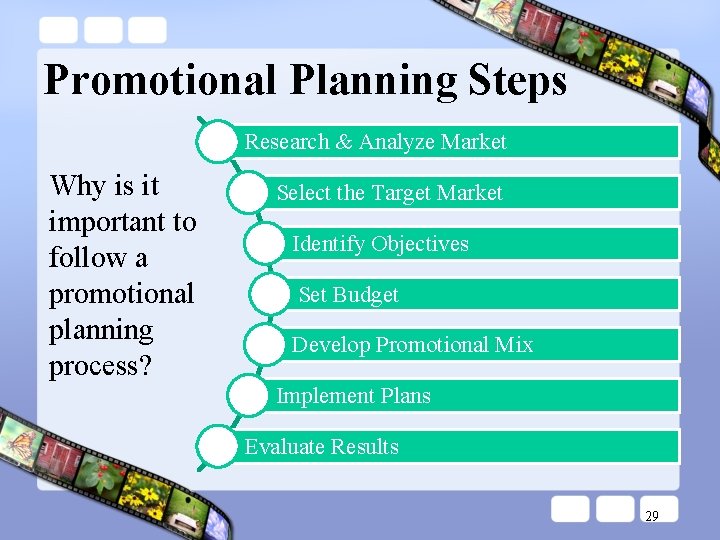
Promotional Planning Steps Research & Analyze Market Why is it important to follow a promotional planning process? Select the Target Market Identify Objectives Set Budget Develop Promotional Mix Implement Plans Evaluate Results 29
Push vs. Pull Promotion • Push - a promotional strategy where businesses attempt to take their products to the customers. The term push stems from the idea that marketers are attempting to push their products at consumers. – Sales tactics include trying to sell merchandise directly to customers via company showrooms and negotiating with retailers to sell their products for them, or set up point-ofsale displays. Often, these retailers will receive special sales incentives in exchange for this increased visibility. – attempt to induce a customer to buy a product. 30
Push vs. Pull Promotion • Pull- promotion used to get the customers to come to you, hence the term pull, where marketers are attempting to pull customers in. – Sales tactics used for pull marketing include mass media promotions, word-of-mouth referrals and advertised sales promotions. From a business perspective, pull marketing attempts to create brand loyalty and keep customers coming back, whereas push marketing is more concerned with short -term sales. 31