
Chapter 15 Ecosystems What Are They and How

- Slides: 54
Chapter 1/5 Ecosystems: What Are They and How Do They Work?
Chapter Overview Questions Ø What is ecology? Ø What basic processes keep us and other organisms alive? Ø What are the major components of an ecosystem? Ø What happens to energy in an ecosystem? Ø What are soils and how are they formed? Ø What happens to matter in an ecosystem? Ø How do scientists study ecosystems?
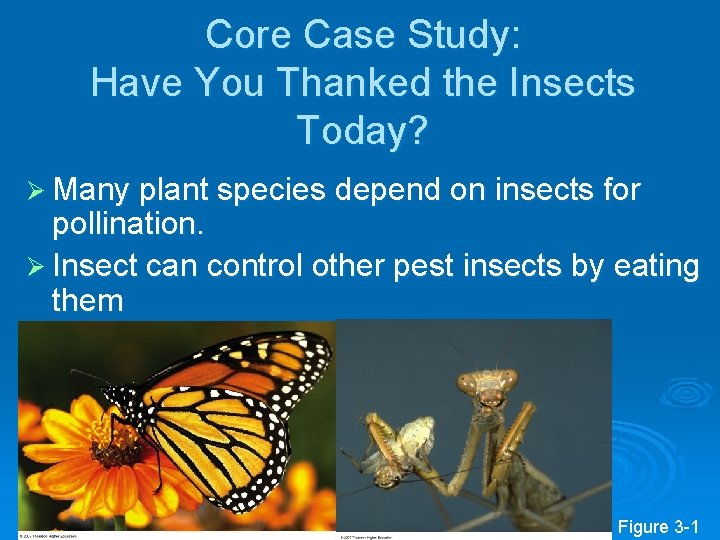
Core Case Study: Have You Thanked the Insects Today? Ø Many plant species depend on insects for pollination. Ø Insect can control other pest insects by eating them Figure 3 -1
Core Case Study: Have You Thanked the Insects Today? Ø …if all insects disappeared, humanity probably could not last more than a few months [E. O. Wilson, Biodiversity expert]. l Insect’s role in nature is part of the larger biological community in which they live.
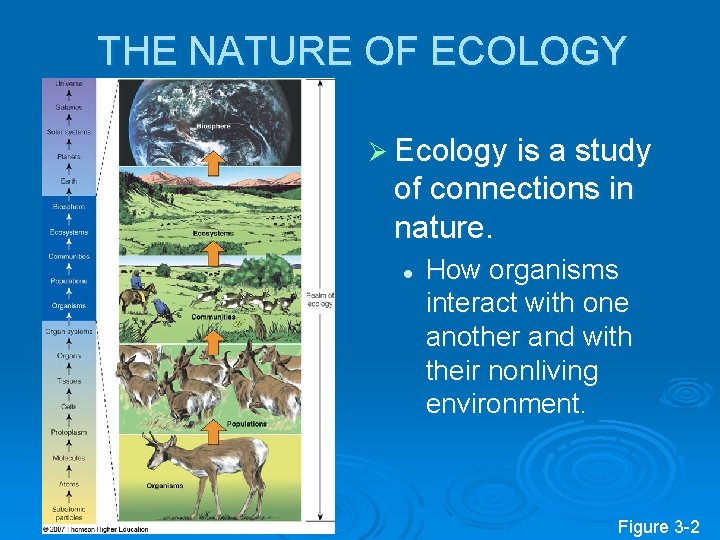
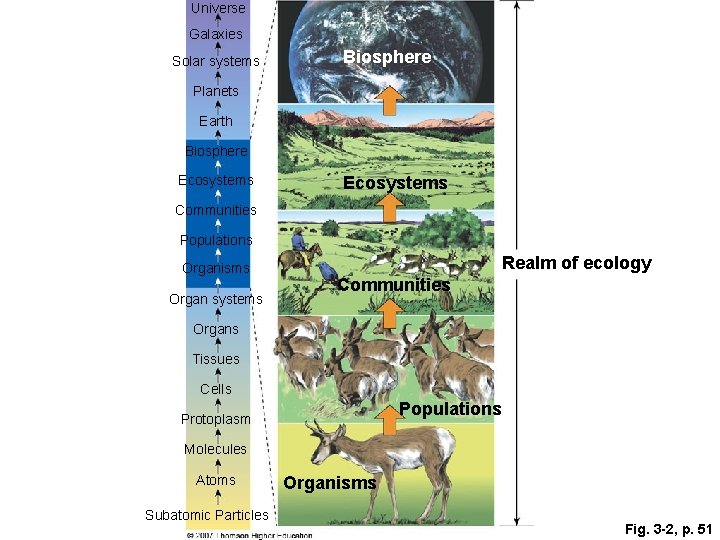
THE NATURE OF ECOLOGY Ø Ecology is a study of connections in nature. l How organisms interact with one another and with their nonliving environment. Figure 3 -2
Universe Galaxies Solar systems Biosphere Planets Earth Biosphere Ecosystems Communities Populations Organisms Organ systems Realm of ecology Communities Organs Tissues Cells Populations Protoplasm Molecules Atoms Subatomic Particles Organisms Fig. 3 -2, p. 51
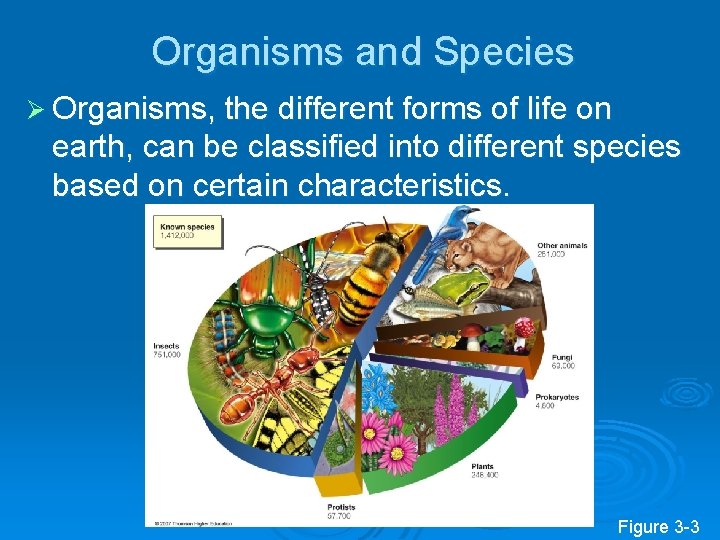
Organisms and Species Ø Organisms, the different forms of life on earth, can be classified into different species based on certain characteristics. Figure 3 -3
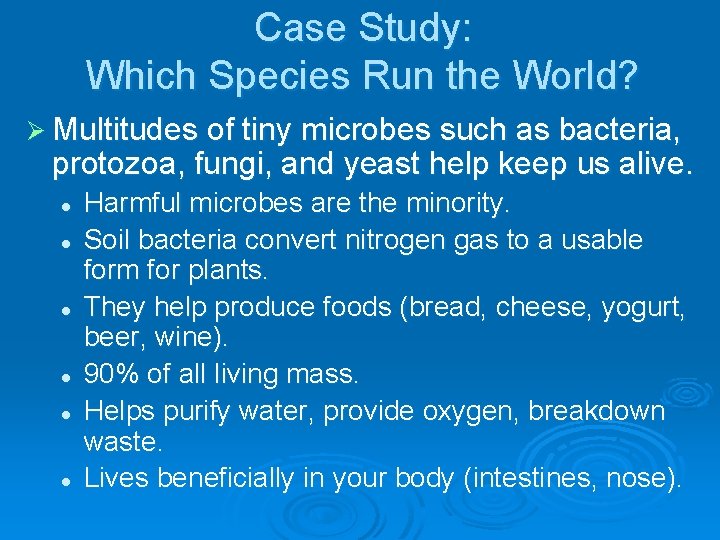
Case Study: Which Species Run the World? Ø Multitudes of tiny microbes such as bacteria, protozoa, fungi, and yeast help keep us alive. l l l Harmful microbes are the minority. Soil bacteria convert nitrogen gas to a usable form for plants. They help produce foods (bread, cheese, yogurt, beer, wine). 90% of all living mass. Helps purify water, provide oxygen, breakdown waste. Lives beneficially in your body (intestines, nose).
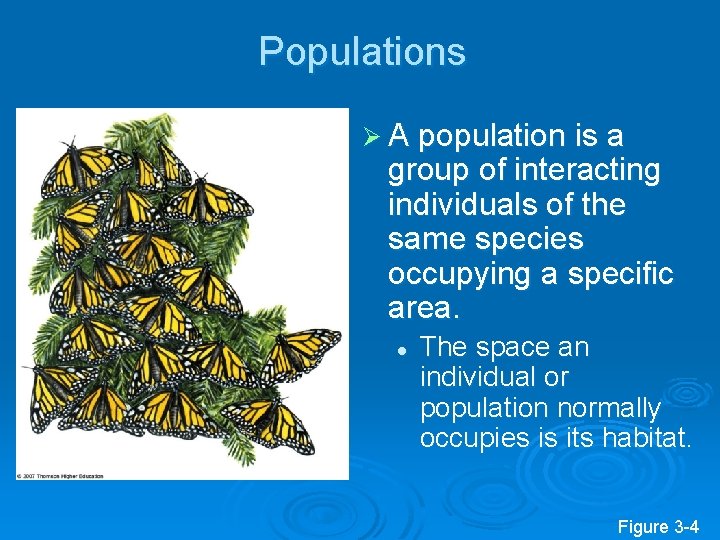
Populations Ø A population is a group of interacting individuals of the same species occupying a specific area. l The space an individual or population normally occupies is its habitat. Figure 3 -4
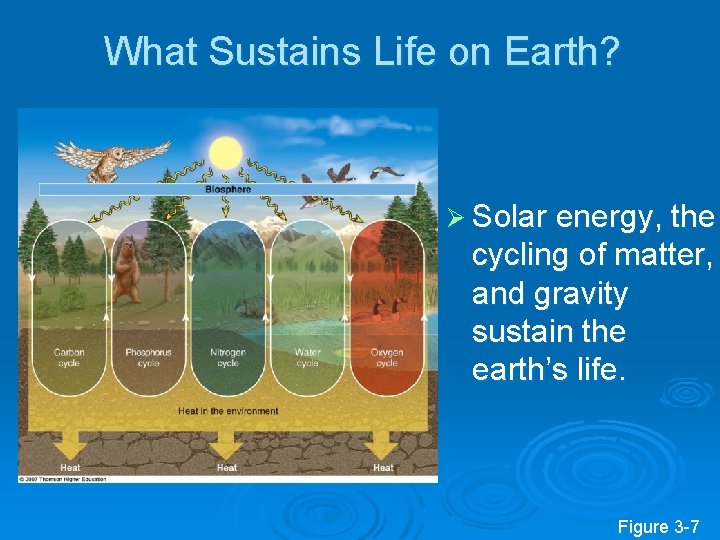
What Sustains Life on Earth? Ø Solar energy, the cycling of matter, and gravity sustain the earth’s life. Figure 3 -7
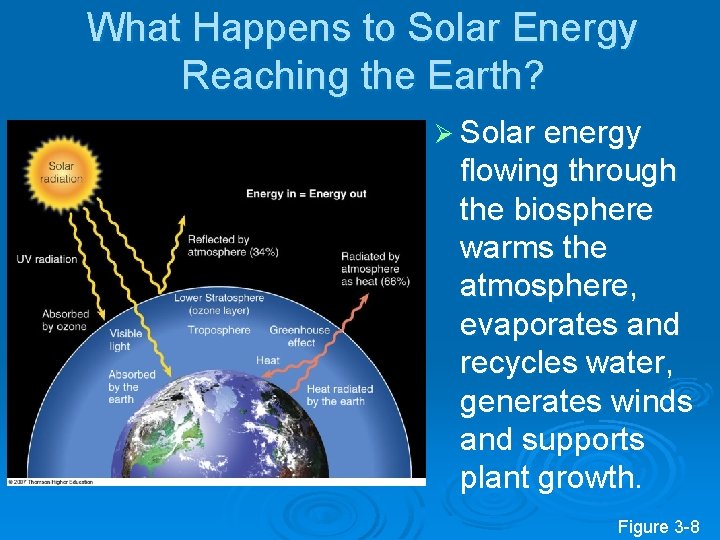
What Happens to Solar Energy Reaching the Earth? Ø Solar energy flowing through the biosphere warms the atmosphere, evaporates and recycles water, generates winds and supports plant growth. Figure 3 -8
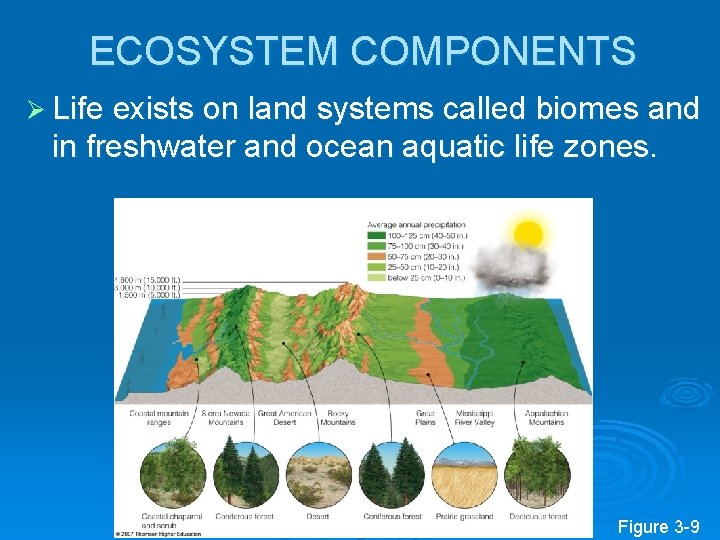
ECOSYSTEM COMPONENTS Ø Life exists on land systems called biomes and in freshwater and ocean aquatic life zones. Figure 3 -9
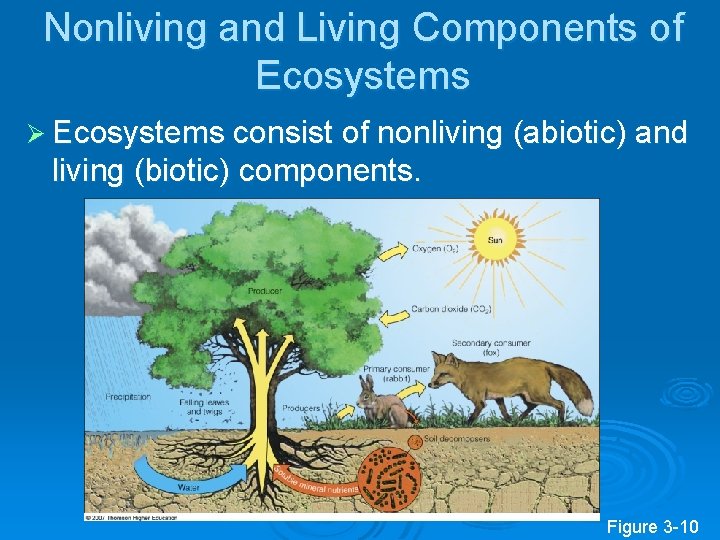
Nonliving and Living Components of Ecosystems Ø Ecosystems consist of nonliving (abiotic) and living (biotic) components. Figure 3 -10
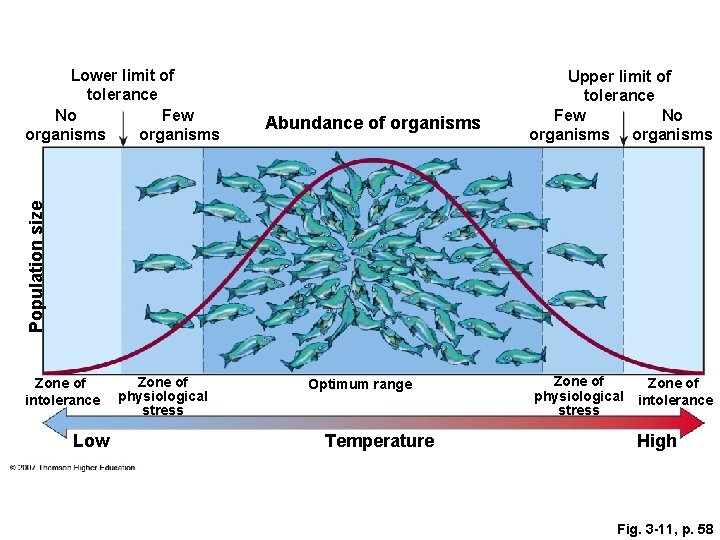
Abundance of organisms Upper limit of tolerance Few No organisms Population size Lower limit of tolerance No Few organisms Zone of intolerance Low Zone of physiological stress Optimum range Temperature Zone of physiological stress Zone of intolerance High Fig. 3 -11, p. 58
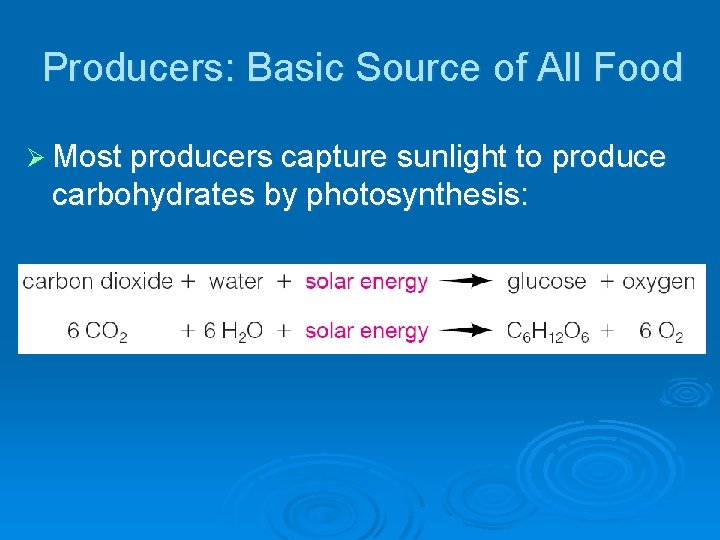
Producers: Basic Source of All Food Ø Most producers capture sunlight to produce carbohydrates by photosynthesis:
Producers: Basic Source of All Food Ø Chemosynthesis: l Some organisms such as deep ocean bacteria draw energy from hydrothermal vents and produce carbohydrates from hydrogen sulfide (H 2 S) gas.
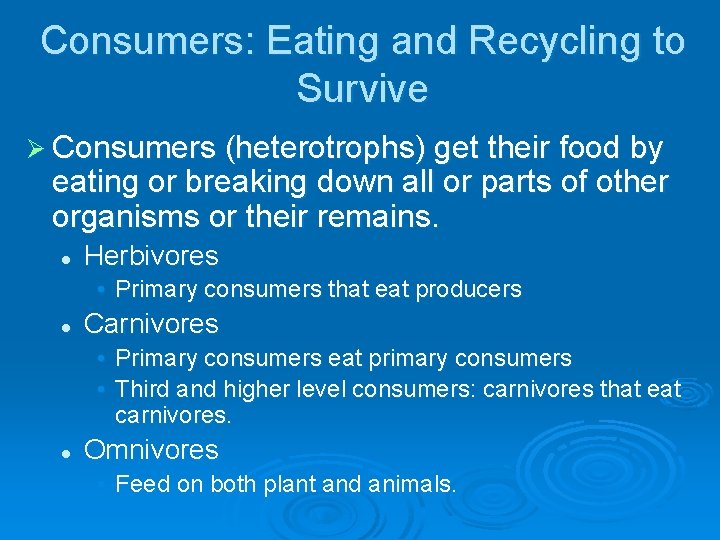
Consumers: Eating and Recycling to Survive Ø Consumers (heterotrophs) get their food by eating or breaking down all or parts of other organisms or their remains. l Herbivores • Primary consumers that eat producers l Carnivores • Primary consumers eat primary consumers • Third and higher level consumers: carnivores that eat carnivores. l Omnivores • Feed on both plant and animals.
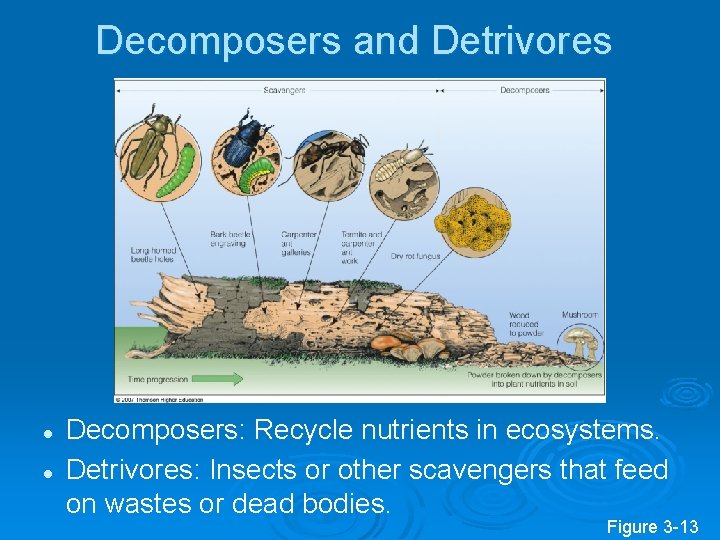
Decomposers and Detrivores l l Decomposers: Recycle nutrients in ecosystems. Detrivores: Insects or other scavengers that feed on wastes or dead bodies. Figure 3 -13
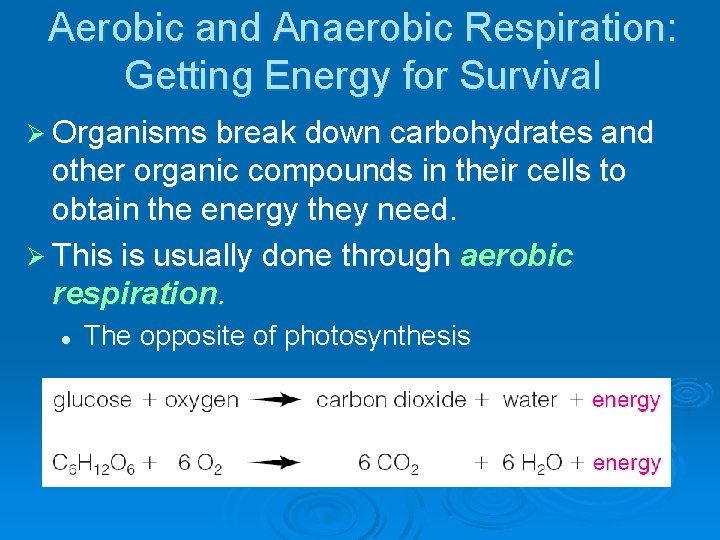
Aerobic and Anaerobic Respiration: Getting Energy for Survival Ø Organisms break down carbohydrates and other organic compounds in their cells to obtain the energy they need. Ø This is usually done through aerobic respiration. l The opposite of photosynthesis
Aerobic and Anaerobic Respiration: Getting Energy for Survival Ø Anaerobic respiration or fermentation: l l Some decomposers get energy by breaking down glucose (or other organic compounds) in the absence of oxygen. The end products vary based on the chemical reaction: • • Methane gas Ethyl alcohol Acetic acid Hydrogen sulfide
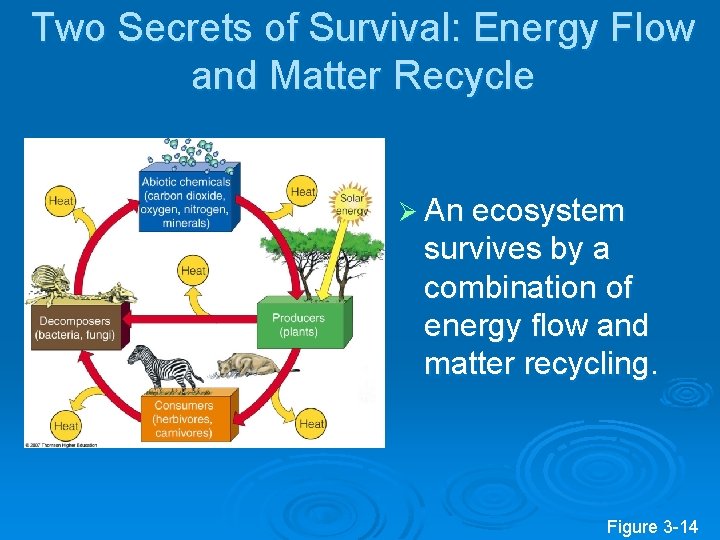
Two Secrets of Survival: Energy Flow and Matter Recycle Ø An ecosystem survives by a combination of energy flow and matter recycling. Figure 3 -14
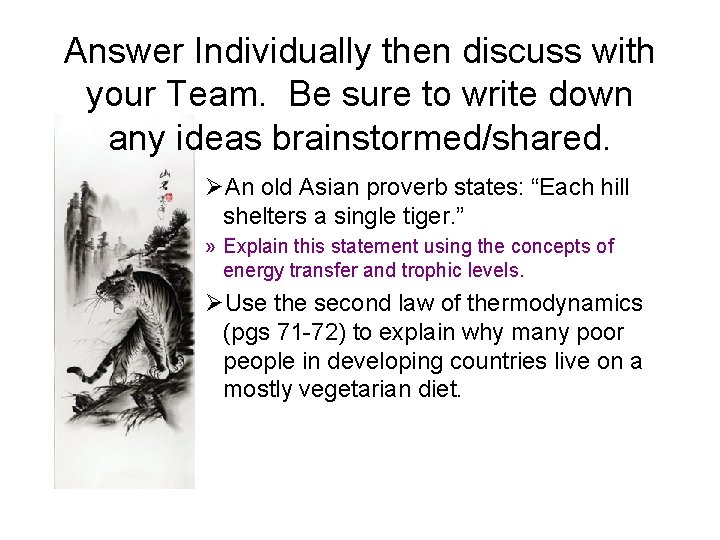
Answer Individually then discuss with your Team. Be sure to write down any ideas brainstormed/shared. ØAn old Asian proverb states: “Each hill shelters a single tiger. ” » Explain this statement using the concepts of energy transfer and trophic levels. ØUse the second law of thermodynamics (pgs 71 -72) to explain why many poor people in developing countries live on a mostly vegetarian diet.
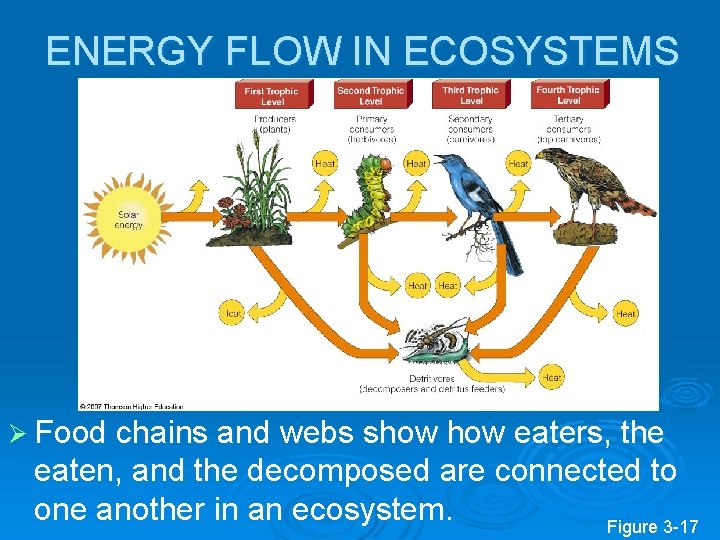
ENERGY FLOW IN ECOSYSTEMS Ø Food chains and webs show eaters, the eaten, and the decomposed are connected to one another in an ecosystem. Figure 3 -17
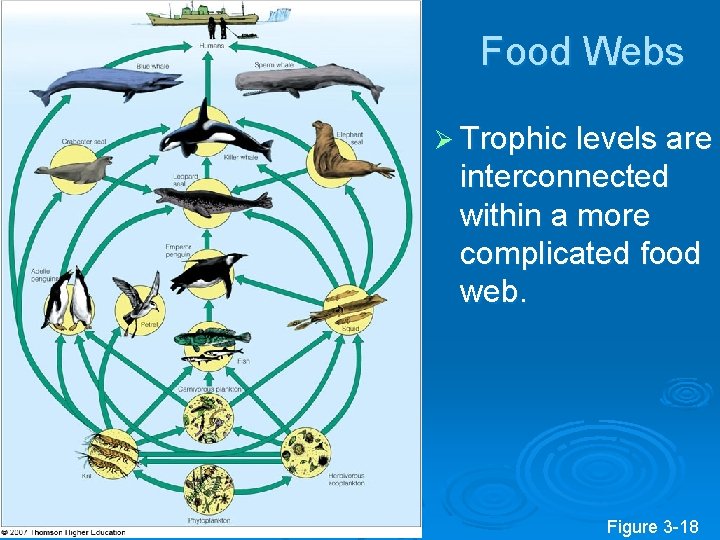
Food Webs Ø Trophic levels are interconnected within a more complicated food web. Figure 3 -18
Ø Ecological efficiency – the percentage of useable energy transferred as biomass from trophjic level to the next. i. e. there is a decrease in the amount of available energy to each succeeeding organism in a food web Ø Each trophic level in a food chain/web contains certain amount of biomass Ø Biomass – each trophic level in a food chain/web contains a certain amount of biomass which is the dry weight for all
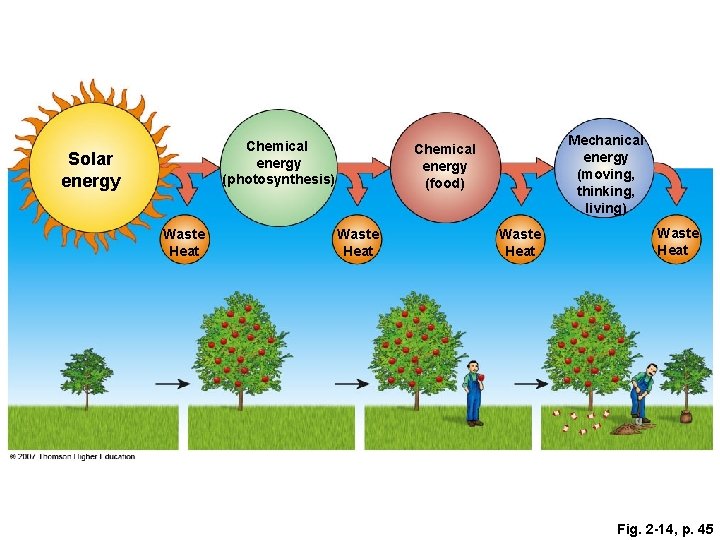
Ø In accordance with the 2 nd law of thermodynamics, when E changes from one form to another, some of the useful energy is ALWAYS degraded to lower quality, more dispersed, less useful energy usually in the form of heat.
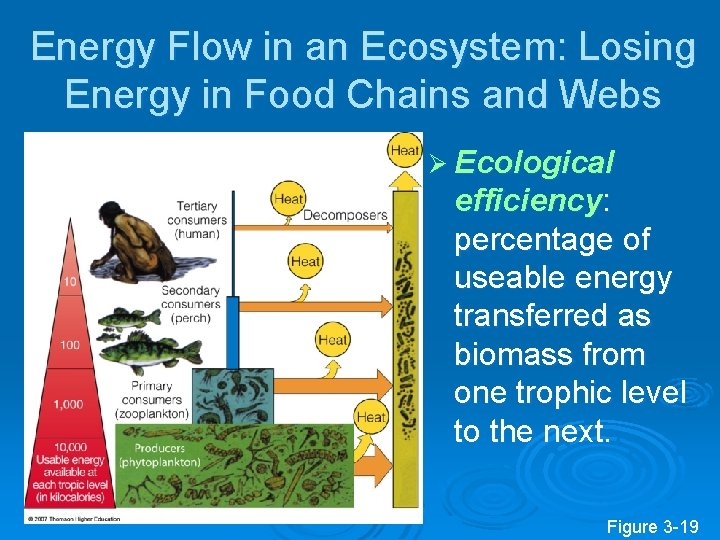
Energy Flow in an Ecosystem: Losing Energy in Food Chains and Webs Ø In accordance with the 2 nd law of thermodynamics, there is a decrease in the amount of energy available to each succeeding organism in a food chain or web.
Chemical energy (photosynthesis) Solar energy Waste Heat Mechanical energy (moving, thinking, living) Chemical energy (food) Waste Heat Fig. 2 -14, p. 45
• Thus only a small portion of what is eaten/digested is actually converted into an organisms bodily material/biomass and the amount of useable energy available to each successive trophic level declines.
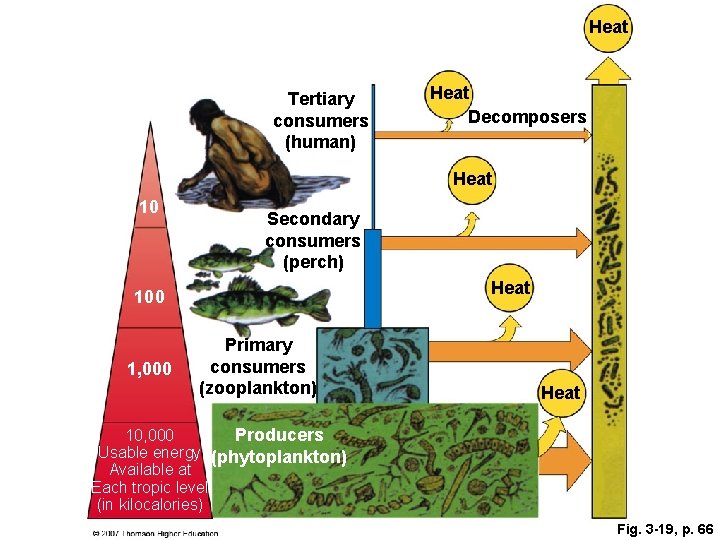
• Energy pyramids show why earth can support more people if they eat at lower trophic levels. There is too little energy left after four or five transfers to support organisms feeding at these high trophic levels.
Energy Flow in an Ecosystem: Losing Energy in Food Chains and Webs Ø Ecological efficiency: percentage of useable energy transferred as biomass from one trophic level to the next. Figure 3 -19
Heat Tertiary consumers (human) Heat Decomposers Heat 10 Secondary consumers (perch) Heat 100 1, 000 Primary consumers (zooplankton) Heat 10, 000 Producers Usable energy (phytoplankton) Available at Each tropic level (in kilocalories) Fig. 3 -19, p. 66
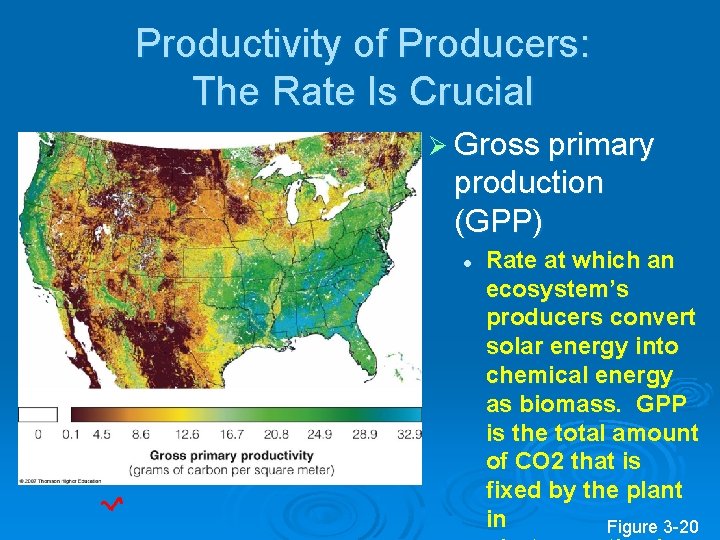
Productivity of Producers: The Rate Is Crucial Ø Gross primary production (GPP) l Rate at which an ecosystem’s producers convert solar energy into chemical energy as biomass. GPP is the total amount of CO 2 that is fixed by the plant in Figure 3 -20
Gross primary productivity (grams of carbon per square meter) Fig. 3 -20, p. 66
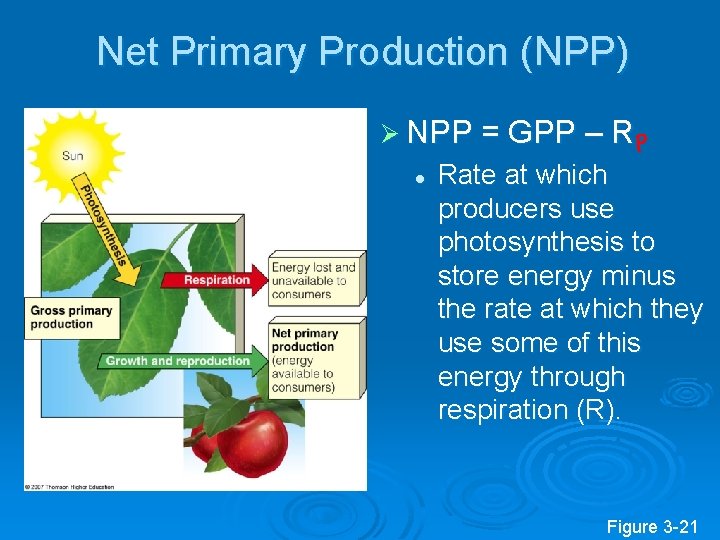
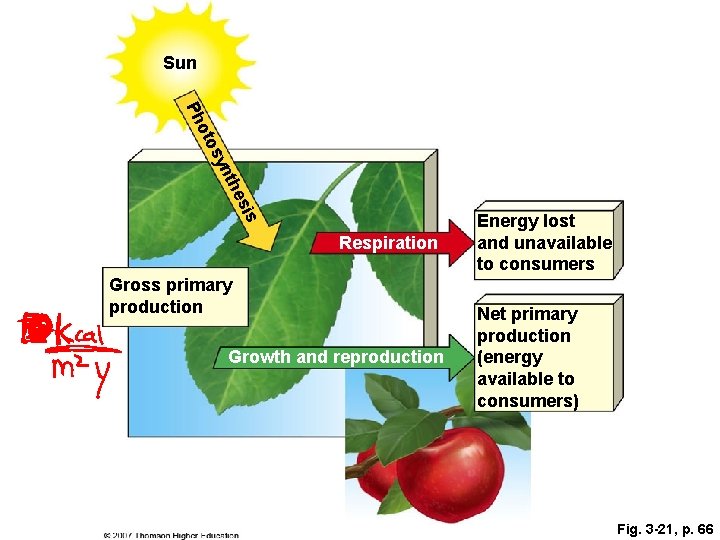
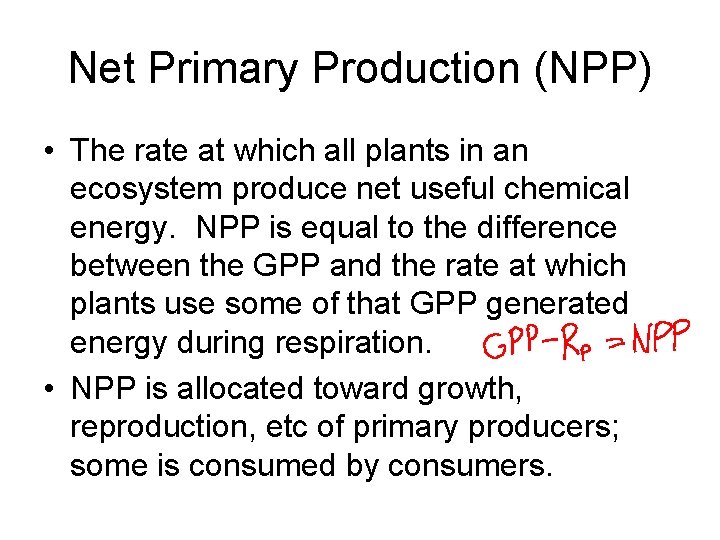
Net Primary Production (NPP) Ø NPP = GPP – R l Rate at which producers use photosynthesis to store energy minus the rate at which they use some of this energy through respiration (R). Figure 3 -21
Sun o Ph sis the yn tos Respiration Gross primary production Growth and reproduction Energy lost and unavailable to consumers Net primary production (energy available to consumers) Fig. 3 -21, p. 66
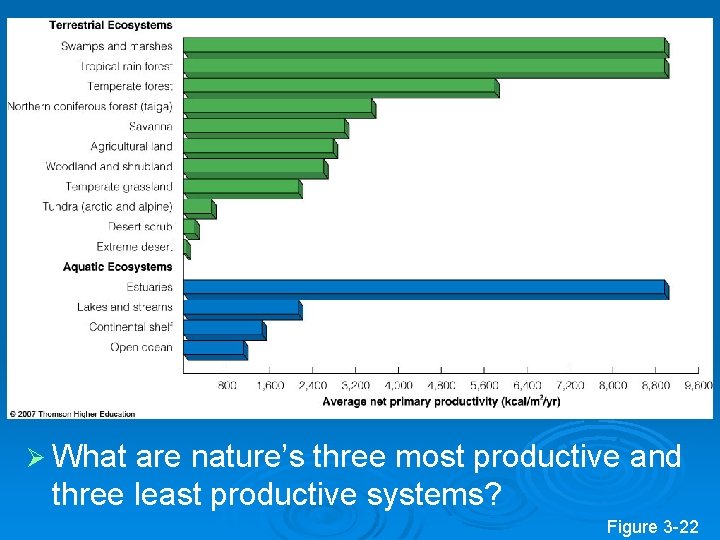
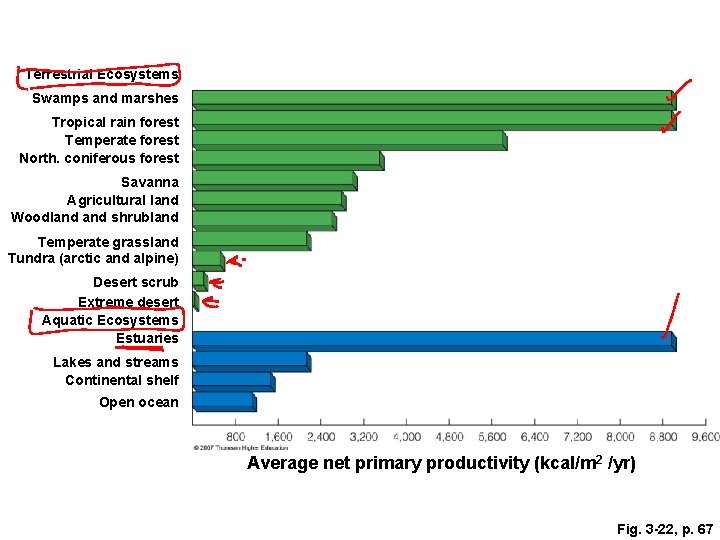
Ø What are nature’s three most productive and three least productive systems? Figure 3 -22
Terrestrial Ecosystems Swamps and marshes Tropical rain forest Temperate forest North. coniferous forest Savanna Agricultural land Woodland shrubland Temperate grassland Tundra (arctic and alpine) Desert scrub Extreme desert Aquatic Ecosystems Estuaries Lakes and streams Continental shelf Open ocean Average net primary productivity (kcal/m 2 /yr) Fig. 3 -22, p. 67
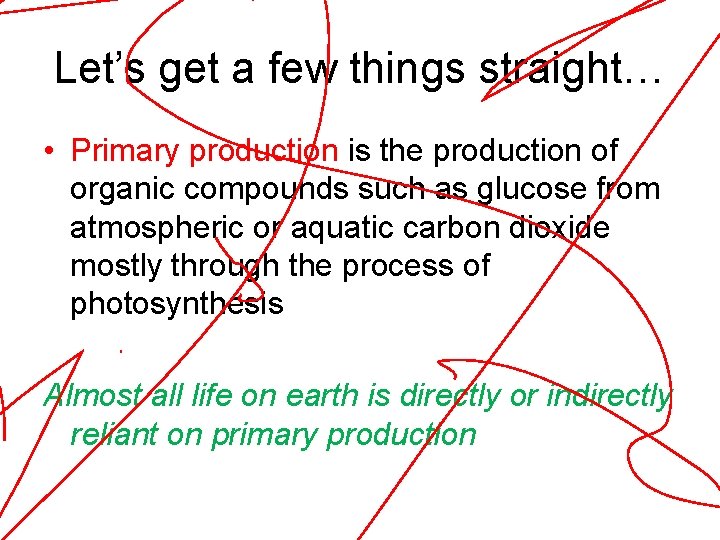
Let’s get a few things straight… • Primary production is the production of organic compounds such as glucose from atmospheric or aquatic carbon dioxide mostly through the process of photosynthesis Almost all life on earth is directly or indirectly reliant on primary production
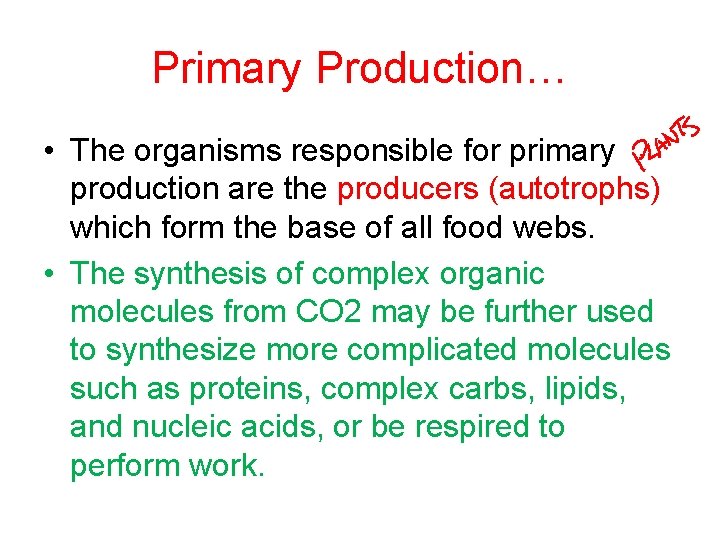
Primary Production… • The organisms responsible for primary production are the producers (autotrophs) which form the base of all food webs. • The synthesis of complex organic molecules from CO 2 may be further used to synthesize more complicated molecules such as proteins, complex carbs, lipids, and nucleic acids, or be respired to perform work.
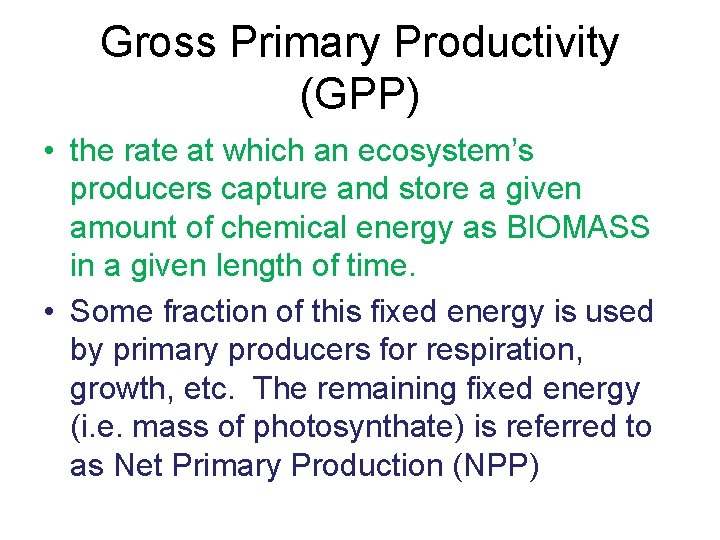
Gross Primary Productivity (GPP) • the rate at which an ecosystem’s producers capture and store a given amount of chemical energy as BIOMASS in a given length of time. • Some fraction of this fixed energy is used by primary producers for respiration, growth, etc. The remaining fixed energy (i. e. mass of photosynthate) is referred to as Net Primary Production (NPP)
Net Primary Production (NPP) • The rate at which all plants in an ecosystem produce net useful chemical energy. NPP is equal to the difference between the GPP and the rate at which plants use some of that GPP generated energy during respiration. • NPP is allocated toward growth, reproduction, etc of primary producers; some is consumed by consumers.
MATTER CYCLING IN ECOSYSTEMS Ø Nutrient Cycles: Global Recycling l l l Global Cycles recycle nutrients through the earth’s air, land, water, and living organisms. Nutrients are the elements and compounds that organisms need to live, grow, and reproduce. Biogeochemical cycles move these substances through air, water, soil, rock and living organisms.
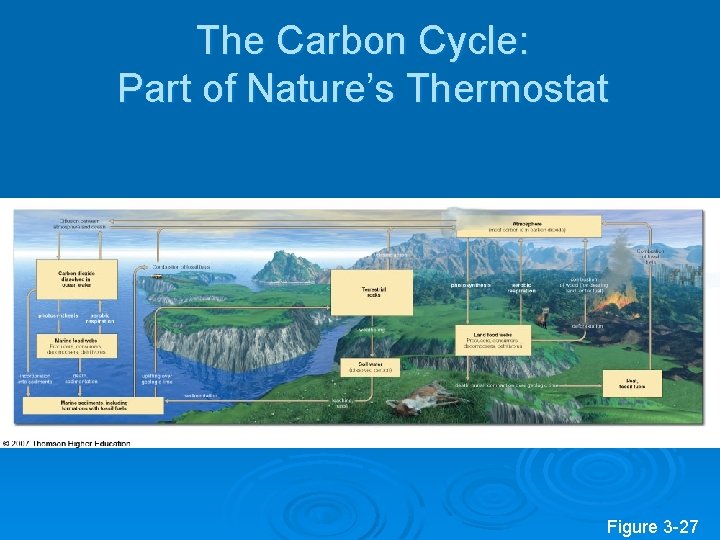
The Carbon Cycle: Part of Nature’s Thermostat Figure 3 -27
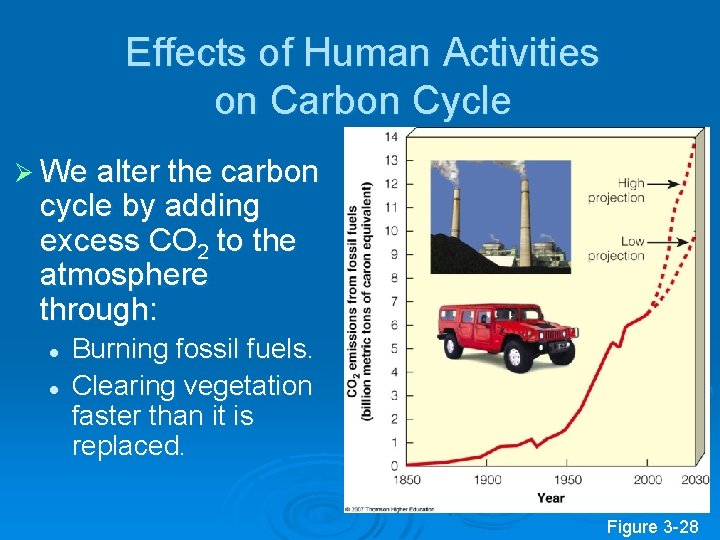
Effects of Human Activities on Carbon Cycle Ø We alter the carbon cycle by adding excess CO 2 to the atmosphere through: l l Burning fossil fuels. Clearing vegetation faster than it is replaced. Figure 3 -28
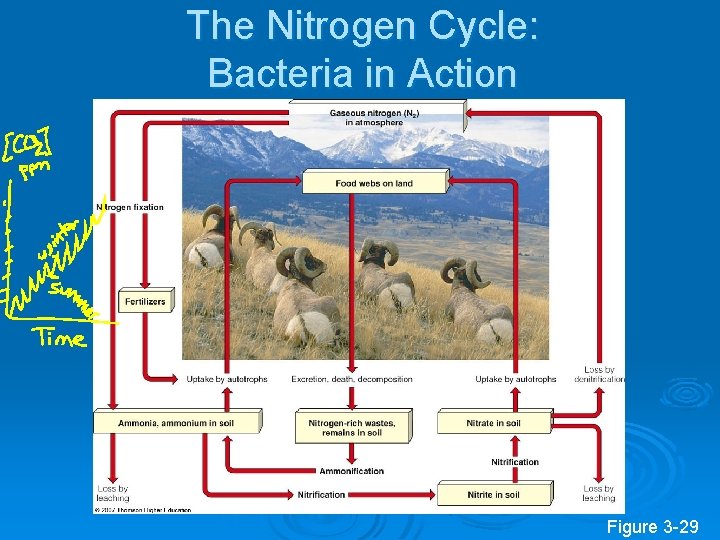
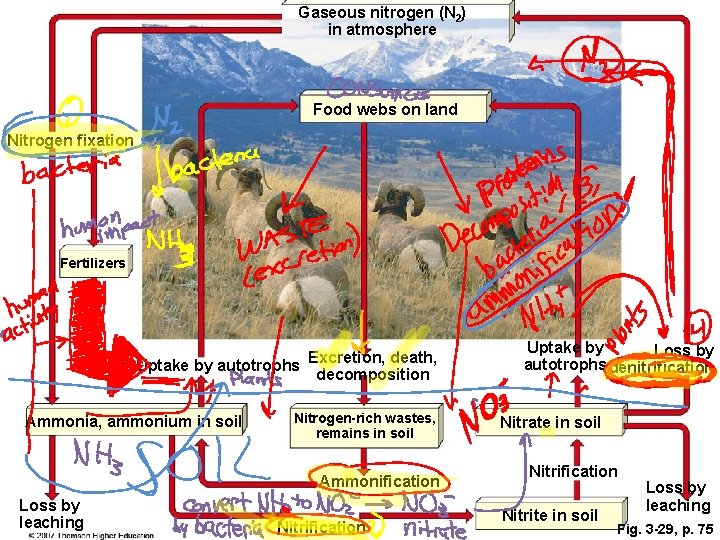
The Nitrogen Cycle: Bacteria in Action Figure 3 -29
Gaseous nitrogen (N 2) in atmosphere Food webs on land Nitrogen fixation Fertilizers Uptake by autotrophs Excretion, death, decomposition Ammonia, ammonium in soil Nitrogen-rich wastes, remains in soil Ammonification Loss by leaching Nitrification Uptake by Loss by autotrophs denitrification Nitrate in soil Nitrification Nitrite in soil Loss by leaching Fig. 3 -29, p. 75
Effects of Human Activities on the Nitrogen Cycle Ø We alter the nitrogen cycle by: l l Adding gases that contribute to acid rain. Adding nitrous oxide to the atmosphere through farming practices which can warm the atmosphere and deplete ozone. Contaminating ground water from nitrate ions in inorganic fertilizers. Releasing nitrogen into the troposphere through deforestation.
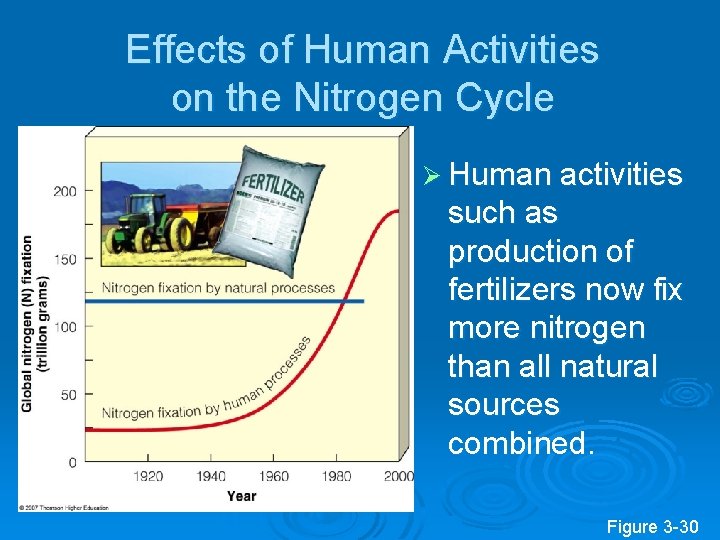
Effects of Human Activities on the Nitrogen Cycle Ø Human activities such as production of fertilizers now fix more nitrogen than all natural sources combined. Figure 3 -30
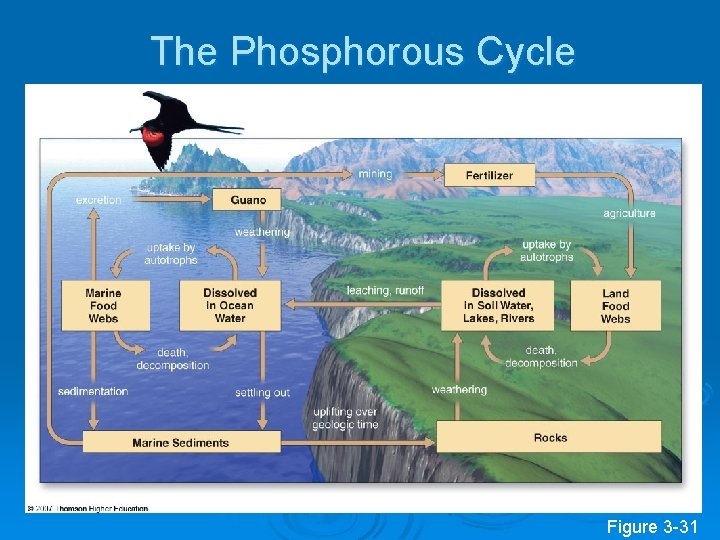
The Phosphorous Cycle Figure 3 -31
Effects of Human Activities on the Phosphorous Cycle Ø We remove large amounts of phosphate from the earth to make fertilizer. Ø We reduce phosphorous in tropical soils by clearing forests. Ø We add excess phosphates to aquatic systems from runoff of animal wastes and fertilizers.
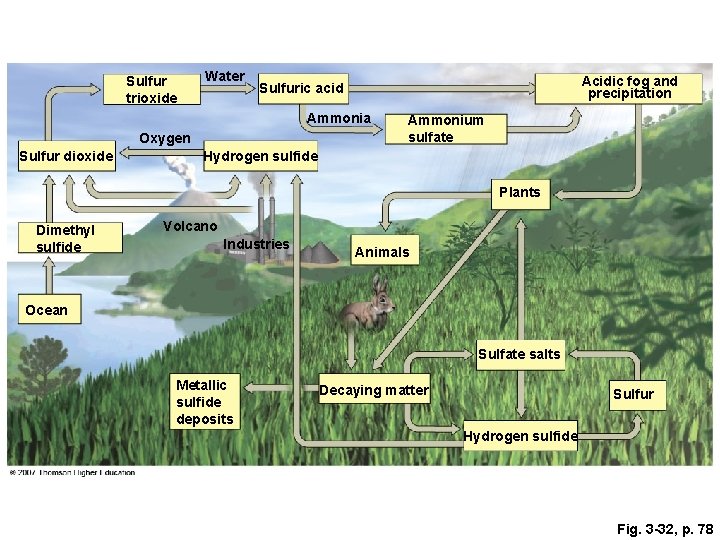
Sulfur trioxide Water Acidic fog and precipitation Sulfuric acid Ammonia Oxygen Sulfur dioxide Ammonium sulfate Hydrogen sulfide Plants Dimethyl sulfide Volcano Industries Animals Ocean Sulfate salts Metallic sulfide deposits Decaying matter Sulfur Hydrogen sulfide Fig. 3 -32, p. 78
HOW DO ECOLOGISTS LEARN ABOUT ECOSYSTEMS? Ø Ecologist go into ecosystems to observe, but also use remote sensors on aircraft and satellites to collect data and analyze geographic data in large databases. l l Geographic Information Systems Remote Sensing Ø Ecologists also use controlled indoor and outdoor chambers to study ecosystems
Importance of Baseline Ecological Data Ø We need baseline data on the world’s ecosystems so we can see how they are changing and develop effective strategies for preventing or slowing their degradation. l Scientists have less than half of the basic ecological data needed to evaluate the status of ecosystems in the United Sates (Heinz Foundation 2002; Millennium Assessment 2005).