
Chapter 15 Classification History of Taxonomy Taxonomy The





- Slides: 42
Chapter 15 Classification
History of Taxonomy
Taxonomy • The branch of biology that names and groups organisms according to their characteristics and evolutionary history
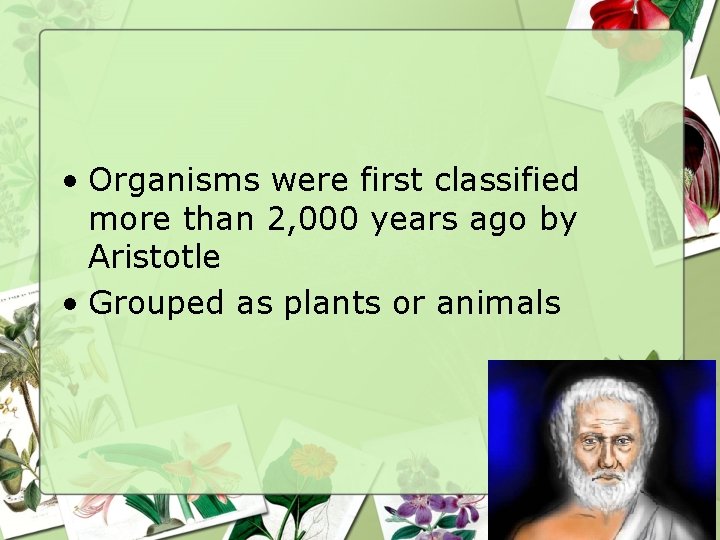
• Organisms were first classified more than 2, 000 years ago by Aristotle • Grouped as plants or animals
Linnaeus’s System • Swedish naturalist Carolus Linnaeus (1707 -1778) – devised a system of grouping organisms into hierarchical categories • He used an organisms form and structure (morphology) to classify it
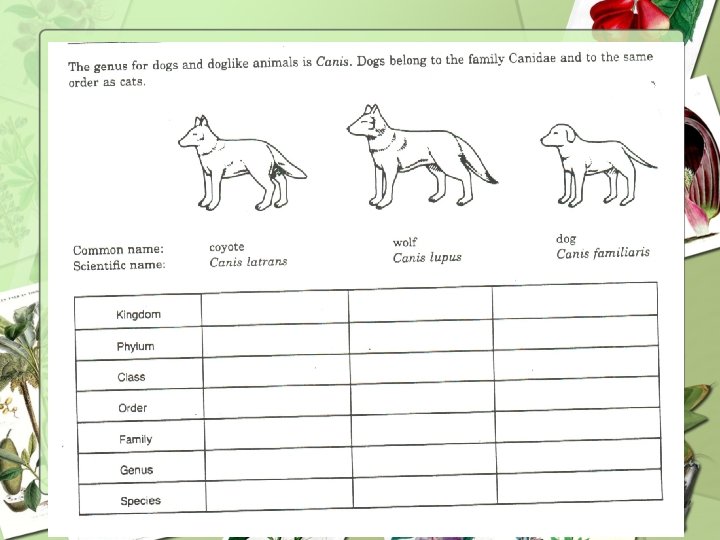
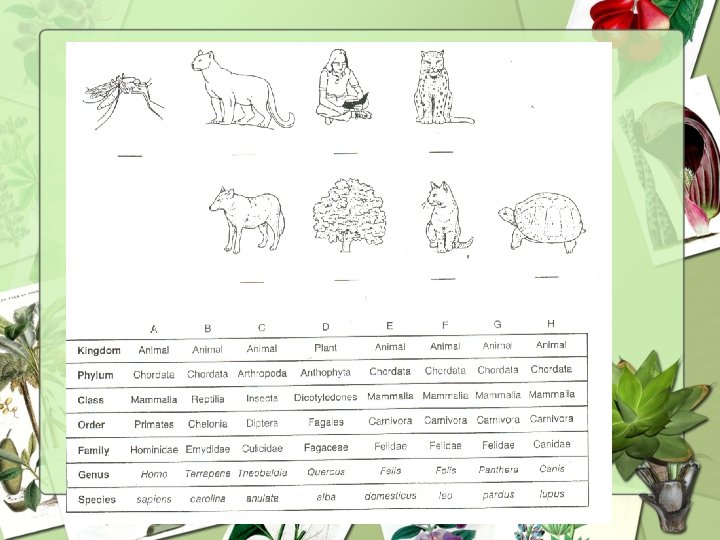
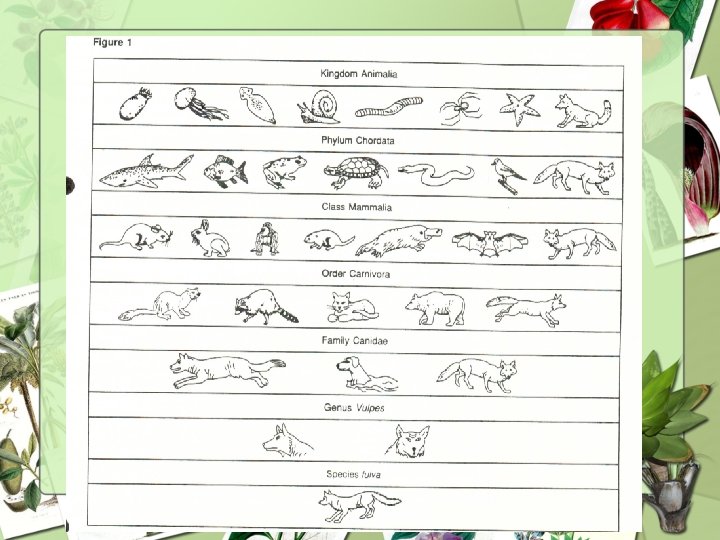
Levels of Classification • Devised a nested hierarchy of seven different levels of organization • Kingdom (largest), phylum (division in plants), class, order, family, genus, species (smallest) • Taxa – each hierarchical division
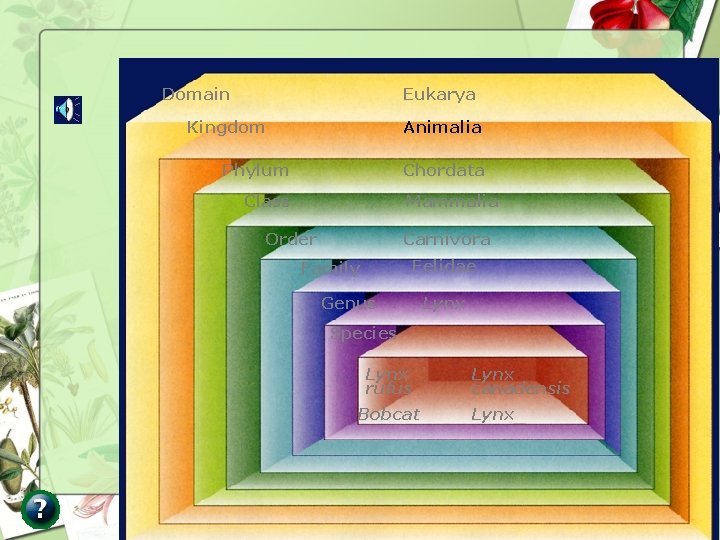
Domain Eukarya Kingdom Animalia Phylum Chordata Class Mammalia Order Carnivora Felidae Family Genus Lynx Species Lynx rufus Bobcat Lynx canadensis Lynx
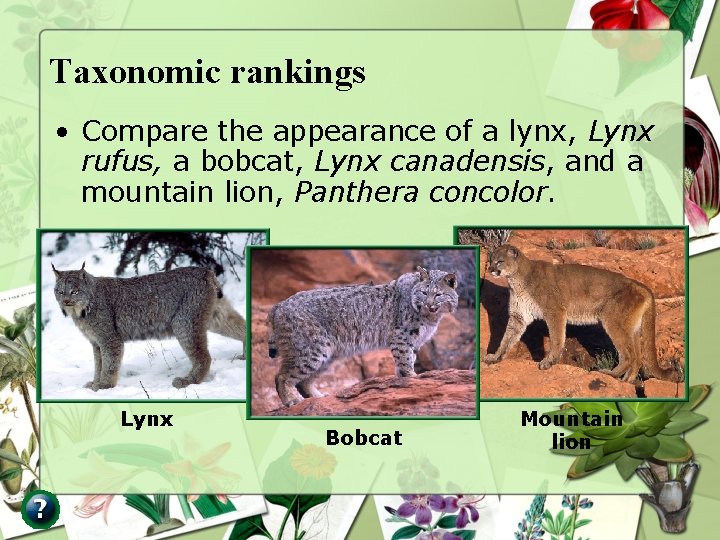
Taxonomic rankings • Compare the appearance of a lynx, Lynx rufus, a bobcat, Lynx canadensis, and a mountain lion, Panthera concolor. Lynx Bobcat Mountain lion
Binomial Nomenclature • Two part name system – in Latin – universal • The species name (scientific name) has two parts • Genus species • Ex. Homo sapiens
How they are classified
• Taxonomists consider the phylogeny (evolutionary history) of the organism
Modern Taxonomists consider: • Morphology • Chromosomal characteristics • Nucleotide sequences • Amino acid sequence • Embryological development
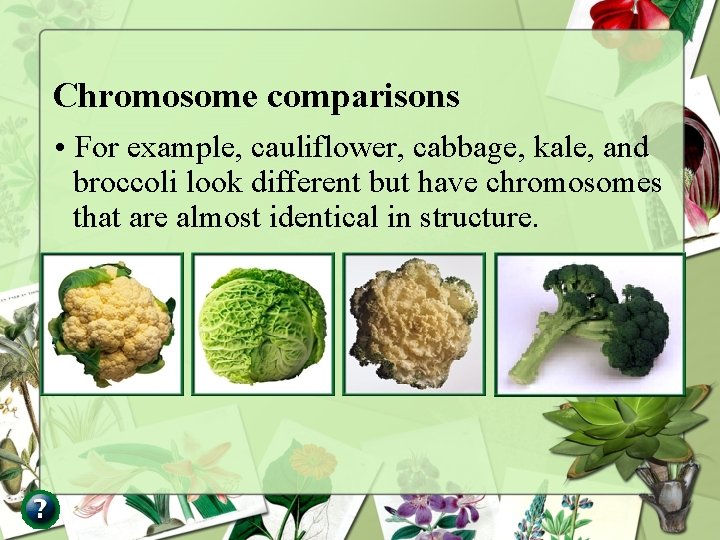
Chromosome comparisons • For example, cauliflower, cabbage, kale, and broccoli look different but have chromosomes that are almost identical in structure.
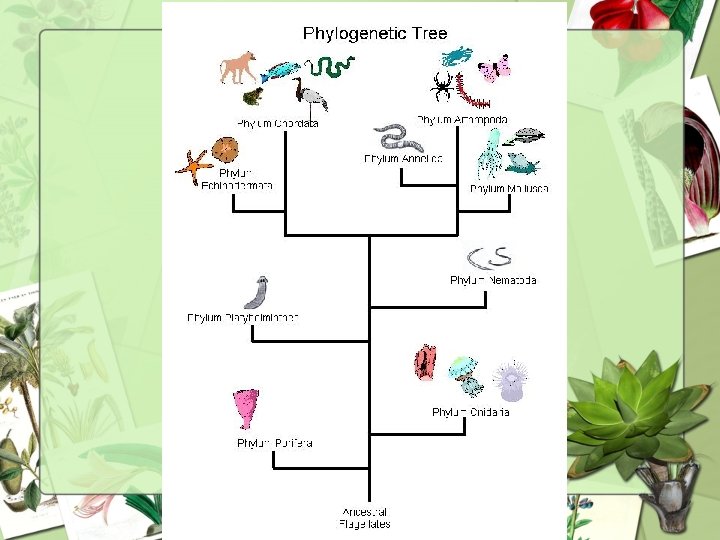
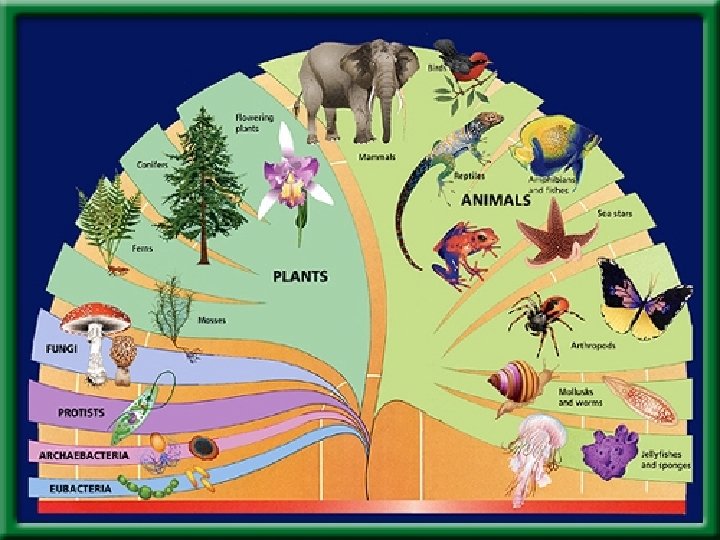
Phylogenetic Tree • A family tree that shows the evolutionary relationship thought to exist among groups of organisms
The Fossil Record • Often provided clues to evolutionary relationships
Morphology • Taxonomists study an organism’s morphology and compare it with the morphology of other living organisms
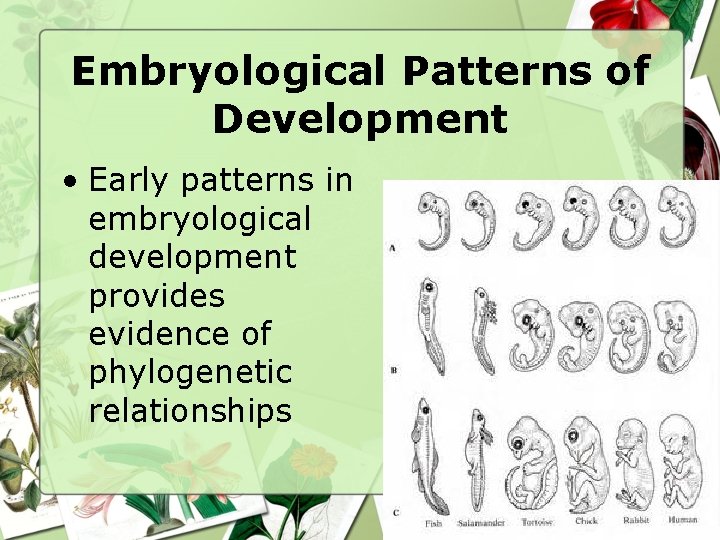
Embryological Patterns of Development • Early patterns in embryological development provides evidence of phylogenetic relationships
Chromosomes and Macromolecules • Taxonomists use comparisons of macromolecules such as DNA, RNA and proteins as a kind of “molecular clock”
• Biologists compare the karyotypes, or patterns of chromosomes, of two related species – regions that are the same are clues to the degree of relatedness of organisms
Six-Kingdom System
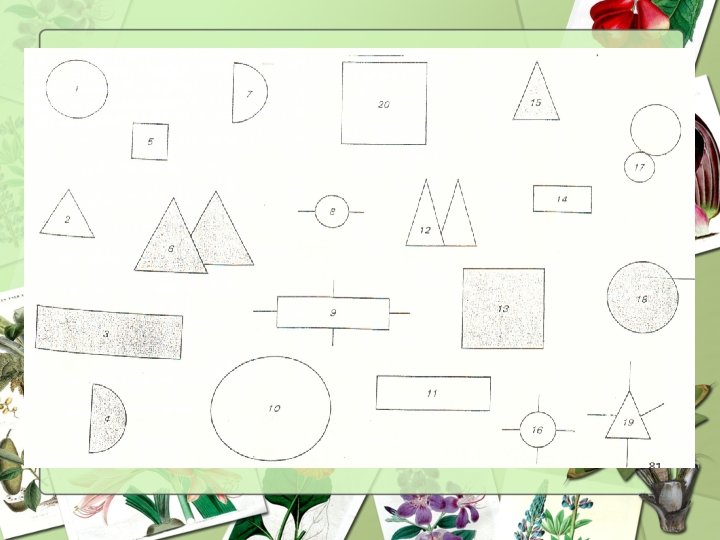
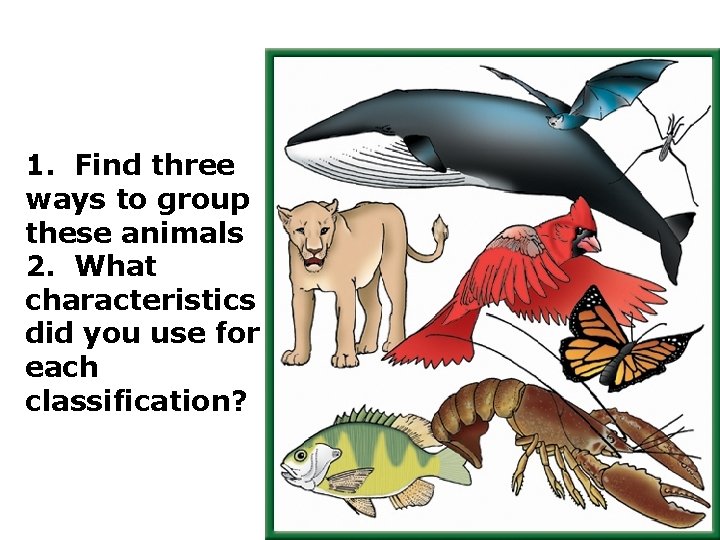
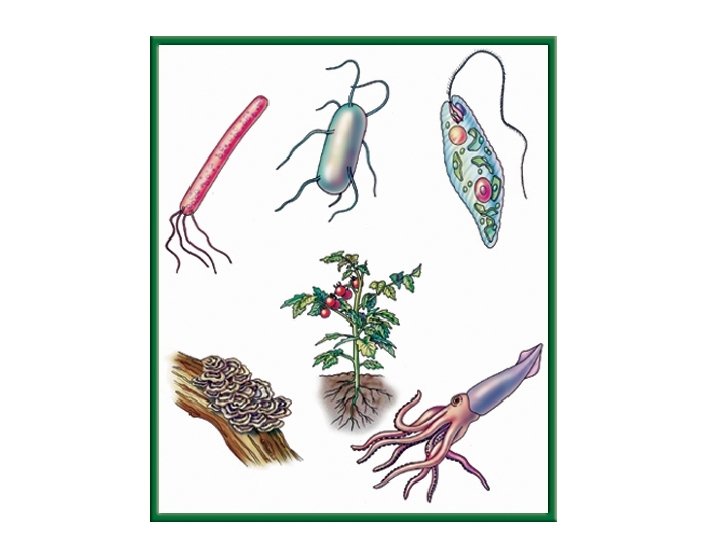
1. Find three ways to group these animals 2. What characteristics did you use for each classification?
• The five kingdom system was used for years but recently it was determined that there are two important subtypes with very different morphologies and properties
Kingdom Archaebacteria • Unicellular prokaryotes with distinctive cell membranes as well as biochemical and genetic properties that differ from all other kinds of life • Some species are autotrophic, producing food by chemosynthesis
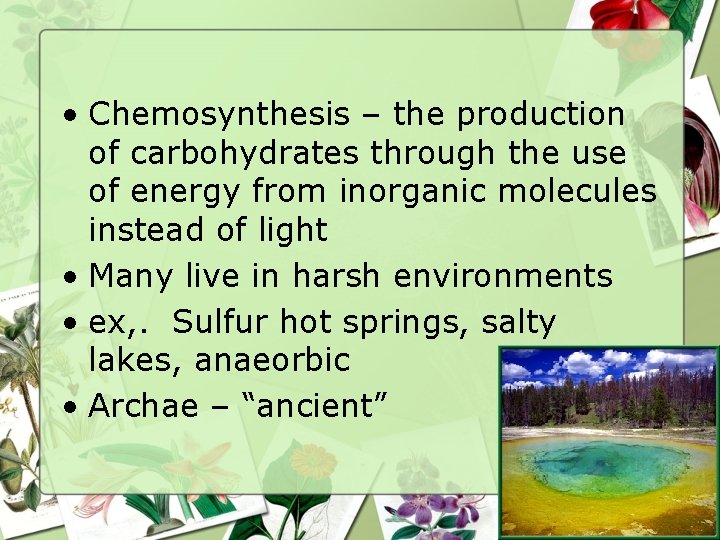
• Chemosynthesis – the production of carbohydrates through the use of energy from inorganic molecules instead of light • Many live in harsh environments • ex, . Sulfur hot springs, salty lakes, anaeorbic • Archae – “ancient”
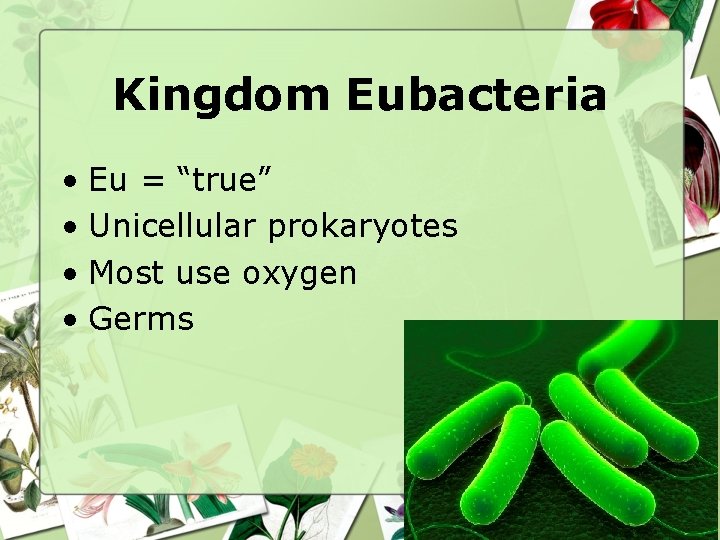
Kingdom Eubacteria • Eu = “true” • Unicellular prokaryotes • Most use oxygen • Germs
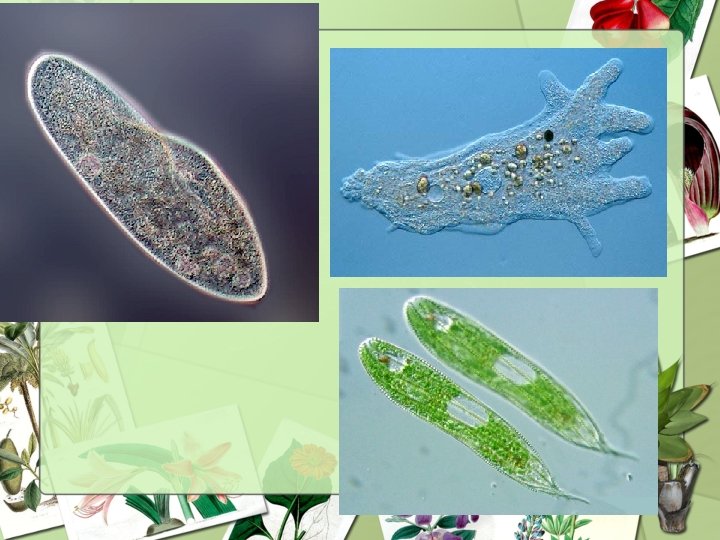
Kingdom Protista • Mostly single-celled organisms • Lack specialized tissues • Membrane-bound true nucleus with linear chromosomes and they have membrane bound organelles • Eukaryotes
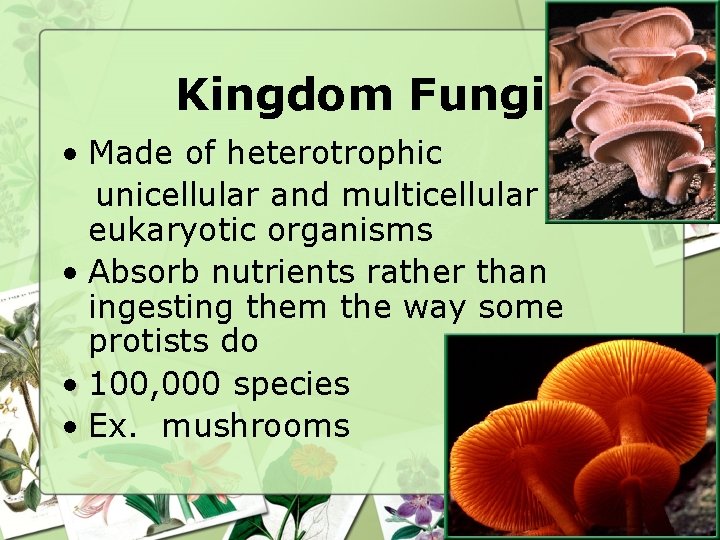
Kingdom Fungi • Made of heterotrophic unicellular and multicellular eukaryotic organisms • Absorb nutrients rather than ingesting them the way some protists do • 100, 000 species • Ex. mushrooms
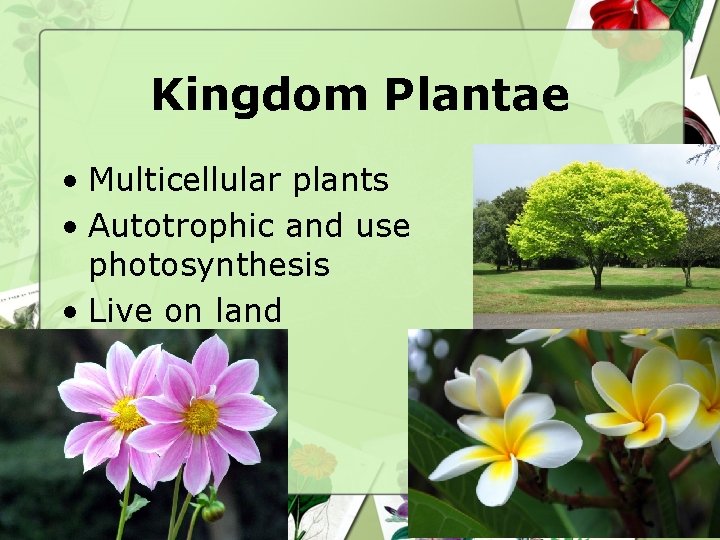
Kingdom Plantae • Multicellular plants • Autotrophic and use photosynthesis • Live on land
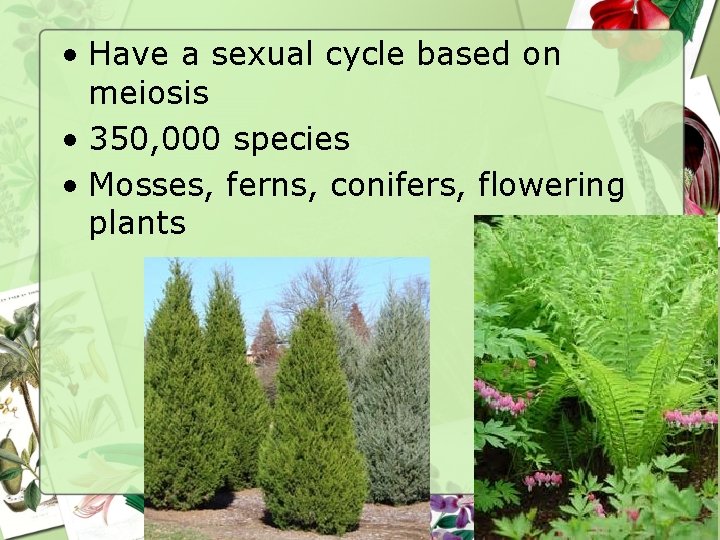
• Have a sexual cycle based on meiosis • 350, 000 species • Mosses, ferns, conifers, flowering plants
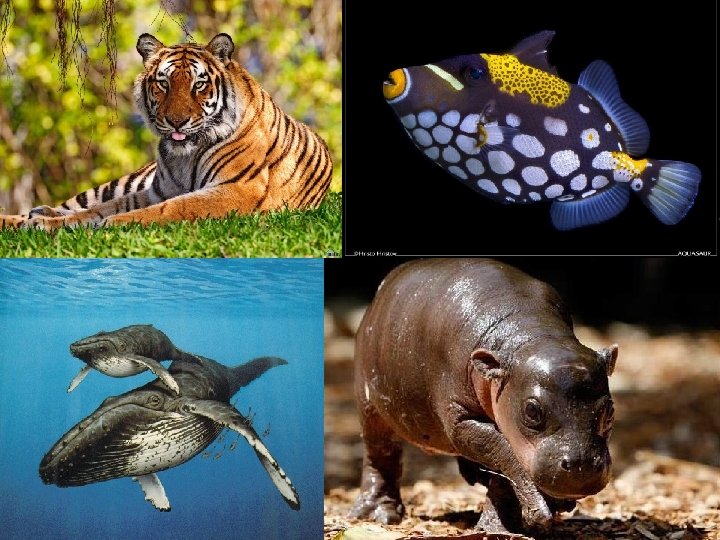
Kingdom Animalia • Eukaryotic, multicellular heterotrophic organisms • Symmetrical body organization • Standard sexual cycle that employs meiosis
The End