
Chapter 15 BPlant Responses How does a plant
Chapter 15 BPlant Responses How does a plant respond to internal and external factors?
15. 4 - Hormones
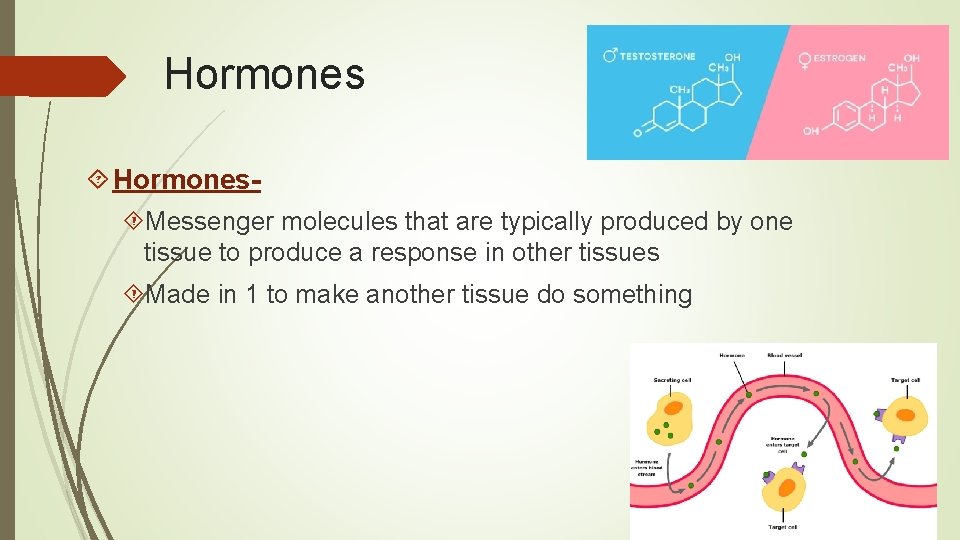
Hormones Messenger molecules that are typically produced by one tissue to produce a response in other tissues Made in 1 to make another tissue do something
Plant Hormones 5 major categories Abscisic Acid Auxins Cytokinins Ethylene Gibberellins Usually don’t work alone Auxin makes ethylene Auxin and cytokinins work together
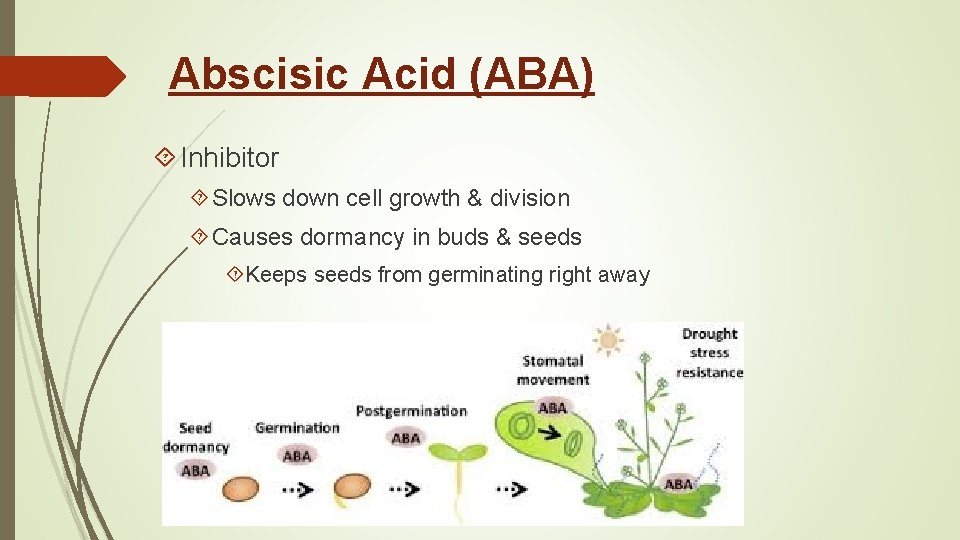
Abscisic Acid (ABA) Inhibitor Slows down cell growth & division Causes dormancy in buds & seeds Keeps seeds from germinating right away
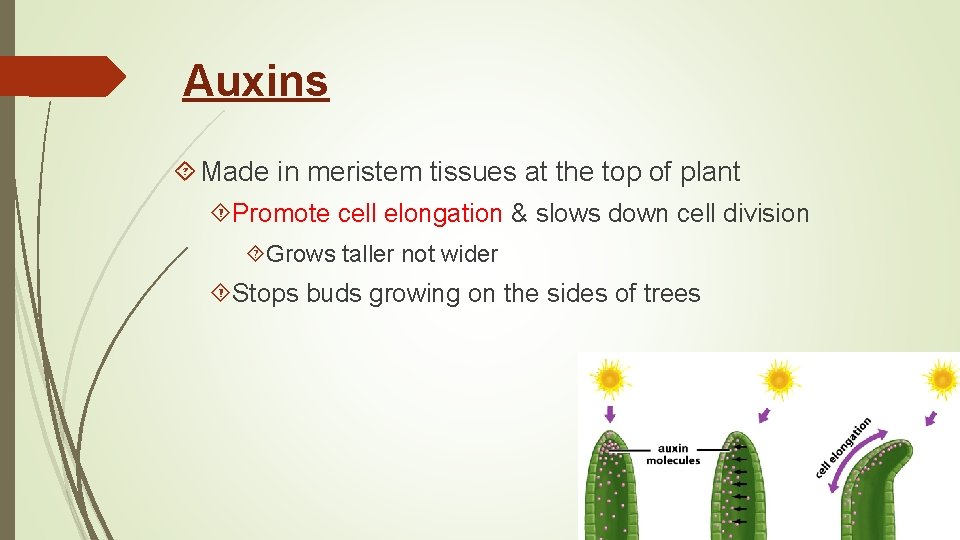
Auxins Made in meristem tissues at the top of plant Promote cell elongation & slows down cell division Grows taller not wider Stops buds growing on the sides of trees
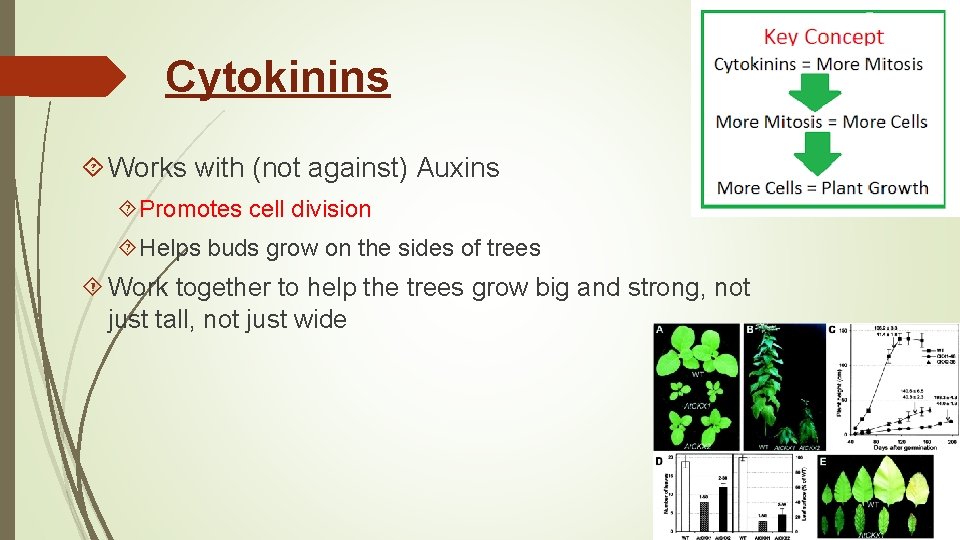
Cytokinins Works with (not against) Auxins Promotes cell division Helps buds grow on the sides of trees Work together to help the trees grow big and strong, not just tall, not just wide
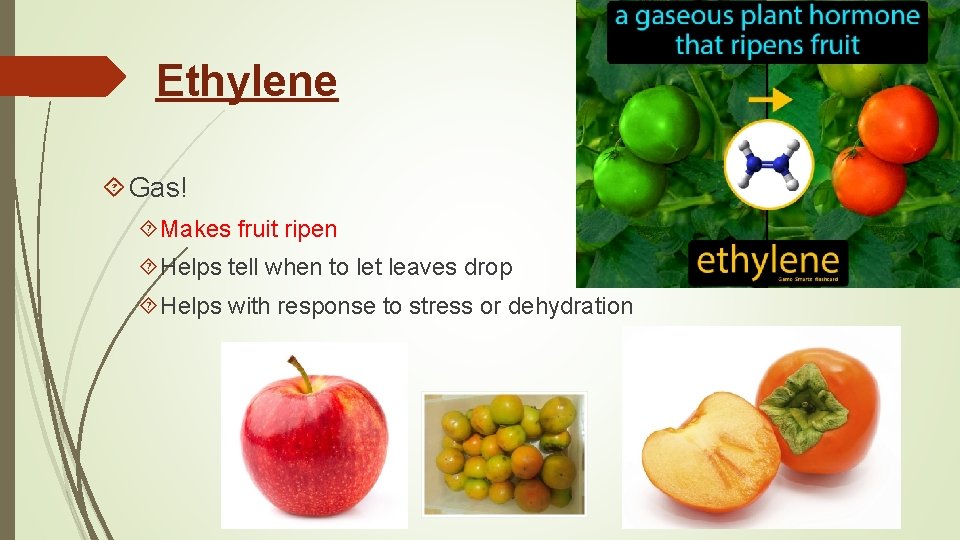
Ethylene Gas! Makes fruit ripen Helps tell when to let leaves drop Helps with response to stress or dehydration
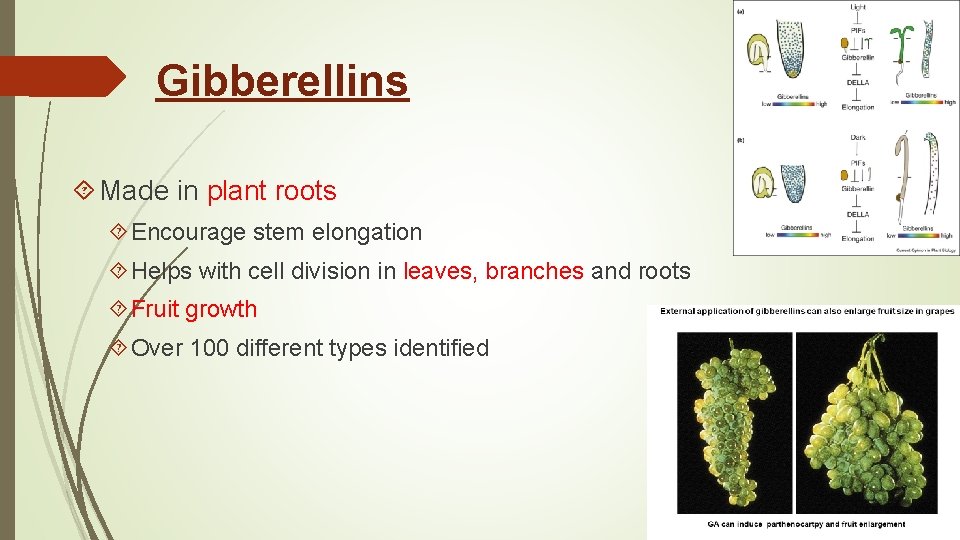
Gibberellins Made in plant roots Encourage stem elongation Helps with cell division in leaves, branches and roots Fruit growth Over 100 different types identified
15. 5 - Tropisms
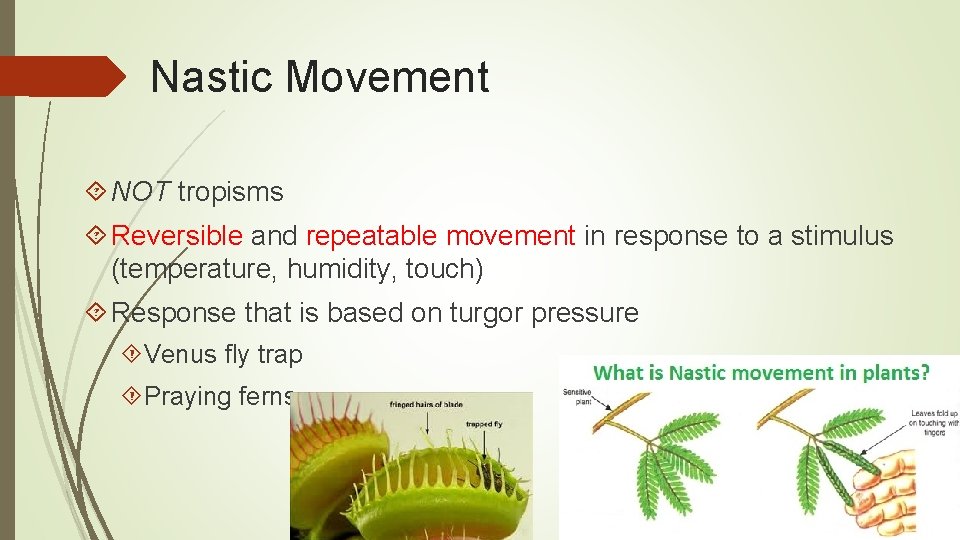
Nastic Movement NOT tropisms Reversible and repeatable movement in response to a stimulus (temperature, humidity, touch) Response that is based on turgor pressure Venus fly trap Praying ferns
Tropisms What is a tropism? Directionally dependent growth responses to external stimuli (permanent) Types: Phototropism Gravitropism Thigmotropism Hydrotropism
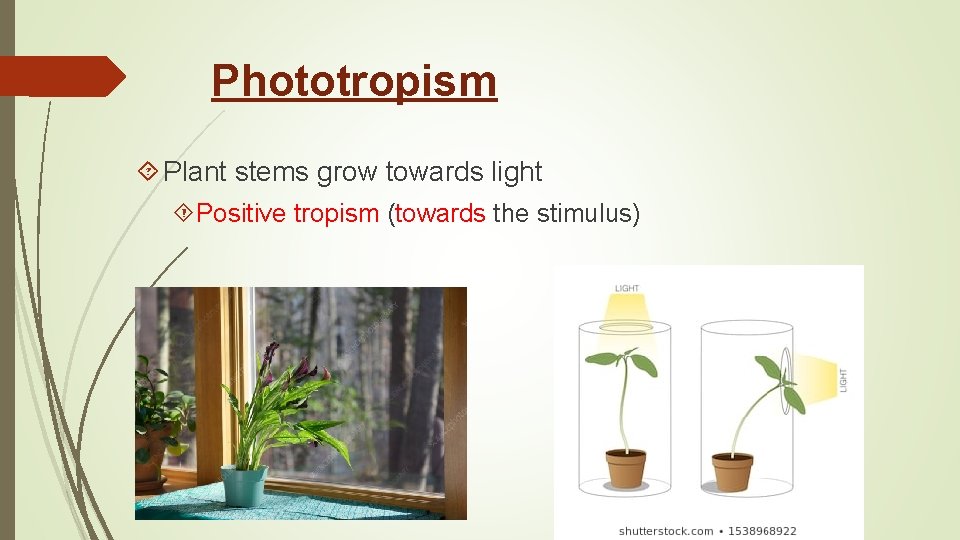
Phototropism Plant stems grow towards light Positive tropism (towards the stimulus)
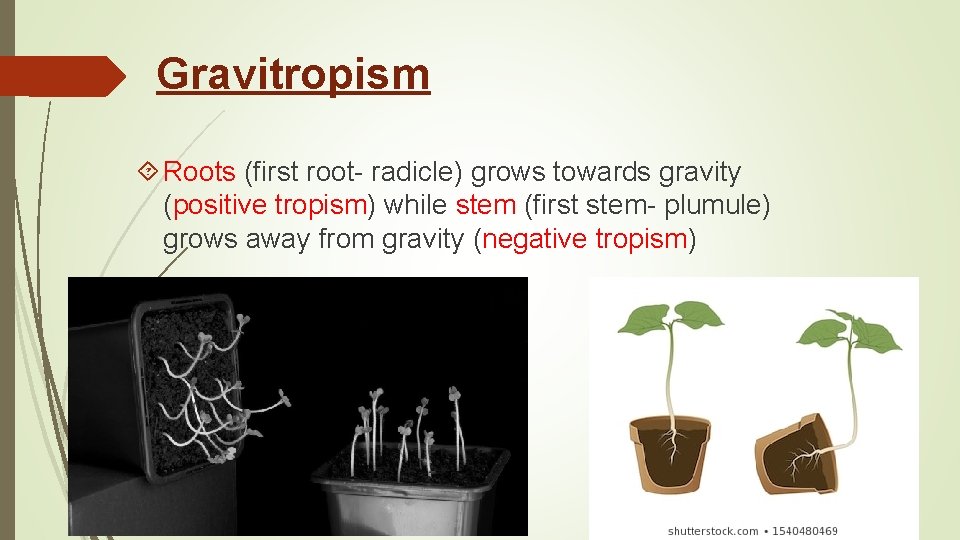
Gravitropism Roots (first root- radicle) grows towards gravity (positive tropism) while stem (first stem- plumule) grows away from gravity (negative tropism)
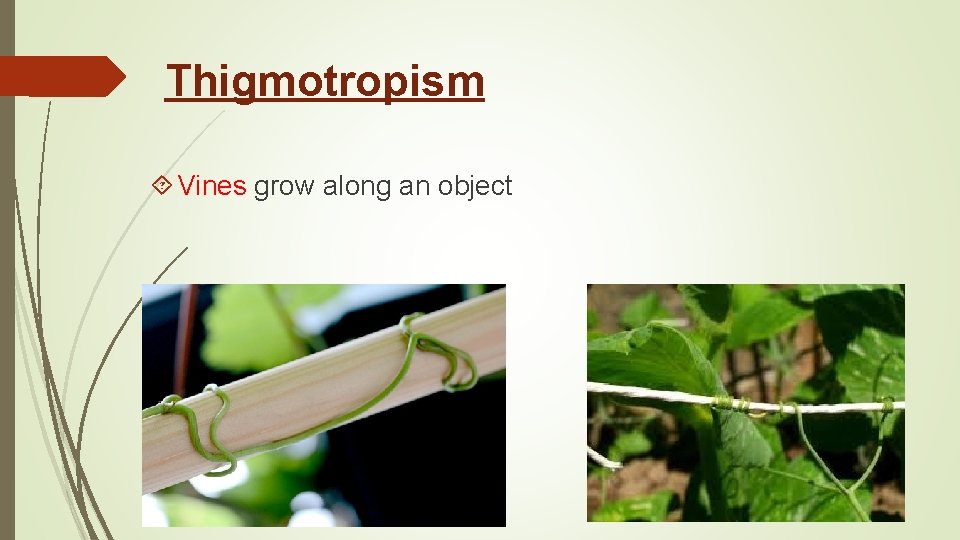
Thigmotropism Vines grow along an object
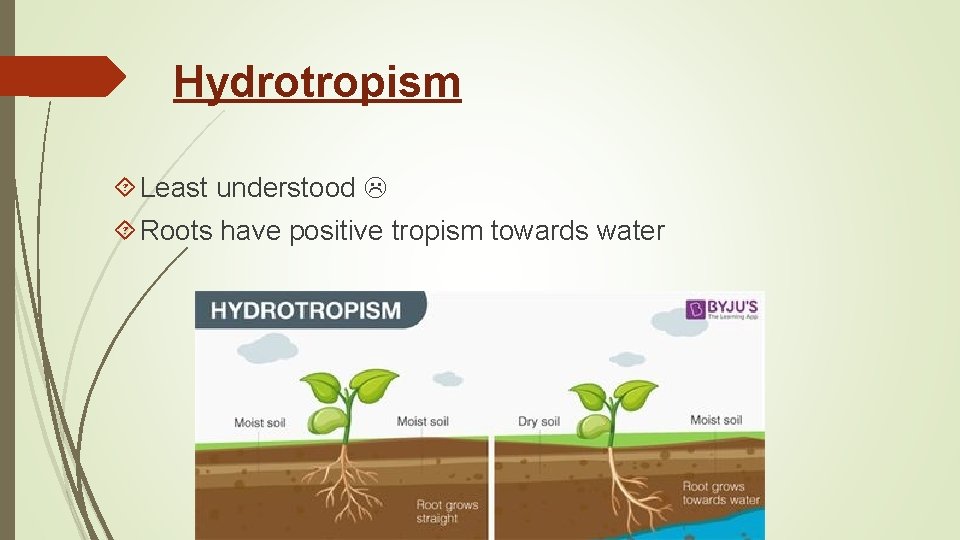
Hydrotropism Least understood Roots have positive tropism towards water
15. 6 - Photoperiodism
Photoperiodism What is photoperiodism? Response of a plant to seasonal changes in day length (daylight, sunlight) Flowers bloom depending on the length of darkness
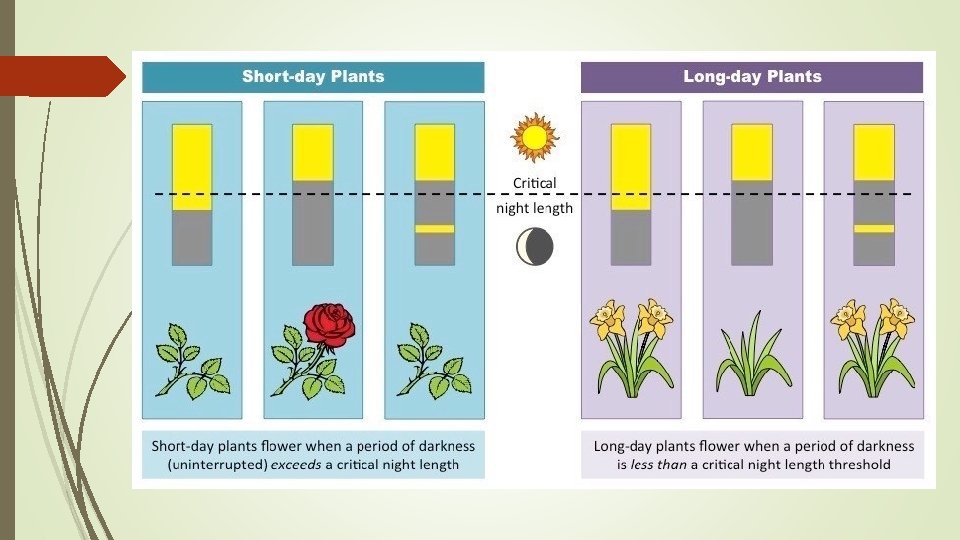
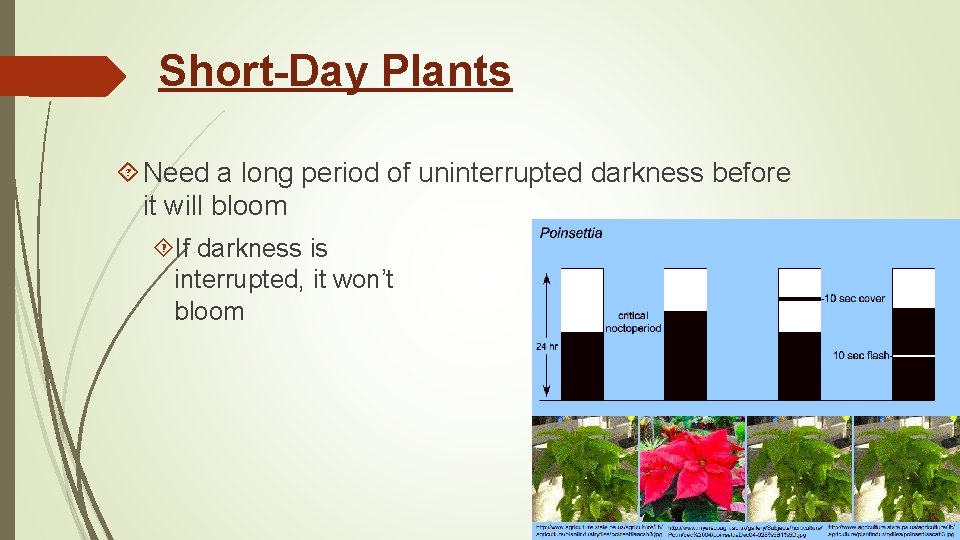
Short-Day Plants Need a long period of uninterrupted darkness before it will bloom If darkness is interrupted, it won’t bloom
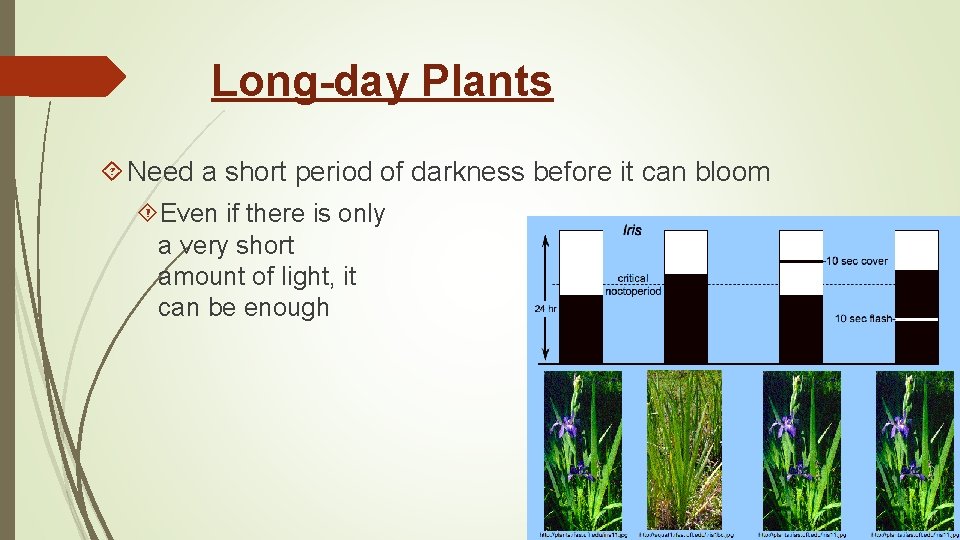
Long-day Plants Need a short period of darkness before it can bloom Even if there is only a very short amount of light, it can be enough
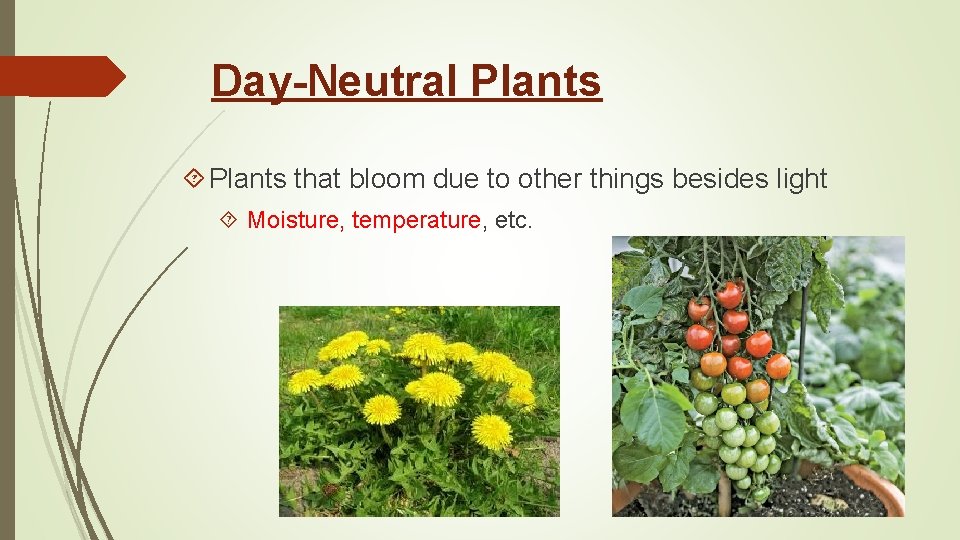
Day-Neutral Plants that bloom due to other things besides light Moisture, temperature, etc.
Photoperiodism Pigments that control how a plant responds to photoperiodism- phytochromes Pigment that is Pr at night, but plant changes it into Pfr during the day Ratio of Pr: Pfr tells the plant whether to flower or not
- Slides: 23