
Chapter 15 Benzene and Aromaticity Section 15 1
Chapter 15 Benzene and Aromaticity
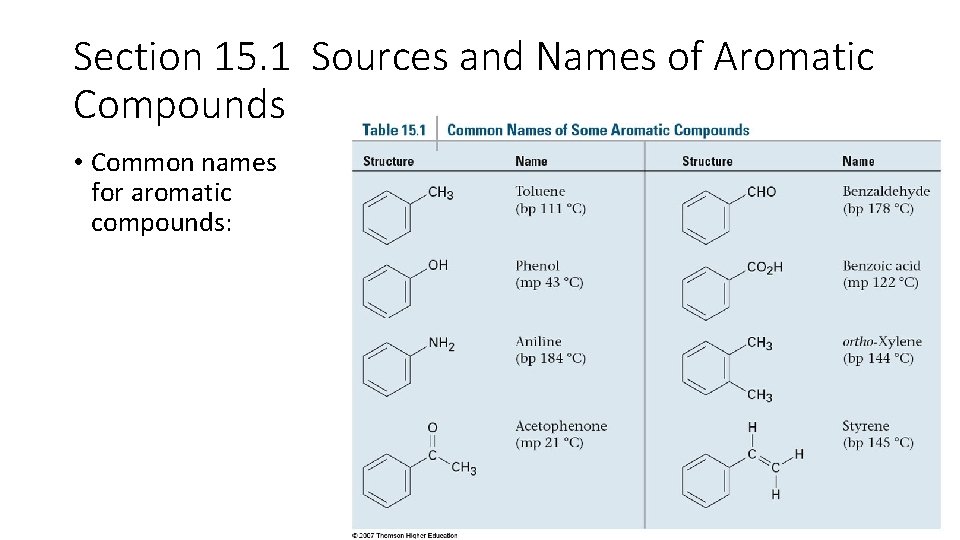
Section 15. 1 Sources and Names of Aromatic Compounds • Common names for aromatic compounds:

Monosubstituted Benzenes • Monosubstituted benzenes are named similar to other organic molecules • -benzene is used as the suffix
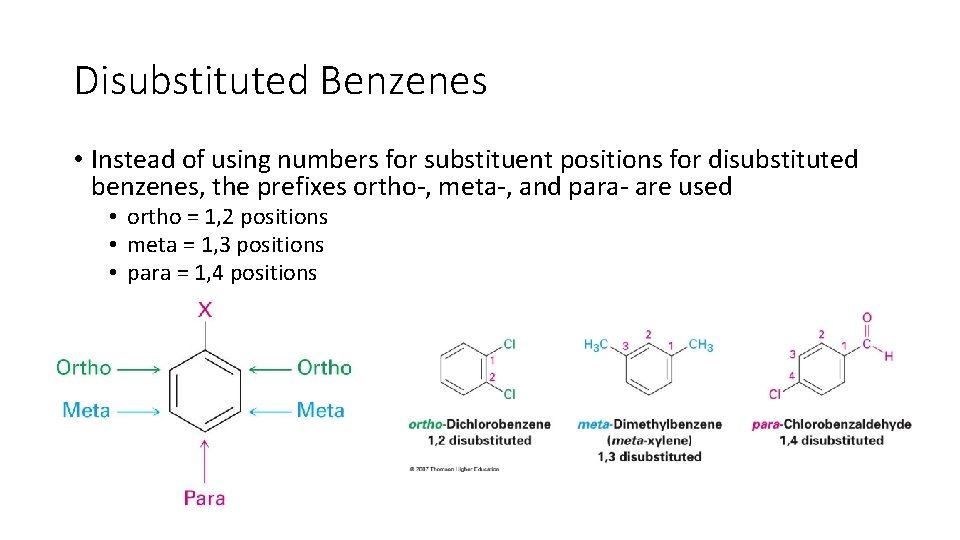
Disubstituted Benzenes • Instead of using numbers for substituent positions for disubstituted benzenes, the prefixes ortho-, meta-, and para- are used • ortho = 1, 2 positions • meta = 1, 3 positions • para = 1, 4 positions
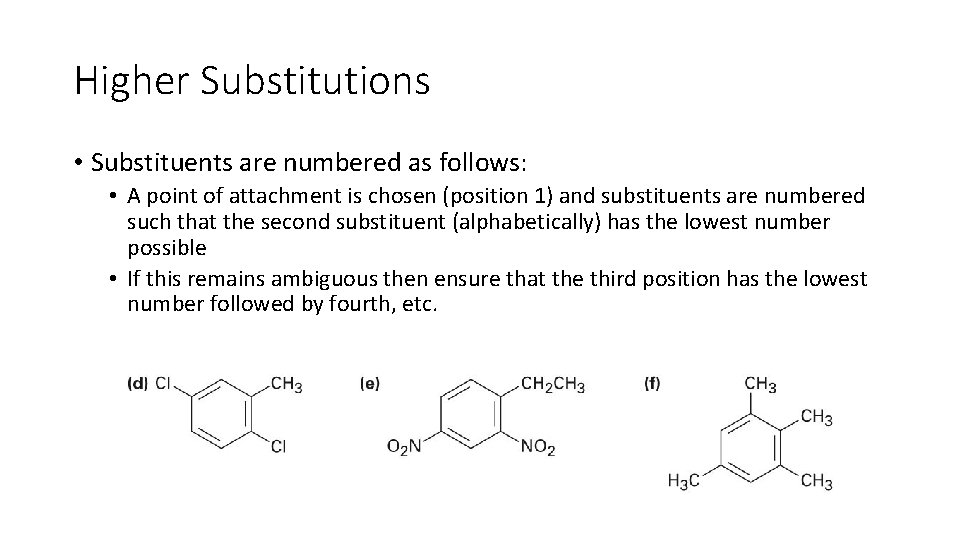
Higher Substitutions • Substituents are numbered as follows: • A point of attachment is chosen (position 1) and substituents are numbered such that the second substituent (alphabetically) has the lowest number possible • If this remains ambiguous then ensure that the third position has the lowest number followed by fourth, etc.
Additional Examples • Draw structures for the following: • p-Bromochlorobenzene • m-Bromotoluene • 1 -Chloro-3, 5 -dimethylbenzene
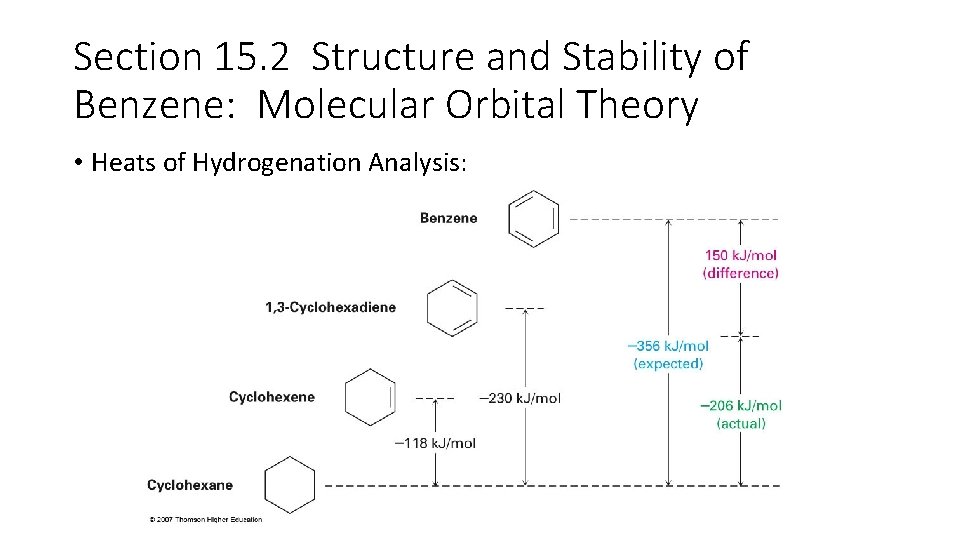
Section 15. 2 Structure and Stability of Benzene: Molecular Orbital Theory • Heats of Hydrogenation Analysis:
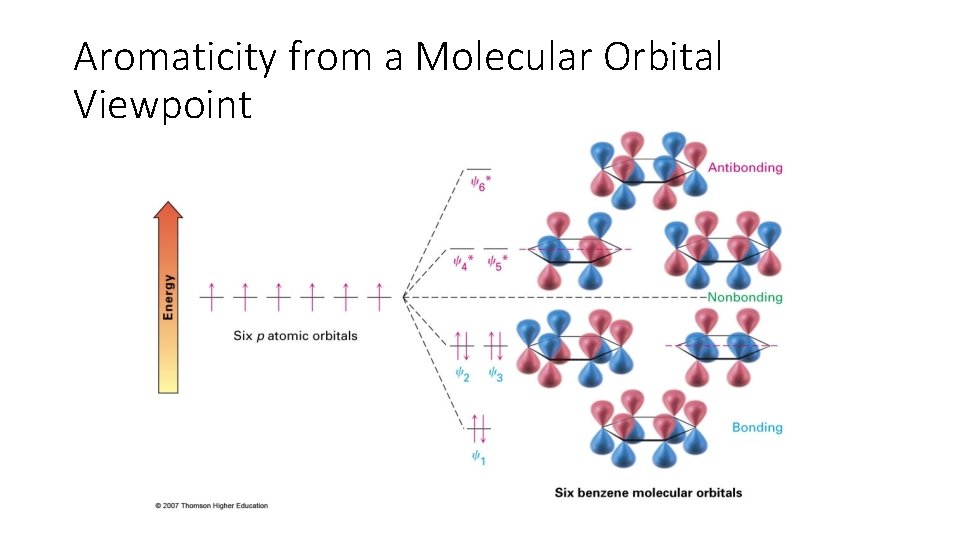
Aromaticity from a Molecular Orbital Viewpoint
Section 15. 3 Aromaticity and the Hückel 4 n+2 Rule • Requirements for aromaticity: • • Cyclic Conjugated (Uninterrupted -system) Planar 4 n + 2 electrons • Molecules with 4 n electrons are referred to as antiaromatic • Ex: Cyclobutadiene
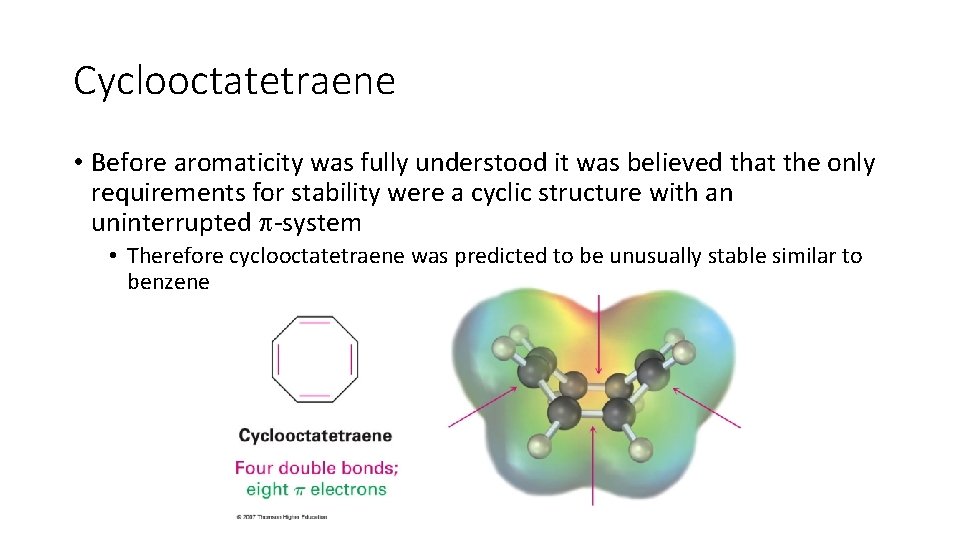
Cyclooctatetraene • Before aromaticity was fully understood it was believed that the only requirements for stability were a cyclic structure with an uninterrupted -system • Therefore cyclooctatetraene was predicted to be unusually stable similar to benzene
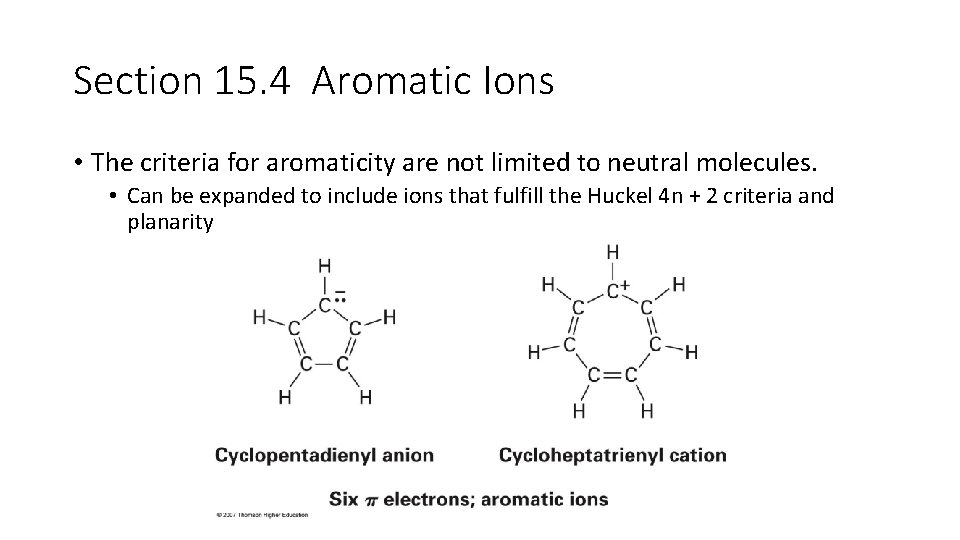
Section 15. 4 Aromatic Ions • The criteria for aromaticity are not limited to neutral molecules. • Can be expanded to include ions that fulfill the Huckel 4 n + 2 criteria and planarity
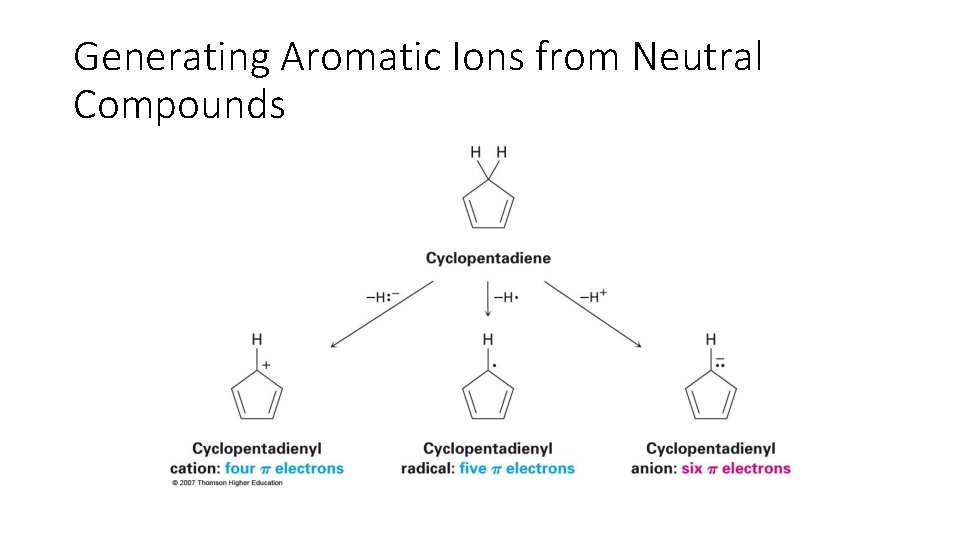
Generating Aromatic Ions from Neutral Compounds
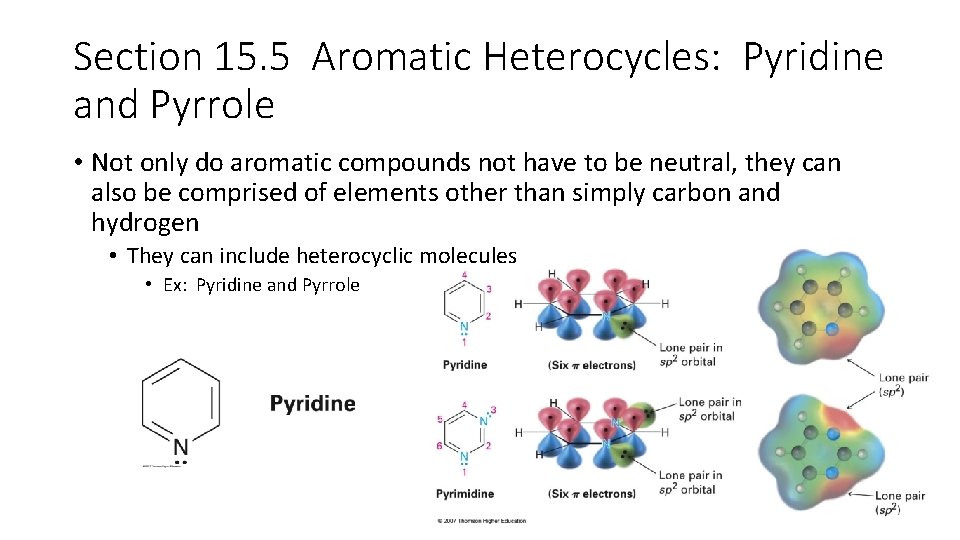
Section 15. 5 Aromatic Heterocycles: Pyridine and Pyrrole • Not only do aromatic compounds not have to be neutral, they can also be comprised of elements other than simply carbon and hydrogen • They can include heterocyclic molecules • Ex: Pyridine and Pyrrole
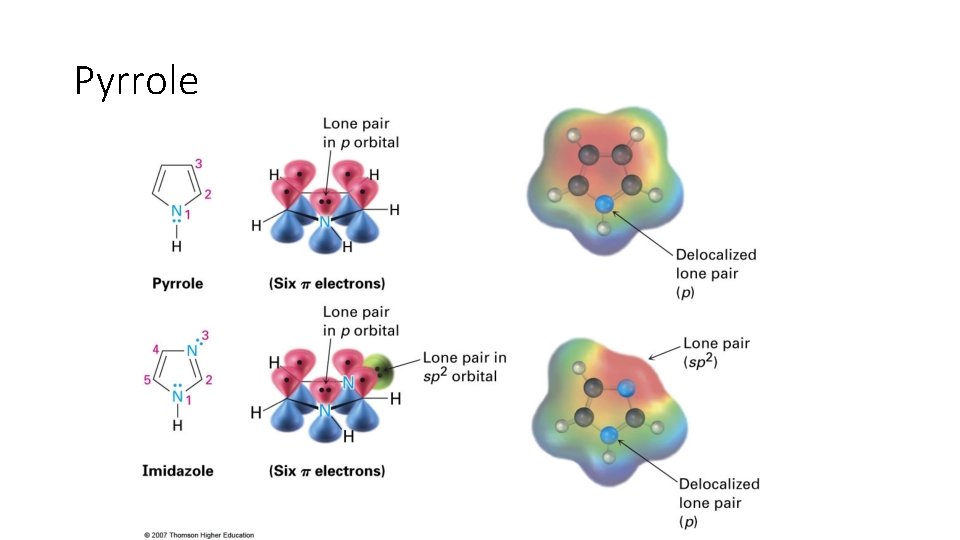
Pyrrole
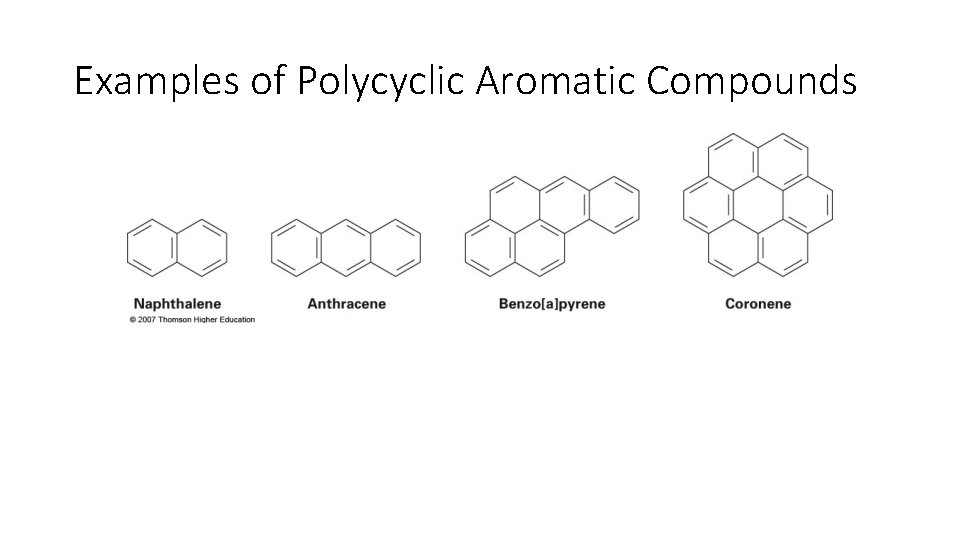
Examples of Polycyclic Aromatic Compounds
- Slides: 15