
Chapter 15 Aging Objectives 1 Define Aging 2
Chapter 15 - Aging Objectives: 1) Define Aging 2) Identify the Aging Theories 3) Identify the Physical Characteristics of Aging 4) Identify the Psychological Characteristics of Aging 5) Identify Death and Dying 6) Identify End of Life Care
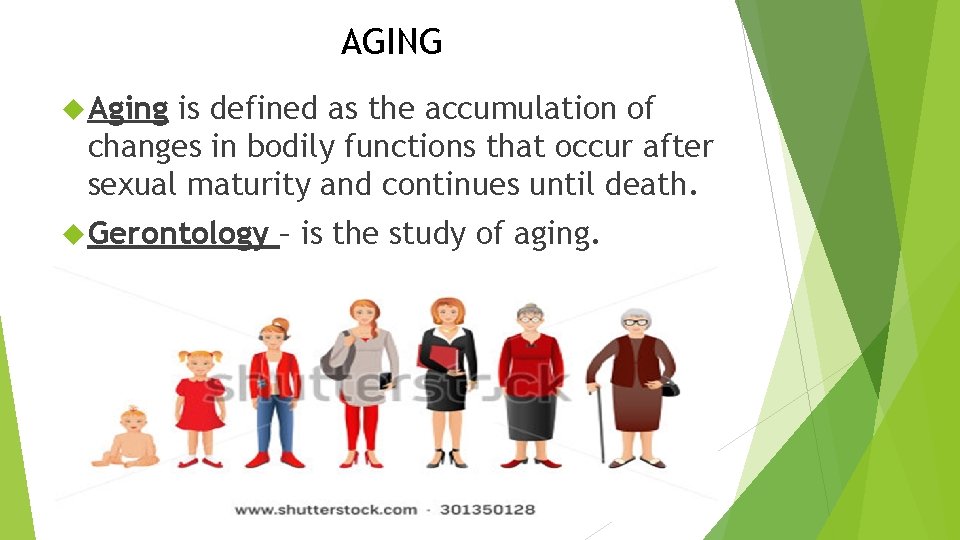
AGING Aging is defined as the accumulation of changes in bodily functions that occur after sexual maturity and continues until death. Gerontology – is the study of aging.
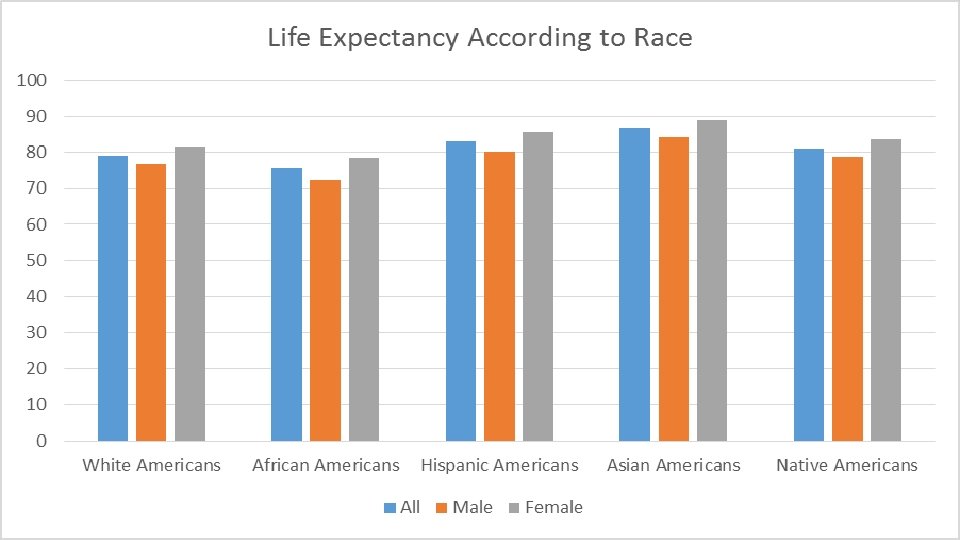
Life Expectancy in the United States Today, the average life expectancy for all people born in the United States is 78. 86 years. Women = 81. 3 years Men = 76. 3 years
AGING THEORIES The Programmed Theories of Aging (Genetic) Identifies that aging and longevity are determined by a biological clock that is influenced by predisposing genetic factors. Types: Cellular clock theory Hormonal stress theory Immunological theory
Aging Theories Continued The Cellular Damage Theories of Aging (Wear and Tear) View aging as a process combining internal factors and environmental factors such as carcinogens and toxin that eventually lead to organ systems malfunctioning and death. Types: Wear Free and tear theory radical theory Cross-linking theory
THE PHYSICAL CHARACTERISTICS OF AGING Skin Bones Hair Metabolism Height Hearing Sight Sleep Heart Lungs Kidneys and Bladder Sexual Function
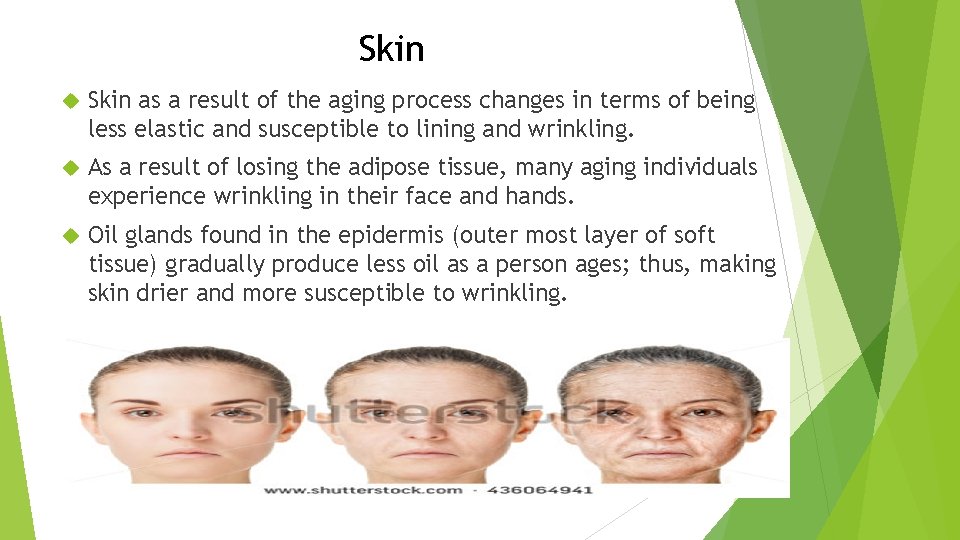
Skin as a result of the aging process changes in terms of being less elastic and susceptible to lining and wrinkling. As a result of losing the adipose tissue, many aging individuals experience wrinkling in their face and hands. Oil glands found in the epidermis (outer most layer of soft tissue) gradually produce less oil as a person ages; thus, making skin drier and more susceptible to wrinkling.
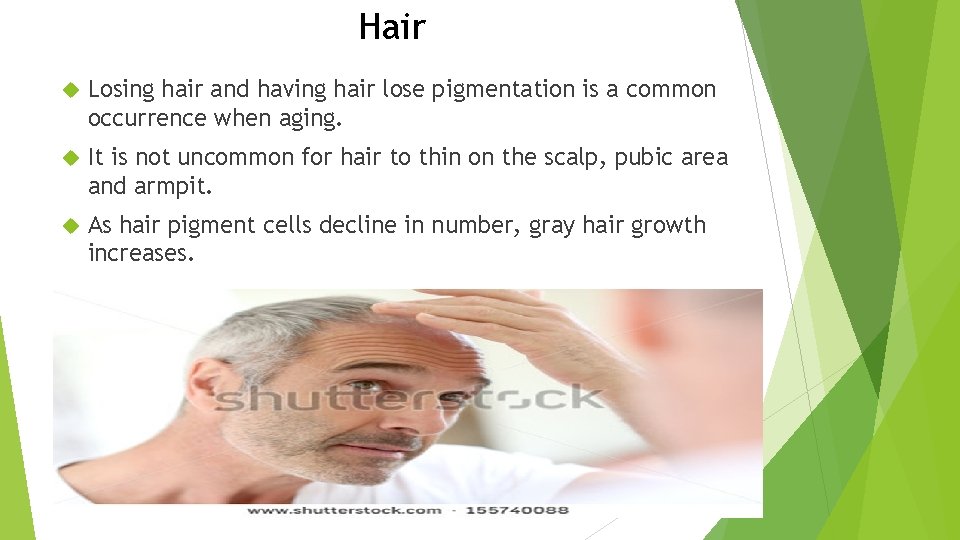
Hair Losing hair and having hair lose pigmentation is a common occurrence when aging. It is not uncommon for hair to thin on the scalp, pubic area and armpit. As hair pigment cells decline in number, gray hair growth increases.
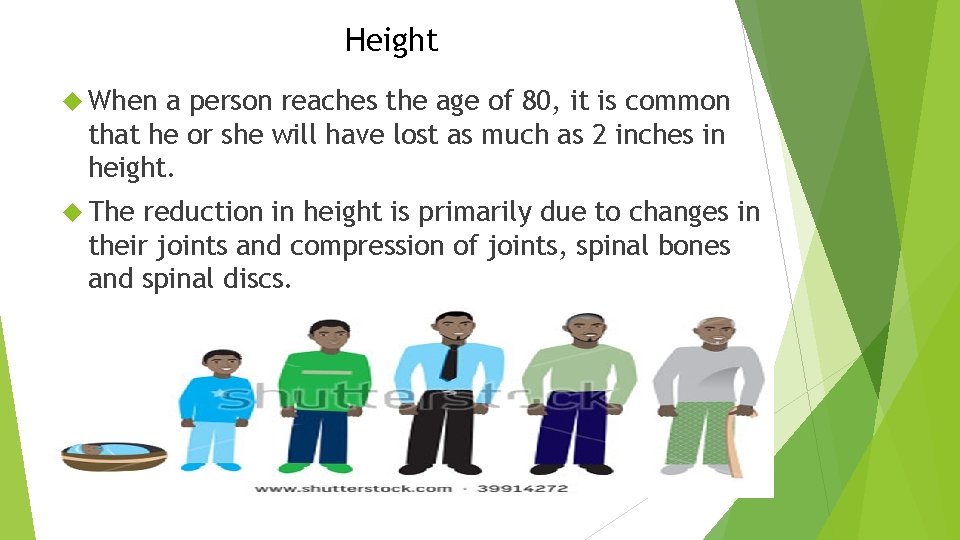
Height When a person reaches the age of 80, it is common that he or she will have lost as much as 2 inches in height. The reduction in height is primarily due to changes in their joints and compression of joints, spinal bones and spinal discs.
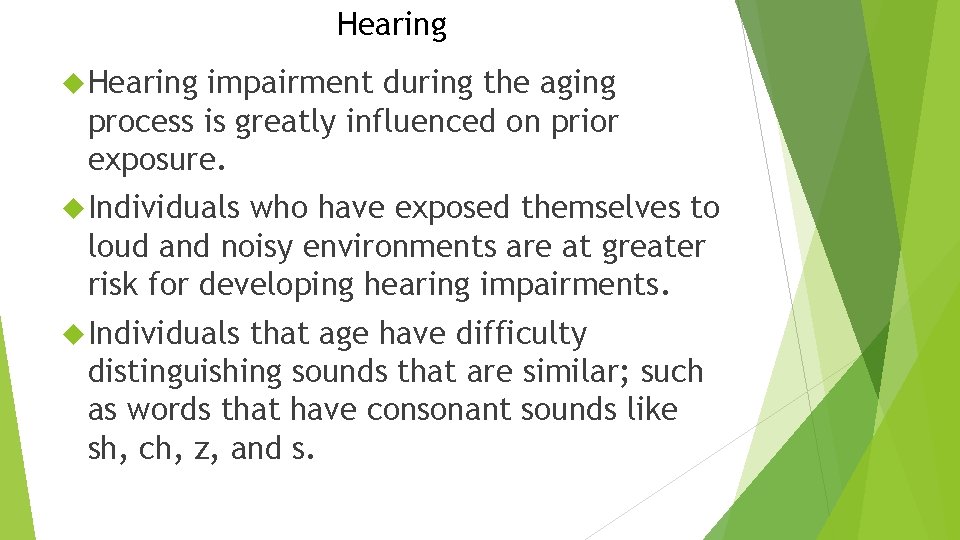
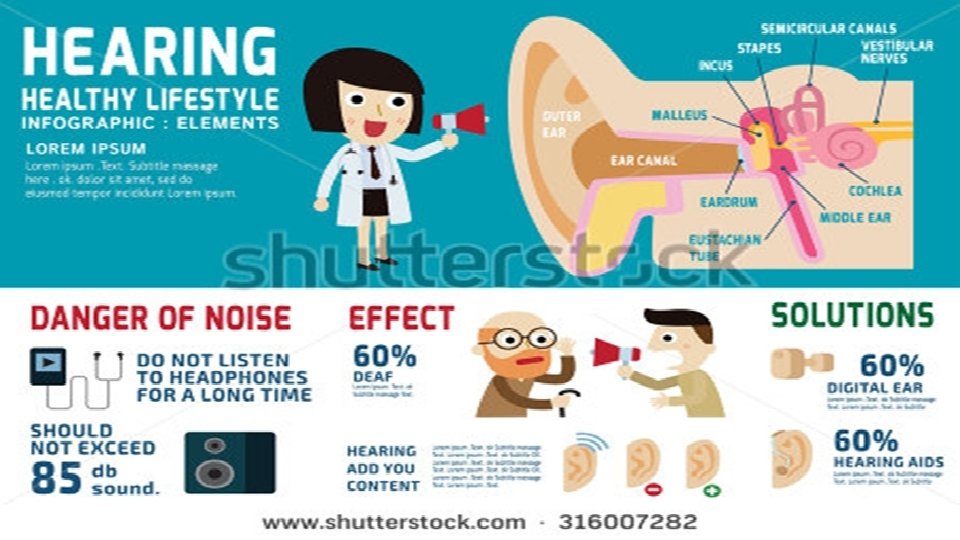
Hearing impairment during the aging process is greatly influenced on prior exposure. Individuals who have exposed themselves to loud and noisy environments are at greater risk for developing hearing impairments. Individuals that age have difficulty distinguishing sounds that are similar; such as words that have consonant sounds like sh, ch, z, and s.
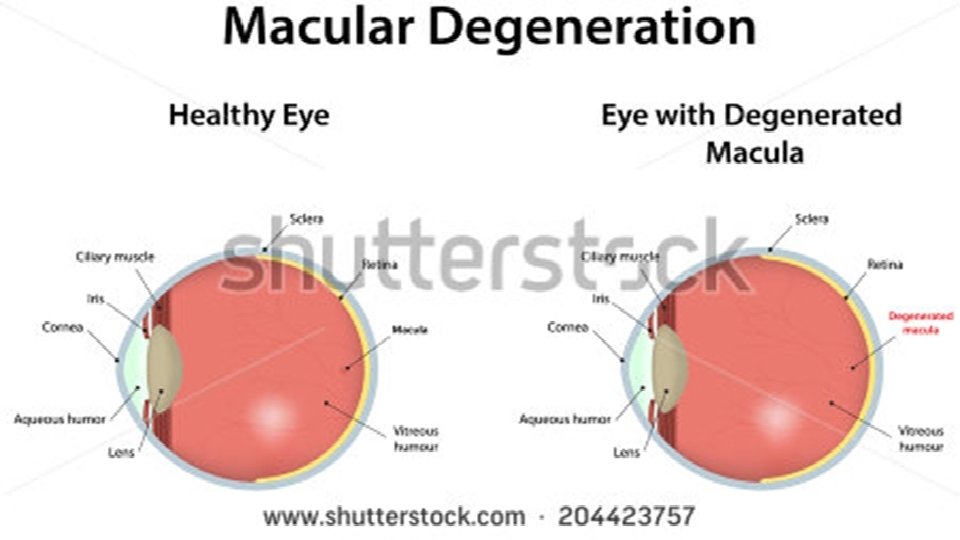
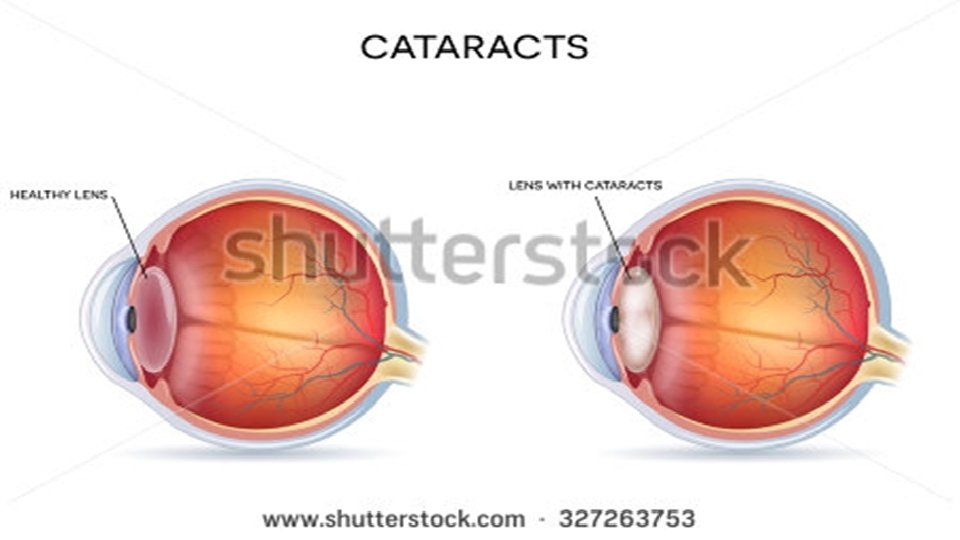
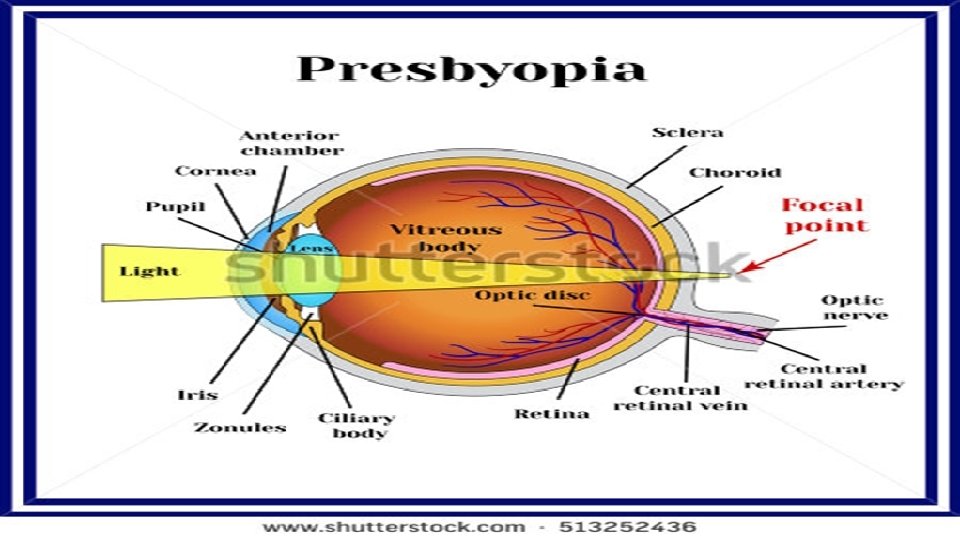
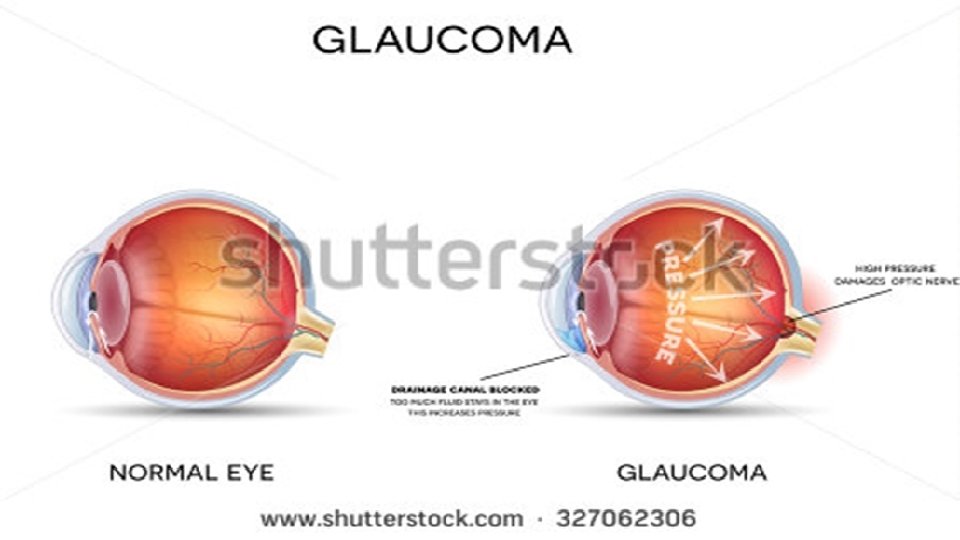
Sight Aged Macular Degeneration Most popular vision impairment occurring during aging. Occurs when blood vessels in the macula of the retina either become too wet or too dry. Cataracts Occur when the cornea (lenses of the eye) becomes cloudy due to a build-up of protein. Presbyopia a condition in which the cornea become less flexible; thus, decreasing the ability to see objects that are near. Glaucoma Is a vision impairment that causes damage to a person’s optic nerve due to the increased pressure (called intraocular pressure) within the eye.
Sleep While aging, a person may not experience the deep sleep experienced when younger. An aging person may notice that they wake up earlier in the day and experience characteristics related to insomnia. Strategies for improving sleep for older adults include: • Get regular exercise and sunshine during the day. • Keep the bedroom cool, quiet, and dark in the evening and night. • Keep food and snacks out of the bed, if possible. • Get out of bed if you’re unable to sleep, and do a quiet or boring activity until you feel sleepy. • Limit or reduce the need to wake up at night, such as for medications. • Follow the same evening and bedtime routines
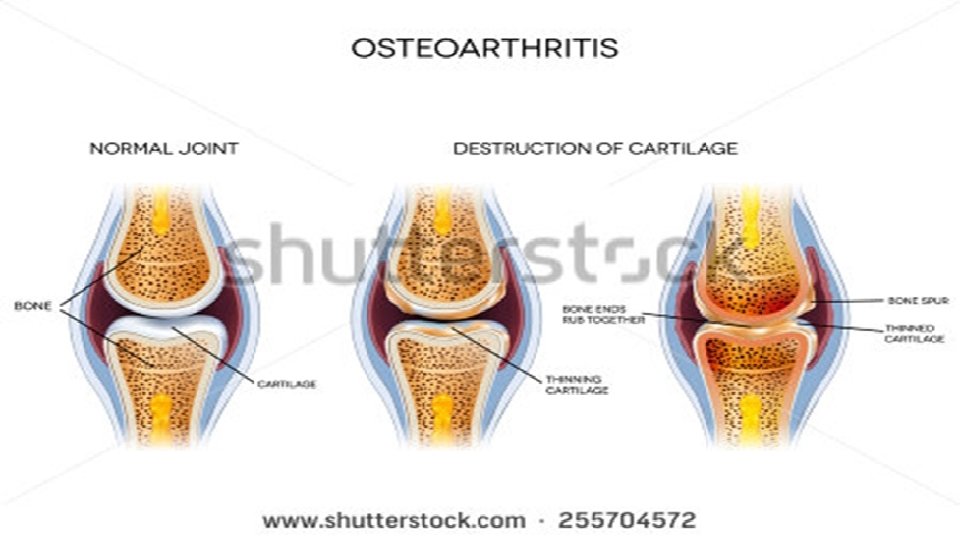
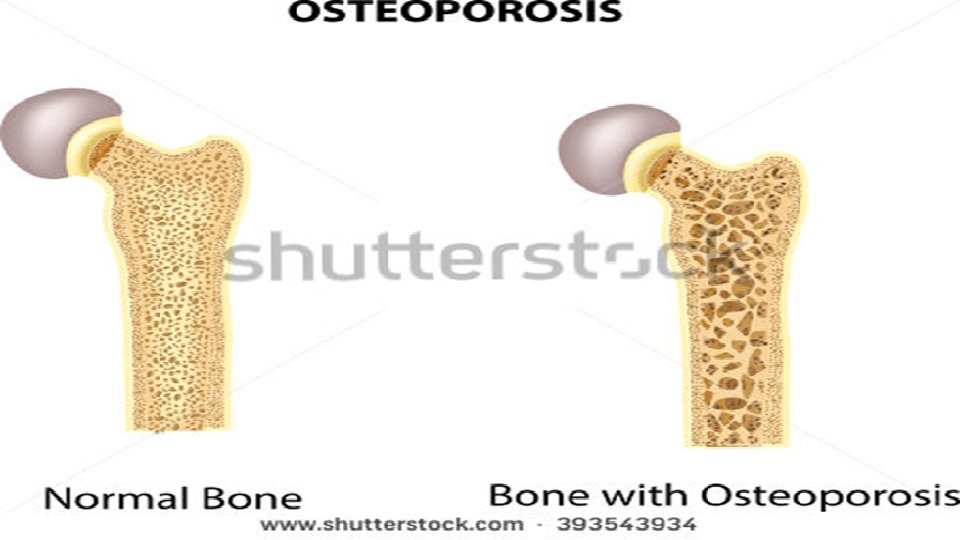
Bones Osteoarthritis - is a condition that occurs when the protective cartilage on the ends of bones wears down over time. Areas that are vulnerable for osteoarthritis are a person’s hands, knees, hips and spine. Osteoporosis - is a condition in which calcium, an important mineral for maintaining and increasing bone density, is steadily excreted from a person’s bones.
Metabolism - involves all chemical processes that take place in the body such as the burning of glucose for energy, and the release of digestive enzymes to breakdown food. As early as the age of 30, a person’s metabolism slows 1 to 2% each year; thus, a person typically needs less energy when aging as their metabolism slows.
Heart and Lungs Heart Inactive Enlarges Becomes less efficient Congestive Must features stay active to reduce congestive features – cardiorespiratory endurance people notice lung inefficiency Vulnerable for infection. Must stay active to maintain and improve capacity and strength
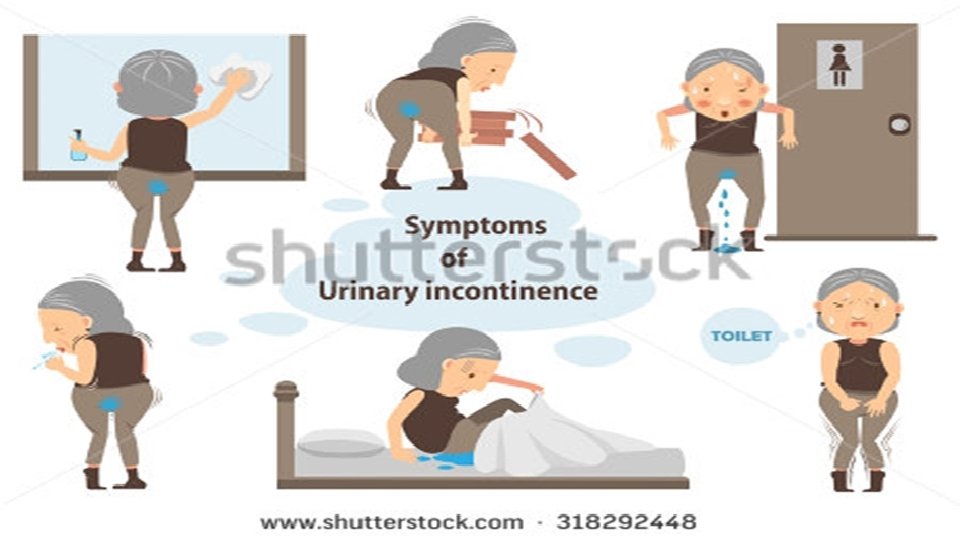
Kidneys and Bladder Kidneys Decline in size and function and the body’s ability to clear waste and medications from the blood steadily decline. It is important that elderly individuals minimize exposure to toxins, alcohol and unnecessary medications. Bladder Decreases in size as a result of aging. Normally, the bladder is capable of handling two cups of urine, but as the body ages the volume of the bladder decreases to one cup. Incontinence
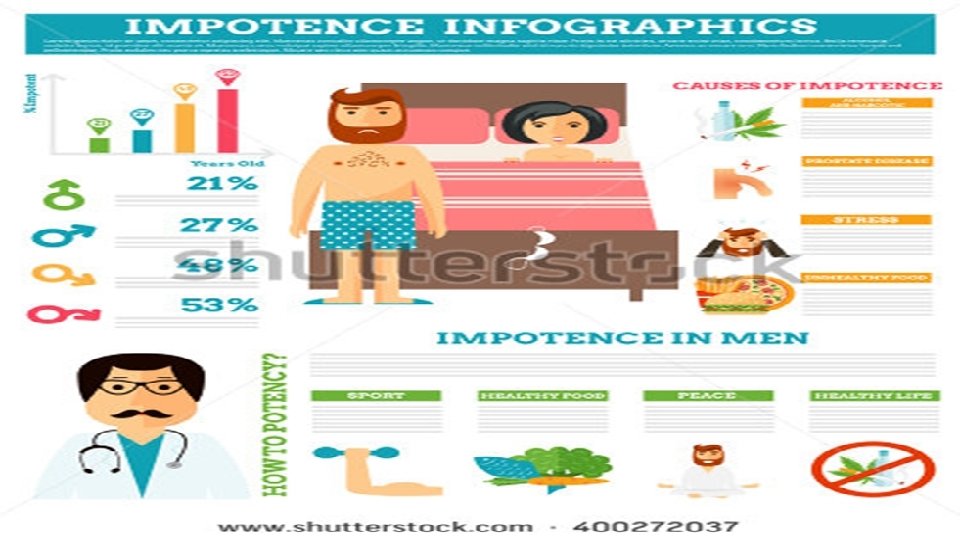
Sexual Function Men Lower testosterone levels = lower sperm count and impairs sexual excitement phase Impotence Women Reduction in estrogen causes lowered vaginal secretions making sex uncomfortable and decreases opportunities for achieving orgasm.
THE PSYCHOLOGICAL CHARACTERISTICS OF AGING Dementia is not a single disease in itself, but is a general term to describe symptoms related to memory loss, communication difficulty and impaired cognitive thinking. Alzheimer’s A neurodegenerative type of dementia and is the most severe type of dementia. Parkinson’s Is a chronic and progressive neurodegenerative disease that affects movement.
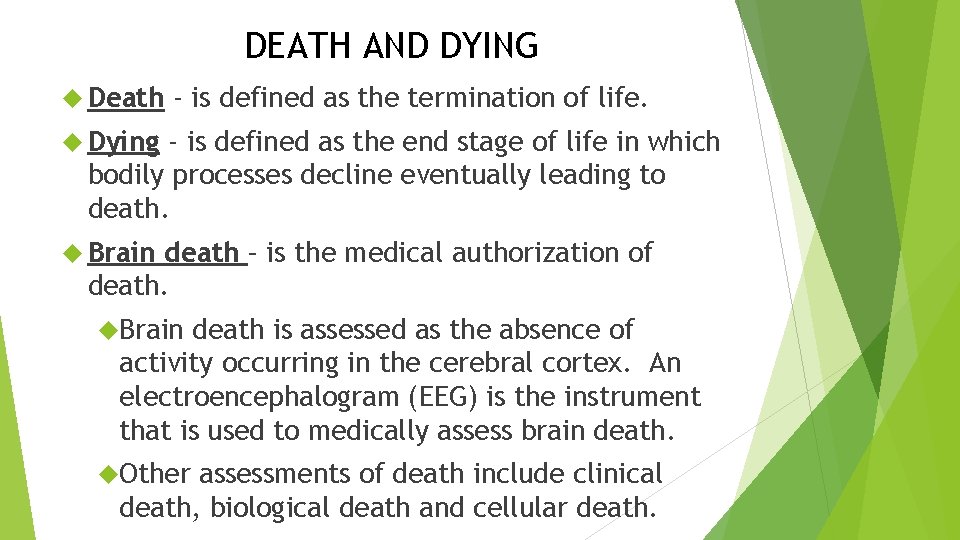
DEATH AND DYING Death - is defined as the termination of life. Dying - is defined as the end stage of life in which bodily processes decline eventually leading to death. Brain death – is the medical authorization of death. Brain death is assessed as the absence of activity occurring in the cerebral cortex. An electroencephalogram (EEG) is the instrument that is used to medically assess brain death. Other assessments of death include clinical death, biological death and cellular death.
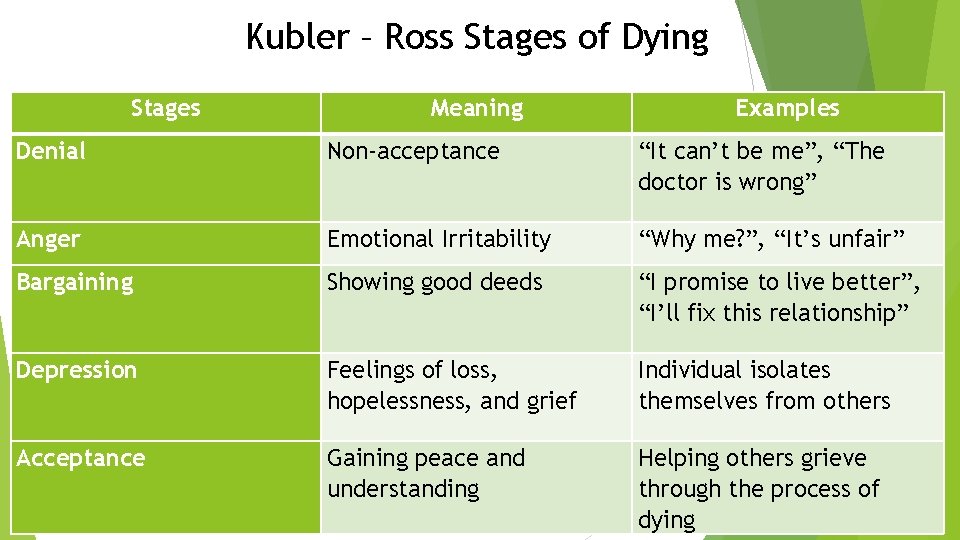
Kubler – Ross Stages of Dying Stages Meaning Examples Denial Non-acceptance “It can’t be me”, “The doctor is wrong” Anger Emotional Irritability “Why me? ”, “It’s unfair” Bargaining Showing good deeds “I promise to live better”, “I’ll fix this relationship” Depression Feelings of loss, hopelessness, and grief Individual isolates themselves from others Acceptance Gaining peace and understanding Helping others grieve through the process of dying
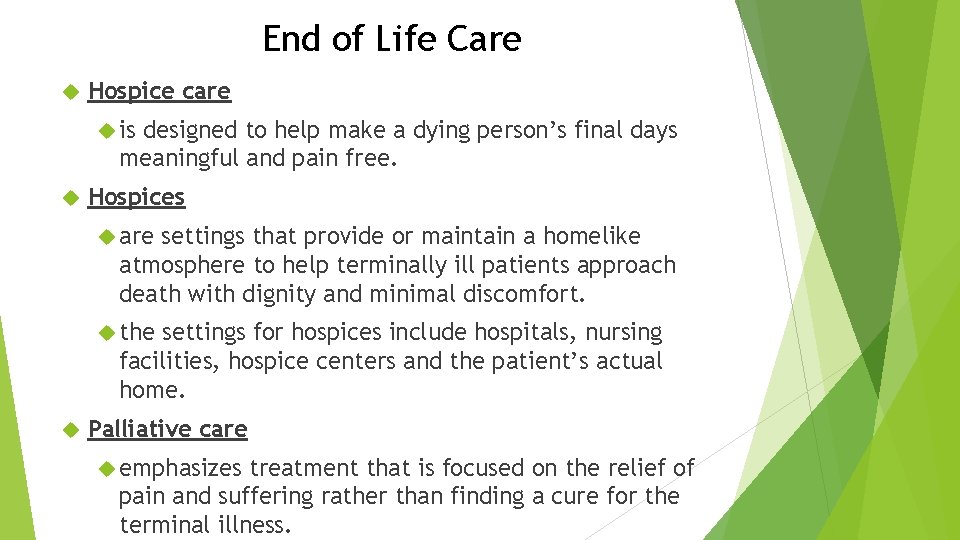
End of Life Care Hospice care is designed to help make a dying person’s final days meaningful and pain free. Hospices are settings that provide or maintain a homelike atmosphere to help terminally ill patients approach death with dignity and minimal discomfort. the settings for hospices include hospitals, nursing facilities, hospice centers and the patient’s actual home. Palliative care emphasizes treatment that is focused on the relief of pain and suffering rather than finding a cure for the terminal illness.
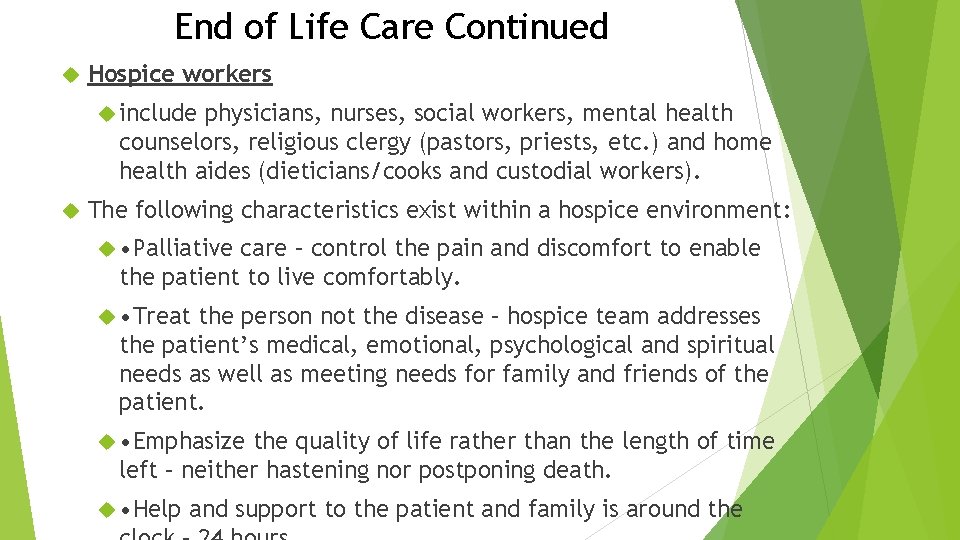
End of Life Care Continued Hospice workers include physicians, nurses, social workers, mental health counselors, religious clergy (pastors, priests, etc. ) and home health aides (dieticians/cooks and custodial workers). The following characteristics exist within a hospice environment: • Palliative care – control the pain and discomfort to enable the patient to live comfortably. • Treat the person not the disease – hospice team addresses the patient’s medical, emotional, psychological and spiritual needs as well as meeting needs for family and friends of the patient. • Emphasize the quality of life rather than the length of time left – neither hastening nor postponing death. • Help and support to the patient and family is around the
Euthanasia - is the purposeful taking of life to relieve suffering. Active euthanasia - is a form of euthanasia in which the administration of lethal drug is used to cause a quick and painless death. Voluntary active euthanasia - is the administration of drug that causes painless death and is usually administered by a licensed physician, physician assisted suicide. Involuntary active euthanasia - is the cause of euthanasia without the patients consent. Passive euthanasia - is the process of withholding potentially life-saving treatments such as stopping life support equipment, stopping medication and even food and water.
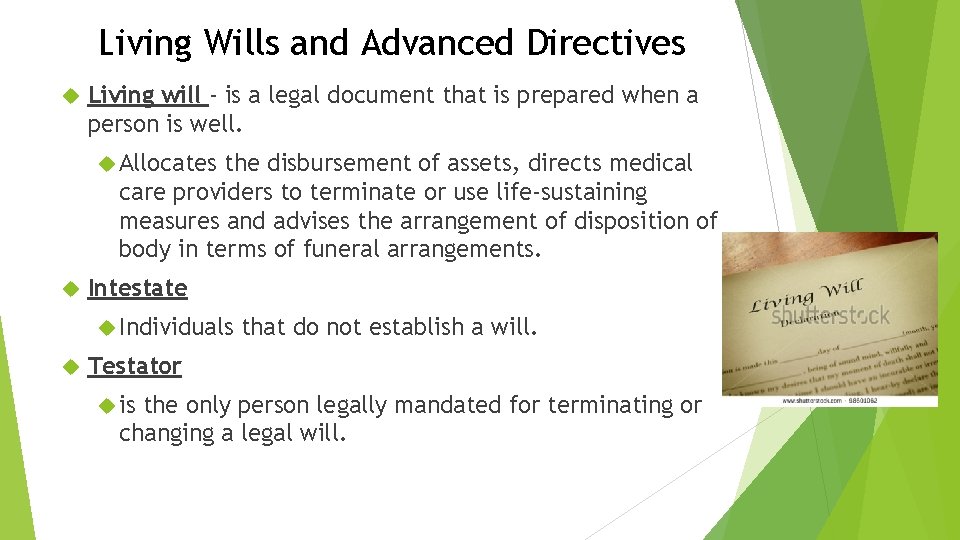
Living Wills and Advanced Directives Living will - is a legal document that is prepared when a person is well. Allocates the disbursement of assets, directs medical care providers to terminate or use life-sustaining measures and advises the arrangement of disposition of body in terms of funeral arrangements. Intestate Individuals that do not establish a will. Testator is the only person legally mandated for terminating or changing a legal will.
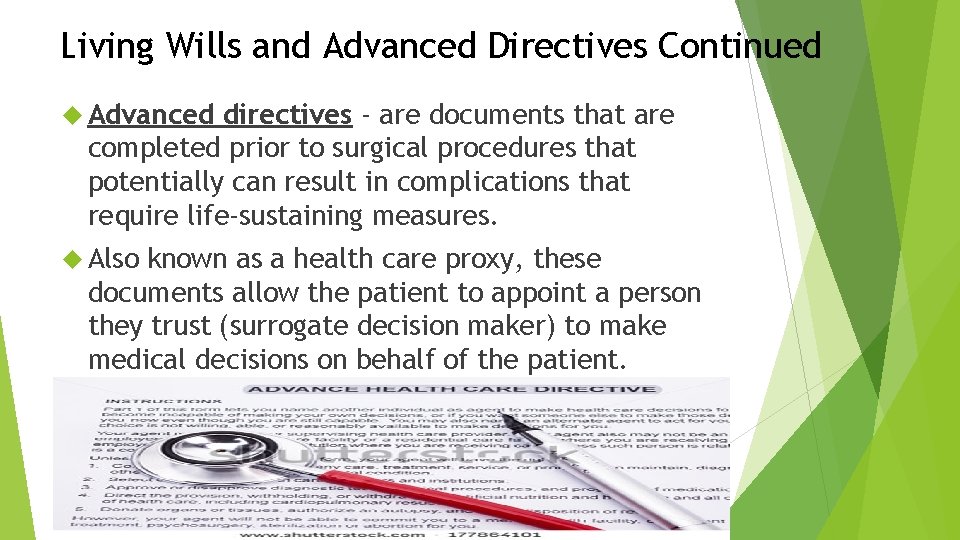
Living Wills and Advanced Directives Continued Advanced directives - are documents that are completed prior to surgical procedures that potentially can result in complications that require life-sustaining measures. Also known as a health care proxy, these documents allow the patient to appoint a person they trust (surrogate decision maker) to make medical decisions on behalf of the patient.
Funeral Arrangements Average funeral costs are $8, 000 to $10, 000. A typical breakdown of funeral costs are as follows: • Casket = $2, 300 • Funeral Director’s basic service fee = $1, 500 • Embalming • Funeral and body preparation = $600 ceremony and viewing = $1, 000 • Miscellaneous costs (hearse, death certificate, obituary, etc. ) = $600 • Grave • Cost space = $1, 000 to dig the grave = $1, 000
- Slides: 36