
Chapter 14Part 2 Milankovitch cycles Chaotic obliquity variations
Chapter 14—Part 2 Milankovitch cycles/ Chaotic obliquity variations
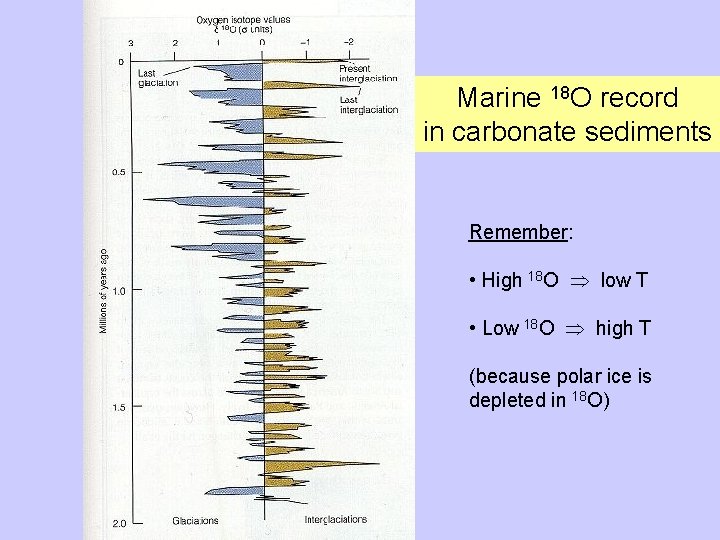
Marine 18 O record in carbonate sediments Remember: • High 18 O low T • Low 18 O high T (because polar ice is depleted in 18 O)
Ice Age Cycles: 100, 000 years between ice ages Smaller cycles also recorded every 41, 000 years*, 19, 000 - 23, 000 years *This cycle dominates prior to 0. 9 k. A
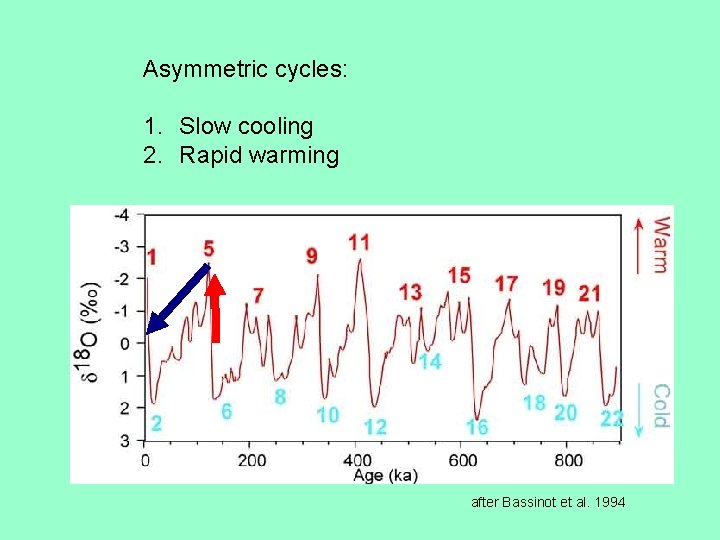
Asymmetric cycles: 1. Slow cooling 2. Rapid warming after Bassinot et al. 1994
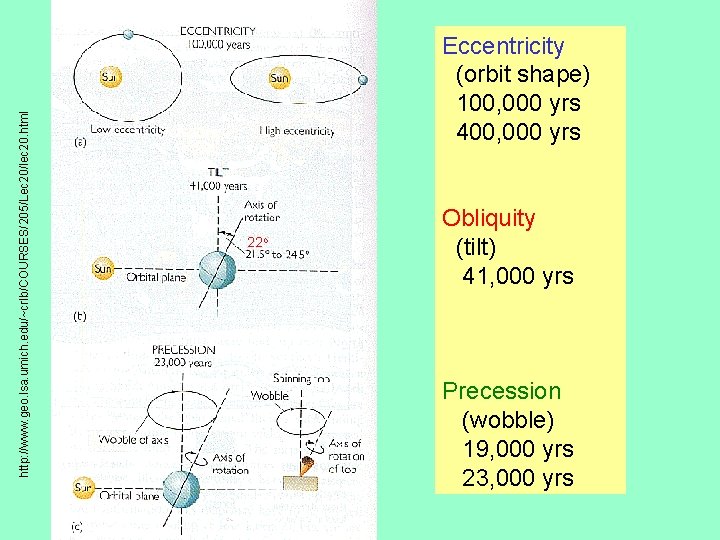
http: //www. geo. lsa. umich. edu/~crlb/COURSES/205/Lec 20/lec 20. html Eccentricity (orbit shape) 100, 000 yrs 400, 000 yrs 22 o Obliquity (tilt) 41, 000 yrs Precession (wobble) 19, 000 yrs 23, 000 yrs
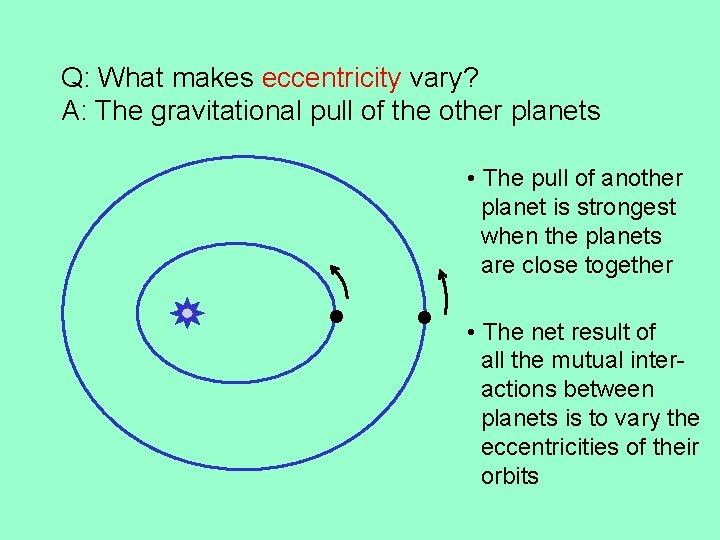
Q: What makes eccentricity vary? A: The gravitational pull of the other planets • The pull of another planet is strongest when the planets are close together • The net result of all the mutual inter actions between planets is to vary the eccentricities of their orbits
Eccentricity Variations • Current value: 0. 017 • Range: 0 -0. 06 • Period(s): ~100, 000 yrs ~400, 000 yrs
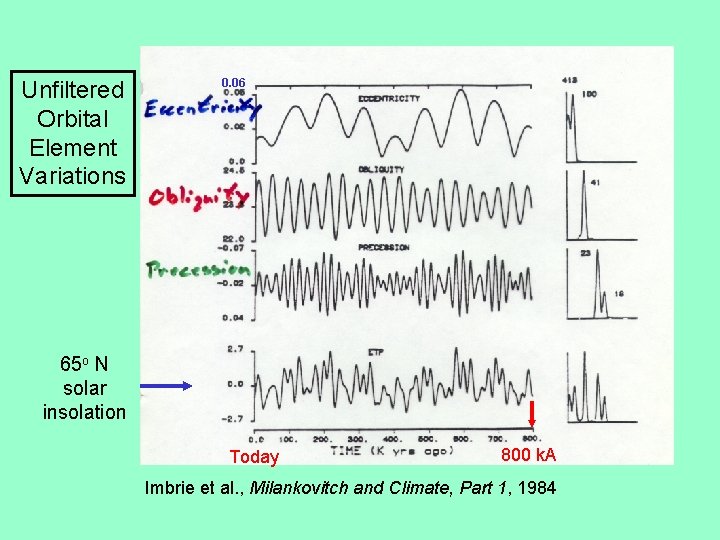
Unfiltered Orbital Element Variations 0. 06 65 o N solar insolation Today 800 k. A Imbrie et al. , Milankovitch and Climate, Part 1, 1984
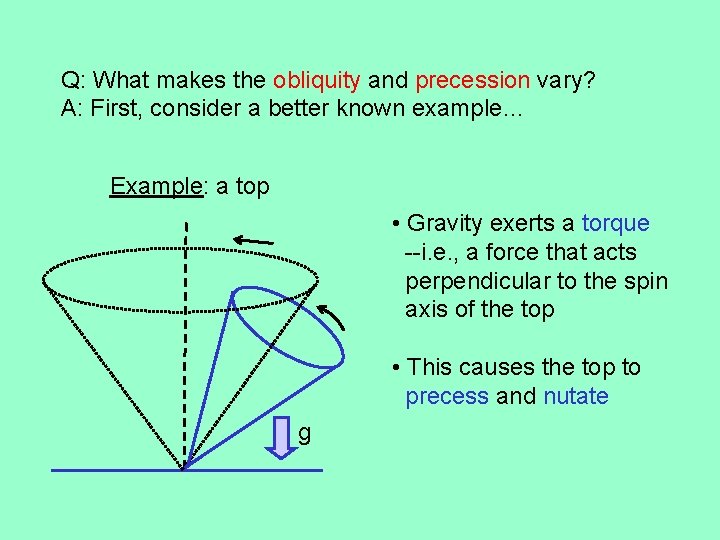
Q: What makes the obliquity and precession vary? A: First, consider a better known example… Example: a top • Gravity exerts a torque --i. e. , a force that acts perpendicular to the spin axis of the top • This causes the top to precess and nutate g
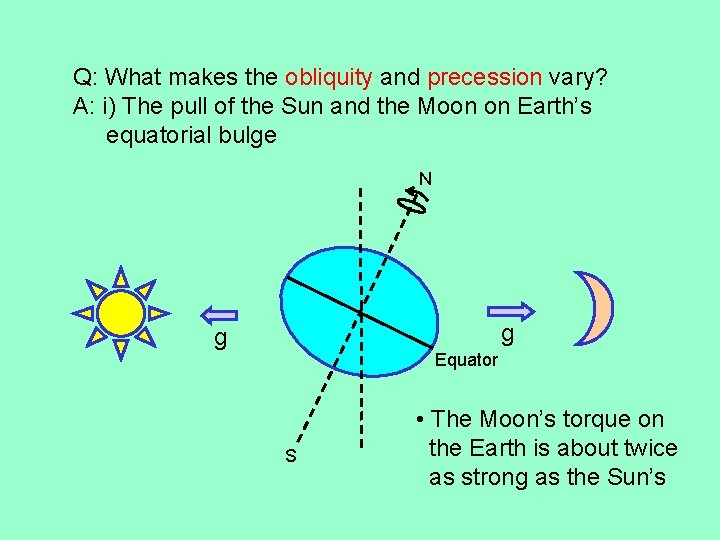
Q: What makes the obliquity and precession vary? A: i) The pull of the Sun and the Moon on Earth’s equatorial bulge N g g Equator S • The Moon’s torque on the Earth is about twice as strong as the Sun’s
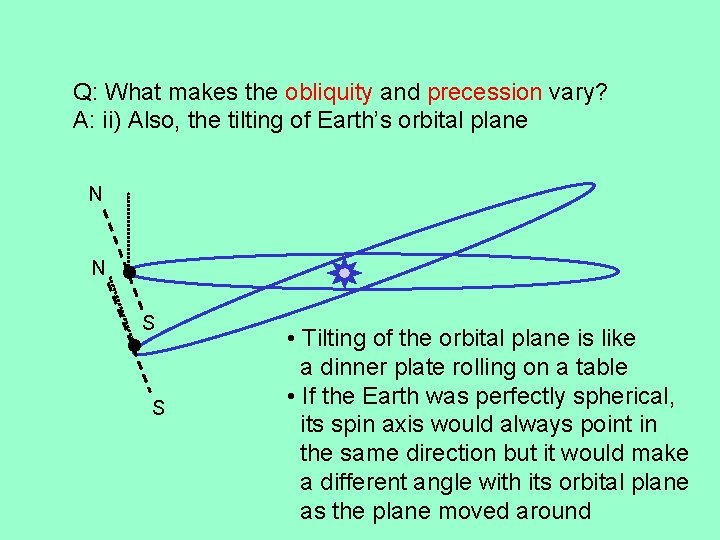
Q: What makes the obliquity and precession vary? A: ii) Also, the tilting of Earth’s orbital plane N N S S • Tilting of the orbital plane is like a dinner plate rolling on a table • If the Earth was perfectly spherical, its spin axis would always point in the same direction but it would make a different angle with its orbital plane as the plane moved around
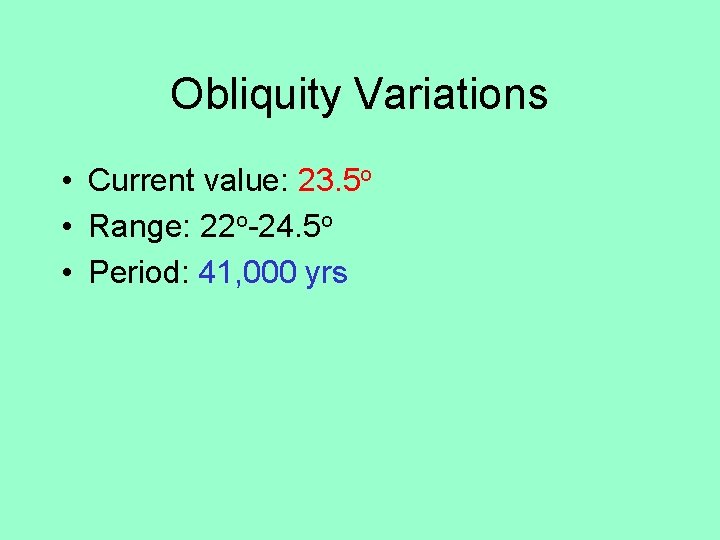
Obliquity Variations • Current value: 23. 5 o • Range: 22 o-24. 5 o • Period: 41, 000 yrs
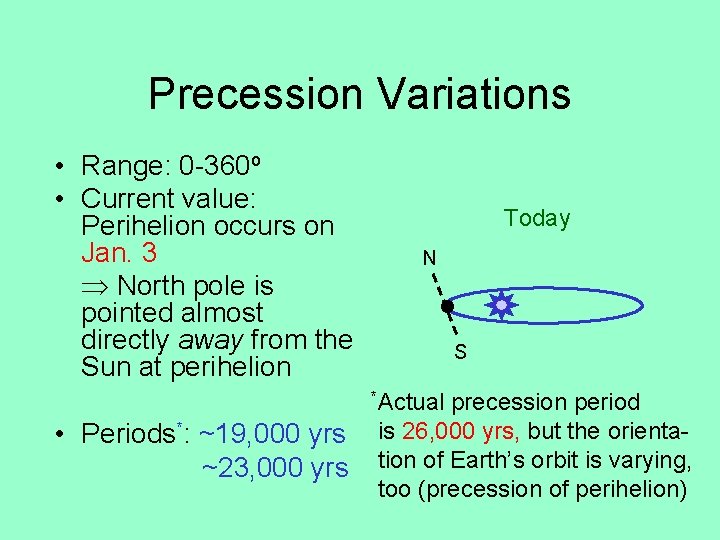
Precession Variations • Range: 0 -360 o • Current value: Perihelion occurs on Jan. 3 North pole is pointed almost directly away from the Sun at perihelion Today N S *Actual precession period • Periods*: ~19, 000 yrs is 26, 000 yrs, but the orienta ~23, 000 yrs tion of Earth’s orbit is varying, too (precession of perihelion)
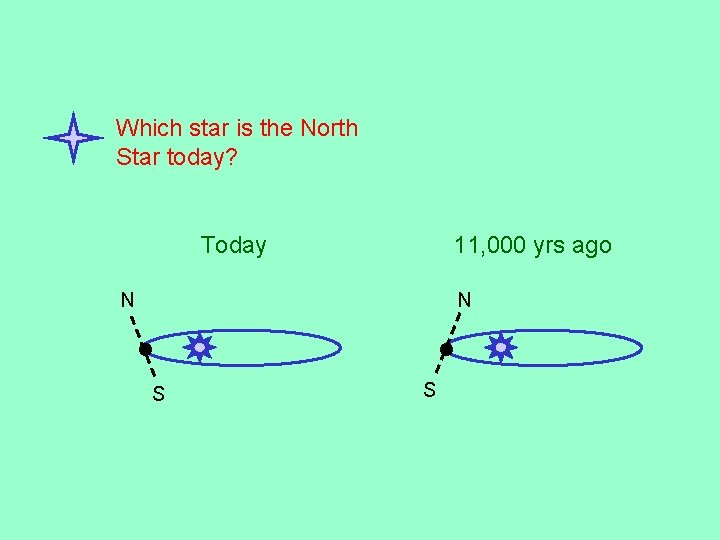
Which star is the North Star today? Today 11, 000 yrs ago N N S S
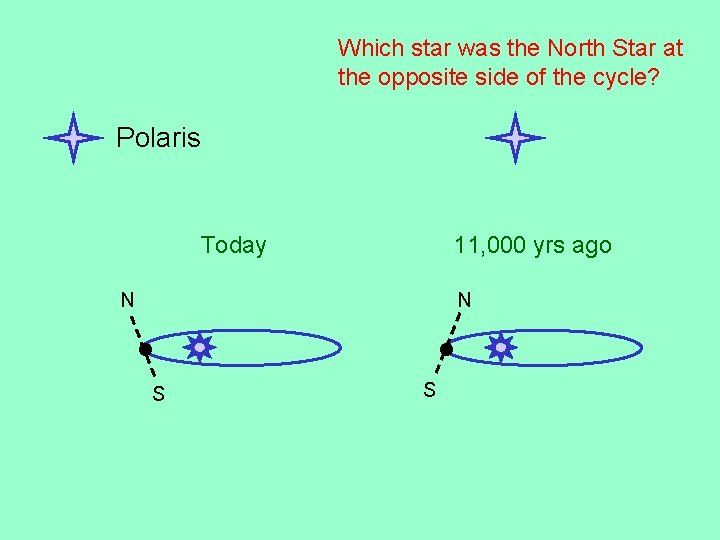
Which star was the North Star at the opposite side of the cycle? Polaris Today 11, 000 yrs ago N N S S
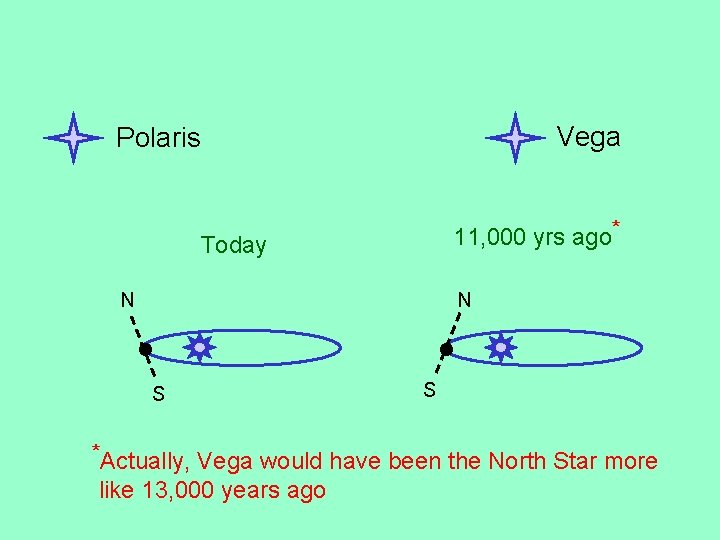
Vega Polaris 11, 000 yrs ago* Today N N S S *Actually, Vega would have been the North Star more like 13, 000 years ago
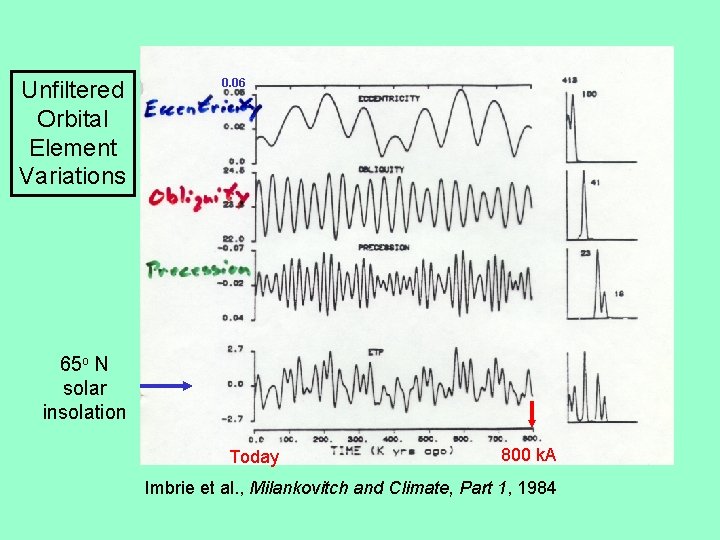
Unfiltered Orbital Element Variations 0. 06 65 o N solar insolation Today 800 k. A Imbrie et al. , Milankovitch and Climate, Part 1, 1984
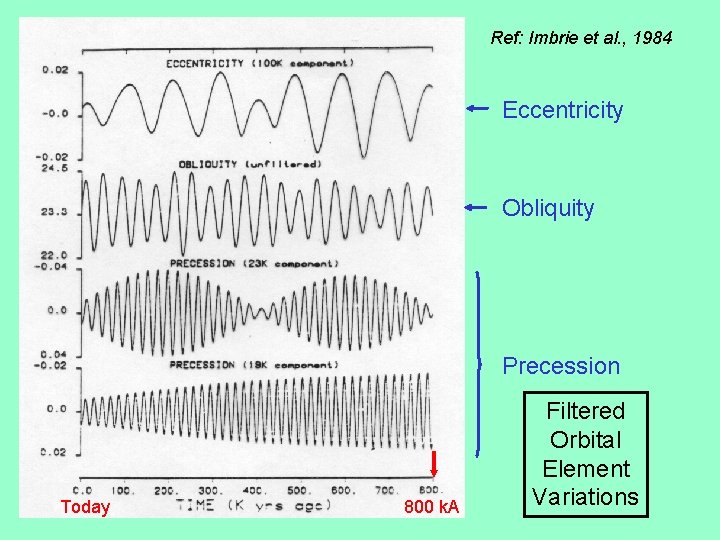
Ref: Imbrie et al. , 1984 Eccentricity Obliquity Precession Today 800 k. A Filtered Orbital Element Variations
• Interestingly, Earth’s obliquity variations would be quite different if the Earth didn’t have a Moon • The obliquity would vary chaotically from 0 -85 o on a time scale of tens of millions of years Chaos: Mathematically, this term is used to describe dynamical systems in which small changes in initial conditions lead to large changes in the solution after some period of time
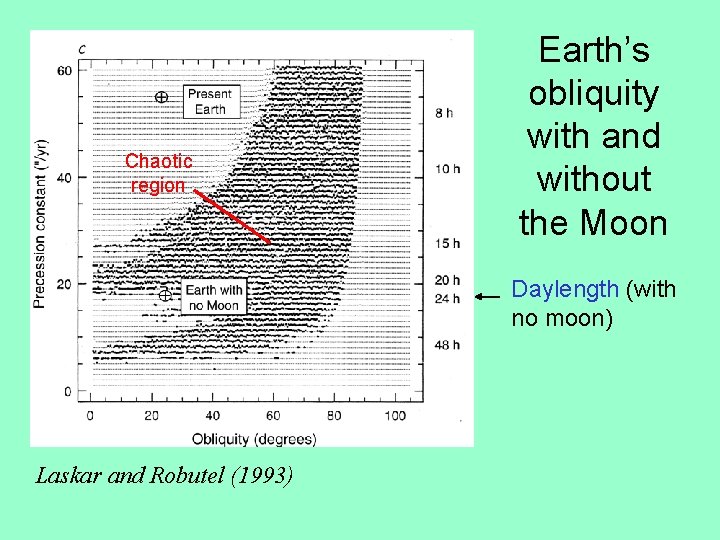
Chaotic region Earth’s obliquity with and without the Moon Daylength (with no moon) Laskar and Robutel (1993)

Back to the climate story…
Milutin Milankovitch, Serbian mathematician 1924 --he suggested solar energy changes and seasonal contrasts varied with small variations in Earth’s orbit NOAA He proposed these energy and seasonal changes led to climate variations
Optimal Conditions for Glaciation: 1. Low obliquity (low seasonal contrast) 2. High eccentricity and NH summers during aphelion (cold summers in the north) Milankovitch’s key insight: Ice and snow are not completely melted during very cold summers. (Most land is in the Northern Hemisphere. )
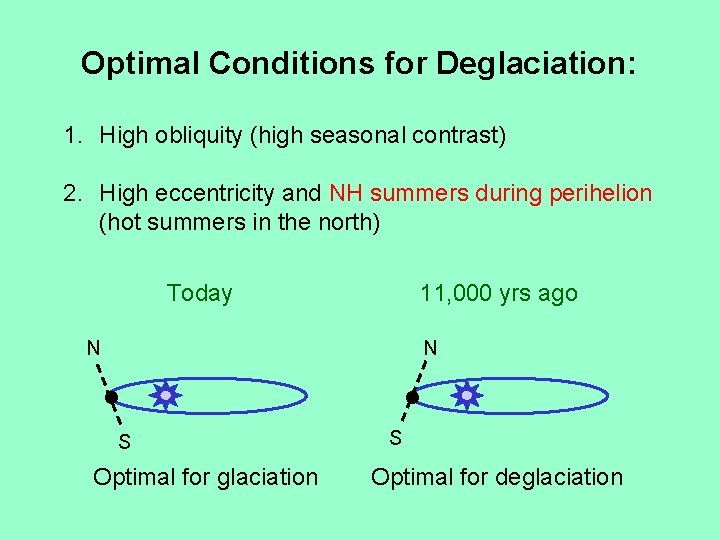
Optimal Conditions for Deglaciation: 1. High obliquity (high seasonal contrast) 2. High eccentricity and NH summers during perihelion (hot summers in the north) Today 11, 000 yrs ago N N S Optimal for glaciation S Optimal for deglaciation
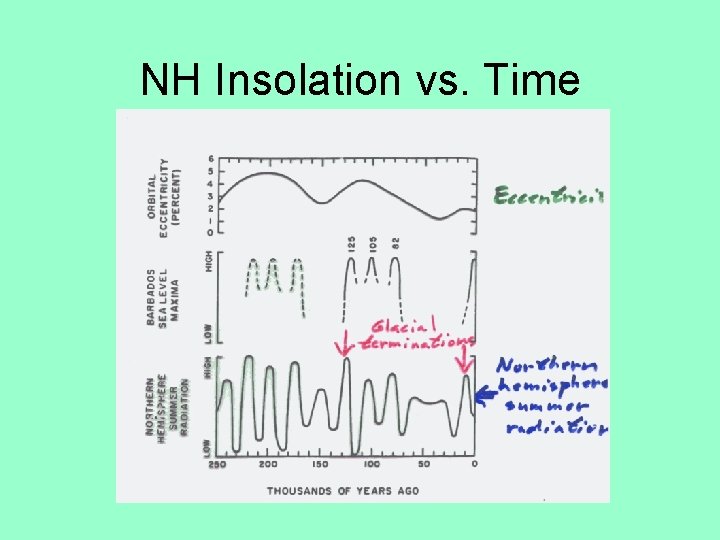
NH Insolation vs. Time
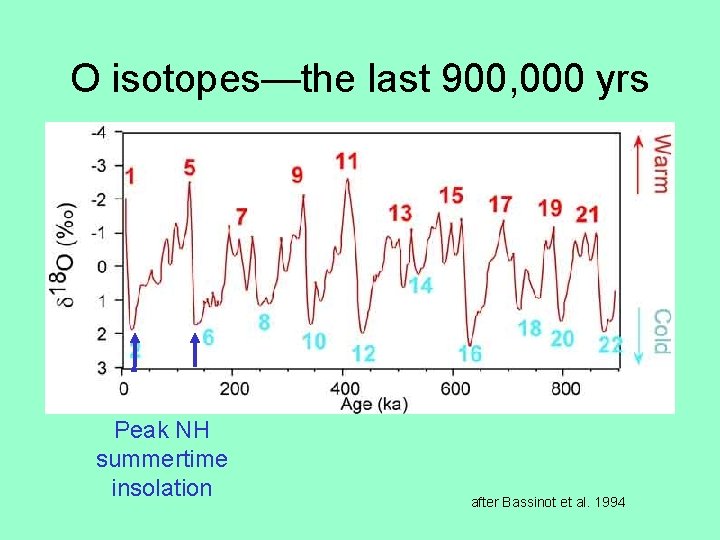
O isotopes—the last 900, 000 yrs Peak NH summertime insolation after Bassinot et al. 1994
Big Mystery of the ice ages: Why is the eccentricity cycle so prominent? The change in annual average solar insolation is small (~0. 5%), but this cycle records by far the largest climate change Two possible explanations: 1) The eccentricity cycle modulates the effects of precession (no change in insolation when e = 0) 2) Some process or processes amplify the temperature change. This could take place by a positive feedback loop

What are some possible glacial climate feedbacks?
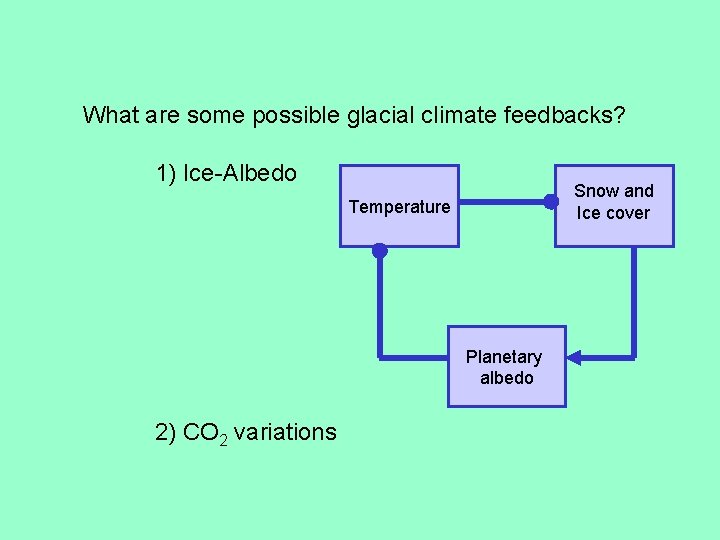
What are some possible glacial climate feedbacks? 1) Ice-Albedo Snow and Ice cover Temperature Planetary albedo 2) CO 2 variations
- Slides: 29