
CHAPTER 14 Weathering Erosion SECTION 4 Erosion Erosion

- Slides: 12
CHAPTER 14: Weathering & Erosion
SECTION 4: Erosion
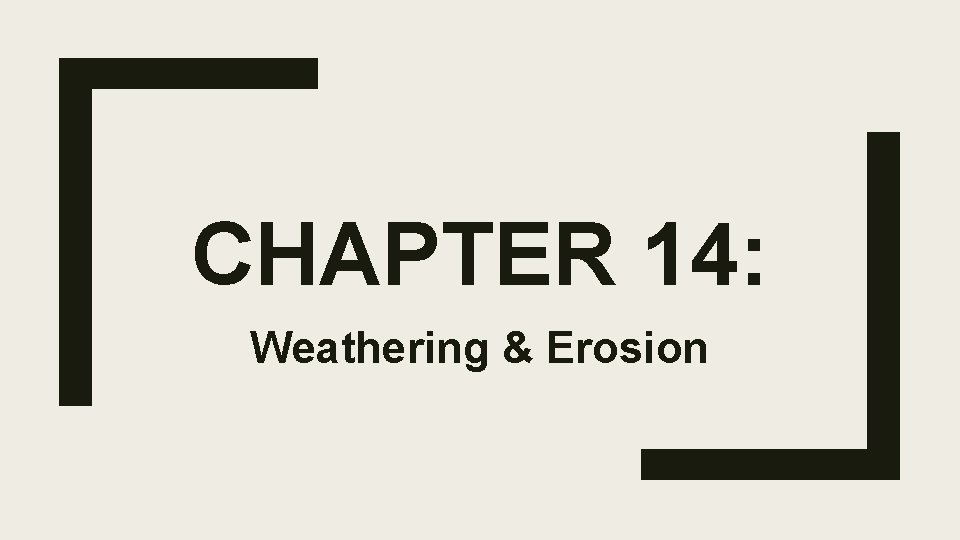
■ Erosion – transporting weathered material, ■ ■ agents – gravity, wind, glacier, & water Soil erosion major concern Soil erodes faster than its made Land use & climate affect S. E. Affects crops
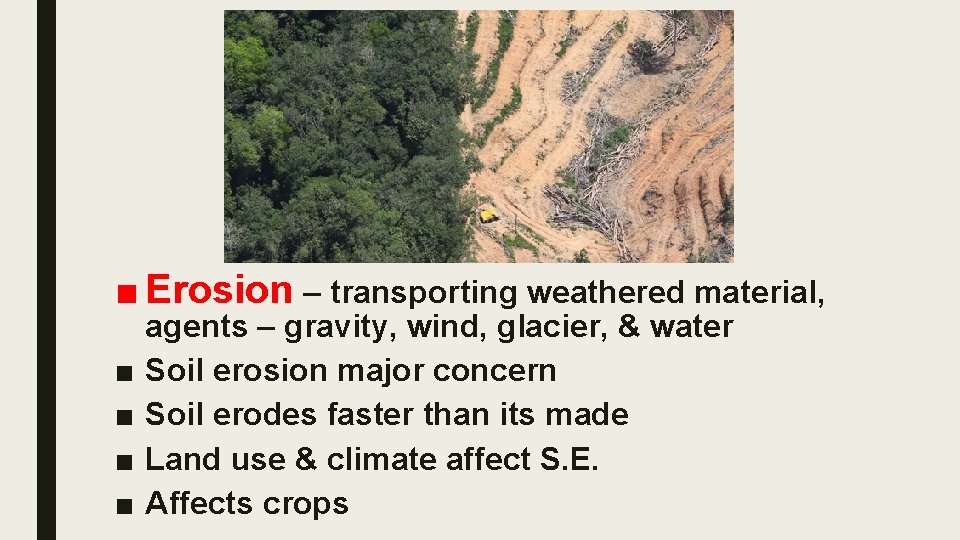
■ Gullying – soil washed away forms gullies, rapid erosion ■ Sheet erosion – topsoil washed away, leaves subsoil
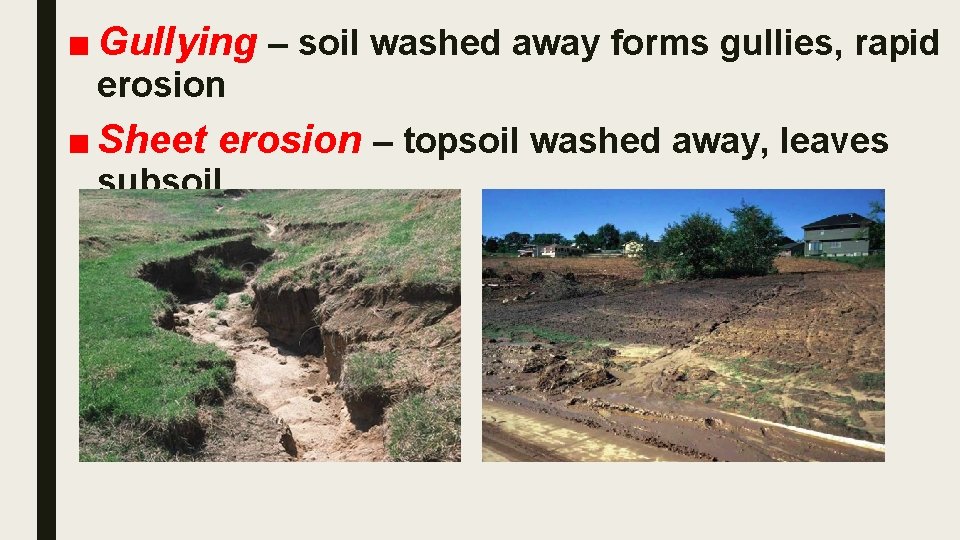
Soil Conservati on ■ Human Effects Terracing Contour farming – Farming, grazing, construction increase E. rates ■ Solutions? – – – Strip cropping Contour farming – plowed according to shape of land Strip-cropping – alternating pattern of crops Terracing – planted in curves on slopes Crop rotation – alternate crops grown Wind Breaks – blocks the wind
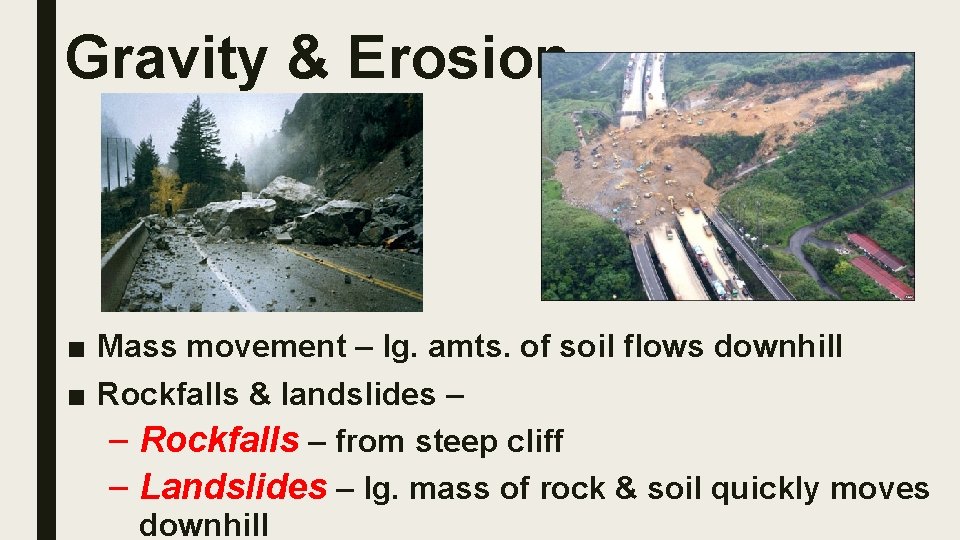
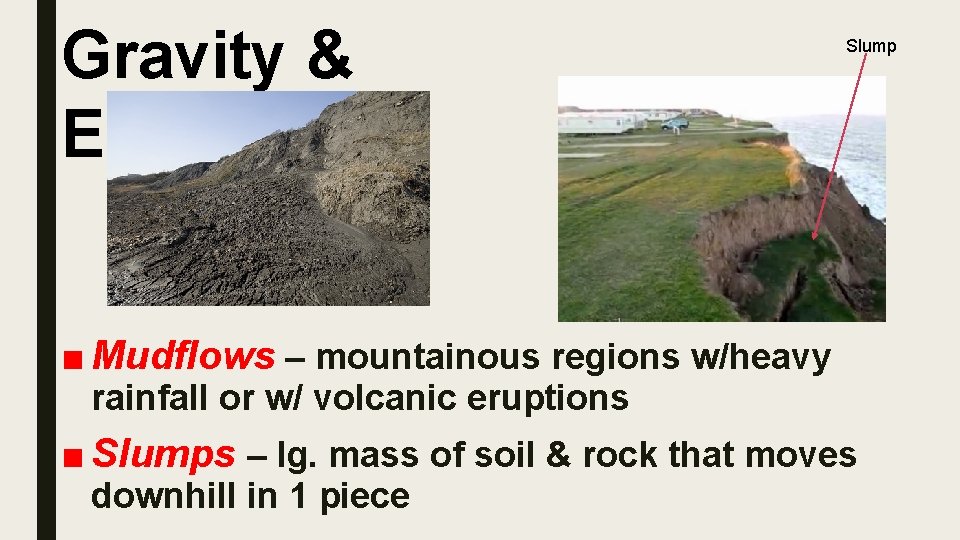
Gravity & Erosion ■ Mass movement – lg. amts. of soil flows downhill ■ Rockfalls & landslides – – Rockfalls – from steep cliff – Landslides – lg. mass of rock & soil quickly moves downhill
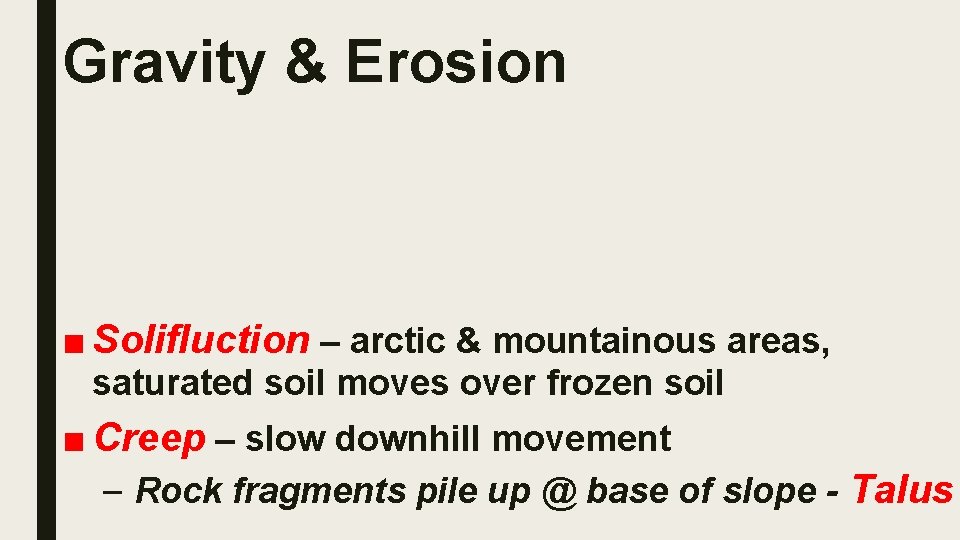
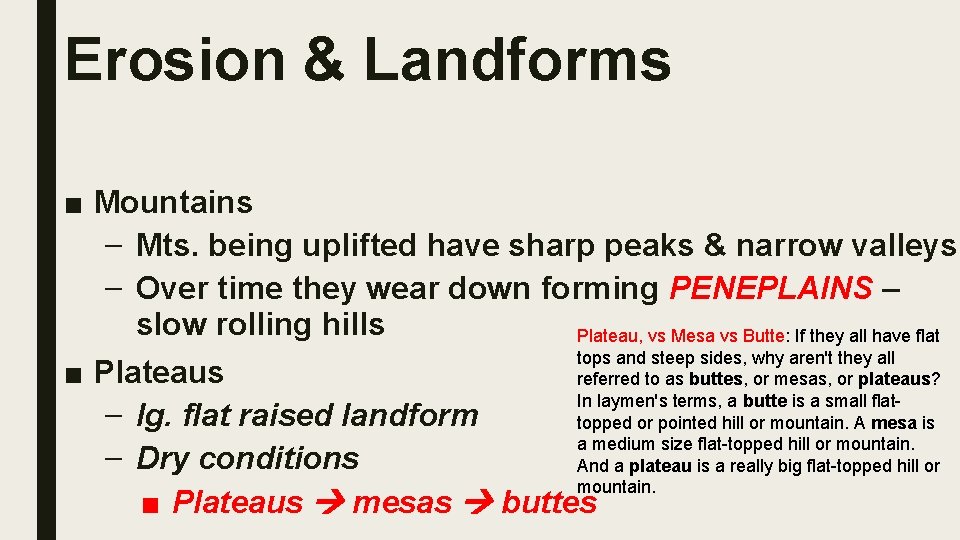
Gravity & Erosion Slump ■ Mudflows – mountainous regions w/heavy rainfall or w/ volcanic eruptions ■ Slumps – lg. mass of soil & rock that moves downhill in 1 piece
Gravity & Erosion ■ Solifluction – arctic & mountainous areas, saturated soil moves over frozen soil ■ Creep – slow downhill movement – Rock fragments pile up @ base of slope - Talus
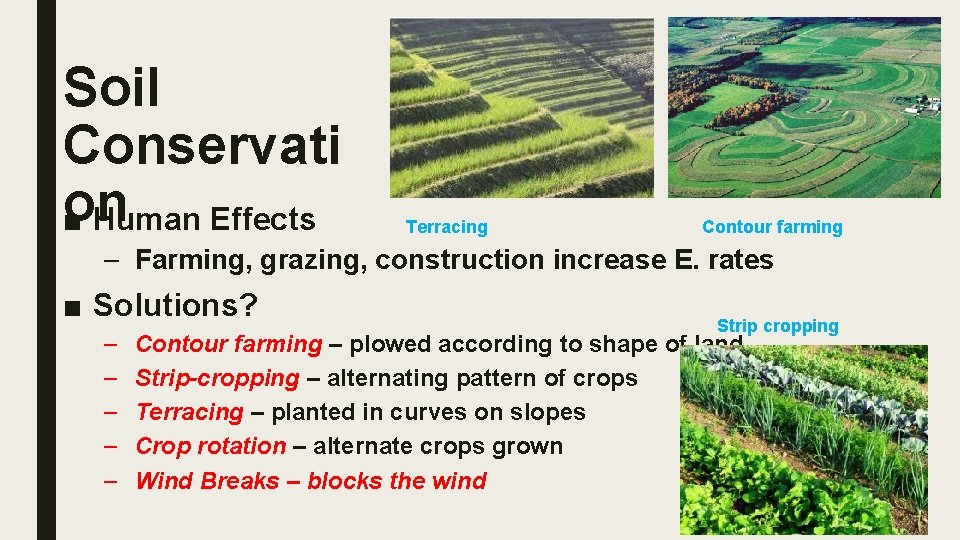
Erosion & Landforms ■ Mountains – Mts. being uplifted have sharp peaks & narrow valleys – Over time they wear down forming PENEPLAINS – slow rolling hills Plateau, vs Mesa vs Butte: If they all have flat tops and steep sides, why aren't they all ■ Plateaus referred to as buttes, or mesas, or plateaus? In laymen's terms, a butte is a small flat– lg. flat raised landform topped or pointed hill or mountain. A mesa is a medium size flat-topped hill or mountain. – Dry conditions And a plateau is a really big flat-topped hill or mountain. ■ Plateaus mesas buttes
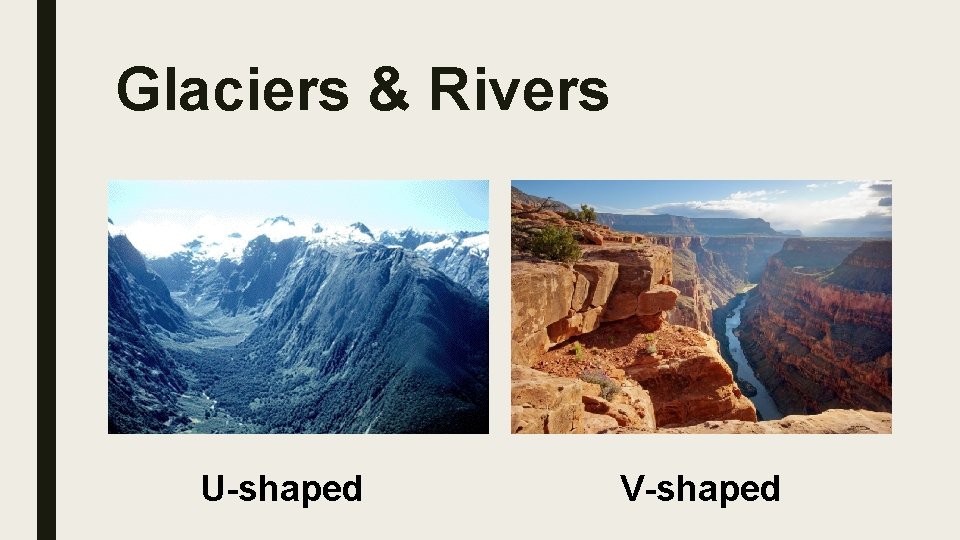
Glaciers & Rivers U-shaped V-shaped
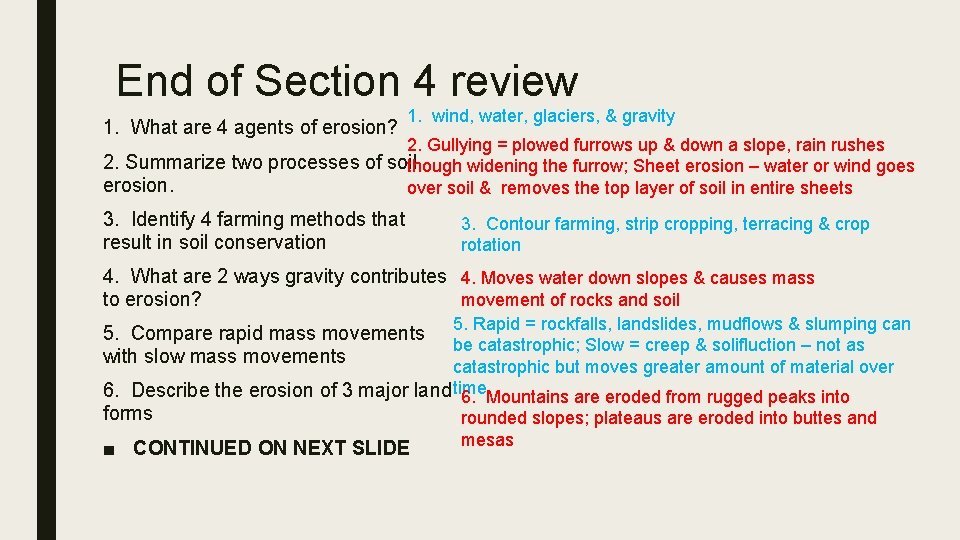
End of Section 4 review 1. What are 4 agents of erosion? 1. wind, water, glaciers, & gravity 2. Gullying = plowed furrows up & down a slope, rain rushes 2. Summarize two processes of soil though widening the furrow; Sheet erosion – water or wind goes erosion. over soil & removes the top layer of soil in entire sheets 3. Identify 4 farming methods that result in soil conservation 3. Contour farming, strip cropping, terracing & crop rotation 4. What are 2 ways gravity contributes 4. Moves water down slopes & causes mass to erosion? movement of rocks and soil 5. Rapid = rockfalls, landslides, mudflows & slumping can be catastrophic; Slow = creep & solifluction – not as catastrophic but moves greater amount of material over 6. Describe the erosion of 3 major land time 6. Mountains are eroded from rugged peaks into 5. Compare rapid mass movements with slow mass movements forms ■ CONTINUED ON NEXT SLIDE rounded slopes; plateaus are eroded into buttes and mesas
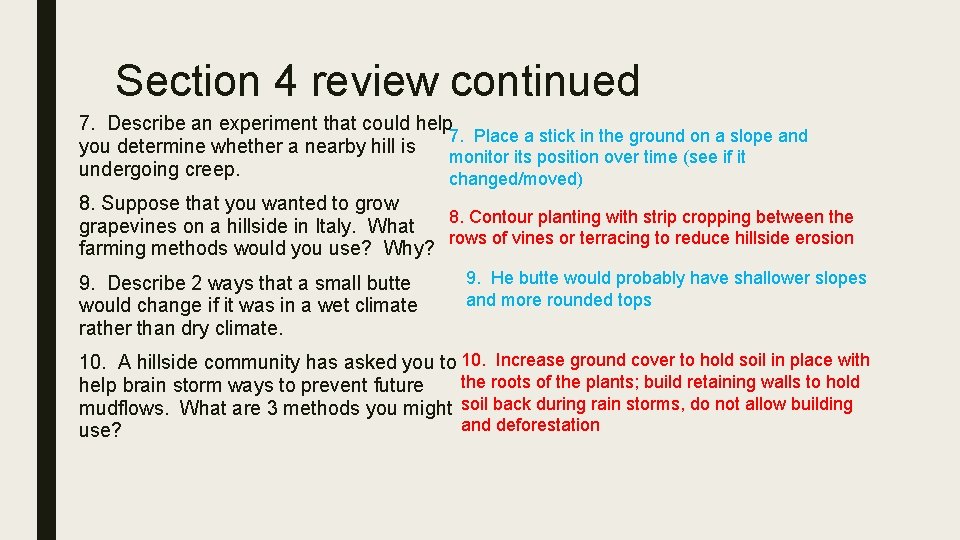
Section 4 review continued 7. Describe an experiment that could help 7. Place a stick in the ground on a slope and you determine whether a nearby hill is monitor its position over time (see if it undergoing creep. changed/moved) 8. Suppose that you wanted to grow grapevines on a hillside in Italy. What 8. Contour planting with strip cropping between the rows of vines or terracing to reduce hillside erosion farming methods would you use? Why? 9. Describe 2 ways that a small butte would change if it was in a wet climate rather than dry climate. 9. He butte would probably have shallower slopes and more rounded tops 10. A hillside community has asked you to 10. Increase ground cover to hold soil in place with the roots of the plants; build retaining walls to hold help brain storm ways to prevent future mudflows. What are 3 methods you might soil back during rain storms, do not allow building and deforestation use?