
Chapter 14 The Origin of Species Honors Biology
Chapter 14 – The Origin of Species Honors Biology Mr. Martino
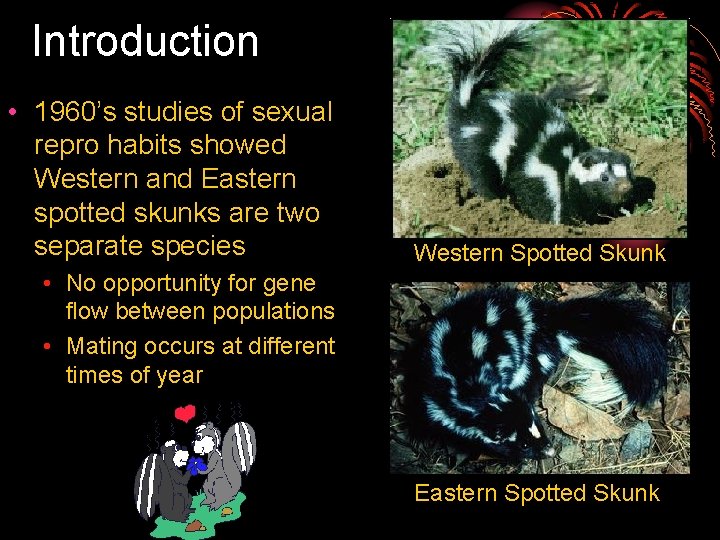
Introduction • 1960’s studies of sexual repro habits showed Western and Eastern spotted skunks are two separate species Western Spotted Skunk • No opportunity for gene flow between populations • Mating occurs at different times of year Eastern Spotted Skunk
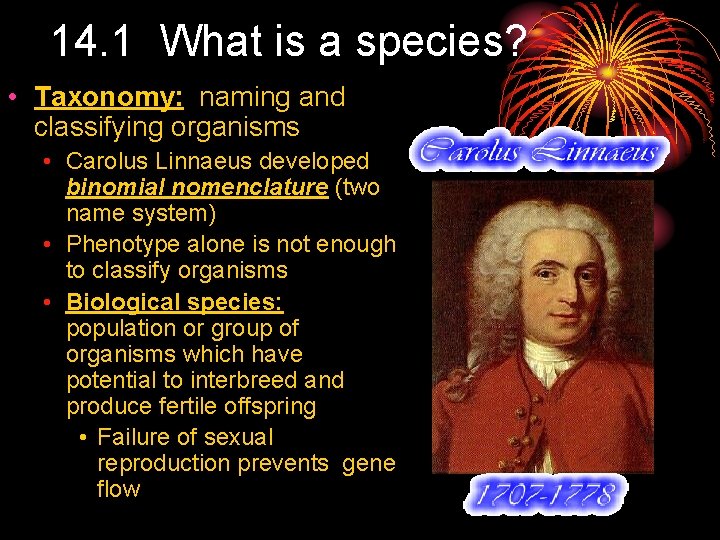
14. 1 What is a species? • Taxonomy: naming and classifying organisms • Carolus Linnaeus developed binomial nomenclature (two name system) • Phenotype alone is not enough to classify organisms • Biological species: population or group of organisms which have potential to interbreed and produce fertile offspring • Failure of sexual reproduction prevents gene flow
• Sometimes different populations of a species may look different…but still interbreed…. so they are technically still the same species…. .
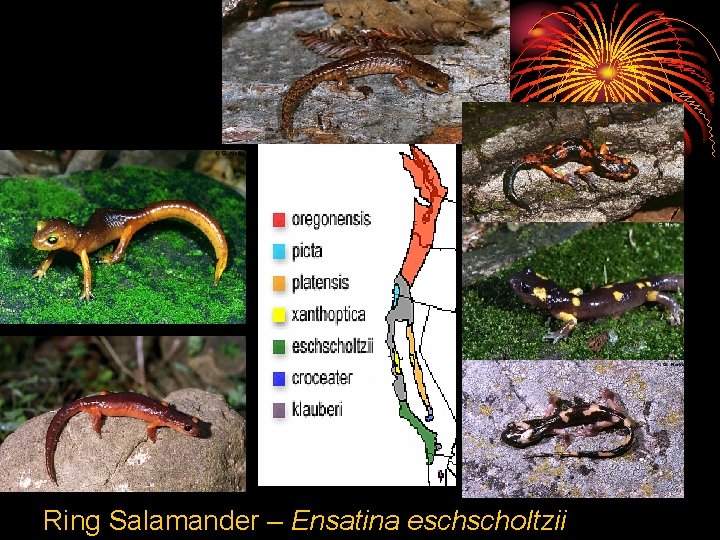
Ring Salamander – Ensatina eschscholtzii
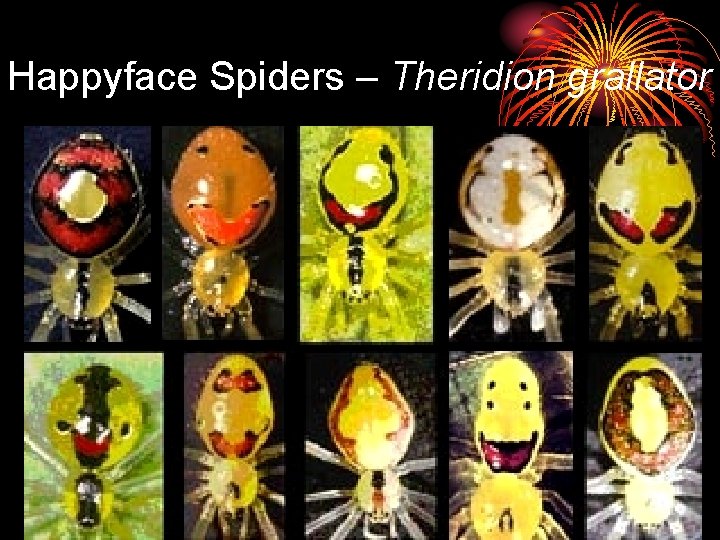
Happyface Spiders – Theridion grallator
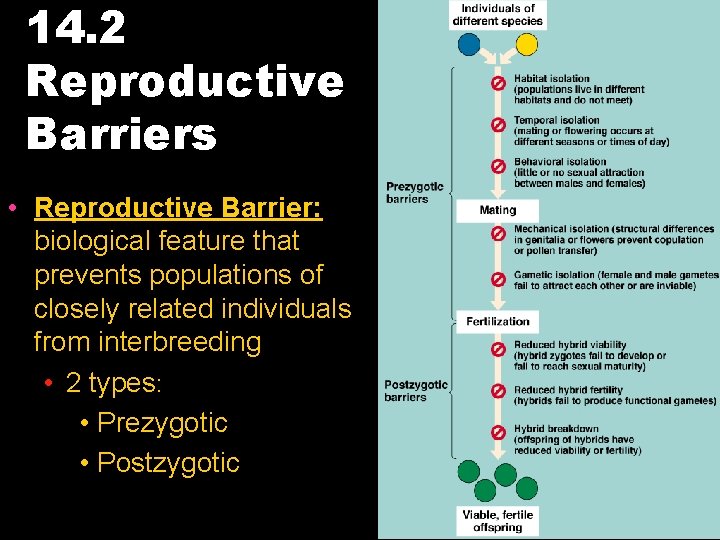
14. 2 Reproductive Barriers • Reproductive Barrier: biological feature that prevents populations of closely related individuals from interbreeding • 2 types: • Prezygotic • Postzygotic
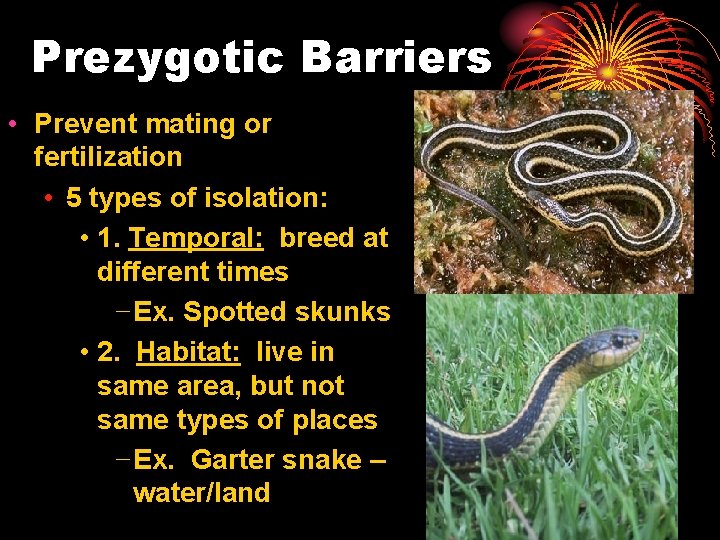
Prezygotic Barriers • Prevent mating or fertilization • 5 types of isolation: • 1. Temporal: breed at different times − Ex. Spotted skunks • 2. Habitat: live in same area, but not same types of places − Ex. Garter snake – water/land
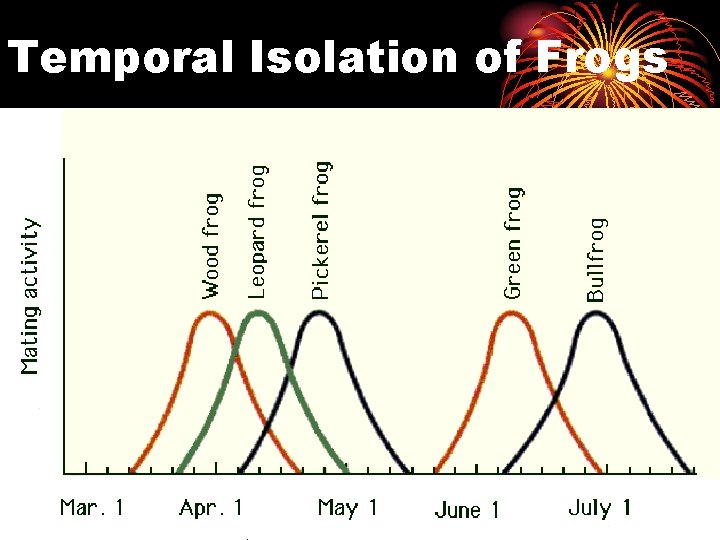
Temporal Isolation of Frogs
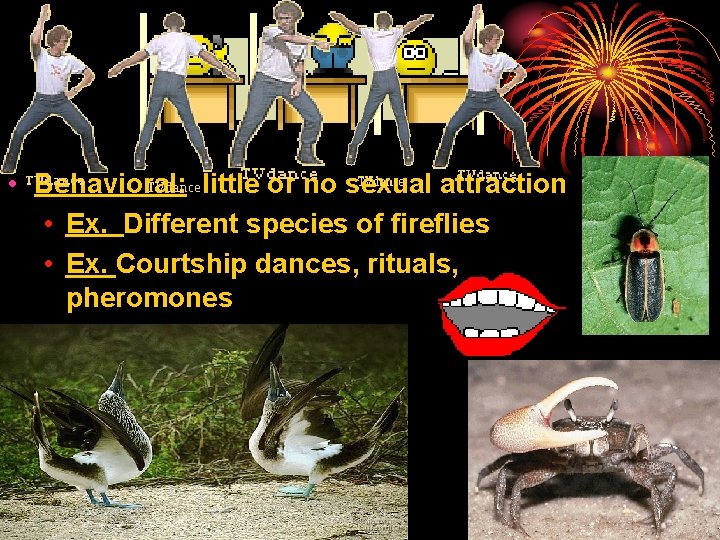
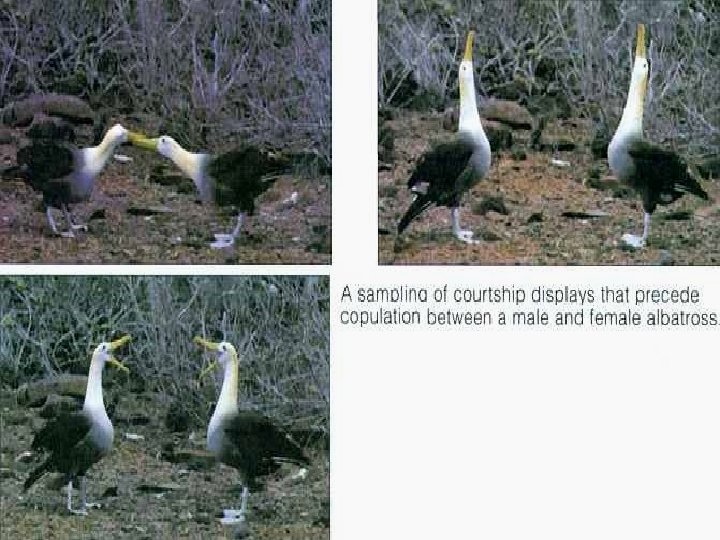
• Behavioral: little or no sexual attraction • Ex. Different species of fireflies • Ex. Courtship dances, rituals, pheromones
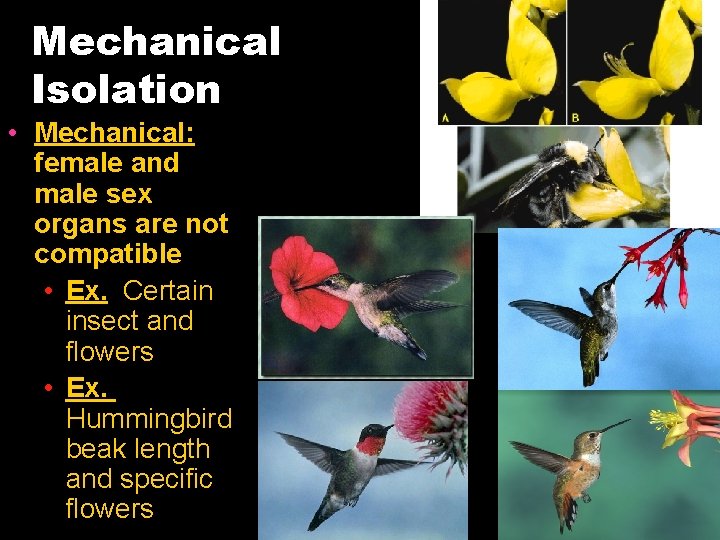
Mechanical Isolation • Mechanical: female and male sex organs are not compatible • Ex. Certain insect and flowers • Ex. Hummingbird beak length and specific flowers
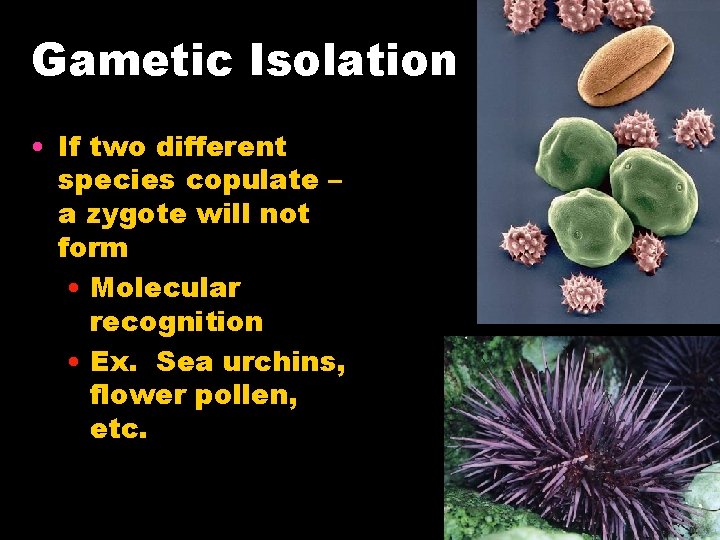
Gametic Isolation • If two different species copulate – a zygote will not form • Molecular recognition • Ex. Sea urchins, flower pollen, etc.
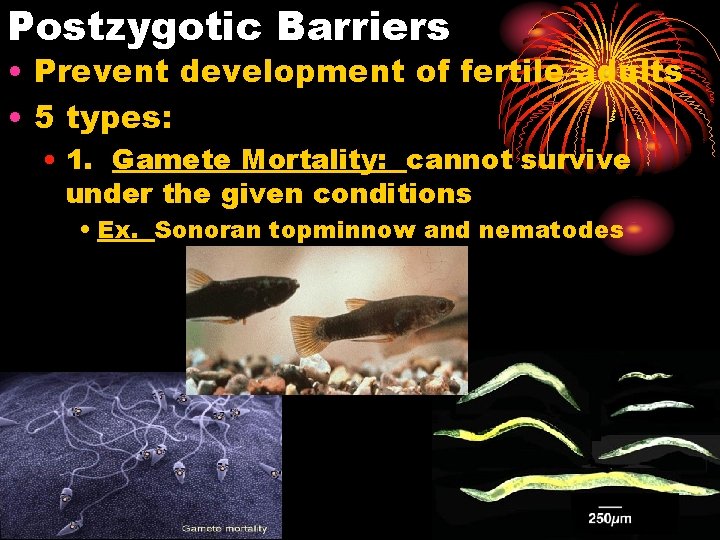
Postzygotic Barriers • Prevent development of fertile adults • 5 types: • 1. Gamete Mortality: cannot survive under the given conditions • Ex. Sonoran topminnow and nematodes
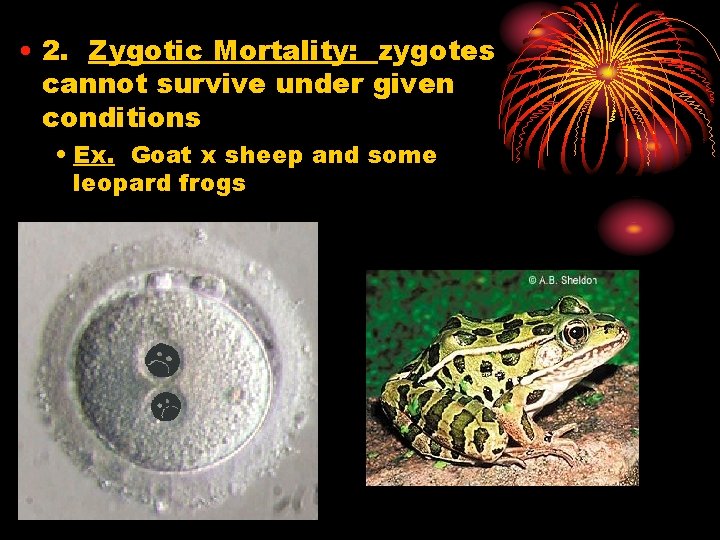
• 2. Zygotic Mortality: zygotes cannot survive under given conditions • Ex. Goat x sheep and some leopard frogs
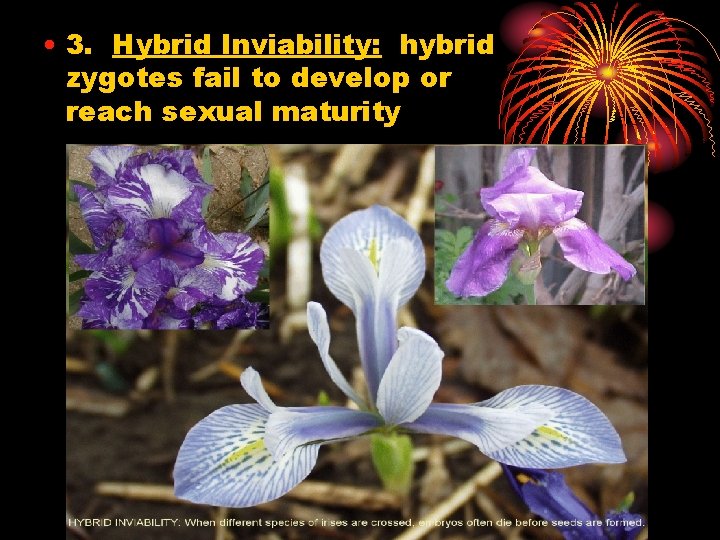
• 3. Hybrid Inviability: hybrid zygotes fail to develop or reach sexual maturity
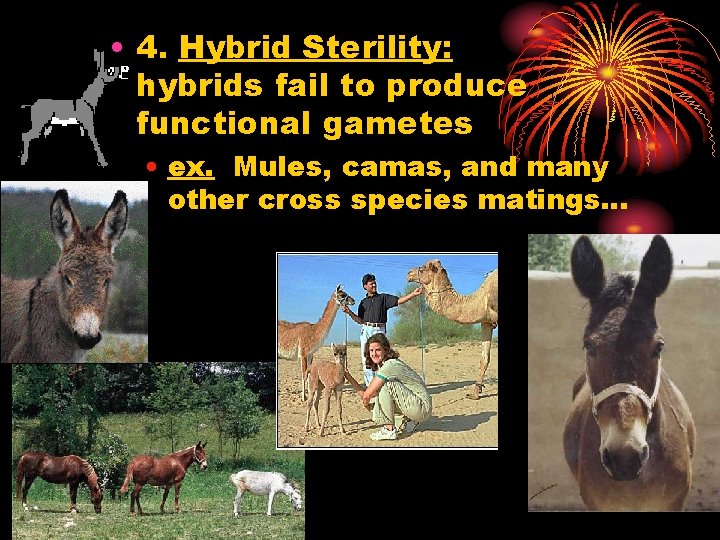
• 4. Hybrid Sterility: hybrids fail to produce functional gametes • ex. Mules, camas, and many other cross species matings…
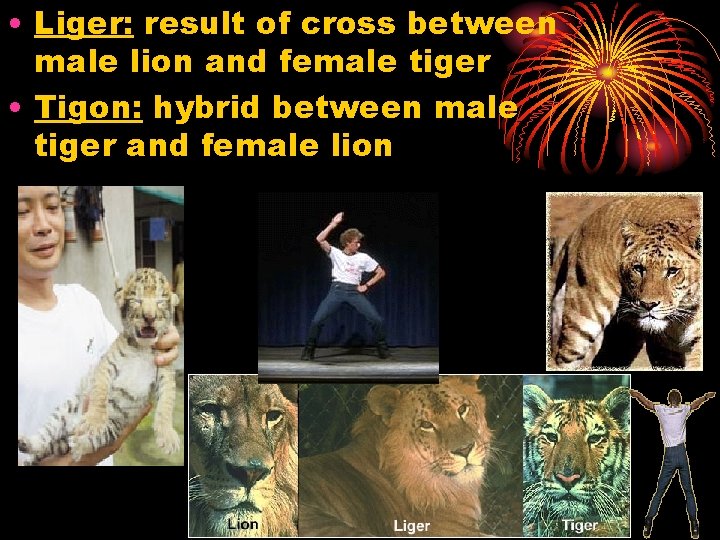
• Liger: result of cross between male lion and female tiger • Tigon: hybrid between male tiger and female lion
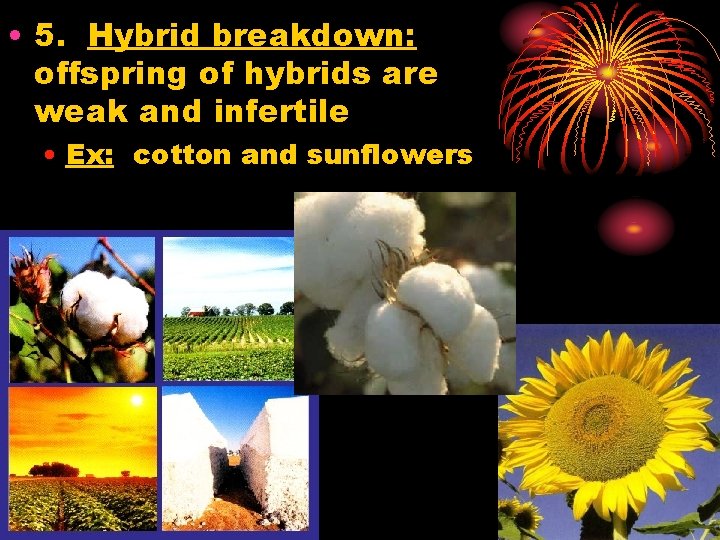
• 5. Hybrid breakdown: offspring of hybrids are weak and infertile • Ex: cotton and sunflowers
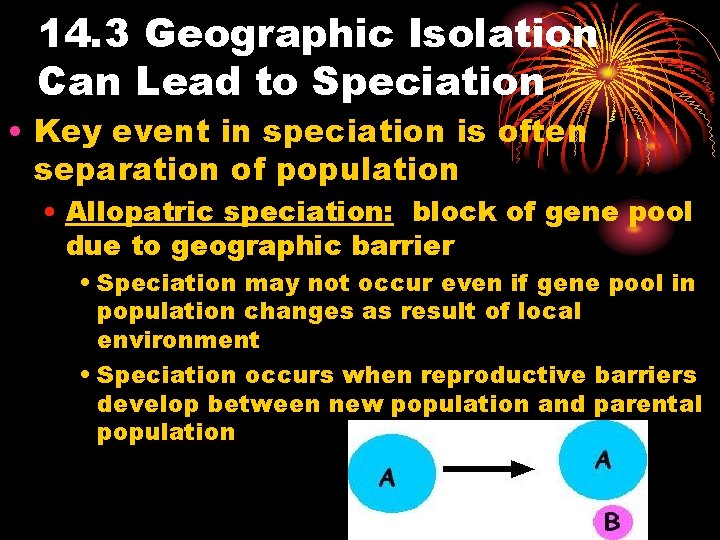
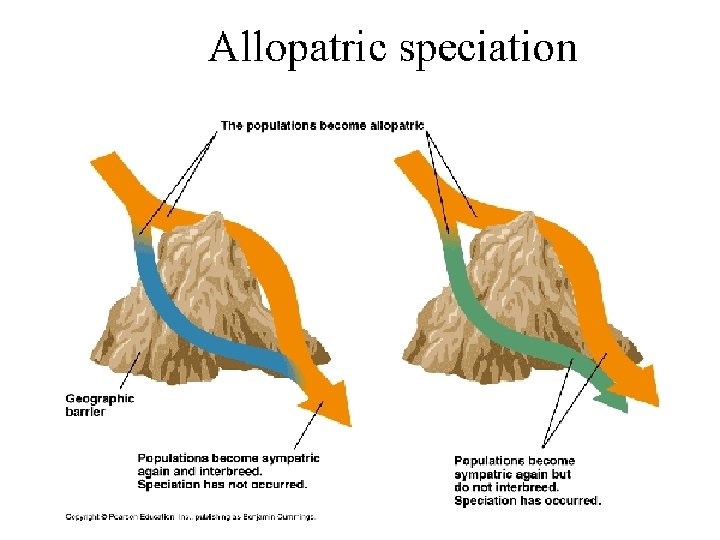
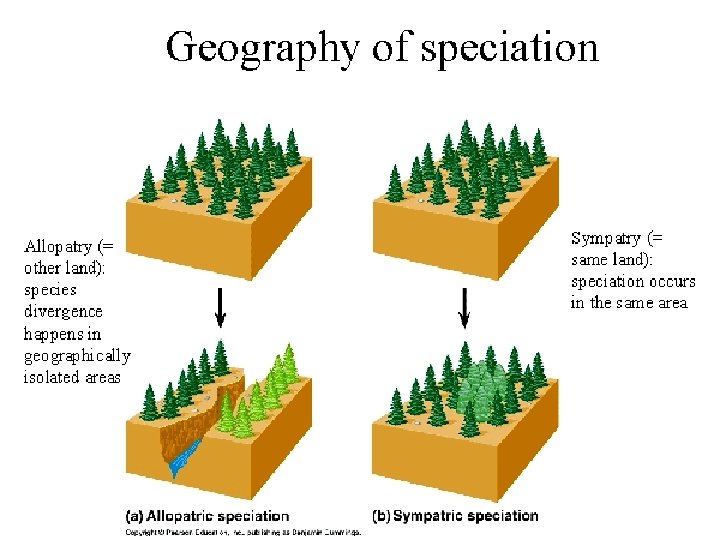
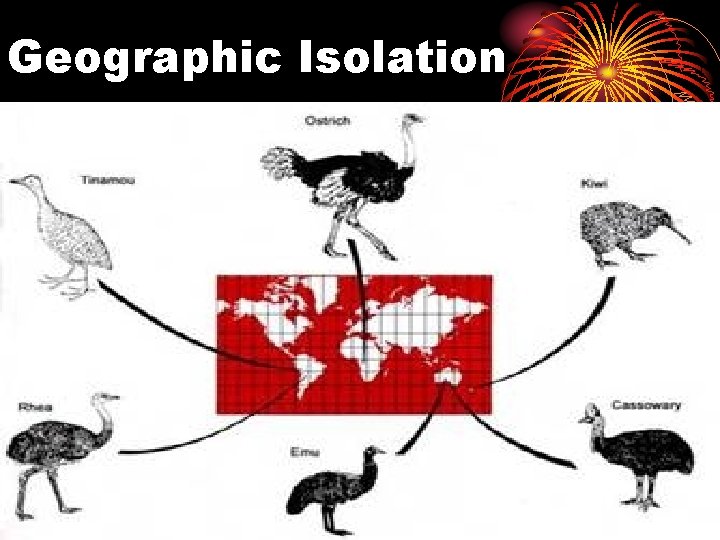
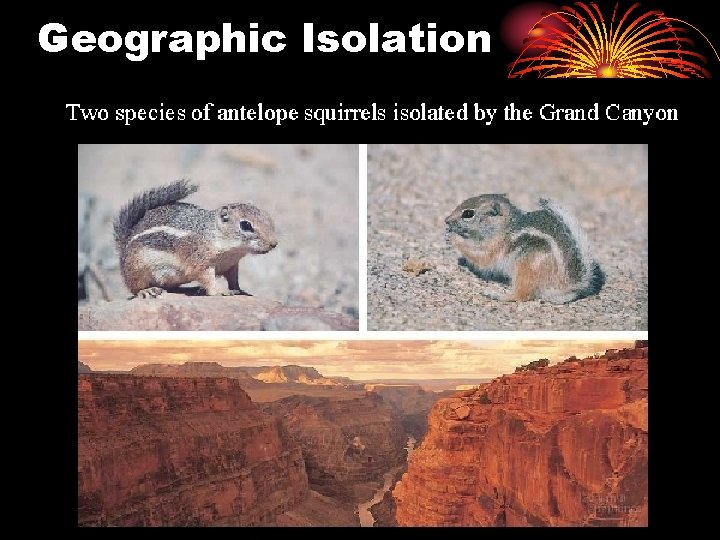
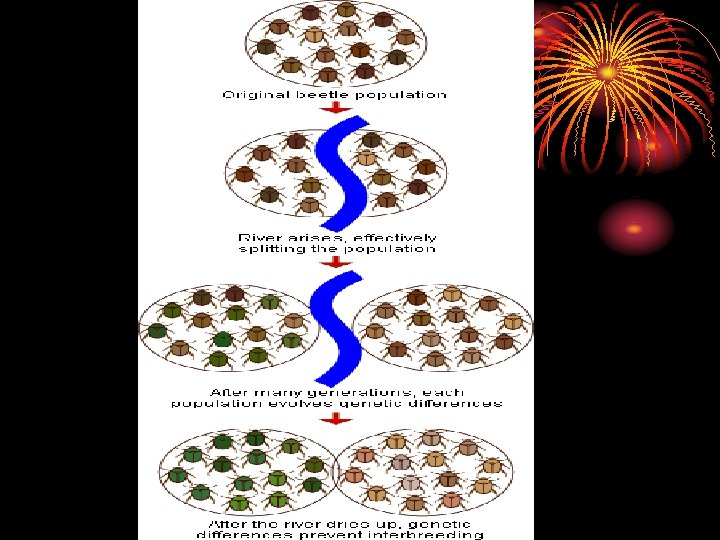
14. 3 Geographic Isolation Can Lead to Speciation • Key event in speciation is often separation of population • Allopatric speciation: block of gene pool due to geographic barrier • Speciation may not occur even if gene pool in population changes as result of local environment • Speciation occurs when reproductive barriers develop between new population and parental population
Geographic Isolation
Geographic Isolation
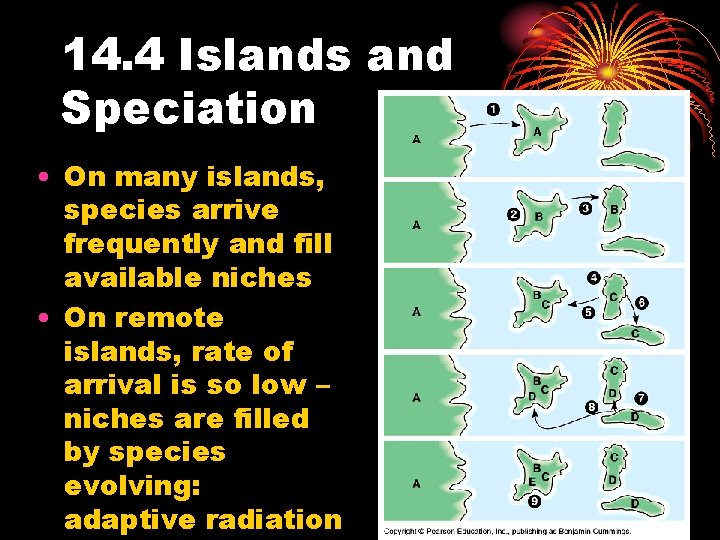
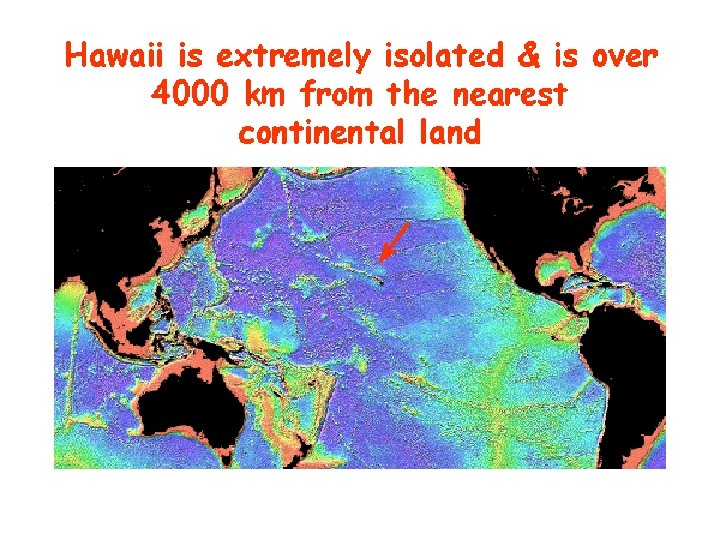
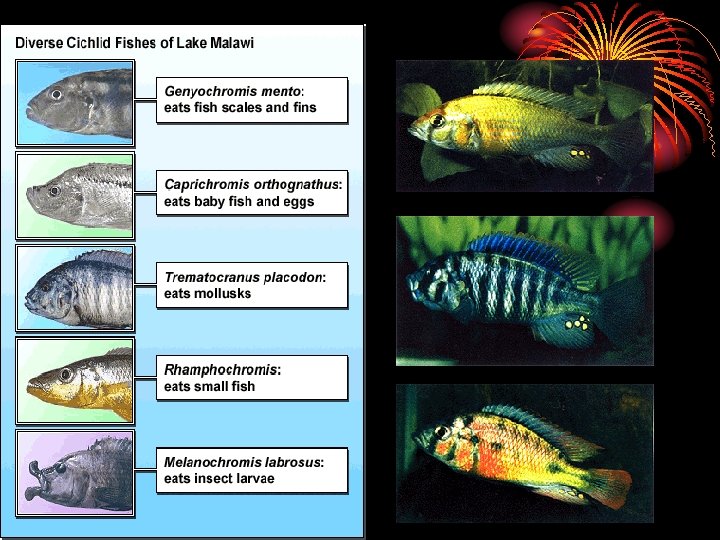
14. 4 Islands and Speciation • On many islands, species arrive frequently and fill available niches • On remote islands, rate of arrival is so low – niches are filled by species evolving: adaptive radiation
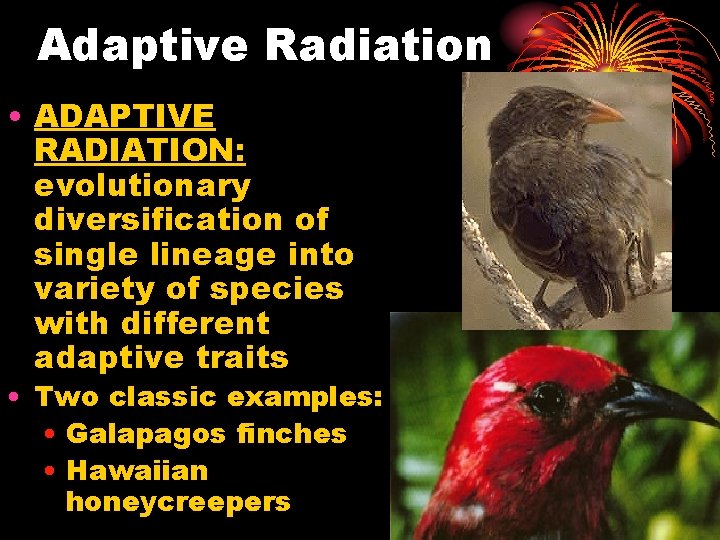
Adaptive Radiation • ADAPTIVE RADIATION: evolutionary diversification of single lineage into variety of species with different adaptive traits • Two classic examples: • Galapagos finches • Hawaiian honeycreepers
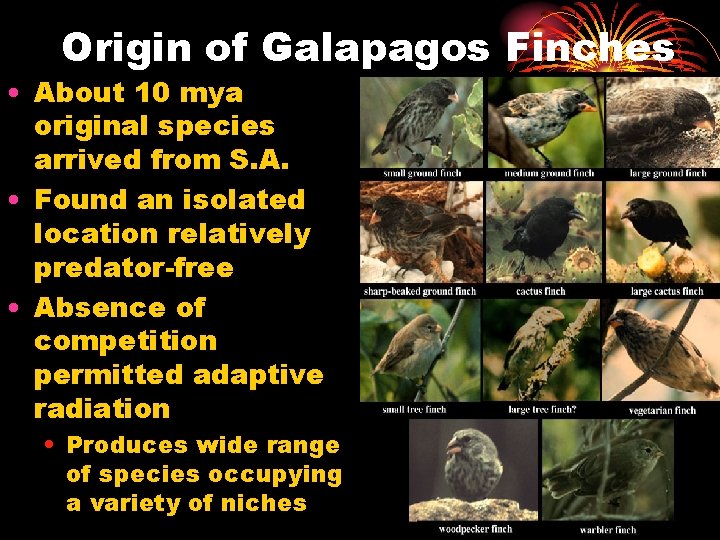
Origin of Galapagos Finches • About 10 mya original species arrived from S. A. • Found an isolated location relatively predator-free • Absence of competition permitted adaptive radiation • Produces wide range of species occupying a variety of niches
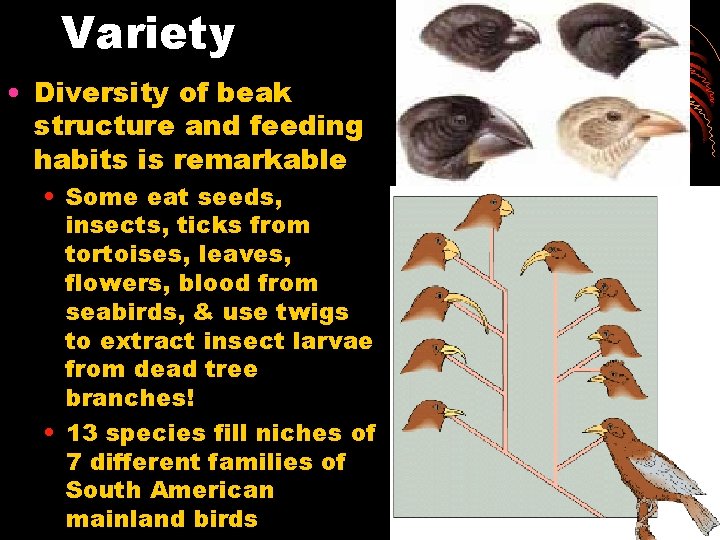
Variety • Diversity of beak structure and feeding habits is remarkable • Some eat seeds, insects, ticks from tortoises, leaves, flowers, blood from seabirds, & use twigs to extract insect larvae from dead tree branches! • 13 species fill niches of 7 different families of South American mainland birds
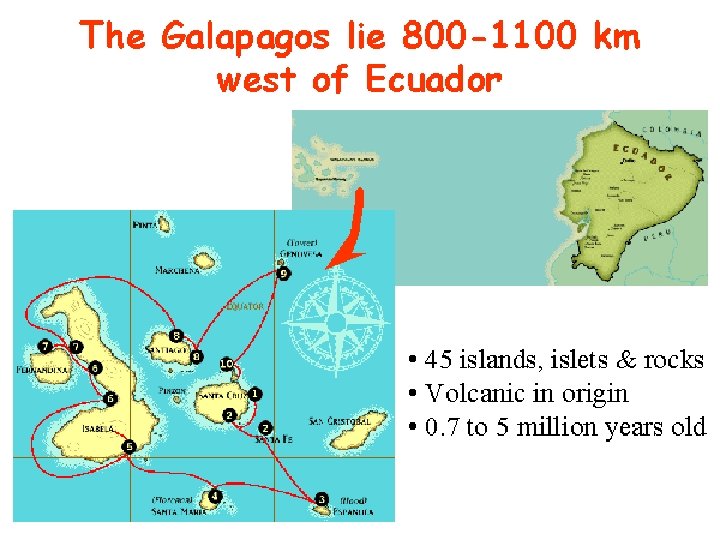
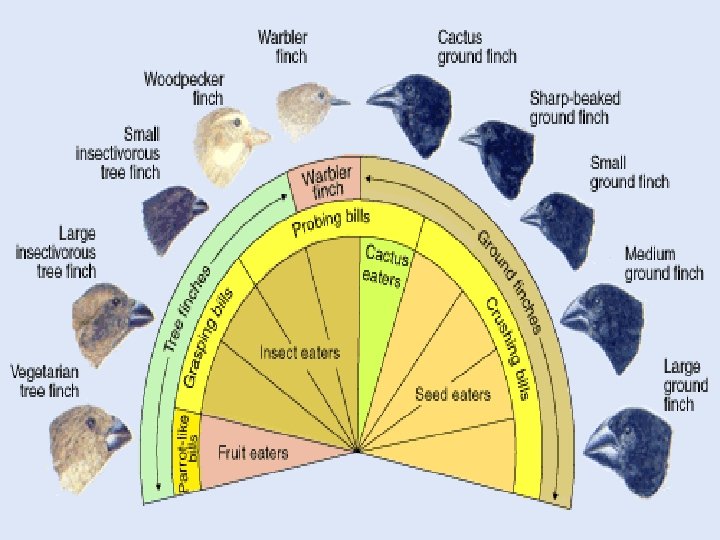
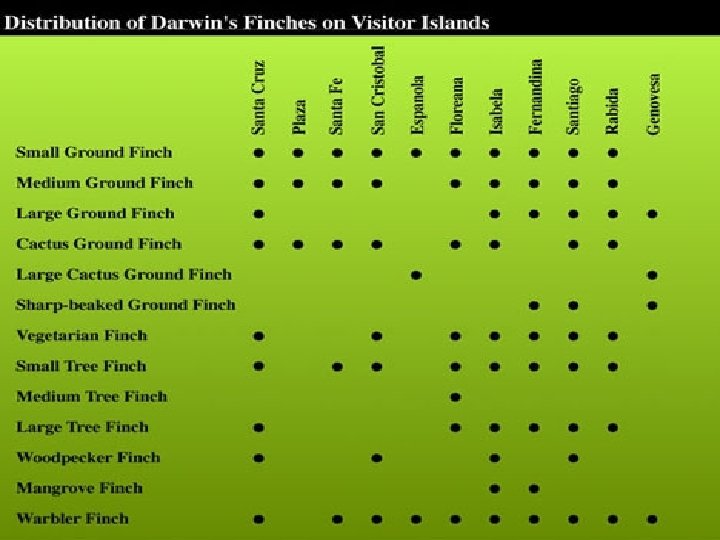
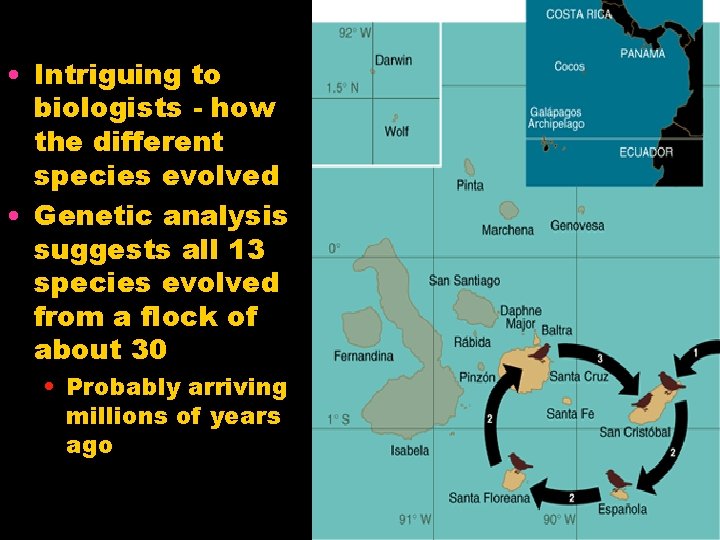
• Intriguing to biologists - how the different species evolved • Genetic analysis suggests all 13 species evolved from a flock of about 30 • Probably arriving millions of years ago
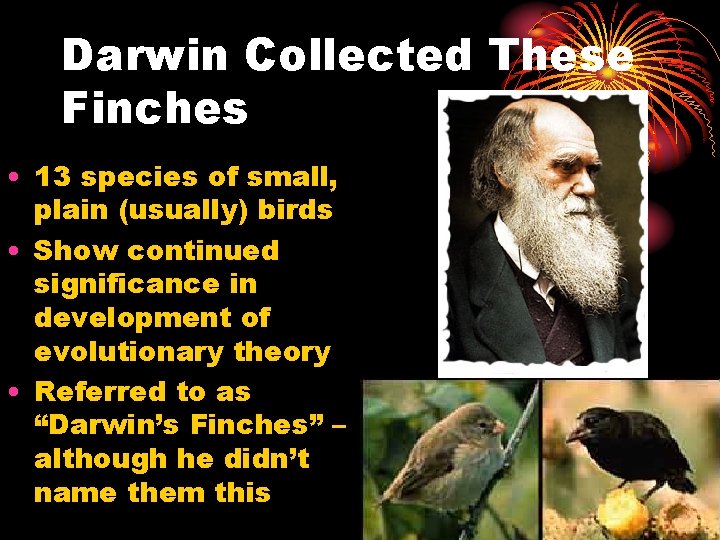
Darwin Collected These Finches • 13 species of small, plain (usually) birds • Show continued significance in development of evolutionary theory • Referred to as “Darwin’s Finches” – although he didn’t name them this
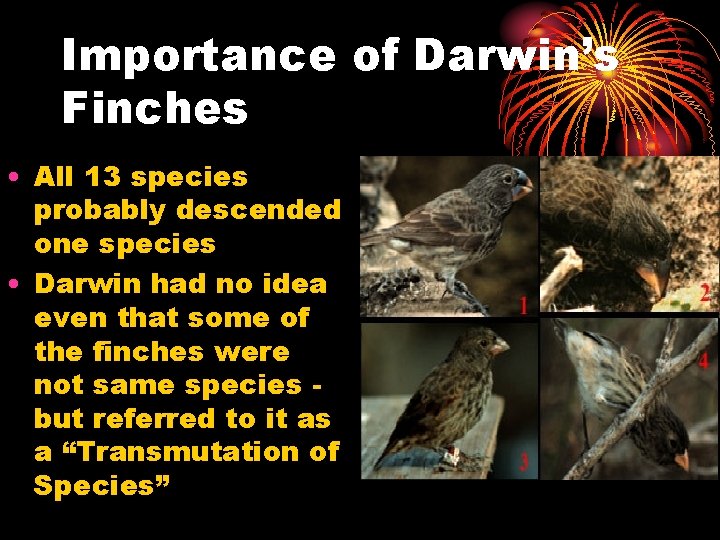
Importance of Darwin’s Finches • All 13 species probably descended one species • Darwin had no idea even that some of the finches were not same species but referred to it as a “Transmutation of Species”
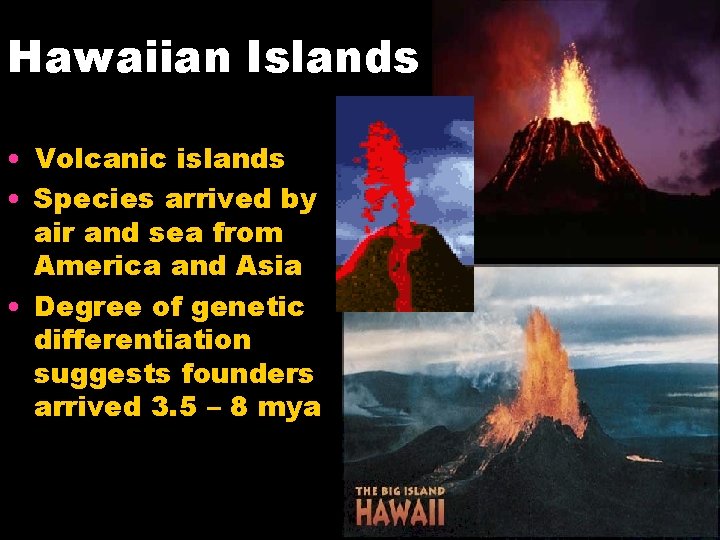
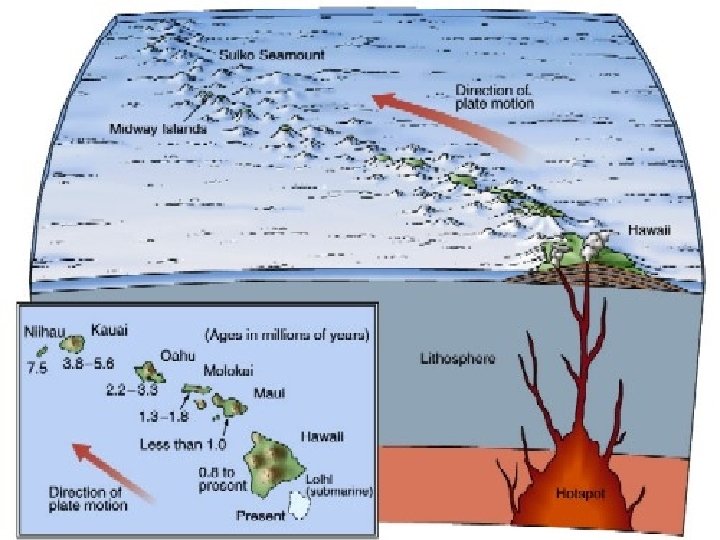
Hawaiian Islands • Volcanic islands • Species arrived by air and sea from America and Asia • Degree of genetic differentiation suggests founders arrived 3. 5 – 8 mya
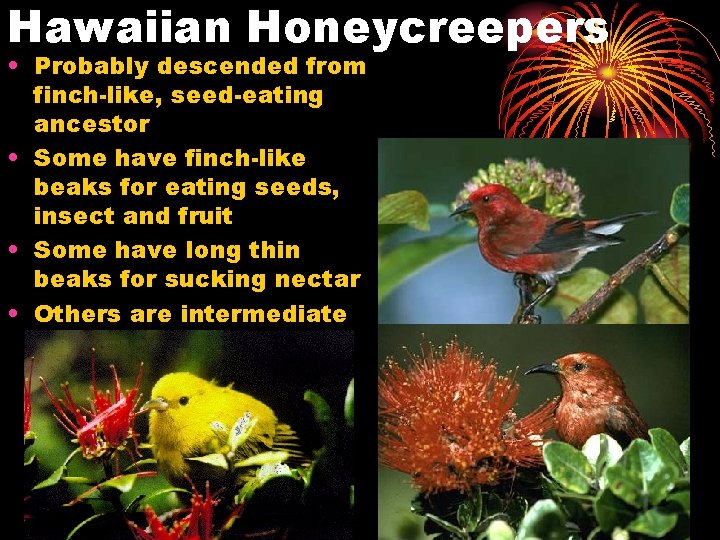
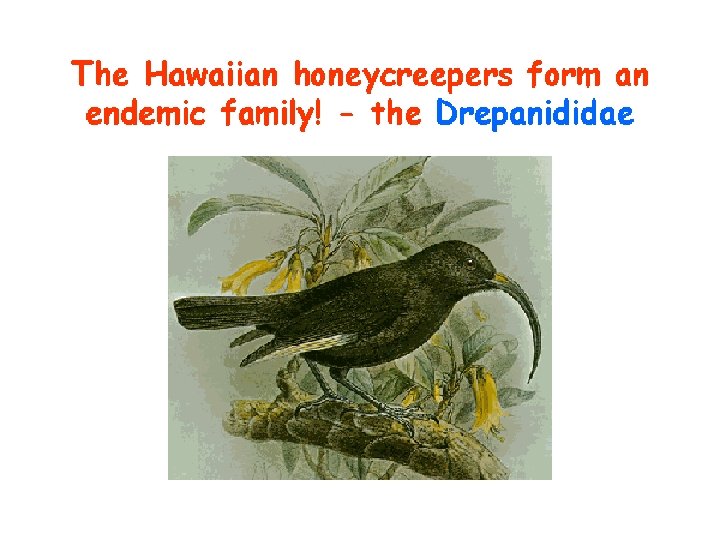
Hawaiian Honeycreepers • Probably descended from finch-like, seed-eating ancestor • Some have finch-like beaks for eating seeds, insect and fruit • Some have long thin beaks for sucking nectar • Others are intermediate
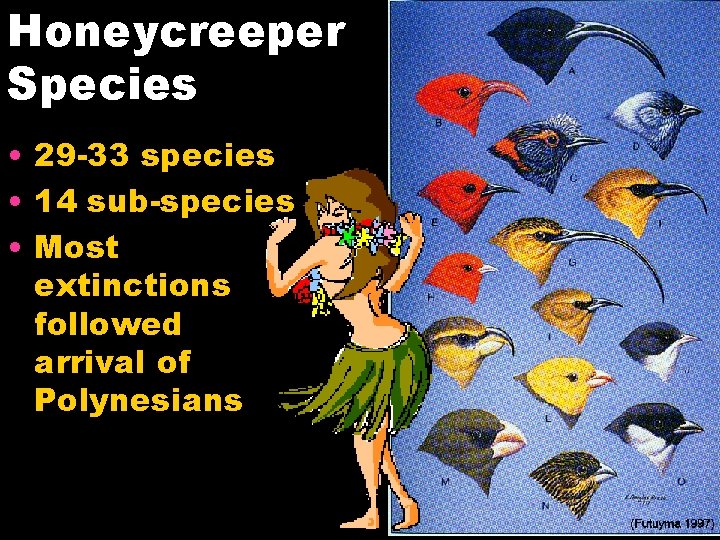
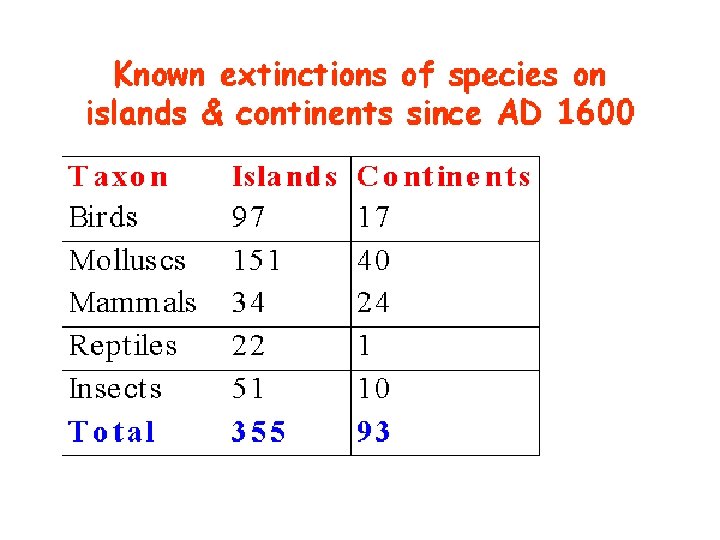
Honeycreeper Species • 29 -33 species • 14 sub-species • Most extinctions followed arrival of Polynesians
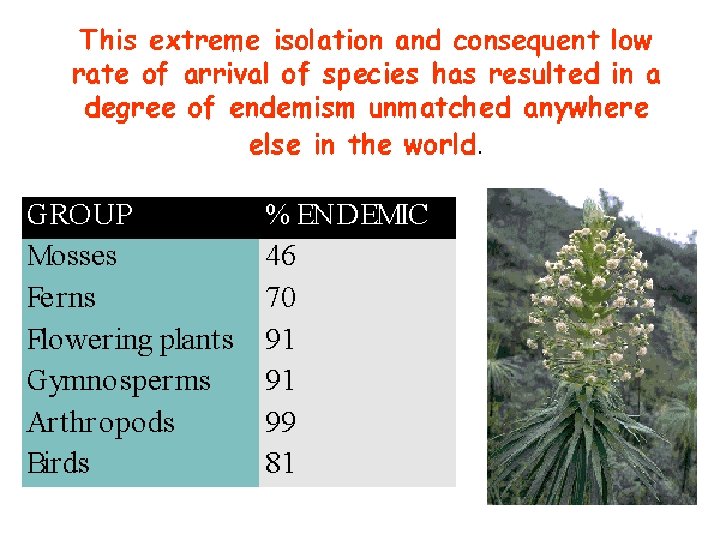
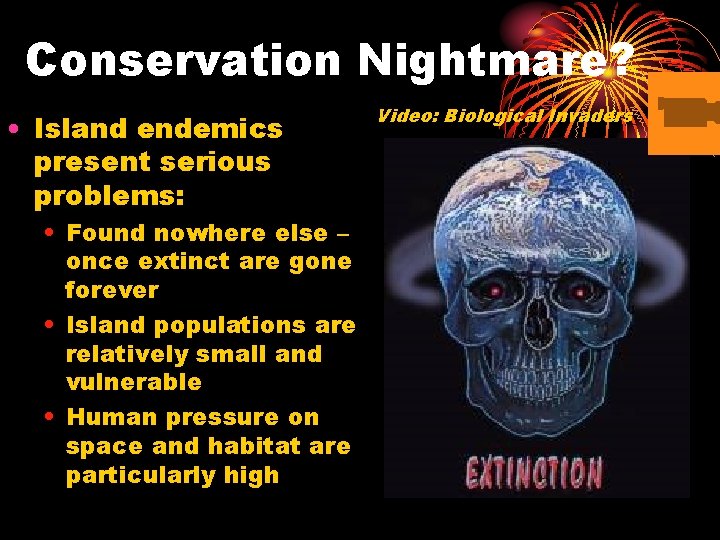
Conservation Nightmare? • Island endemics present serious problems: • Found nowhere else – once extinct are gone forever • Island populations are relatively small and vulnerable • Human pressure on space and habitat are particularly high Video: Biological Invaders
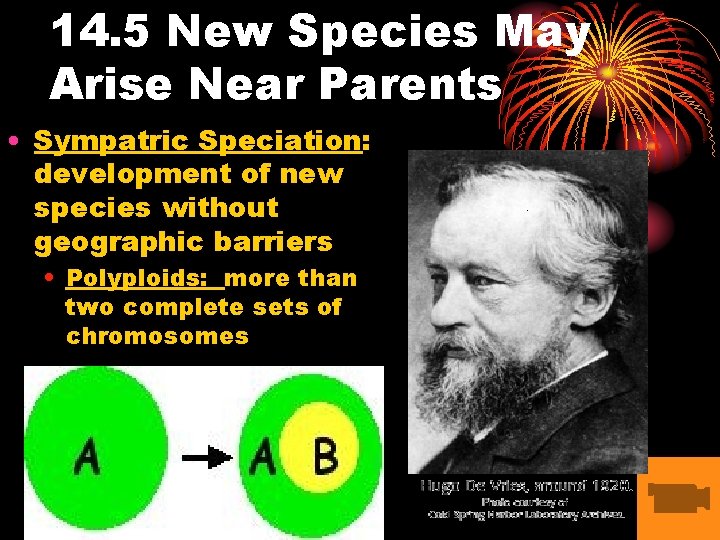
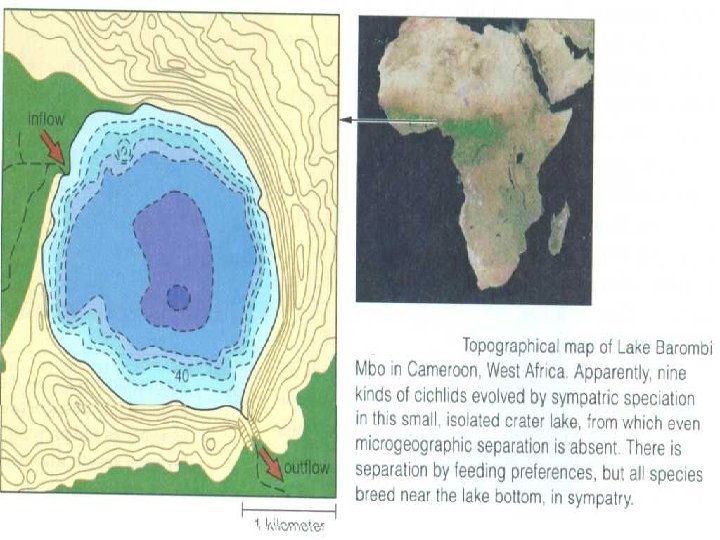
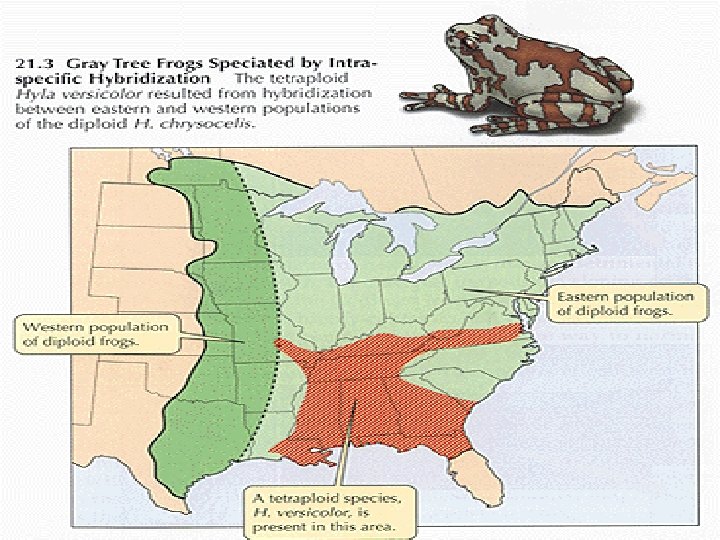
14. 5 New Species May Arise Near Parents • Sympatric Speciation: development of new species without geographic barriers • Polyploids: more than two complete sets of chromosomes
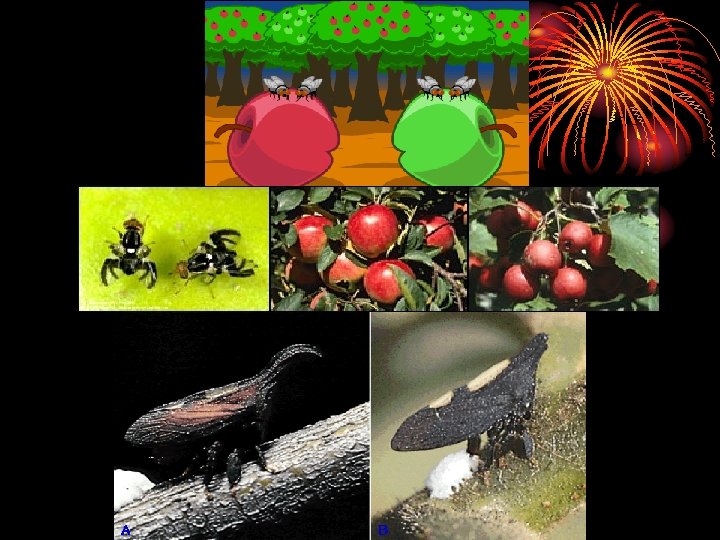
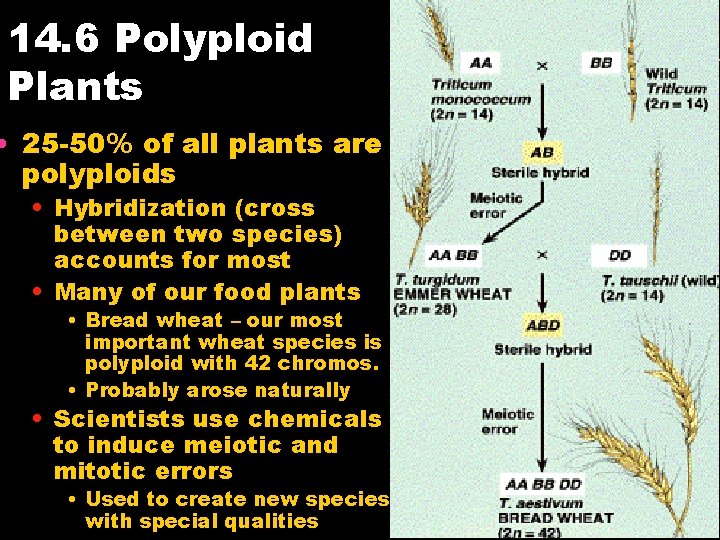
14. 6 Polyploid Plants • 25 -50% of all plants are polyploids • Hybridization (cross between two species) accounts for most • Many of our food plants • Bread wheat – our most important wheat species is polyploid with 42 chromos. • Probably arose naturally • Scientists use chemicals to induce meiotic and mitotic errors • Used to create new species with special qualities
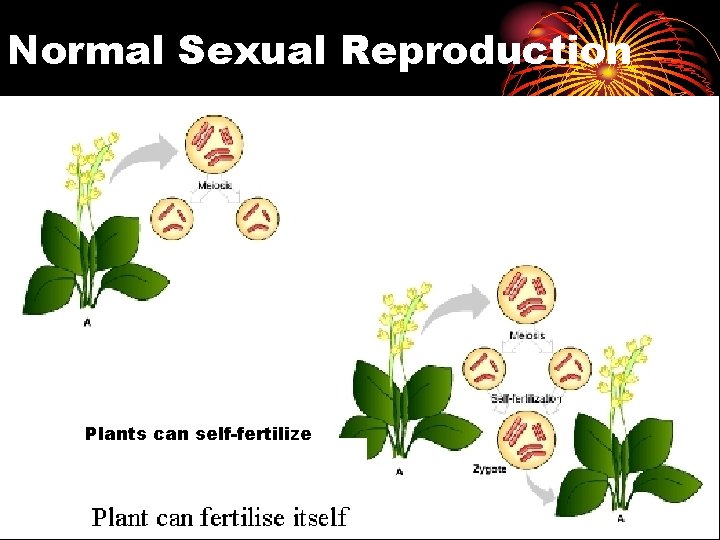
Normal Sexual Reproduction Plants can self-fertilize
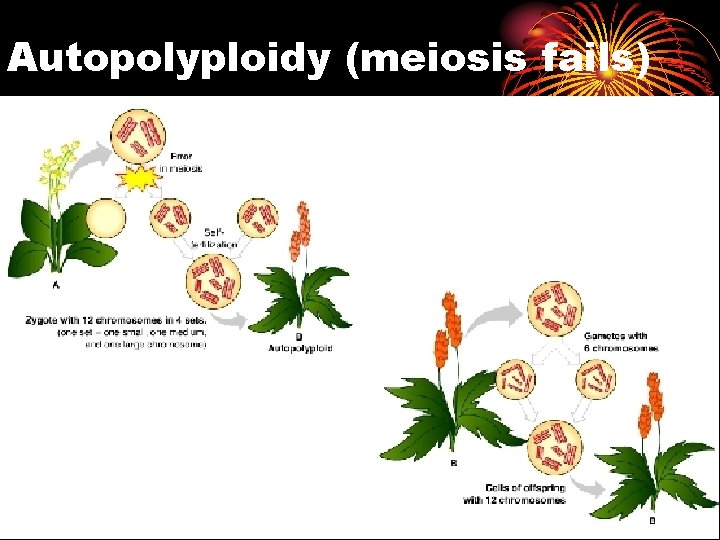
Autopolyploidy (meiosis fails)
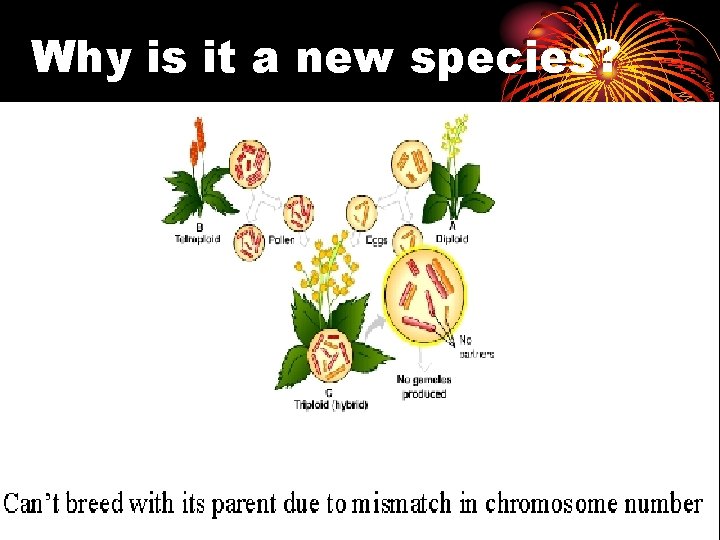
Why is it a new species?
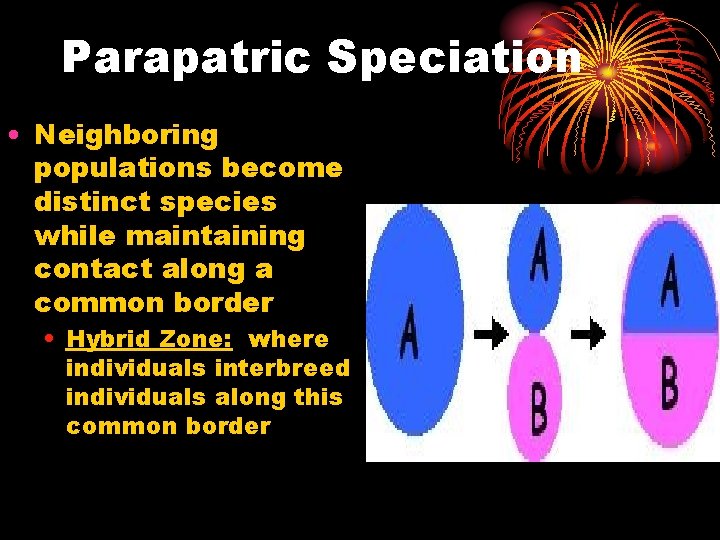
Parapatric Speciation • Neighboring populations become distinct species while maintaining contact along a common border • Hybrid Zone: where individuals interbreed individuals along this common border
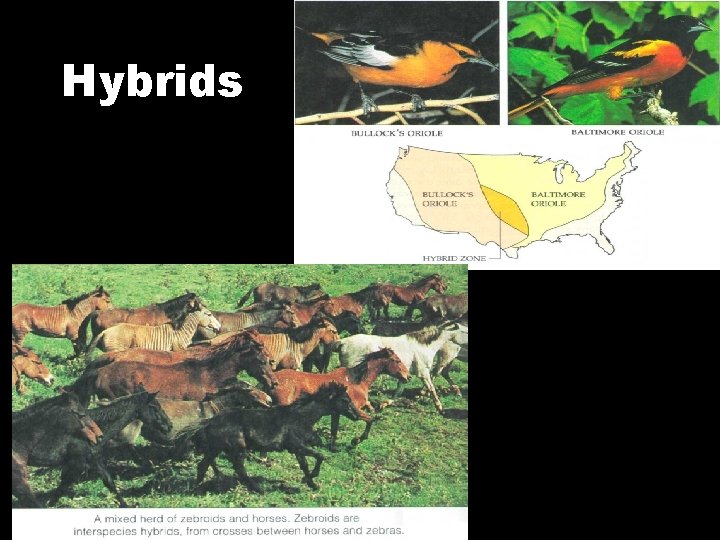
Hybrids
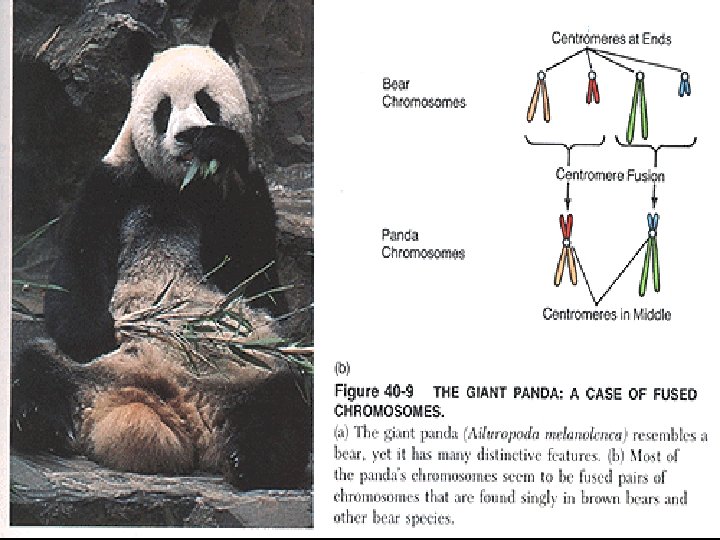
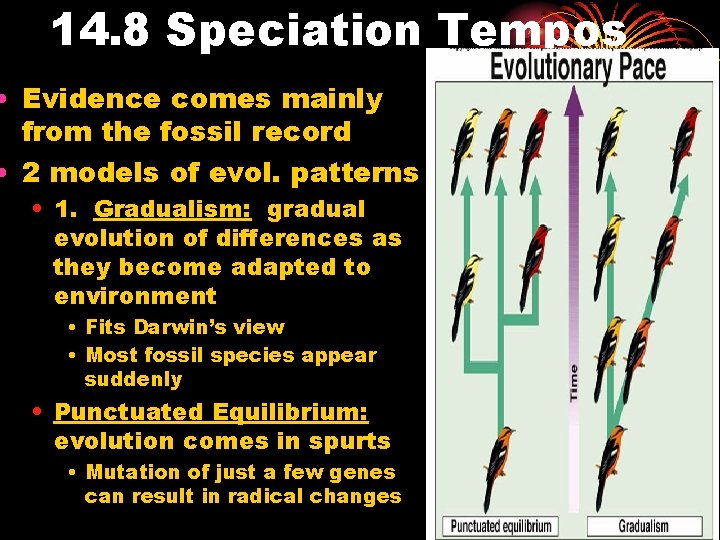
14. 8 Speciation Tempos • Evidence comes mainly from the fossil record • 2 models of evol. patterns • 1. Gradualism: gradual evolution of differences as they become adapted to environment • Fits Darwin’s view • Most fossil species appear suddenly • Punctuated Equilibrium: evolution comes in spurts • Mutation of just a few genes can result in radical changes
- Slides: 58