
Chapter 14 The Lymphatic System and Immunity Lymphatic
- Slides: 25
Chapter 14 The Lymphatic System and Immunity
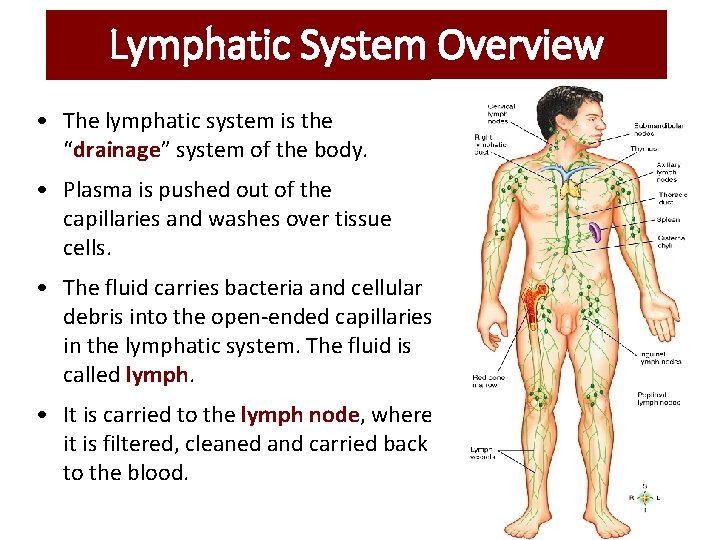
Lymphatic System Overview • The lymphatic system is the “drainage” system of the body. • Plasma is pushed out of the capillaries and washes over tissue cells. • The fluid carries bacteria and cellular debris into the open-ended capillaries in the lymphatic system. The fluid is called lymph. • It is carried to the lymph node, where it is filtered, cleaned and carried back to the blood.
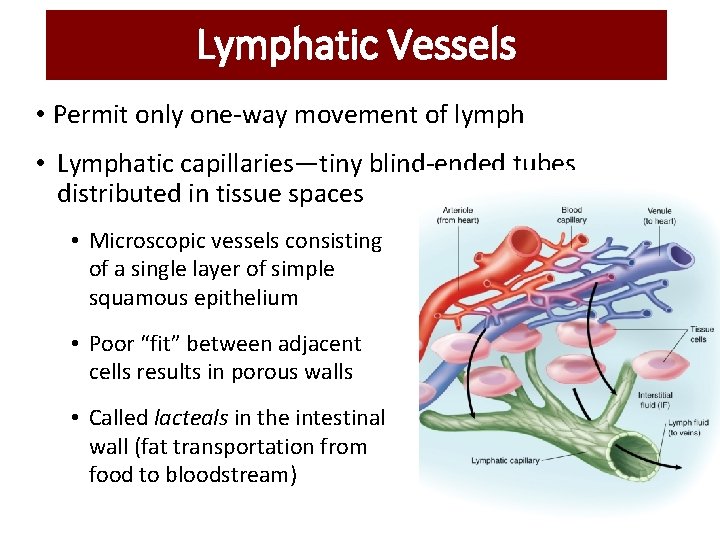
Lymphatic Vessels • Permit only one-way movement of lymph • Lymphatic capillaries—tiny blind-ended tubes distributed in tissue spaces • Microscopic vessels consisting of a single layer of simple squamous epithelium • Poor “fit” between adjacent cells results in porous walls • Called lacteals in the intestinal wall (fat transportation from food to bloodstream)
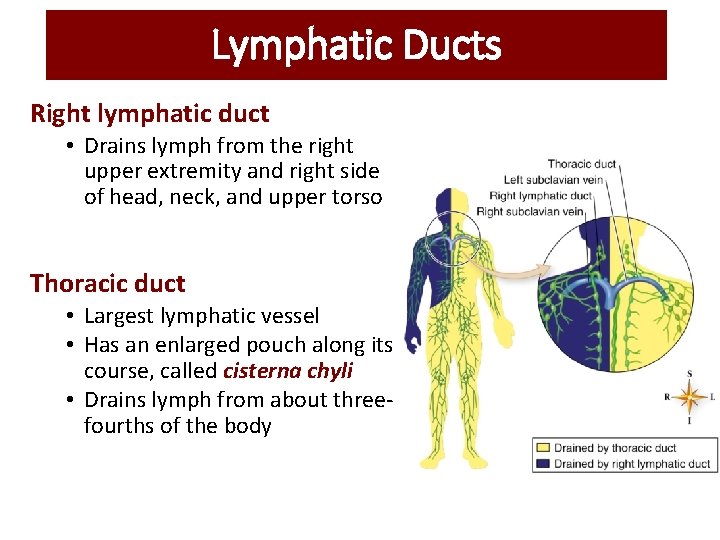
Lymphatic Ducts Right lymphatic duct • Drains lymph from the right upper extremity and right side of head, neck, and upper torso Thoracic duct • Largest lymphatic vessel • Has an enlarged pouch along its course, called cisterna chyli • Drains lymph from about threefourths of the body
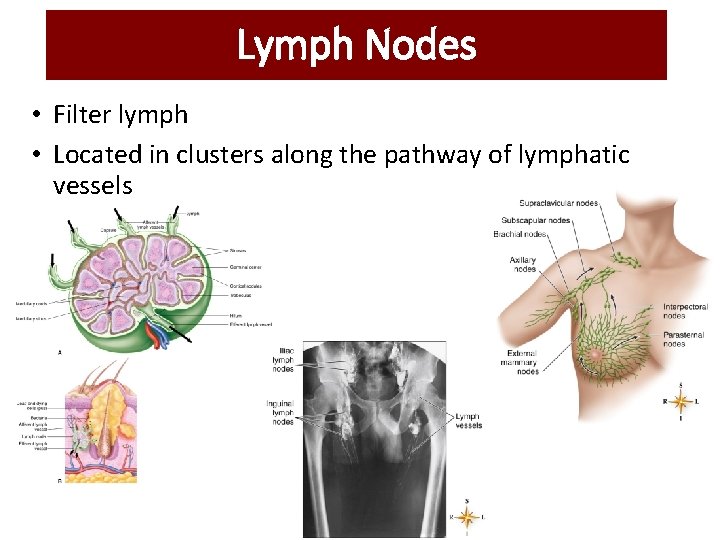
Lymph Nodes • Filter lymph • Located in clusters along the pathway of lymphatic vessels
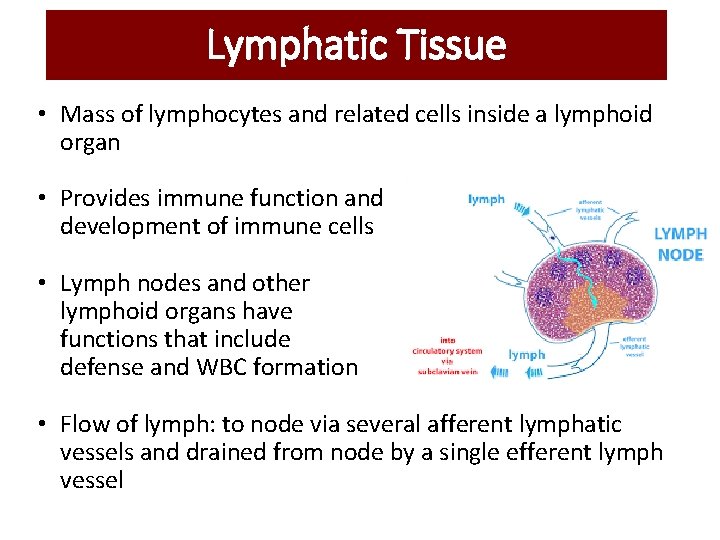
Lymphatic Tissue • Mass of lymphocytes and related cells inside a lymphoid organ • Provides immune function and development of immune cells • Lymph nodes and other lymphoid organs have functions that include defense and WBC formation • Flow of lymph: to node via several afferent lymphatic vessels and drained from node by a single efferent lymph vessel
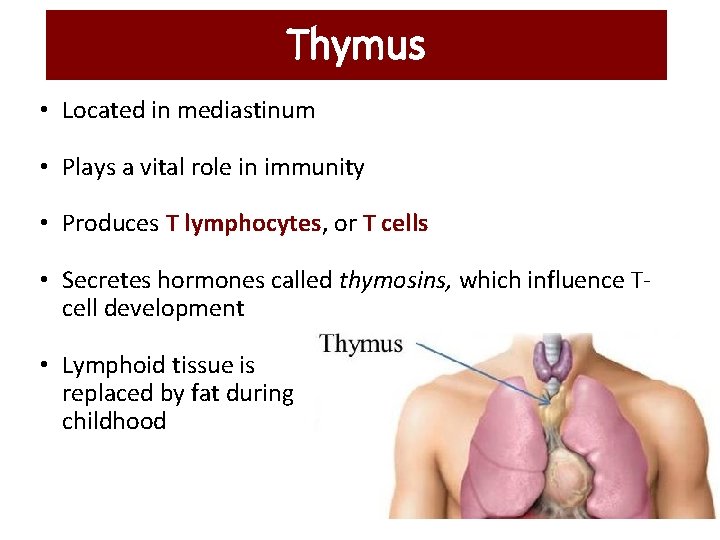
Thymus • Located in mediastinum • Plays a vital role in immunity • Produces T lymphocytes, or T cells • Secretes hormones called thymosins, which influence Tcell development • Lymphoid tissue is replaced by fat during childhood
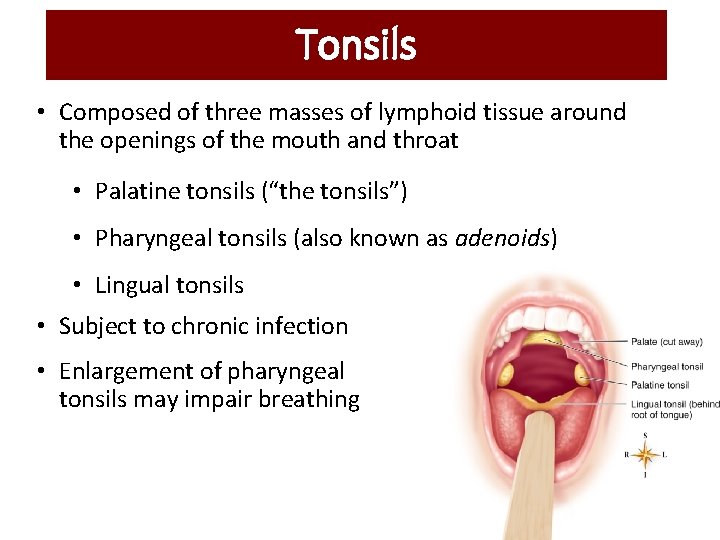
Tonsils • Composed of three masses of lymphoid tissue around the openings of the mouth and throat • Palatine tonsils (“the tonsils”) • Pharyngeal tonsils (also known as adenoids) • Lingual tonsils • Subject to chronic infection • Enlargement of pharyngeal tonsils may impair breathing
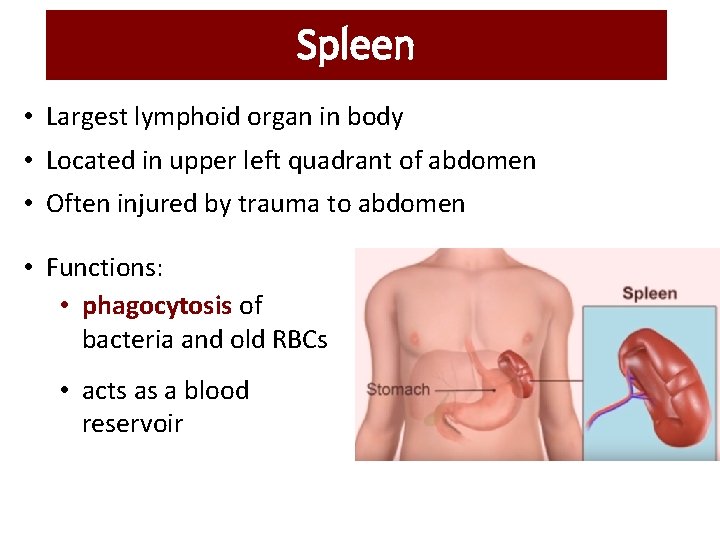
Spleen • Largest lymphoid organ in body • Located in upper left quadrant of abdomen • Often injured by trauma to abdomen • Functions: • phagocytosis of bacteria and old RBCs • acts as a blood reservoir
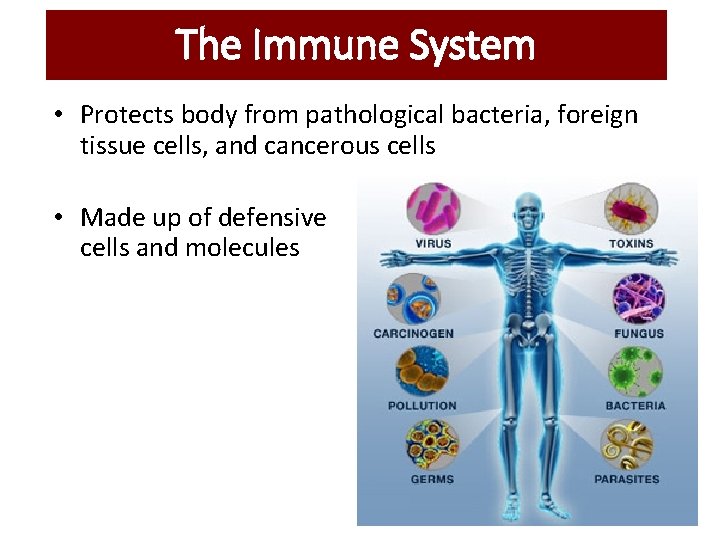
The Immune System • Protects body from pathological bacteria, foreign tissue cells, and cancerous cells • Made up of defensive cells and molecules
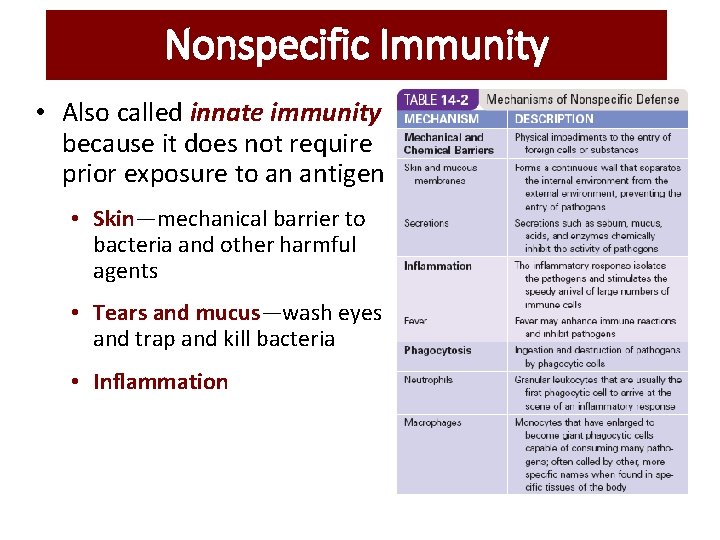
Nonspecific Immunity • Also called innate immunity because it does not require prior exposure to an antigen • Skin—mechanical barrier to bacteria and other harmful agents • Tears and mucus—wash eyes and trap and kill bacteria • Inflammation
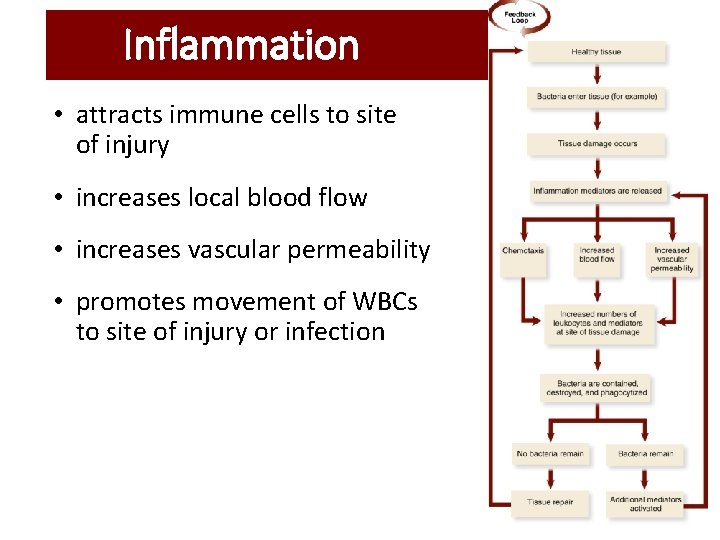
Inflammation • attracts immune cells to site of injury • increases local blood flow • increases vascular permeability • promotes movement of WBCs to site of injury or infection
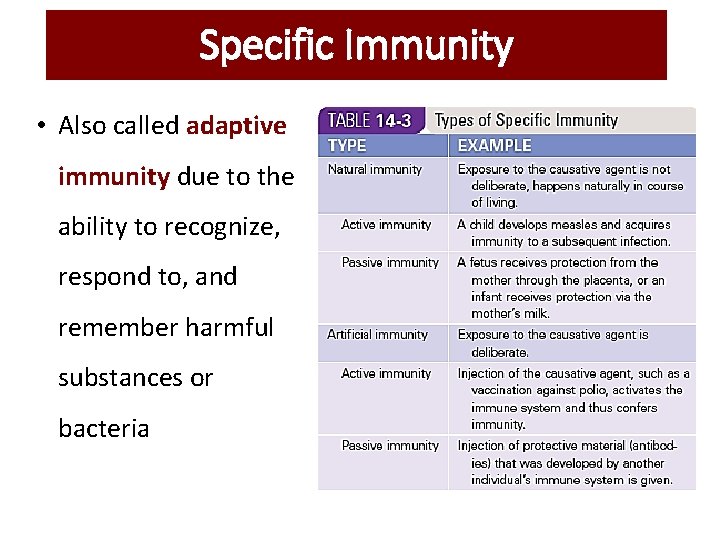
Specific Immunity • Also called adaptive immunity due to the ability to recognize, respond to, and remember harmful substances or bacteria
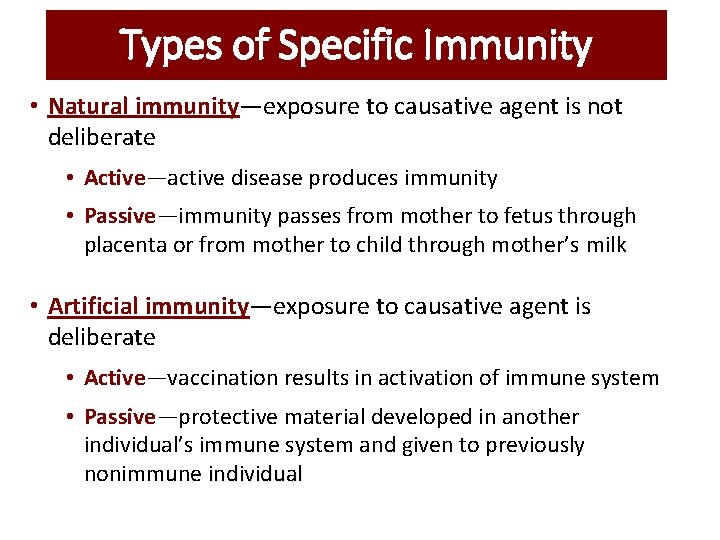
Types of Specific Immunity • Natural immunity—exposure to causative agent is not deliberate • Active—active disease produces immunity • Passive—immunity passes from mother to fetus through placenta or from mother to child through mother’s milk • Artificial immunity—exposure to causative agent is deliberate • Active—vaccination results in activation of immune system • Passive—protective material developed in another individual’s immune system and given to previously nonimmune individual
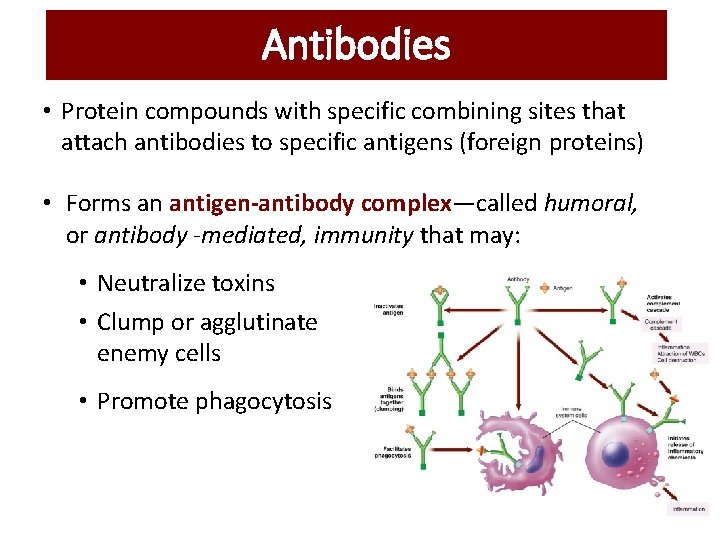
Antibodies • Protein compounds with specific combining sites that attach antibodies to specific antigens (foreign proteins) • Forms an antigen-antibody complex—called humoral, or antibody -mediated, immunity that may: • Neutralize toxins • Clump or agglutinate enemy cells • Promote phagocytosis
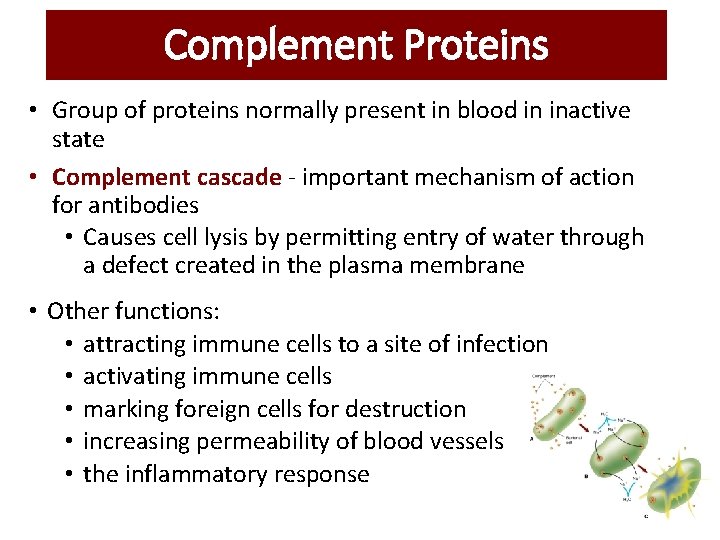
Complement Proteins • Group of proteins normally present in blood in inactive state • Complement cascade - important mechanism of action for antibodies • Causes cell lysis by permitting entry of water through a defect created in the plasma membrane • Other functions: • attracting immune cells to a site of infection • activating immune cells • marking foreign cells for destruction • increasing permeability of blood vessels • the inflammatory response
Immune System Cells
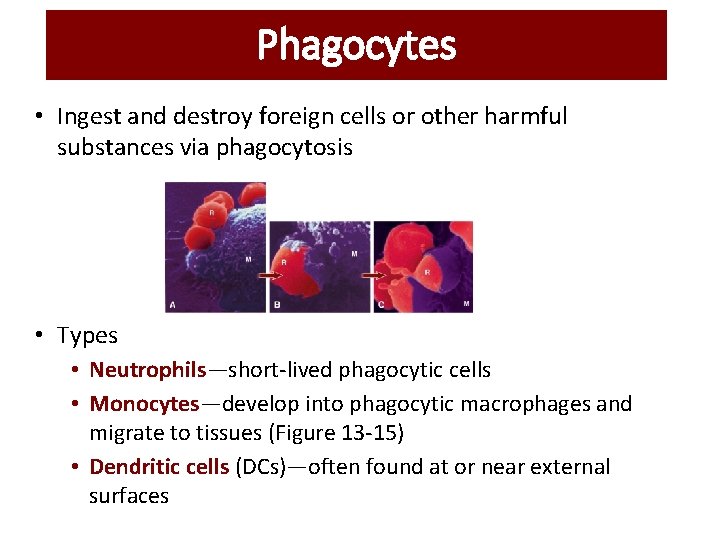
Phagocytes • Ingest and destroy foreign cells or other harmful substances via phagocytosis • Types • Neutrophils—short-lived phagocytic cells • Monocytes—develop into phagocytic macrophages and migrate to tissues (Figure 13 -15) • Dendritic cells (DCs)—often found at or near external surfaces
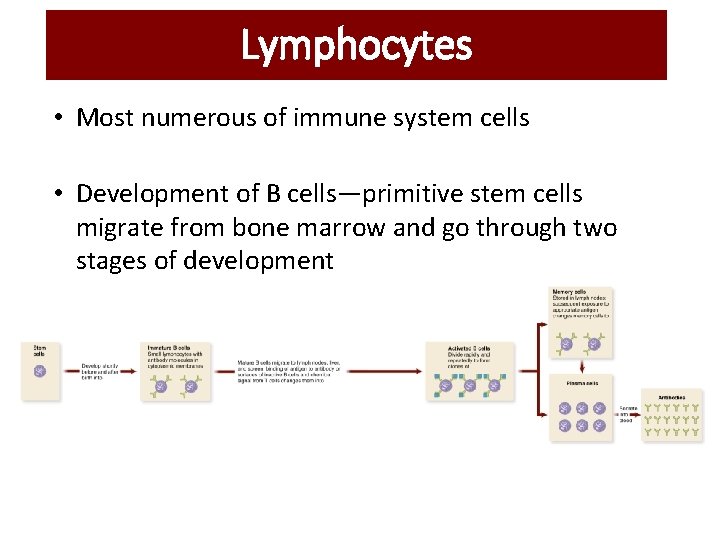
Lymphocytes • Most numerous of immune system cells • Development of B cells—primitive stem cells migrate from bone marrow and go through two stages of development
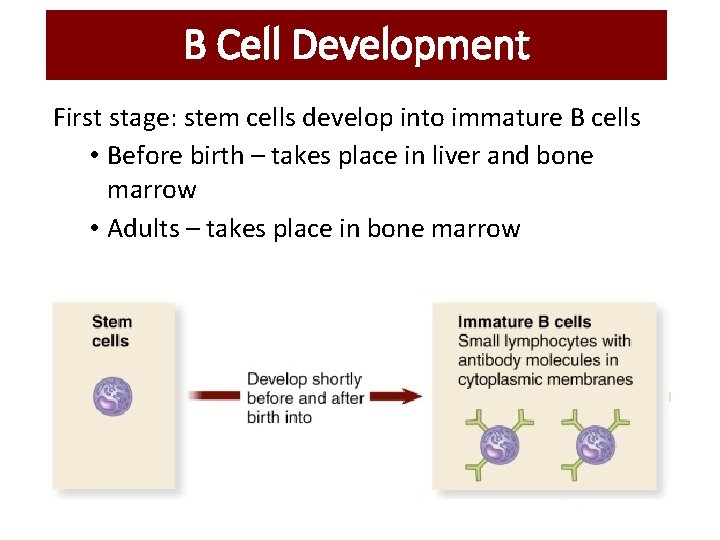
B Cell Development First stage: stem cells develop into immature B cells • Before birth – takes place in liver and bone marrow • Adults – takes place in bone marrow
B Cell Development • Second stage—inactive B cell develops into activated B cell • Initiated by inactive B cell’s contact with antigens, which bind to its surface antibodies, plus signal chemicals from T cells • Activated B cell, by dividing repeatedly, forms two clones of cells—plasma (effector) cells and memory cells • Plasma cells secrete antibodies into blood; memory cells are stored in lymph nodes
Function of B cells • Indirectly, B cells produce humoral immunity • Activated B cells develop into plasma cells • Plasma cells secrete antibodies into the blood • Circulating antibodies produce humoral immunity
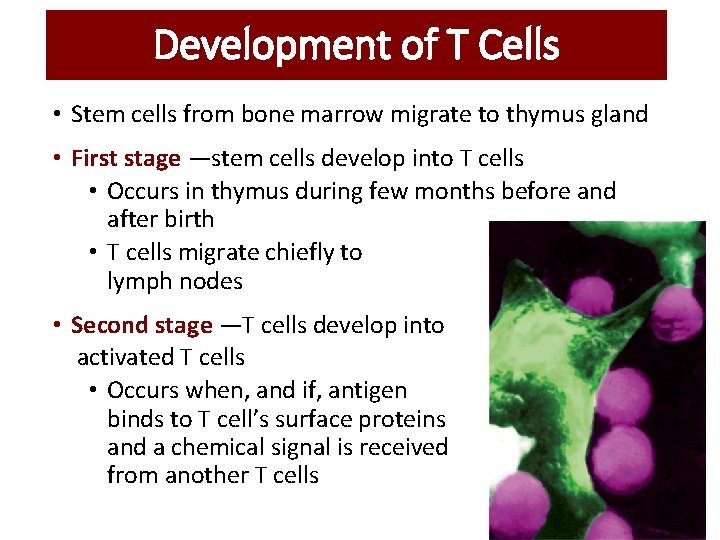
Development of T Cells • Stem cells from bone marrow migrate to thymus gland • First stage —stem cells develop into T cells • Occurs in thymus during few months before and after birth • T cells migrate chiefly to lymph nodes • Second stage —T cells develop into activated T cells • Occurs when, and if, antigen binds to T cell’s surface proteins and a chemical signal is received from another T cells
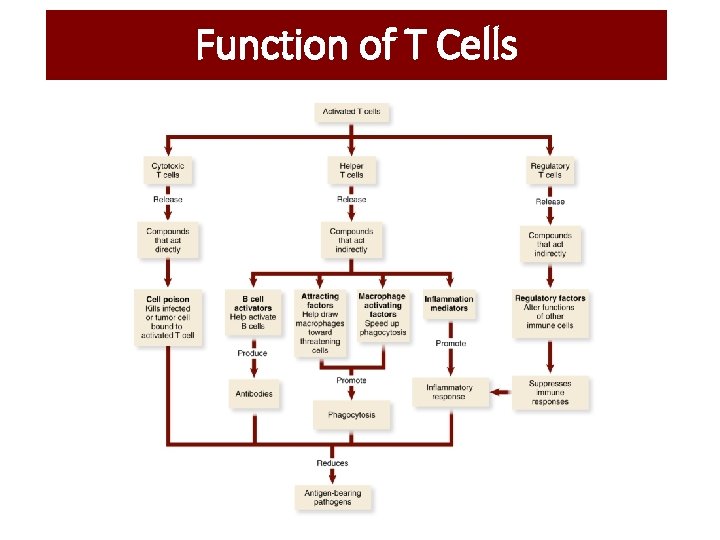
Function of T Cells Produce cell-mediated immunity (resistance to disease organisms that results from the actions of cells – mainly sensitized T cells) • Cytotoxic T cells—kill infected or tumor cells by releasing a substance that poisons infected or tumor cells • Helper T cells—release chemicals that attract and activate macrophages to kill cells by phagocytosis; produce chemicals that help activate B cells • Regulatory T cells—release chemicals to suppress immune responses
Function of T Cells