
Chapter 14 The Human Genome Human Chromosomes Our
- Slides: 42
Chapter 14 The Human Genome
Human Chromosomes Our Focus this Chapter: • Karyotype • Sex Determination • Genes and the Environment • Genes and Inheritance – Polygenic – Dominant vs. Recessive – Pedigree Charts and Punnett Squares • Human Genes – Inheritance Patterns • Gene Inheritance: Polygenic, dominant, recessive, codominant, sexlinked, linked • Chromosomal Disorders
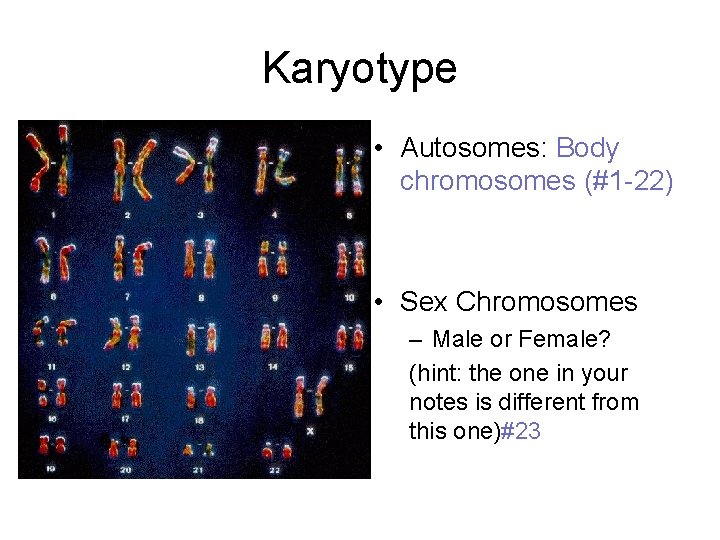
Karyotype • Autosomes: Body chromosomes (#1 -22) • Sex Chromosomes – Male or Female? (hint: the one in your notes is different from this one)#23
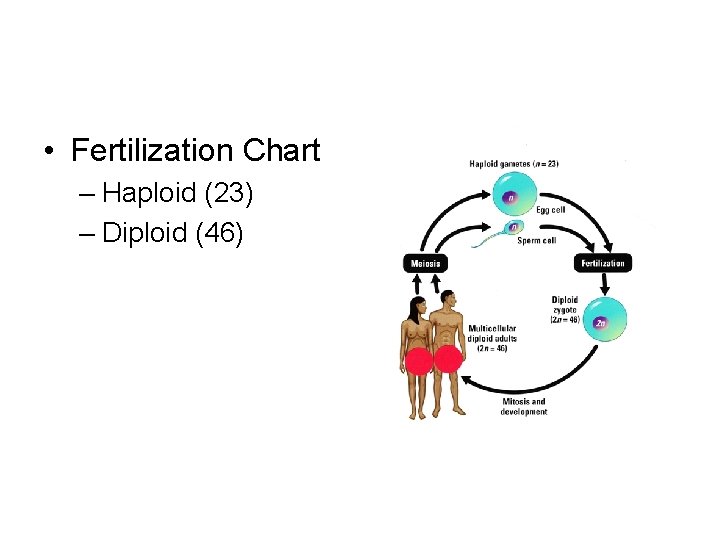
• Fertilization Chart – Haploid (23) – Diploid (46)
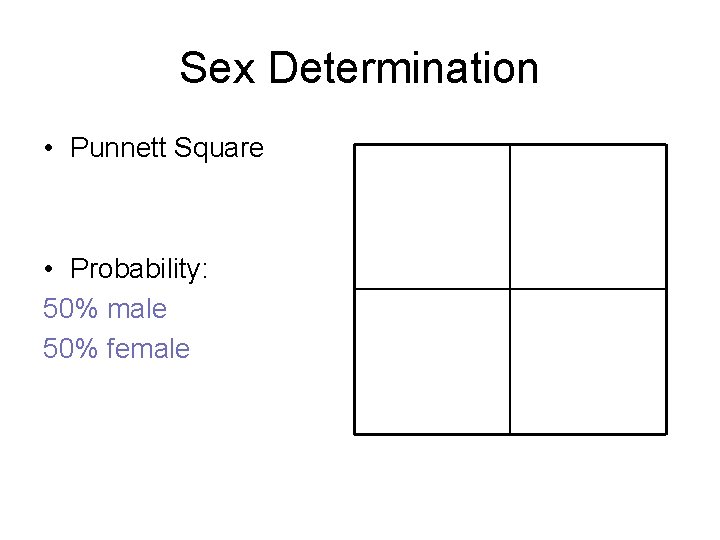
Sex Determination • Punnett Square • Probability: 50% male 50% female
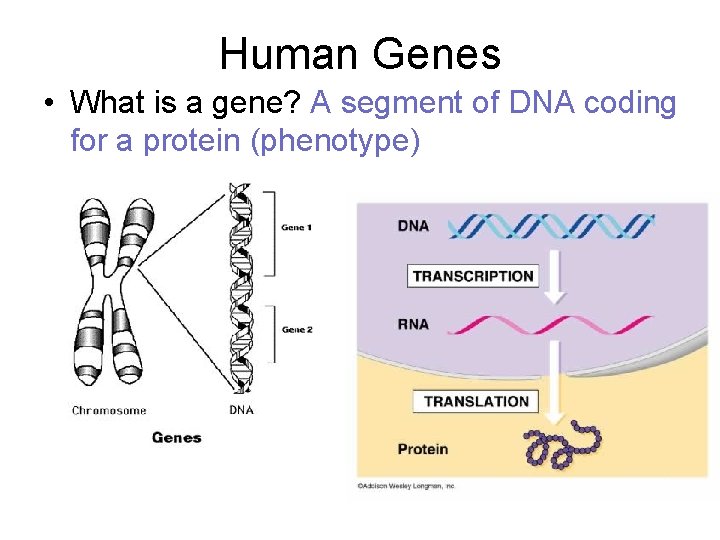
Human Genes • What is a gene? A segment of DNA coding for a protein (phenotype)
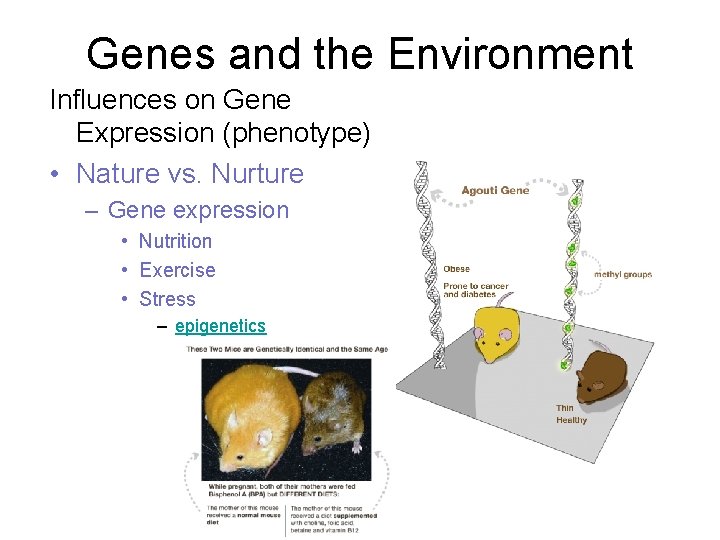
Genes and the Environment Influences on Gene Expression (phenotype) • Nature vs. Nurture – Gene expression • Nutrition • Exercise • Stress – epigenetics
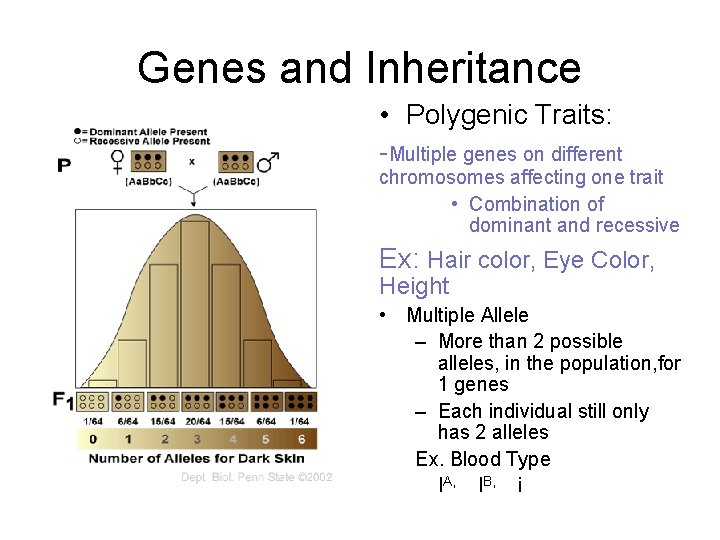
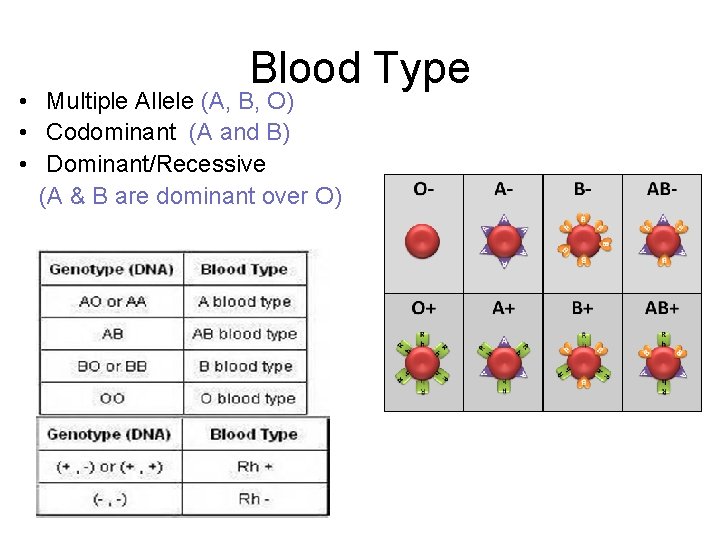
Genes and Inheritance • Polygenic Traits: -Multiple genes on different chromosomes affecting one trait • Combination of dominant and recessive Ex: Hair color, Eye Color, Height • Multiple Allele – More than 2 possible alleles, in the population, for 1 genes – Each individual still only has 2 alleles Ex. Blood Type IA, IB, i
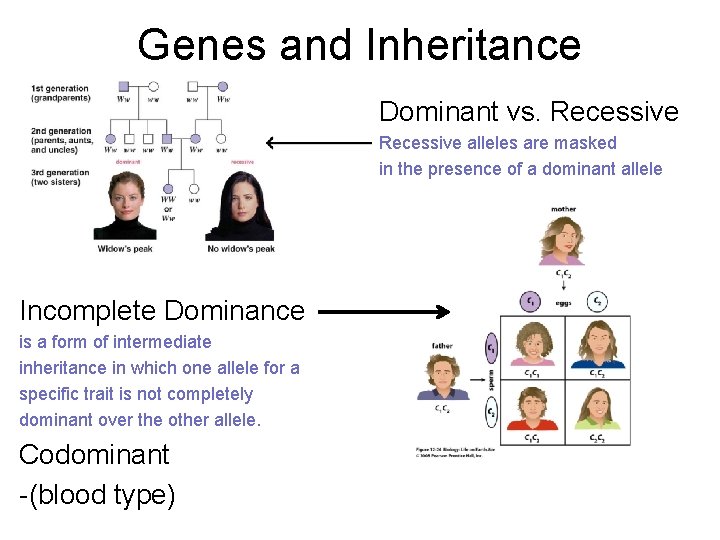
Genes and Inheritance Dominant vs. Recessive alleles are masked in the presence of a dominant allele Incomplete Dominance is a form of intermediate inheritance in which one allele for a specific trait is not completely dominant over the other allele. Codominant -(blood type)
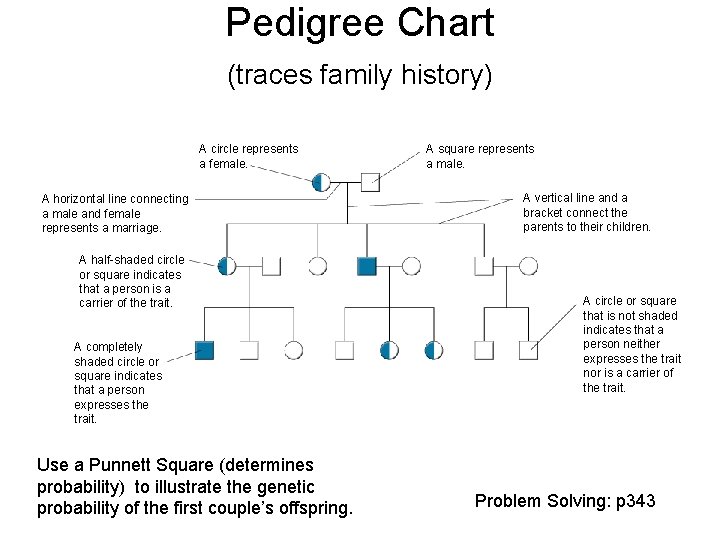
Pedigree Chart Figure 14 -3 A Pedigree Section 14 -1 (traces family history) A circle represents a female. A horizontal line connecting a male and female represents a marriage. A half-shaded circle or square indicates that a person is a carrier of the trait. A completely shaded circle or square indicates that a person expresses the trait. Use a Punnett Square (determines probability) to illustrate the genetic probability of the first couple’s offspring. A square represents a male. A vertical line and a bracket connect the parents to their children. A circle or square that is not shaded indicates that a person neither expresses the trait nor is a carrier of the trait. Problem Solving: p 343
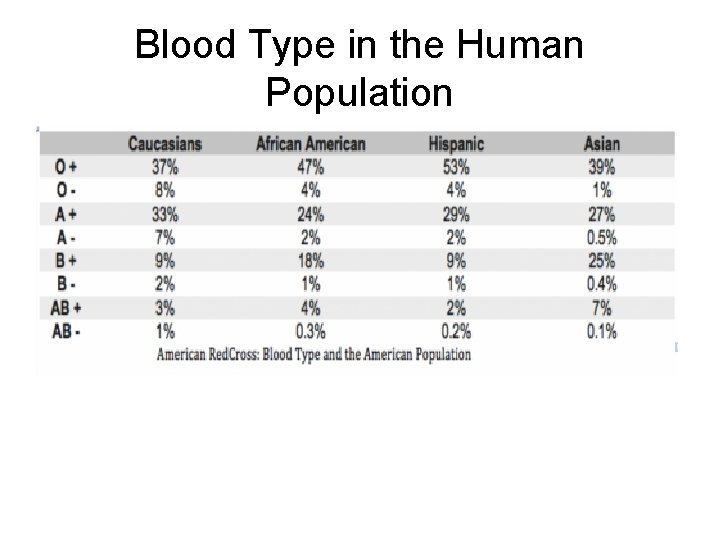
Blood Type • Multiple Allele (A, B, O) • Codominant (A and B) • Dominant/Recessive (A & B are dominant over O)
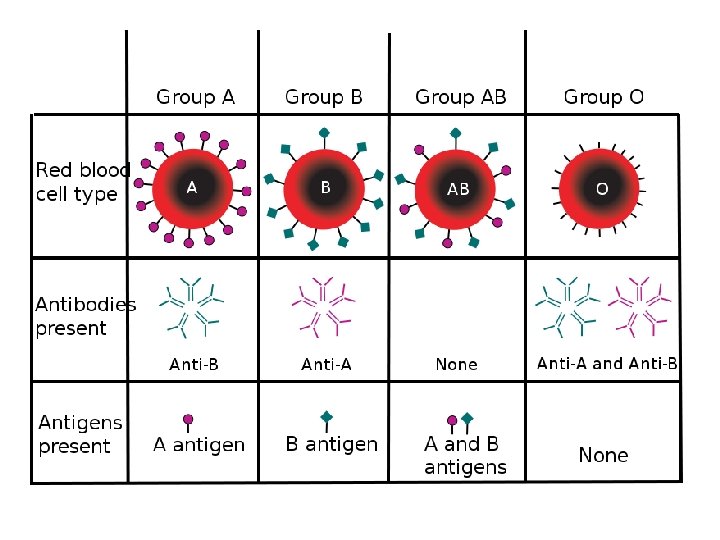
Blood Type in the Human Population •
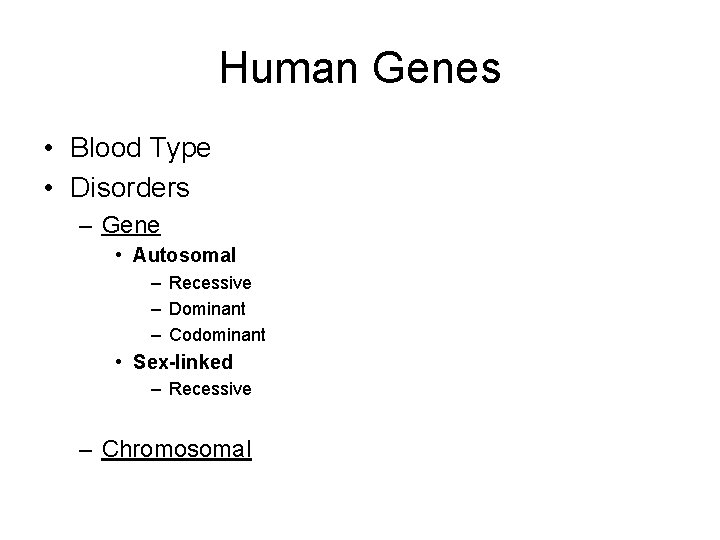
Human Genes • Blood Type • Disorders – Gene • Autosomal – Recessive – Dominant – Codominant • Sex-linked – Recessive – Chromosomal
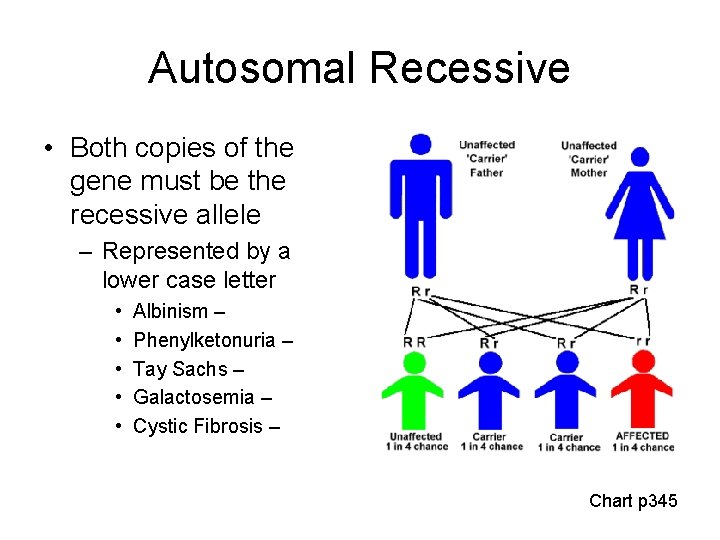
Autosomal Recessive • Both copies of the gene must be the recessive allele – Represented by a lower case letter • • • Albinism – Phenylketonuria – Tay Sachs – Galactosemia – Cystic Fibrosis – Chart p 345
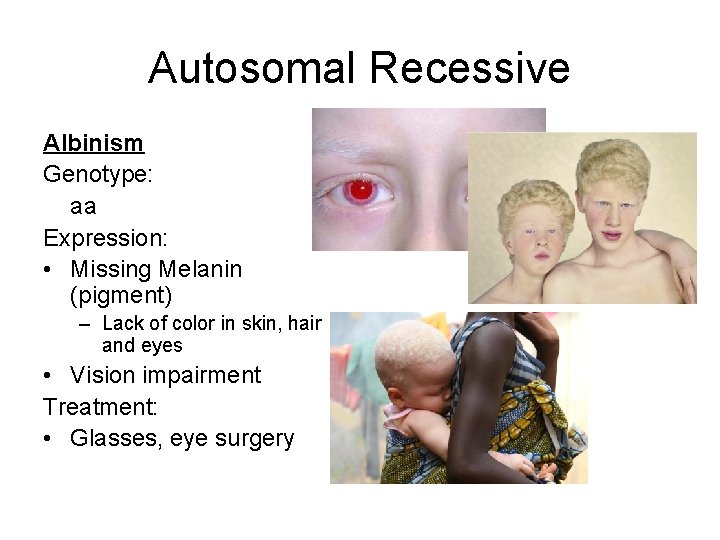
Autosomal Recessive Albinism Genotype: aa Expression: • Missing Melanin (pigment) – Lack of color in skin, hair and eyes • Vision impairment Treatment: • Glasses, eye surgery
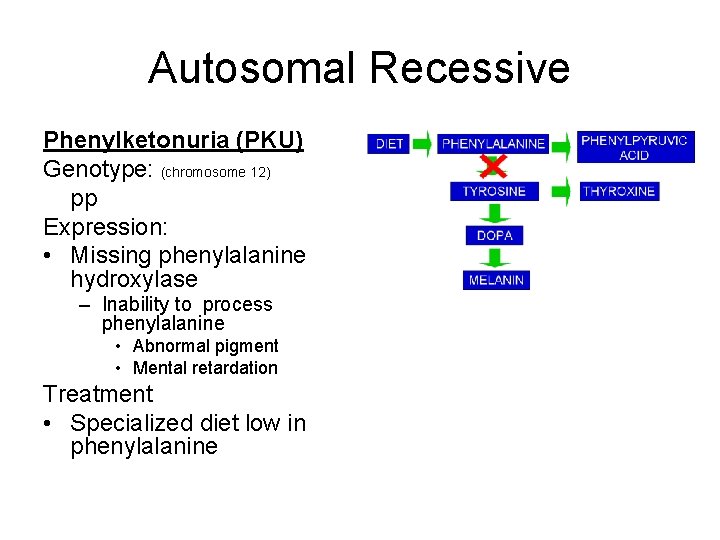
Autosomal Recessive Phenylketonuria (PKU) Genotype: (chromosome 12) pp Expression: • Missing phenylalanine hydroxylase – Inability to process phenylalanine • Abnormal pigment • Mental retardation Treatment • Specialized diet low in phenylalanine
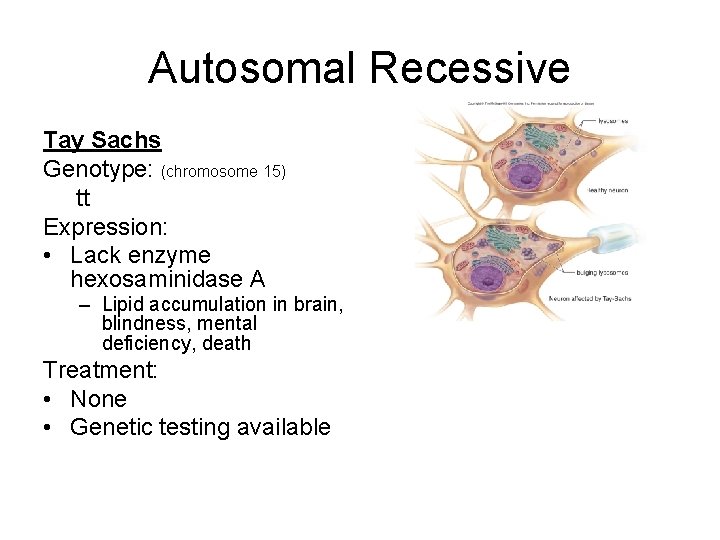
Autosomal Recessive Tay Sachs Genotype: (chromosome 15) tt Expression: • Lack enzyme hexosaminidase A – Lipid accumulation in brain, blindness, mental deficiency, death Treatment: • None • Genetic testing available
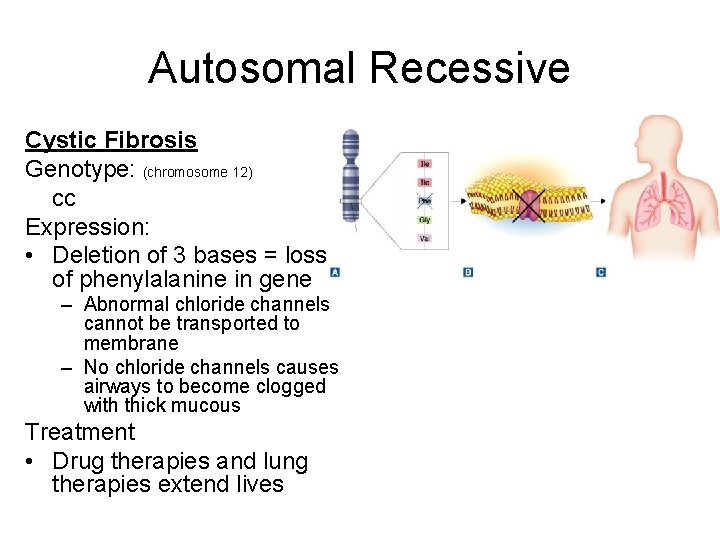
Autosomal Recessive Cystic Fibrosis Genotype: (chromosome 12) cc Expression: • Deletion of 3 bases = loss of phenylalanine in gene – Abnormal chloride channels cannot be transported to membrane – No chloride channels causes airways to become clogged with thick mucous Treatment • Drug therapies and lung therapies extend lives
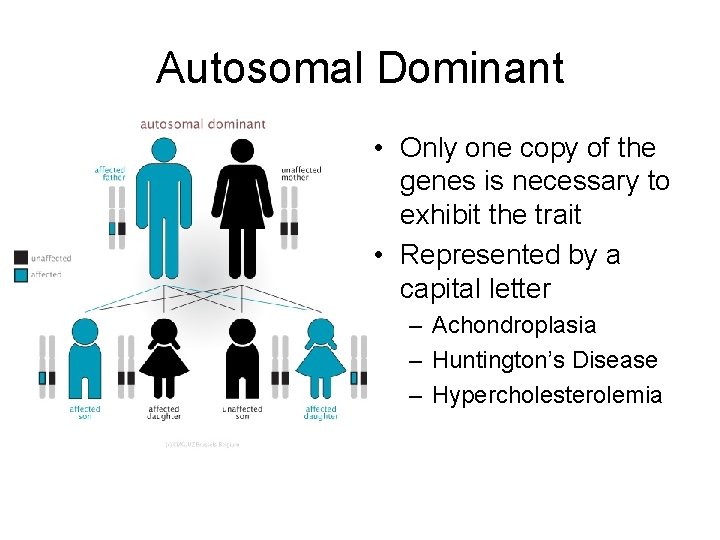
Autosomal Dominant • Only one copy of the genes is necessary to exhibit the trait • Represented by a capital letter – Achondroplasia – Huntington’s Disease – Hypercholesterolemia
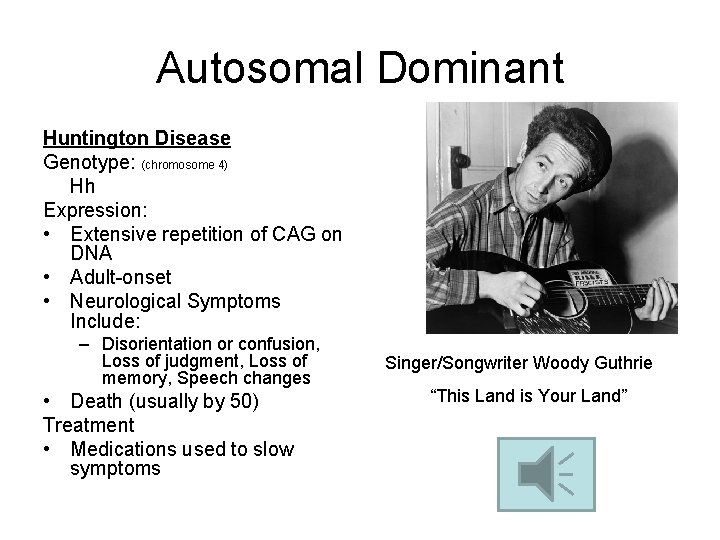
Autosomal Dominant Huntington Disease Genotype: (chromosome 4) Hh Expression: • Extensive repetition of CAG on DNA • Adult-onset • Neurological Symptoms Include: – Disorientation or confusion, Loss of judgment, Loss of memory, Speech changes • Death (usually by 50) Treatment • Medications used to slow symptoms Singer/Songwriter Woody Guthrie “This Land is Your Land”
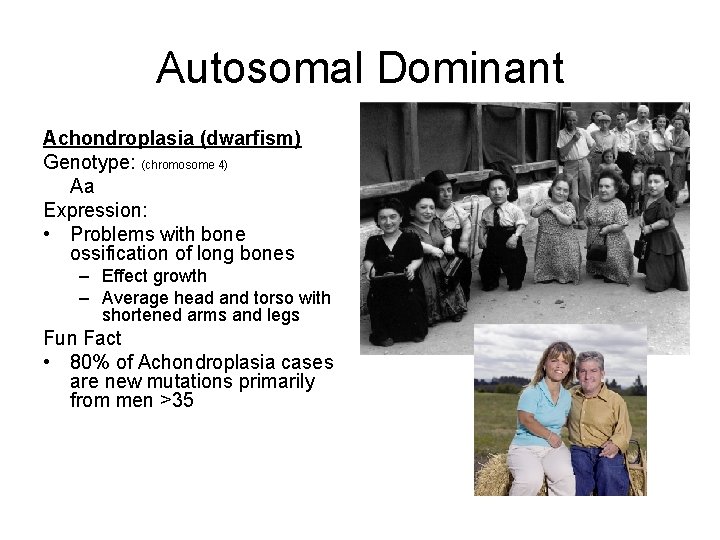
Autosomal Dominant Achondroplasia (dwarfism) Genotype: (chromosome 4) Aa Expression: • Problems with bone ossification of long bones – Effect growth – Average head and torso with shortened arms and legs Fun Fact • 80% of Achondroplasia cases are new mutations primarily from men >35
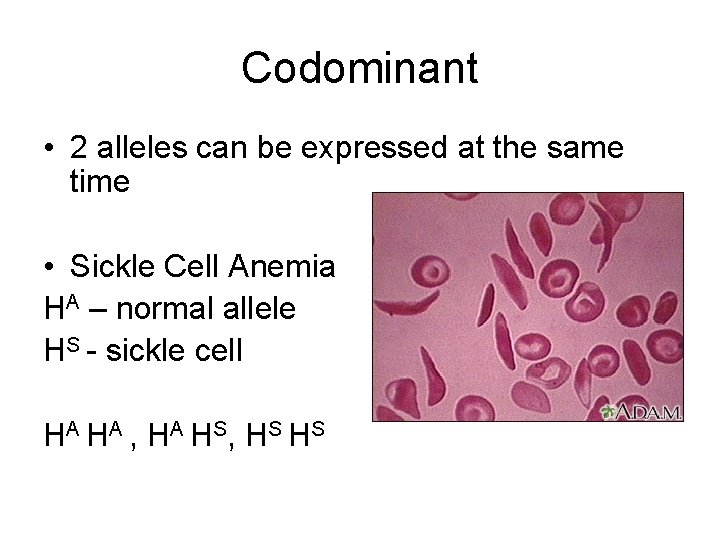
Codominant • 2 alleles can be expressed at the same time • Sickle Cell Anemia HA – normal allele HS - sickle cell HA HA , H A HS , H S HS
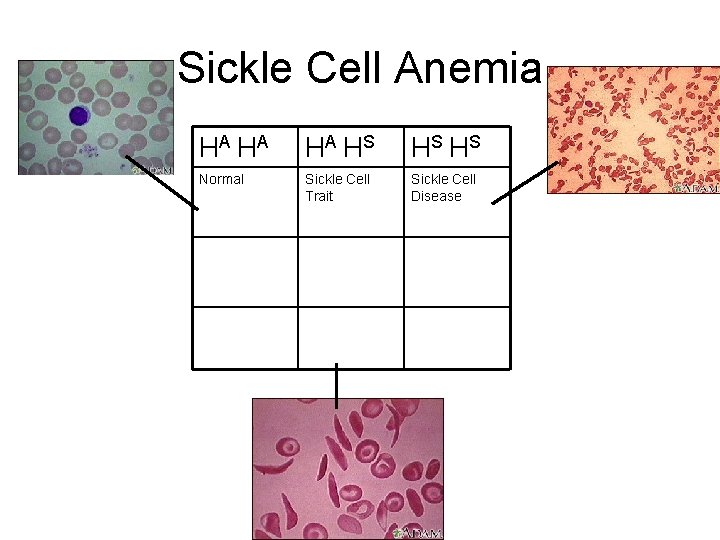
Sickle Cell Anemia HA HA HA HS HS HS Normal Sickle Cell Trait Sickle Cell Disease Normal Hemoglobin Both normal and abnormal hemoglobin Abnormal hemoglobin Normal rbc shape Normal and sickle shape Sickle shaped rbc
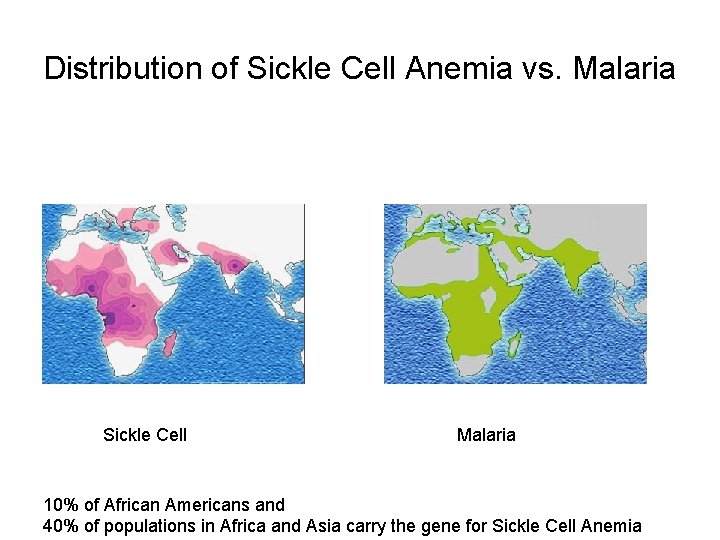
Distribution of Sickle Cell Anemia vs. Malaria Sickle Cell Malaria 10% of African Americans and 40% of populations in Africa and Asia carry the gene for Sickle Cell Anemia
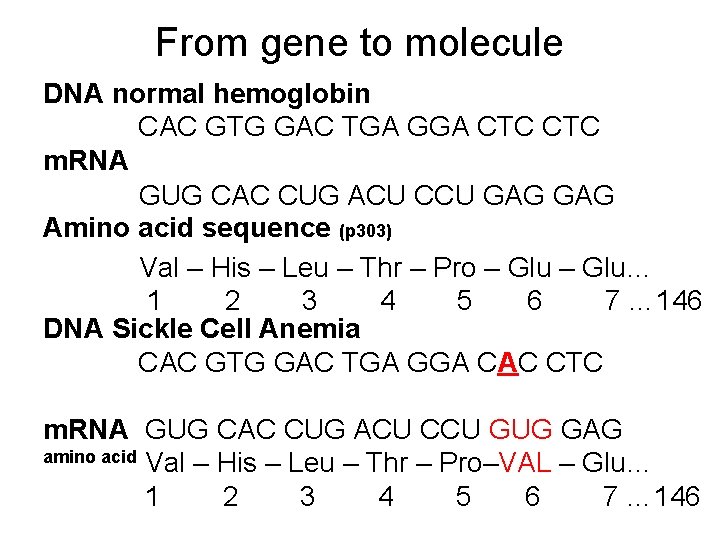
From gene to molecule DNA normal hemoglobin CAC GTG GAC TGA GGA CTC m. RNA GUG CAC CUG ACU CCU GAG Amino acid sequence (p 303) Val – His – Leu – Thr – Pro – Glu… 1 2 3 4 5 6 7 … 146 DNA Sickle Cell Anemia CAC GTG GAC TGA GGA CAC CTC m. RNA GUG CAC CUG ACU CCU GUG GAG amino acid Val – His – Leu – Thr – Pro–VAL – Glu… 1 2 3 4 5 6 7 … 146
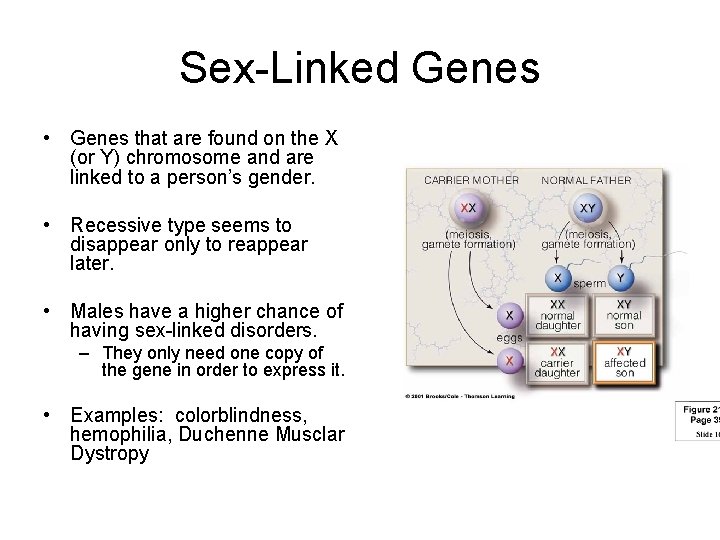
Sex-Linked Genes • Genes that are found on the X (or Y) chromosome and are linked to a person’s gender. • Recessive type seems to disappear only to reappear later. • Males have a higher chance of having sex-linked disorders. – They only need one copy of the gene in order to express it. • Examples: colorblindness, hemophilia, Duchenne Musclar Dystropy
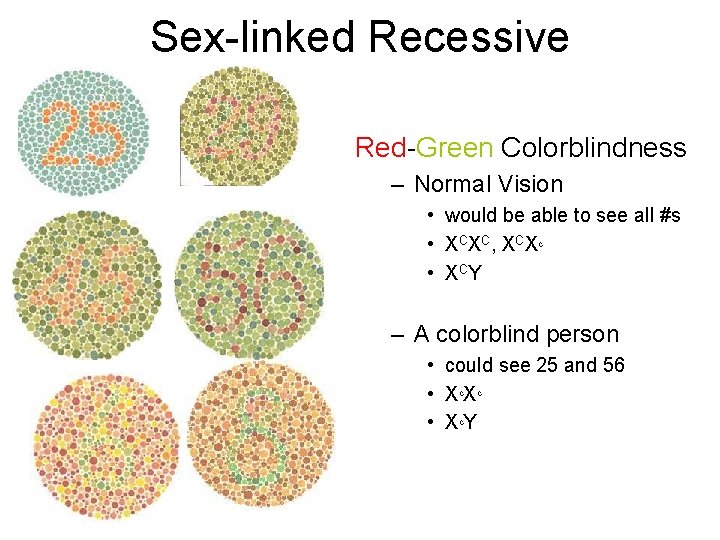
Sex-linked Recessive Red-Green Colorblindness – Normal Vision • would be able to see all #s • XCXC, XCXc • XCY – A colorblind person • could see 25 and 56 • X c • X c. Y
Sex-linked Recessive • Red-Green Colorblindness
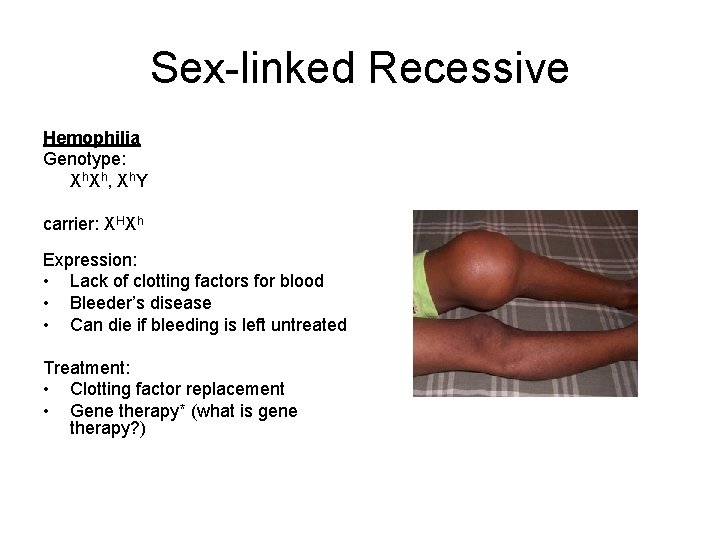
Sex-linked Recessive Hemophilia Genotype: Xh. Xh, X h. Y carrier: XHXh Expression: • Lack of clotting factors for blood • Bleeder’s disease • Can die if bleeding is left untreated Treatment: • Clotting factor replacement • Gene therapy* (what is gene therapy? )
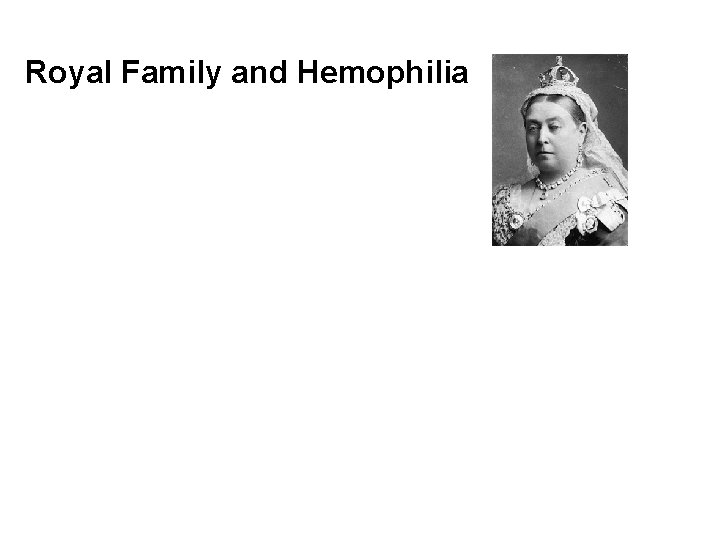
Royal Family and Hemophilia
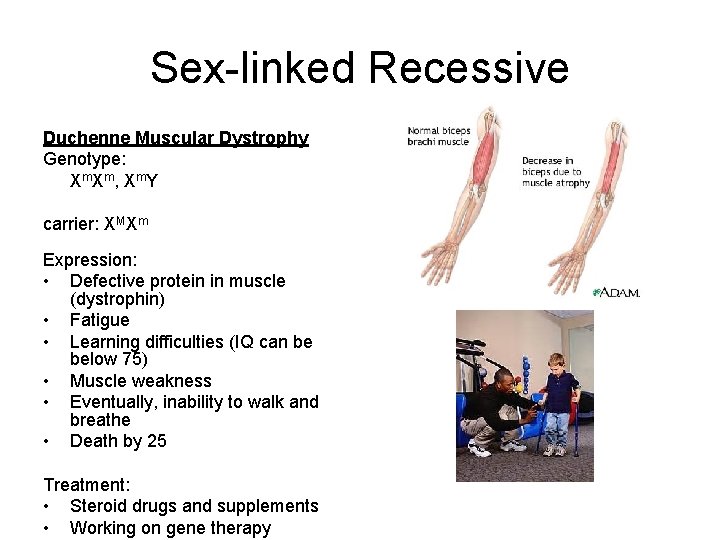
Sex-linked Recessive Duchenne Muscular Dystrophy Genotype: Xm. Xm, Xm. Y carrier: XMXm Expression: • Defective protein in muscle (dystrophin) • Fatigue • Learning difficulties (IQ can be below 75) • Muscle weakness • Eventually, inability to walk and breathe • Death by 25 Treatment: • Steroid drugs and supplements • Working on gene therapy
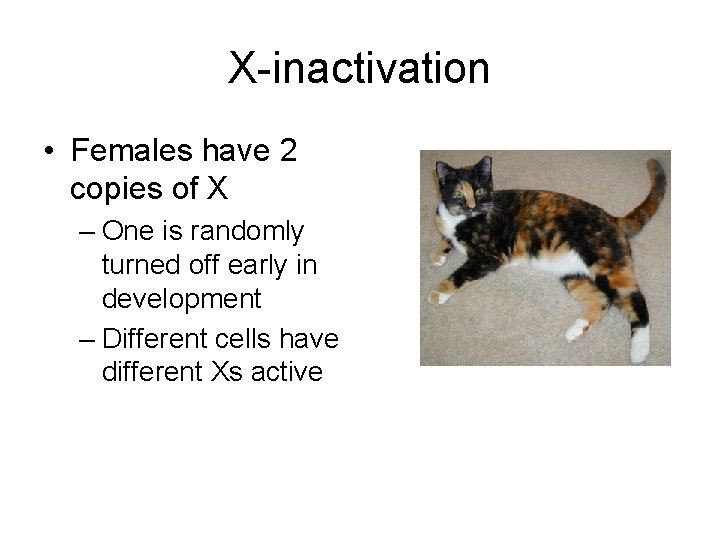
X-inactivation • Females have 2 copies of X – One is randomly turned off early in development – Different cells have different Xs active
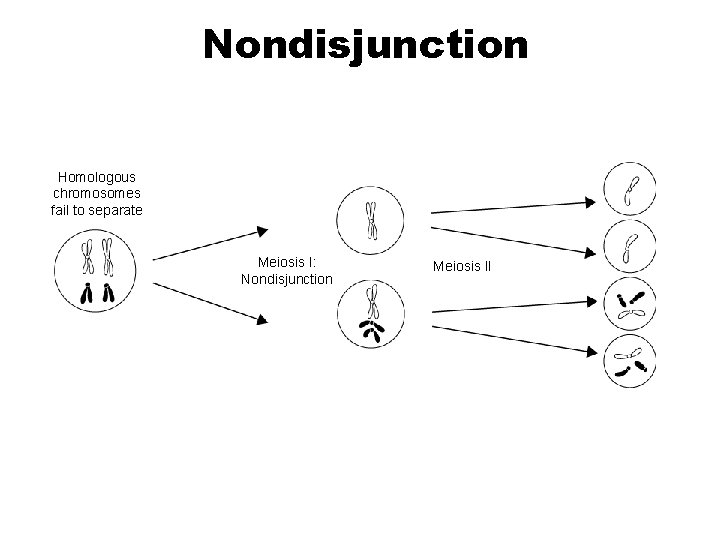
Chromosomal Disorders • Rather than 1 gene effecting one protein an entire chromosome is deleted or added. • Cause: – Non-disjunction of chromosomes (autosomes or sex chromosomes) during meiosis • Examples: Down Syndrome, Turner’s Klinefelter’s
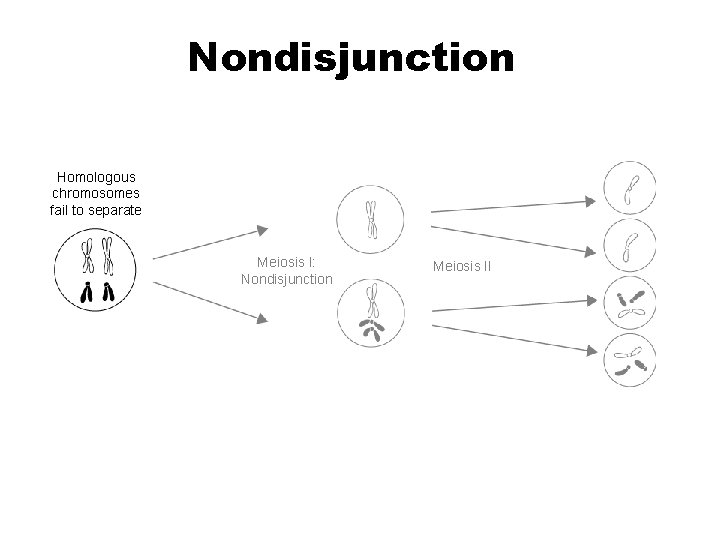
Section 14 -2 Nondisjunction Homologous chromosomes fail to separate Meiosis I: Nondisjunction Go to Section: Meiosis II
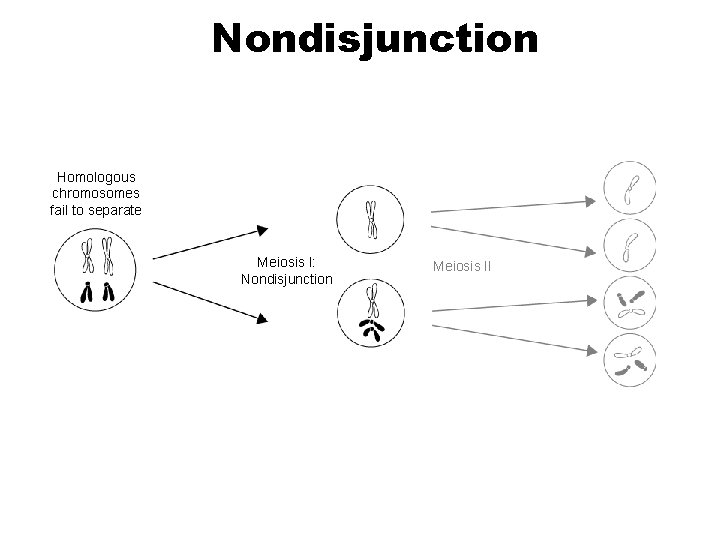
Nondisjunction Section 14 -2 Homologous chromosomes fail to separate Meiosis I: Nondisjunction Go to Section: Meiosis II
Section 14 -2 Nondisjunction Homologous chromosomes fail to separate Meiosis I: Nondisjunction Go to Section: Meiosis II
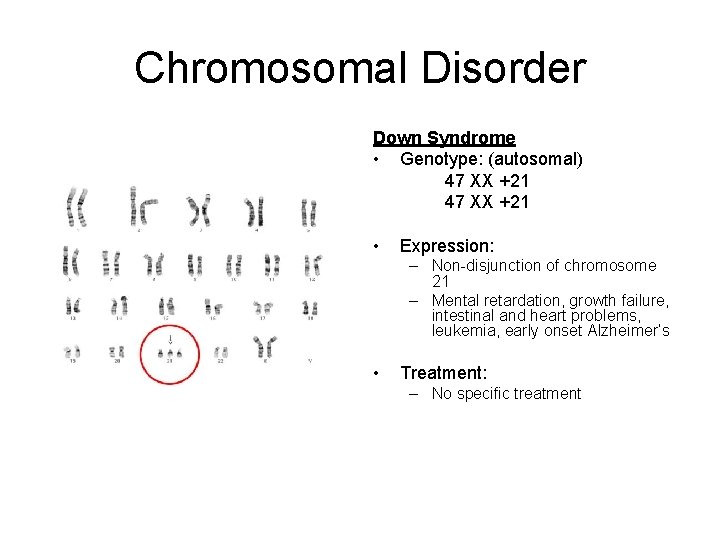
Chromosomal Disorder Down Syndrome • Genotype: (autosomal) 47 XX +21 • Expression: – Non-disjunction of chromosome 21 – Mental retardation, growth failure, intestinal and heart problems, leukemia, early onset Alzheimer’s • Treatment: – No specific treatment
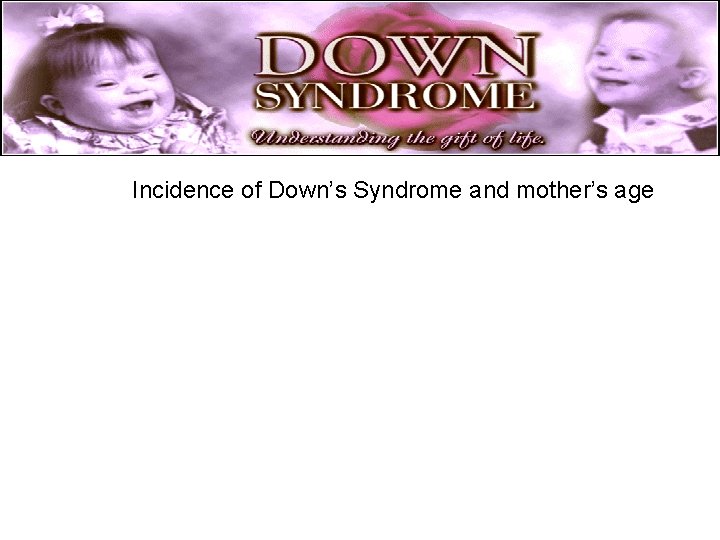
Incidence of Down’s Syndrome and mother’s age
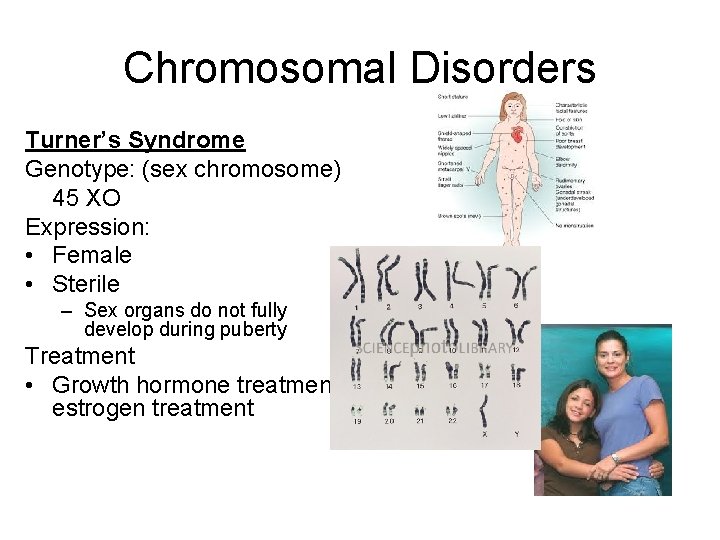
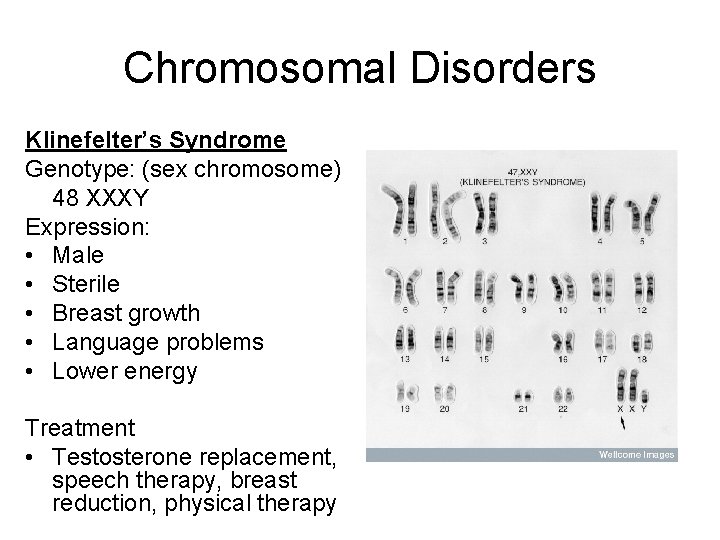
Chromosomal Disorders • Non disjunction of sex chromosomes leads to extra of loss of an X or Y chromosome
Chromosomal Disorders Turner’s Syndrome Genotype: (sex chromosome) 45 XO Expression: • Female • Sterile – Sex organs do not fully develop during puberty Treatment • Growth hormone treatment, estrogen treatment
Chromosomal Disorders Klinefelter’s Syndrome Genotype: (sex chromosome) 48 XXXY Expression: • Male • Sterile • Breast growth • Language problems • Lower energy Treatment • Testosterone replacement, speech therapy, breast reduction, physical therapy