
CHAPTER 14 THE ELECTRICAL SIDE OF AIR CONDITIONING
- Slides: 21
CHAPTER 14 THE ELECTRICAL SIDE OF AIR CONDITIONING
POWER SOURCES • 2 TYPES: • AC • DC
COMPLETE ELECTRICAL CIRCUIT • 3 REQUIREMENTS & 1 OPTION 1. 2. 3. 4. POWER SOURCE LOAD POWER PATH CONTROL/SAFETY
TRANSFORMERS • INCREASE OR DECREASE VOLTAGE • STEP-UP: example 120 v primary 240 v secondary • STEP-DOWN: example 120 v primary 24 v secondary
LOADS • ELECTRICAL DEVICES THAT CONSUME POWER • COMMON HVAC LOADS: • FAN MOTORS • COMPRESSOR MOTORS
ELECTRICAL PATH • EVERY CIRCUIT HAS AT LEAST 2 WIRES: • L 1 • L 2 [208 V OR 240 V] OR NEUTRAL [120 V]
CONTROL DEVICE OR SWITCHES • OPTIONAL COMPONENT • DEVICE TO TURN ON OR OFF LOADS • MAY BE MANUAL: • LIGHT SWITCH • MOMENTARY SWITCH • MAY BE AUTOMATIC: • THERMOSTAT • HI LIMIT • PRESSURE SWITCH
TYPES OF CIRCUITS • SERIES: • ONE PATH THROUGH LOADS • PARALLEL: • MORE THAN ONE PATH THROUGH LOADS • COMBINATION: • COMBINATION OF PARALLEL & SERIES
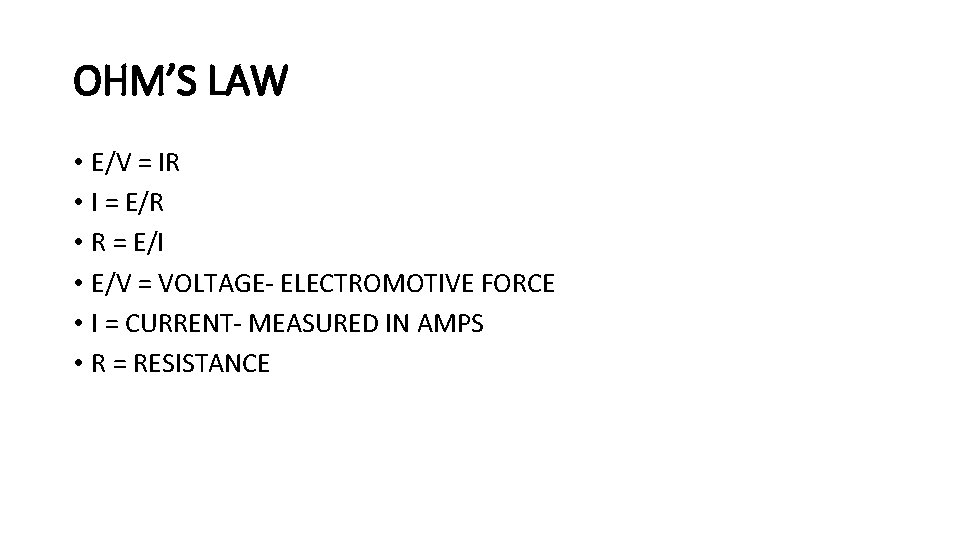
OHM’S LAW • E/V = IR • I = E/R • R = E/I • E/V = VOLTAGE- ELECTROMOTIVE FORCE • I = CURRENT- MEASURED IN AMPS • R = RESISTANCE
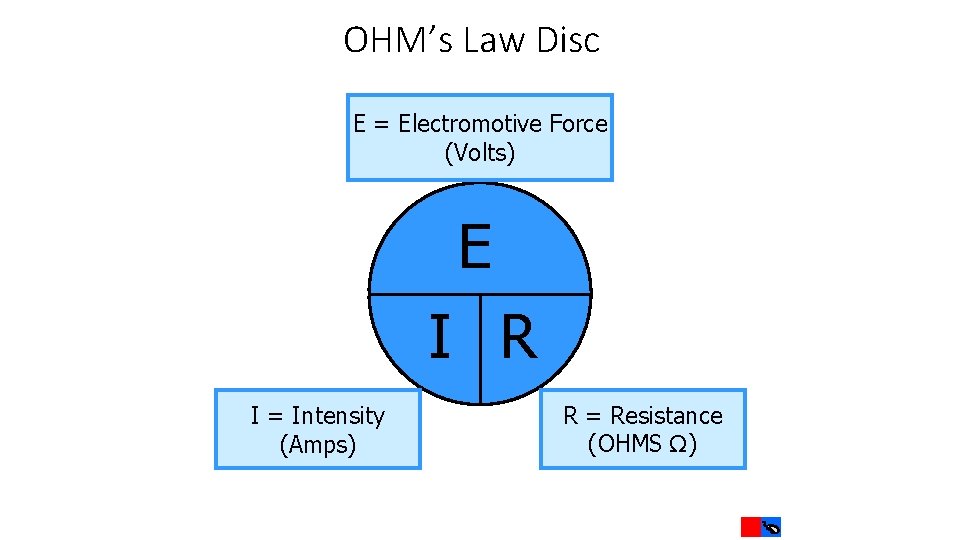
OHM’s Law Disc E = Electromotive Force (Volts) E I R I = Intensity (Amps) R = Resistance (OHMS Ω)
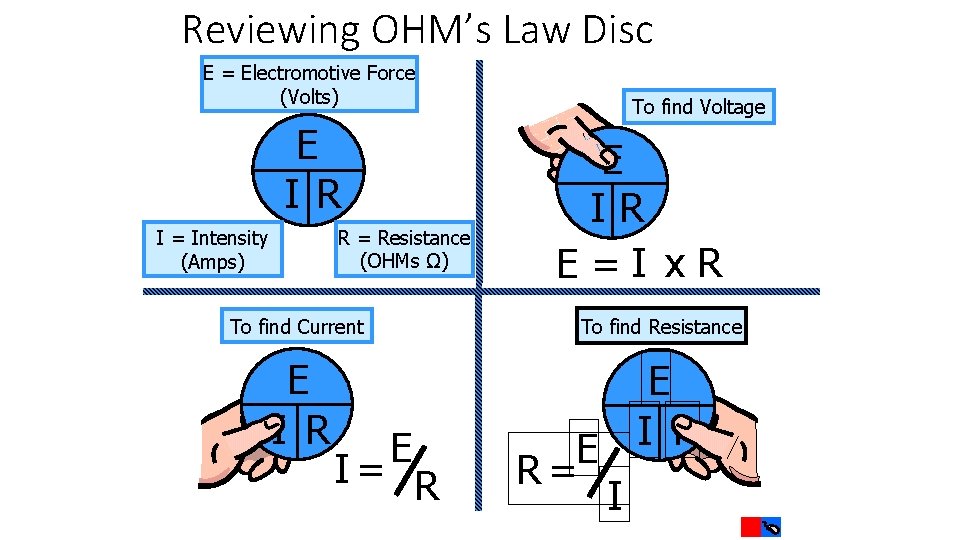
Reviewing OHM’s Law Disc E = Electromotive Force (Volts) E I R R = Resistance (OHMs Ω) I = Intensity (Amps) To find Current E I R To find Voltage E IR E=I x. R To find Resistance E I= R E I R E R= I
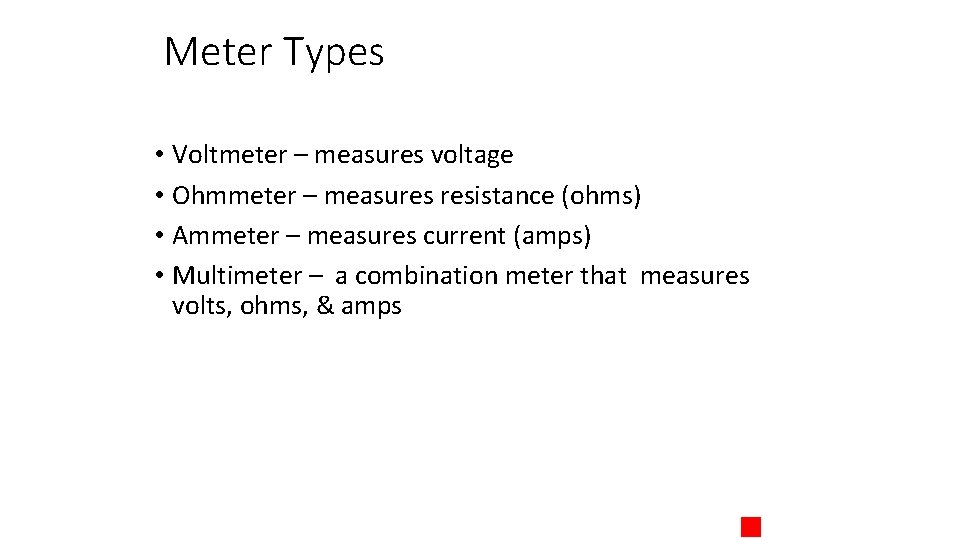
Meter Types • Voltmeter – measures voltage • Ohmmeter – measures resistance (ohms) • Ammeter – measures current (amps) • Multimeter – a combination meter that measures volts, ohms, & amps
Voltmeters • Measure electromotive force of a circuit in volts • Always set meter at the highest voltage scale to prevent meter damage • 1 Volt = 1, 000 millivolts (m. V)
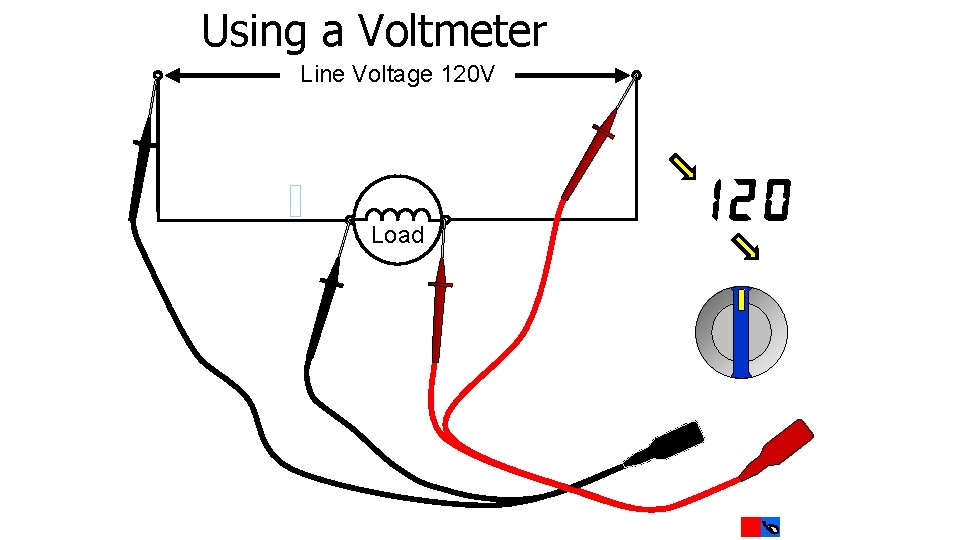
Using a Voltmeter Line Voltage 120 V Load
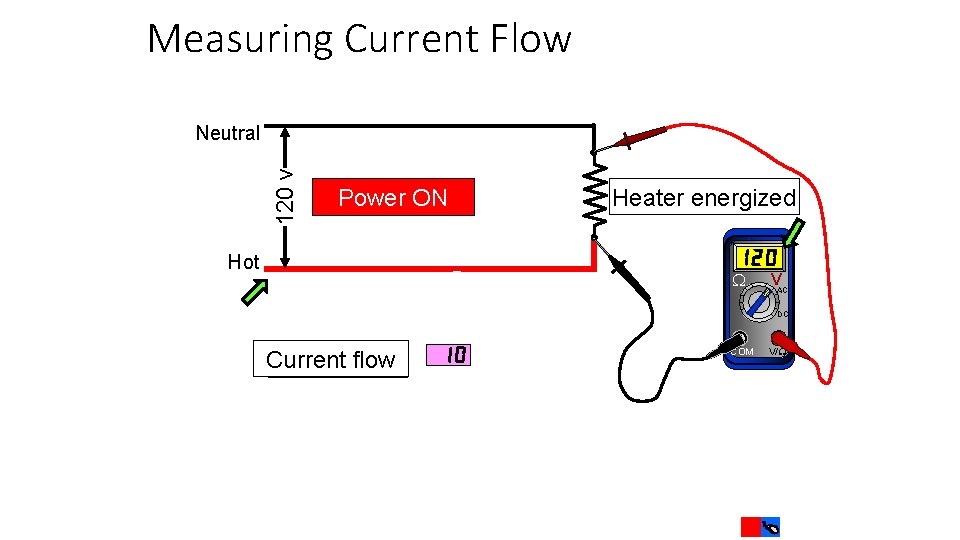
Measuring Current Flow 120 v Neutral Power. OFF ON Hot Heater energized VAC DC Current flow No current COM V/
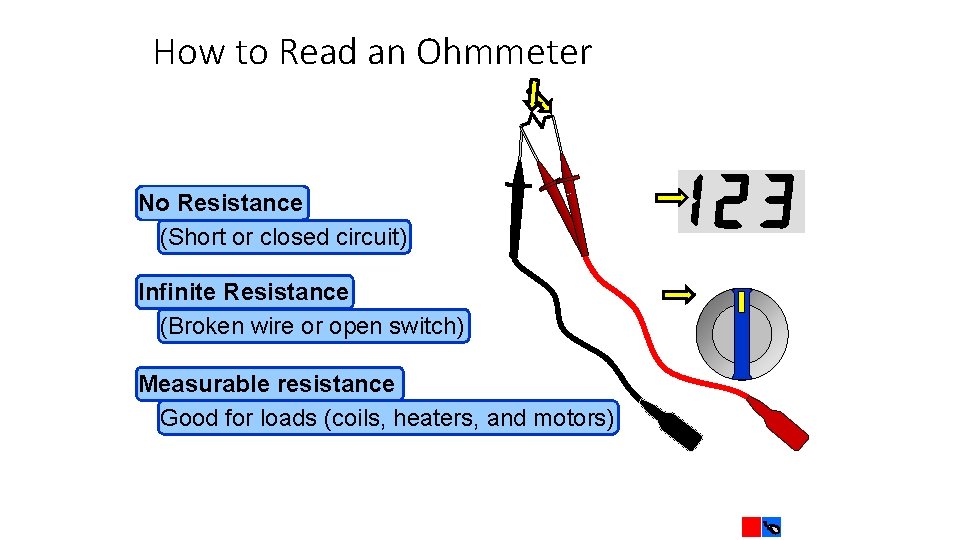
Ohmmeter • The meter uses an internal battery to push voltage through a device • The resistance encountered by the battery’s current is measured in ohms. • Open: Infinite resistance (∞ or OL) • Example: Switch open, broken wire, etc. • Closed or Short: No resistance (0) • Example: Switch closed, wires connected, or shorted winding • Measurable resistance: Any value between 0 - ∞ • Example: Resistance of a motor winding or heater wire
How to Read an Ohmmeter No Resistance (Short or closed circuit) Infinite Resistance (Broken wire or open switch) Measurable resistance Good for loads (coils, heaters, and motors)
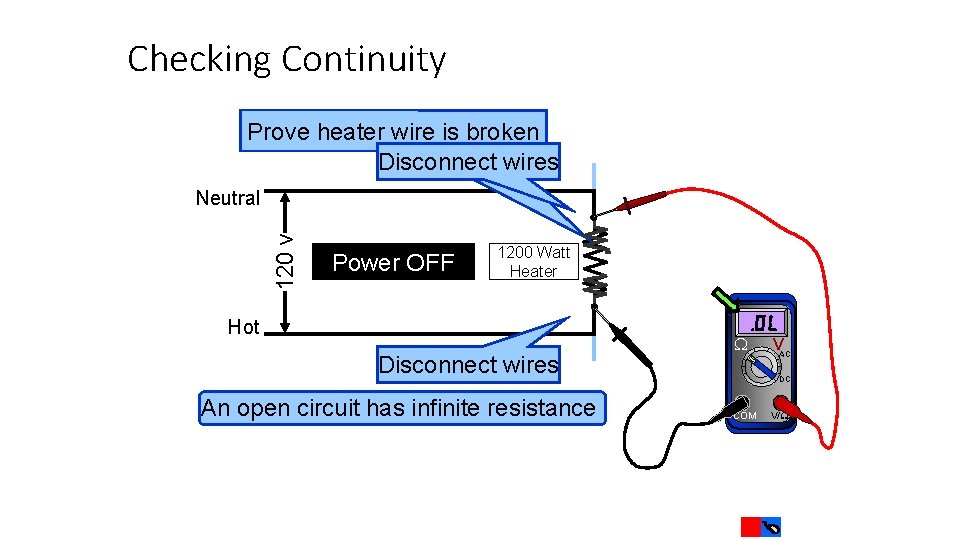
Checking Continuity Prove heater wire is broken Disconnect wires 120 v Neutral Power OFF 1200 Watt Heater Hot Disconnect wires An open circuit has infinite resistance VAC DC COM V/
Checking for “Continuity” • Determine if the wiring within a load is continuous • Example: Checking a resistance heater
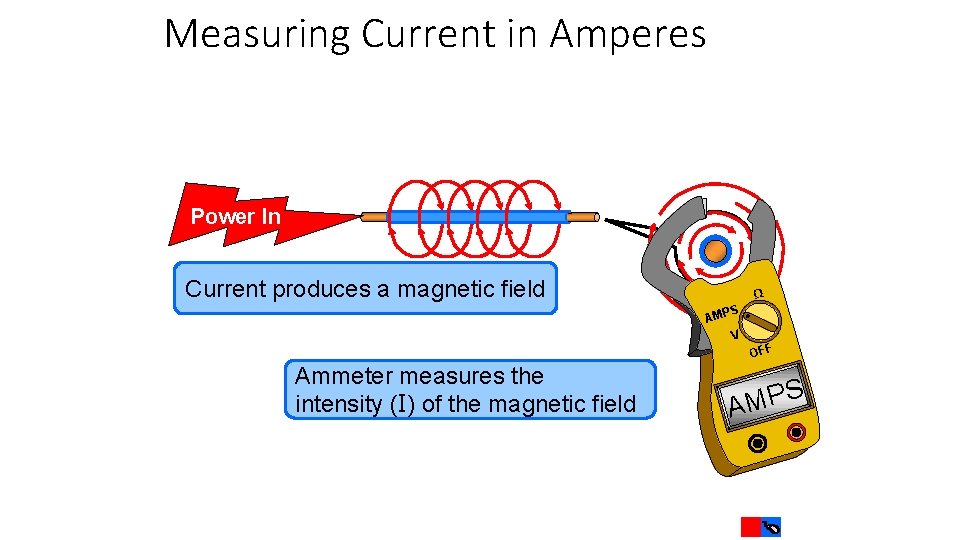
Ammeters (Amp Meters) • Current flow creates a magnetic field • Ammeters measure the intensity of the field
Measuring Current in Amperes Power In Current produces a magnetic field Ω AMP S V Ammeter measures the intensity (I) of the magnetic field OFF S P M A