
Chapter 14 Molecular Mechanisms of Mutation and DNA
- Slides: 47
Chapter 14 Molecular Mechanisms of Mutation and DNA Repair Jones and Bartlett Publishers © 2005
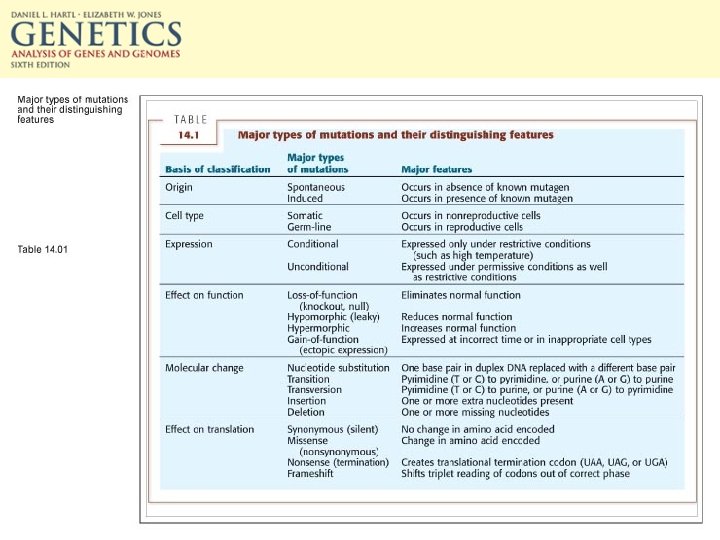
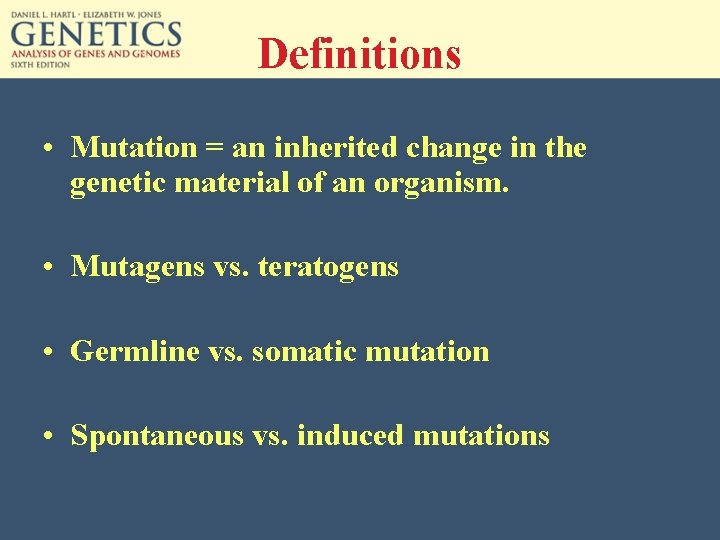
Definitions • Mutation = an inherited change in the genetic material of an organism. • Mutagens vs. teratogens • Germline vs. somatic mutation • Spontaneous vs. induced mutations
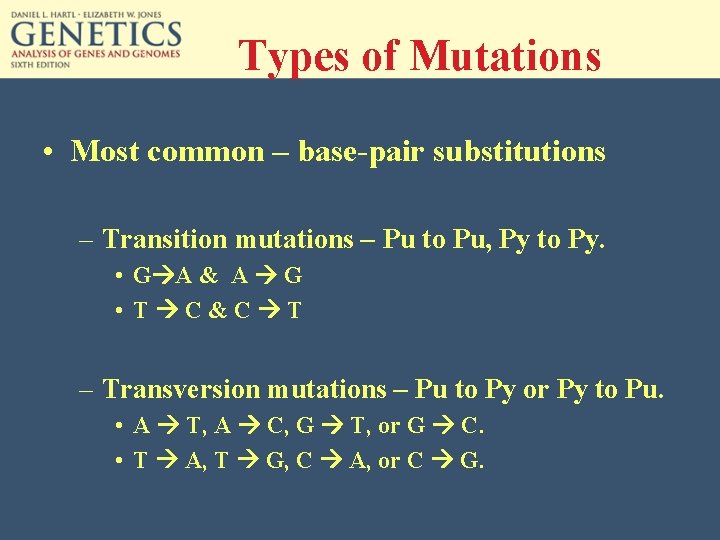
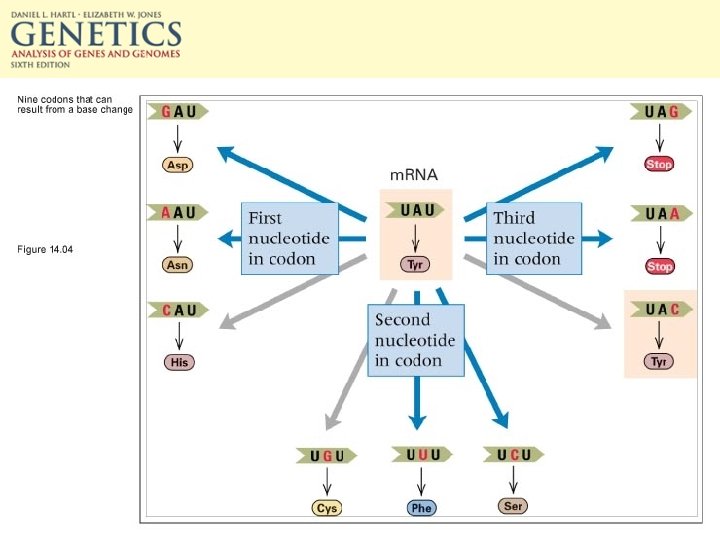
Types of Mutations • Most common – base-pair substitutions – Transition mutations – Pu to Pu, Py to Py. • G A & A G • T C&C T – Transversion mutations – Pu to Py or Py to Pu. • A T, A C, G T, or G C. • T A, T G, C A, or C G.
Types of Mutations • Neutral mutations result when amino acid substitutions do not change protein function. • Similar amino acids can be substituted for each other – isoleucine for leucine. • Missense mutations result when the amino acid substitution changes protein function. – Temperature sensitivity often is a missense mutation.
Types of Mutations • Nonsense mutations – change in codon to UGA, UAA, or UAG. • This results in premature stopping of protein synthesis. • They can be lethal or severe in phenotype.
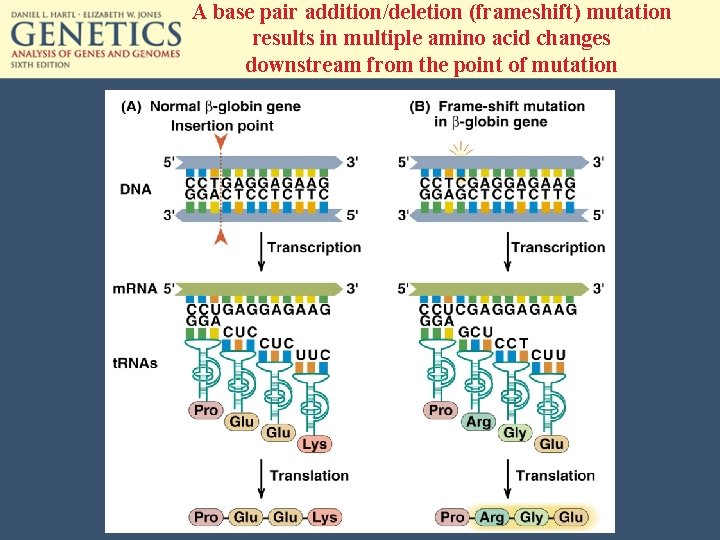
Types of Mutations • The 2 nd most common type of mutations are insertion/deletions of base pairs. • This can cause frameshifts. • Deletions or insertions of one or two bases usually results in dramatic differences in protein production.
Types of Mutations • Why are these mutations important? – They can affect m. RNA and protein production, eventually determining the phenotype. • Silent mutations – produce no change in amino acid sequence (due to degeneracy of the genetic code. ) (aka synonymous mutations). – CUU codes for leucine, but so does CUC, CUA, CUG, UUA, and UUG.
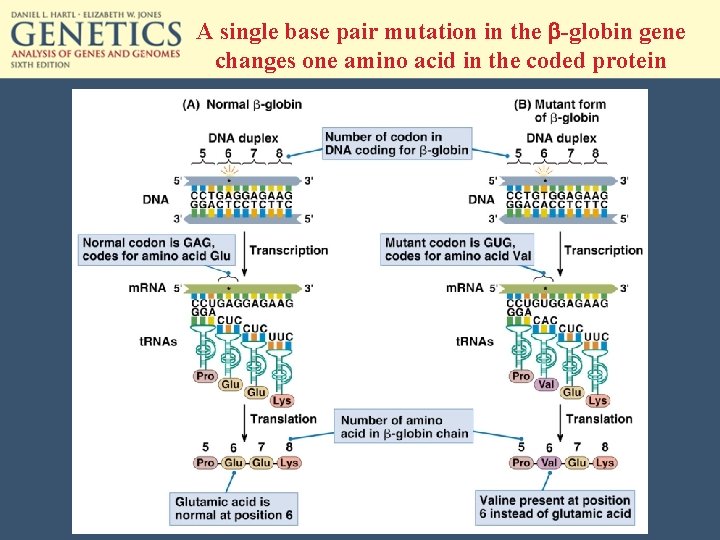
A single base pair mutation in the b-globin gene changes one amino acid in the coded protein
A base pair addition/deletion (frameshift) mutation results in multiple amino acid changes downstream from the point of mutation
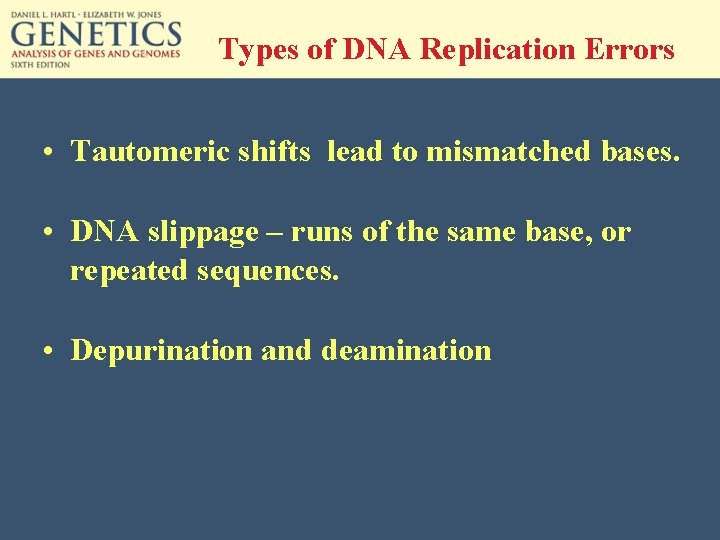
Types of DNA Replication Errors • Tautomeric shifts lead to mismatched bases. • DNA slippage – runs of the same base, or repeated sequences. • Depurination and deamination
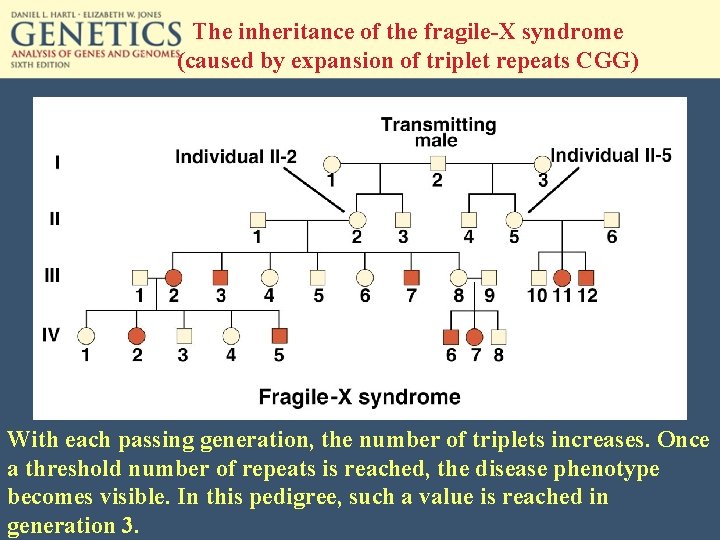
The inheritance of the fragile-X syndrome (caused by expansion of triplet repeats CGG) With each passing generation, the number of triplets increases. Once a threshold number of repeats is reached, the disease phenotype becomes visible. In this pedigree, such a value is reached in generation 3.
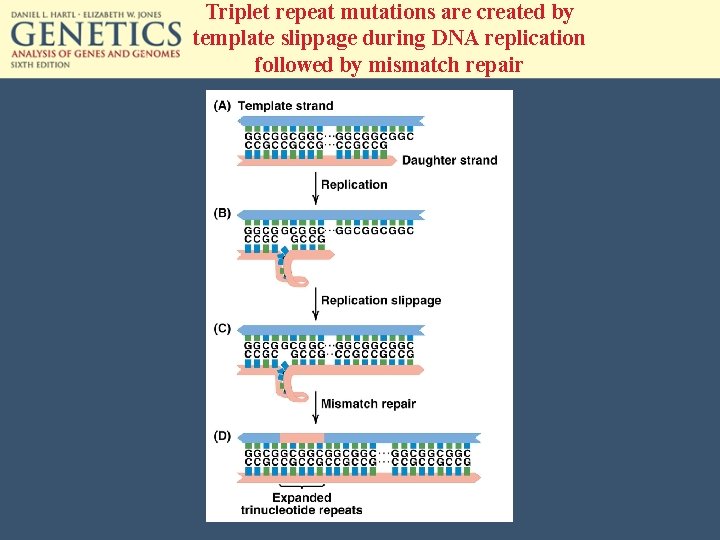
Triplet repeat mutations are created by template slippage during DNA replication followed by mismatch repair
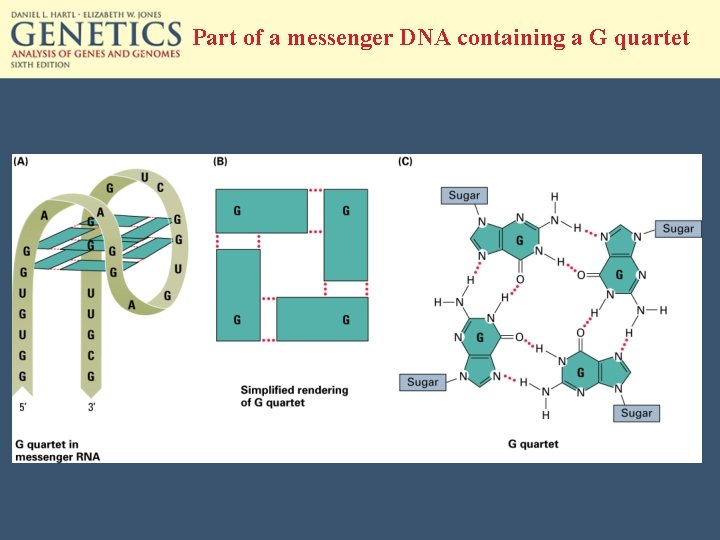
Part of a messenger DNA containing a G quartet
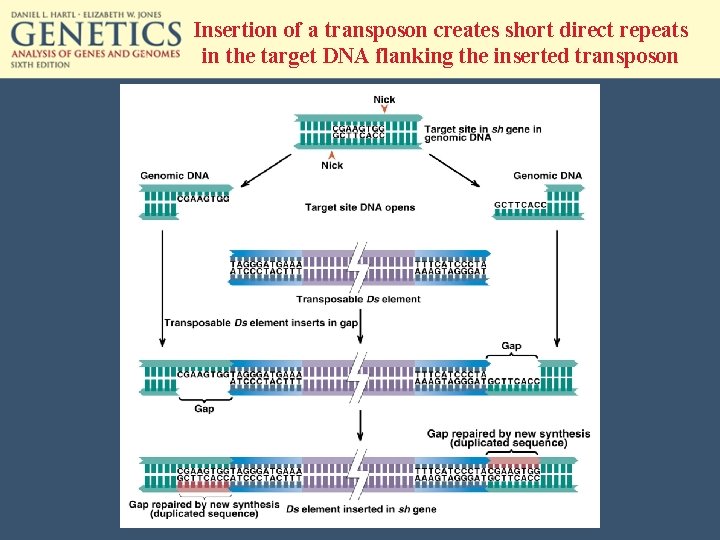
Insertion of a transposon creates short direct repeats in the target DNA flanking the inserted transposon
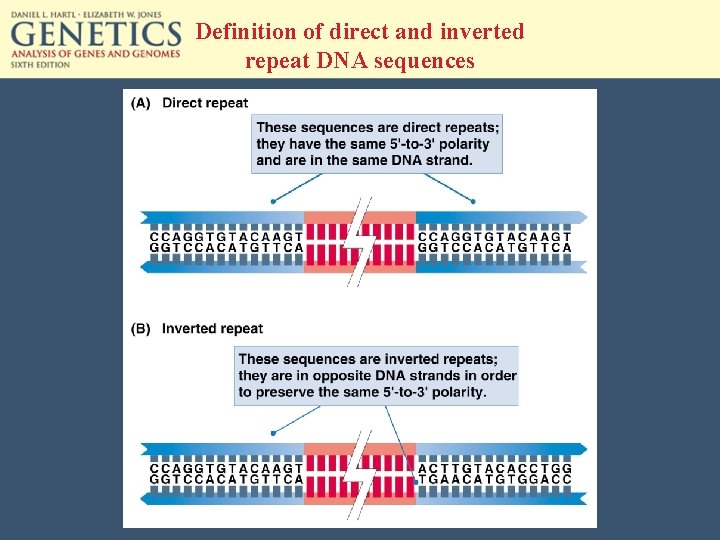
Definition of direct and inverted repeat DNA sequences
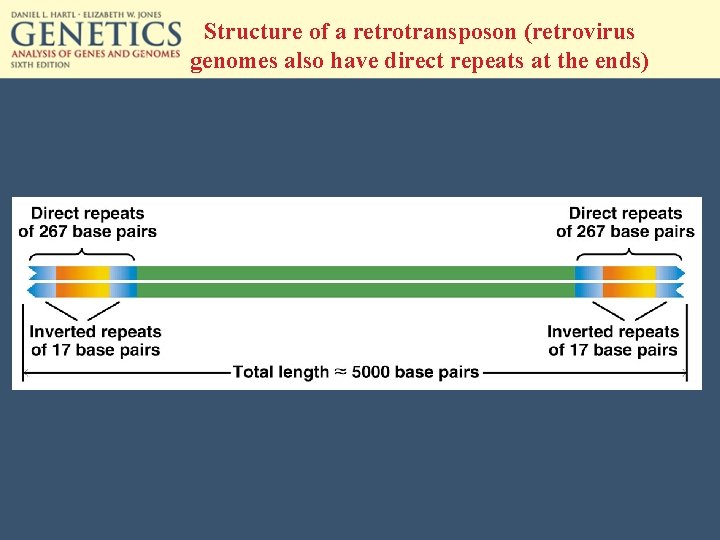
Structure of a retrotransposon (retrovirus genomes also have direct repeats at the ends)
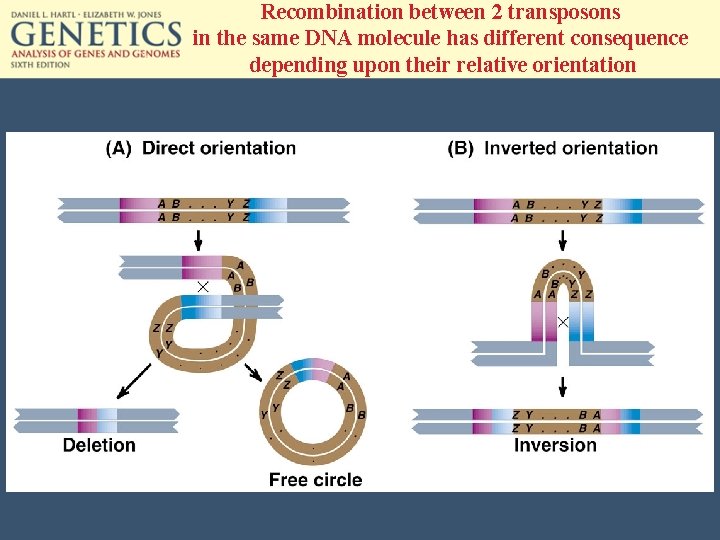
Recombination between 2 transposons in the same DNA molecule has different consequence depending upon their relative orientation
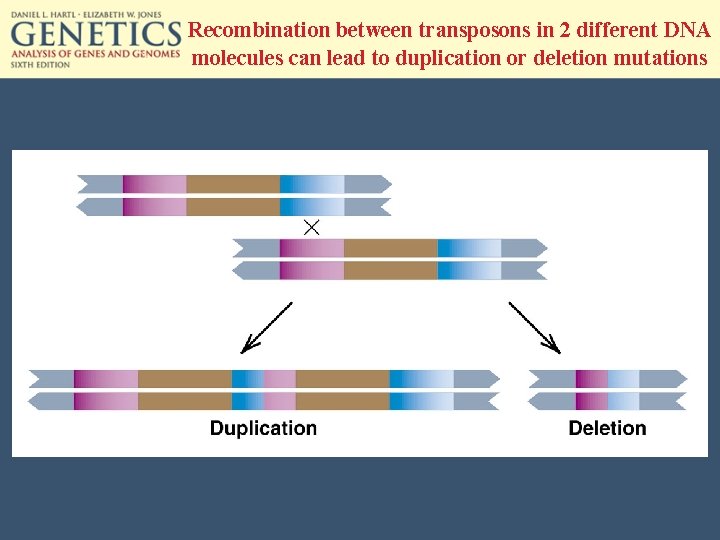
Recombination between transposons in 2 different DNA molecules can lead to duplication or deletion mutations
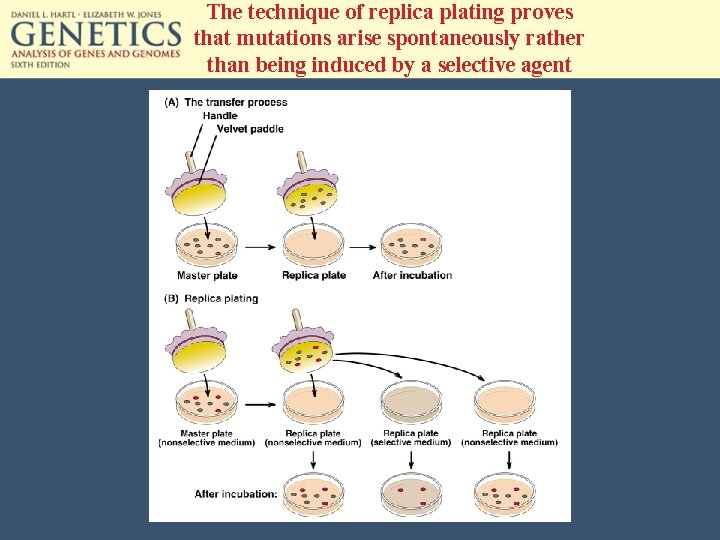
The technique of replica plating proves that mutations arise spontaneously rather than being induced by a selective agent
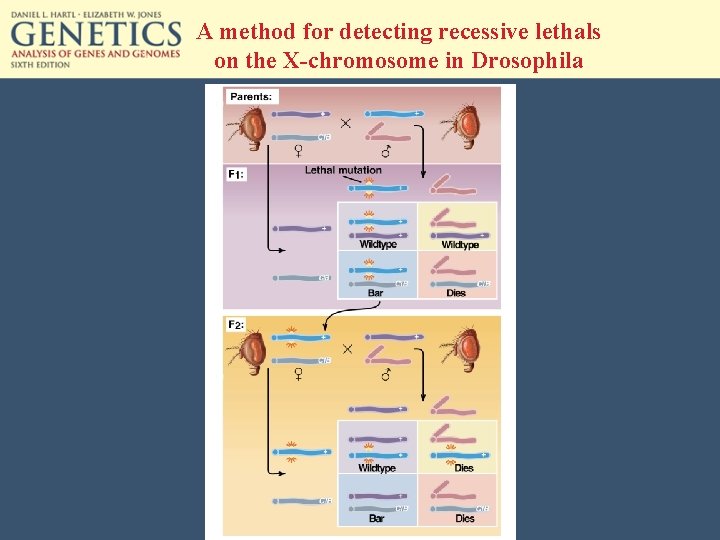
A method for detecting recessive lethals on the X-chromosome in Drosophila
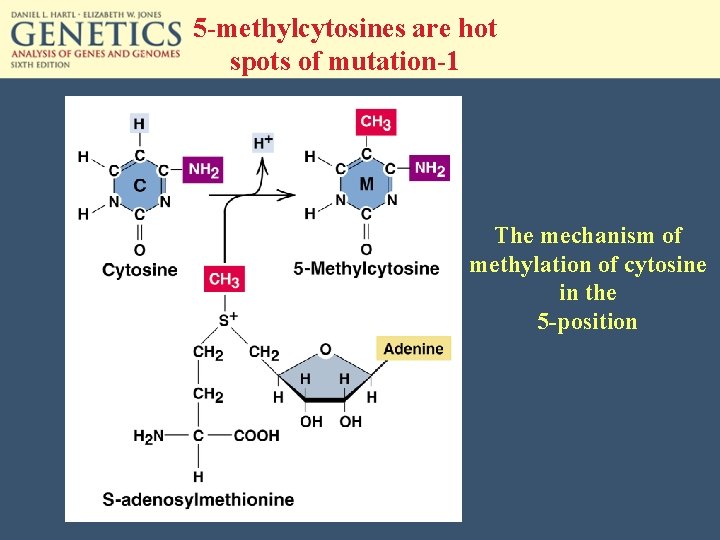
5 -methylcytosines are hot spots of mutation-1 The mechanism of methylation of cytosine in the 5 -position
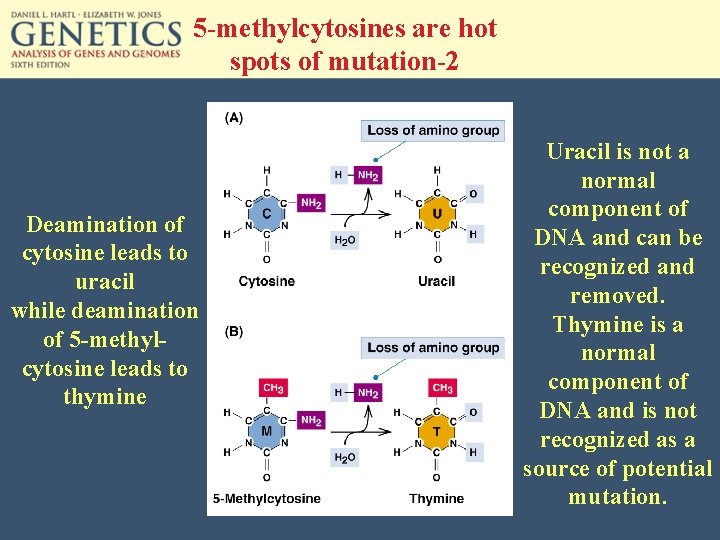
5 -methylcytosines are hot spots of mutation-2 Deamination of cytosine leads to uracil while deamination of 5 -methylcytosine leads to thymine Uracil is not a normal component of DNA and can be recognized and removed. Thymine is a normal component of DNA and is not recognized as a source of potential mutation.
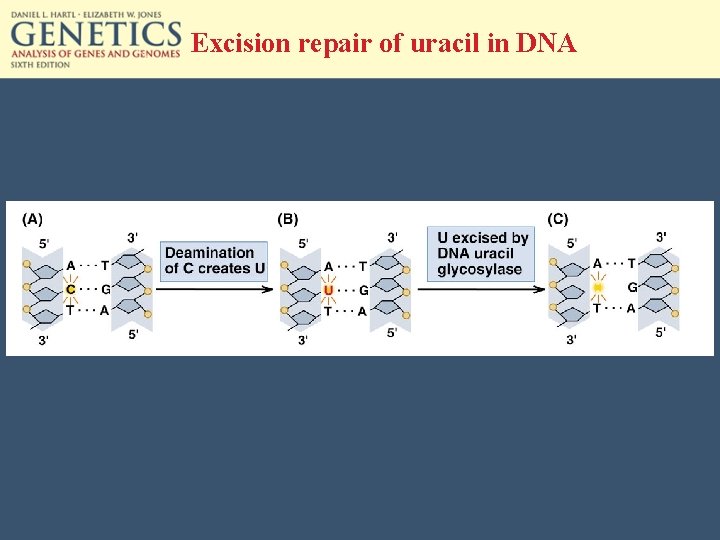
Excision repair of uracil in DNA
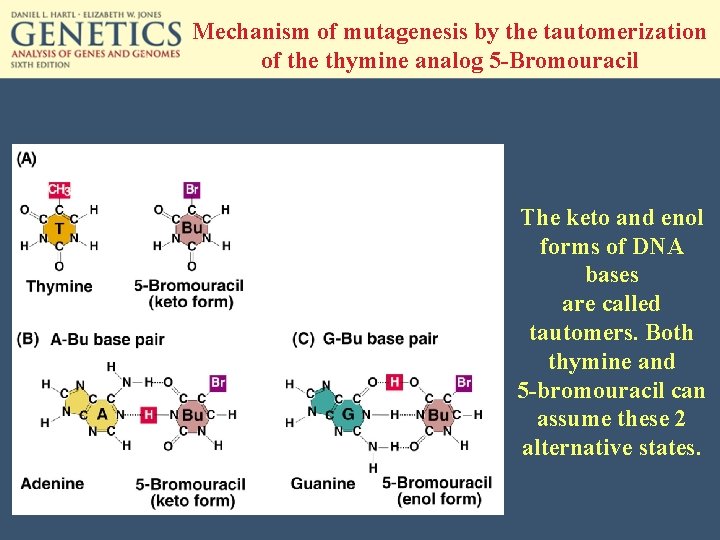
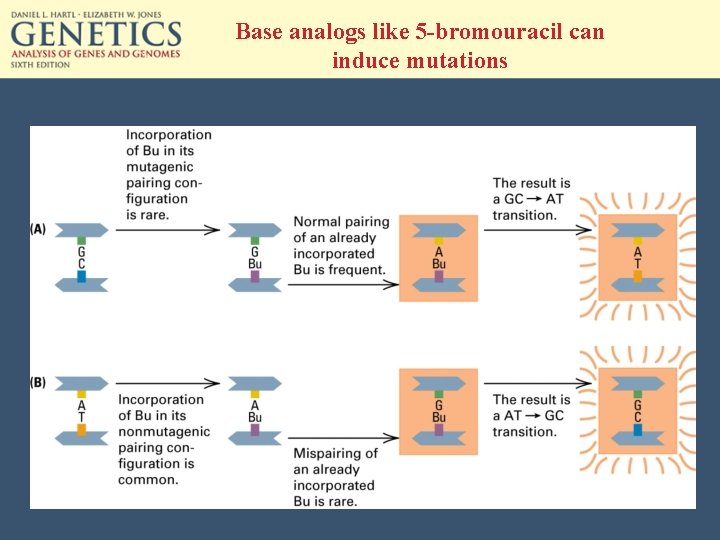
Mechanism of mutagenesis by the tautomerization of the thymine analog 5 -Bromouracil The keto and enol forms of DNA bases are called tautomers. Both thymine and 5 -bromouracil can assume these 2 alternative states.
Base analogs like 5 -bromouracil can induce mutations
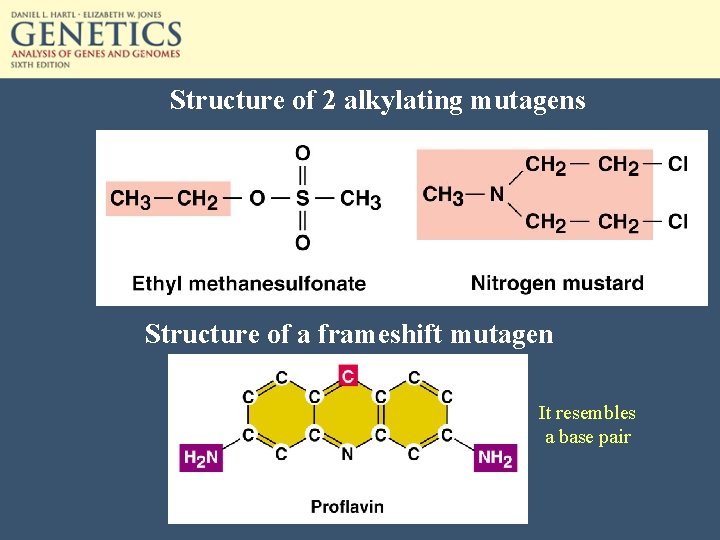
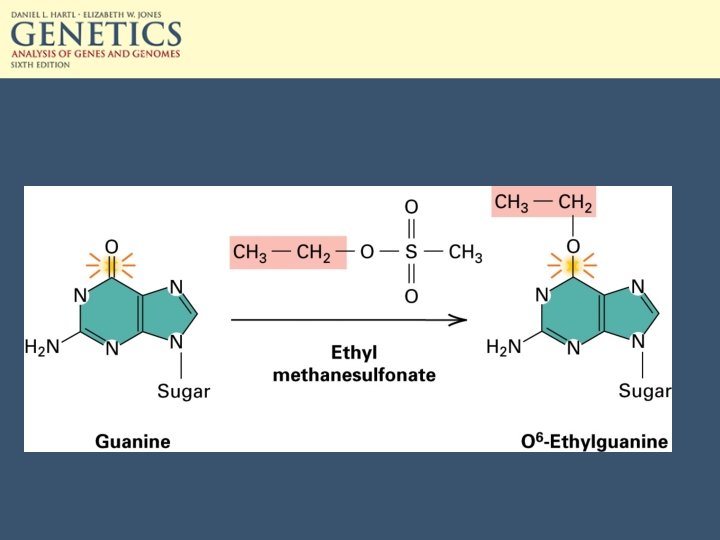
Structure of 2 alkylating mutagens Structure of a frameshift mutagen It resembles a base pair
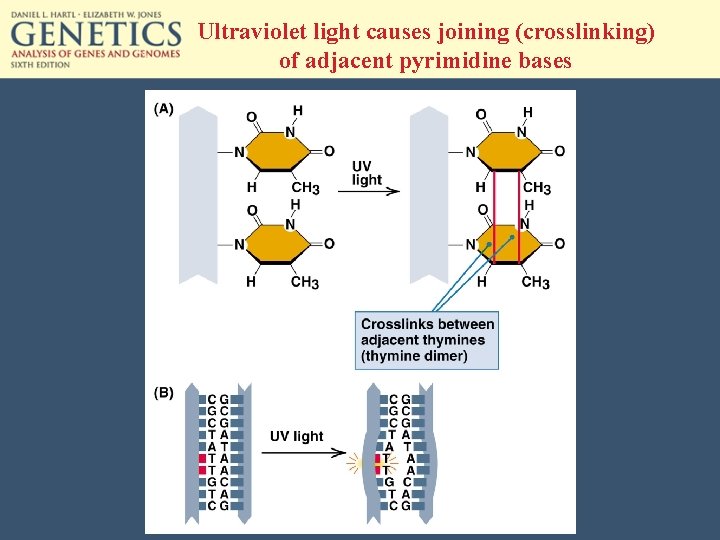
Ultraviolet light causes joining (crosslinking) of adjacent pyrimidine bases
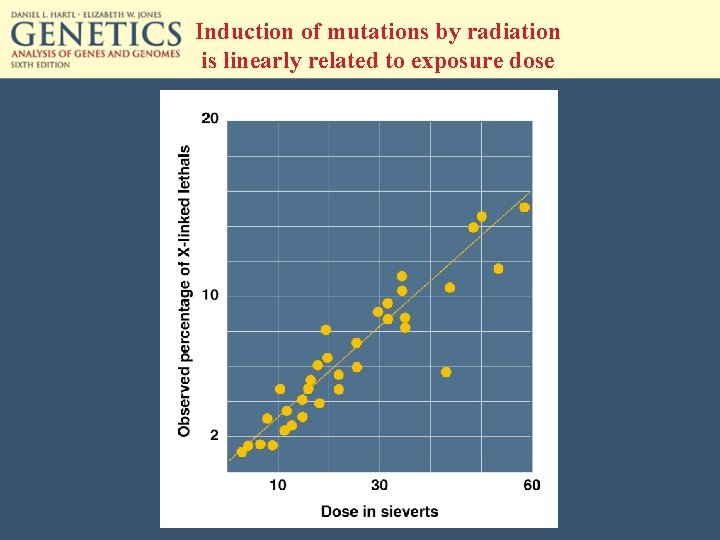
Induction of mutations by radiation is linearly related to exposure dose
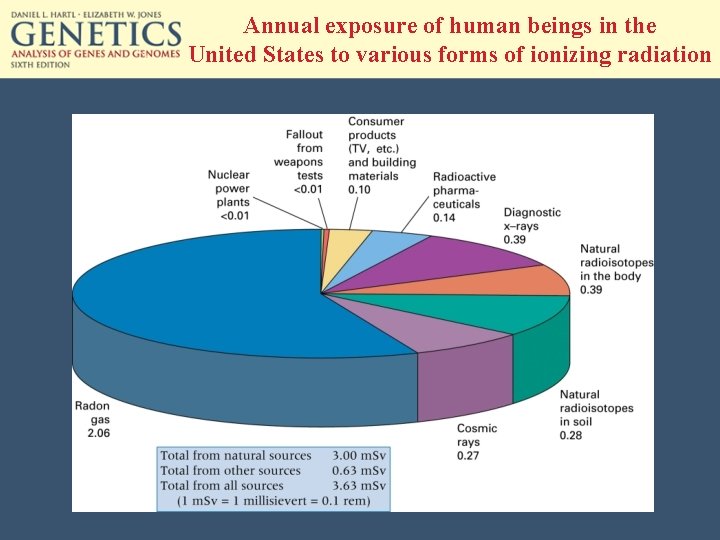
Annual exposure of human beings in the United States to various forms of ionizing radiation
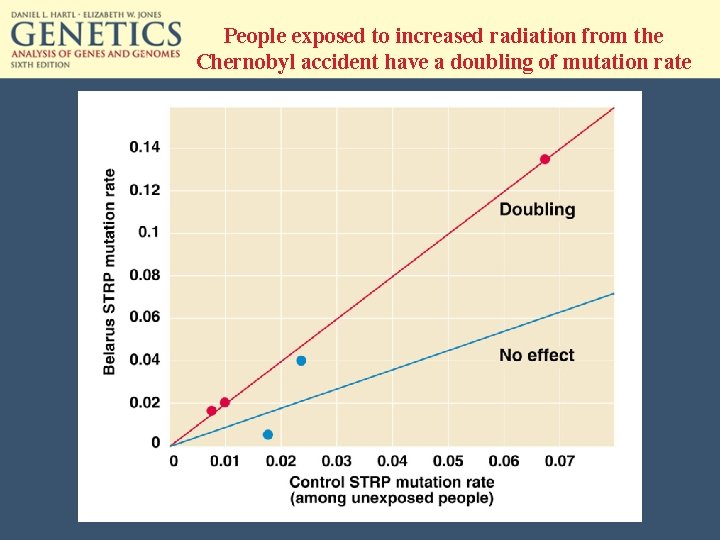
People exposed to increased radiation from the Chernobyl accident have a doubling of mutation rate
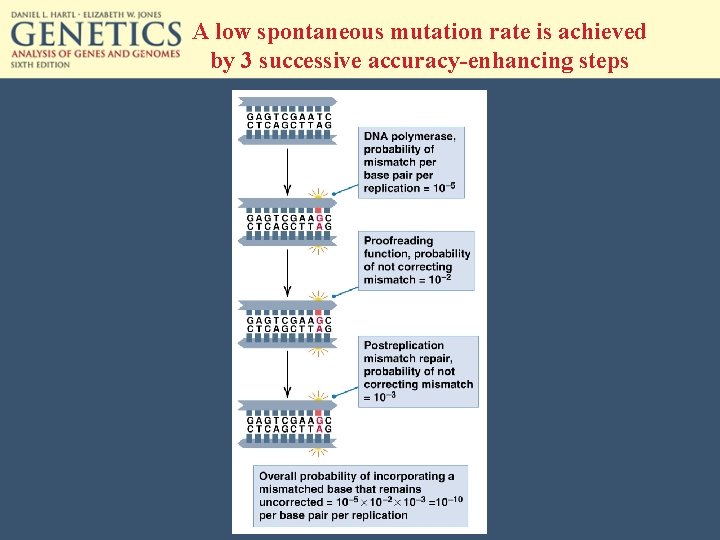
A low spontaneous mutation rate is achieved by 3 successive accuracy-enhancing steps
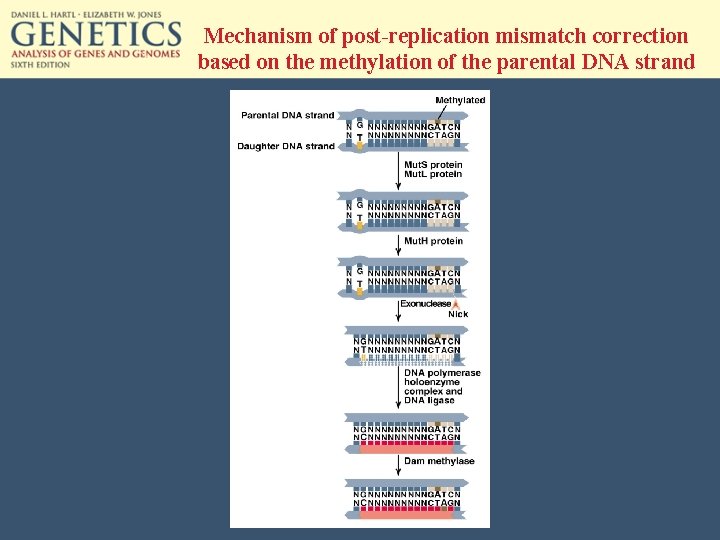
Mechanism of post-replication mismatch correction based on the methylation of the parental DNA strand
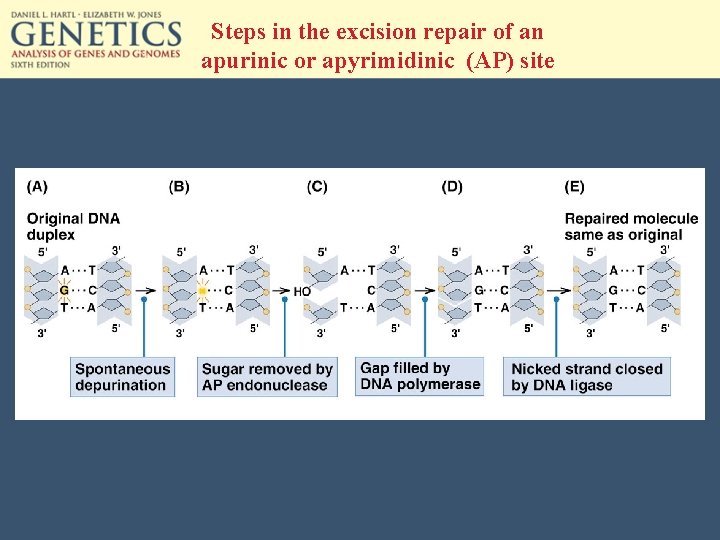
Steps in the excision repair of an apurinic or apyrimidinic (AP) site
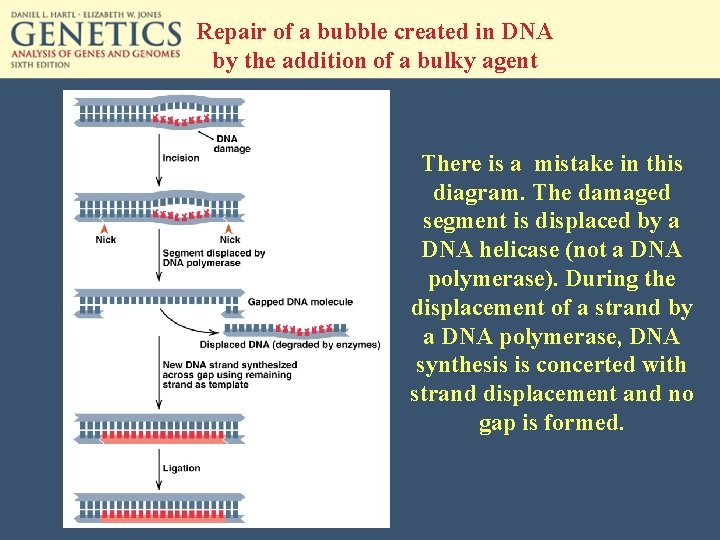
Repair of a bubble created in DNA by the addition of a bulky agent There is a mistake in this diagram. The damaged segment is displaced by a DNA helicase (not a DNA polymerase). During the displacement of a strand by a DNA polymerase, DNA synthesis is concerted with strand displacement and no gap is formed.
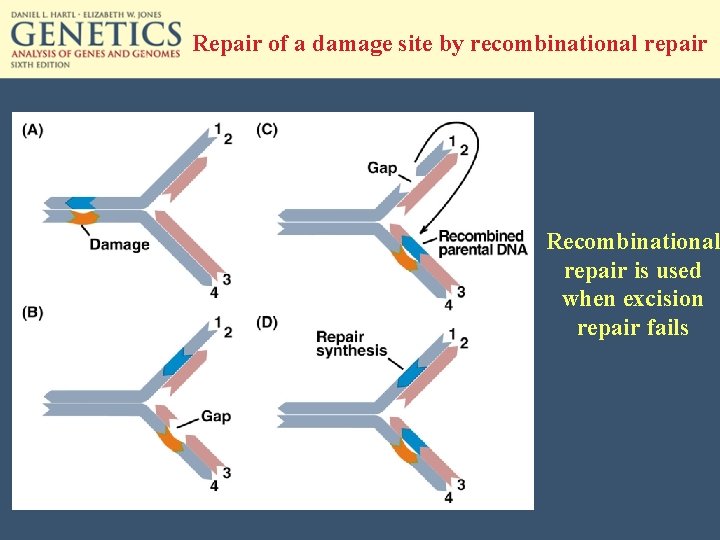
Repair of a damage site by recombinational repair Recombinational repair is used when excision repair fails
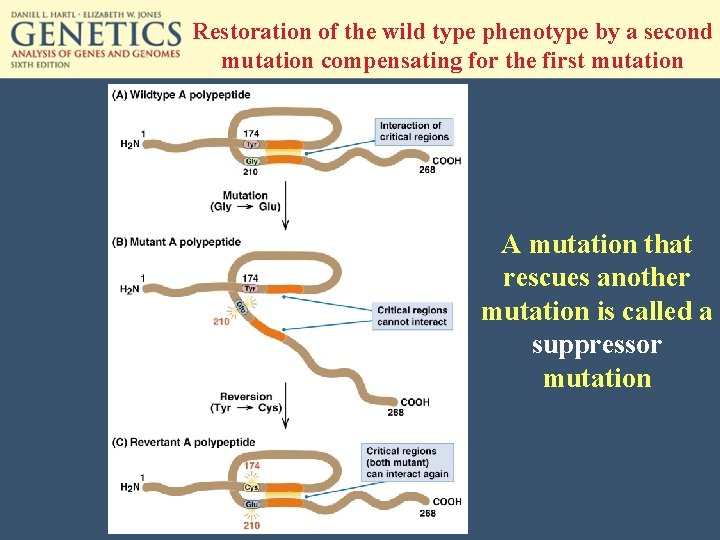
Restoration of the wild type phenotype by a second mutation compensating for the first mutation A mutation that rescues another mutation is called a suppressor mutation
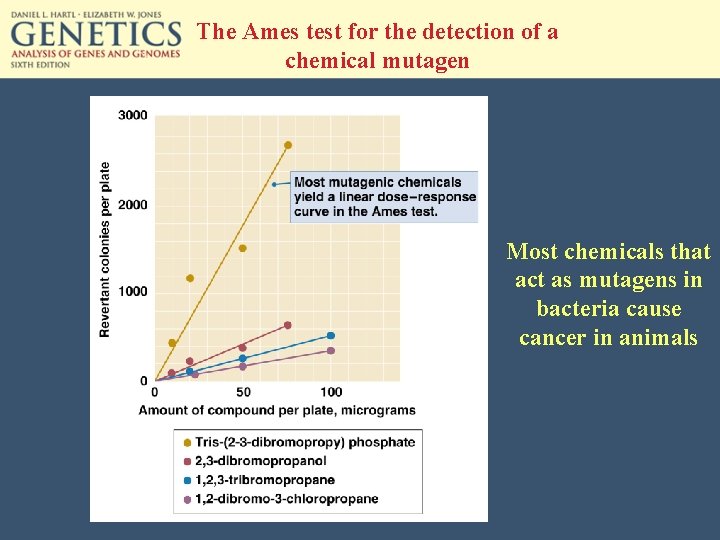
The Ames test for the detection of a chemical mutagen Most chemicals that act as mutagens in bacteria cause cancer in animals
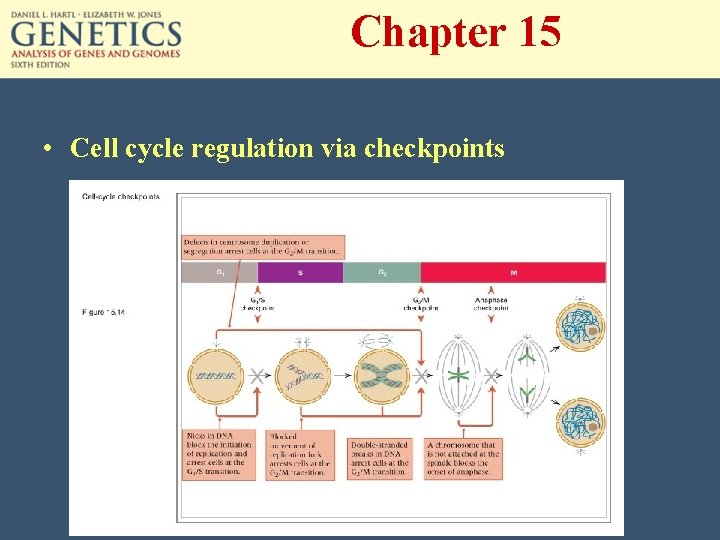
Chapter 15 • Cell cycle regulation via checkpoints
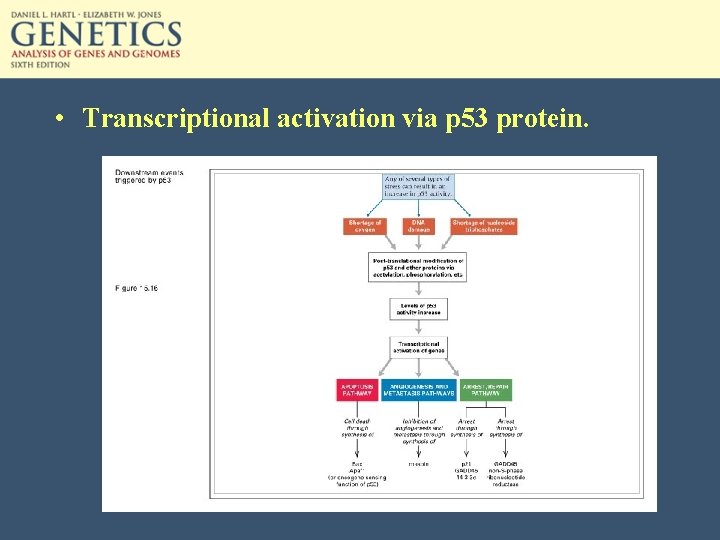
• Transcriptional activation via p 53 protein.
• Sporadic (99%) vs. familial (1%) cancers – Contact inhibition – Cell senescence (associated with telomerase activity; higher in cancer cells) – Cancers are clonal.
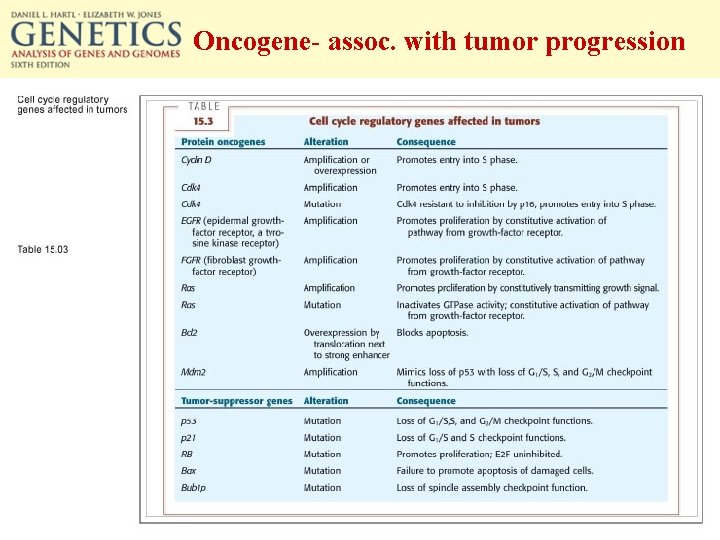
Oncogene- assoc. with tumor progression