
Chapter 14 Lesson 2 Heart Disease Teachers notes
- Slides: 17
Chapter 14 Lesson 2 Heart Disease Teacher’s notes are available in the notes section of this presentation. Next >>
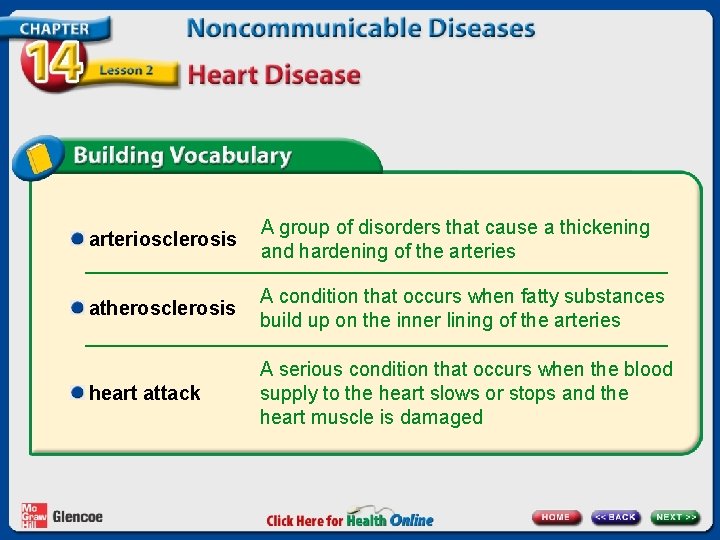
arteriosclerosis A group of disorders that cause a thickening and hardening of the arteries atherosclerosis A condition that occurs when fatty substances build up on the inner lining of the arteries heart attack A serious condition that occurs when the blood supply to the heart slows or stops and the heart muscle is damaged
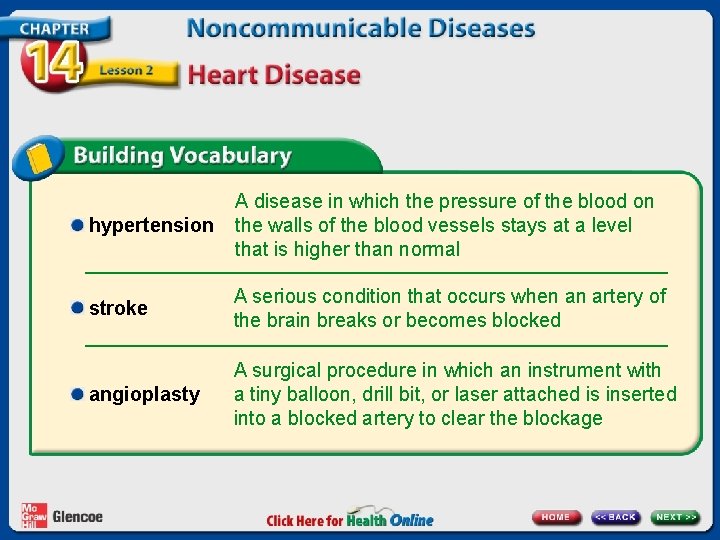
hypertension A disease in which the pressure of the blood on the walls of the blood vessels stays at a level that is higher than normal stroke A serious condition that occurs when an artery of the brain breaks or becomes blocked angioplasty A surgical procedure in which an instrument with a tiny balloon, drill bit, or laser attached is inserted into a blocked artery to clear the blockage
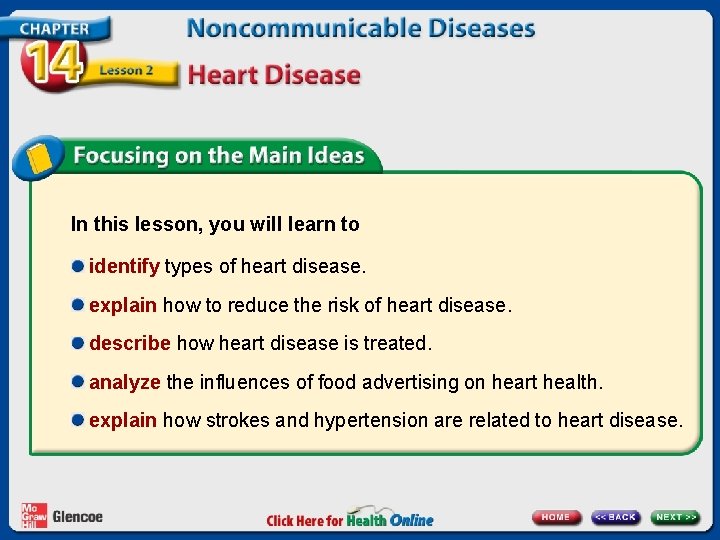
In this lesson, you will learn to identify types of heart disease. explain how to reduce the risk of heart disease. describe how heart disease is treated. analyze the influences of food advertising on heart health. explain how strokes and hypertension are related to heart disease.
What Is Cardiovascular Disease? Cardiovascular or heart disease is any condition that reduces the strength of the heart and blood vessels. Sometimes, heart disease is due to heredity, but it is usually related to lifestyle. People who Smoke get very little exercise have other unhealthy habits like poor diet are more at risk for developing heart disease.
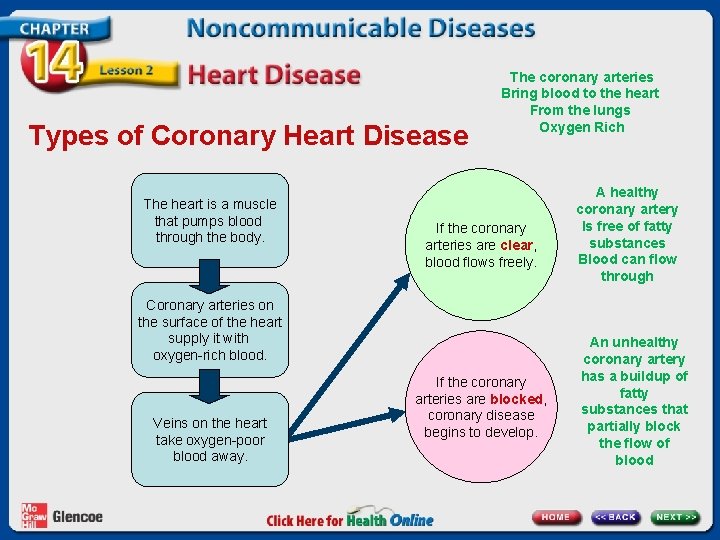
Types of Coronary Heart Disease The heart is a muscle that pumps blood through the body. The coronary arteries Bring blood to the heart From the lungs Oxygen Rich If the coronary arteries are clear, blood flows freely. Coronary arteries on the surface of the heart supply it with oxygen-rich blood. Veins on the heart take oxygen-poor blood away. If the coronary arteries are blocked, coronary disease begins to develop. A healthy coronary artery Is free of fatty substances Blood can flow through An unhealthy coronary artery has a buildup of fatty substances that partially block the flow of blood
Types of Coronary Heart Disease Arteriosclerosis is a group of disorders that includes atherosclerosis. arteriosclerosis A group of diseases that cause a thickening and hardening of the arteries atherosclerosis A condition that occurs when fatty substances build up on the inner lining of the arteries When buildup collects inside the arteries, it takes up space needed for blood to flow through. If the coronary arteries become blocked with too much buildup, the heart may not get enough oxygen.
A Heart Attack A heart attack can happen if the heart does not get enough oxygen from the blood. heart attack A serious condition that occurs when the blood supply to the heart slows or stops and the heart muscle is damaged.
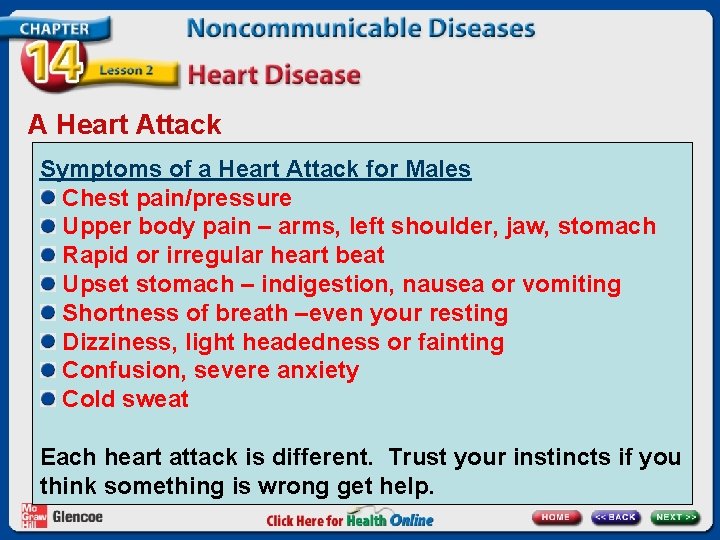
A Heart Attack Symptoms of a Heart Attack for Males Chest pain/pressure Upper body pain – arms, left shoulder, jaw, stomach Rapid or irregular heart beat Upset stomach – indigestion, nausea or vomiting Shortness of breath –even your resting Dizziness, light headedness or fainting Confusion, severe anxiety Cold sweat Each heart attack is different. Trust your instincts if you think something is wrong get help.
A Heart Attack Symptoms of a Heart Attack for Females Heart attack symptoms can be quiet different for women than for men. Many times a women’s symptoms do not include chest pain. Sometimes they just don’t feel good 80% of the time women experience at least one symptom for more than a month before their heart attack
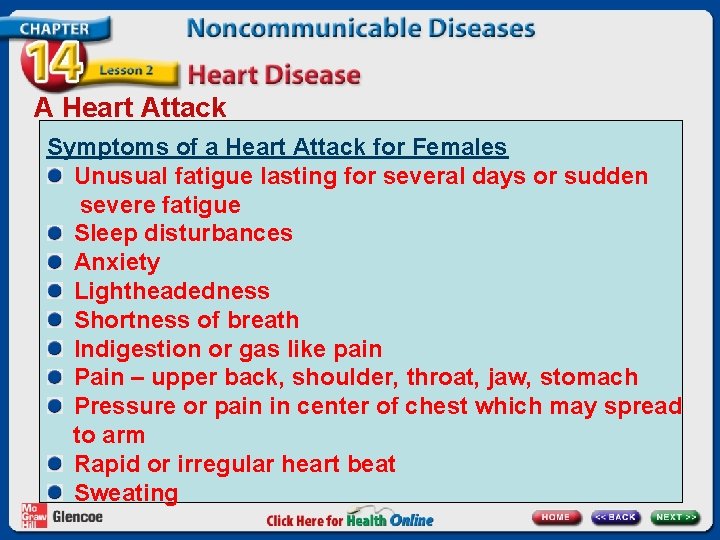
A Heart Attack Symptoms of a Heart Attack for Females Unusual fatigue lasting for several days or sudden severe fatigue Sleep disturbances Anxiety Lightheadedness Shortness of breath Indigestion or gas like pain Pain – upper back, shoulder, throat, jaw, stomach Pressure or pain in center of chest which may spread to arm Rapid or irregular heart beat Sweating
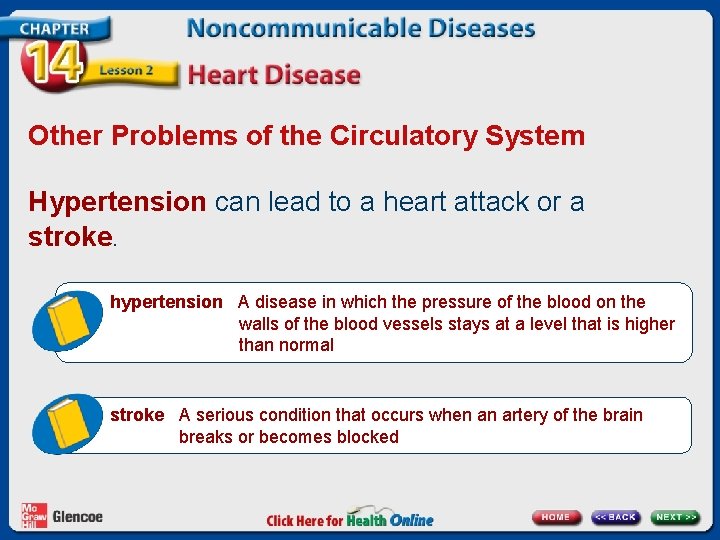
Other Problems of the Circulatory System Hypertension can lead to a heart attack or a stroke. hypertension A disease in which the pressure of the blood on the walls of the blood vessels stays at a level that is higher than normal stroke A serious condition that occurs when an artery of the brain breaks or becomes blocked
Other Problems of the Circulatory System Hypertension: People who have hypertension can manage the condition by following a healthful eating plan, exercising regularly, avoiding stress, and taking medicine if needed. Stroke: Like the heart, the brain needs plenty of oxygen and nutrients to function. If an artery leaks or develops a thick mass called a clot, blood flow to the part of the brain is interrupted, causing damage. The effects of a stroke depend on what part of the brain is affected.
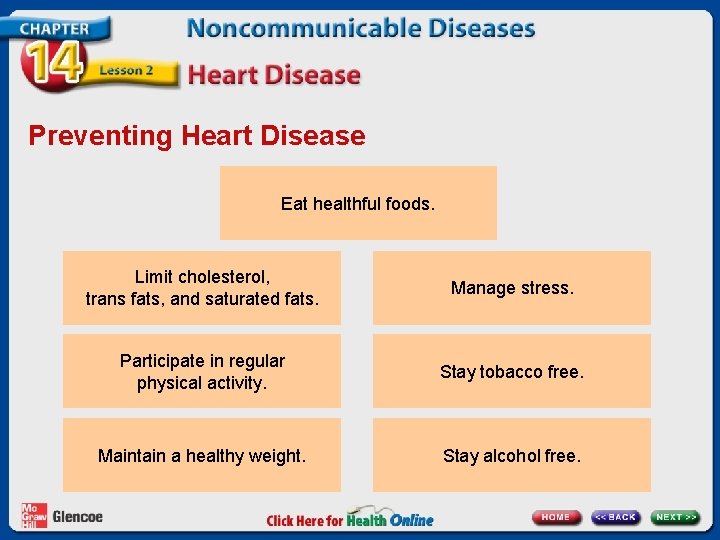
Preventing Heart Disease Eat healthful foods. Limit cholesterol, trans fats, and saturated fats. Manage stress. Participate in regular physical activity. Stay tobacco free. Maintain a healthy weight. Stay alcohol free.
Treating Heart Disease Angioplasty is a popular method for treating heart disease. angioplasty A surgical procedure in which an instrument with a tiny balloon, drill bit, or laser attached is inserted into a blocked artery to clear a blockage
Treating Heart Disease Other methods used to treat heart disease are: Medications Pacemakers Bypass surgery Heart transplants
End of Chapter 14 Noncommunicable Diseases Lesson 2 Heart Disease Click for: >> Main Menu >> Chapter 14 Assessment