
Chapter 14 Identifying Business Opportunities Internal External Business
Chapter 14 Identifying Business Opportunities
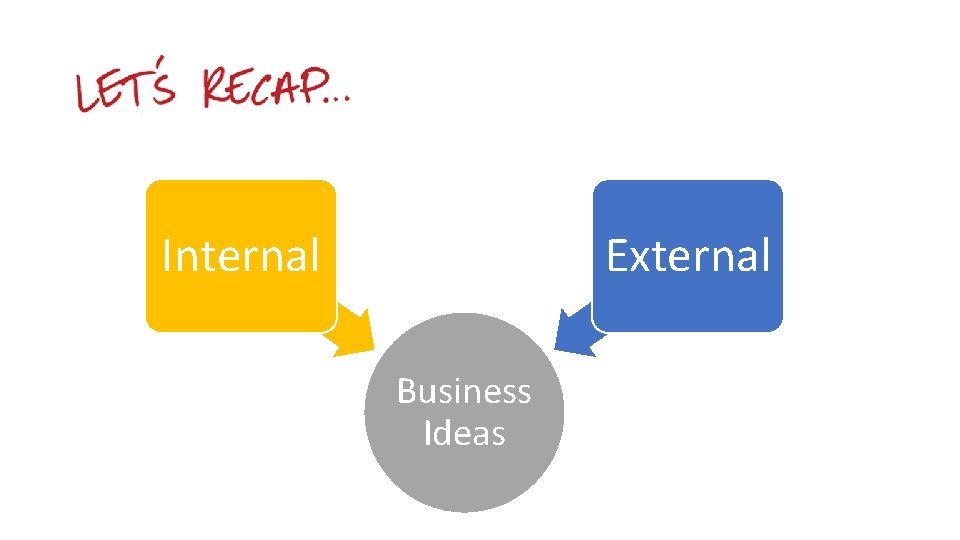
Internal External Business Ideas
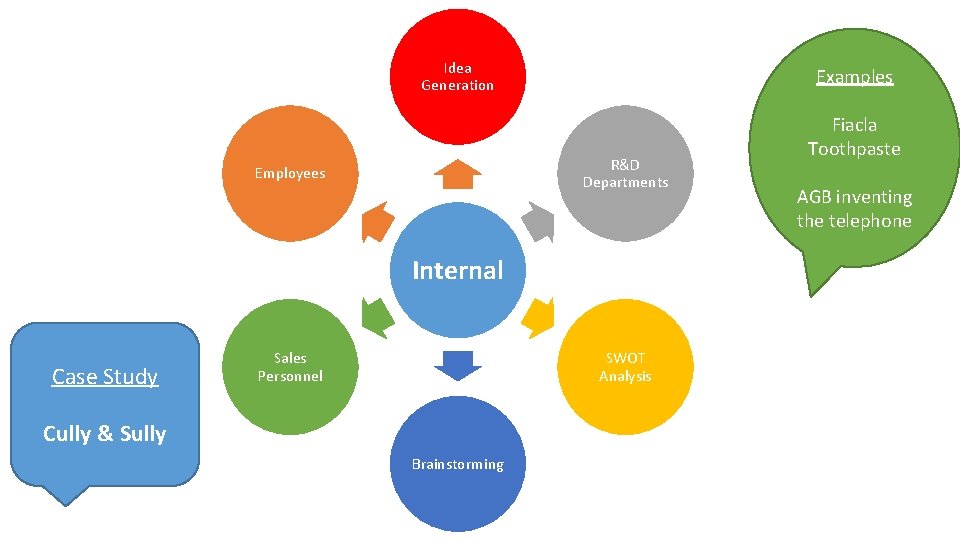
Idea Generation Examples R&D Departments Employees Internal Case Study Sales Personnel SWOT Analysis Cully & Sully Brainstorming Fiacla Toothpaste AGB inventing the telephone
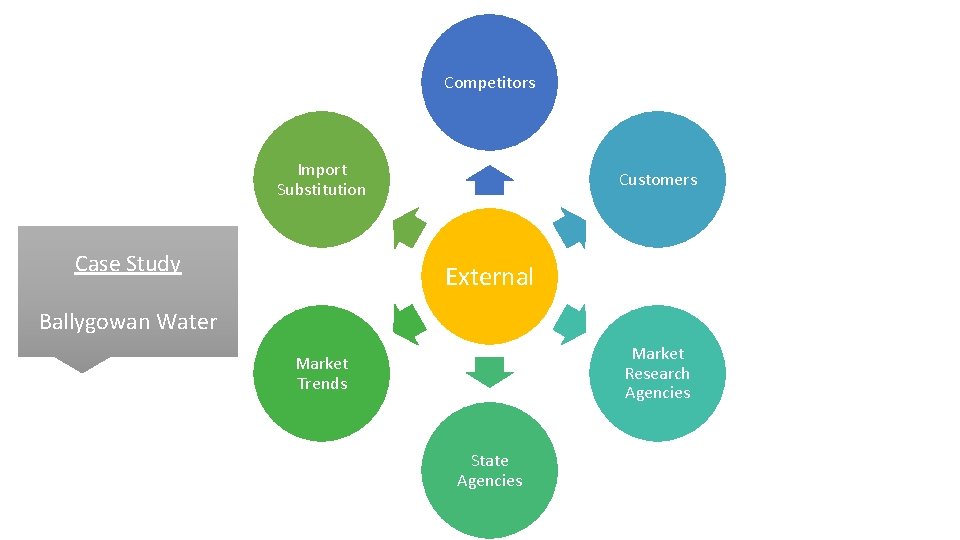
Competitors Import Substitution Case Study Customers External Ballygowan Water Market Research Agencies Market Trends State Agencies
How Can Business Ideas Be Researched? Market Research, the process of gathering and analysing information about potential market for a product. Benefits of market research, 1. 2. 3. 4. 5. Indicates the size of the market Identifies competitors Tests Consumer Reaction Predicts Sales Reduces risk and saves money
Case Study’s of Market Research • Coca Cola Market Research Failure https: //www. youtube. com/watch? v=Tqv. TMPY 8 Q_8 • Top 10 Marketing Failures https: //www. youtube. com/watch? v=hx. Rq. Kgj. D 3 v. Y
Types of Market Research The type of market research chosen will depend on, • What key information is required • The amount of detail and accuracy needed • The costs involved in collecting the data • The time and money available to do the research
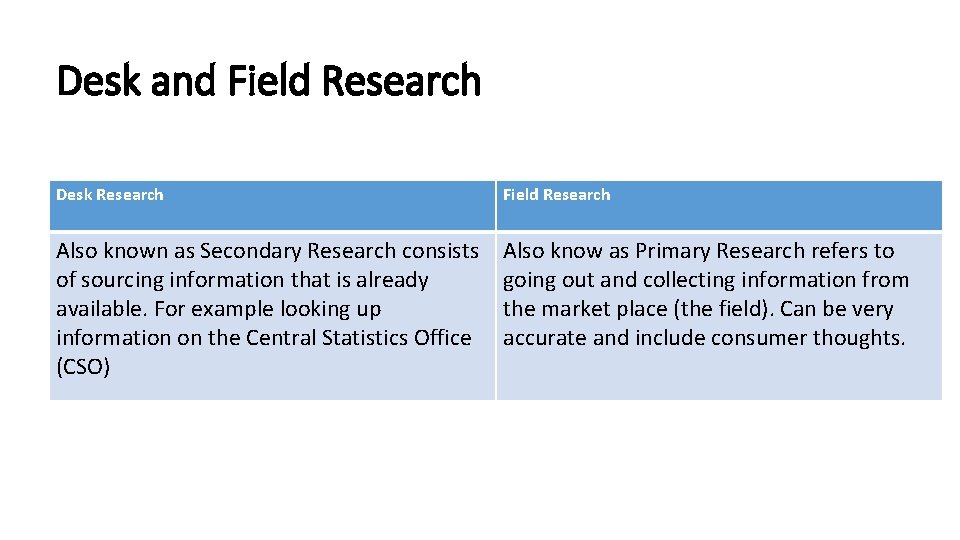
Desk and Field Research Desk Research Field Research Also known as Secondary Research consists of sourcing information that is already available. For example looking up information on the Central Statistics Office (CSO) Also know as Primary Research refers to going out and collecting information from the market place (the field). Can be very accurate and include consumer thoughts.
Desk Research (Secondary Research) • Accessing information that has already been gathered by others. • Uses books, reports statistics and the internet.
Sources of Desk Research • Reports and Statistics • The Internet • Newspapers and Magazines • Experts • Feedback • Commercial Market Research Companies
Advantages Disadvantages Available quickly Too general and lack detail Low cost Data may be out of date The benefits and limitations of desk research https: //www. youtube. com/watch? v=Kn 8 x. F-x. RZDY
Field Research (Primary Research) • Refers to where the information is collected by going out into the market place (The Field). • Can be very accurate and contain thoughts of consumers.
Sources of Field Research • Observation • Consumer Surveys • Questionnaires -Multiple Choice -Open ended questions -Closed questions
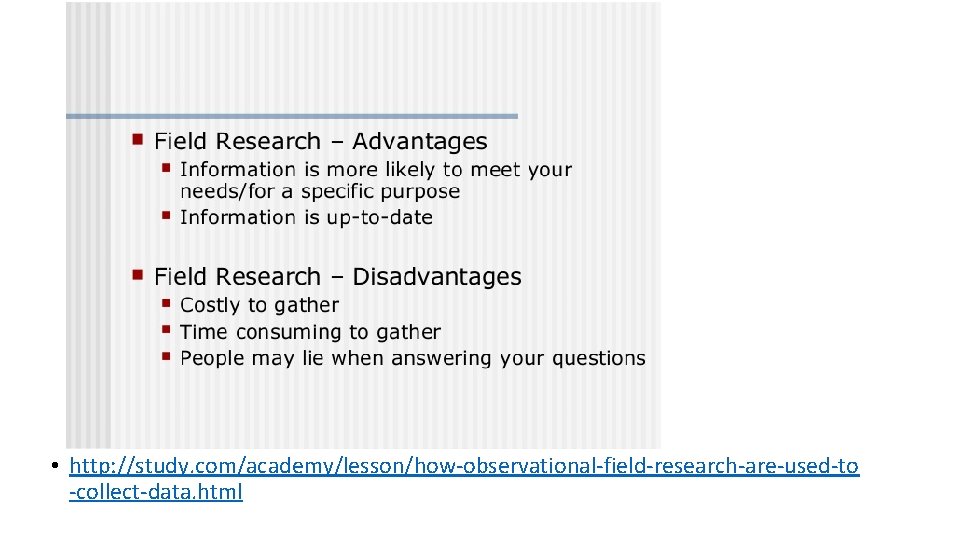
• http: //study. com/academy/lesson/how-observational-field-research-are-used-to -collect-data. html
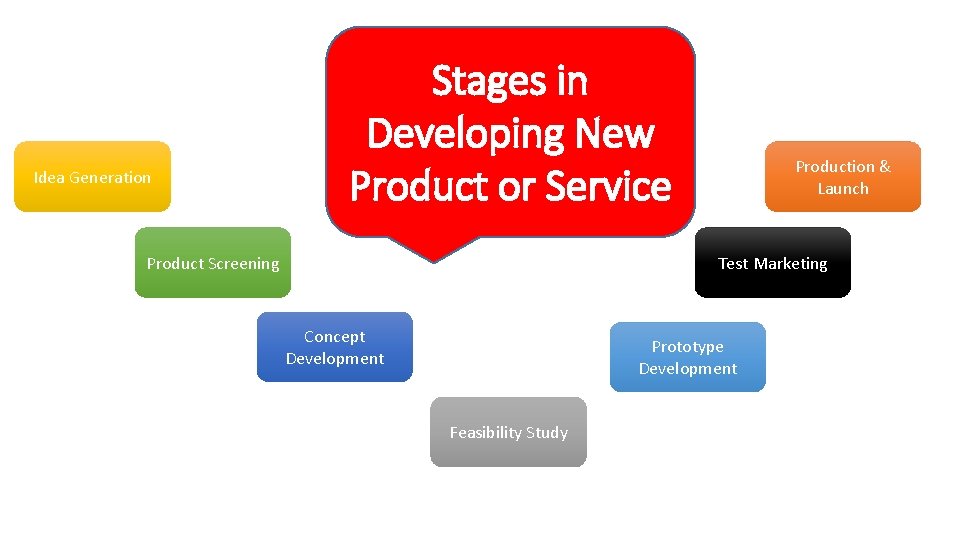
Idea Generation Stages in Developing New Product or Service Product Screening Production & Launch Test Marketing Concept Development Prototype Development Feasibility Study
Idea Generation - Idea generation comes from the Internal and/or external sources of new business ideas.
Product Screening - Selecting and sorting the most promising product/service from the weak ones. Are products, 1. Unrealistic 2. Have some potential 3. Worth further investigation
Concept Development - Turning an idea/product into a realistic concept that will appeal to customers and also be different from rivals. - A USP (Unique Selling Point) is a feature of a product/service that makes its attractive and different from an organisations rivals.
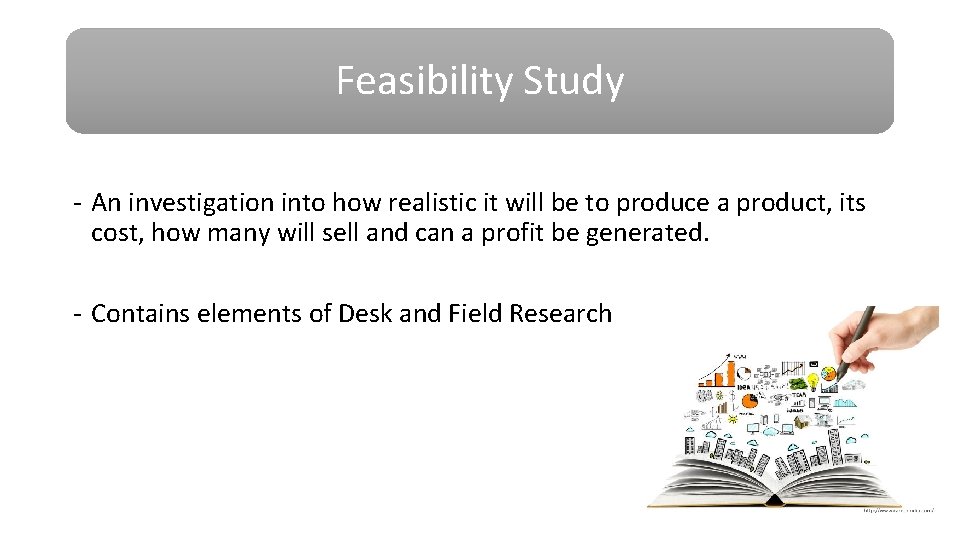
Feasibility Study - An investigation into how realistic it will be to produce a product, its cost, how many will sell and can a profit be generated. - Contains elements of Desk and Field Research
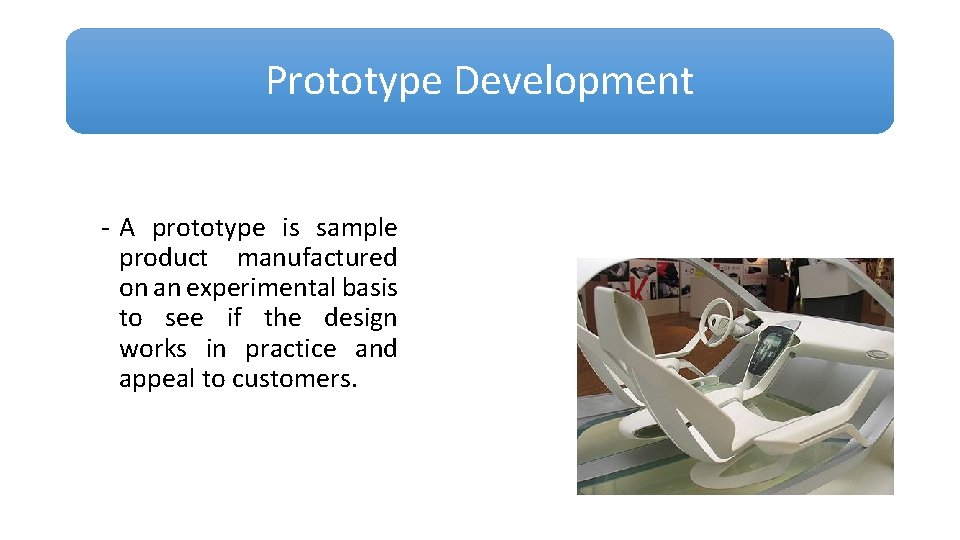
Prototype Development - A prototype is sample product manufactured on an experimental basis to see if the design works in practice and appeal to customers.
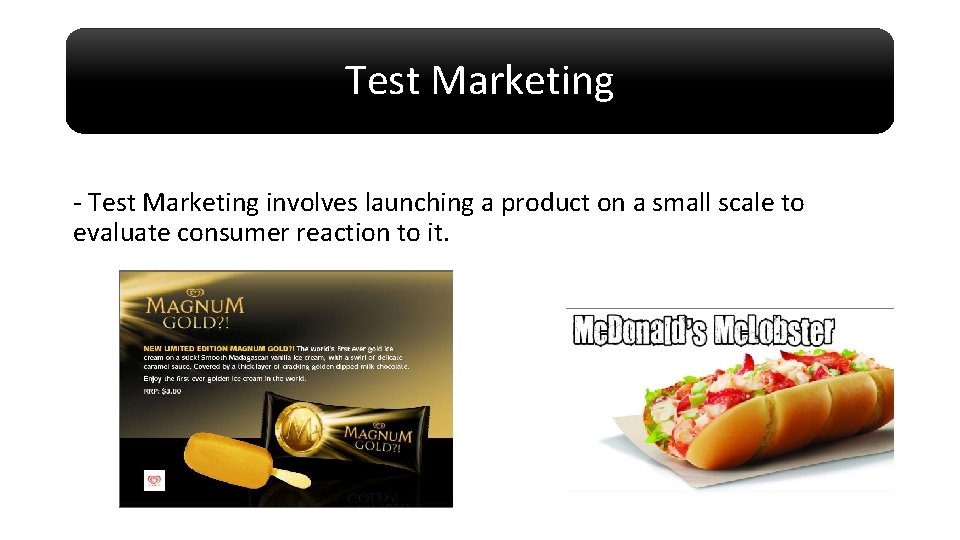
Test Marketing - Test Marketing involves launching a product on a small scale to evaluate consumer reaction to it.
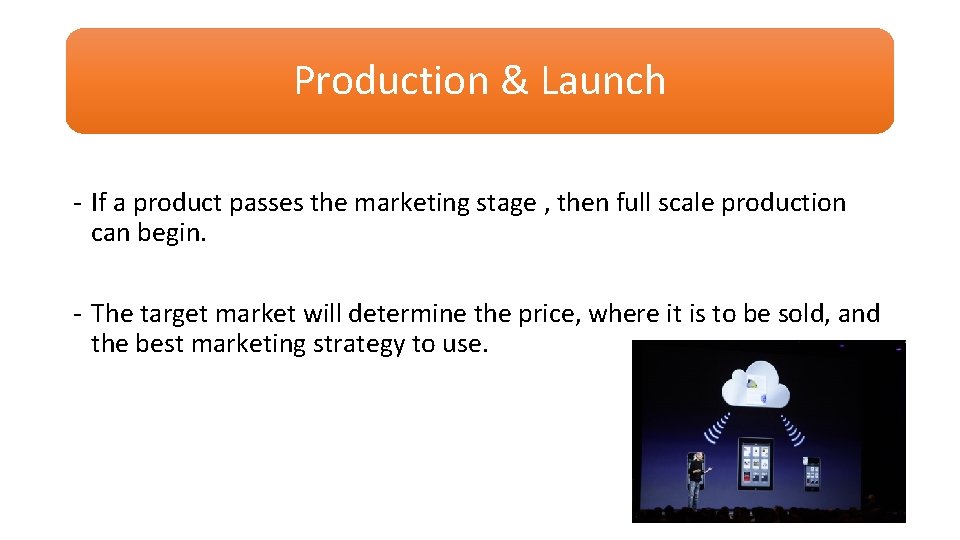
Production & Launch - If a product passes the marketing stage , then full scale production can begin. - The target market will determine the price, where it is to be sold, and the best marketing strategy to use.
Break-even Analysis - A break-even analysis can help identify the likely profitability of a business idea. - Fixed Costs (Costs remain the same) - Variable Costs ( Costs vary depending on the number of products produced) - The break-even point (Sales that must be achieved to cover costs and break-even)
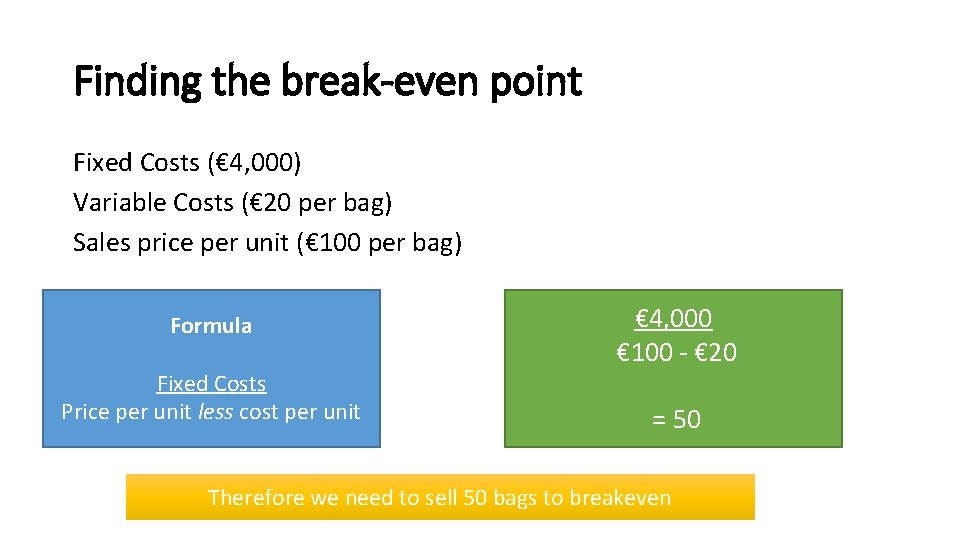
Finding the break-even point Fixed Costs (€ 4, 000) Variable Costs (€ 20 per bag) Sales price per unit (€ 100 per bag) Formula Fixed Costs Price per unit less cost per unit € 4, 000 € 100 - € 20 = 50 Therefore we need to sell 50 bags to breakeven
Now You Try! Calculate the Break-Even Point • Page 241 • A - E

- Slides: 26