
Chapter 14 Human Genetics Recessive Defective Hemoglobin on
Chapter 14: Human Genetics
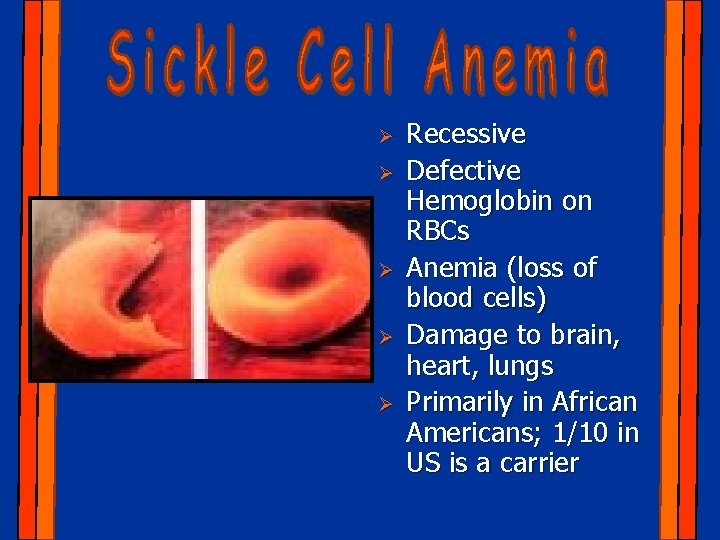
Ø Ø Ø Recessive Defective Hemoglobin on RBCs Anemia (loss of blood cells) Damage to brain, heart, lungs Primarily in African Americans; 1/10 in US is a carrier
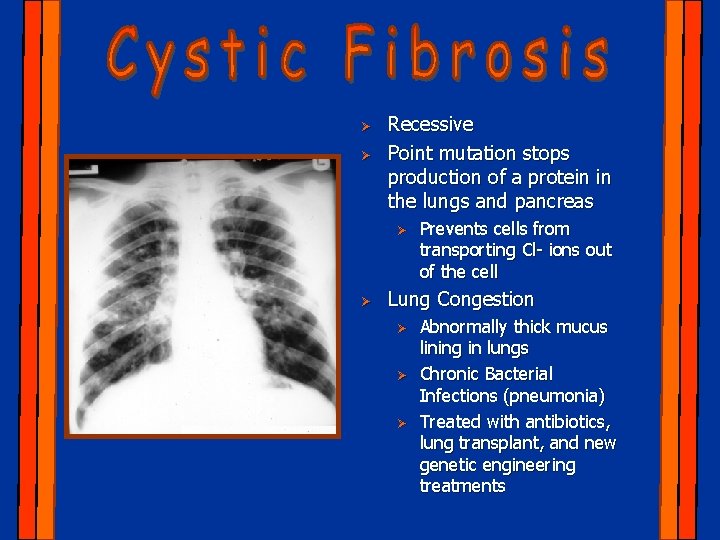
Ø Ø Recessive Point mutation stops production of a protein in the lungs and pancreas Ø Ø Prevents cells from transporting Cl- ions out of the cell Lung Congestion Ø Ø Ø Abnormally thick mucus lining in lungs Chronic Bacterial Infections (pneumonia) Treated with antibiotics, lung transplant, and new genetic engineering treatments
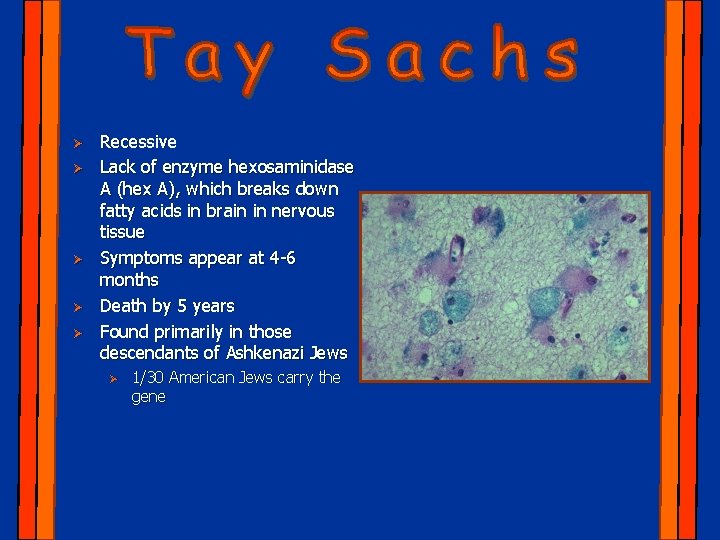
Ø Ø Ø Recessive Lack of enzyme hexosaminidase A (hex A), which breaks down fatty acids in brain in nervous tissue Symptoms appear at 4 -6 months Death by 5 years Found primarily in those descendants of Ashkenazi Jews Ø 1/30 American Jews carry the gene

Albinism n n Patients are unable to produce skin or eye pigments, and thus are lightsensitive Autosomal recessive n Therefore, is it monogenic or chromosomal?
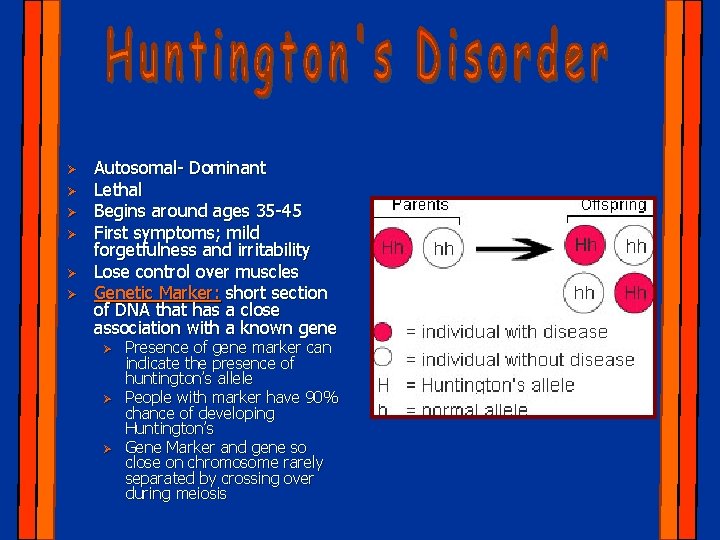
Ø Ø Ø Autosomal- Dominant Lethal Begins around ages 35 -45 First symptoms; mild forgetfulness and irritability Lose control over muscles Genetic Marker: short section of DNA that has a close association with a known gene Ø Ø Ø Presence of gene marker can indicate the presence of huntington’s allele People with marker have 90% chance of developing Huntington’s Gene Marker and gene so close on chromosome rarely separated by crossing over during meiosis
Achondroplasia (a. k. a. dwarfism) n Monogenic, autosomal n n Carriers express genes, therefore, is it dominant or recessive? There is also a disease called gigantism (Andre the Giant)
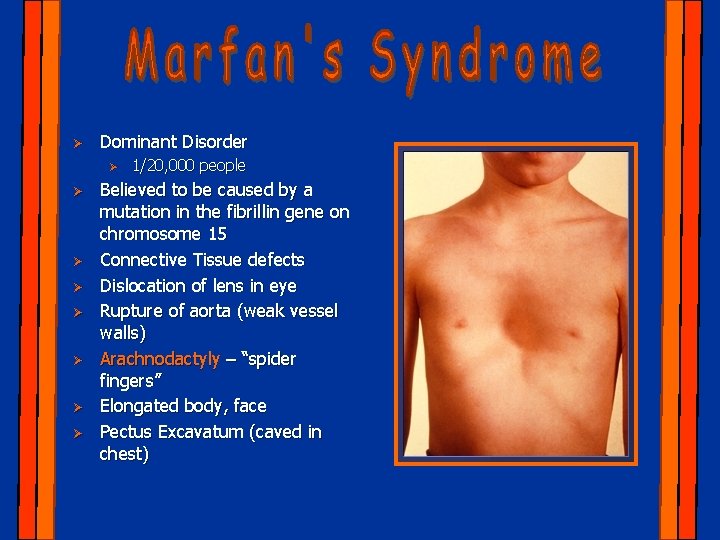
Ø Dominant Disorder Ø Ø Ø Ø 1/20, 000 people Believed to be caused by a mutation in the fibrillin gene on chromosome 15 Connective Tissue defects Dislocation of lens in eye Rupture of aorta (weak vessel walls) Arachnodactyly – “spider fingers” Elongated body, face Pectus Excavatum (caved in chest)
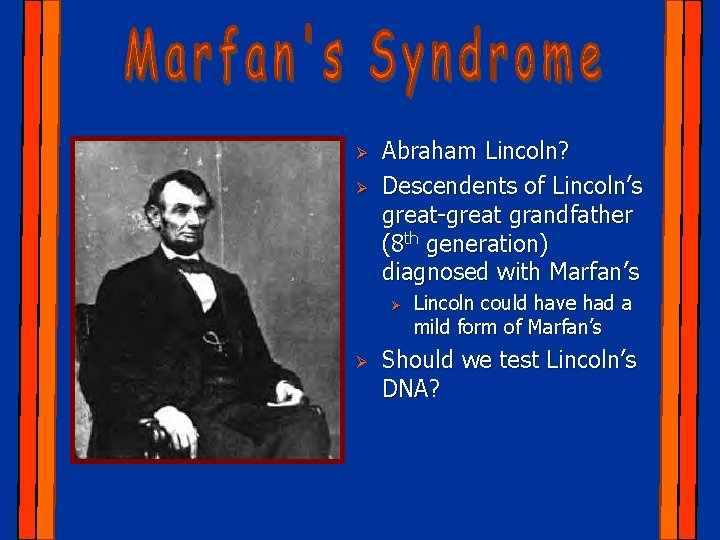
Ø Ø Abraham Lincoln? Descendents of Lincoln’s great-great grandfather (8 th generation) diagnosed with Marfan’s Ø Ø Lincoln could have had a mild form of Marfan’s Should we test Lincoln’s DNA?
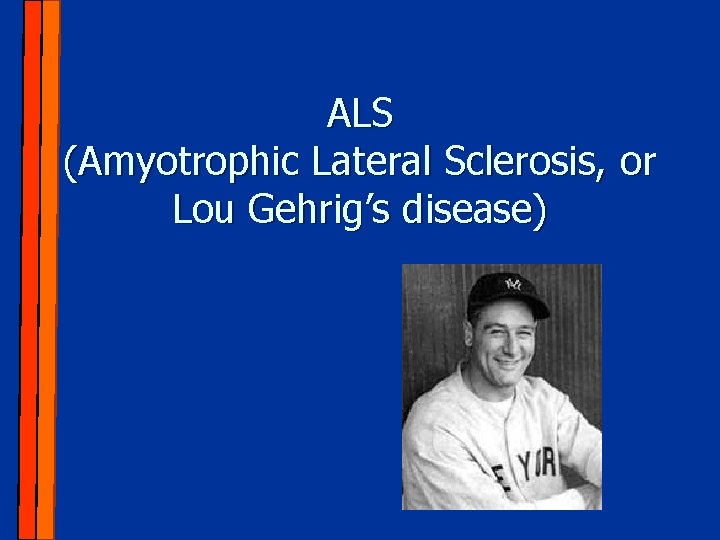
ALS (Amyotrophic Lateral Sclerosis, or Lou Gehrig’s disease)
n n n the disease strikes people between the ages of 40 and 70, and as many as 30, 000 Americans have the disease at any given time This monogenic mutation is believed to make a defective protein that is toxic to motor nerve cells. A common first symptom is a painless weakness in a hand, foot, arm or leg, other early symptoms include speech swallowing or walking difficulty
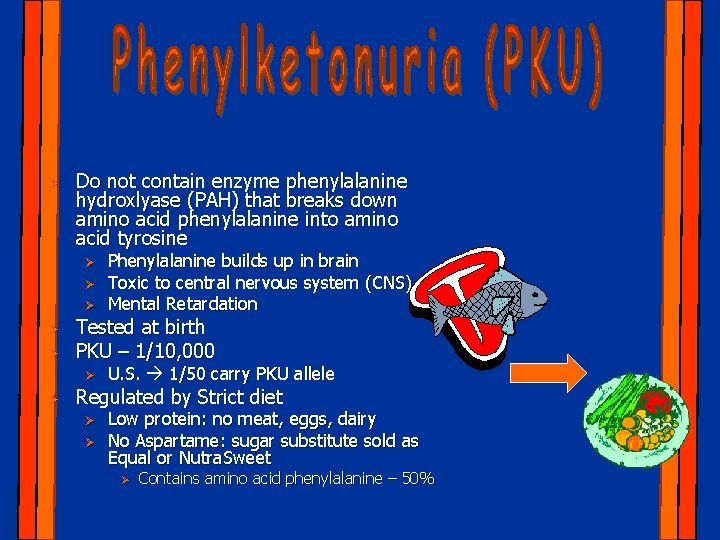
Ø Do not contain enzyme phenylalanine hydroxlyase (PAH) that breaks down amino acid phenylalanine into amino acid tyrosine Ø Ø Ø Tested at birth PKU – 1/10, 000 Ø Ø Phenylalanine builds up in brain Toxic to central nervous system (CNS) Mental Retardation U. S. 1/50 carry PKU allele Regulated by Strict diet Ø Ø Low protein: no meat, eggs, dairy No Aspartame: sugar substitute sold as Equal or Nutra. Sweet Ø Contains amino acid phenylalanine – 50%
Ø Sex- Influenced: Presence of male or female hormones influences the expression of the trait Ø Males and females with the same genotype will have different phenoypes Ø Ø Ex: baldness; B=baldness, B’=normal hair Ø BB=bald (male/female) Ø B’B’=normal hair (male/female) Ø BB’= bald (male) normal (female)
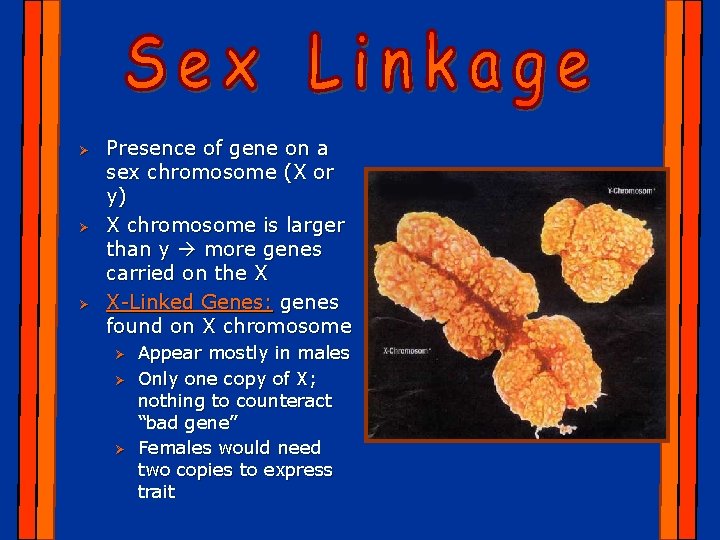
Ø Ø Ø Presence of gene on a sex chromosome (X or y) X chromosome is larger than y more genes carried on the X X-Linked Genes: genes found on X chromosome Ø Ø Ø Appear mostly in males Only one copy of X; nothing to counteract “bad gene” Females would need two copies to express trait
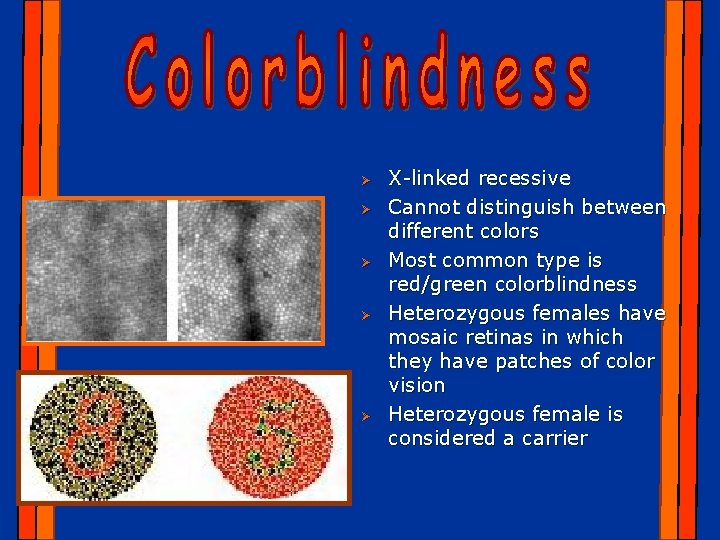
Ø Ø Ø X-linked recessive Cannot distinguish between different colors Most common type is red/green colorblindness Heterozygous females have mosaic retinas in which they have patches of color vision Heterozygous female is considered a carrier
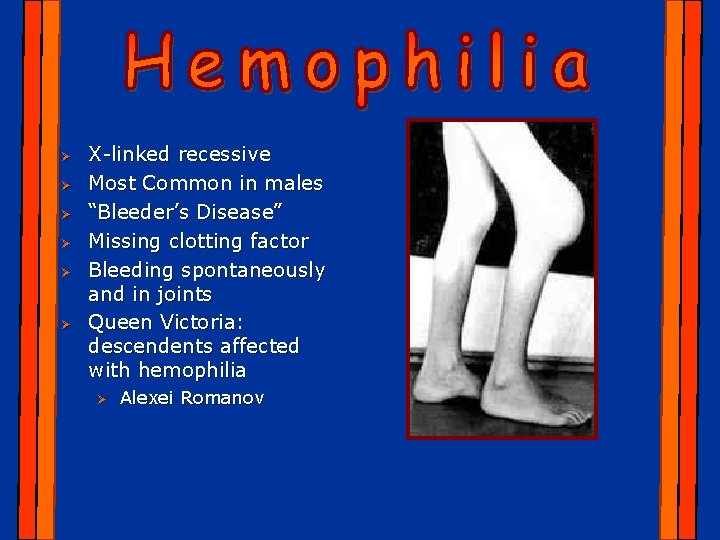
Ø Ø Ø X-linked recessive Most Common in males “Bleeder’s Disease” Missing clotting factor Bleeding spontaneously and in joints Queen Victoria: descendents affected with hemophilia Ø Alexei Romanov
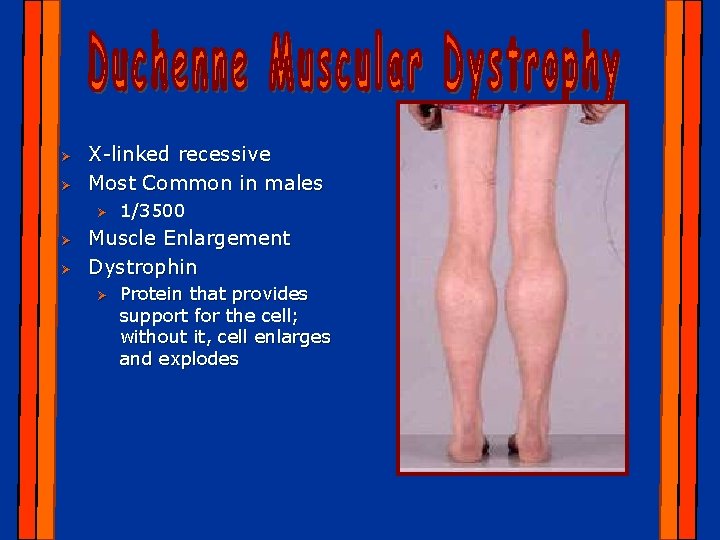
Ø Ø X-linked recessive Most Common in males Ø Ø Ø 1/3500 Muscle Enlargement Dystrophin Ø Protein that provides support for the cell; without it, cell enlarges and explodes
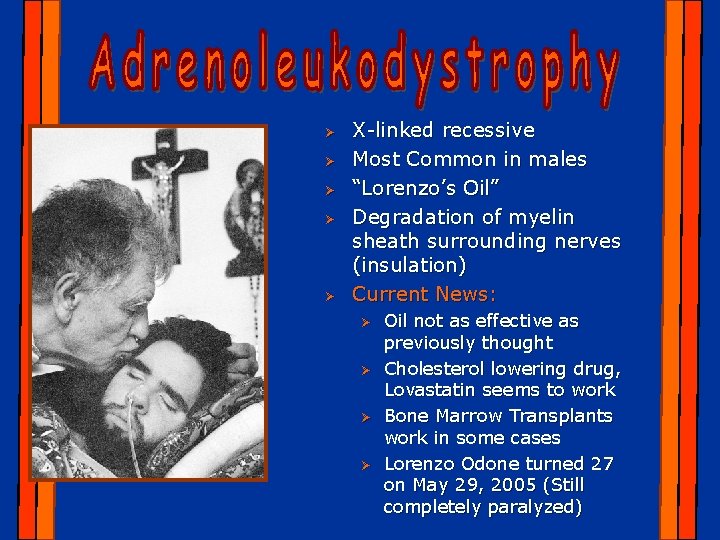
Ø Ø Ø X-linked recessive Most Common in males “Lorenzo’s Oil” Degradation of myelin sheath surrounding nerves (insulation) Current News: Ø Ø Oil not as effective as previously thought Cholesterol lowering drug, Lovastatin seems to work Bone Marrow Transplants work in some cases Lorenzo Odone turned 27 on May 29, 2005 (Still completely paralyzed)
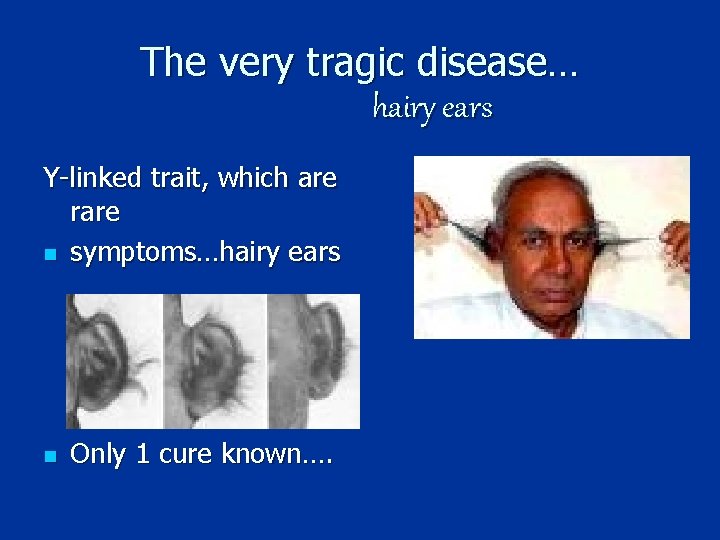
The very tragic disease… hairy ears Y-linked trait, which are rare n symptoms…hairy ears n Only 1 cure known….
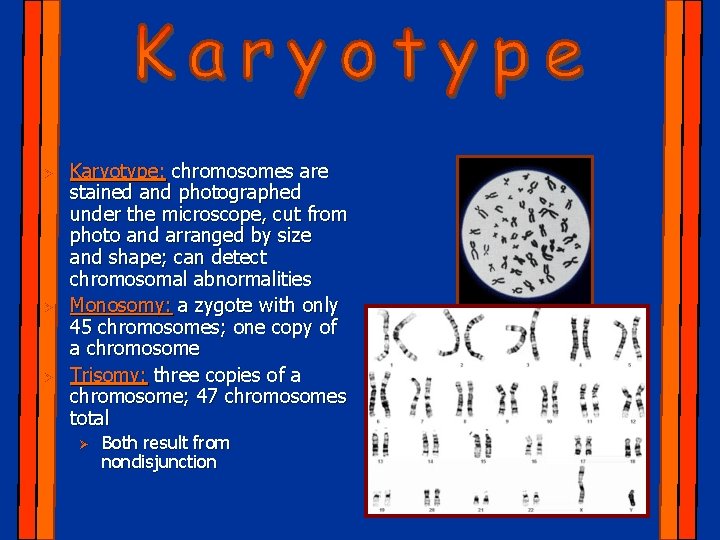
Ø Ø Ø Karyotype: chromosomes are stained and photographed under the microscope, cut from photo and arranged by size and shape; can detect chromosomal abnormalities Monosomy: a zygote with only 45 chromosomes; one copy of a chromosome Trisomy: three copies of a chromosome; 47 chromosomes total Ø Both result from nondisjunction
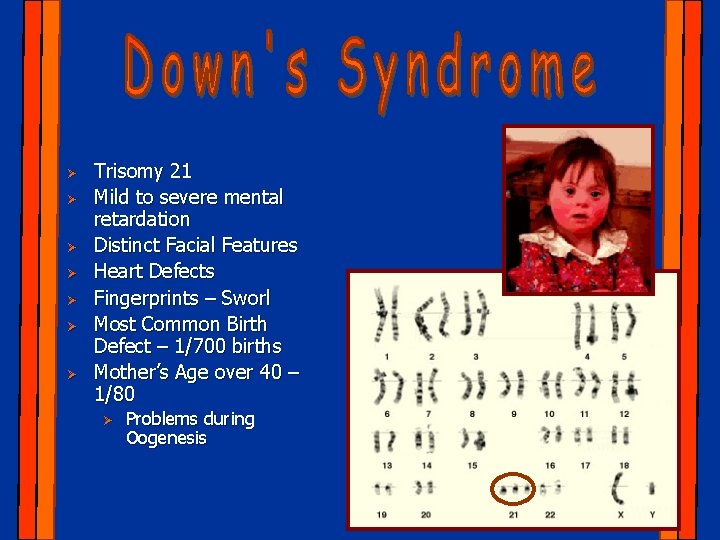
Ø Ø Ø Ø Trisomy 21 Mild to severe mental retardation Distinct Facial Features Heart Defects Fingerprints – Sworl Most Common Birth Defect – 1/700 births Mother’s Age over 40 – 1/80 Ø Problems during Oogenesis
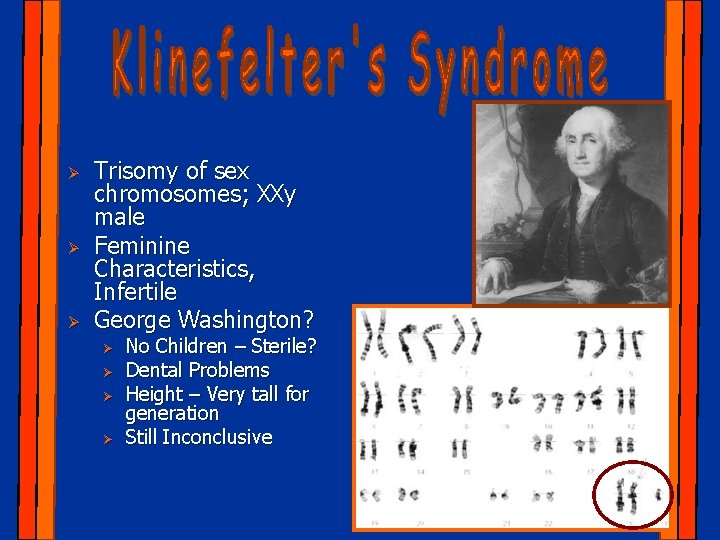
Ø Ø Ø Trisomy of sex chromosomes; XXy male Feminine Characteristics, Infertile George Washington? Ø Ø No Children – Sterile? Dental Problems Height – Very tall for generation Still Inconclusive
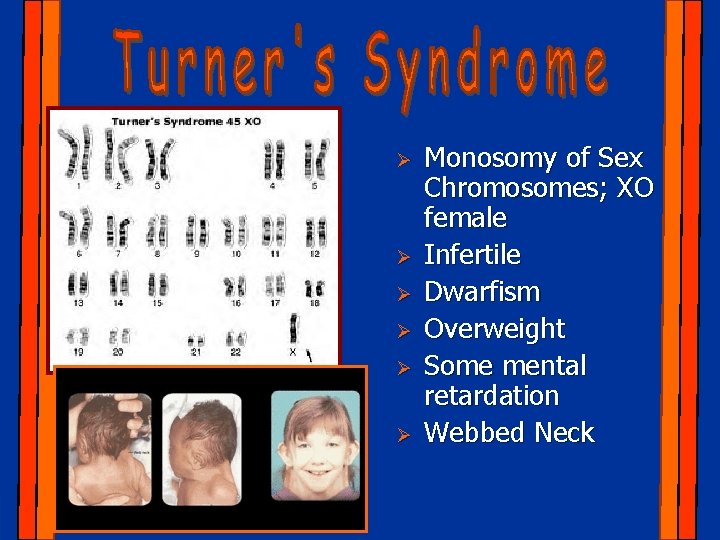
Ø Ø Ø Monosomy of Sex Chromosomes; XO female Infertile Dwarfism Overweight Some mental retardation Webbed Neck
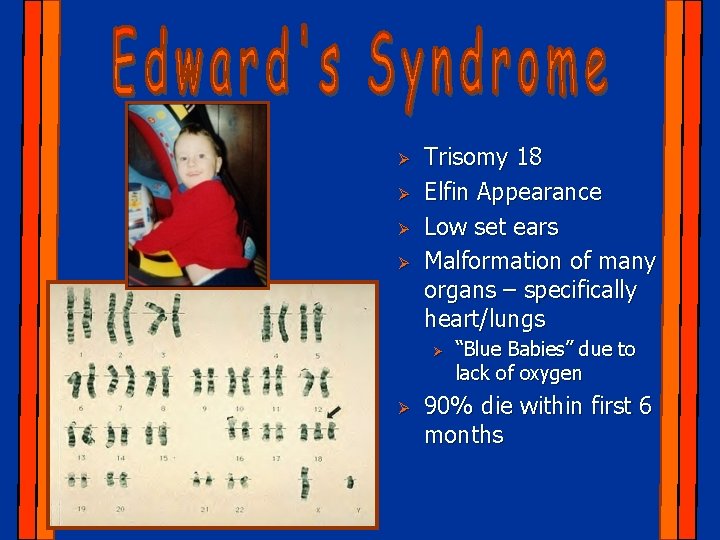
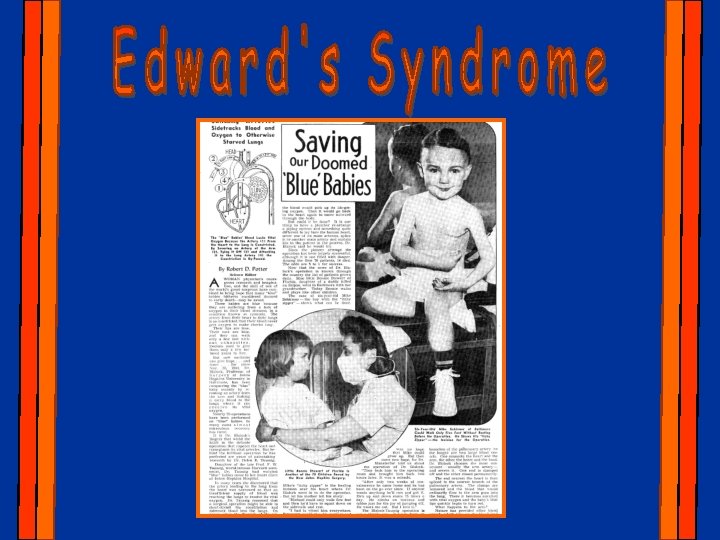
Ø Ø Trisomy 18 Elfin Appearance Low set ears Malformation of many organs – specifically heart/lungs Ø Ø “Blue Babies” due to lack of oxygen 90% die within first 6 months
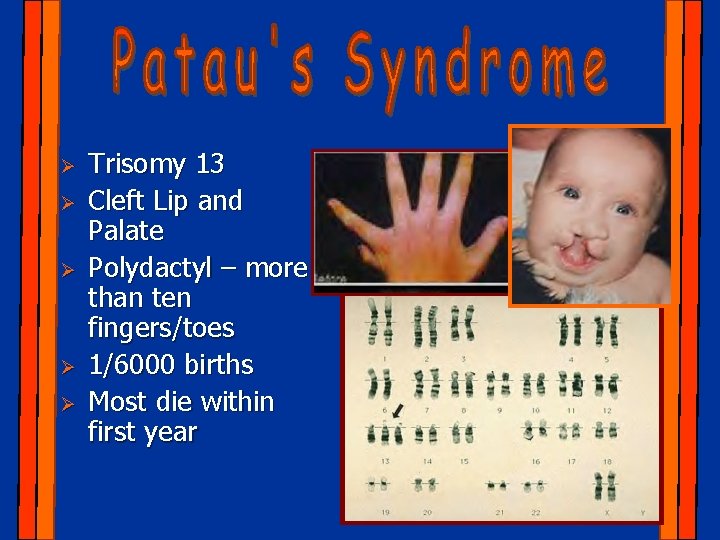
Ø Ø Ø Trisomy 13 Cleft Lip and Palate Polydactyl – more than ten fingers/toes 1/6000 births Most die within first year
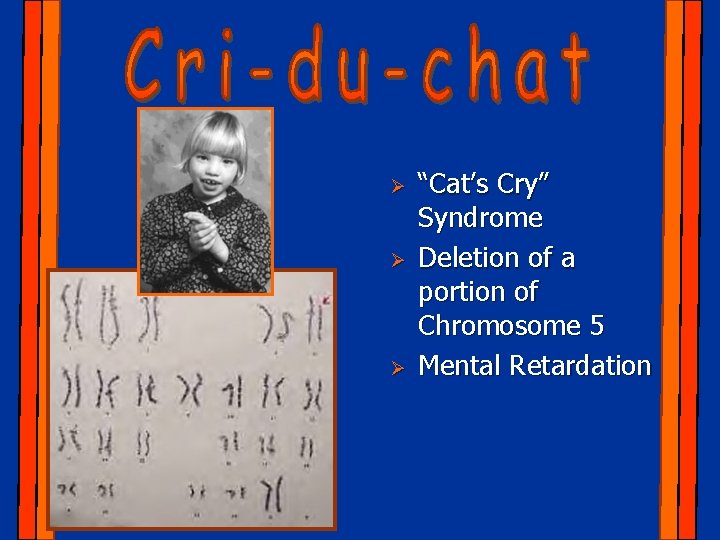
Ø Ø Ø “Cat’s Cry” Syndrome Deletion of a portion of Chromosome 5 Mental Retardation
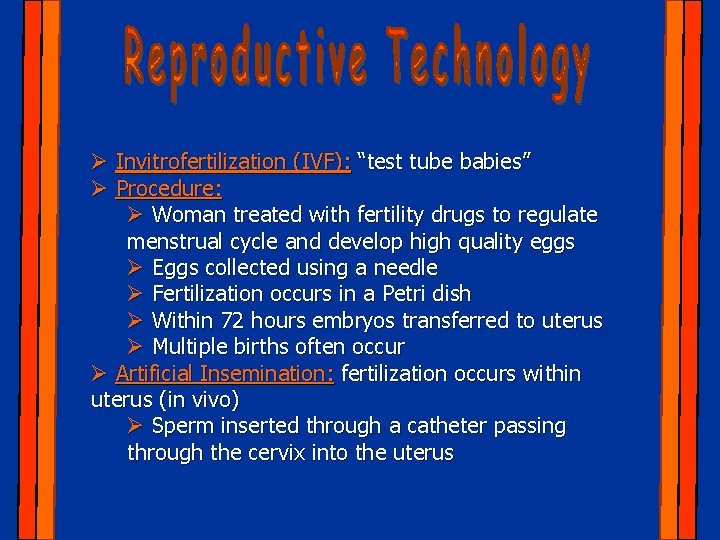
Ø Invitrofertilization (IVF): “test tube babies” Ø Procedure: Ø Woman treated with fertility drugs to regulate menstrual cycle and develop high quality eggs Ø Eggs collected using a needle Ø Fertilization occurs in a Petri dish Ø Within 72 hours embryos transferred to uterus Ø Multiple births often occur Ø Artificial Insemination: fertilization occurs within uterus (in vivo) Ø Sperm inserted through a catheter passing through the cervix into the uterus
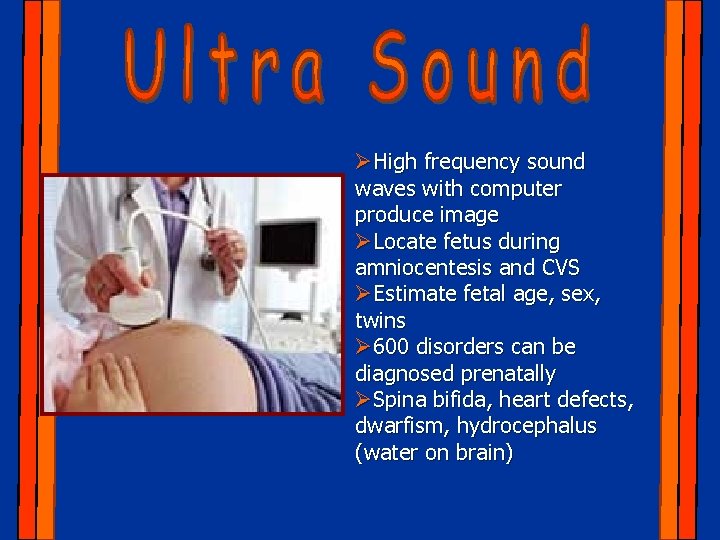
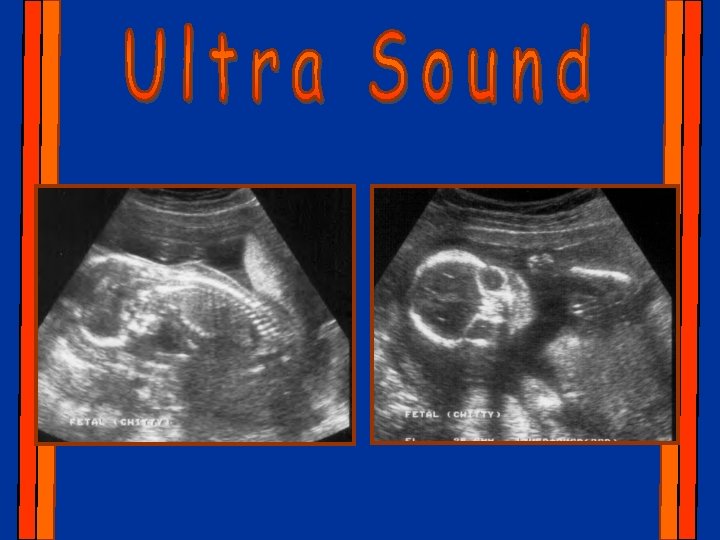
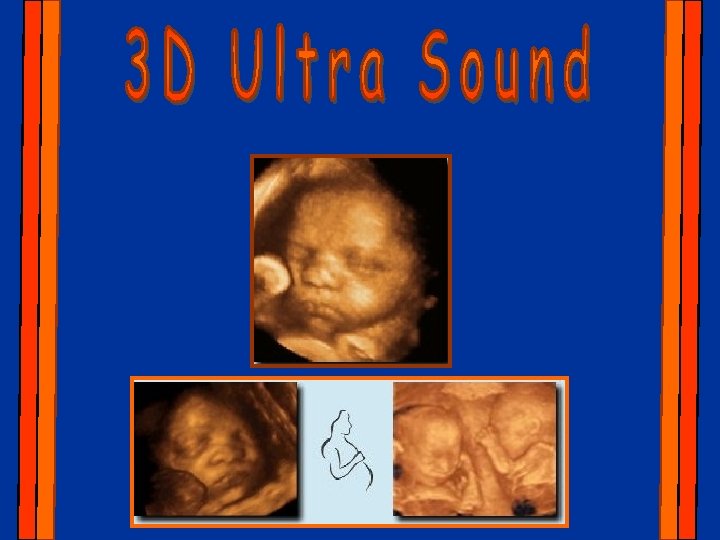
ØHigh frequency sound waves with computer produce image ØLocate fetus during amniocentesis and CVS ØEstimate fetal age, sex, twins Ø 600 disorders can be diagnosed prenatally ØSpina bifida, heart defects, dwarfism, hydrocephalus (water on brain)
Ø Fetal Cells obtained from either amniocentesis or chorionic villi sampling (CVS) Ø Cultured and a karyotype created to diagnose genetic disorders Ø Alphafetoproteins (AFP) levels indicated in sample; different levels signal defects Ø Low AFP levels Ø Down’s Syndrome Ø High AFP levels ØSpina Bifida: spinal cord not contained within spinal column ØTwins
Ø Genetic Screening: a person with family history for genetic disorders are screened before deciding to have children Ø Karyotype of individual created to check for any chromosomal abnormalities Ø Genetic Counseling: couples at risk for having children with genetic disorder seek medical guidance to determine their chances of having a child with a disorder Ø Punnett Squares
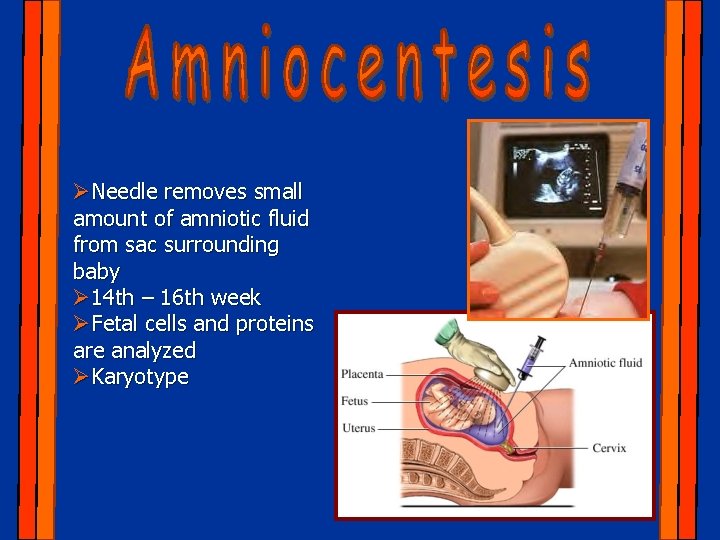
ØNeedle removes small amount of amniotic fluid from sac surrounding baby Ø 14 th – 16 th week ØFetal cells and proteins are analyzed ØKaryotype
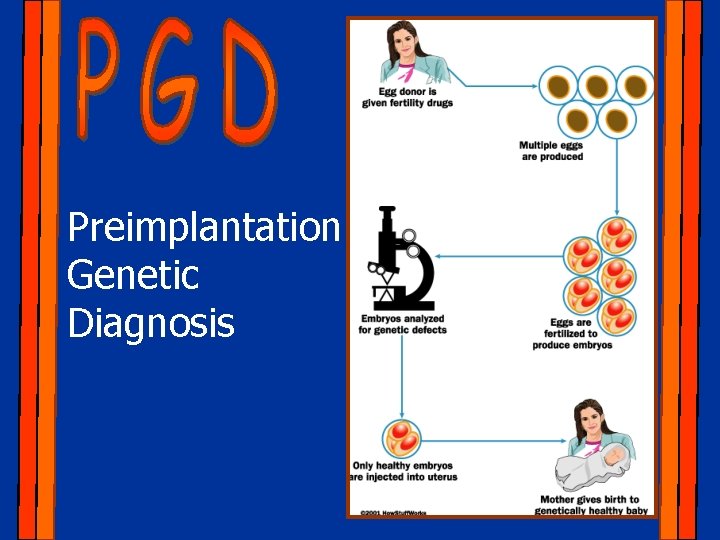
Preimplantation Genetic Diagnosis
- Slides: 35