
CHAPTER 14 History of Life 14 1 BIOGENESIS

CHAPTER 14 History of Life
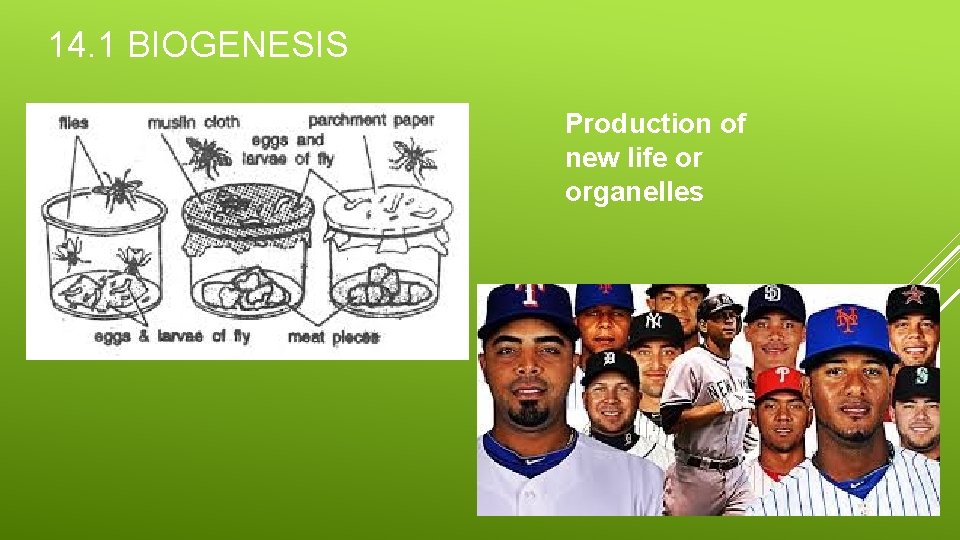
14. 1 BIOGENESIS Production of new life or organelles
LEARNING OBJECTIVES I WILL BE ABLE TO: Compare the principle of biogenesis with the idea of spontaneous generation Summarize the results of experiments by Redi and by Spallanzani that tested the hypothesis of spontaneous generation Describe how Pasteur’s experiment disproved the hypothesis of spontaneous generation

HOW DOES LIFE ARISE?
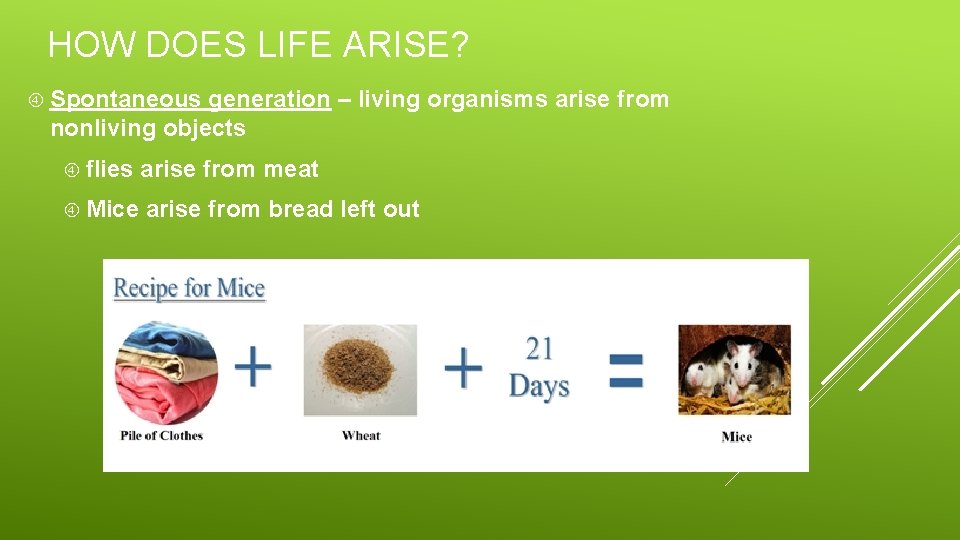
HOW DOES LIFE ARISE? Spontaneous generation – living organisms arise from nonliving objects flies arise from meat Mice arise from bread left out
FRANCISCO REDI Designed experiment to examine spontaneous generation Hypothesis: if meat is kept away from flies, no maggots will appear 2 groups of jars with meat in them 1 with gauze on top so only air could get in (experimental group) 1 uncovered jar (control group) Control group? Experimental group?
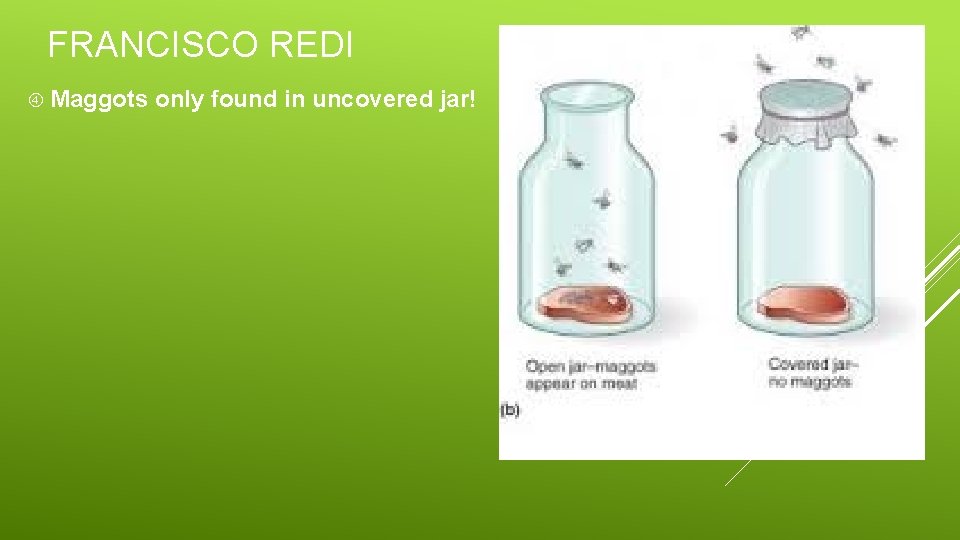
FRANCISCO REDI Maggots only found in uncovered jar!
LAZZARO SPALLANZANI Designed experiment to see if life would arise in boiled broth Hypothesis: life comes from other life, not from air 2 bottles with boiled broth in them 1 left open immediately after boiling (control group) 1 sealed immediately after boiling (experimental group) Control group? Experimental group?
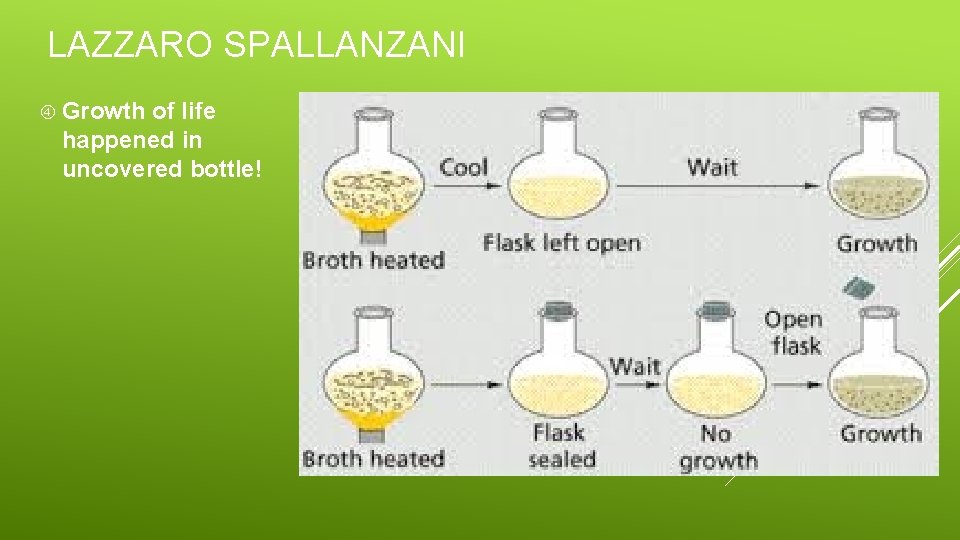
LAZZARO SPALLANZANI Growth of life happened in uncovered bottle!
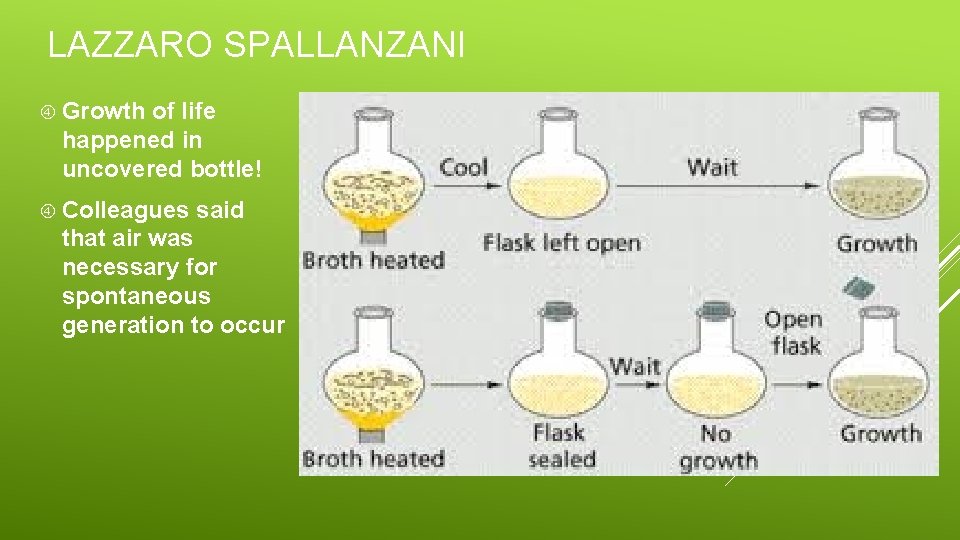
LAZZARO SPALLANZANI Growth of life happened in uncovered bottle! Colleagues said that air was necessary for spontaneous generation to occur
LOUIS PASTEUR Wanted to show that addition of air would NOT result in spontaneous generation
LOUIS PASTEUR Hypothesis: spontaneous generation will not occur with or without air 2 flasks with curved necks with boiled broth in them Broke the neck off of one flask after boiling
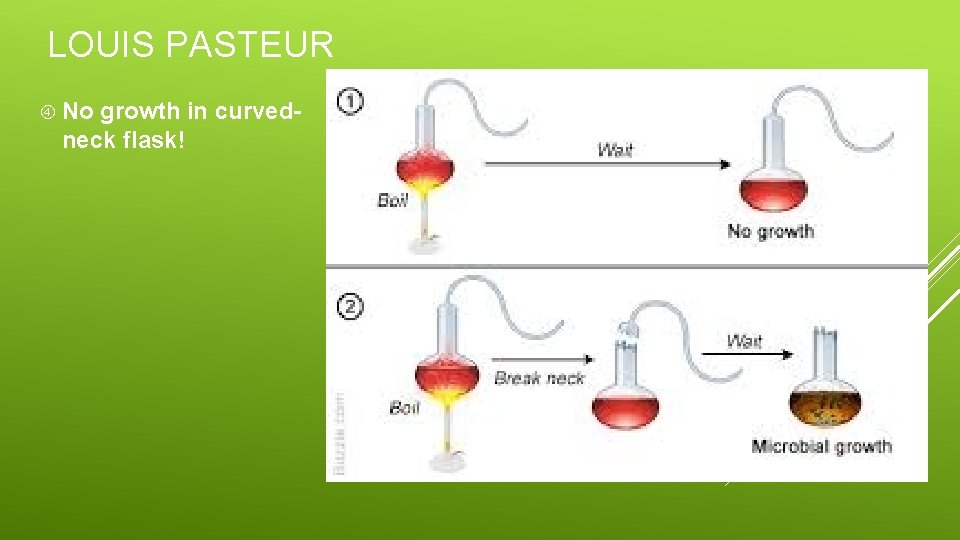
LOUIS PASTEUR No growth in curvedneck flask!
14. 2 EARTH’S HISTORY
LEARNING OBJECTIVES I WILL BE ABLE TO: Describe the age of the Earth Summarize the concept of half-life Describe the production of organic compounds in the Miller. Urey apparatus Summarize the possible importance of cell-like structures produced in the laboratory

AGE OF THE EARTH http: //channel. nationalgeographic. com/videos/oldest-rocks- ever-discovered/
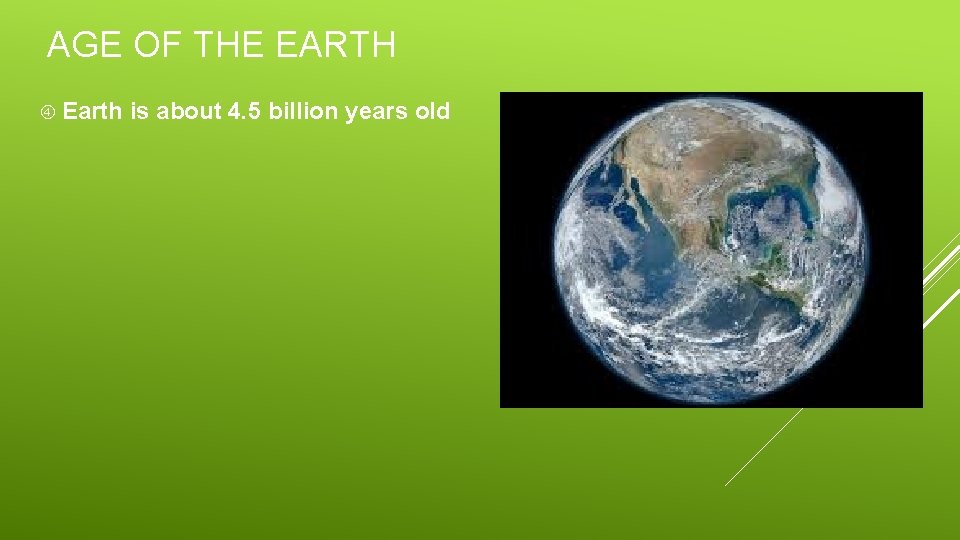
AGE OF THE EARTH Earth is about 4. 5 billion years old
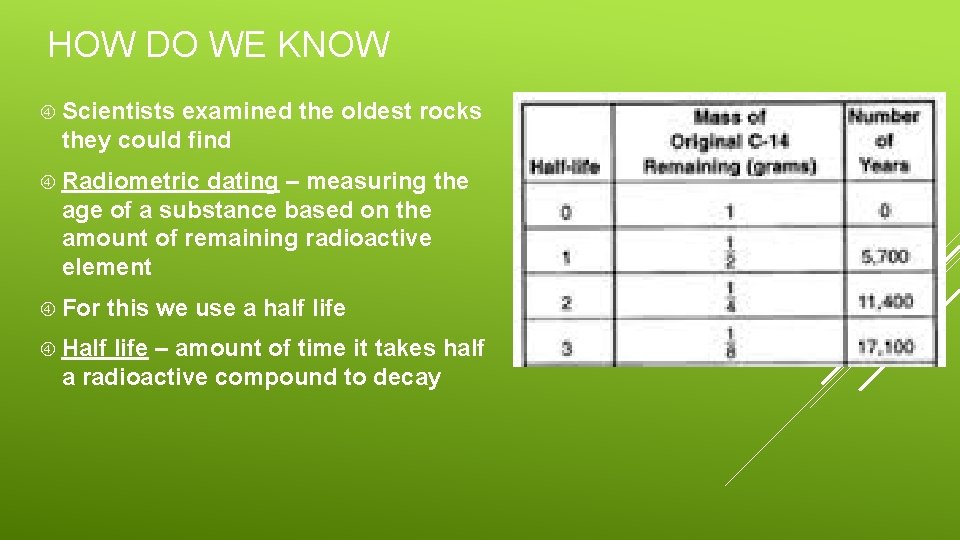
HOW DO WE KNOW Scientists examined the oldest rocks they could find Radiometric dating – measuring the age of a substance based on the amount of remaining radioactive element For this we use a half life Half life – amount of time it takes half a radioactive compound to decay
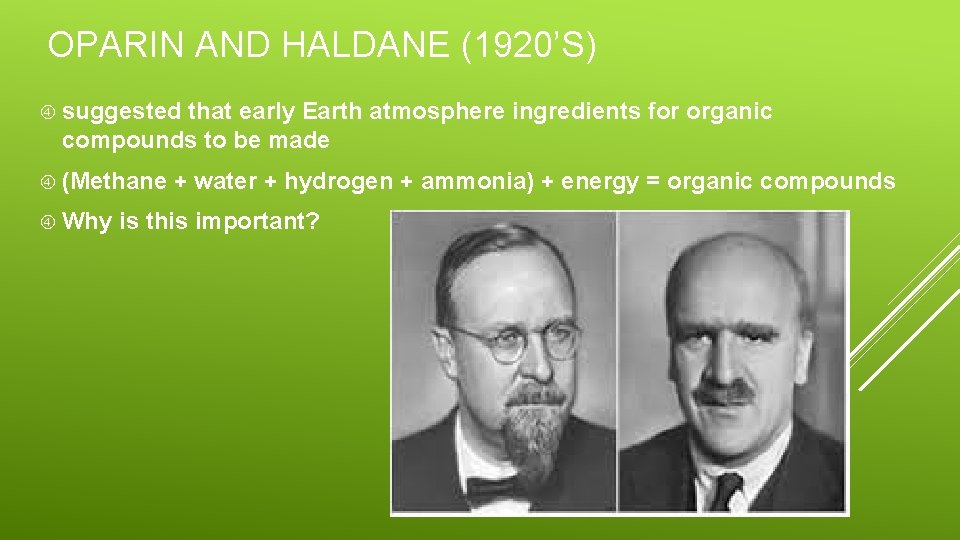
OPARIN AND HALDANE (1920’S) suggested that early Earth atmosphere ingredients for organic compounds to be made (Methane Why + water + hydrogen + ammonia) + energy = organic compounds is this important?
OPARIN AND HALDANE (1920’S) suggested that early Earth atmosphere ingredients for organic compounds to be made (Methane Why + water + hydrogen + ammonia) + energy = organic compounds is this important?
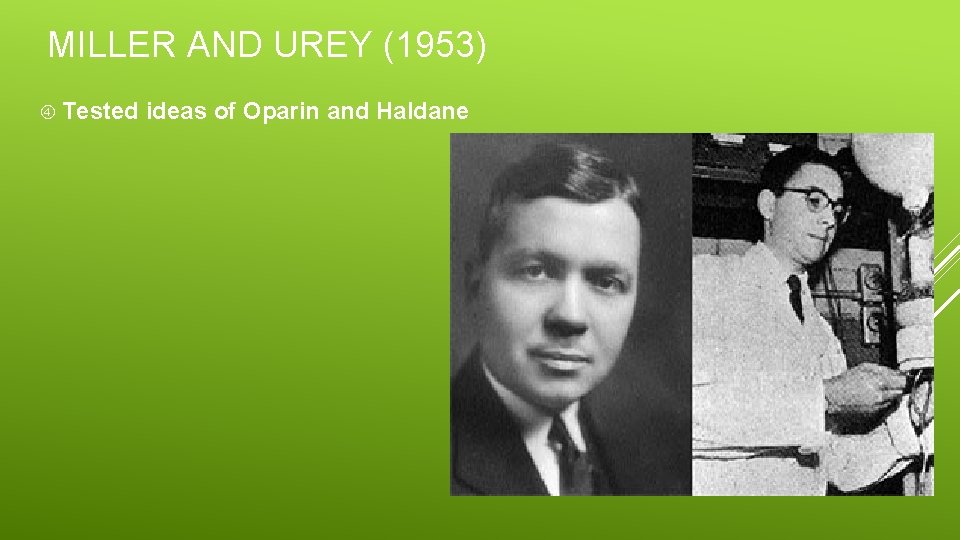
MILLER AND UREY (1953) Tested ideas of Oparin and Haldane
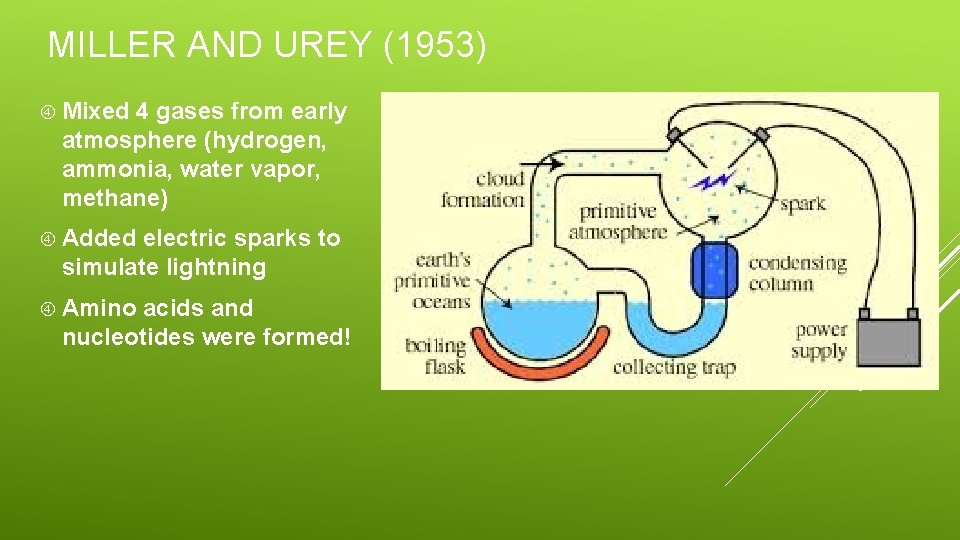
MILLER AND UREY (1953) Mixed 4 gases from early atmosphere (hydrogen, ammonia, water vapor, methane) Added electric sparks to simulate lightning Amino acids and nucleotides were formed!
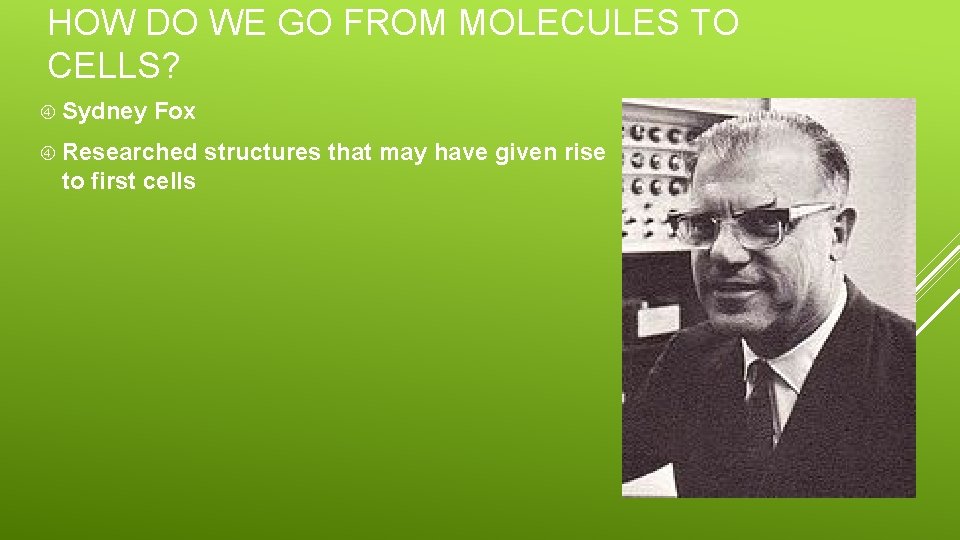
HOW DO WE GO FROM MOLECULES TO CELLS? Sydney Fox Researched to first cells structures that may have given rise
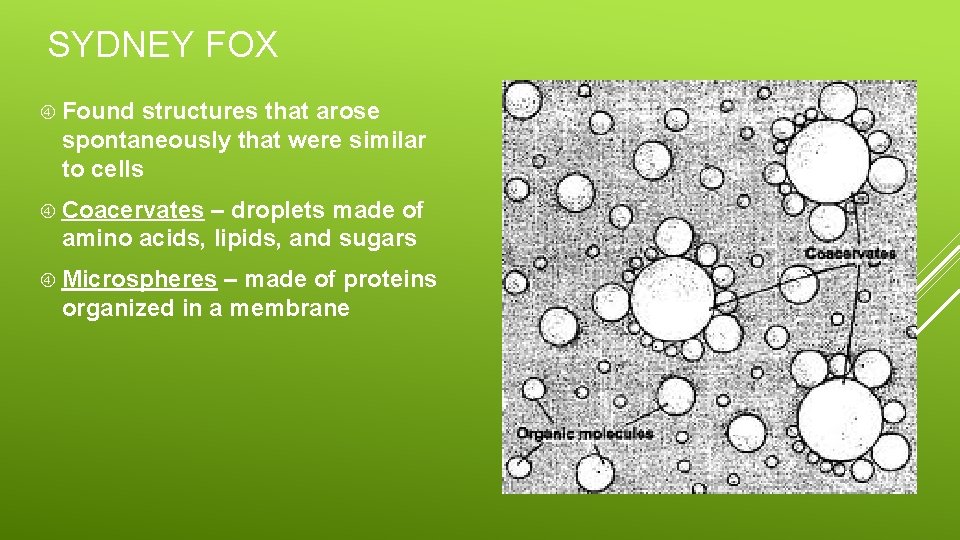
SYDNEY FOX Found structures that arose spontaneously that were similar to cells Coacervates – droplets made of amino acids, lipids, and sugars Microspheres – made of proteins organized in a membrane

LEARNING OBJECTIVES Emperor Wattle tamarin cup caterpillar
- Slides: 27