
Chapter 14 Design and Analysis of Experiments 8
- Slides: 41
Chapter 14 Design and Analysis of Experiments 8 E 2012 Montgomery 1
Design of Engineering Experiments – Nested and Split-Plot Designs • Text reference, Chapter 14 • These are multifactor experiments that have some important industrial applications • Nested and split-plot designs frequently involve one or more random factors, so the methodology of Chapter 13 (expected mean squares, variance components) is important • There are many variations of these designs – we consider only some basic situations Chapter 14 Design and Analysis of Experiments 8 E 2012 Montgomery 2
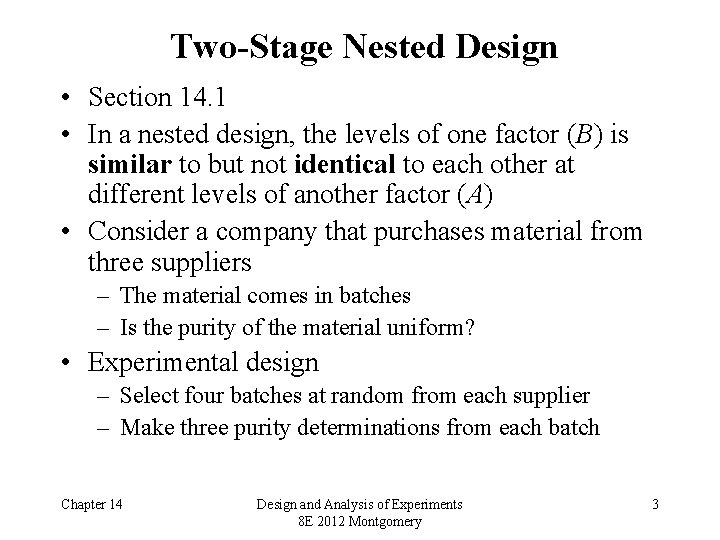
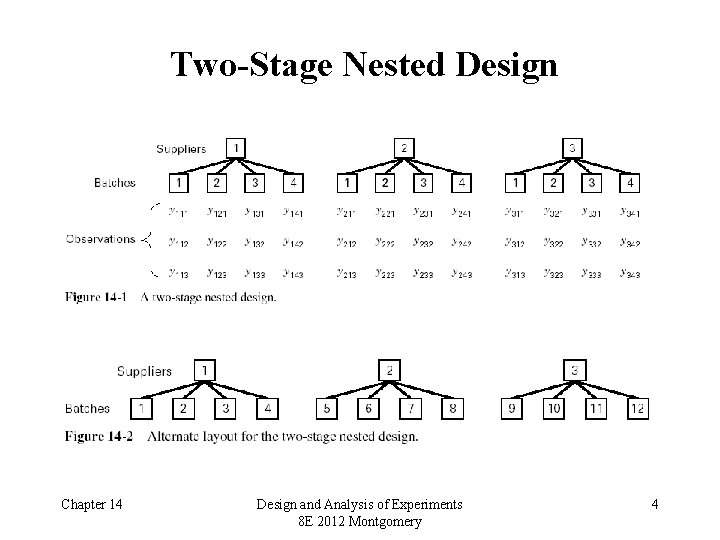
Two-Stage Nested Design • Section 14. 1 • In a nested design, the levels of one factor (B) is similar to but not identical to each other at different levels of another factor (A) • Consider a company that purchases material from three suppliers – The material comes in batches – Is the purity of the material uniform? • Experimental design – Select four batches at random from each supplier – Make three purity determinations from each batch Chapter 14 Design and Analysis of Experiments 8 E 2012 Montgomery 3
Two-Stage Nested Design Chapter 14 Design and Analysis of Experiments 8 E 2012 Montgomery 4
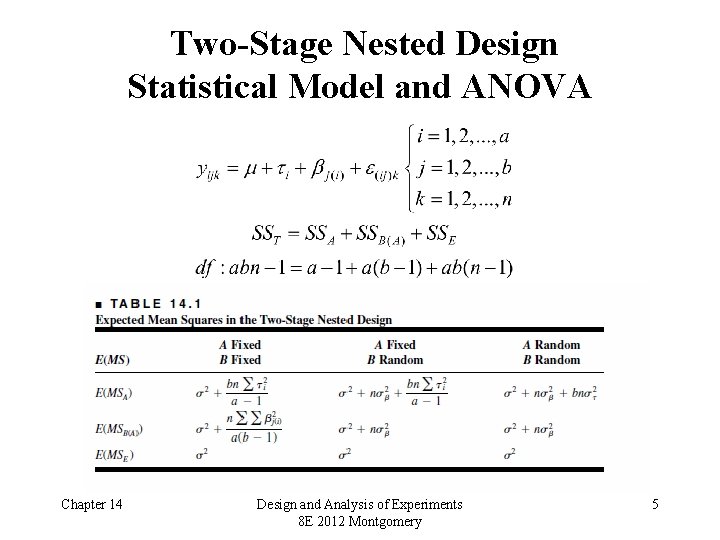
Two-Stage Nested Design Statistical Model and ANOVA Chapter 14 Design and Analysis of Experiments 8 E 2012 Montgomery 5
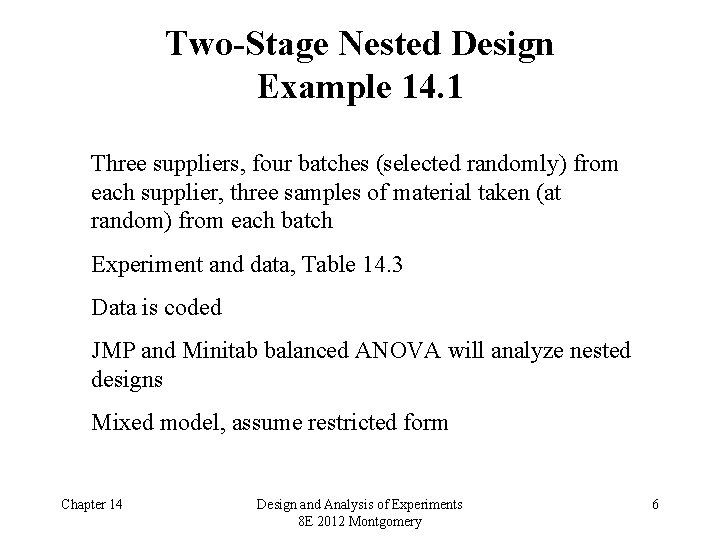
Two-Stage Nested Design Example 14. 1 Three suppliers, four batches (selected randomly) from each supplier, three samples of material taken (at random) from each batch Experiment and data, Table 14. 3 Data is coded JMP and Minitab balanced ANOVA will analyze nested designs Mixed model, assume restricted form Chapter 14 Design and Analysis of Experiments 8 E 2012 Montgomery 6
Chapter 14 Design and Analysis of Experiments 8 E 2012 Montgomery 7
Chapter 14 Design and Analysis of Experiments 8 E 2012 Montgomery 8
Chapter 14 Design and Analysis of Experiments 8 E 2012 Montgomery 9
Minitab Analysis Chapter 14 Design and Analysis of Experiments 8 E 2012 Montgomery 10
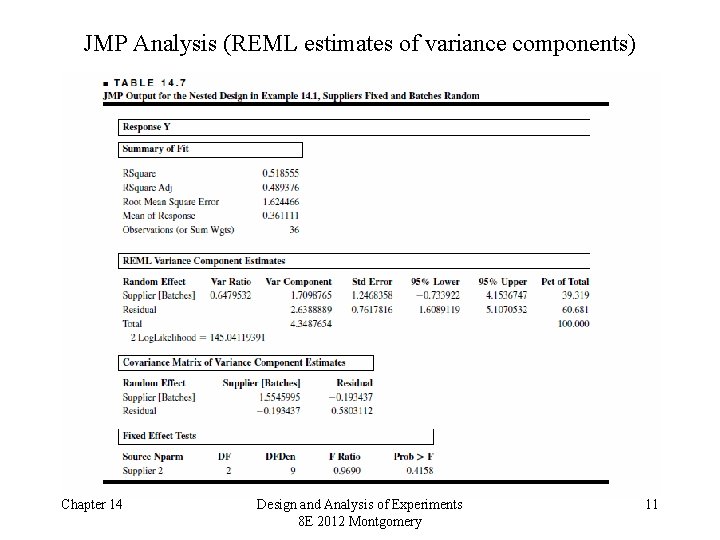
JMP Analysis (REML estimates of variance components) Chapter 14 Design and Analysis of Experiments 8 E 2012 Montgomery 11
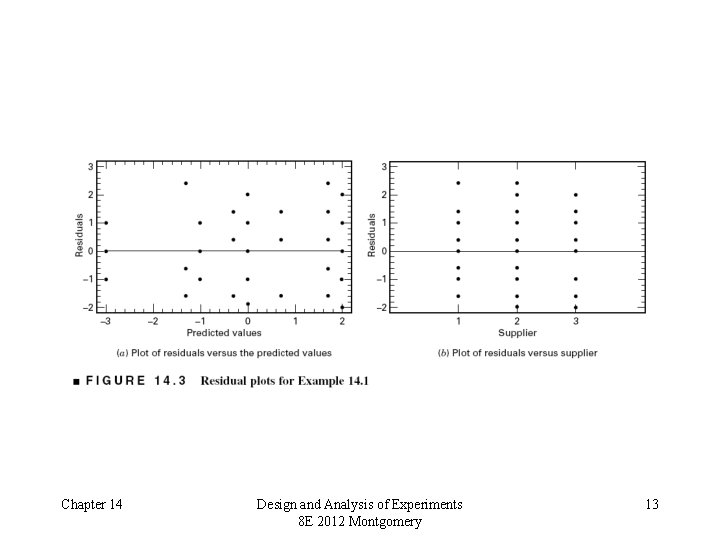
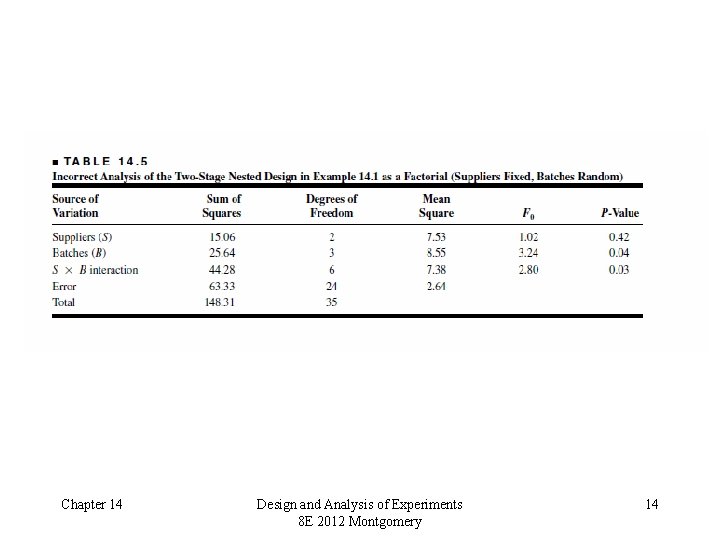
Practical Interpretation – Example 14. 1 • There is no difference in purity among suppliers, but significant difference in purity among batches (within suppliers) • What are the practical implications of this conclusion? • Examine residual plots – plot of residuals versus supplier is very important (why? ) • What if we had incorrectly analyzed this experiment as a factorial? (see Table 14. 5) • Estimation of variance components (ANOVA method) Chapter 14 Design and Analysis of Experiments 8 E 2012 Montgomery 12
Chapter 14 Design and Analysis of Experiments 8 E 2012 Montgomery 13
Chapter 14 Design and Analysis of Experiments 8 E 2012 Montgomery 14
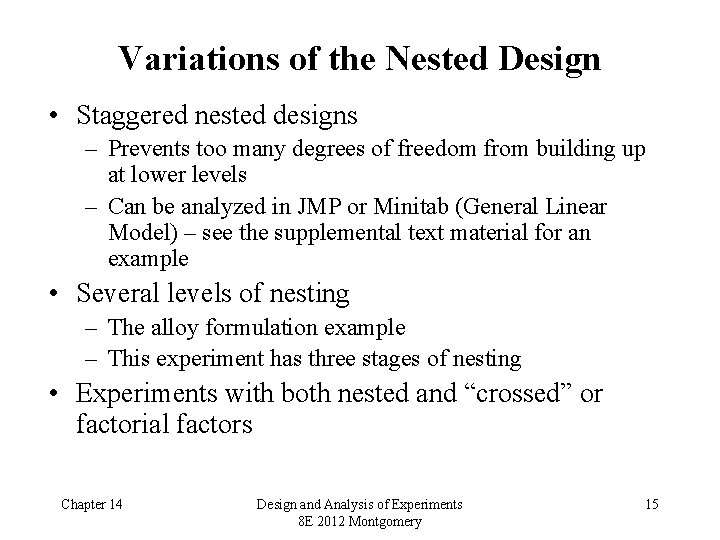
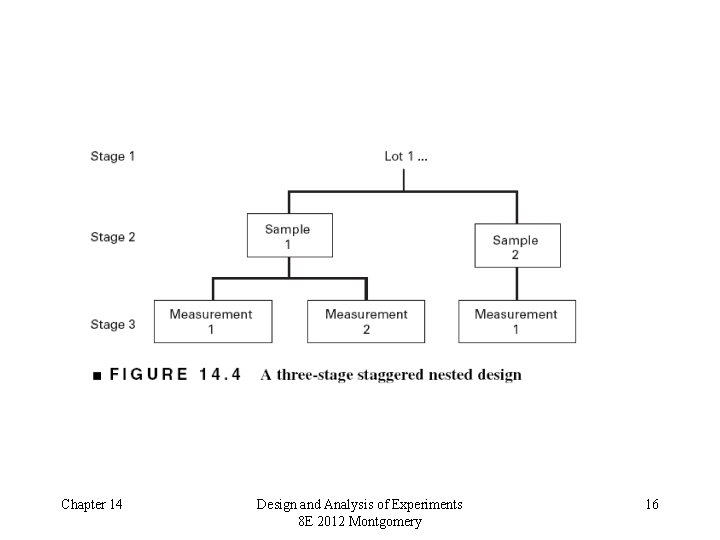
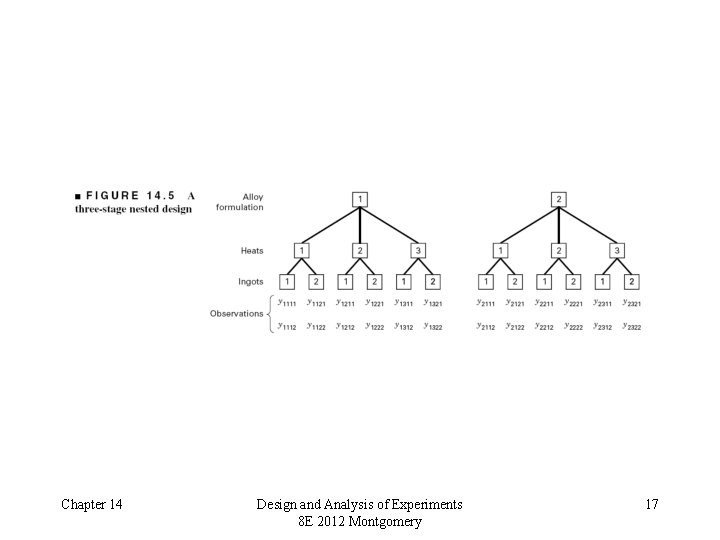
Variations of the Nested Design • Staggered nested designs – Prevents too many degrees of freedom from building up at lower levels – Can be analyzed in JMP or Minitab (General Linear Model) – see the supplemental text material for an example • Several levels of nesting – The alloy formulation example – This experiment has three stages of nesting • Experiments with both nested and “crossed” or factorial factors Chapter 14 Design and Analysis of Experiments 8 E 2012 Montgomery 15
Chapter 14 Design and Analysis of Experiments 8 E 2012 Montgomery 16
Chapter 14 Design and Analysis of Experiments 8 E 2012 Montgomery 17
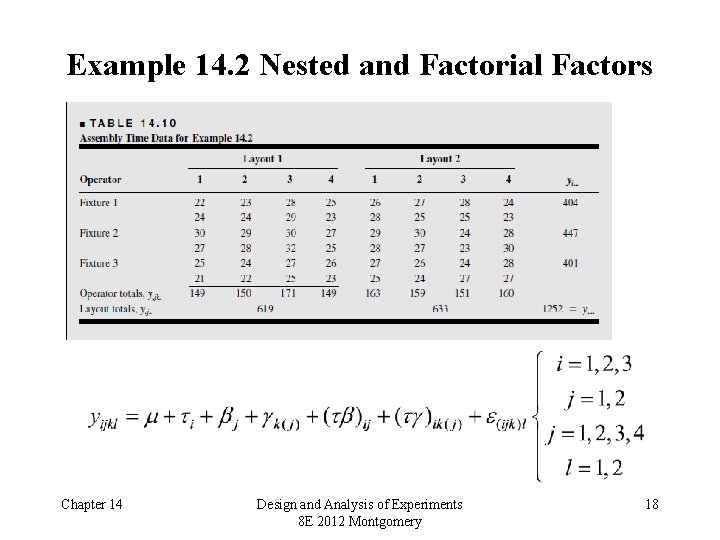
Example 14. 2 Nested and Factorial Factors Chapter 14 Design and Analysis of Experiments 8 E 2012 Montgomery 18
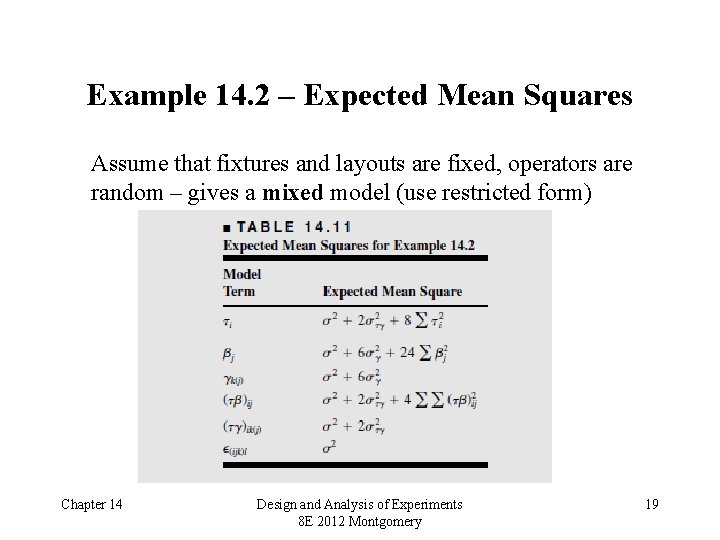
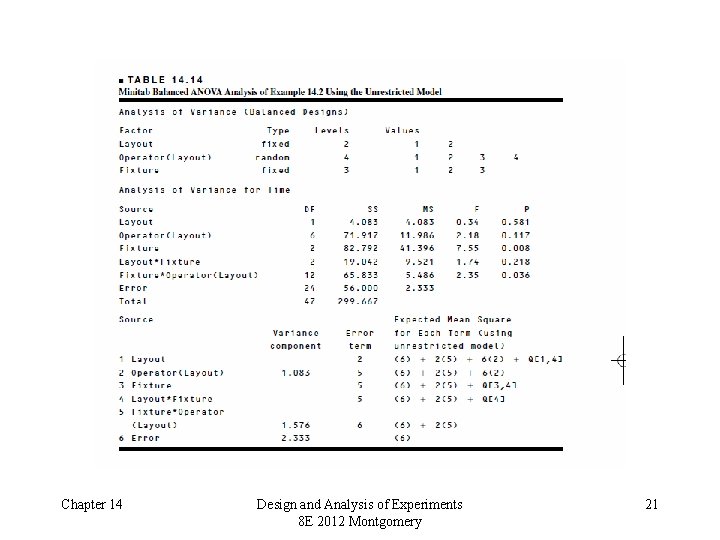
Example 14. 2 – Expected Mean Squares Assume that fixtures and layouts are fixed, operators are random – gives a mixed model (use restricted form) Chapter 14 Design and Analysis of Experiments 8 E 2012 Montgomery 19
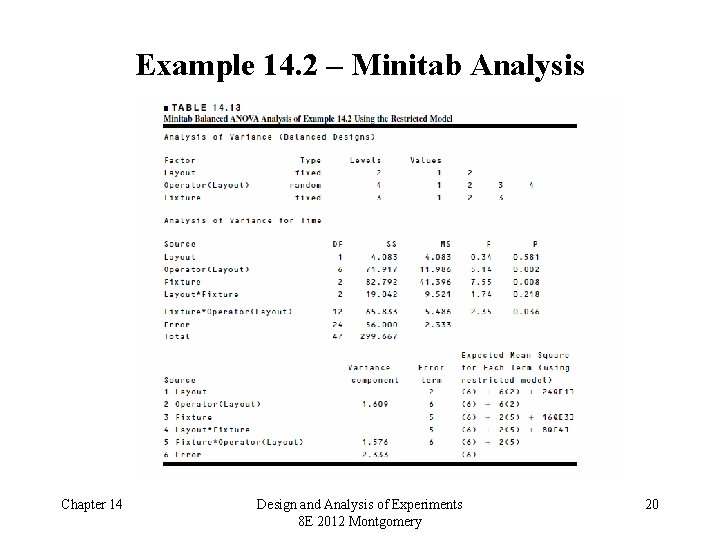
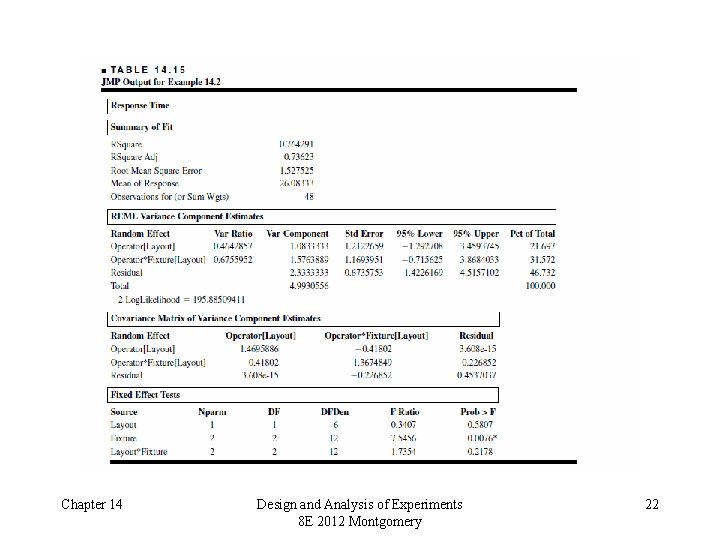
Example 14. 2 – Minitab Analysis Chapter 14 Design and Analysis of Experiments 8 E 2012 Montgomery 20
Chapter 14 Design and Analysis of Experiments 8 E 2012 Montgomery 21
Chapter 14 Design and Analysis of Experiments 8 E 2012 Montgomery 22
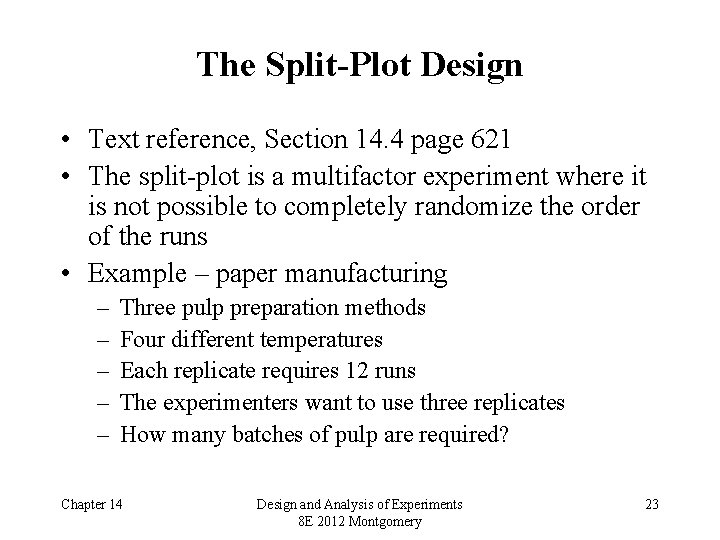
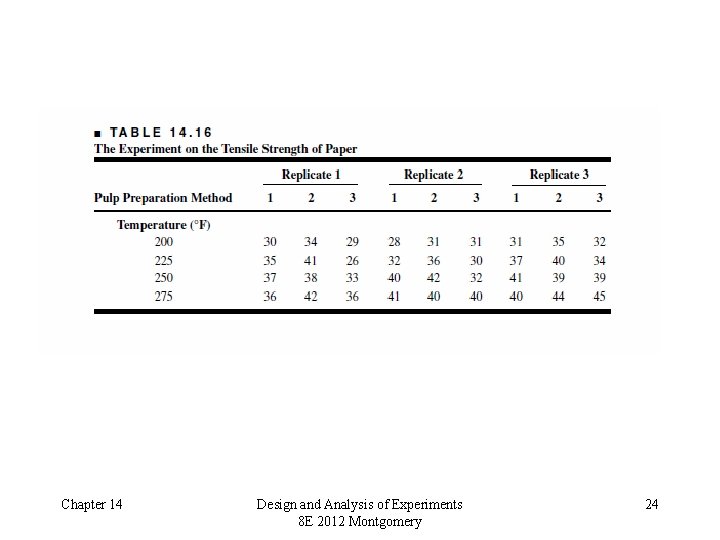
The Split-Plot Design • Text reference, Section 14. 4 page 621 • The split-plot is a multifactor experiment where it is not possible to completely randomize the order of the runs • Example – paper manufacturing – – – Three pulp preparation methods Four different temperatures Each replicate requires 12 runs The experimenters want to use three replicates How many batches of pulp are required? Chapter 14 Design and Analysis of Experiments 8 E 2012 Montgomery 23
Chapter 14 Design and Analysis of Experiments 8 E 2012 Montgomery 24
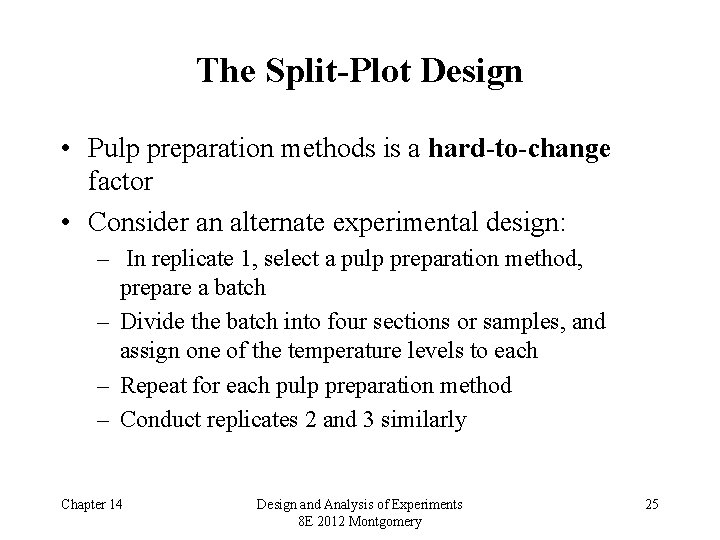
The Split-Plot Design • Pulp preparation methods is a hard-to-change factor • Consider an alternate experimental design: – In replicate 1, select a pulp preparation method, prepare a batch – Divide the batch into four sections or samples, and assign one of the temperature levels to each – Repeat for each pulp preparation method – Conduct replicates 2 and 3 similarly Chapter 14 Design and Analysis of Experiments 8 E 2012 Montgomery 25
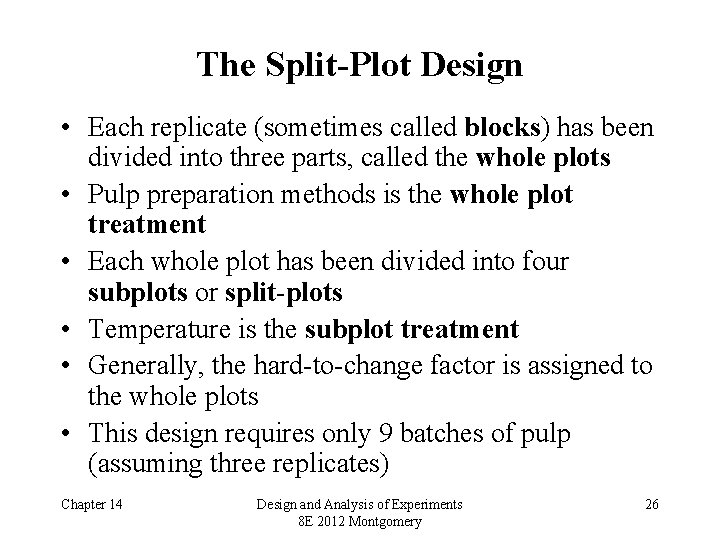
The Split-Plot Design • Each replicate (sometimes called blocks) has been divided into three parts, called the whole plots • Pulp preparation methods is the whole plot treatment • Each whole plot has been divided into four subplots or split-plots • Temperature is the subplot treatment • Generally, the hard-to-change factor is assigned to the whole plots • This design requires only 9 batches of pulp (assuming three replicates) Chapter 14 Design and Analysis of Experiments 8 E 2012 Montgomery 26
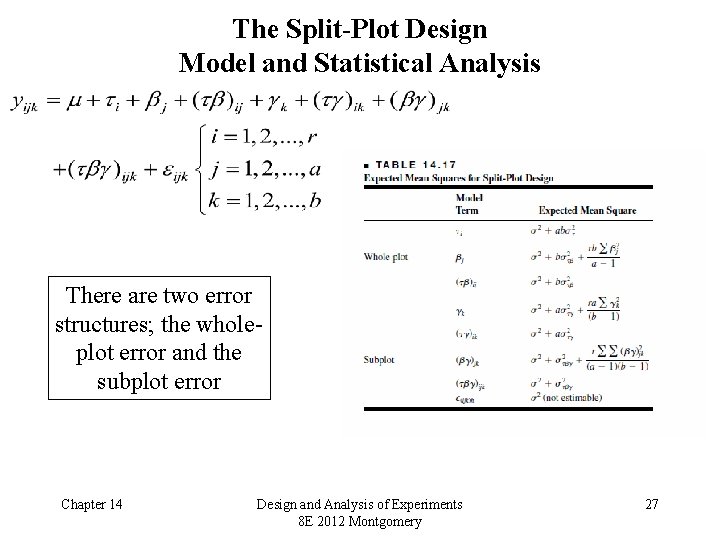
The Split-Plot Design Model and Statistical Analysis There are two error structures; the wholeplot error and the subplot error Chapter 14 Design and Analysis of Experiments 8 E 2012 Montgomery 27
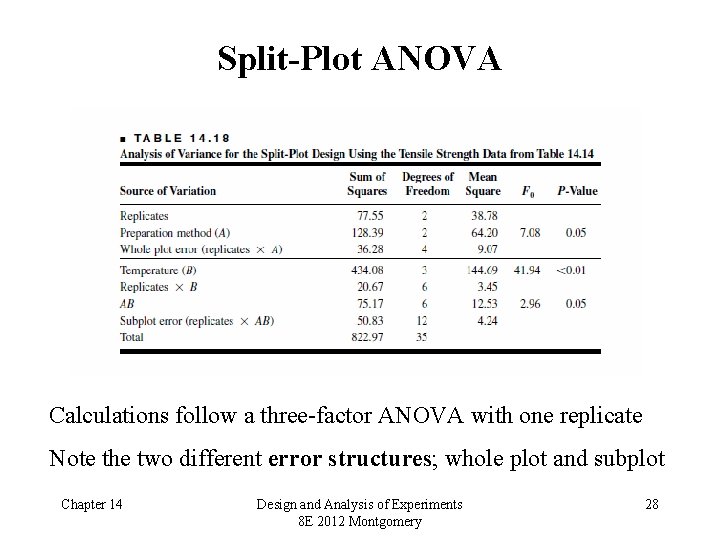
Split-Plot ANOVA Calculations follow a three-factor ANOVA with one replicate Note the two different error structures; whole plot and subplot Chapter 14 Design and Analysis of Experiments 8 E 2012 Montgomery 28
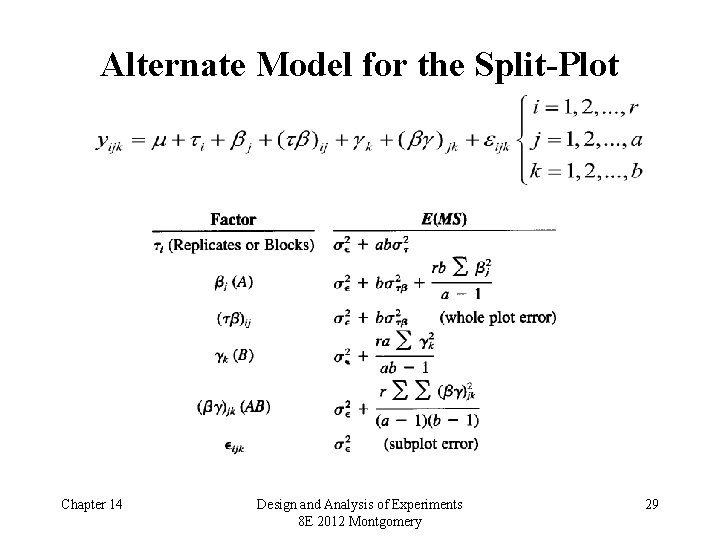
Alternate Model for the Split-Plot Chapter 14 Design and Analysis of Experiments 8 E 2012 Montgomery 29
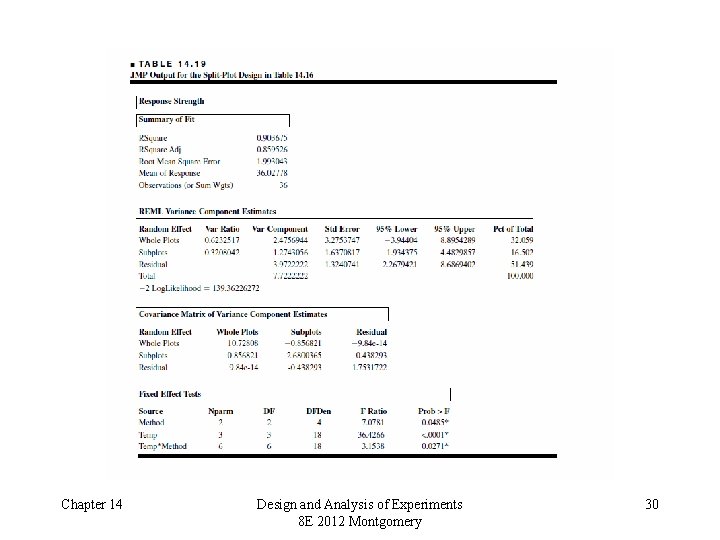
Chapter 14 Design and Analysis of Experiments 8 E 2012 Montgomery 30
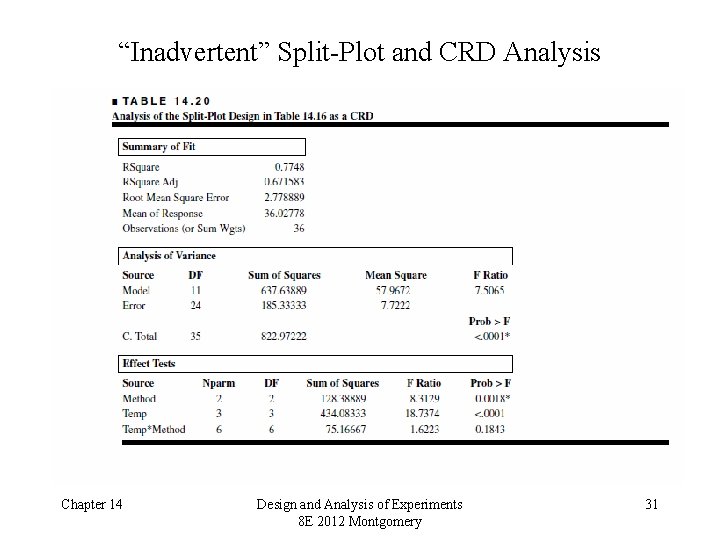
“Inadvertent” Split-Plot and CRD Analysis Chapter 14 Design and Analysis of Experiments 8 E 2012 Montgomery 31
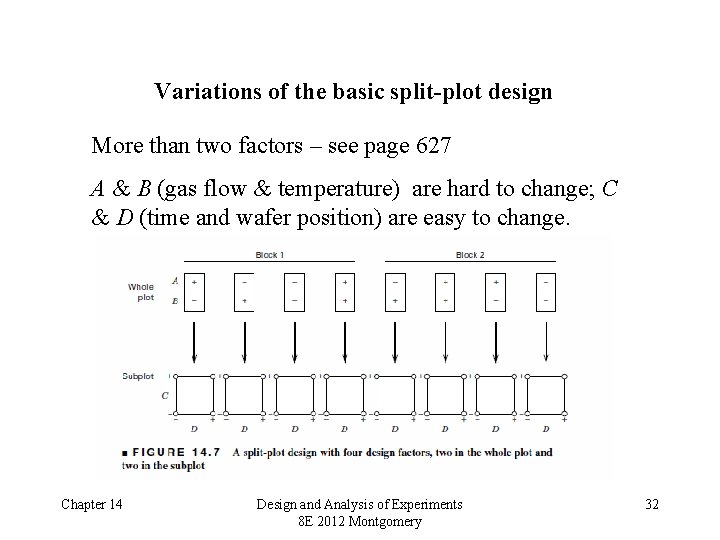
Variations of the basic split-plot design More than two factors – see page 627 A & B (gas flow & temperature) are hard to change; C & D (time and wafer position) are easy to change. Chapter 14 Design and Analysis of Experiments 8 E 2012 Montgomery 32
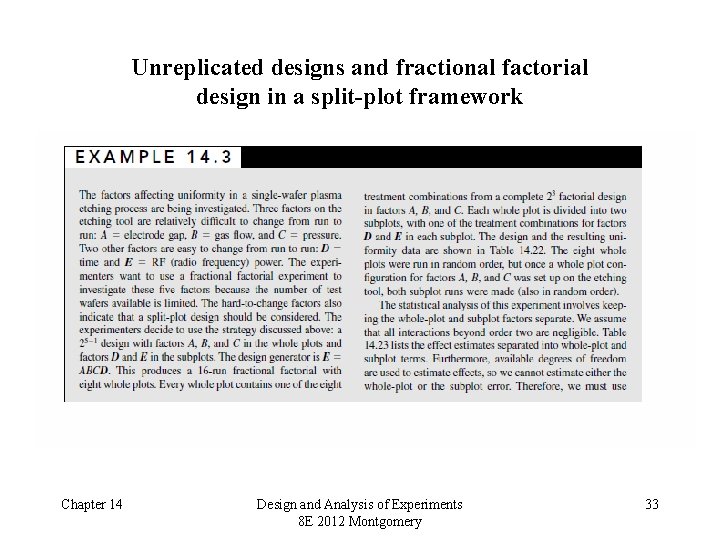
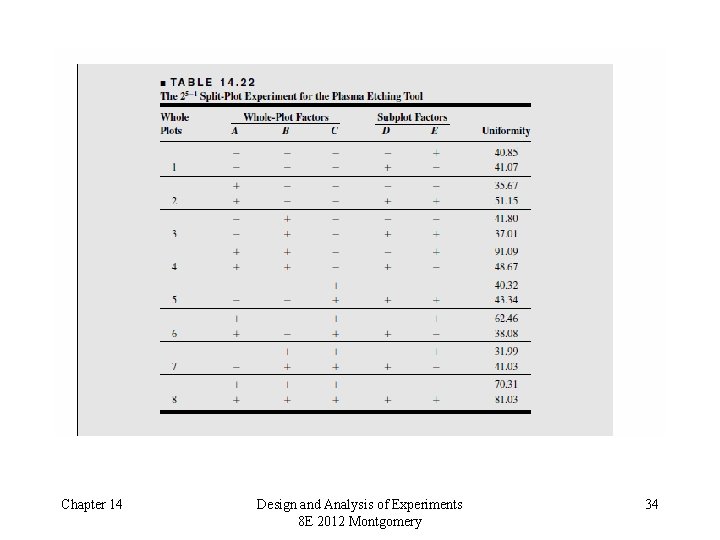
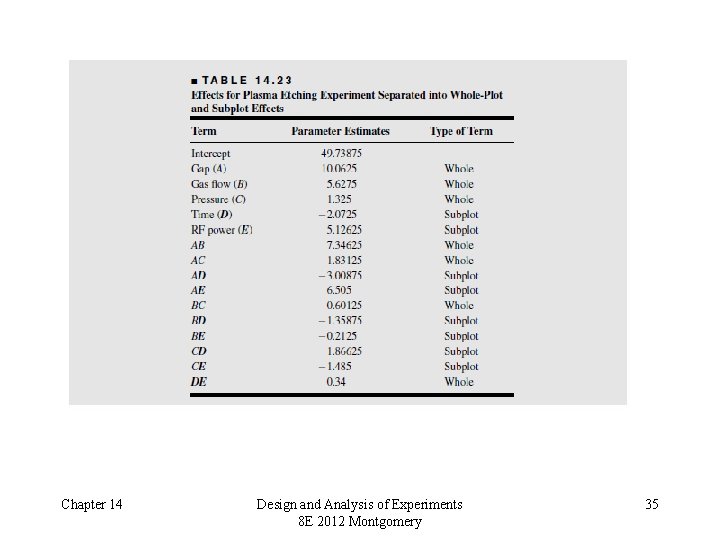
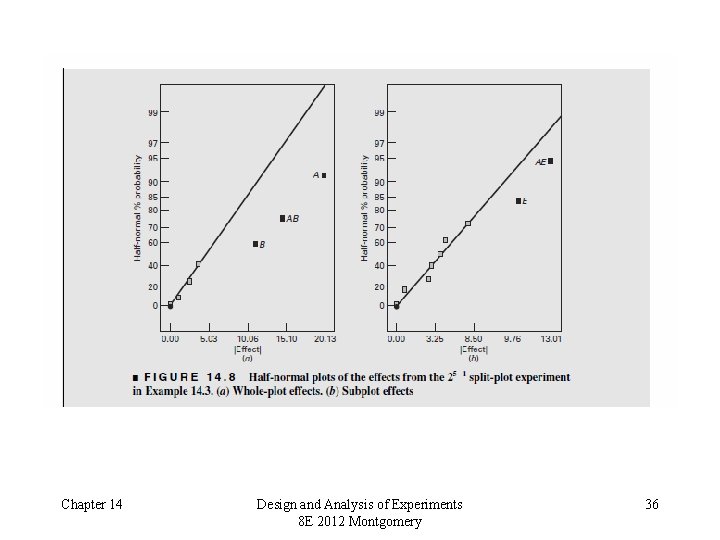
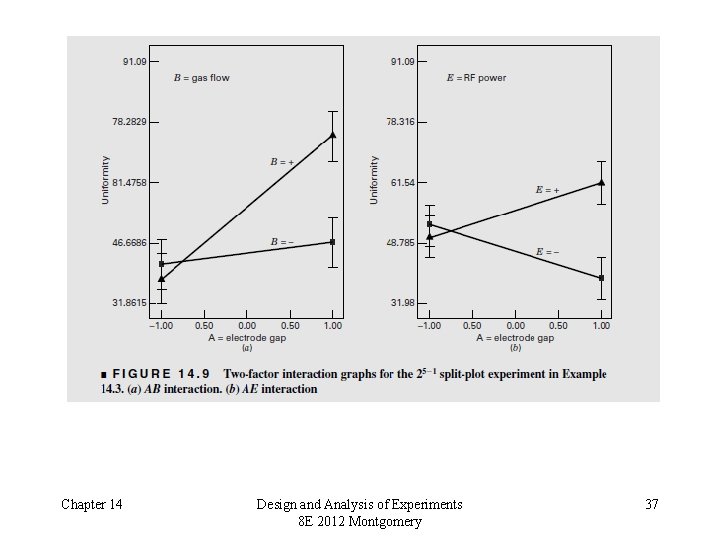
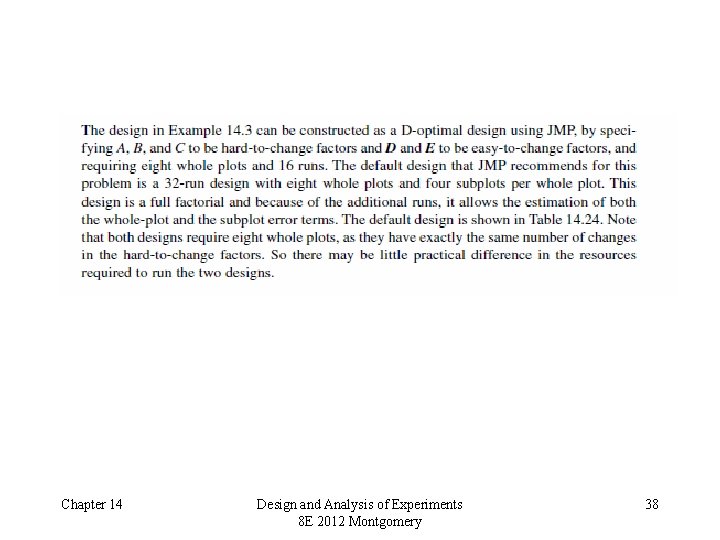
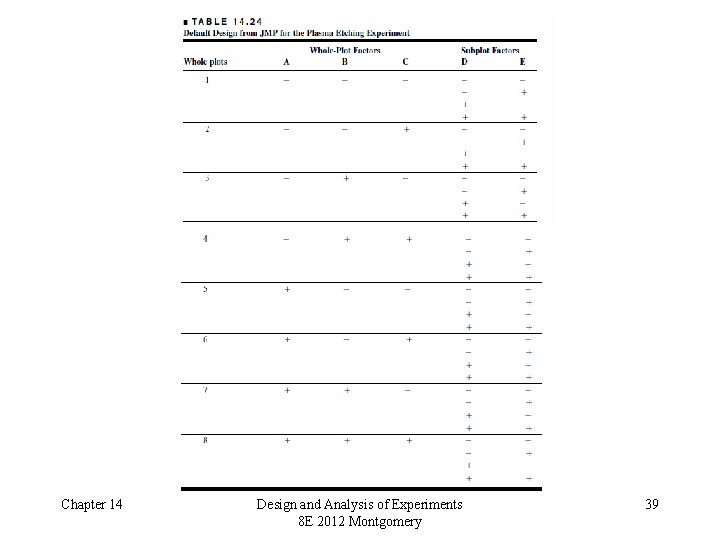
Unreplicated designs and fractional factorial design in a split-plot framework Chapter 14 Design and Analysis of Experiments 8 E 2012 Montgomery 33
Chapter 14 Design and Analysis of Experiments 8 E 2012 Montgomery 34
Chapter 14 Design and Analysis of Experiments 8 E 2012 Montgomery 35
Chapter 14 Design and Analysis of Experiments 8 E 2012 Montgomery 36
Chapter 14 Design and Analysis of Experiments 8 E 2012 Montgomery 37
Chapter 14 Design and Analysis of Experiments 8 E 2012 Montgomery 38
Chapter 14 Design and Analysis of Experiments 8 E 2012 Montgomery 39
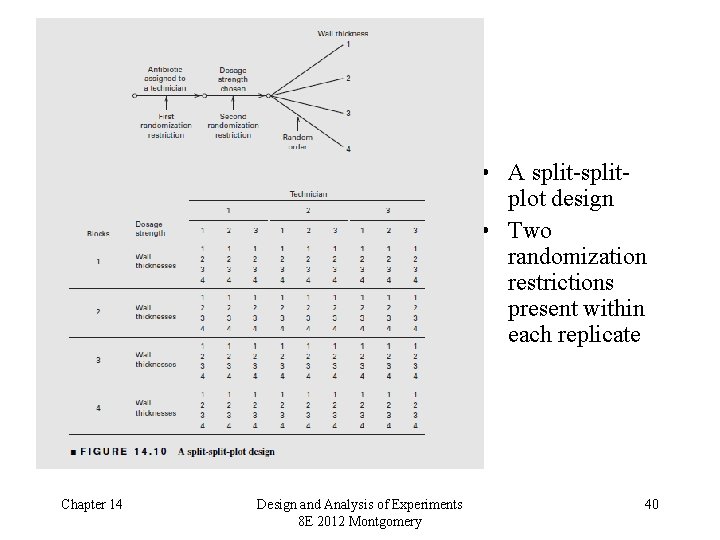
• A split-splitplot design • Two randomization restrictions present within each replicate Chapter 14 Design and Analysis of Experiments 8 E 2012 Montgomery 40
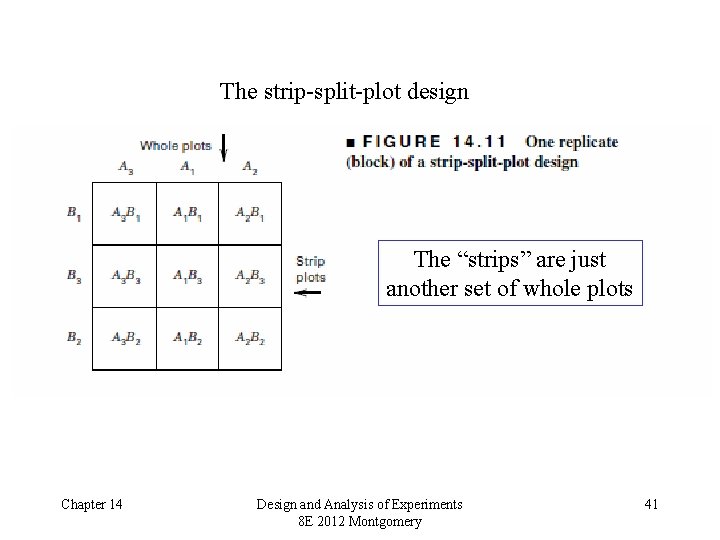
The strip-split-plot design The “strips” are just another set of whole plots Chapter 14 Design and Analysis of Experiments 8 E 2012 Montgomery 41