
Chapter 14 Cell Differentiation 2016 Introduction cell numbers
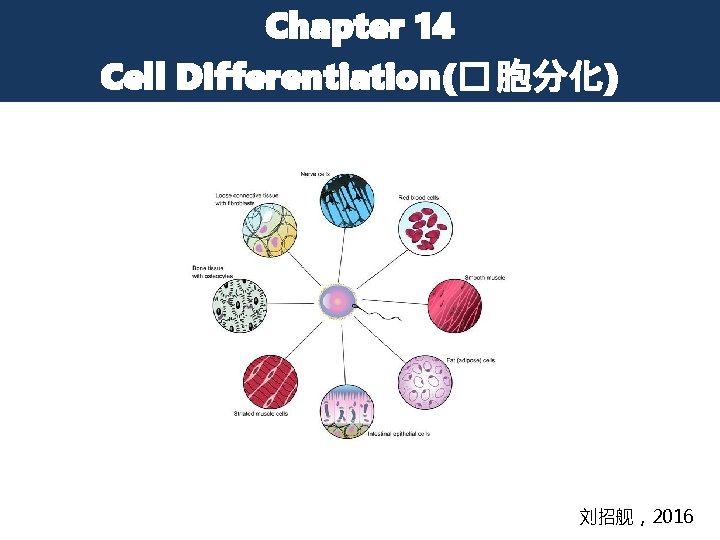
Chapter 14 Cell Differentiation(� 胞分化) 刘招舰,2016
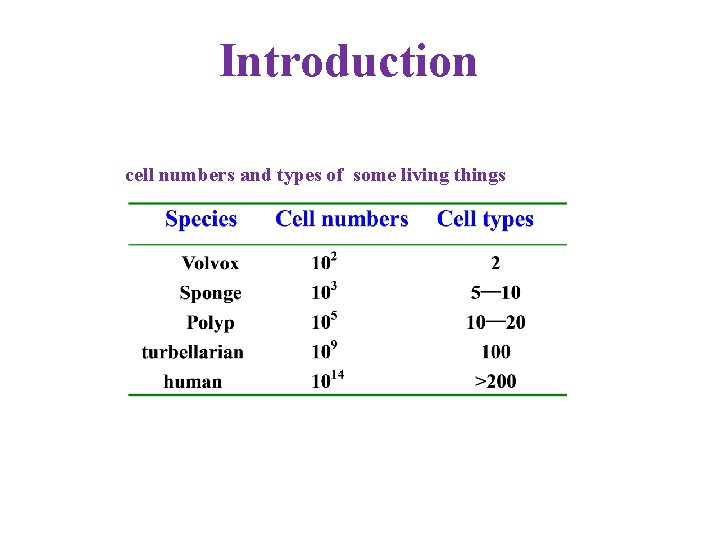
Introduction cell numbers and types of some living things

Cellular equilibrium 1 fertilized egg -1014 1016 cell divisions/lifetime Proliferation Differentiation Death
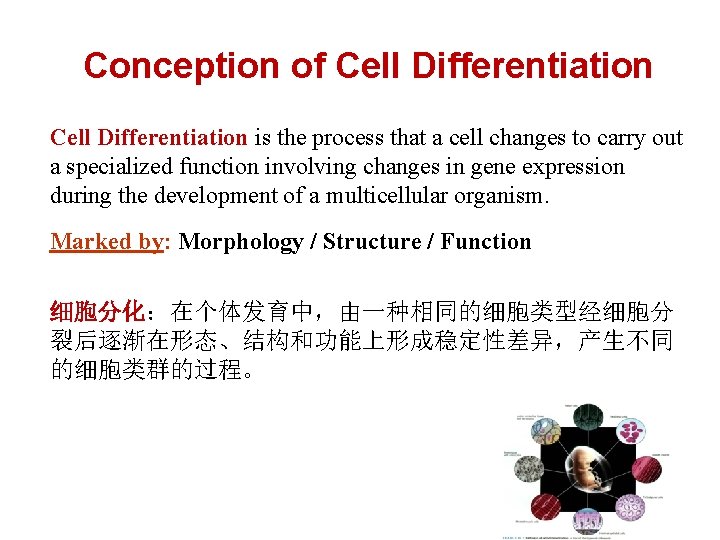
Conception of Cell Differentiation is the process that a cell changes to carry out a specialized function involving changes in gene expression during the development of a multicellular organism. Marked by: Morphology / Structure / Function 细胞分化:在个体发育中,由一种相同的细胞类型经细胞分 裂后逐渐在形态、结构和功能上形成稳定性差异,产生不同 的细胞类群的过程。
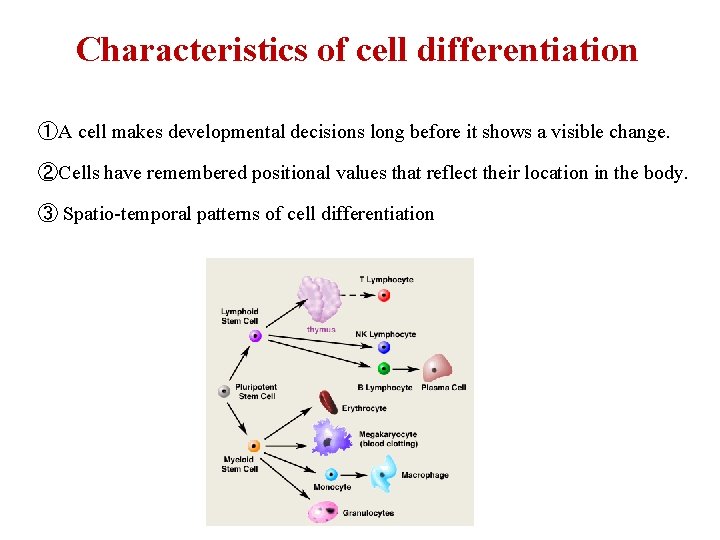
Characteristics of cell differentiation ①A cell makes developmental decisions long before it shows a visible change. ②Cells have remembered positional values that reflect their location in the body. ③ Spatio-temporal patterns of cell differentiation
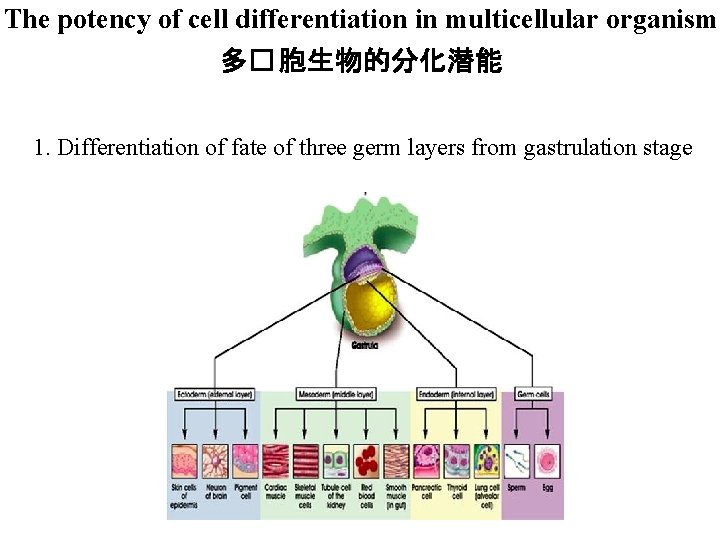
The potency of cell differentiation in multicellular organism 多� 胞生物的分化潜能 1. Differentiation of fate of three germ layers from gastrulation stage
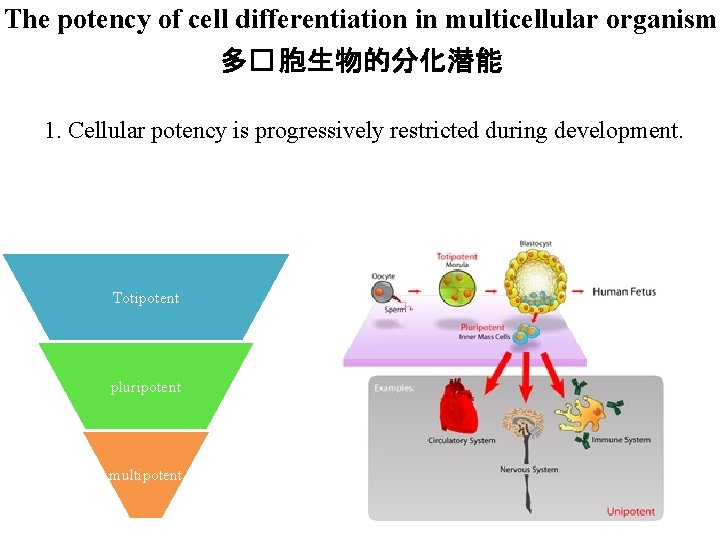
The potency of cell differentiation in multicellular organism 多� 胞生物的分化潜能 1. Cellular potency is progressively restricted during development. Totipotent pluripotent multipotent
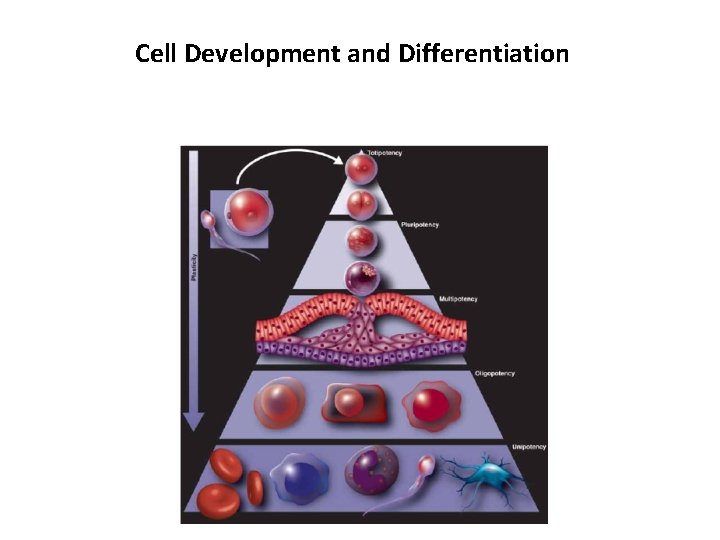
Cell Development and Differentiation
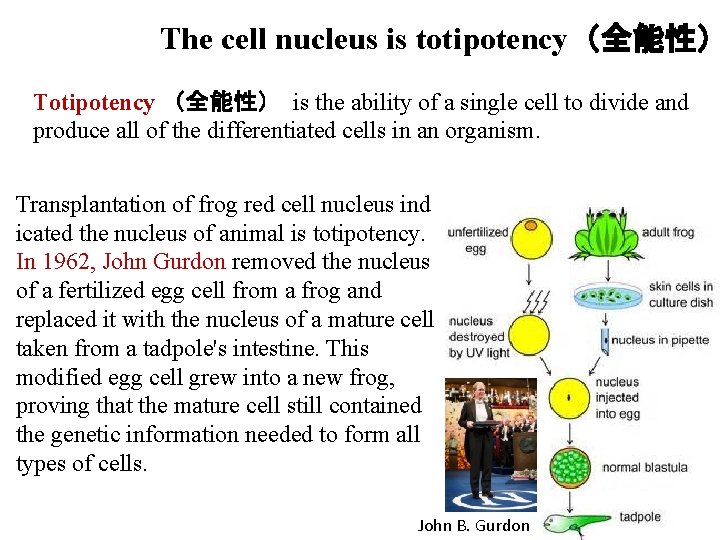
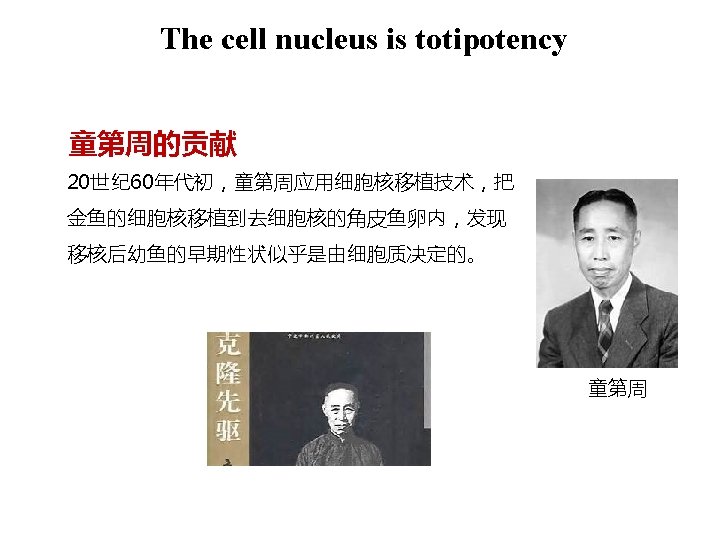
The cell nucleus is totipotency(全能性) Totipotency (全能性) is the ability of a single cell to divide and produce all of the differentiated cells in an organism. Transplantation of frog red cell nucleus ind icated the nucleus of animal is totipotency. In 1962, John Gurdon removed the nucleus of a fertilized egg cell from a frog and replaced it with the nucleus of a mature cell taken from a tadpole's intestine. This modified egg cell grew into a new frog, proving that the mature cell still contained the genetic information needed to form all types of cells. John B. Gurdon
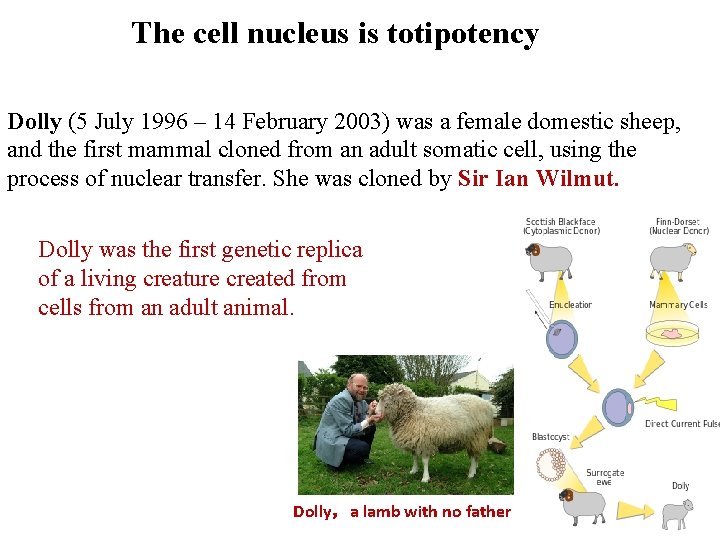
The cell nucleus is totipotency Dolly (5 July 1996 – 14 February 2003) was a female domestic sheep, and the first mammal cloned from an adult somatic cell, using the process of nuclear transfer. She was cloned by Sir Ian Wilmut. Dolly was the first genetic replica of a living creature created from cells from an adult animal. Dolly,a lamb with no father
Cell determination and cell differentiation � 胞决定与� 胞分化 1. Cell determination(� 胞决定): The process in which a previously undifferentiated cell is already programmed to become a specific cell type by following a specified path towards cell differentiation. u. Cell determination is influenced by the action of the extracellular environment and the contents of the cell's genome. When a cell is said to be determined it means that the cell is irreversibly committed to a specific cell fate.

Cell determination precedes cell differentiation Grafting experiment Cell determination maybe decide in late gastrula embryo stage
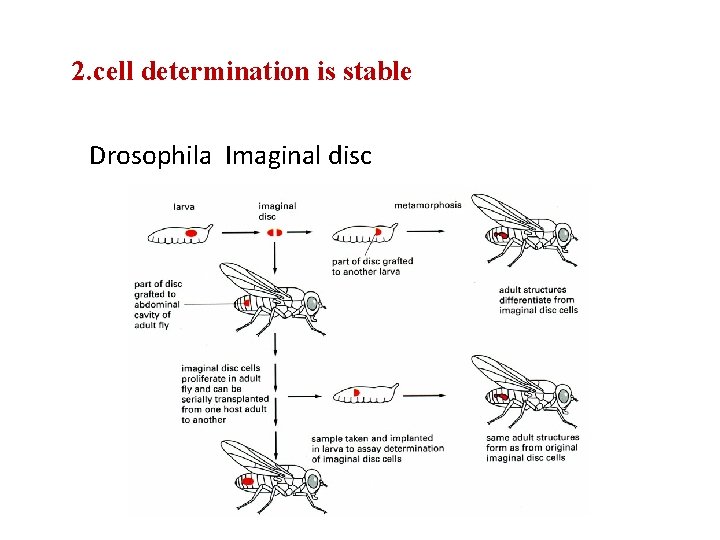
2. cell determination is stable Drosophila Imaginal disc
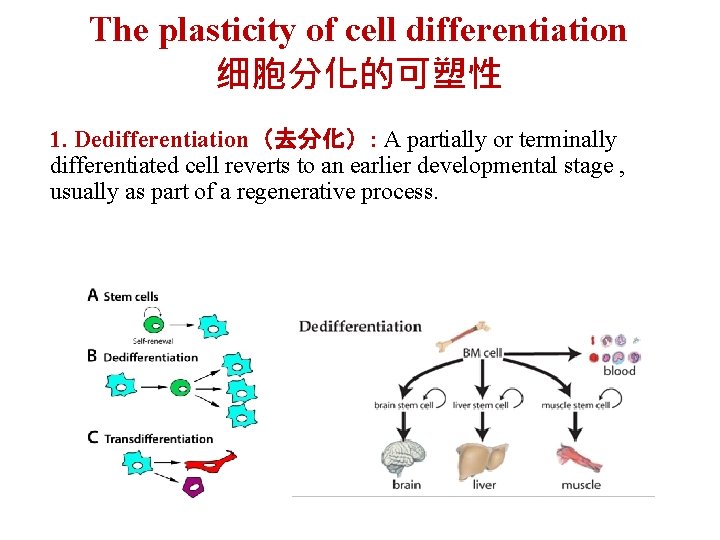
The plasticity of cell differentiation 细胞分化的可塑性 1. Dedifferentiation(去分化): A partially or terminally differentiated cell reverts to an earlier developmental stage , usually as part of a regenerative process.

The plasticity of cell differentiation 细胞分化的可塑性 • 2. Transdifferentiation(� 分化), also known as lineage reprogramming, is a process where one mature somatic cell transforms into another mature somatic cell without undergoing an intermediate pluripotent state or progenitor cell type.
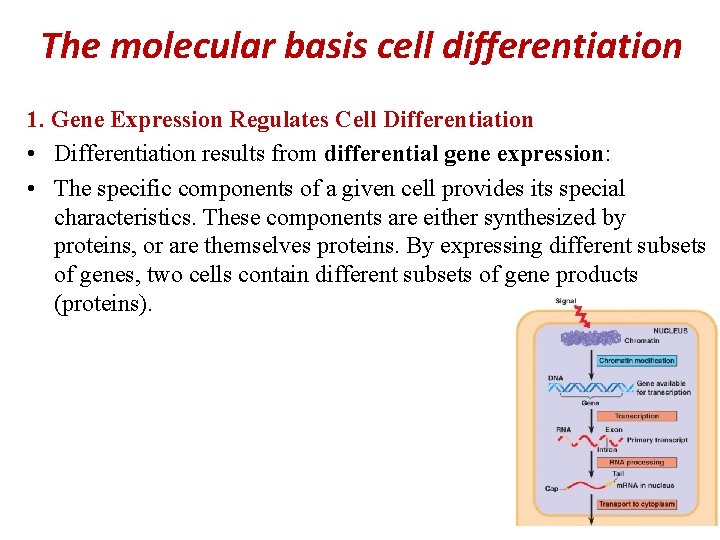
The molecular basis cell differentiation 1. Gene Expression Regulates Cell Differentiation • Differentiation results from differential gene expression: • The specific components of a given cell provides its special characteristics. These components are either synthesized by proteins, or are themselves proteins. By expressing different subsets of genes, two cells contain different subsets of gene products (proteins).
The molecular basis cell differentiation 1. Gene Expression Regulates Cell Differentiation House-keeping genes(持家基因): Ø They are necessary to maintain basic life activities of cells. ØThey only plays the assistance role on cell differentiation. ØExpressed in all cell types, essential for all cells Luxury genes (奢侈基因): Ø They code specific protein which determines cell characters. ØThe product has no effect on cell survival. ØThey are the material base determined cell differentiation. Øexpressed in special cells.
v The different cell types of a multicellular organism contain the same DNA. v A cell can change the expression of its genes in response to external signals. v Differences in m. RNA expression patterns among different cell types. v Different cell types synthesize different sets of proteins.
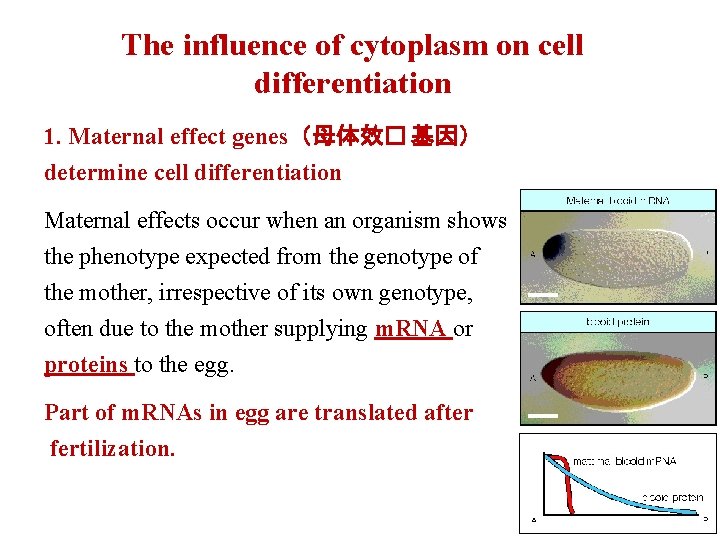
The influence of cytoplasm on cell differentiation 1. Maternal effect genes(母体效� 基因) determine cell differentiation Maternal effects occur when an organism shows the phenotype expected from the genotype of the mother, irrespective of its own genotype, often due to the mother supplying m. RNA or proteins to the egg. Part of m. RNAs in egg are translated after fertilization.
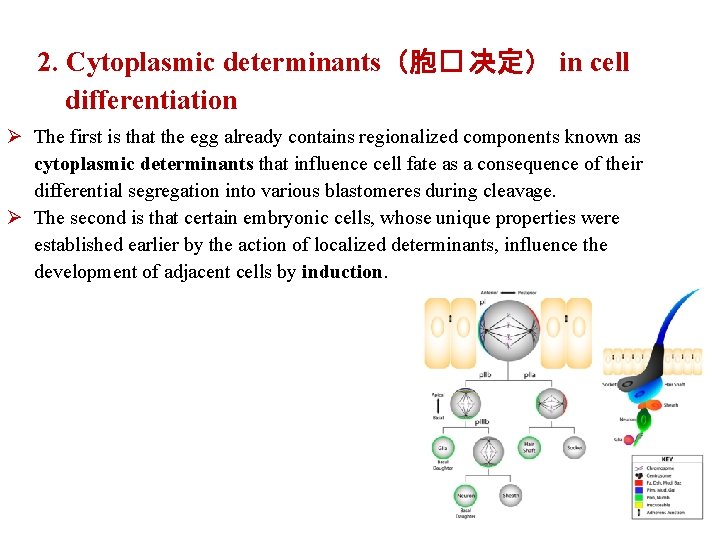
2. Cytoplasmic determinants(胞� 决定) in cell differentiation Ø The first is that the egg already contains regionalized components known as cytoplasmic determinants that influence cell fate as a consequence of their differential segregation into various blastomeres during cleavage. Ø The second is that certain embryonic cells, whose unique properties were established earlier by the action of localized determinants, influence the development of adjacent cells by induction.
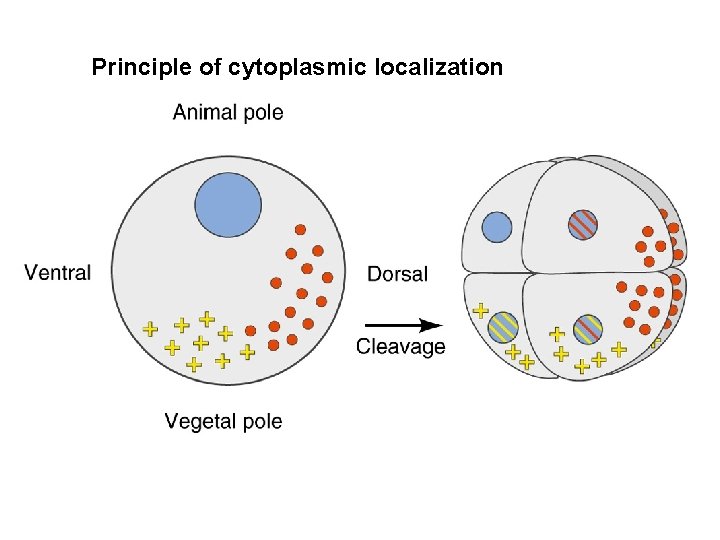
Principle of cytoplasmic localization
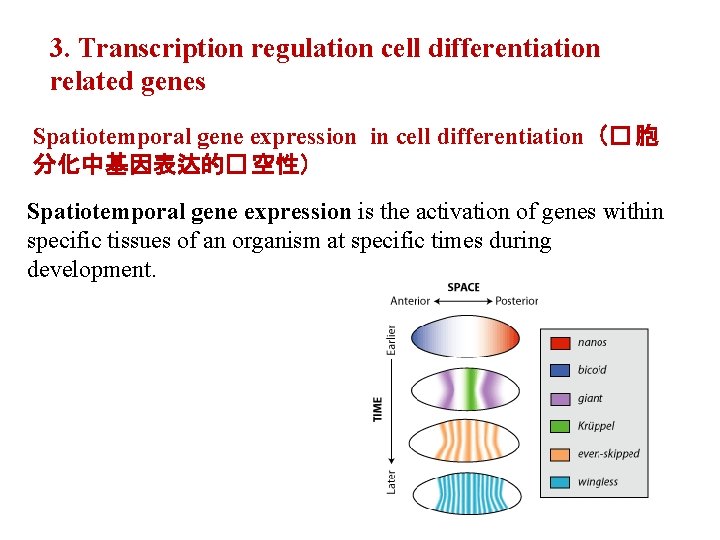
3. Transcription regulation cell differentiation related genes Spatiotemporal gene expression in cell differentiation(� 胞 分化中基因表达的� 空性) Spatiotemporal gene expression is the activation of genes within specific tissues of an organism at specific times during development.
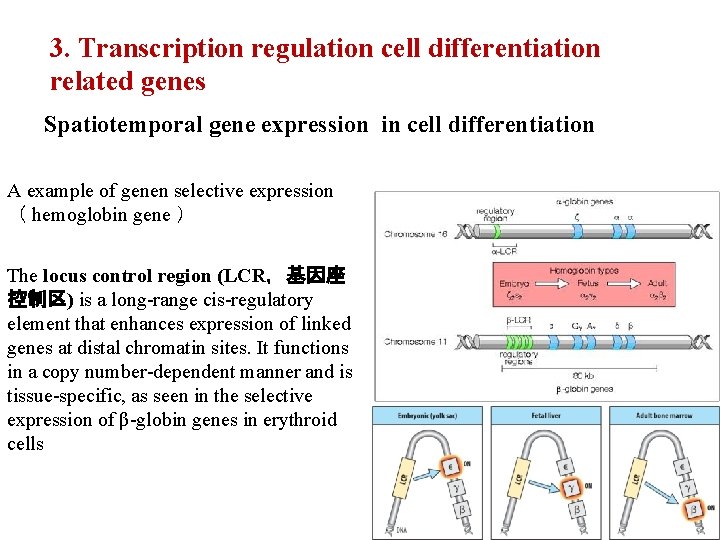
3. Transcription regulation cell differentiation related genes Spatiotemporal gene expression in cell differentiation A example of genen selective expression ( hemoglobin gene ) The locus control region (LCR,基因座 控制区) is a long-range cis-regulatory element that enhances expression of linked genes at distal chromatin sites. It functions in a copy number-dependent manner and is tissue-specific, as seen in the selective expression of β-globin genes in erythroid cells
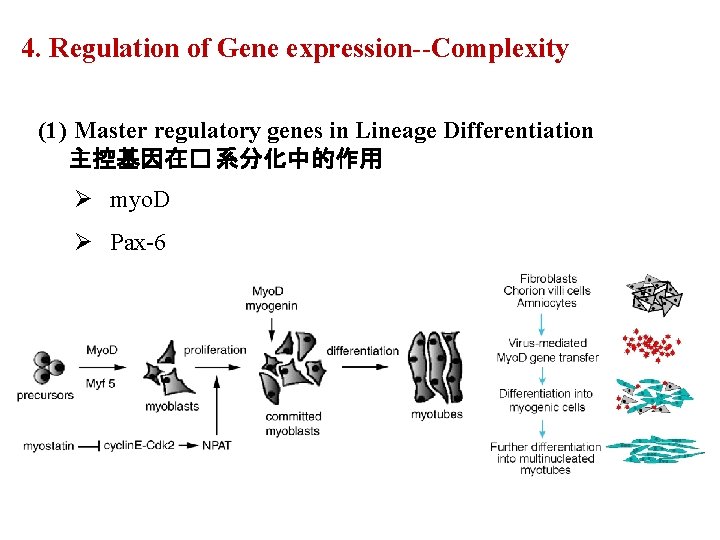
4. Regulation of Gene expression--Complexity (1) Master regulatory genes in Lineage Differentiation 主控基因在� 系分化中的作用 Ø myo. D Ø Pax-6
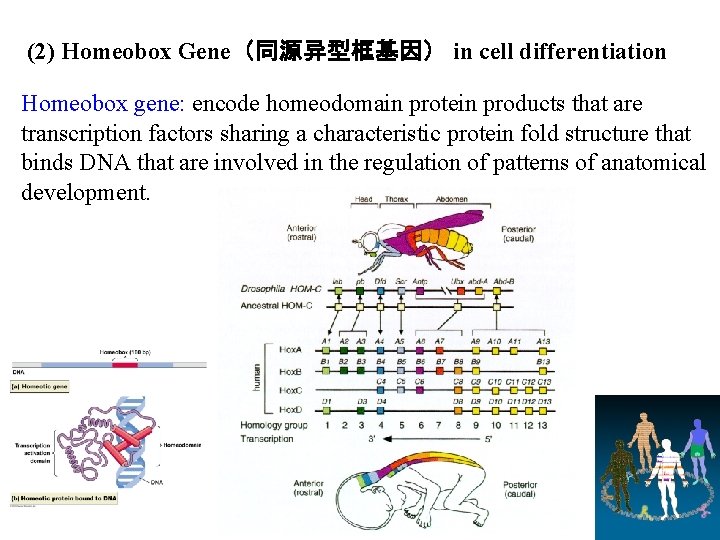
(2) Homeobox Gene(同源异型框基因) in cell differentiation Homeobox gene: encode homeodomain protein products that are transcription factors sharing a characteristic protein fold structure that binds DNA that are involved in the regulation of patterns of anatomical development.
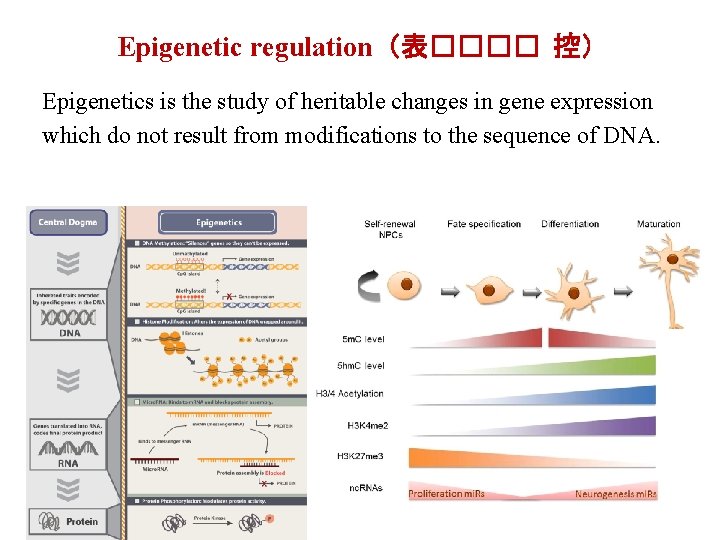
Epigenetic regulation(表���� 控) Epigenetics is the study of heritable changes in gene expression which do not result from modifications to the sequence of DNA.
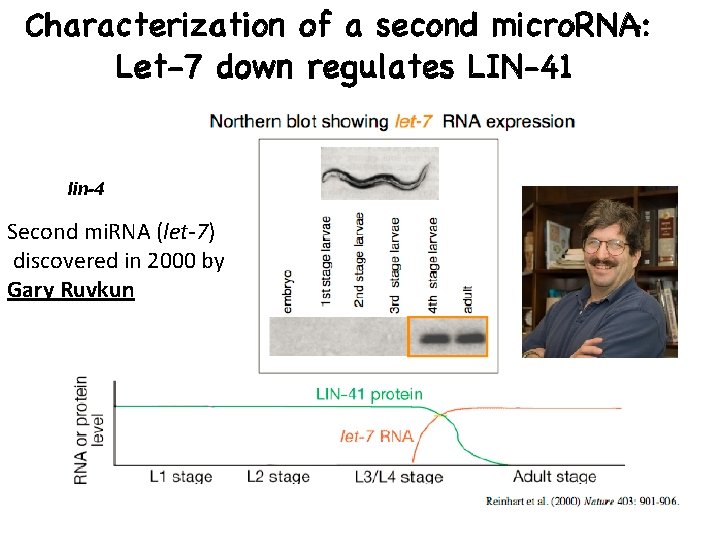
lin-4 Second mi. RNA (let-7) discovered in 2000 by Gary Ruvkun
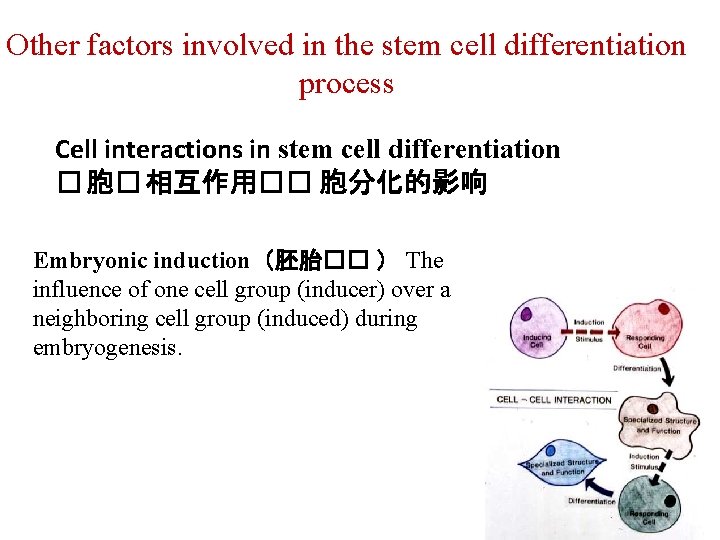
Other factors involved in the stem cell differentiation process Cell interactions in stem cell differentiation � 胞� 相互作用�� 胞分化的影响 Embryonic induction(胚胎�� ) The influence of one cell group (inducer) over a neighboring cell group (induced) during embryogenesis.
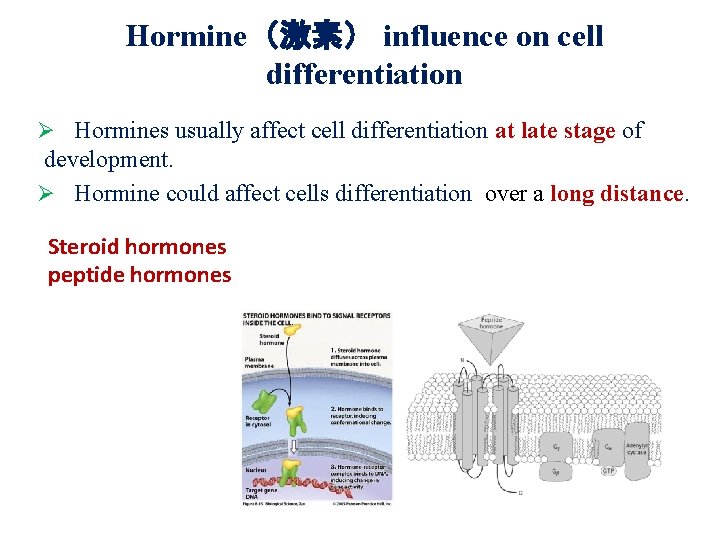
Hormine(激素) influence on cell differentiation Ø Hormines usually affect cell differentiation at late stage of development. Ø Hormine could affect cells differentiation over a long distance. Steroid hormones peptide hormones
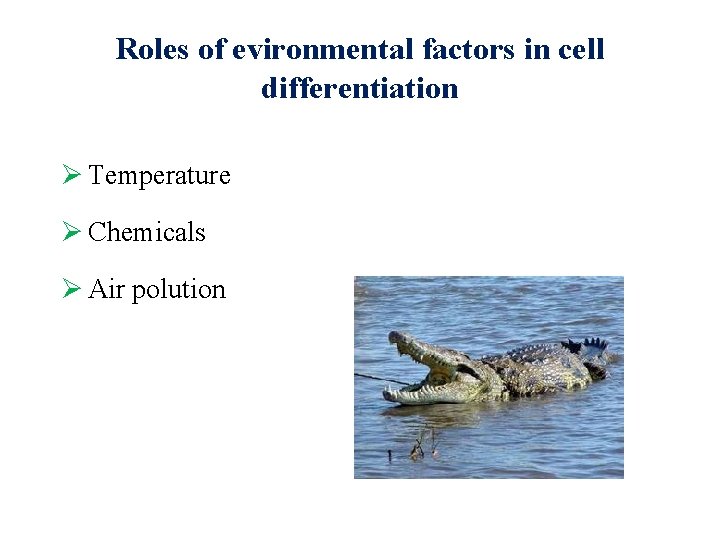
Roles of evironmental factors in cell differentiation Ø Temperature Ø Chemicals Ø Air polution
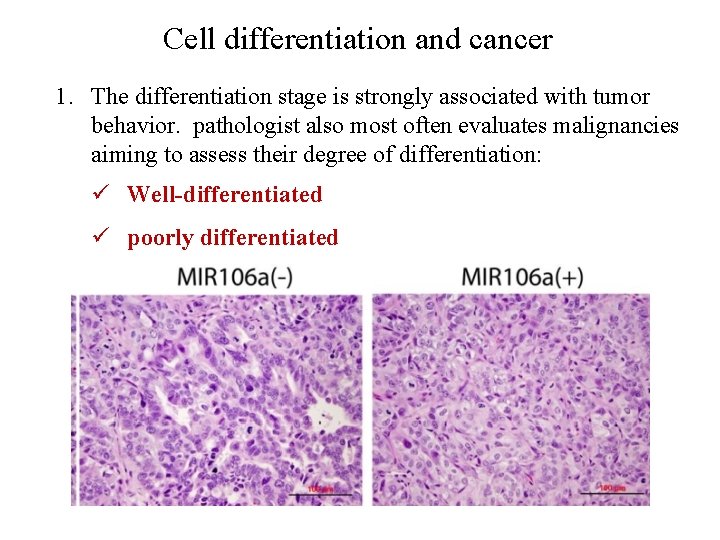
Cell differentiation and cancer 1. The differentiation stage is strongly associated with tumor behavior. pathologist also most often evaluates malignancies aiming to assess their degree of differentiation: ü Well-differentiated ü poorly differentiated
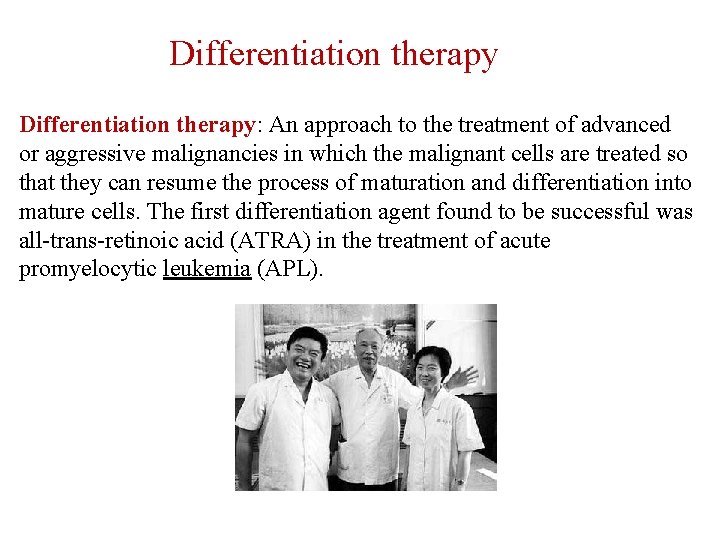
Differentiation therapy: An approach to the treatment of advanced or aggressive malignancies in which the malignant cells are treated so that they can resume the process of maturation and differentiation into mature cells. The first differentiation agent found to be successful was all-trans-retinoic acid (ATRA) in the treatment of acute promyelocytic leukemia (APL).
- Slides: 33