
CHAPTER 14 Bond Prices and Yields Investments 8
CHAPTER 14 Bond Prices and Yields Investments, 8 th edition Bodie, Kane and Marcus Slides by Susan Hine Mc. Graw-Hill/Irwin Copyright © 2009 by The Mc. Graw-Hill Companies, Inc. All rights reserved.
Bond Characteristics • Face or par value • Coupon rate – Zero coupon bond • Compounding and payments – Accrued Interest • Indenture 14 -2
Different Issuers of Bonds • U. S. Treasury – Notes and Bonds • Corporations • Municipalities • International Governments and Corporations • Innovative Bonds – Floaters and Inverse Floaters – Asset-Backed – Catastrophe 14 -3
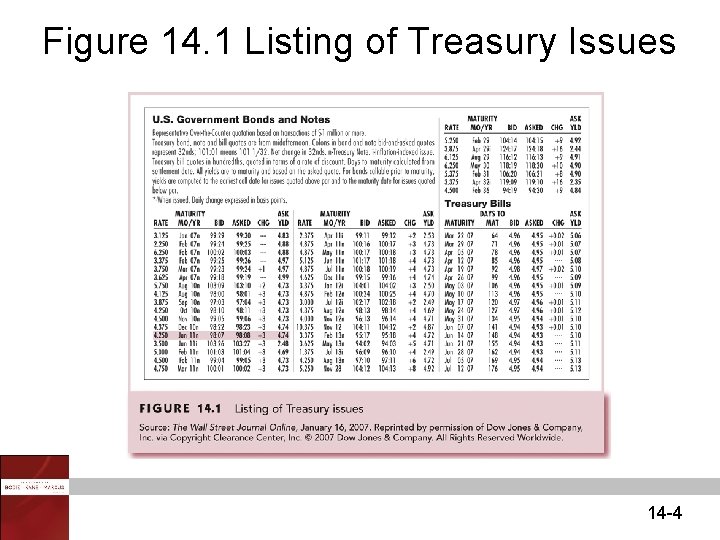
Figure 14. 1 Listing of Treasury Issues 14 -4
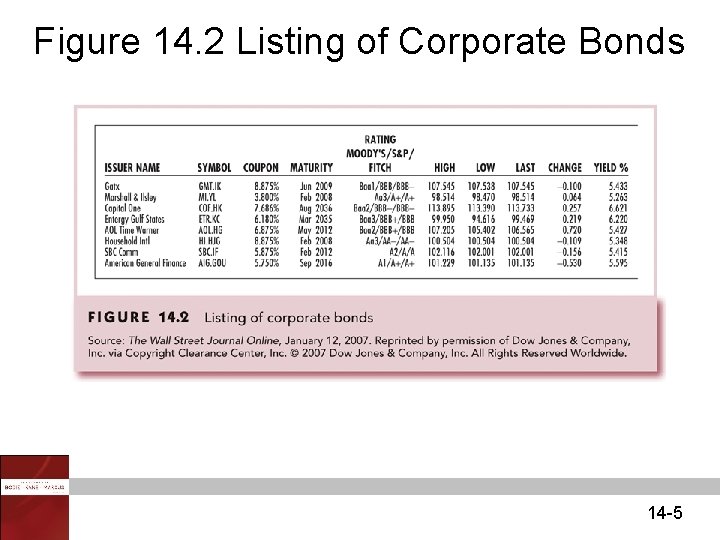
Figure 14. 2 Listing of Corporate Bonds 14 -5
Provisions of Bonds • • • Secured or unsecured Call provision Convertible provision Put provision (putable bonds) Floating rate bonds Preferred Stock 14 -6
Innovation in the Bond Market • • Inverse Floaters Asset-Backed Bonds Catastrophe Bonds Indexed Bonds 14 -7
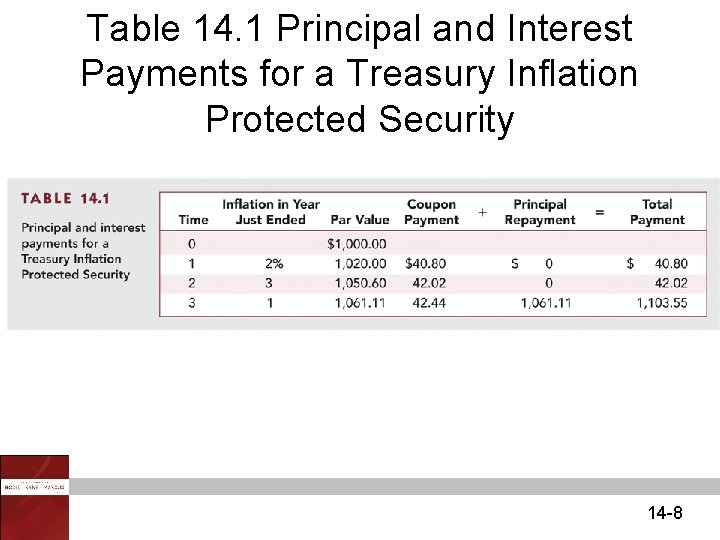
Table 14. 1 Principal and Interest Payments for a Treasury Inflation Protected Security 14 -8
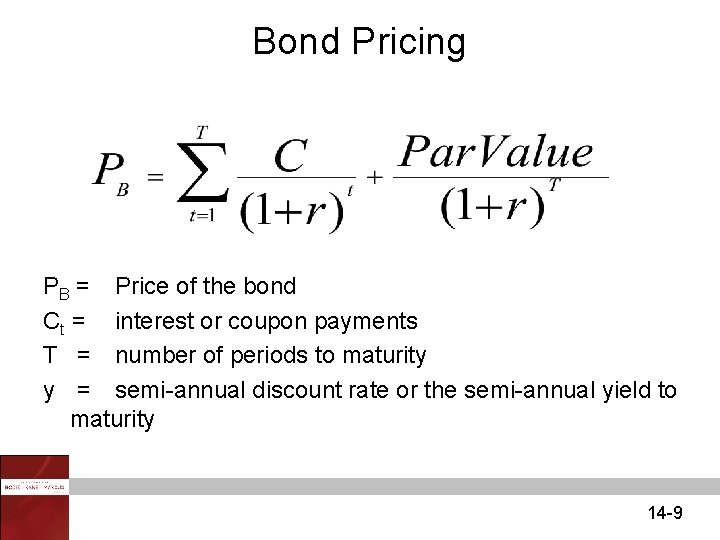
Bond Pricing PB = Price of the bond Ct = interest or coupon payments T = number of periods to maturity y = semi-annual discount rate or the semi-annual yield to maturity 14 -9
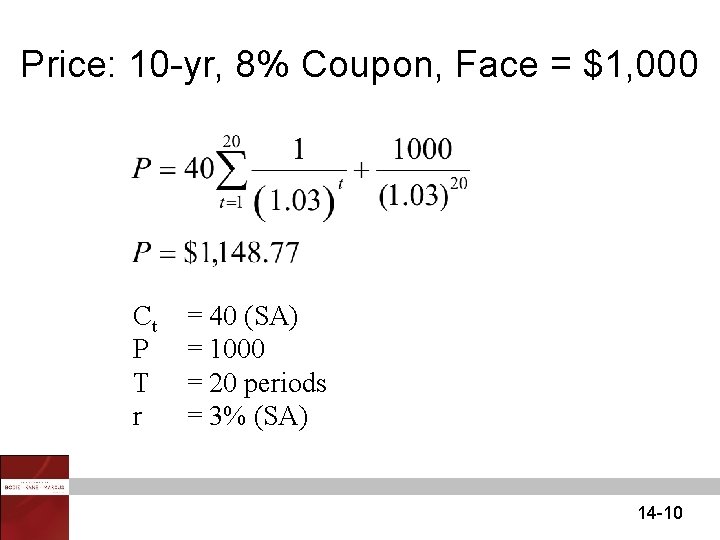
Price: 10 -yr, 8% Coupon, Face = $1, 000 Ct P T r = 40 (SA) = 1000 = 20 periods = 3% (SA) 14 -10
Bond Prices and Yields • Prices and Yields (required rates of return) have an inverse relationship • When yields get very high the value of the bond will be very low • When yields approach zero, the value of the bond approaches the sum of the cash flows 14 -11
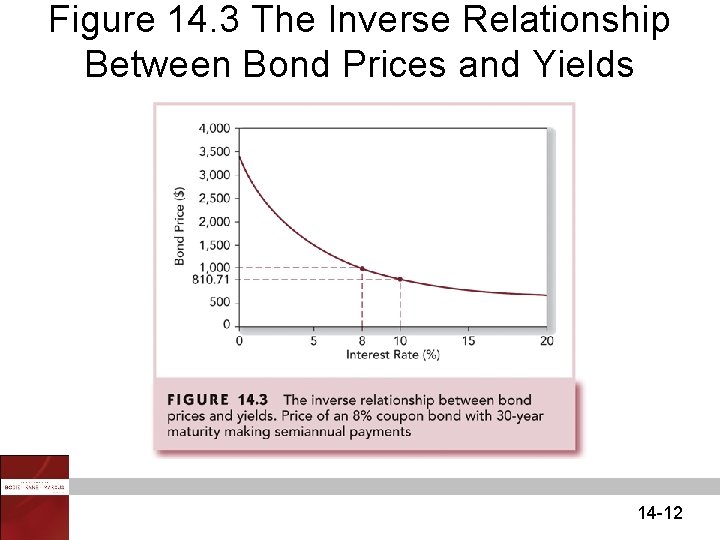
Figure 14. 3 The Inverse Relationship Between Bond Prices and Yields 14 -12
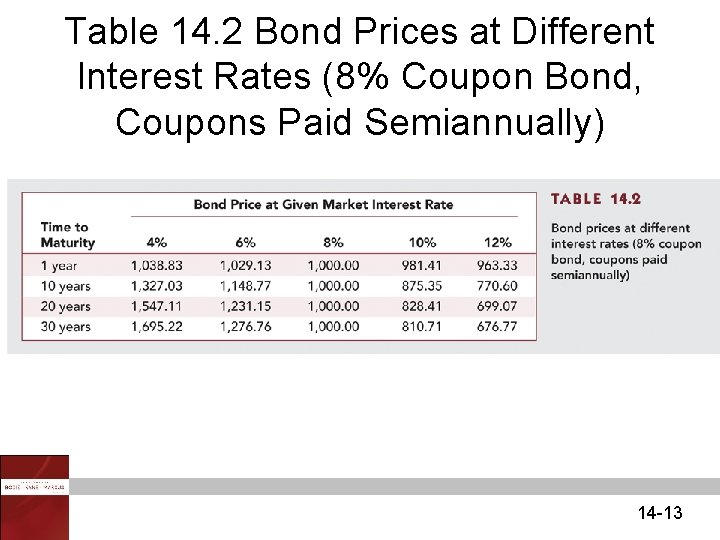
Table 14. 2 Bond Prices at Different Interest Rates (8% Coupon Bond, Coupons Paid Semiannually) 14 -13
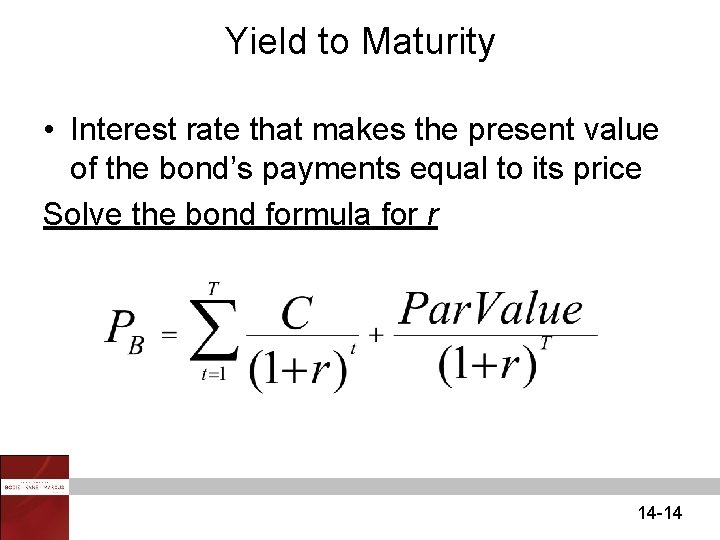
Yield to Maturity • Interest rate that makes the present value of the bond’s payments equal to its price Solve the bond formula for r 14 -14
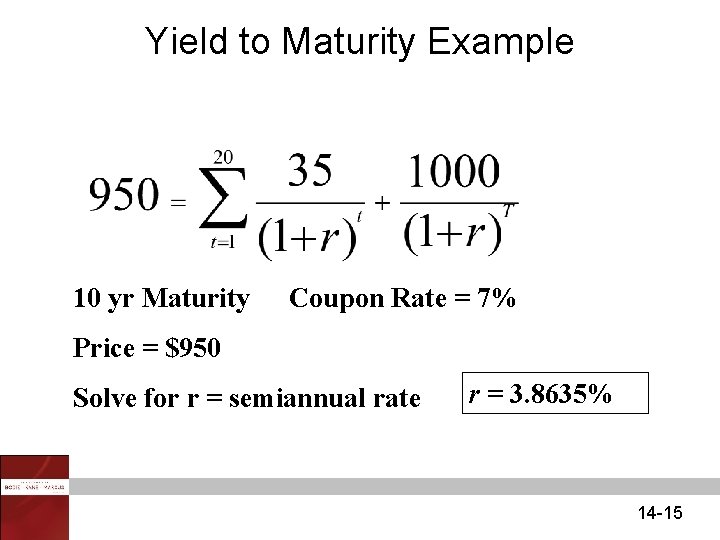
Yield to Maturity Example 10 yr Maturity Coupon Rate = 7% Price = $950 Solve for r = semiannual rate r = 3. 8635% 14 -15
Yield Measures Bond Equivalent Yield 7. 72% = 3. 86% x 2 Effective Annual Yield (1. 0386)2 - 1 = 7. 88% Current Yield Annual Interest / Market Price $70 / $950 = 7. 37 % Yield to Call 14 -16
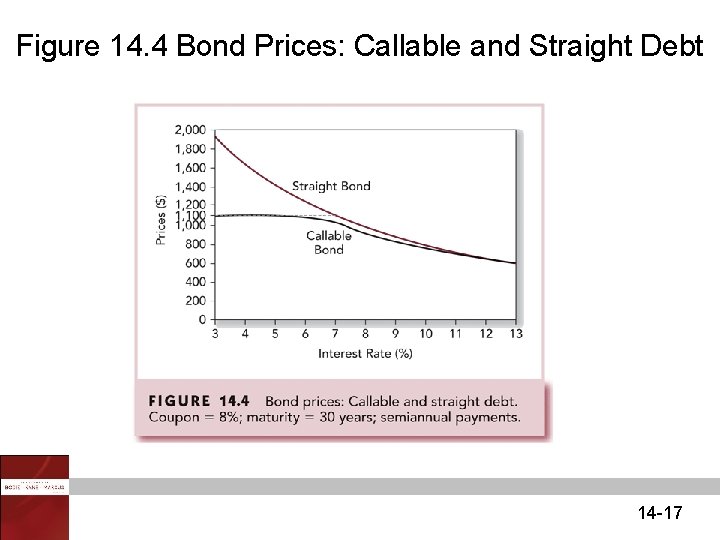
Figure 14. 4 Bond Prices: Callable and Straight Debt 14 -17
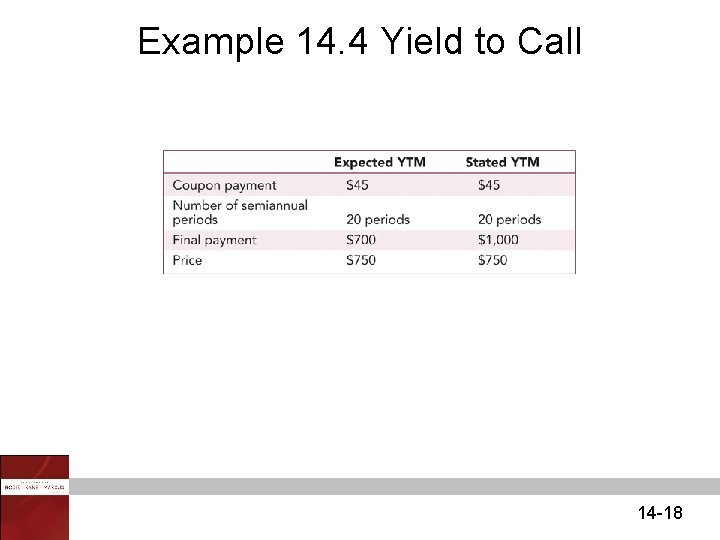
Example 14. 4 Yield to Call 14 -18
Realized Yield versus YTM • Reinvestment Assumptions • Holding Period Return – Changes in rates affect returns – Reinvestment of coupon payments – Change in price of the bond 14 -19
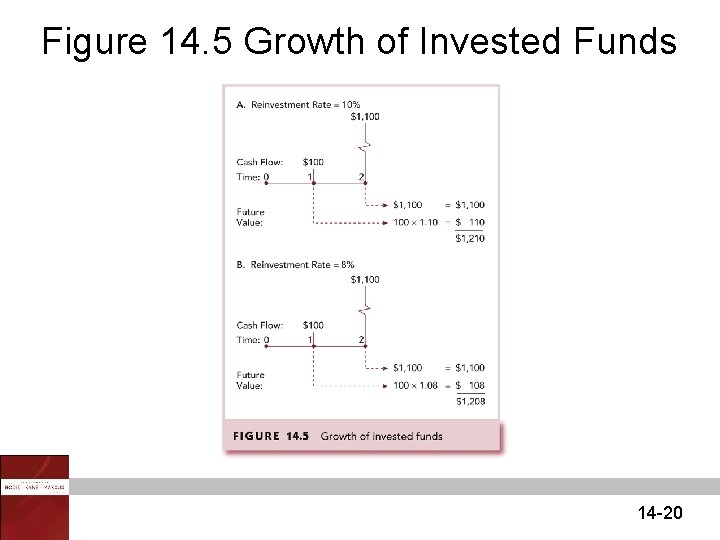
Figure 14. 5 Growth of Invested Funds 14 -20
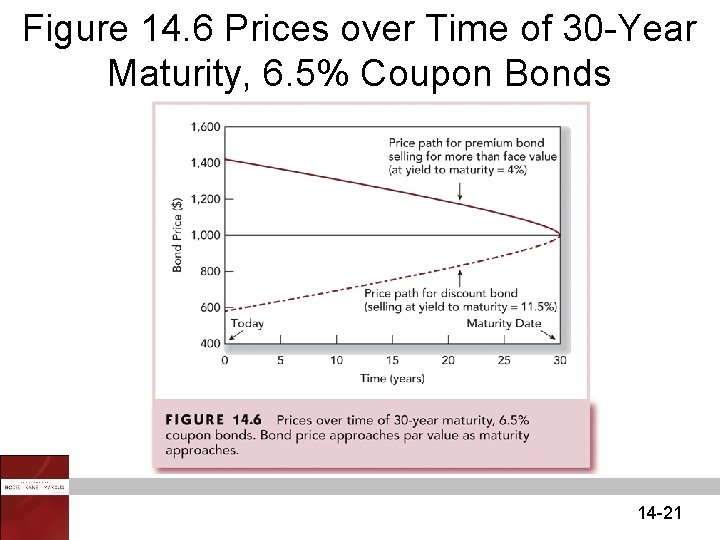
Figure 14. 6 Prices over Time of 30 -Year Maturity, 6. 5% Coupon Bonds 14 -21
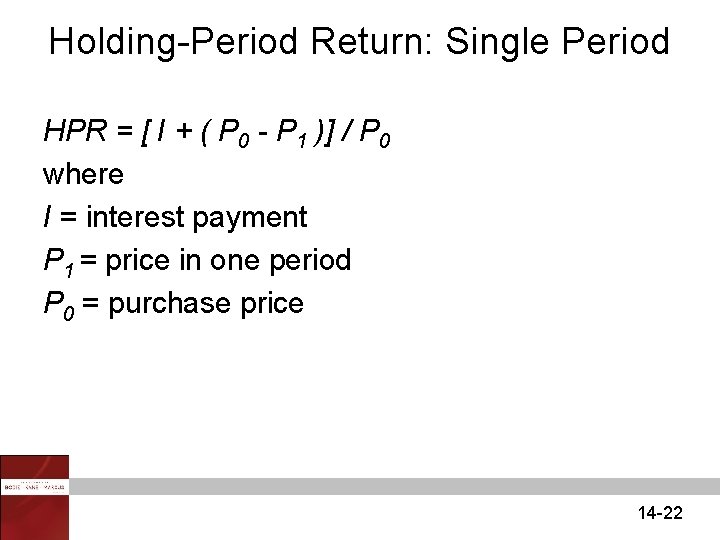
Holding-Period Return: Single Period HPR = [ I + ( P 0 - P 1 )] / P 0 where I = interest payment P 1 = price in one period P 0 = purchase price 14 -22
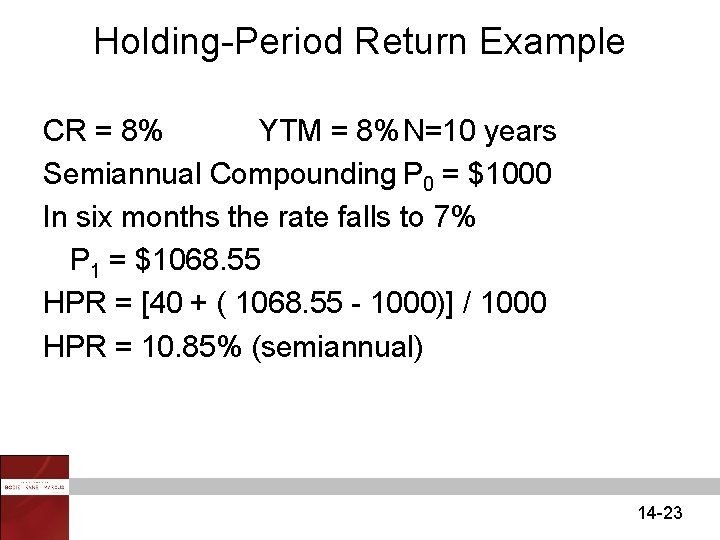
Holding-Period Return Example CR = 8% YTM = 8% N=10 years Semiannual Compounding P 0 = $1000 In six months the rate falls to 7% P 1 = $1068. 55 HPR = [40 + ( 1068. 55 - 1000)] / 1000 HPR = 10. 85% (semiannual) 14 -23
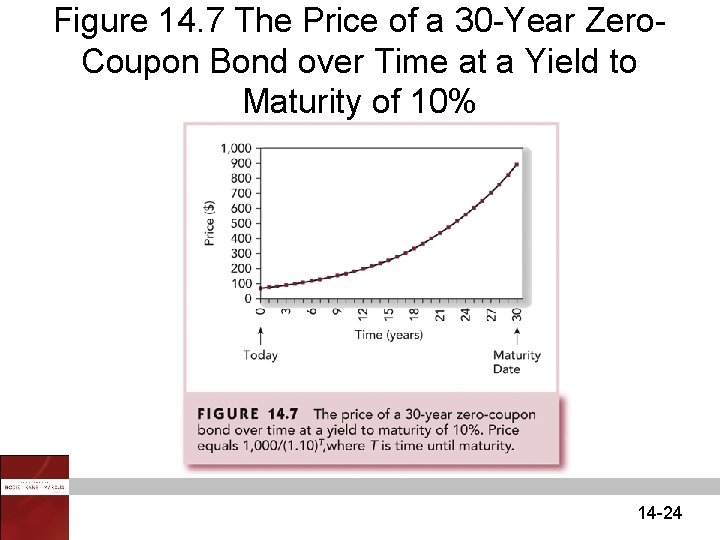
Figure 14. 7 The Price of a 30 -Year Zero. Coupon Bond over Time at a Yield to Maturity of 10% 14 -24
Default Risk and Ratings • Rating companies – Moody’s Investor Service – Standard & Poor’s – Fitch • Rating Categories – Investment grade – Speculative grade/Junk Bonds 14 -25
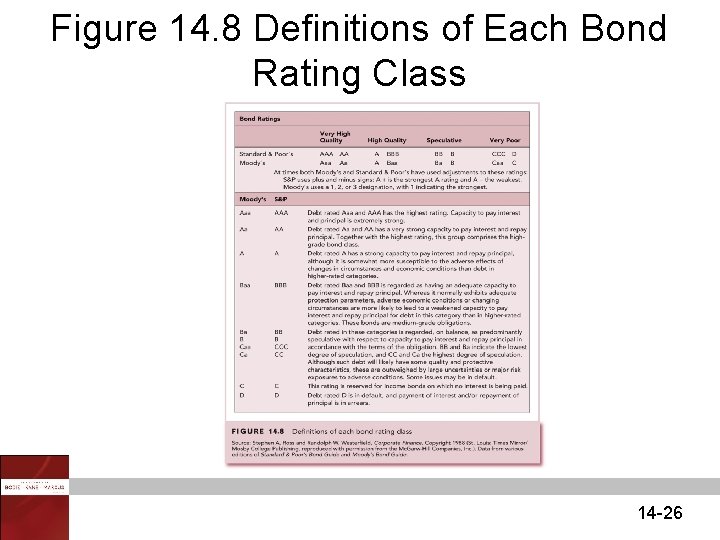
Figure 14. 8 Definitions of Each Bond Rating Class 14 -26
Factors Used by Rating Companies • • • Coverage ratios Leverage ratios Liquidity ratios Profitability ratios Cash flow to debt 14 -27
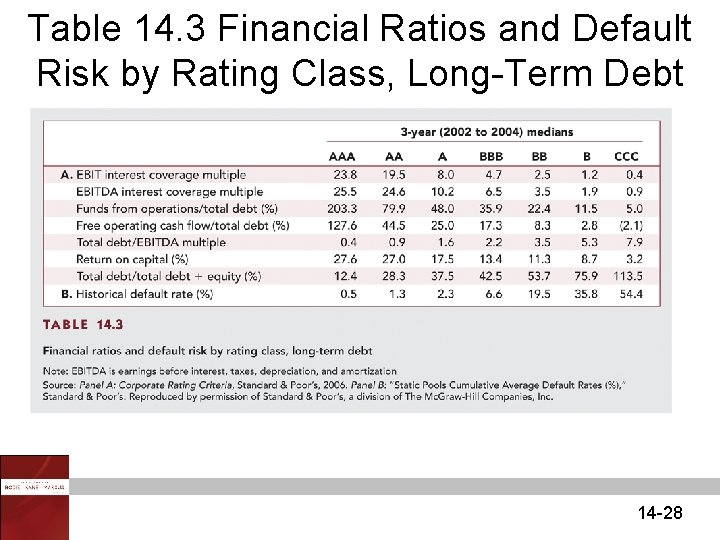
Table 14. 3 Financial Ratios and Default Risk by Rating Class, Long-Term Debt 14 -28
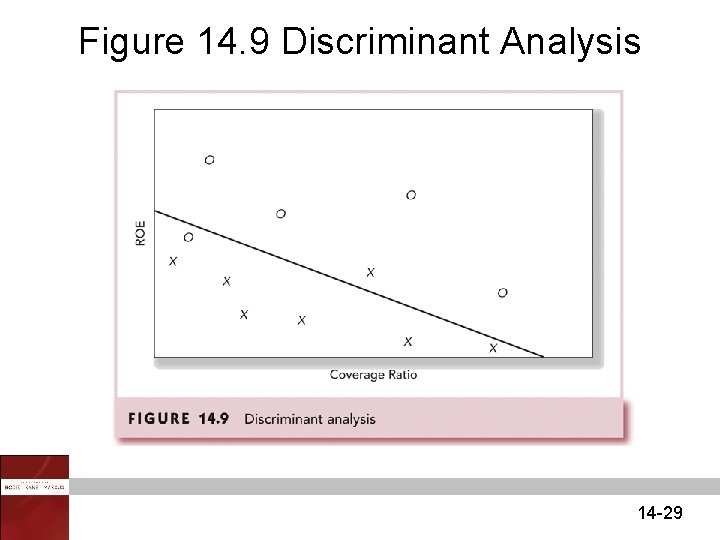
Figure 14. 9 Discriminant Analysis 14 -29
Protection Against Default • • Sinking funds Subordination of future debt Dividend restrictions Collateral 14 -30
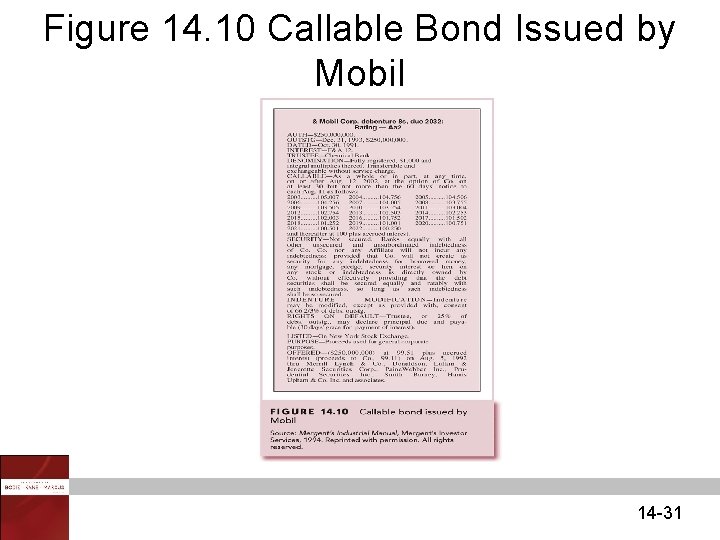
Figure 14. 10 Callable Bond Issued by Mobil 14 -31
Default Risk and Yield • Risk structure of interest rates • Default premiums – Yields compared to ratings – Yield spreads over business cycles 14 -32
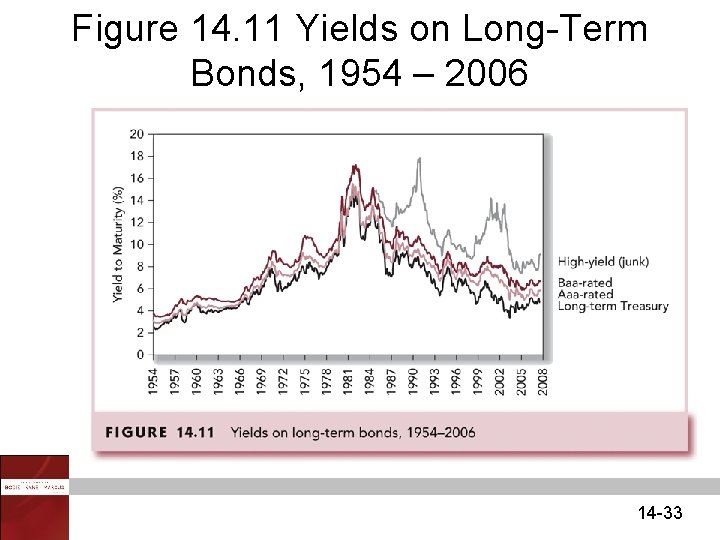
Figure 14. 11 Yields on Long-Term Bonds, 1954 – 2006 14 -33
Credit Risk and Collateralized Debt Obligations (CDOs) • Major mechanism to reallocate credit risk in the fixed-income markets – Structured Investment Vehicle (SIV) often used to create the CDO – Mortgage-backed CDOs were an investment disaster in 2007 14 -34
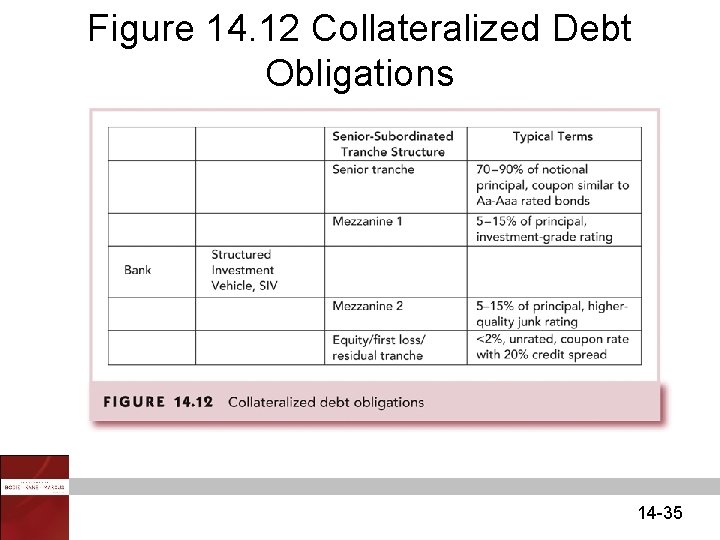
Figure 14. 12 Collateralized Debt Obligations 14 -35
- Slides: 35