
Chapter 14 Beyond Mendels Laws of Inheritance AP
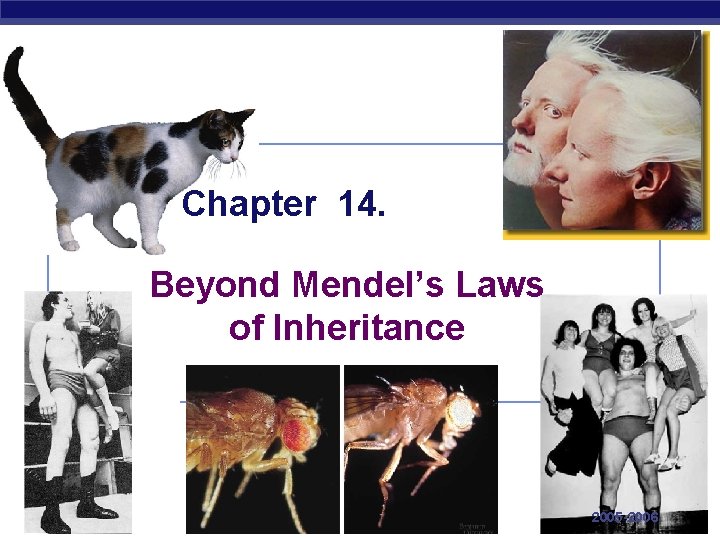
Chapter 14. Beyond Mendel’s Laws of Inheritance AP Biology 2005 -2006
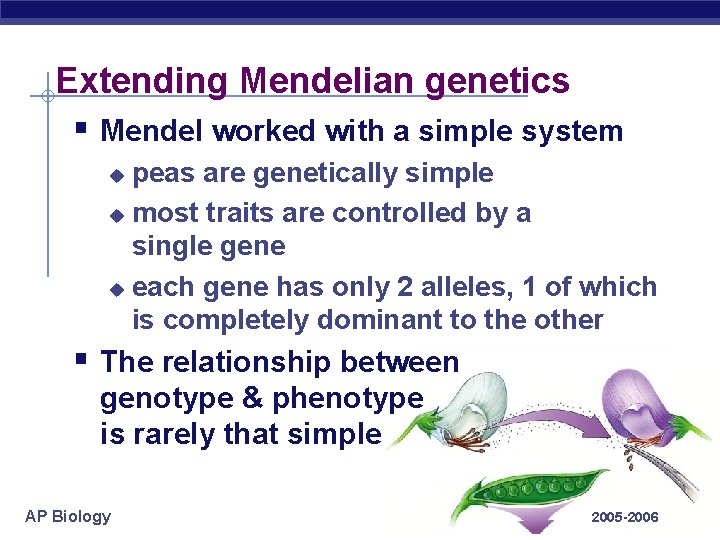
Extending Mendelian genetics § Mendel worked with a simple system peas are genetically simple u most traits are controlled by a single gene u each gene has only 2 alleles, 1 of which is completely dominant to the other u § The relationship between genotype & phenotype is rarely that simple AP Biology 2005 -2006
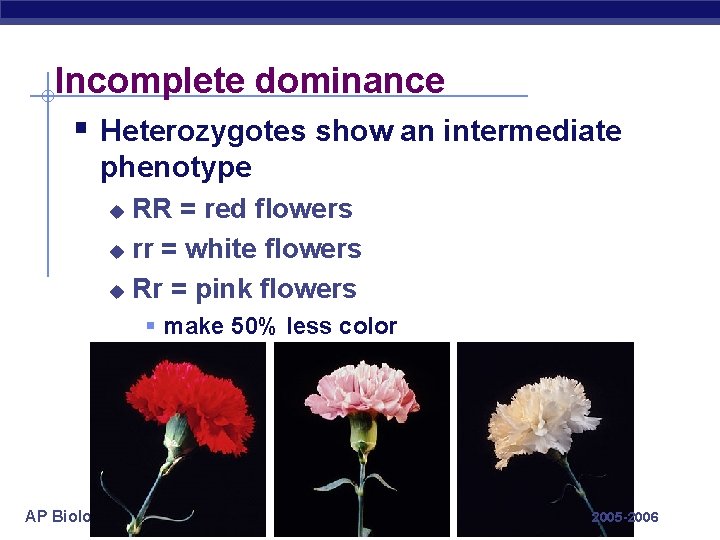
Incomplete dominance § Heterozygotes show an intermediate phenotype RR = red flowers u rr = white flowers u Rr = pink flowers u § make 50% less color AP Biology 2005 -2006
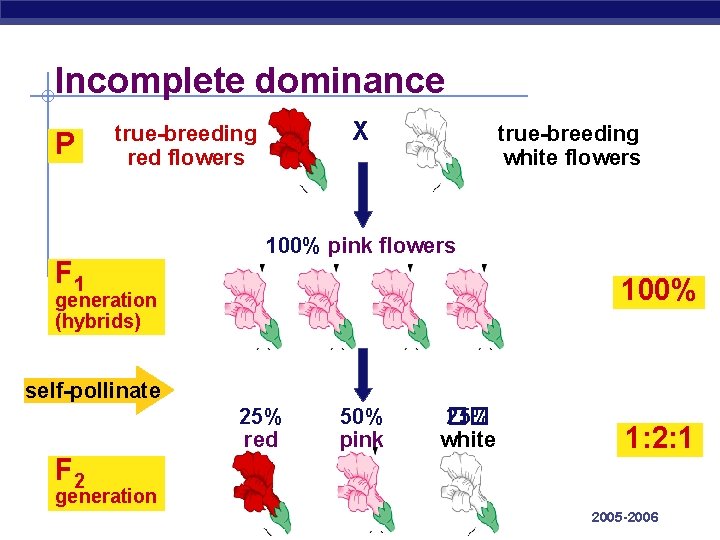
Incomplete dominance P X true-breeding red flowers F 1 true-breeding white flowers 100% pink flowers 100% generation (hybrids) self-pollinate 25% red F 2 50% pink �� 25% white 1: 2: 1 generation AP Biology 2005 -2006

Incomplete dominance C RC W x C RC W female / eggs male / sperm CR CW C RC R C RC W CW CW % genotype C RC R C RC W 25% 50% C RC W CW CW 25% 1: 2: 1 AP Biology % phenotype 1: 2: 1 2005 -2006
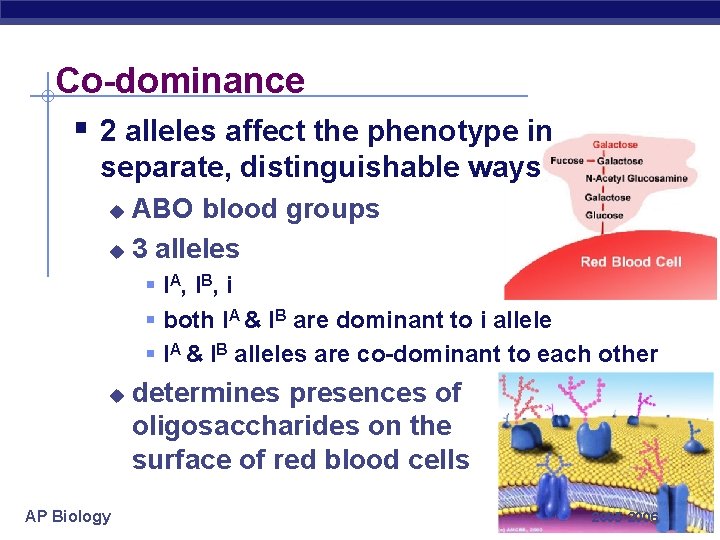
Co-dominance § 2 alleles affect the phenotype in separate, distinguishable ways ABO blood groups u 3 alleles u § I A, I B, i § both IA & IB are dominant to i allele § IA & IB alleles are co-dominant to each other u AP Biology determines presences of oligosaccharides on the surface of red blood cells 2005 -2006
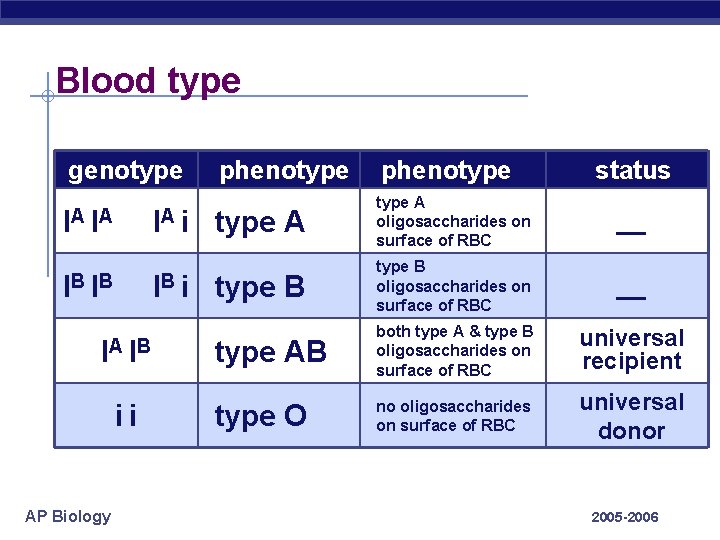
Blood type genotype phenotype status IA IA IA i type A oligosaccharides on surface of RBC IB IB IB i type B oligosaccharides on surface of RBC __ type AB both type A & type B oligosaccharides on surface of RBC universal recipient type O no oligosaccharides on surface of RBC universal donor IA IB ii AP Biology __ 2005 -2006
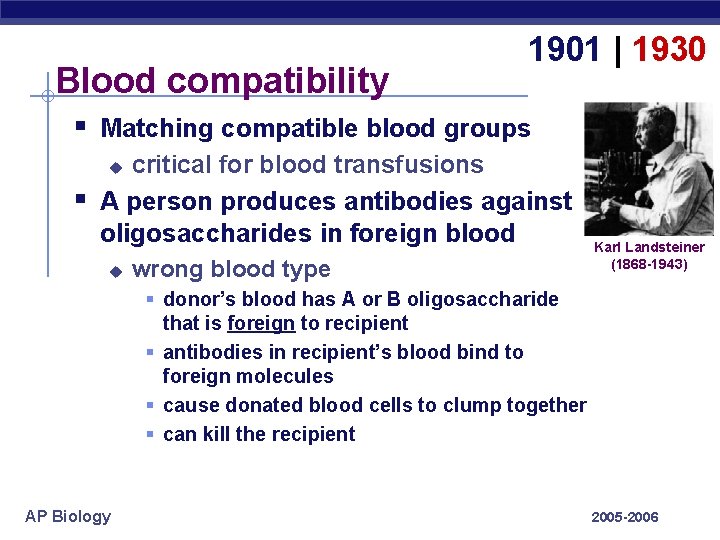
Blood compatibility 1901 | 1930 § Matching compatible blood groups critical for blood transfusions A person produces antibodies against oligosaccharides in foreign blood u wrong blood type u § Karl Landsteiner (1868 -1943) § donor’s blood has A or B oligosaccharide that is foreign to recipient § antibodies in recipient’s blood bind to foreign molecules § cause donated blood cells to clump together § can kill the recipient AP Biology 2005 -2006
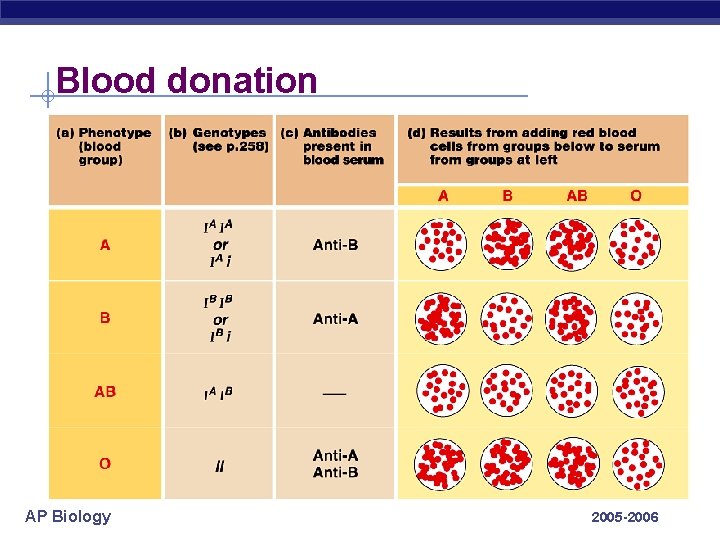
Blood donation AP Biology 2005 -2006

Pleiotropy § Most genes are pleiotropic u one gene affects more than one phenotypic character § wide-ranging effects due to a single gene: § dwarfism (achondroplasia) § gigantism (acromegaly) AP Biology 2005 -2006
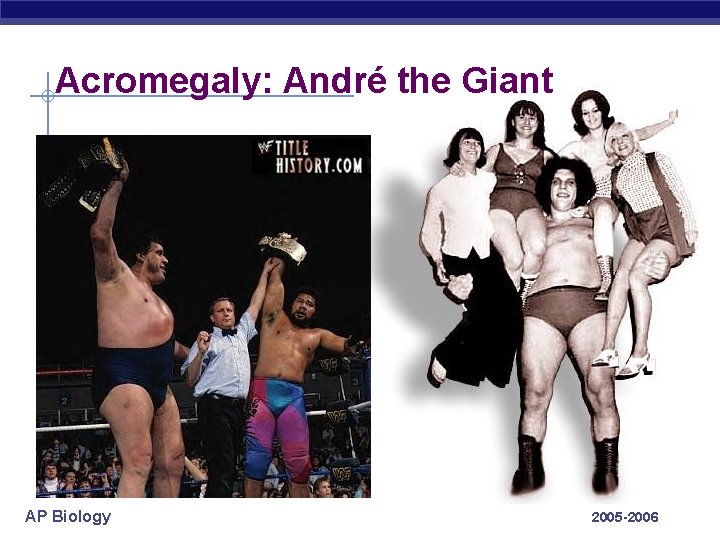
Acromegaly: André the Giant AP Biology 2005 -2006
Pleiotropy § It is not surprising that a gene can affect a number of organism’s characteristics u consider the intricate molecular & cellular interactions responsible for an organism’s development § cystic fibrosis w mucus build up in many organs § sickle cell anemia w sickling of blood cells AP Biology 2005 -2006
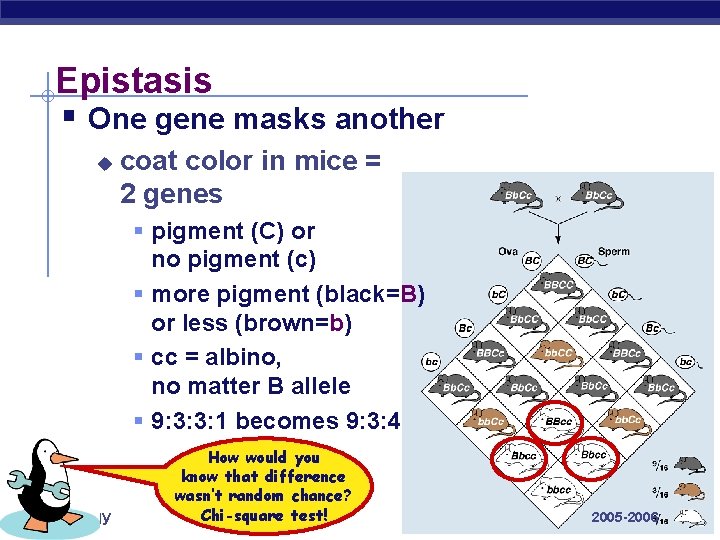
Epistasis § One gene masks another u coat color in mice = 2 genes § pigment (C) or no pigment (c) § more pigment (black=B) or less (brown=b) § cc = albino, no matter B allele § 9: 3: 3: 1 becomes 9: 3: 4 AP Biology How would you know that difference wasn’t random chance? Chi-square test! 2005 -2006

Epistasis in Labrador retrievers § 2 genes: E & B u u AP Biology pigment (E) or no pigment (e) how dark pigment will be: black (B) to brown (b) 2005 -2006
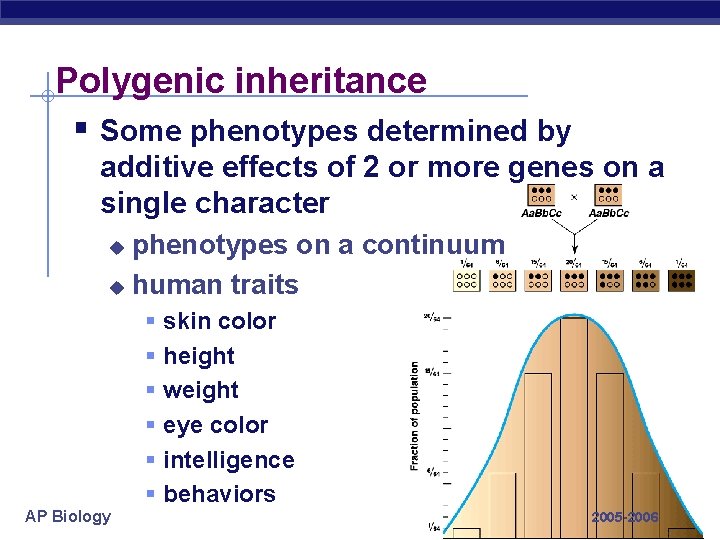
Polygenic inheritance § Some phenotypes determined by additive effects of 2 or more genes on a single character phenotypes on a continuum u human traits u § § § AP Biology skin color height weight eye color intelligence behaviors 2005 -2006
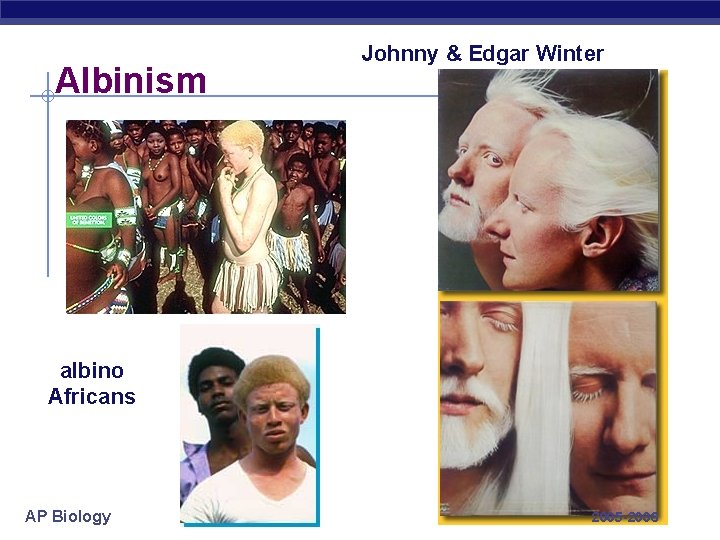
Albinism Johnny & Edgar Winter albino Africans AP Biology 2005 -2006
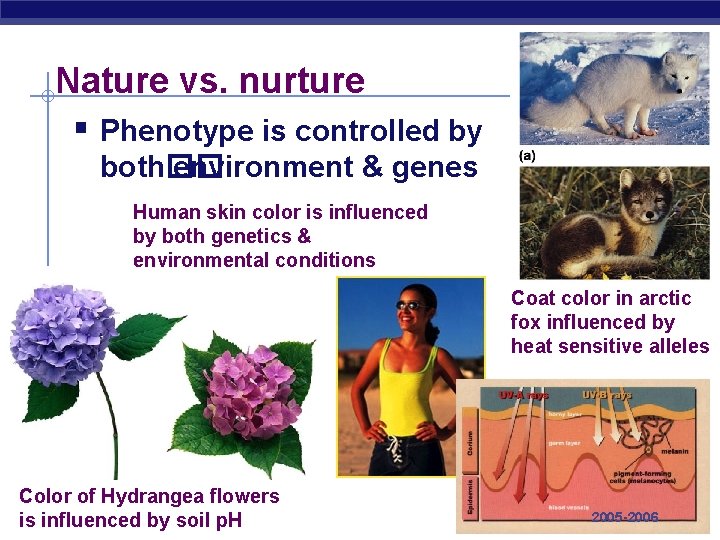
Nature vs. nurture § Phenotype is controlled by both�� environment & genes Human skin color is influenced by both genetics & environmental conditions Coat color in arctic fox influenced by heat sensitive alleles Color of Hydrangea flowers APinfluenced Biology is by soil p. H 2005 -2006
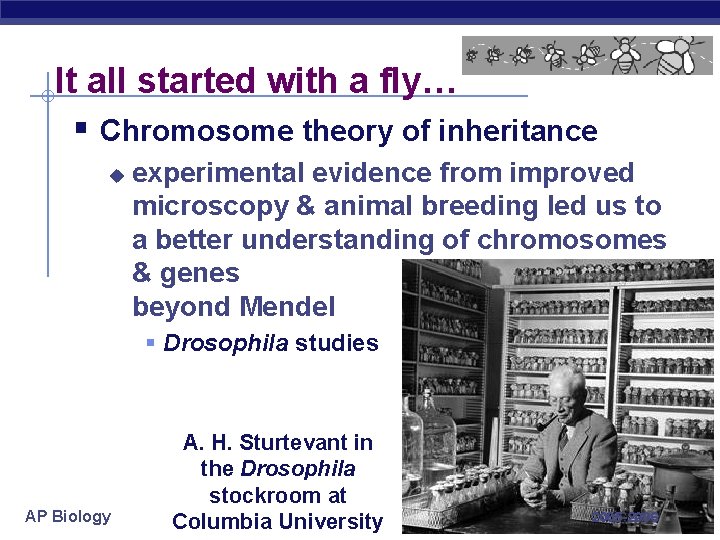
It all started with a fly… § Chromosome theory of inheritance u experimental evidence from improved microscopy & animal breeding led us to a better understanding of chromosomes & genes beyond Mendel § Drosophila studies AP Biology A. H. Sturtevant in the Drosophila stockroom at Columbia University 2005 -2006
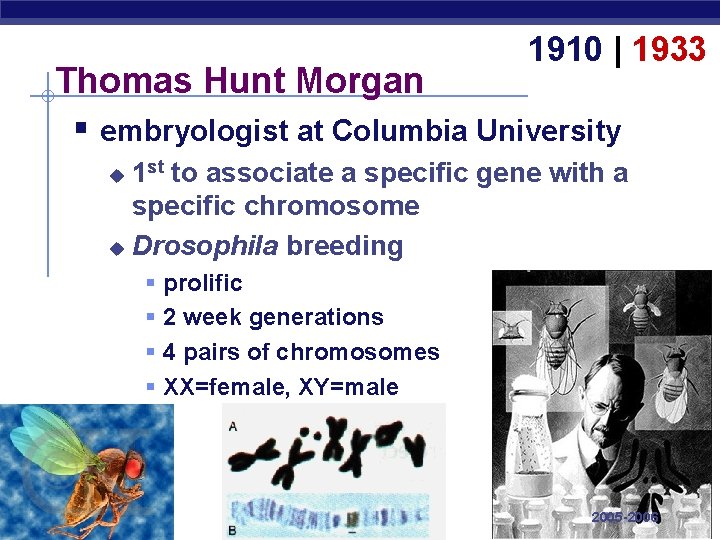
1910 | 1933 Thomas Hunt Morgan § embryologist at Columbia University 1 st to associate a specific gene with a specific chromosome u Drosophila breeding u § § AP Biology prolific 2 week generations 4 pairs of chromosomes XX=female, XY=male 2005 -2006

Morgan’s first mutant… § Wild type fly = red eyes § Morgan discovered a mutant white-eyed male u AP Biology traced the gene for eye color to a specific chromosome 2005 -2006
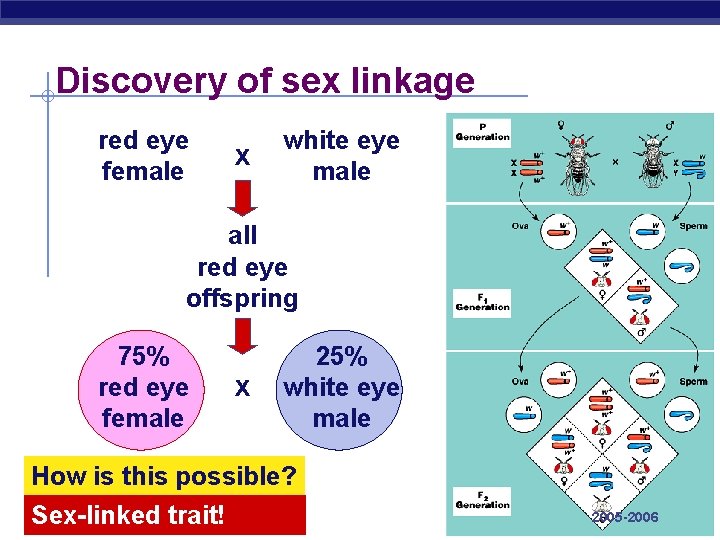
Discovery of sex linkage red eye female x white eye male all red eye offspring 75% red eye female x 25% white eye male How is this possible? Sex-linked trait! AP Biology 2005 -2006
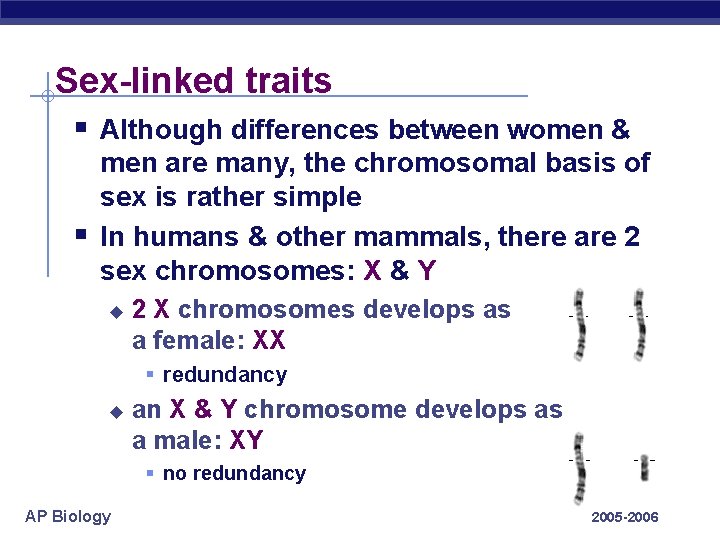
Sex-linked traits § Although differences between women & § men are many, the chromosomal basis of sex is rather simple In humans & other mammals, there are 2 sex chromosomes: X & Y u 2 X chromosomes develops as a female: XX § redundancy u an X & Y chromosome develops as a male: XY § no redundancy AP Biology 2005 -2006
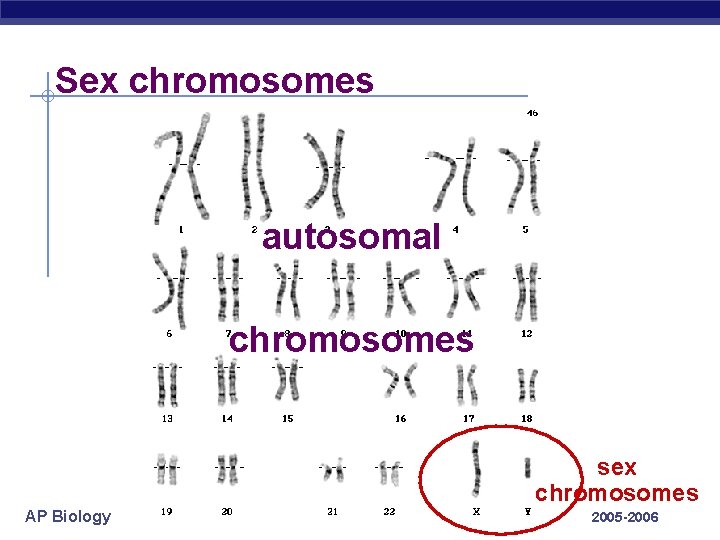
Sex chromosomes autosomal chromosomes sex chromosomes AP Biology 2005 -2006
Genes on sex chromosomes § Y chromosome u SRY: sex-determining region § master regulator for maleness § turns on genes for production of male hormones w pleiotropy! § X chromosome u other traits beyond sex determination § hemophilia § Duchenne muscular dystrophy § color-blind AP Biology 2005 -2006
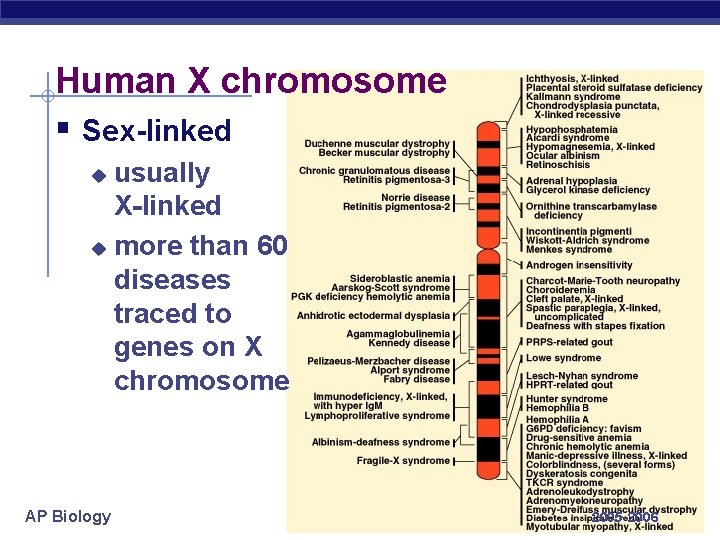
Human X chromosome § Sex-linked usually X-linked u more than 60 diseases traced to genes on X chromosome u AP Biology 2005 -2006
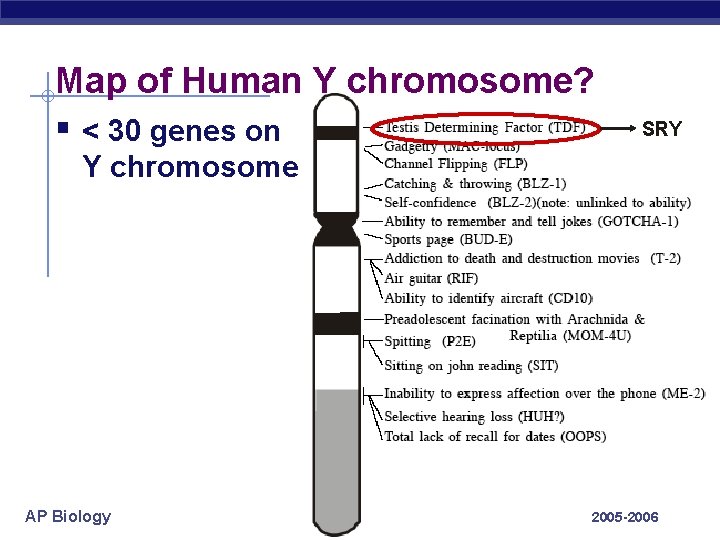
Map of Human Y chromosome? § < 30 genes on SRY Y chromosome AP Biology 2005 -2006
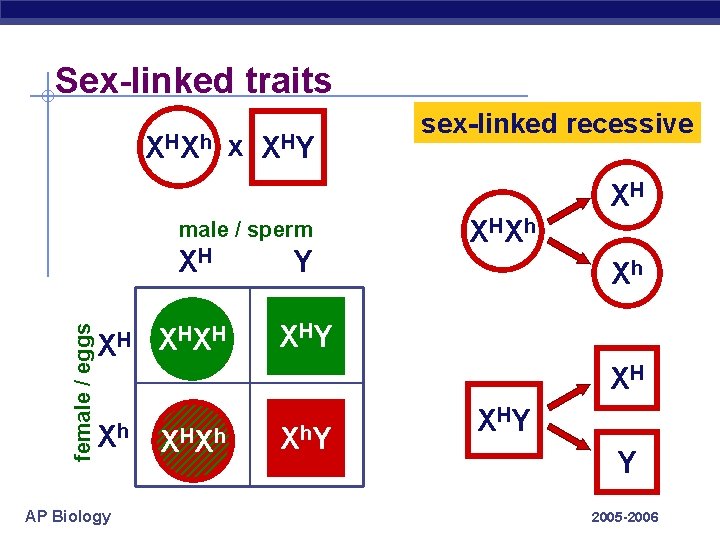
Sex-linked traits HX h x X HY HH XHh sex-linked recessive XH female / eggs male / sperm XH Xh AP Biology XH Y X HX H X HY X HX h Xh XH X HX h X h. Y X HY Y 2005 -2006

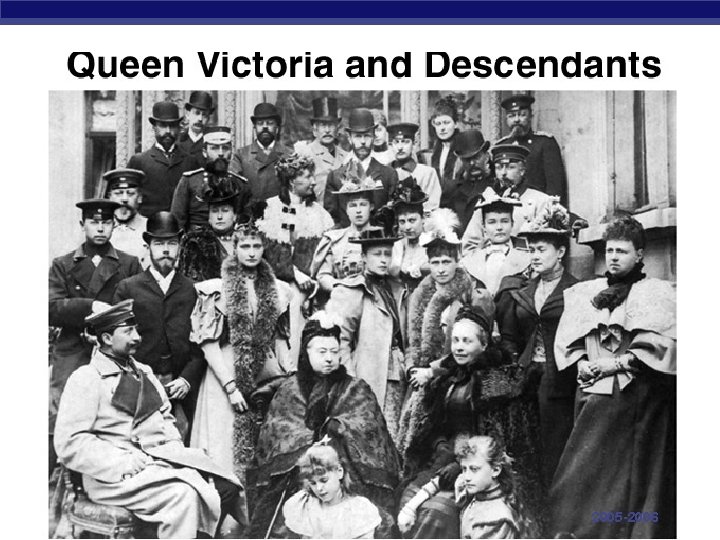
Sex-linked traits summary § X-linked follow the X chromosomes u males get their X from their mother u trait is never passed from father to son u § Y-linked very few traits u only 26 genes u trait is only passed from father to son u females cannot inherit trait u AP Biology 2005 -2006
AP Biology 2005 -2006

AP Biology 2005 -2006
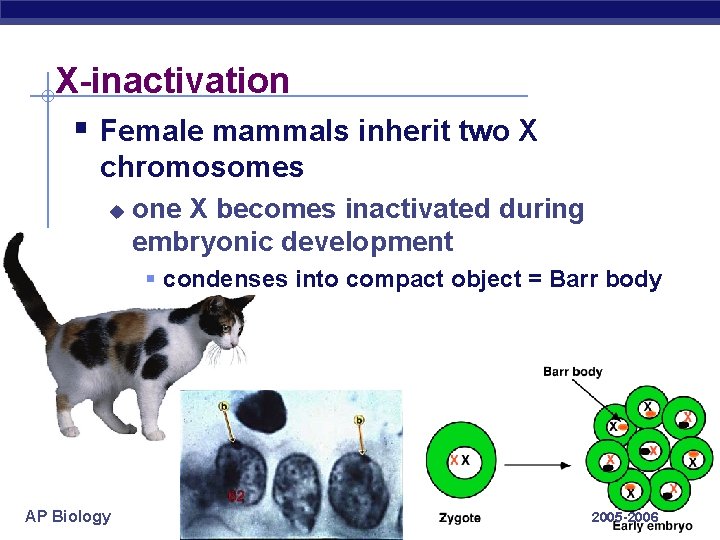
X-inactivation § Female mammals inherit two X chromosomes u one X becomes inactivated during embryonic development § condenses into compact object = Barr body AP Biology 2005 -2006
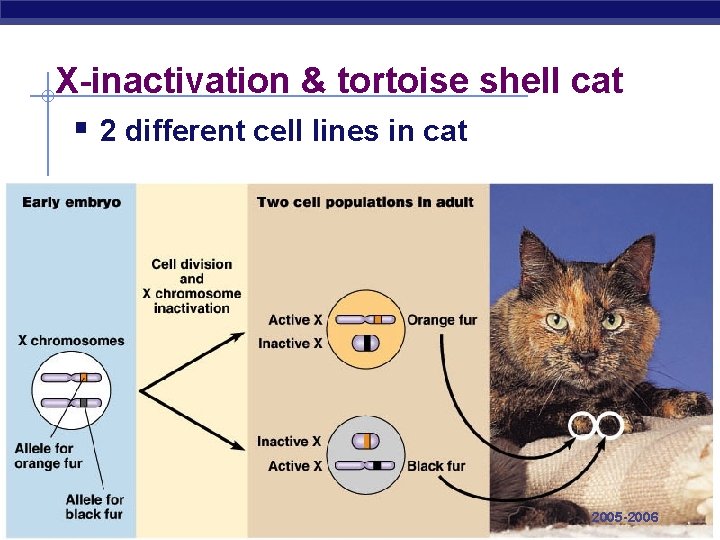
X-inactivation & tortoise shell cat § 2 different cell lines in cat AP Biology 2005 -2006
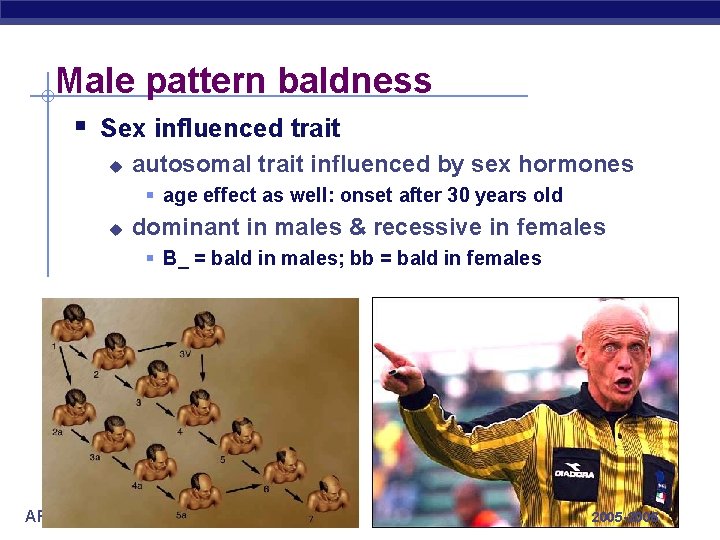
Male pattern baldness § Sex influenced trait u autosomal trait influenced by sex hormones § age effect as well: onset after 30 years old u dominant in males & recessive in females § B_ = bald in males; bb = bald in females AP Biology 2005 -2006
Mechanisms of inheritance § What causes the differences in alleles of a trait? yellow vs. green color u smooth vs. wrinkled seeds u dark vs. light skin u Tay sachs disease vs. no disease u Sickle cell anemia vs. no disease u AP Biology 2005 -2006

Mechanisms of inheritance § What causes dominance vs. recessive? genes code for polypeptides u polypeptides are processed into proteins u proteins function as… u § enzymes § structural proteins § hormones AP Biology 2005 -2006
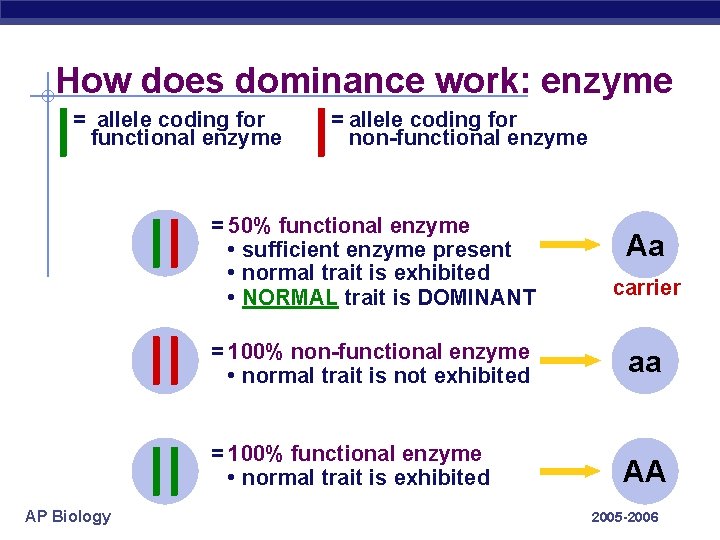
How does dominance work: enzyme = allele coding for functional enzyme AP Biology = allele coding for non-functional enzyme = 50% functional enzyme • sufficient enzyme present • normal trait is exhibited • NORMAL trait is DOMINANT carrier = 100% non-functional enzyme • normal trait is not exhibited aa = 100% functional enzyme • normal trait is exhibited AA Aa 2005 -2006

How does dominance work: structure = allele coding for functional structural protein = allele coding for non-functional structural protein = 50% functional structure • 50% proteins malformed • normal trait is not exhibited • MUTANT trait is DOMINANT AP Biology Aa = 100% non-functional structure • normal trait is not exhibited AA = 100% functional structure • normal trait is exhibited aa 2005 -2006
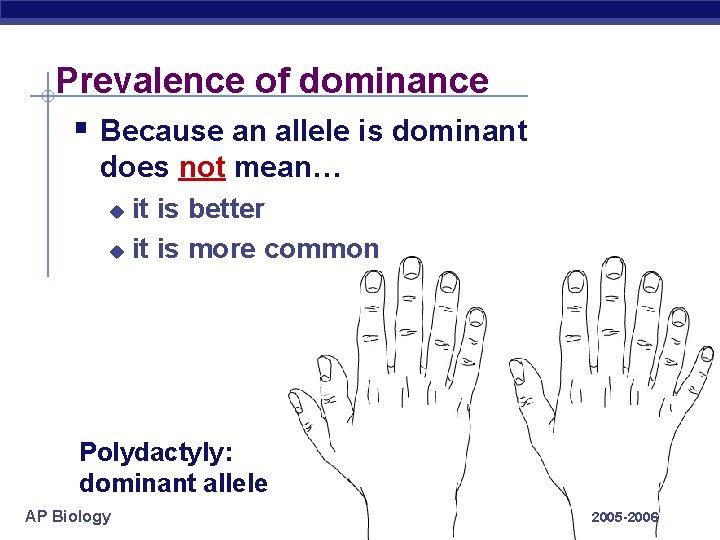
Prevalence of dominance § Because an allele is dominant does not mean… it is better u it is more common u Polydactyly: dominant allele AP Biology 2005 -2006

Polydactyly individuals are born with extra fingers or toes dominant to the recessive allele for 5 digits recessive allele far more common than dominant 399 individuals out of 400 have only 5 digits most people are homozygous recessive (aa) AP Biology 2005 -2006

Hound Dog Taylor AP Biology 2005 -2006
Any Questions? ? AP Biology 2005 -2006
- Slides: 41