
Chapter 14 Aromatic Compounds Created by Professor William
Chapter 14 Aromatic Compounds Created by Professor William Tam & Dr. Phillis Chang Copyright © 2014 by John Wiley & Sons, Inc. All rights reserved.

1. The Discovery of Benzene v Benzene: v In 1825, Faraday isolated benzene from a compressed illuminating gas that had been made by pyrolyzing whale oil © 2014 by John Wiley & Sons, Inc. All rights reserved.
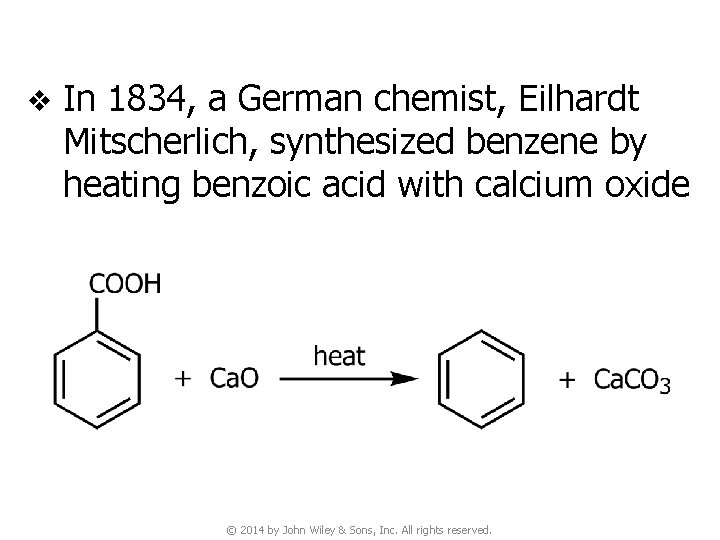
v In 1834, a German chemist, Eilhardt Mitscherlich, synthesized benzene by heating benzoic acid with calcium oxide © 2014 by John Wiley & Sons, Inc. All rights reserved.
In the 19 th century, organic compounds were classified as being either aliphatic or aromatic v Aliphatic ● The chemical behavior of a compound was “fatlike” v Aromatic ● The compound had a low hydrogento-carbon ratio and was “fragrant” v © 2014 by John Wiley & Sons, Inc. All rights reserved.

2. Nomenclature of Benzene Derivatives v Naming monosubstituted benzenes ● In many simple compounds, benzene is the parent name and the substituent is simply indicated by a prefix © 2014 by John Wiley & Sons, Inc. All rights reserved.
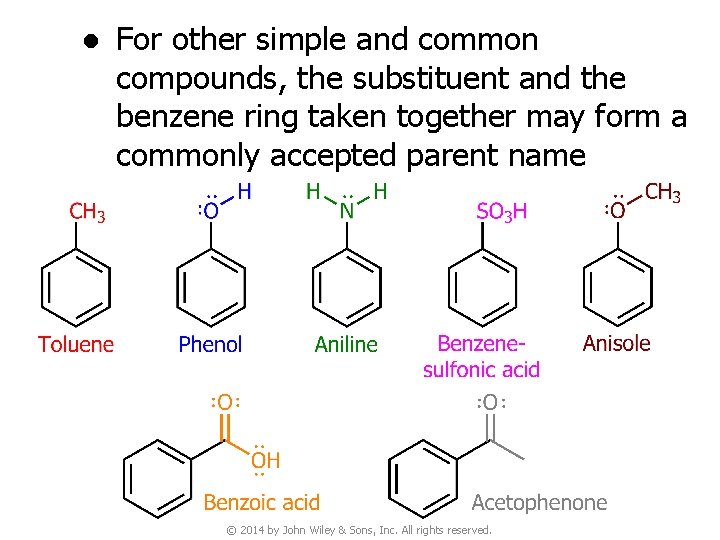
● For other simple and common compounds, the substituent and the benzene ring taken together may form a commonly accepted parent name © 2014 by John Wiley & Sons, Inc. All rights reserved.
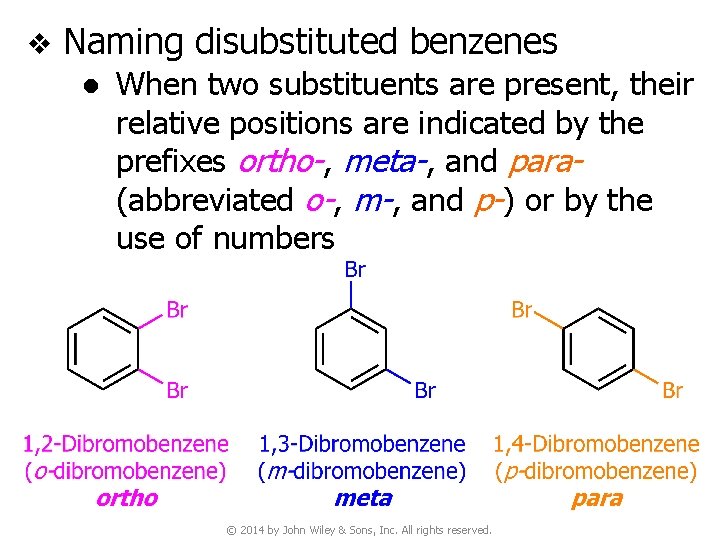
v Naming disubstituted benzenes ● When two substituents are present, their relative positions are indicated by the prefixes ortho-, meta-, and para(abbreviated o-, m-, and p-) or by the use of numbers © 2014 by John Wiley & Sons, Inc. All rights reserved.
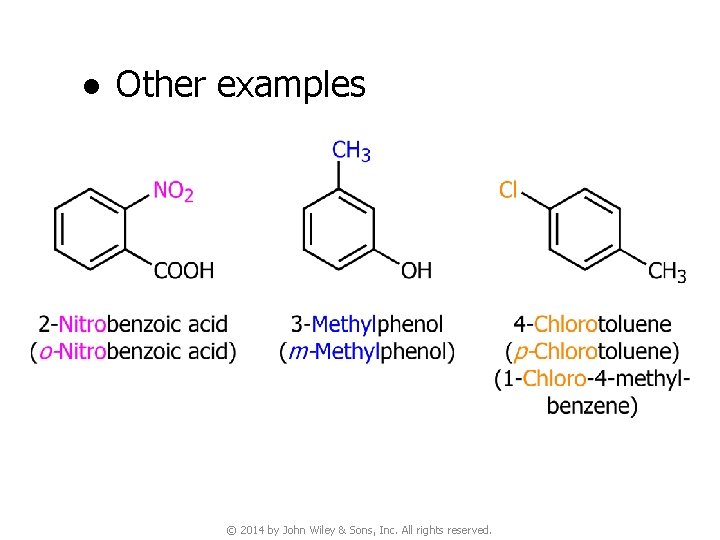
● Other examples © 2014 by John Wiley & Sons, Inc. All rights reserved.
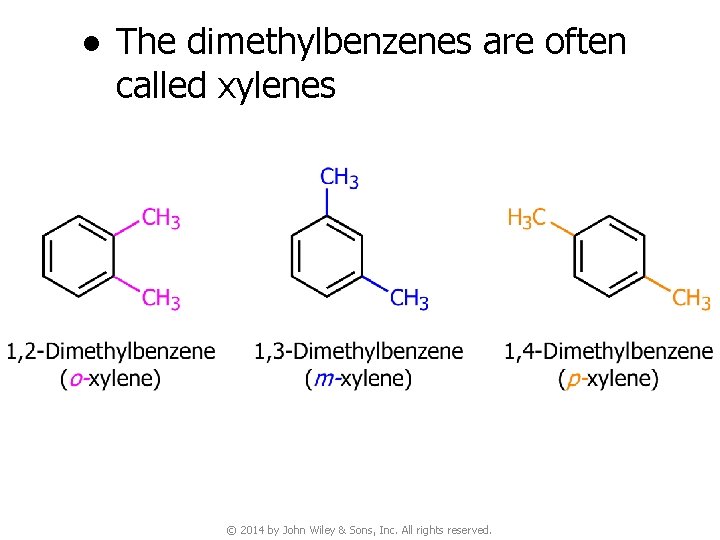
● The dimethylbenzenes are often called xylenes © 2014 by John Wiley & Sons, Inc. All rights reserved.
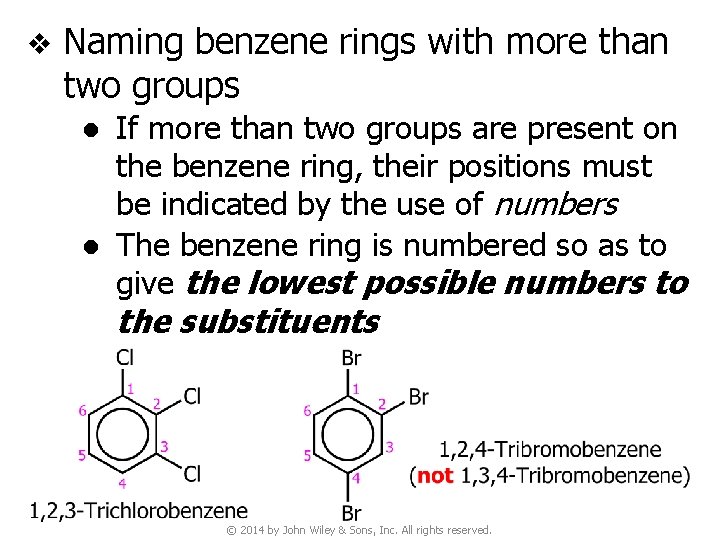
v Naming benzene rings with more than two groups ● If more than two groups are present on the benzene ring, their positions must be indicated by the use of numbers ● The benzene ring is numbered so as to give the lowest possible numbers to the substituents © 2014 by John Wiley & Sons, Inc. All rights reserved.
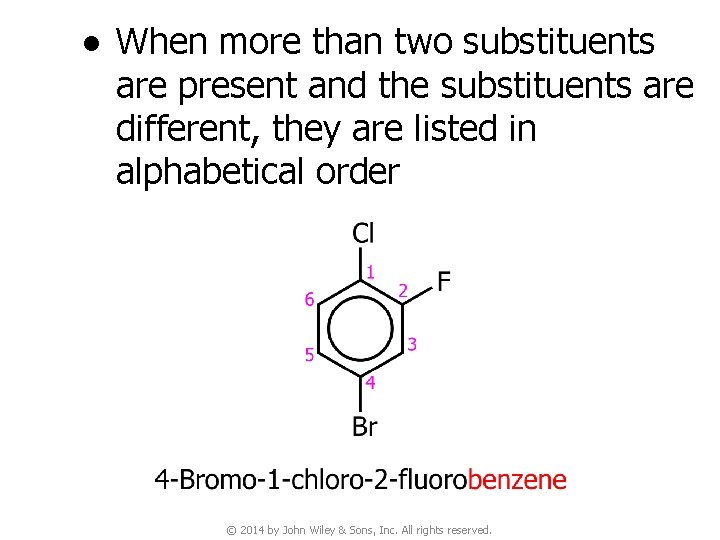
● When more than two substituents are present and the substituents are different, they are listed in alphabetical order © 2014 by John Wiley & Sons, Inc. All rights reserved.
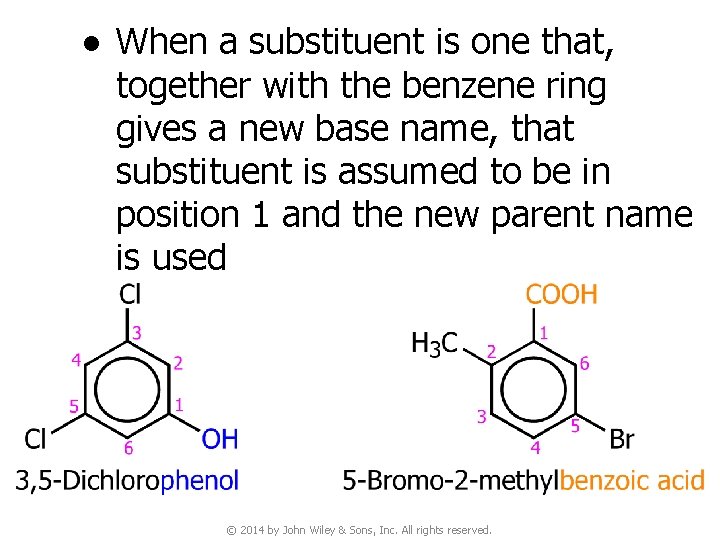
● When a substituent is one that, together with the benzene ring gives a new base name, that substituent is assumed to be in position 1 and the new parent name is used © 2014 by John Wiley & Sons, Inc. All rights reserved.
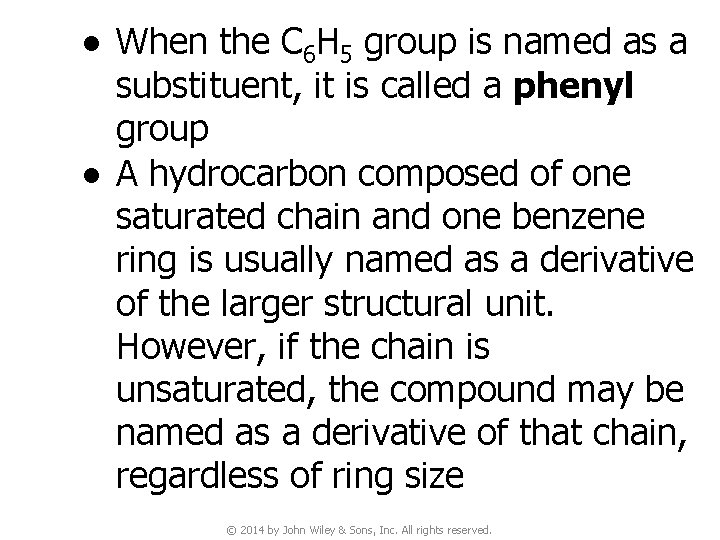
● When the C 6 H 5 group is named as a substituent, it is called a phenyl group ● A hydrocarbon composed of one saturated chain and one benzene ring is usually named as a derivative of the larger structural unit. However, if the chain is unsaturated, the compound may be named as a derivative of that chain, regardless of ring size © 2014 by John Wiley & Sons, Inc. All rights reserved.
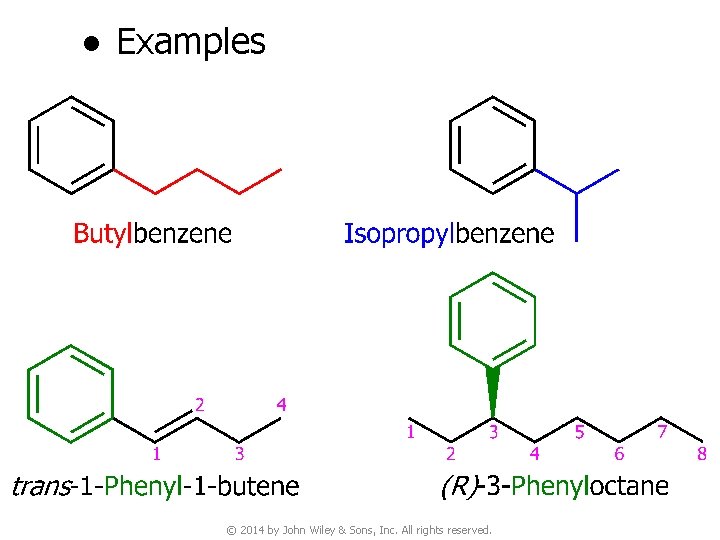
● Examples © 2014 by John Wiley & Sons, Inc. All rights reserved.
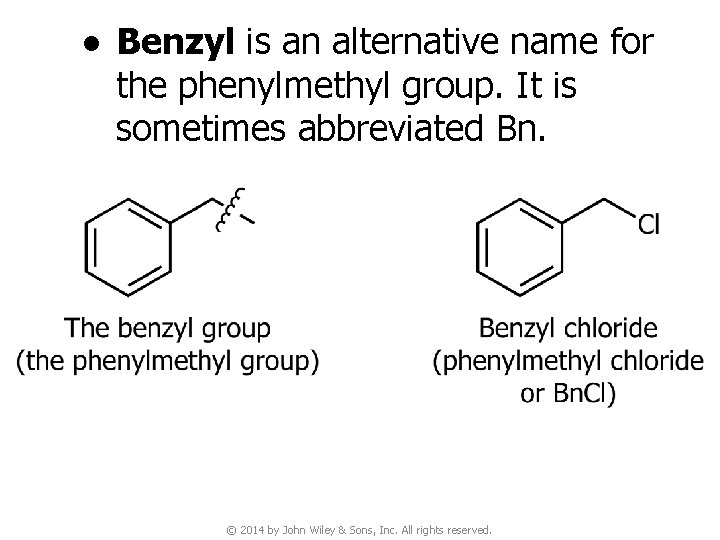
● Benzyl is an alternative name for the phenylmethyl group. It is sometimes abbreviated Bn. © 2014 by John Wiley & Sons, Inc. All rights reserved.
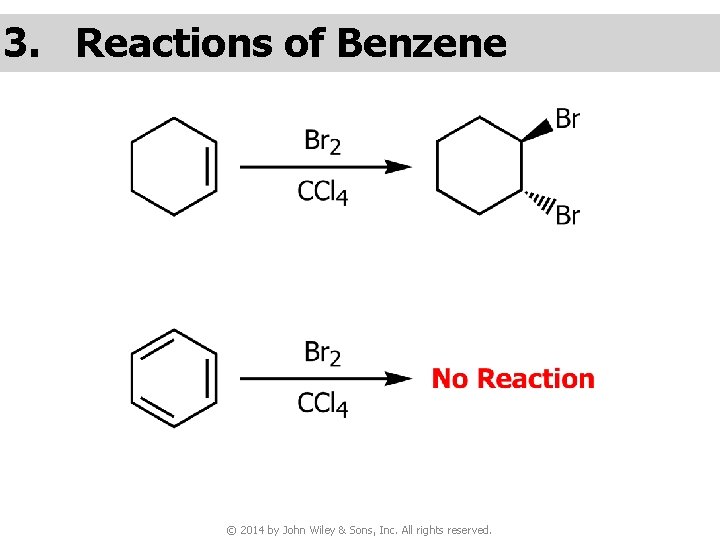
3. Reactions of Benzene © 2014 by John Wiley & Sons, Inc. All rights reserved.
© 2014 by John Wiley & Sons, Inc. All rights reserved.
© 2014 by John Wiley & Sons, Inc. All rights reserved.
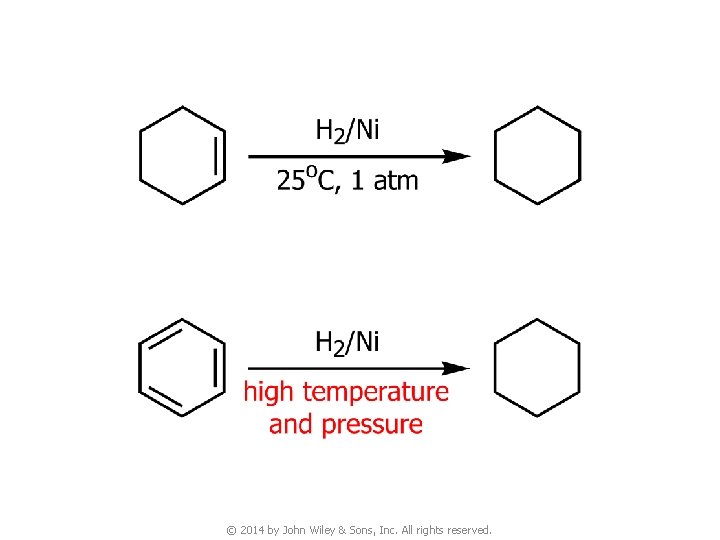
© 2014 by John Wiley & Sons, Inc. All rights reserved.
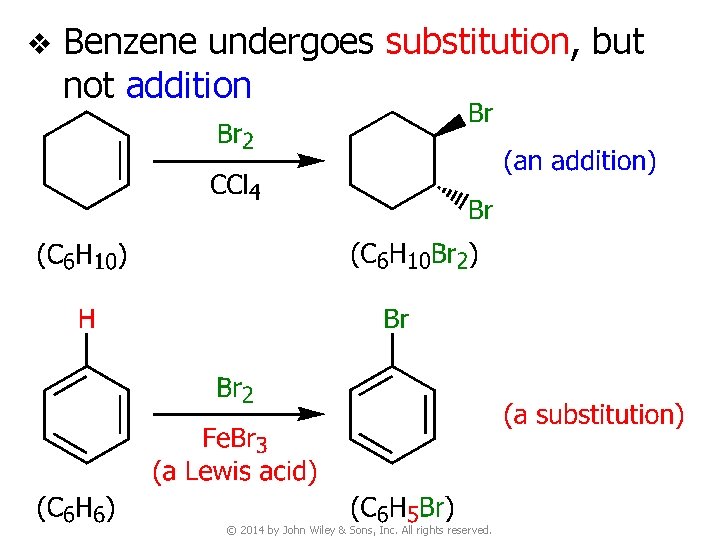
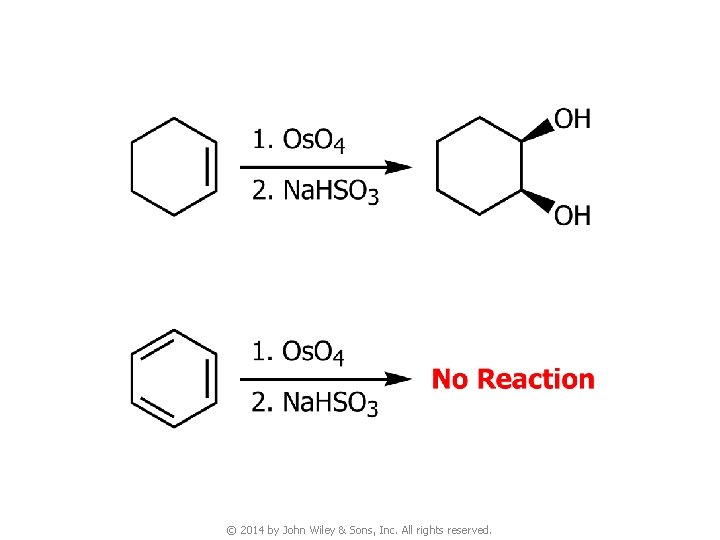
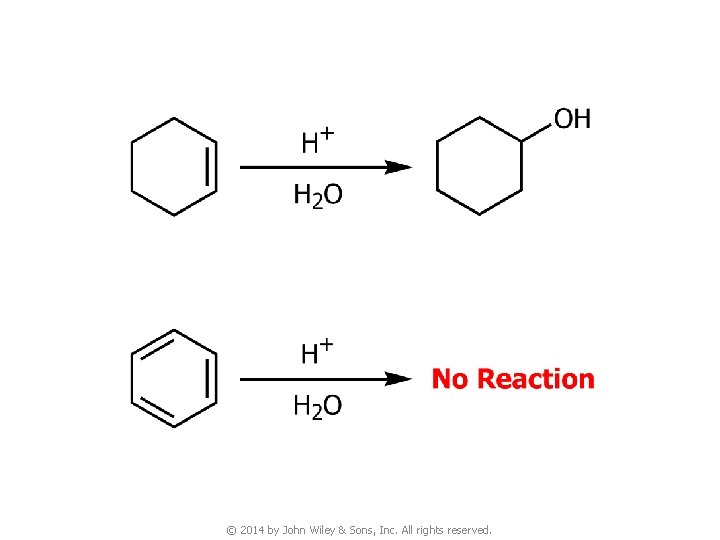
v Benzene undergoes substitution, but not addition © 2014 by John Wiley & Sons, Inc. All rights reserved.
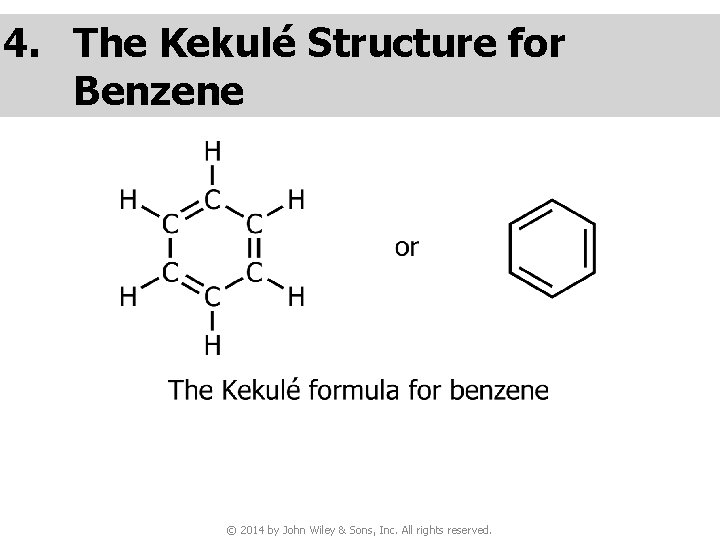
4. The Kekulé Structure for Benzene © 2014 by John Wiley & Sons, Inc. All rights reserved.
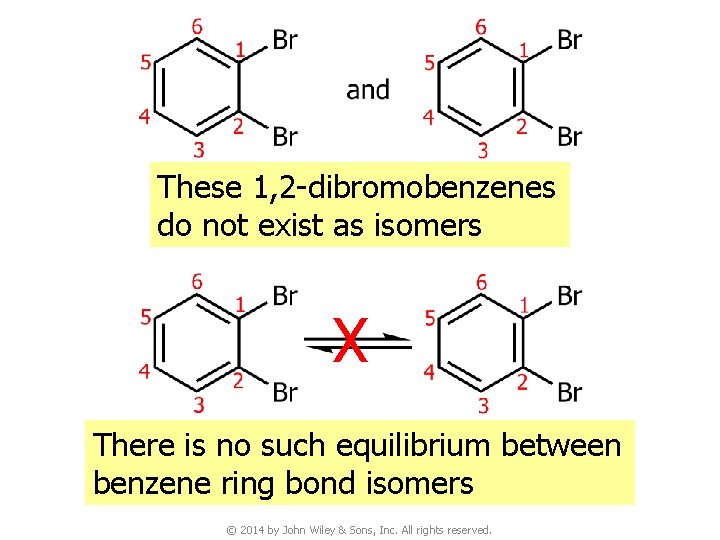
These 1, 2 -dibromobenzenes do not exist as isomers X There is no such equilibrium between benzene ring bond isomers © 2014 by John Wiley & Sons, Inc. All rights reserved.
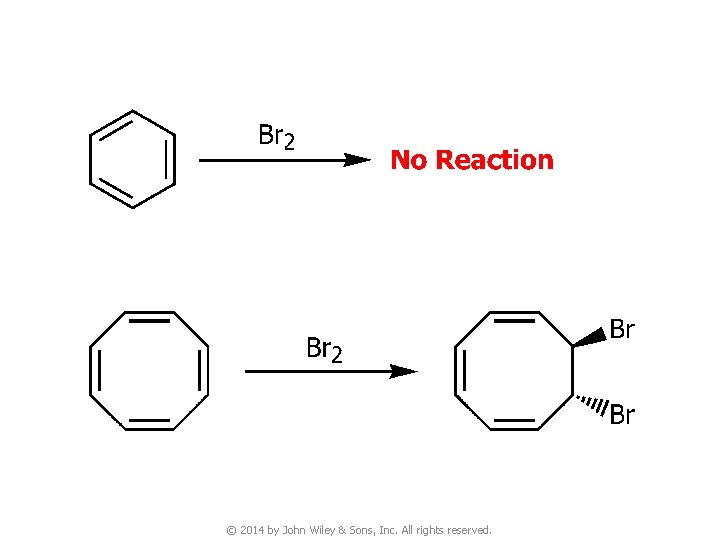
© 2014 by John Wiley & Sons, Inc. All rights reserved.
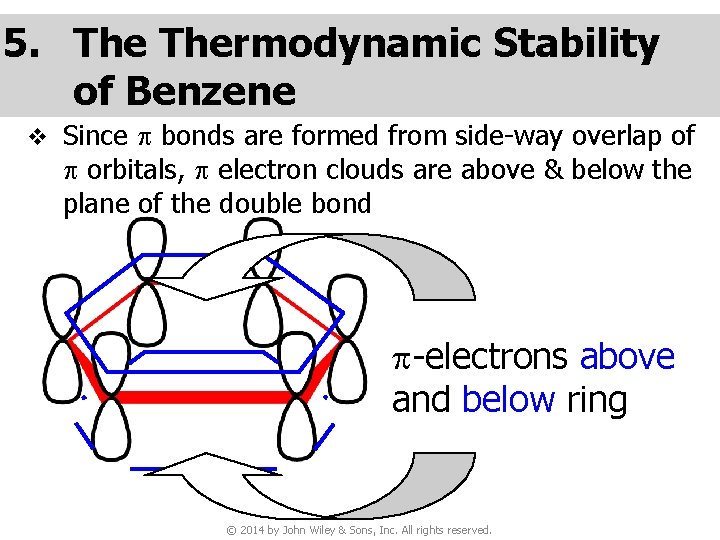
5. Thermodynamic Stability of Benzene v Since p bonds are formed from side-way overlap of p orbitals, p electron clouds are above & below the plane of the double bond p-electrons above and below ring © 2014 by John Wiley & Sons, Inc. All rights reserved.
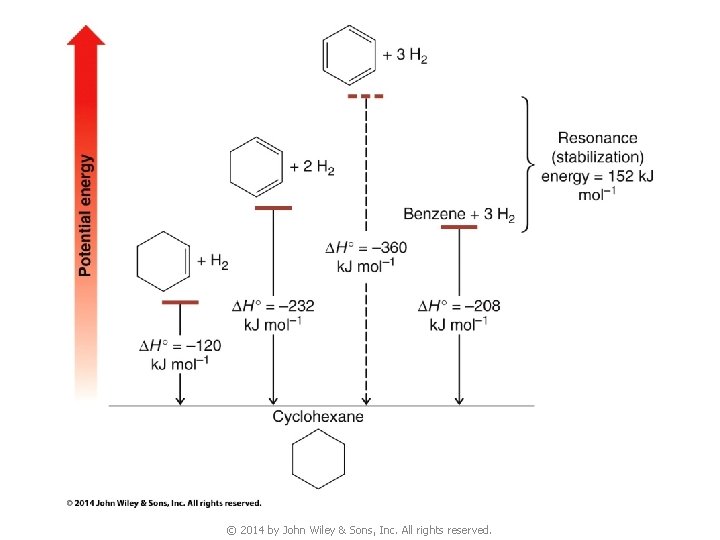
© 2014 by John Wiley & Sons, Inc. All rights reserved.
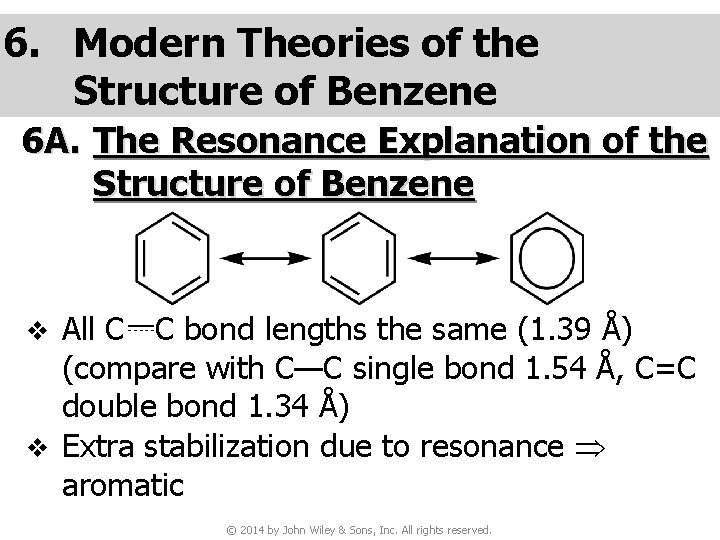
6. Modern Theories of the Structure of Benzene 6 A. The Resonance Explanation of the Structure of Benzene All C C bond lengths the same (1. 39 Å) (compare with C—C single bond 1. 54 Å, C=C double bond 1. 34 Å) v Extra stabilization due to resonance aromatic v © 2014 by John Wiley & Sons, Inc. All rights reserved.
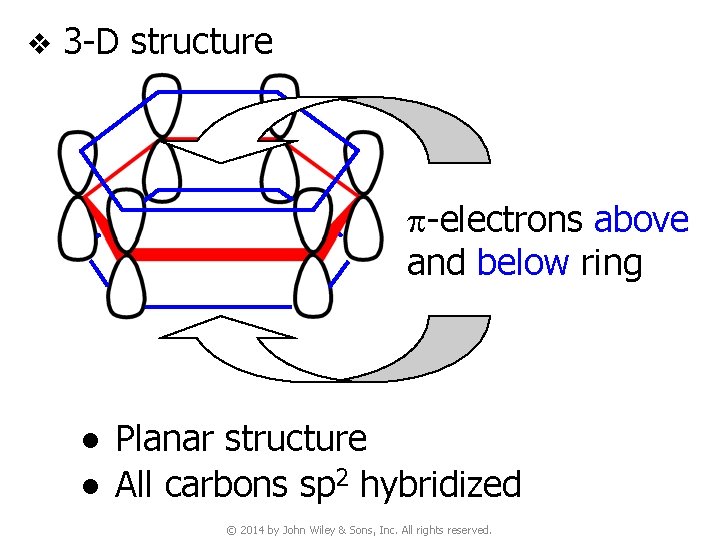
v 3 -D structure p-electrons above and below ring ● Planar structure ● All carbons sp 2 hybridized © 2014 by John Wiley & Sons, Inc. All rights reserved.
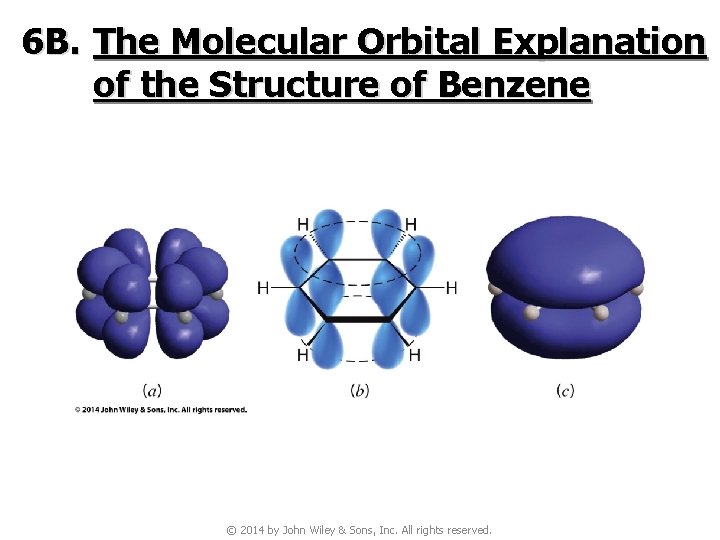
6 B. The Molecular Orbital Explanation of the Structure of Benzene © 2014 by John Wiley & Sons, Inc. All rights reserved.
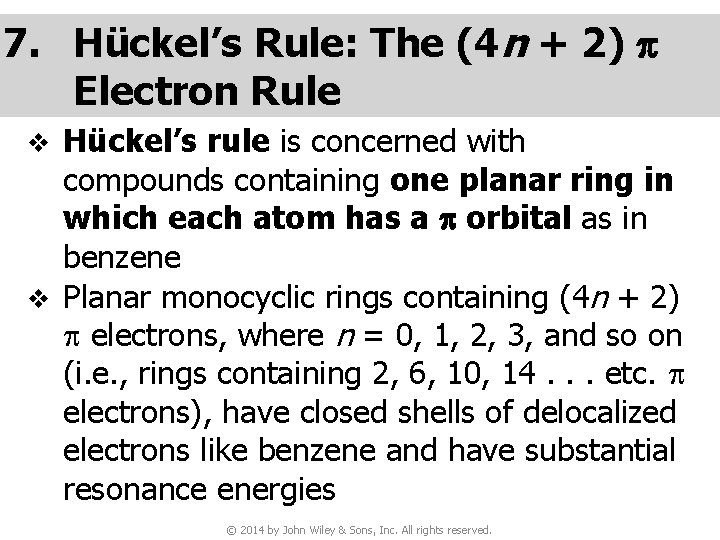
7. Hückel’s Rule: The (4 n + 2) p Electron Rule Hückel’s rule is concerned with compounds containing one planar ring in which each atom has a p orbital as in benzene v Planar monocyclic rings containing (4 n + 2) p electrons, where n = 0, 1, 2, 3, and so on (i. e. , rings containing 2, 6, 10, 14. . . etc. p electrons), have closed shells of delocalized electrons like benzene and have substantial resonance energies v © 2014 by John Wiley & Sons, Inc. All rights reserved.
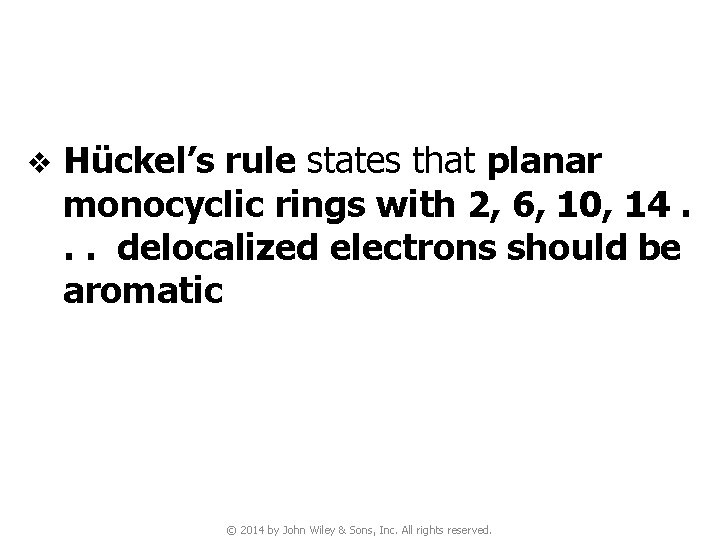
v Hückel’s rule states that planar monocyclic rings with 2, 6, 10, 14. . . delocalized electrons should be aromatic © 2014 by John Wiley & Sons, Inc. All rights reserved.
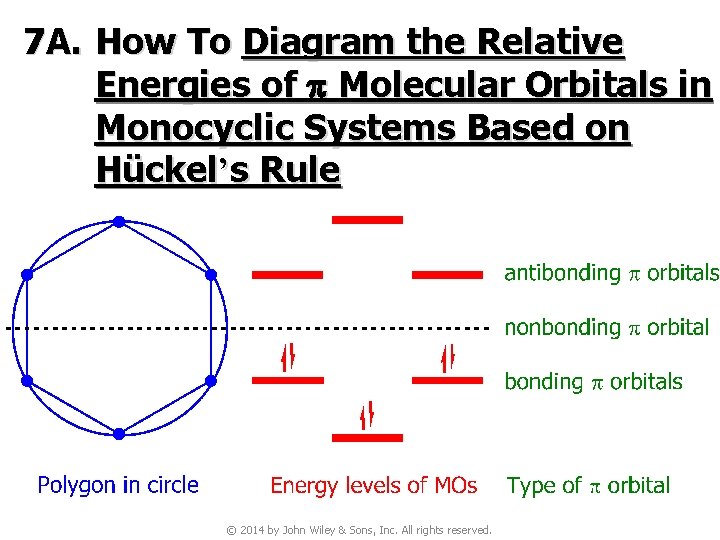
7 A. How To Diagram the Relative Energies of p Molecular Orbitals in Monocyclic Systems Based on Hückel’s Rule © 2014 by John Wiley & Sons, Inc. All rights reserved.
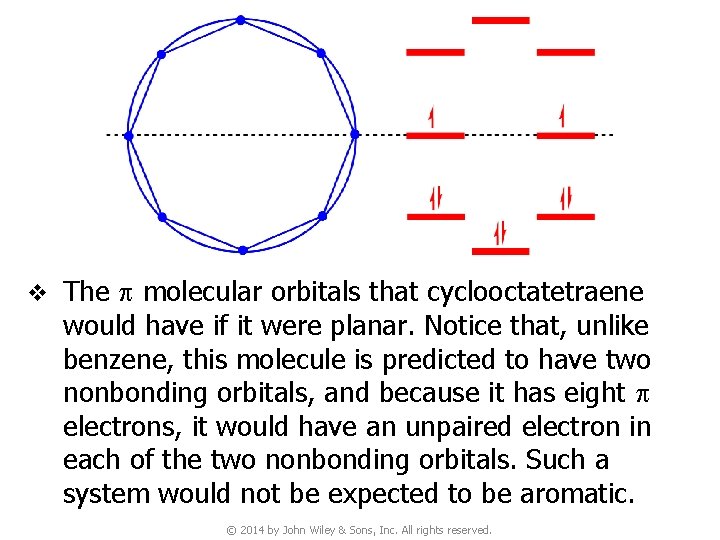
v The p molecular orbitals that cyclooctatetraene would have if it were planar. Notice that, unlike benzene, this molecule is predicted to have two nonbonding orbitals, and because it has eight p electrons, it would have an unpaired electron in each of the two nonbonding orbitals. Such a system would not be expected to be aromatic. © 2014 by John Wiley & Sons, Inc. All rights reserved.
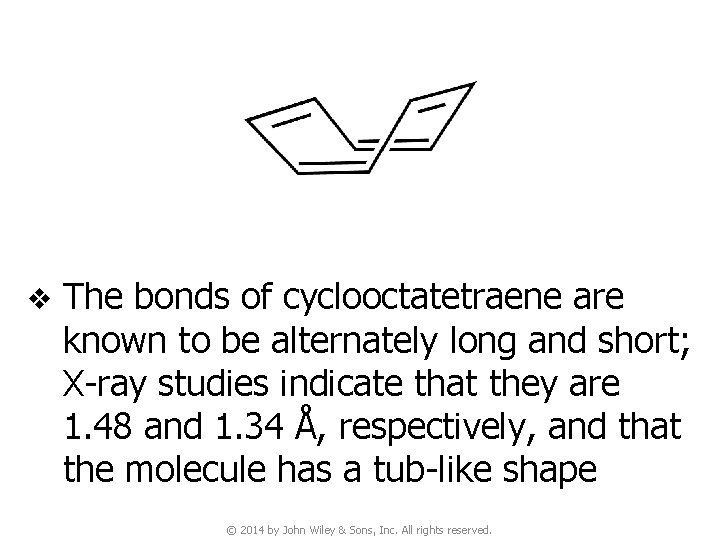
v The bonds of cyclooctatetraene are known to be alternately long and short; X-ray studies indicate that they are 1. 48 and 1. 34 Å, respectively, and that the molecule has a tub-like shape © 2014 by John Wiley & Sons, Inc. All rights reserved.
7 B. The Annulenes v Hückel’s rule predicts that annulenes will be aromatic if their molecules have (4 n + 2) p electrons and have a planar carbon skeleton © 2014 by John Wiley & Sons, Inc. All rights reserved.
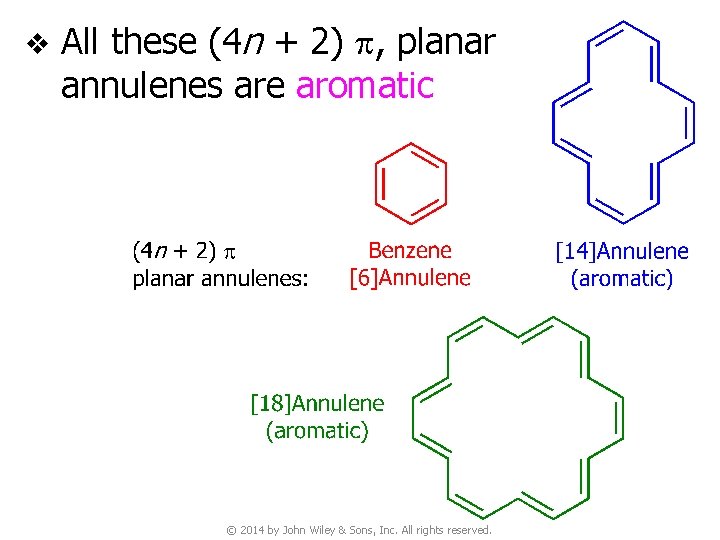
v All these (4 n + 2) p, planar annulenes are aromatic © 2014 by John Wiley & Sons, Inc. All rights reserved.
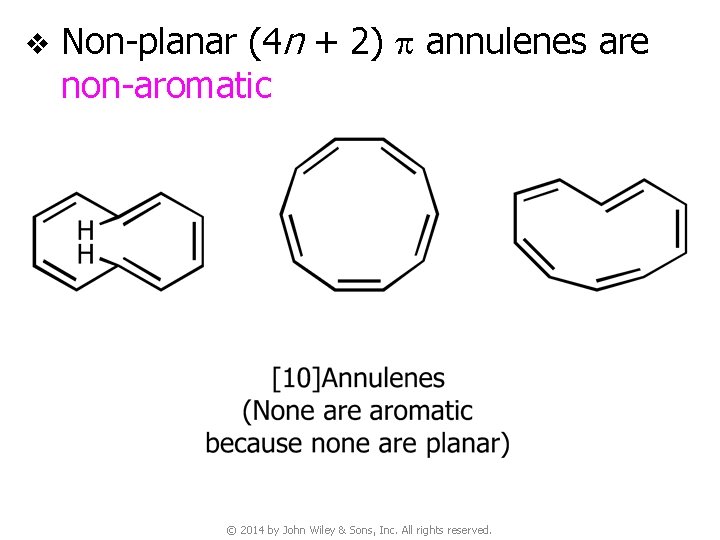
v Non-planar (4 n + 2) p annulenes are non-aromatic © 2014 by John Wiley & Sons, Inc. All rights reserved.
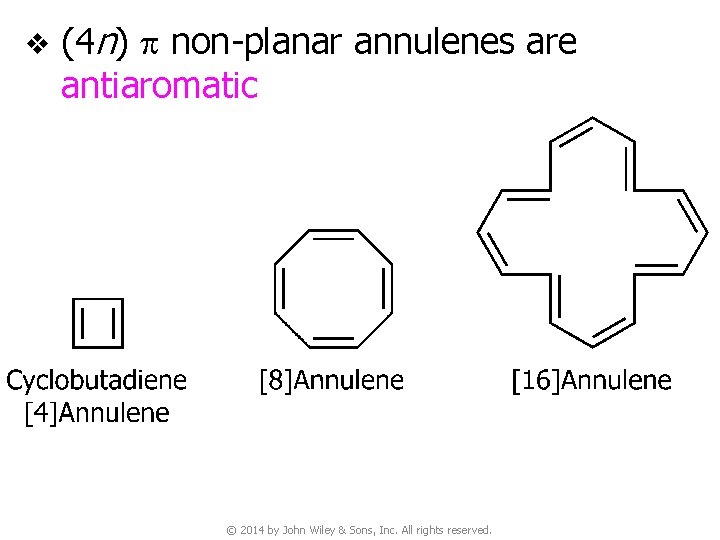
v (4 n) p non-planar annulenes are antiaromatic © 2014 by John Wiley & Sons, Inc. All rights reserved.
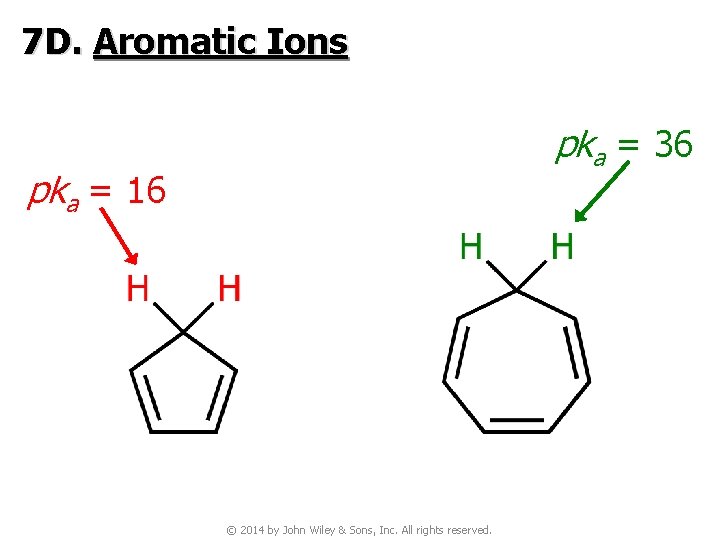
7 D. Aromatic Ions pka = 36 pka = 16 © 2014 by John Wiley & Sons, Inc. All rights reserved.
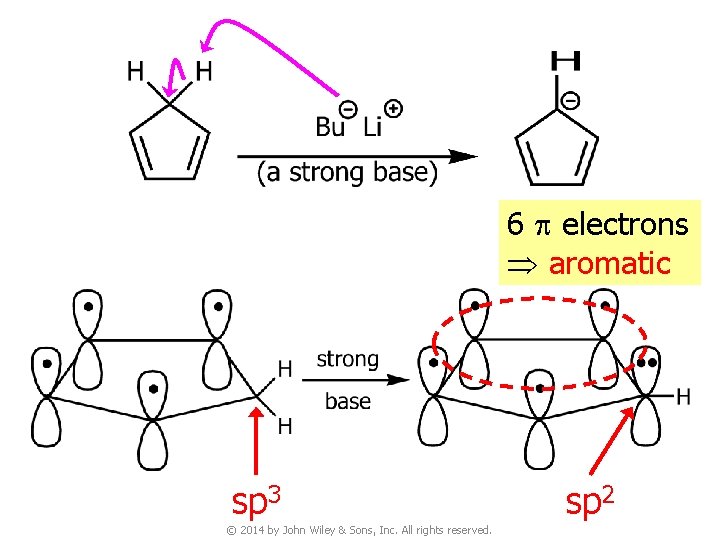
6 p electrons aromatic sp 3 © 2014 by John Wiley & Sons, Inc. All rights reserved. sp 2
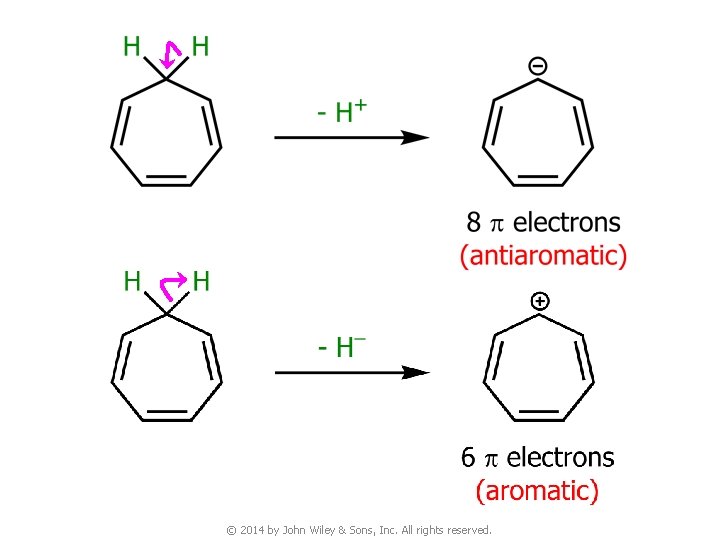
© 2014 by John Wiley & Sons, Inc. All rights reserved.
7 E. Aromatic, Antiaromatic, and Nonaromatic Compounds v An aromatic compound has its p electrons delocalized over the entire ring and it is stabilized by the pelectron delocalization © 2014 by John Wiley & Sons, Inc. All rights reserved.
v One way to evaluate whether a cyclic compound is stabilized by delocalization of p electrons through its ring is to compare it with an openchain compound having the same number of p electrons © 2014 by John Wiley & Sons, Inc. All rights reserved.
v Based on sound calculations or experiments ● If the ring has lower p-electron energy, then the ring is aromatic ● If the ring and the chain have the same p-electron energy, then the ring is nonaromatic ● If the ring has greater p-electron energy than the open chain, then the ring is antiaromatic © 2014 by John Wiley & Sons, Inc. All rights reserved.
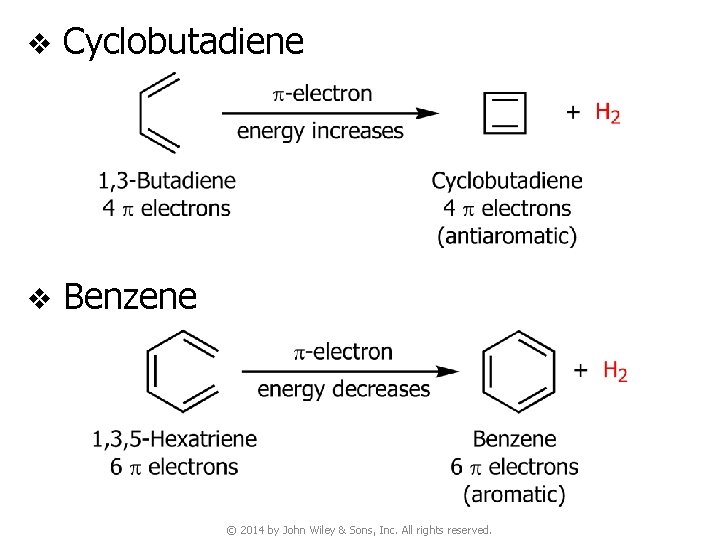
v Cyclobutadiene v Benzene © 2014 by John Wiley & Sons, Inc. All rights reserved.
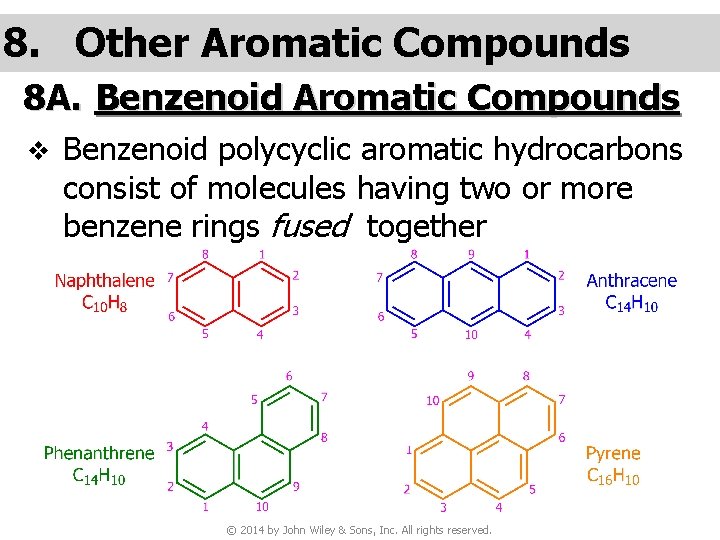
8. Other Aromatic Compounds 8 A. Benzenoid Aromatic Compounds v Benzenoid polycyclic aromatic hydrocarbons consist of molecules having two or more benzene rings fused together © 2014 by John Wiley & Sons, Inc. All rights reserved.
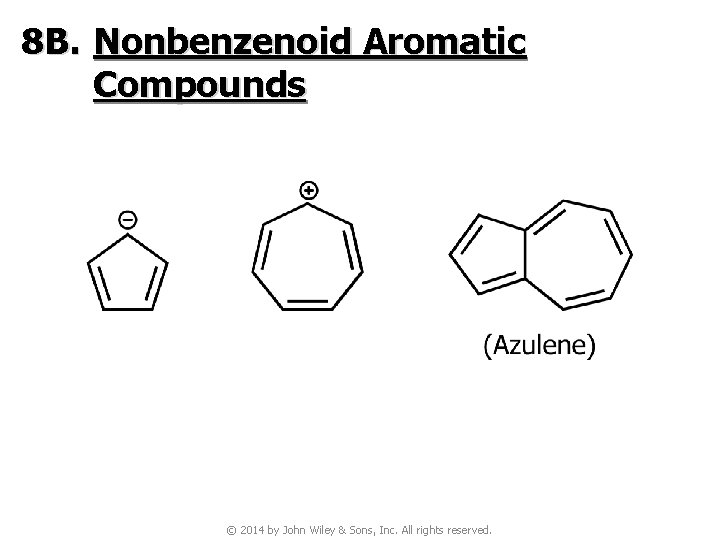
8 B. Nonbenzenoid Aromatic Compounds © 2014 by John Wiley & Sons, Inc. All rights reserved.
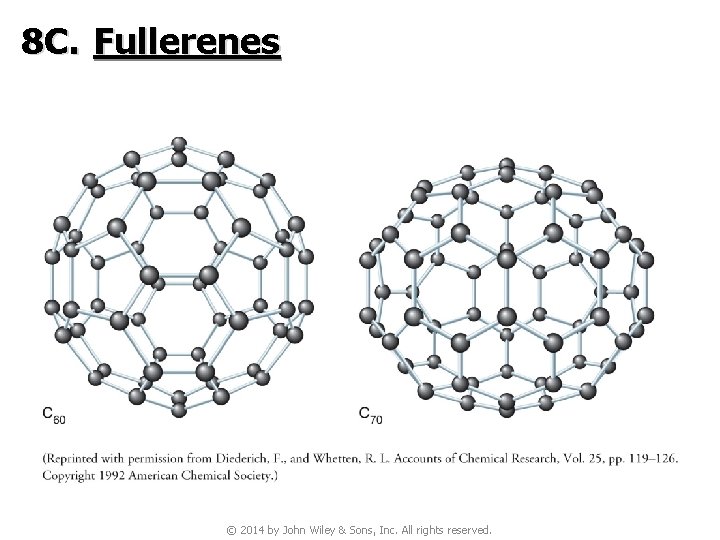
8 C. Fullerenes © 2014 by John Wiley & Sons, Inc. All rights reserved.
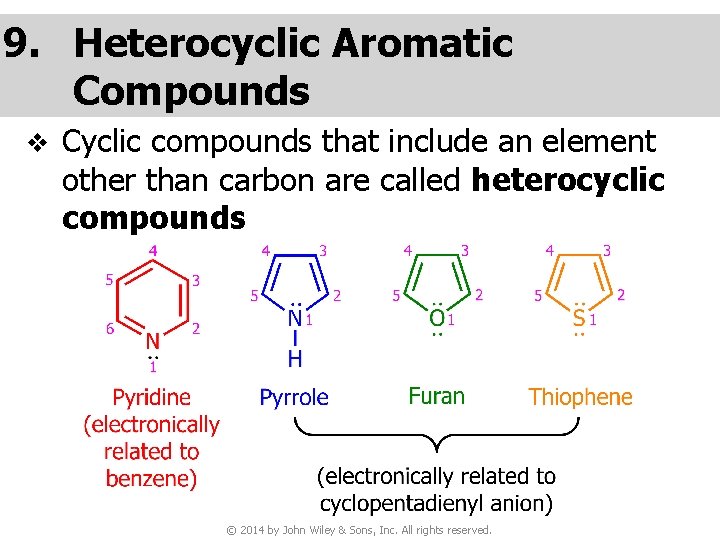
9. Heterocyclic Aromatic Compounds v Cyclic compounds that include an element other than carbon are called heterocyclic compounds © 2014 by John Wiley & Sons, Inc. All rights reserved.
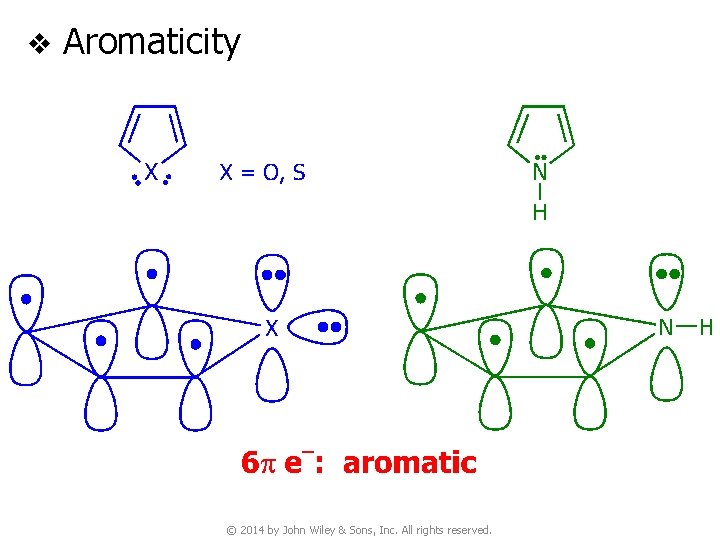
v Aromaticity © 2014 by John Wiley & Sons, Inc. All rights reserved.
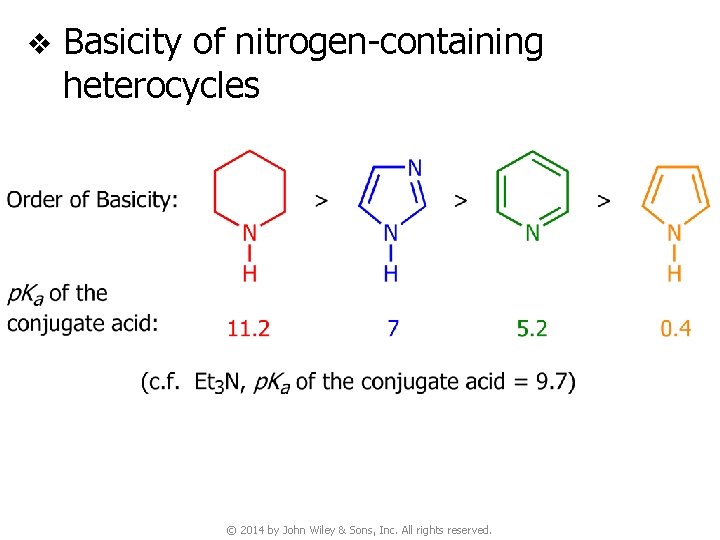
v Basicity of nitrogen-containing heterocycles © 2014 by John Wiley & Sons, Inc. All rights reserved.
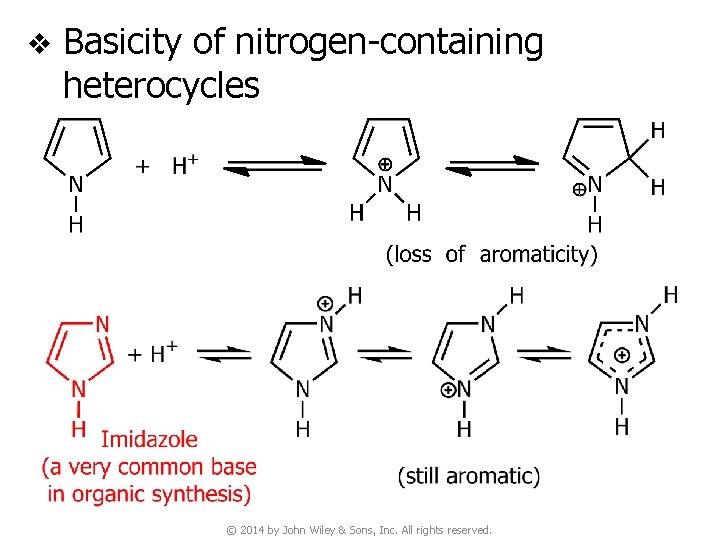
v Basicity of nitrogen-containing heterocycles © 2014 by John Wiley & Sons, Inc. All rights reserved.
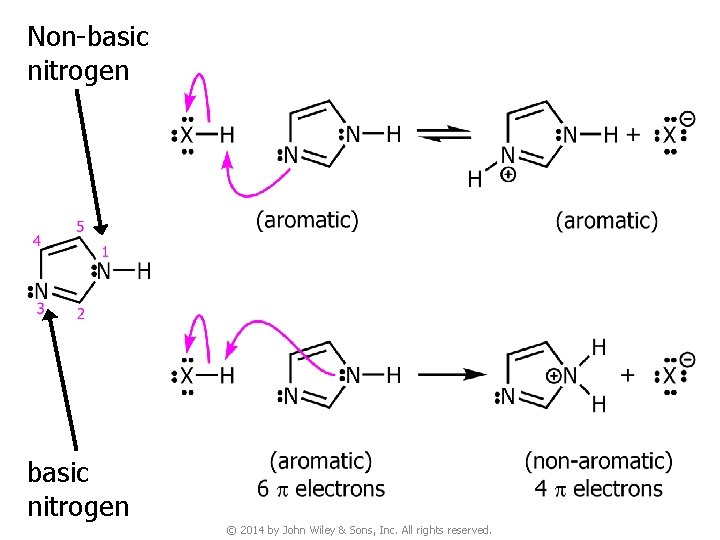
Non-basic nitrogen © 2014 by John Wiley & Sons, Inc. All rights reserved.
- Slides: 52