
Chapter 14 Alcohols Ethers and Thiols Alcohols Alcohol


- Slides: 29
Chapter 14 Alcohols, Ethers, and Thiols
Alcohols • Alcohol: an -OH (hydroxyl) group bonded to a tetrahedral carbon • Nomenclature 1. longest chain with the -OH group numbered lowest possible (rings OH=1) 2. change the ending of the parent alkane from e to -ol 3. name and number substituents and list them in alphabetical order
Nomenclature
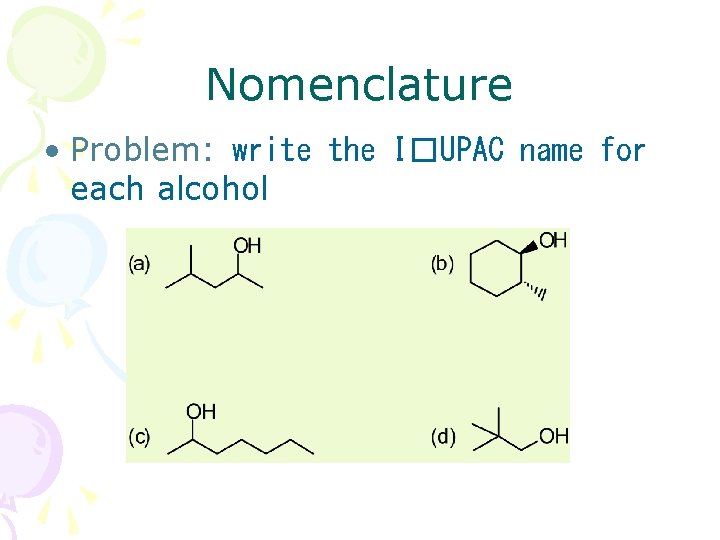
Nomenclature • Problem: write the I�UPAC name for each alcohol
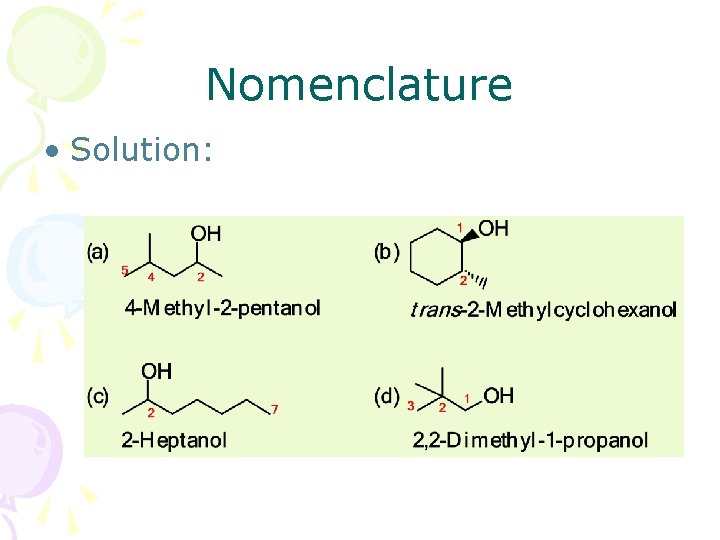
Nomenclature • Solution:
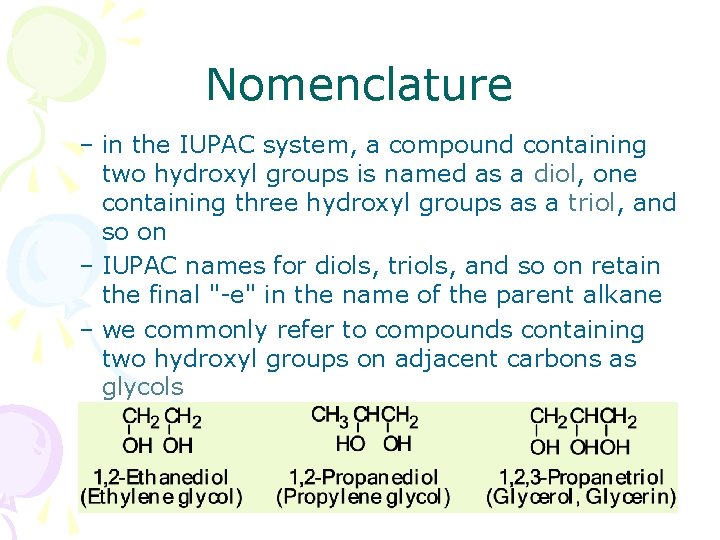
Nomenclature – in the IUPAC system, a compound containing two hydroxyl groups is named as a diol, diol one containing three hydroxyl groups as a triol, triol and so on – IUPAC names for diols, triols, and so on retain the final "-e" in the name of the parent alkane – we commonly refer to compounds containing two hydroxyl groups on adjacent carbons as glycols
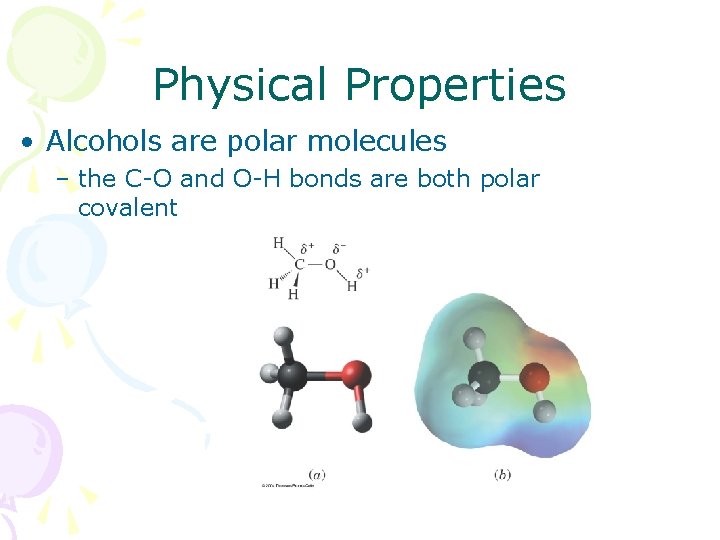
Physical Properties • Alcohols are polar molecules – the C-O and O-H bonds are both polar covalent
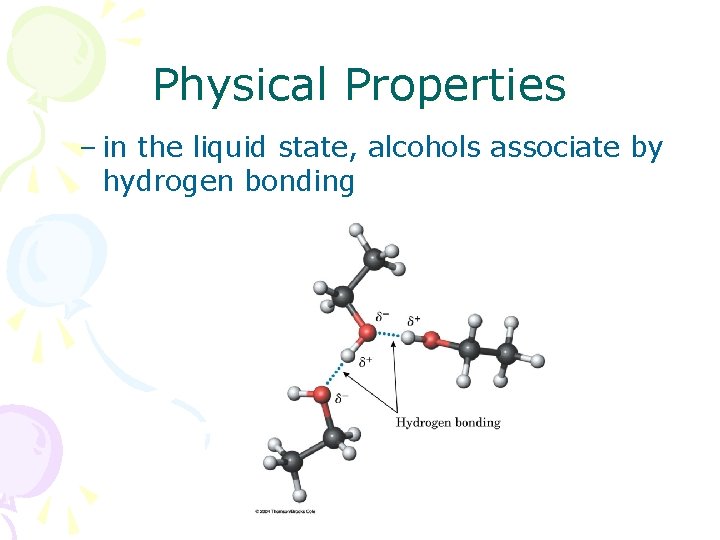
Physical Properties – in the liquid state, alcohols associate by hydrogen bonding
Physical Properties – bp increases as MW increases – solubility in water decreases as MW increases
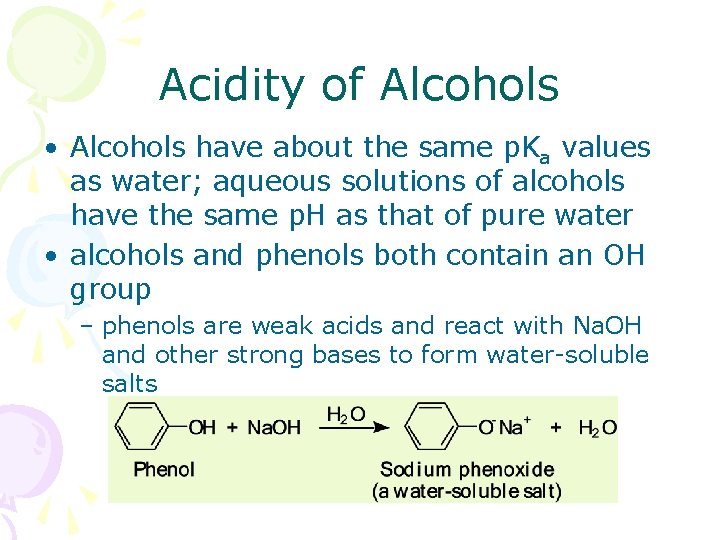
Acidity of Alcohols • Alcohols have about the same p. Ka values as water; aqueous solutions of alcohols have the same p. H as that of pure water • alcohols and phenols both contain an OH group – phenols are weak acids and react with Na. OH and other strong bases to form water-soluble salts
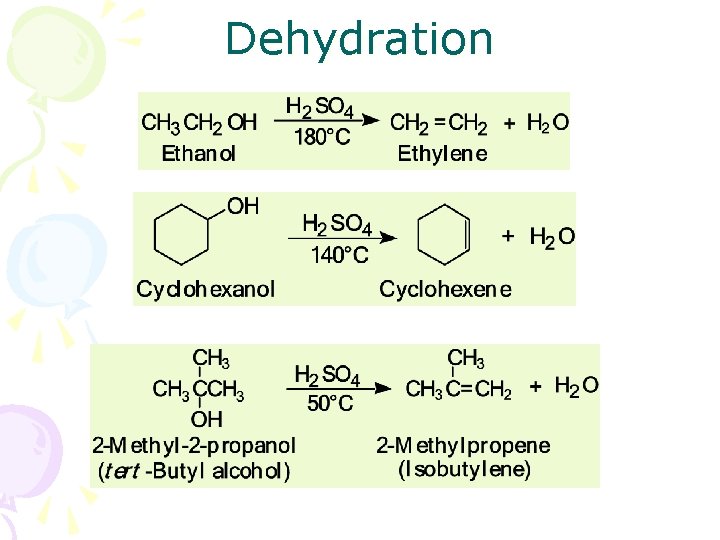
Dehydration • Dehydration: elimination of a molecule of water from adjacent carbon atoms gives an alkene – heating an alcohol with either 85% H 3 PO 4 or concentrated H 2 SO 4 – 1° alcohols are the most difficult to dehydrate – 2° alcohols undergo acid-catalyzed dehydration at somewhat lower temperatures – 3° alcohols generally undergo acid-catalyzed dehydration at temperatures only slightly above room temperature
Dehydration
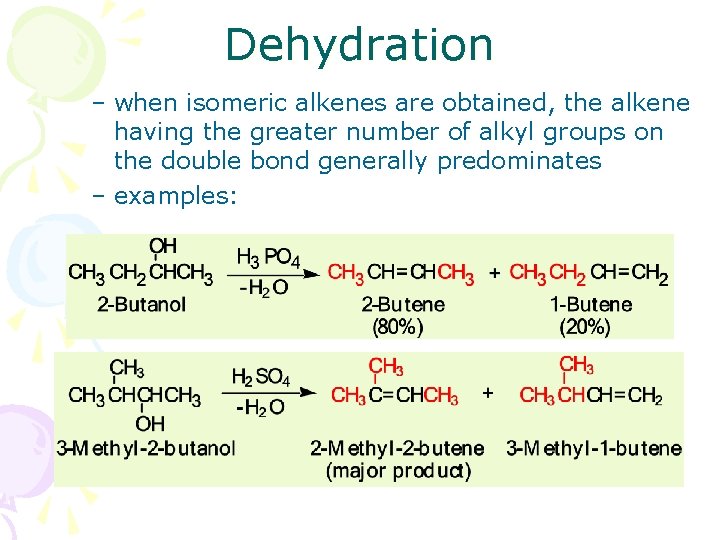
Dehydration – when isomeric alkenes are obtained, the alkene having the greater number of alkyl groups on the double bond generally predominates – examples:
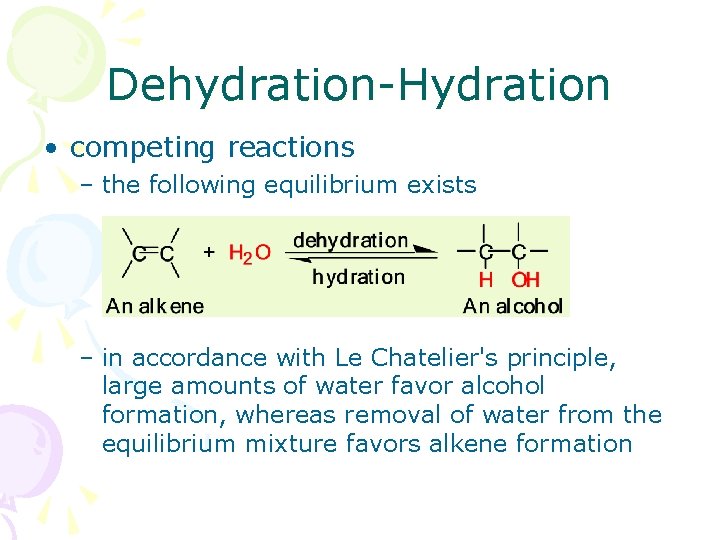
Dehydration-Hydration • competing reactions – the following equilibrium exists – in accordance with Le Chatelier's principle, large amounts of water favor alcohol formation, whereas removal of water from the equilibrium mixture favors alkene formation
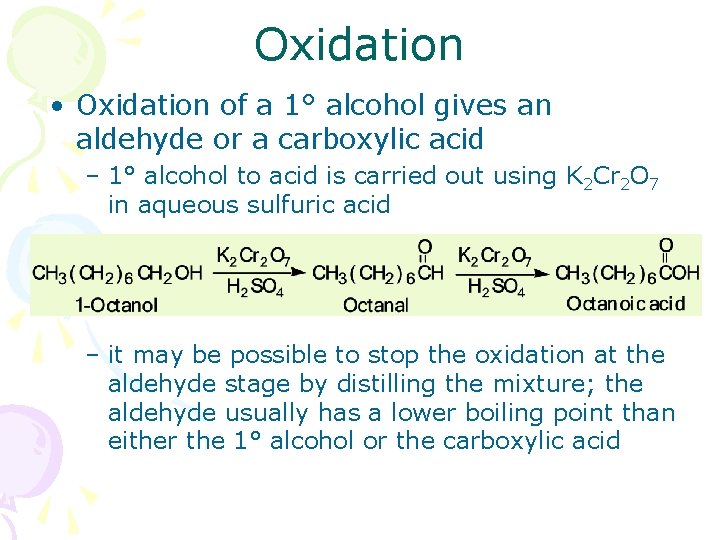
Oxidation • Oxidation of a 1° alcohol gives an aldehyde or a carboxylic acid – 1° alcohol to acid is carried out using K 2 Cr 2 O 7 in aqueous sulfuric acid – it may be possible to stop the oxidation at the aldehyde stage by distilling the mixture; the aldehyde usually has a lower boiling point than either the 1° alcohol or the carboxylic acid
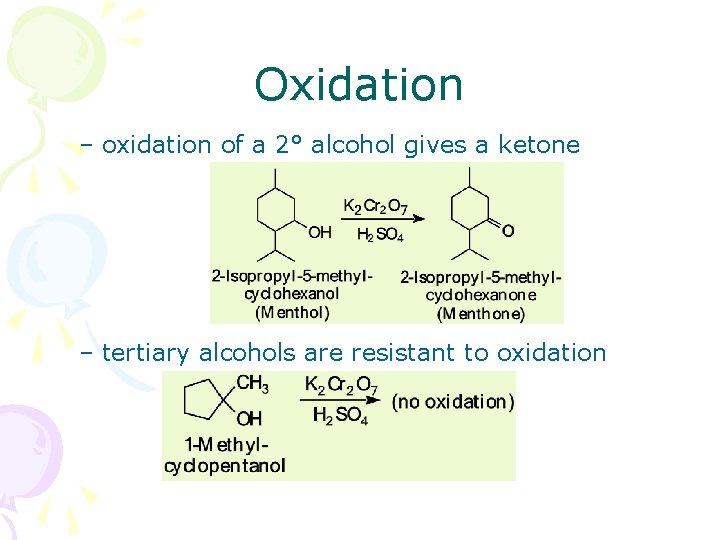
Oxidation – oxidation of a 2° alcohol gives a ketone – tertiary alcohols are resistant to oxidation
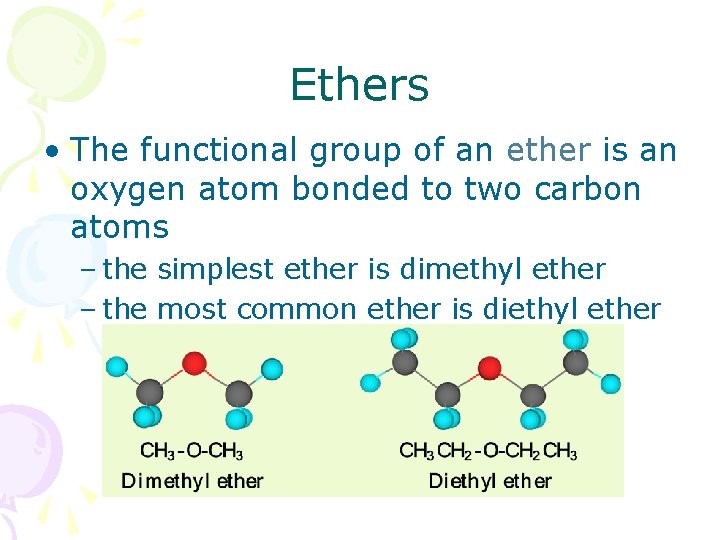
Ethers • The functional group of an ether is an oxygen atom bonded to two carbon atoms – the simplest ether is dimethyl ether – the most common ether is diethyl ether
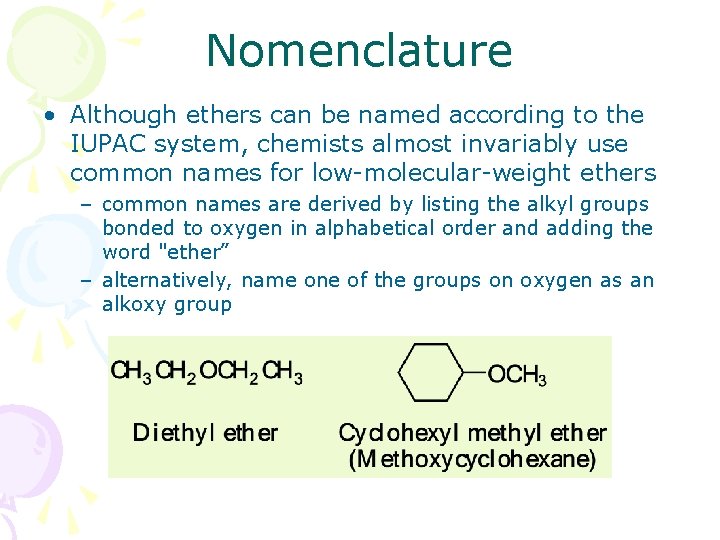
Nomenclature • Although ethers can be named according to the IUPAC system, chemists almost invariably use common names for low-molecular-weight ethers – common names are derived by listing the alkyl groups bonded to oxygen in alphabetical order and adding the word "ether” – alternatively, name one of the groups on oxygen as an alkoxy group
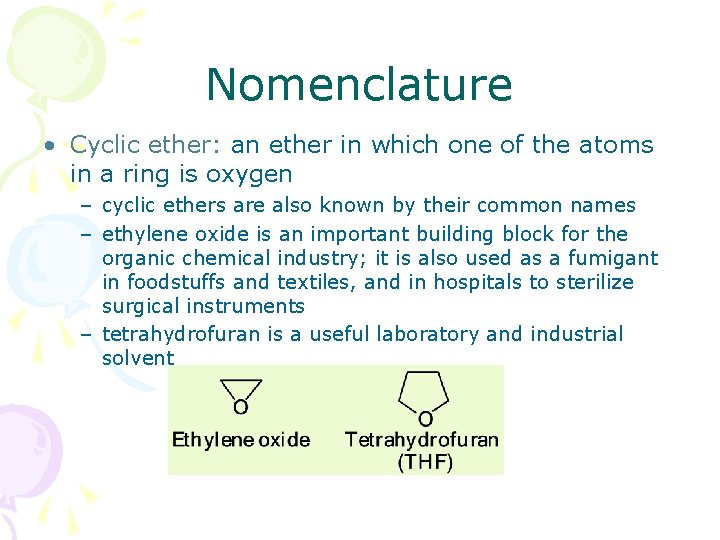
Nomenclature • Cyclic ether: an ether in which one of the atoms in a ring is oxygen – cyclic ethers are also known by their common names – ethylene oxide is an important building block for the organic chemical industry; it is also used as a fumigant in foodstuffs and textiles, and in hospitals to sterilize surgical instruments – tetrahydrofuran is a useful laboratory and industrial solvent
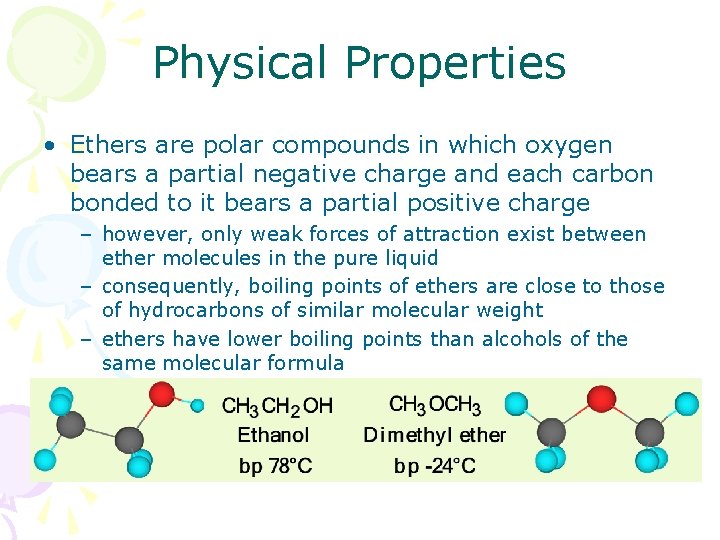
Physical Properties • Ethers are polar compounds in which oxygen bears a partial negative charge and each carbon bonded to it bears a partial positive charge – however, only weak forces of attraction exist between ether molecules in the pure liquid – consequently, boiling points of ethers are close to those of hydrocarbons of similar molecular weight – ethers have lower boiling points than alcohols of the same molecular formula
Reactions of Ethers • Ethers resemble hydrocarbons in their resistance to chemical reaction – they do not react with oxidizing agents such as potassium dichromate – they do not react with reducing agents such as H 2 in the presence of a transition metal catalyst – they are not affected by most acids or bases at moderate temperatures • Because of their general inertness and good solvent properties, ethers such as diethyl ether and THF are excellent solvents in which to carry out organic reactions
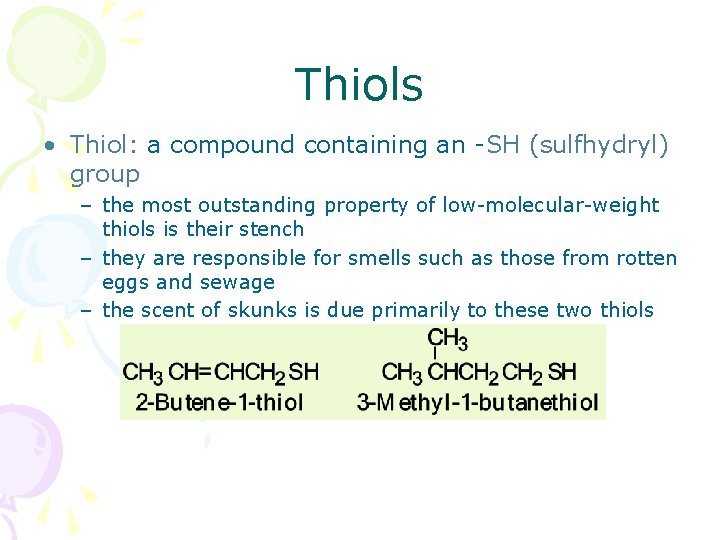
Thiols • Thiol: a compound containing an -SH (sulfhydryl) group – the most outstanding property of low-molecular-weight thiols is their stench – they are responsible for smells such as those from rotten eggs and sewage – the scent of skunks is due primarily to these two thiols
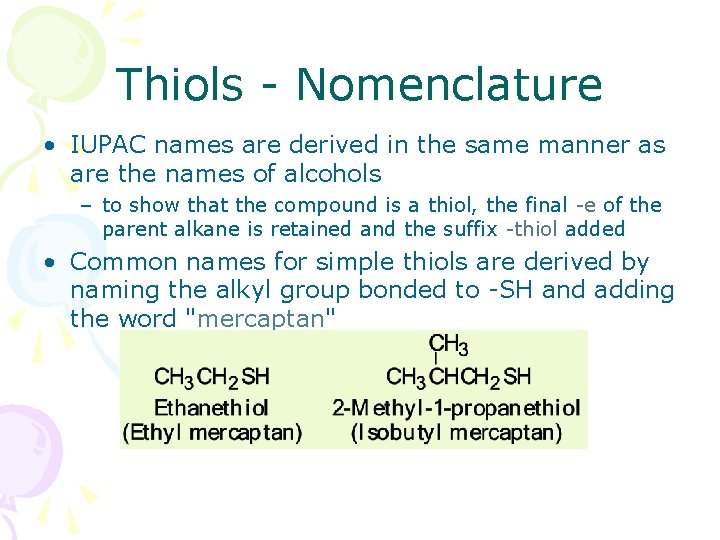
Thiols - Nomenclature • IUPAC names are derived in the same manner as are the names of alcohols – to show that the compound is a thiol, the final -e of the parent alkane is retained and the suffix -thiol added • Common names for simple thiols are derived by naming the alkyl group bonded to -SH and adding the word "mercaptan" mercaptan
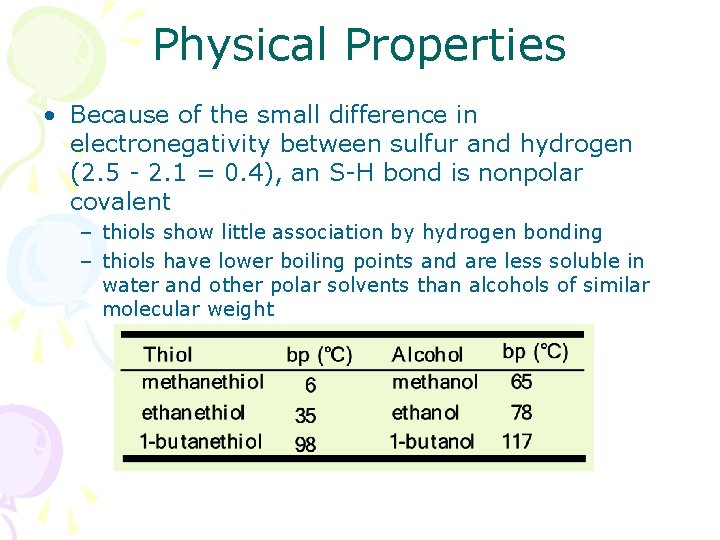
Physical Properties • Because of the small difference in electronegativity between sulfur and hydrogen (2. 5 - 2. 1 = 0. 4), an S-H bond is nonpolar covalent – thiols show little association by hydrogen bonding – thiols have lower boiling points and are less soluble in water and other polar solvents than alcohols of similar molecular weight
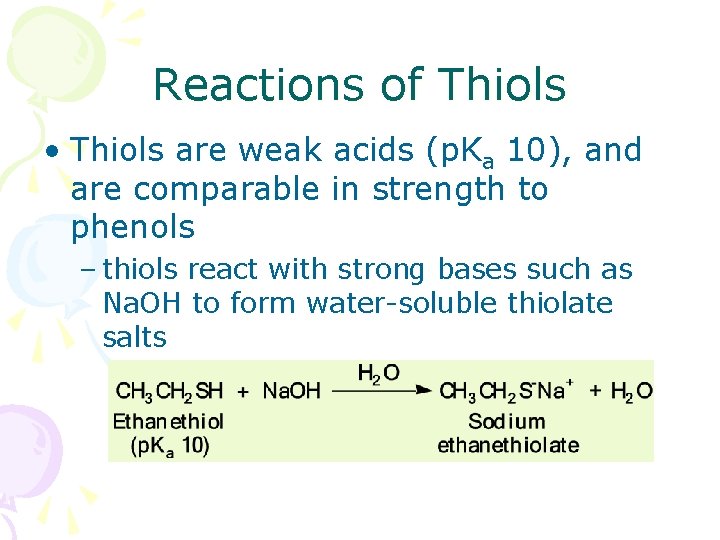
Reactions of Thiols • Thiols are weak acids (p. Ka 10), and are comparable in strength to phenols – thiols react with strong bases such as Na. OH to form water-soluble thiolate salts
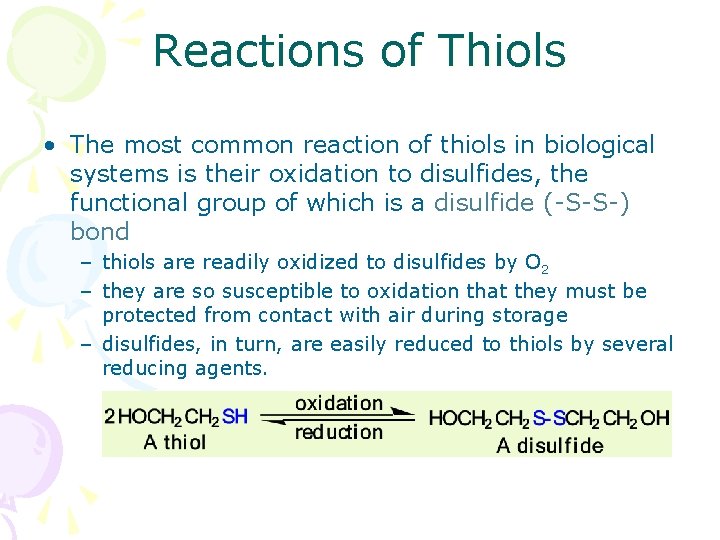
Reactions of Thiols • The most common reaction of thiols in biological systems is their oxidation to disulfides, the functional group of which is a disulfide (-S-S-) bond – thiols are readily oxidized to disulfides by O 2 – they are so susceptible to oxidation that they must be protected from contact with air during storage – disulfides, in turn, are easily reduced to thiols by several reducing agents.
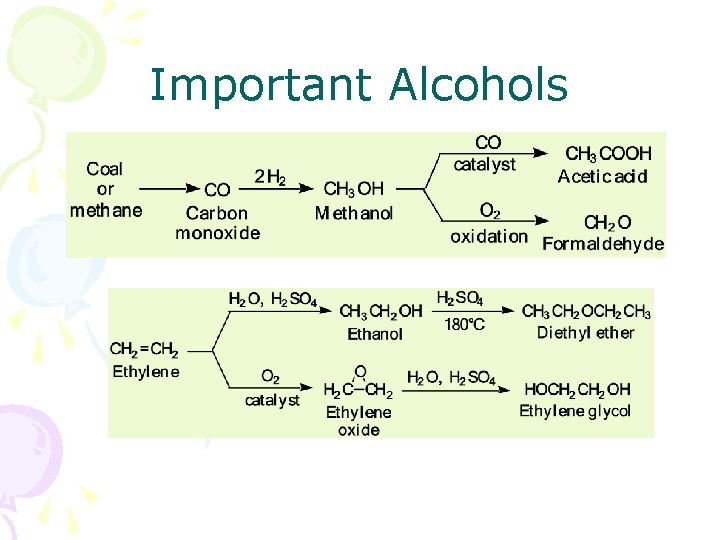
Important Alcohols
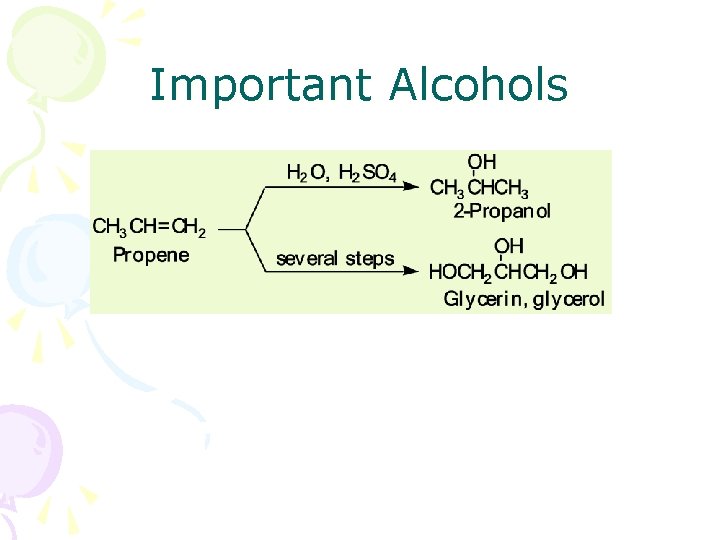
Important Alcohols
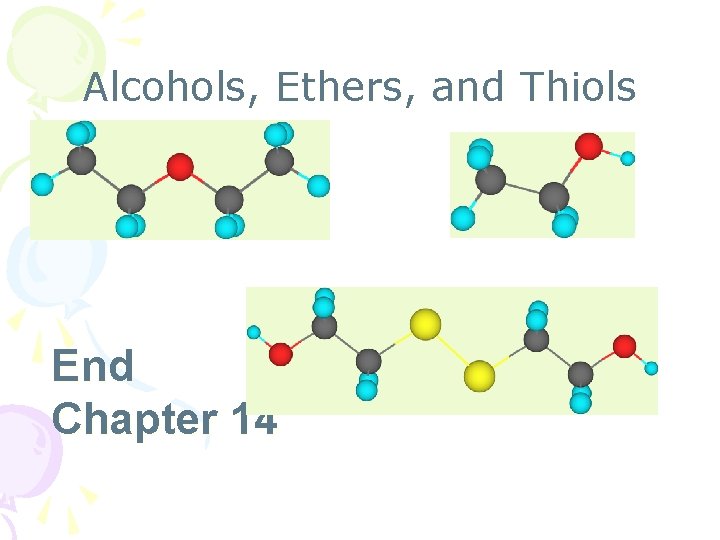
Alcohols, Ethers, and Thiols End Chapter 14