
Chapter 14 1 Mendelian Inheritance of Human Traits

- Slides: 20
Chapter 14. 1 – Mendelian Inheritance of Human Traits
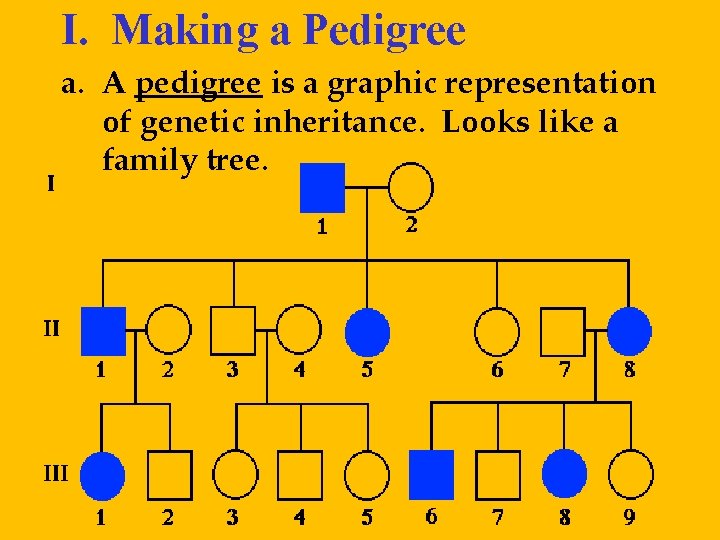
I. Making a Pedigree a. A pedigree is a graphic representation of genetic inheritance. Looks like a family tree.
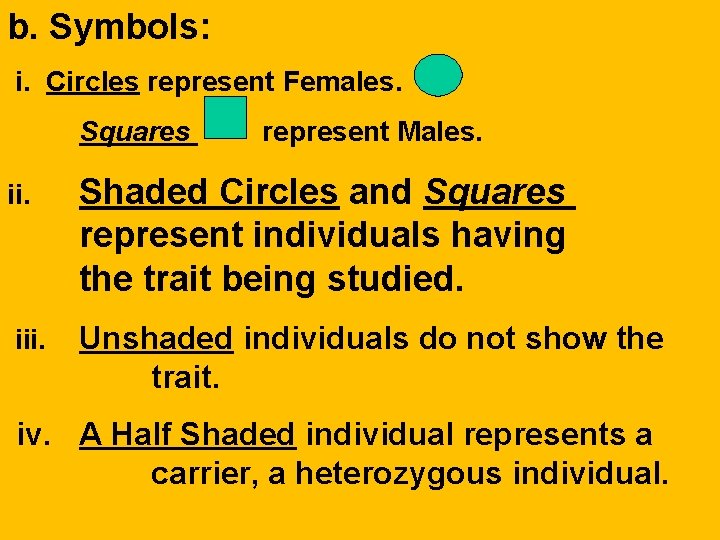
b. Symbols: i. Circles represent Females. Squares represent Males. ii. Shaded Circles and Squares represent individuals having the trait being studied. iii. Unshaded individuals do not show the trait. iv. A Half Shaded individual represents a carrier, a heterozygous individual.
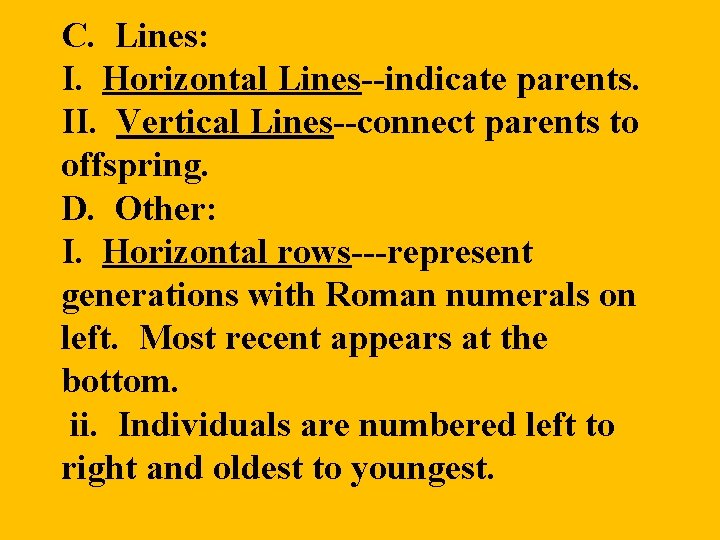
C. Lines: I. Horizontal Lines--indicate parents. II. Vertical Lines--connect parents to offspring. D. Other: I. Horizontal rows---represent generations with Roman numerals on left. Most recent appears at the bottom. ii. Individuals are numbered left to right and oldest to youngest.
Chapter 14. 2 Genetic Disorders
Terms to Know: Autosomes ---any chromosome that is not a sex chromosome. Sex Chromosome ---any chromosome involved with determining the sex of an organism
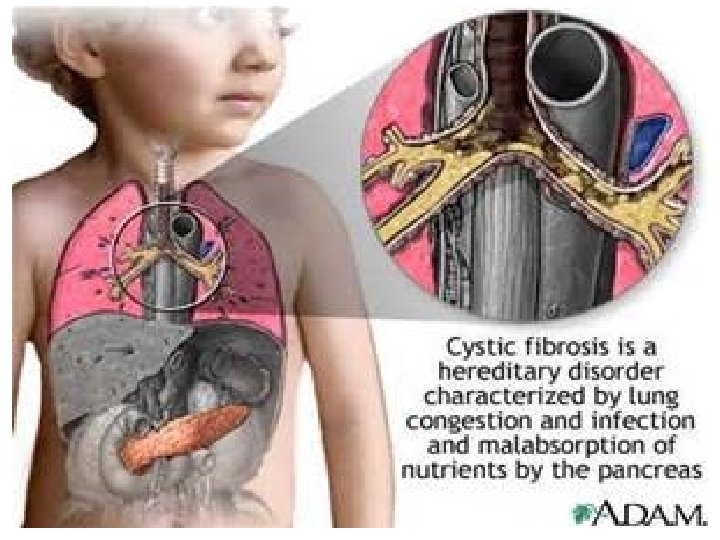
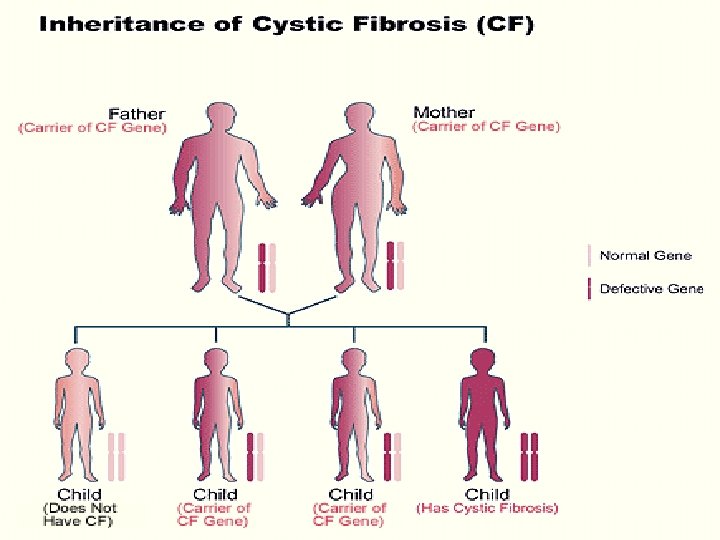
II. Simple Recessive Heredity -- Most genetic disorders are caused by recessive alleles (genes). A. Cystic Fibrosis ---Common among white Americans ---Due to a defective protein in the plasma membrane. ---Results in the formation of thick mucus in the lungs and digestive tract.
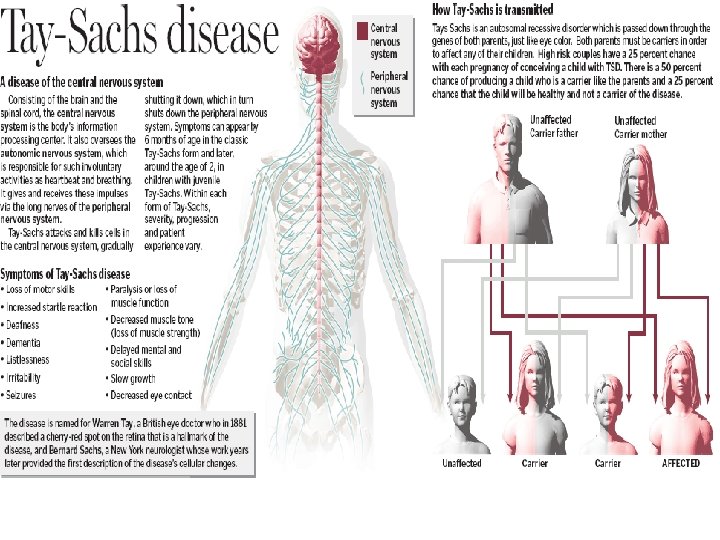
---Treatment: Physical therapy, special diets, and new drugs. B. Tay-Sachs disease a. Caused by the absence of an enzyme that normally breaks down a lipid produced and stored in tissues of the central nervous system. b. Results in blindness, progressive loss in movement, mental deterioration, and death usually by age 5.
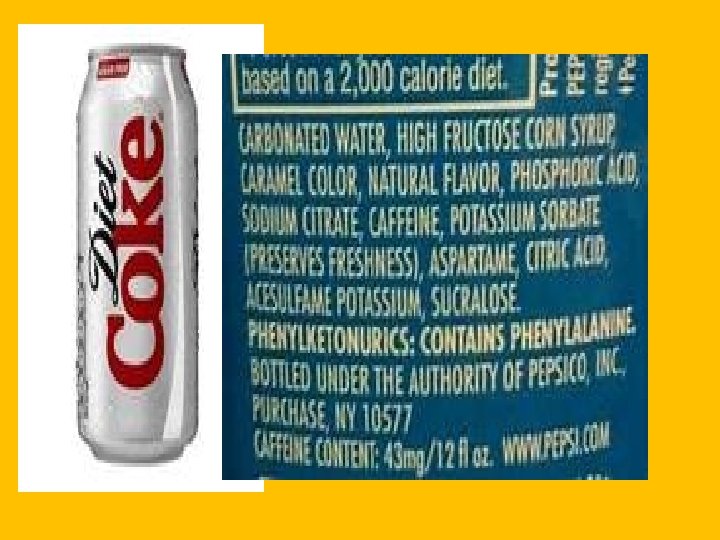
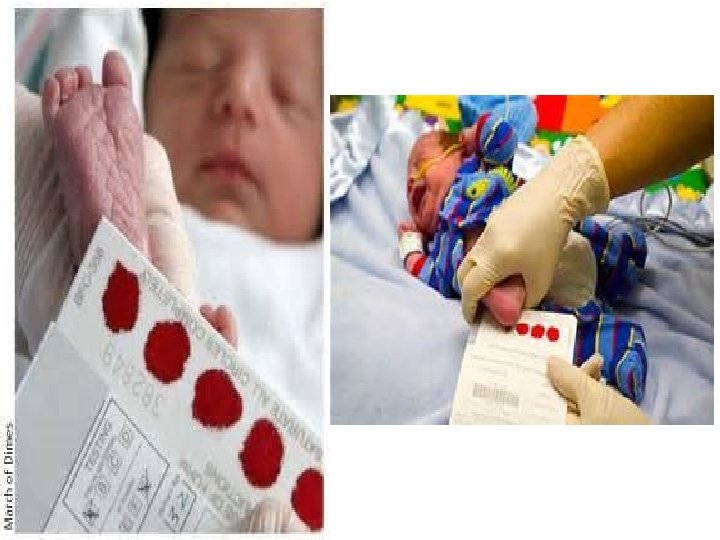
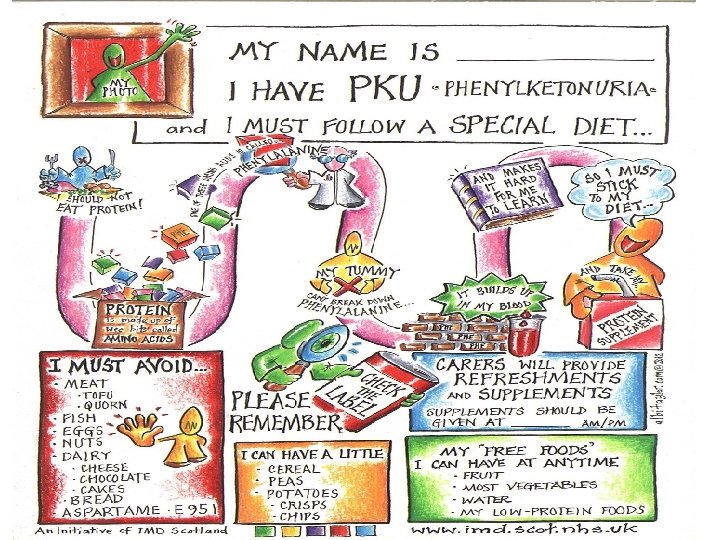
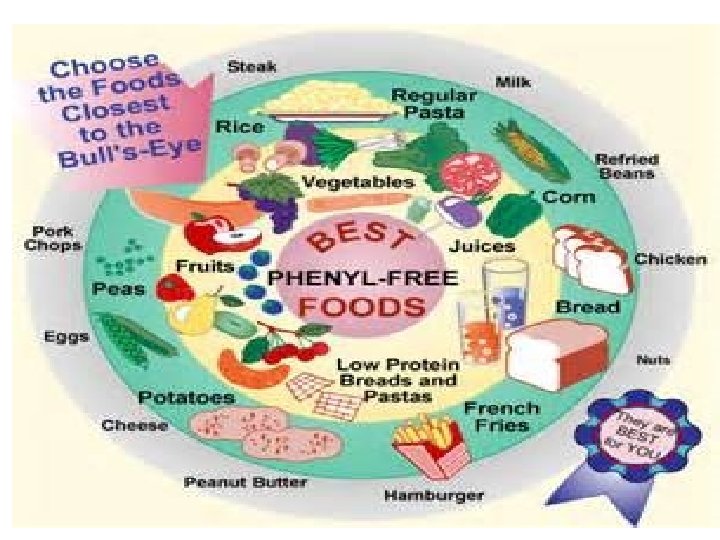
C. Phenylketonuria (PKU) a. Results from the absence of an enzyme that converts one amino acid, phenylalanine, to a different amino acid, tyrosine. b. Causes: damage to the central nervous system. All infants are tested at birth. c. Treatment: Special diet low in phenylalanine until the brain is fully developed.
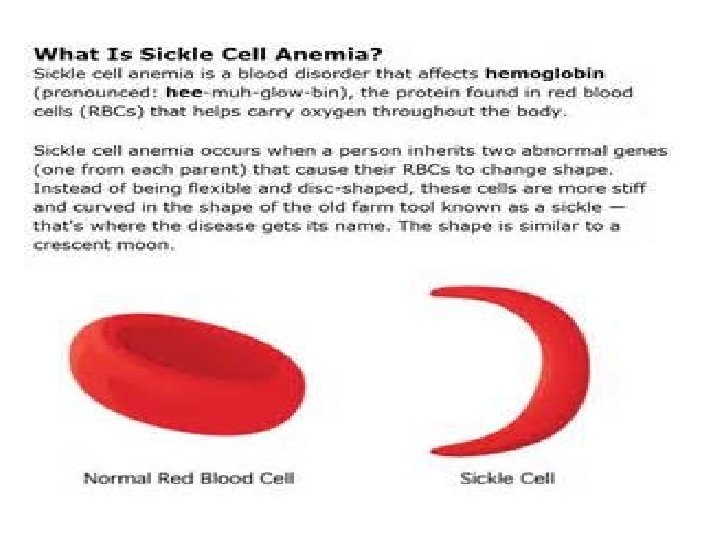
D. Sickle Cell Anemia a. Results: Red blood cells are sickling in shape. (Look like a sickle or a crescent moon. ) b. Causes: The red blood cell to break down prematurely, which can lead to anemia causing a shortness of breath, fatigue, and delayed growth and development in children. c. Treatment: Medications, stem cell transplant and gene therapy (in experimental stages).
III. Simple Dominant Heredity a. In dominant heredity only a single dominant allele (gene) is needed for trait. B. Huntington’s Disease i. Lethal genetic disorder caused by a rare dominant allele. ii. Results in breakdown of certain areas of the brain. iii. No treatment exists. iv. Onset of the disease usually occurs between the ages of 30 and 50. There is a genetic test for this disease.
http: //www. youtube. com/watch? v=65 xf 1 ol. Ep. QM