
Chapter 13 Water the Universal Solvent Water as
- Slides: 23
Chapter 13 - Water the Universal Solvent Water as a solvent • the comparison of solution processes in water for molecular substances and ionic compounds • precipitation reactions represented by balanced full and ionic equations, including states • the importance of the solvent properties of water in selected biological, domestic or industrial contexts.
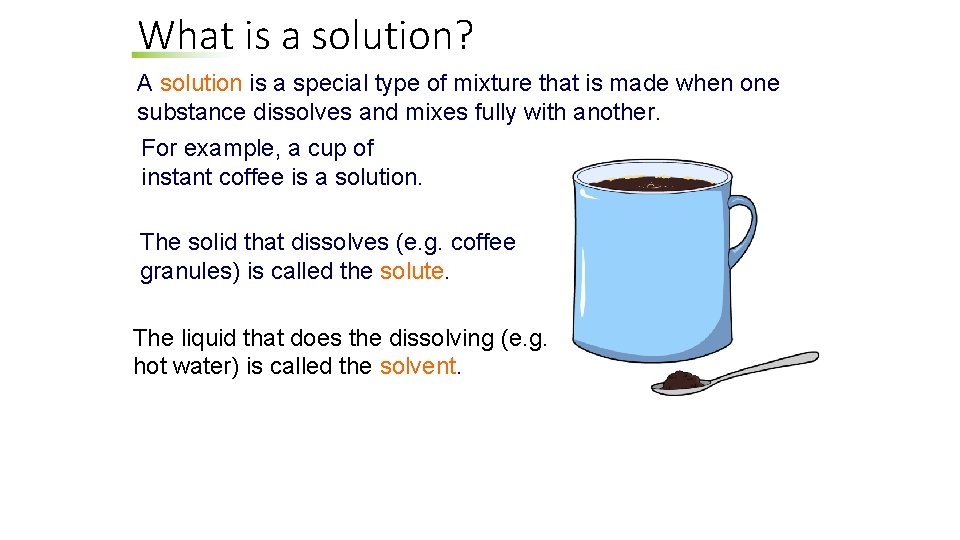
What is a solution? A solution is a special type of mixture that is made when one substance dissolves and mixes fully with another. For example, a cup of instant coffee is a solution. The solid that dissolves (e. g. coffee granules) is called the solute. The liquid that does the dissolving (e. g. hot water) is called the solvent.
Water as a solvent • Water is sometimes called ‘the universal solvent’ because it will dissolve so many substances – in particular, salts • Polar molecules- “Like dissolves like” • A solute will dissolve if it’s attraction to the solvent is stronger than its attraction to itself. • Known as aqueous (aq) in reactions
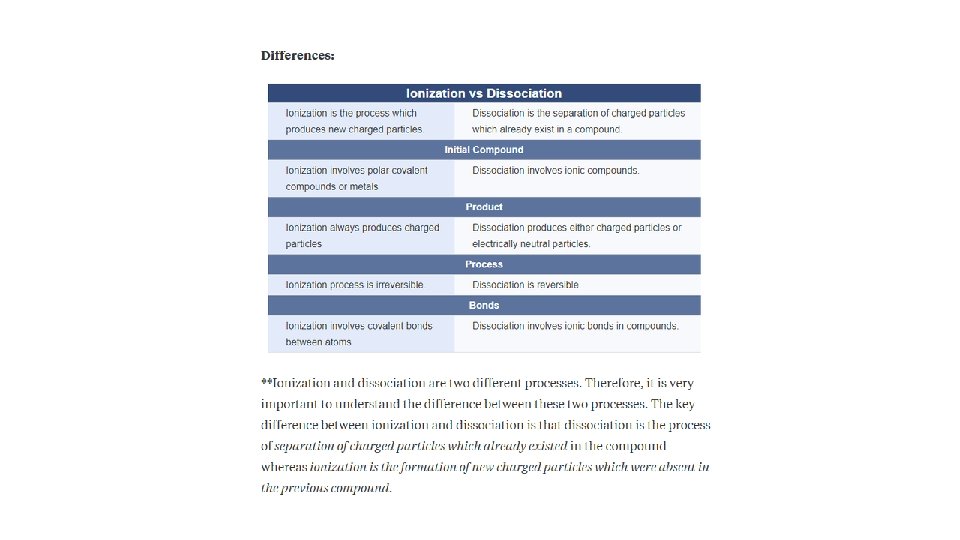
What dissolves in Water? 1. Polar covalent compounds (form Hydrogen Bonds with water) 2. Polar covalent molecular compounds (ionise) 3. Ionic Compounds (dissociate) The more polar the covalent compound is, the more likely it is to dissolve in water “LIKE DISSOLVES LIKE”
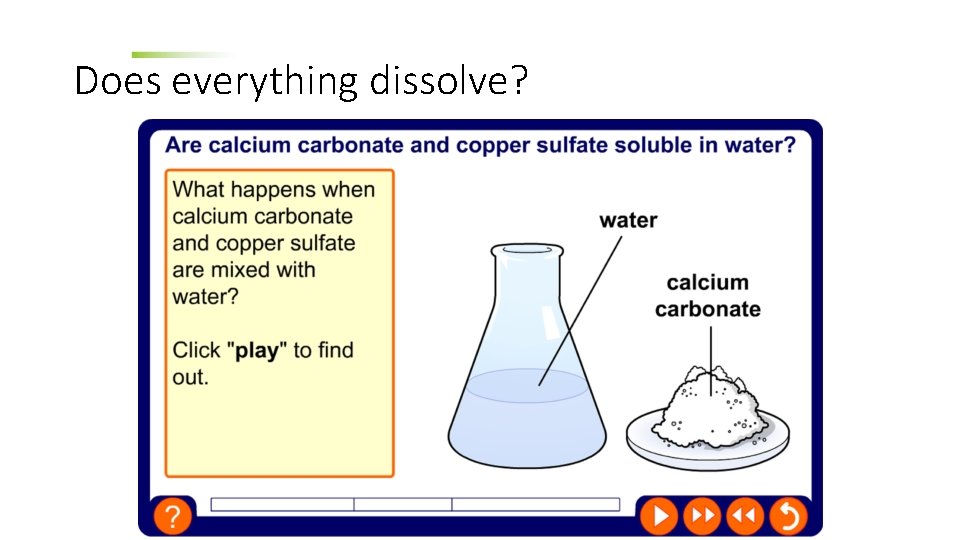
Does everything dissolve?
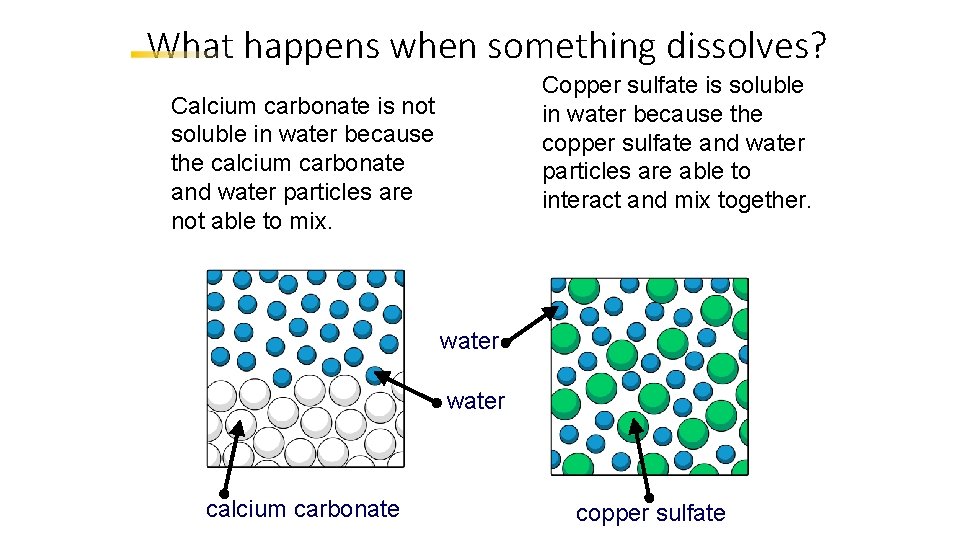
What happens when something dissolves? Copper sulfate is soluble in water because the copper sulfate and water particles are able to interact and mix together. Calcium carbonate is not soluble in water because the calcium carbonate and water particles are not able to mix. water calcium carbonate copper sulfate
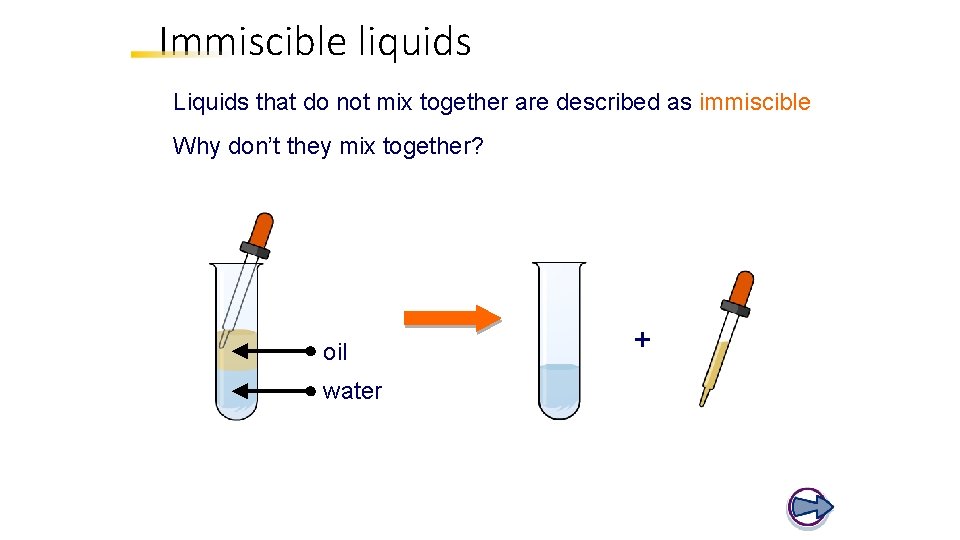
Immiscible liquids Liquids that do not mix together are described as immiscible Why don’t they mix together? oil water +
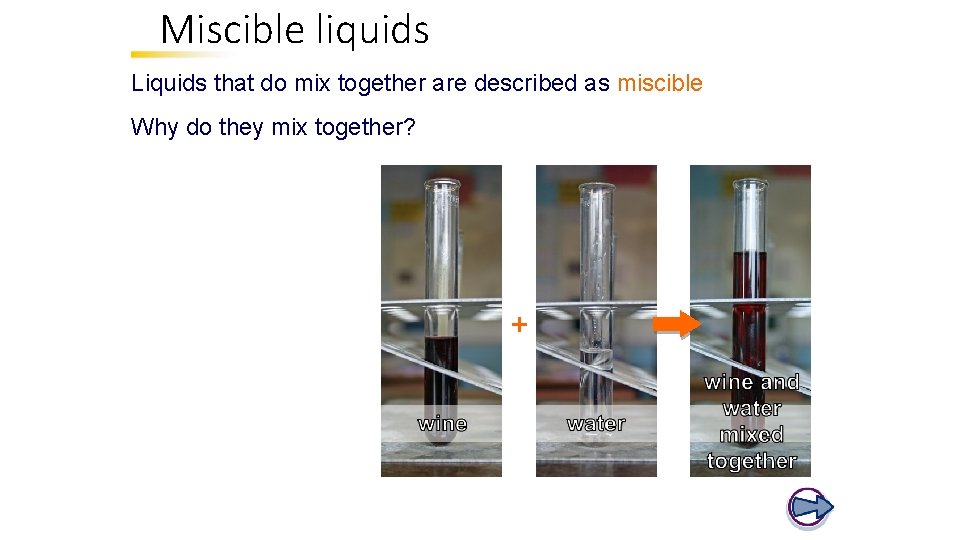
Miscible liquids Liquids that do mix together are described as miscible Why do they mix together? +
• the comparison of solution processes in water for molecular substances and ionic compounds Polar covalent compounds that can form H-Bonds with water • Hydrogen bonds between water molecules are broken • Hydrogen bonds between compound are broken • Hydrogen bonds between water molecules and compound are formed
• the comparison of solution processes in water for molecular substances and ionic compounds Polar Covalent Compounds that Ionise • VERY polar covalent bonds can break in water, due to electrostatic attraction between them and water molecules • Polar covalent bonds within molecules break, producing Hydrogen ions and anions • A covalent bond forms between Hydrogen ion and water molecule = H 3 O+ • Ion- dipole attractions between all ions and water molecules are formed. • Each ion is surrounded by water molecules – hydrated
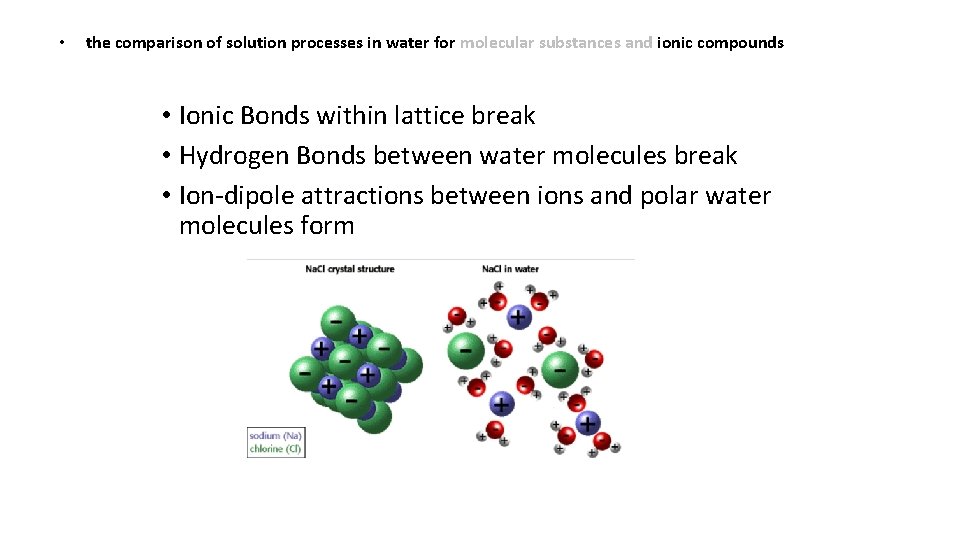
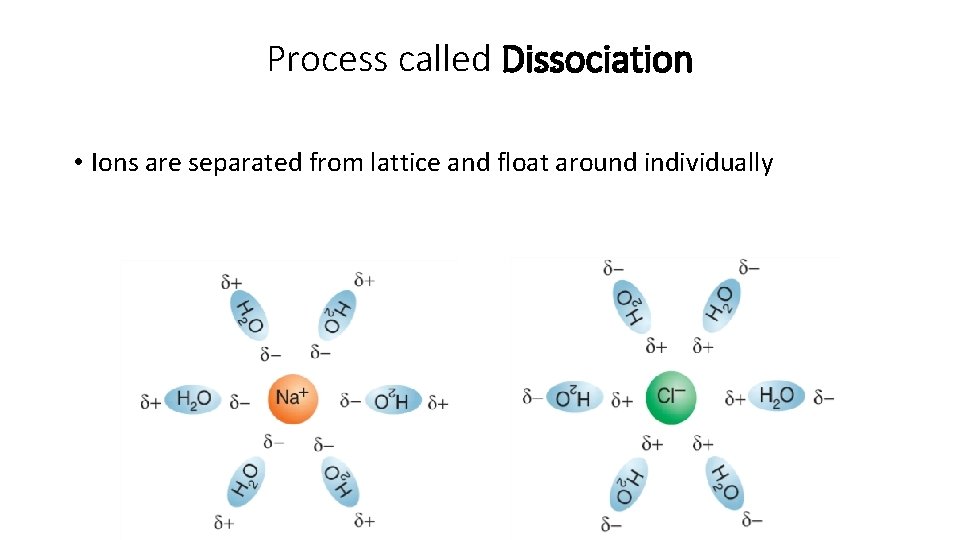
• the comparison of solution processes in water for molecular substances and ionic compounds Ionic Compounds • Ionic solid – 3 D lattice of anions and cations held in fixed positions • Slight positive end of water molecule is attracted to anion in lattice • Slight negative end of water molecule is attracted to cation in lattice
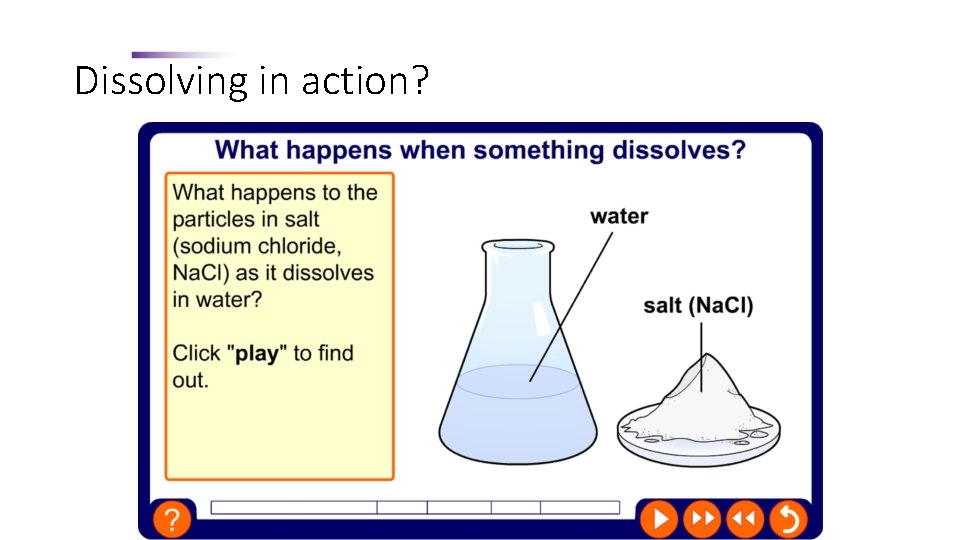
Dissolving in action?
• the comparison of solution processes in water for molecular substances and ionic compounds • Ionic Bonds within lattice break • Hydrogen Bonds between water molecules break • Ion-dipole attractions between ions and polar water molecules form
Process called Dissociation • Ions are separated from lattice and float around individually
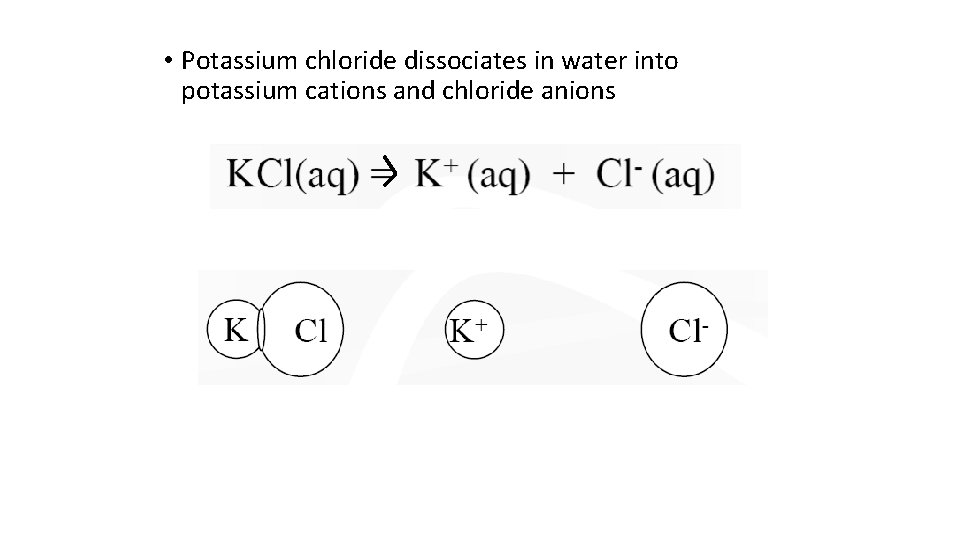
• Potassium chloride dissociates in water into potassium cations and chloride anions
• precipitation reactions represented by balanced full and ionic equations, including states Precipitation Reactions • Mixing solutions may produce solid = precipitate • Can separate the solid from the liquid by filtering and washing the precipitate • Filtrate: The liquid (solution) that passes through a filter
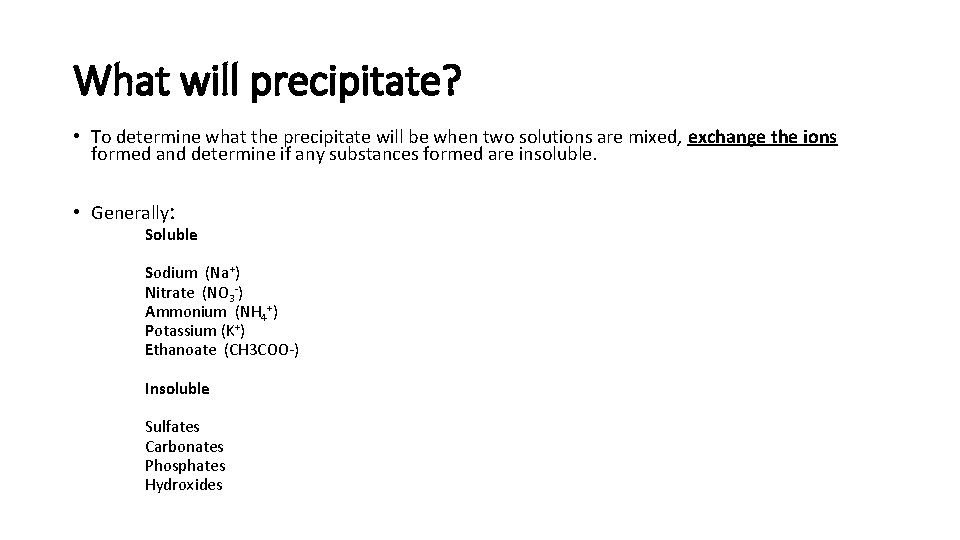
What will precipitate? • To determine what the precipitate will be when two solutions are mixed, exchange the ions formed and determine if any substances formed are insoluble. • Generally: Soluble Sodium (Na+) Nitrate (NO 3 -) Ammonium (NH 4+) Potassium (K+) Ethanoate (CH 3 COO-) Insoluble Sulfates Carbonates Phosphates Hydroxides
• precipitation reactions represented by balanced full and ionic equations, including states Ionic Equations • We write balanced precipitation reactions to show ion exchange in solution • The states MUST be written to show which product is the precipitate • Equations must be balanced as per normal balancing rules
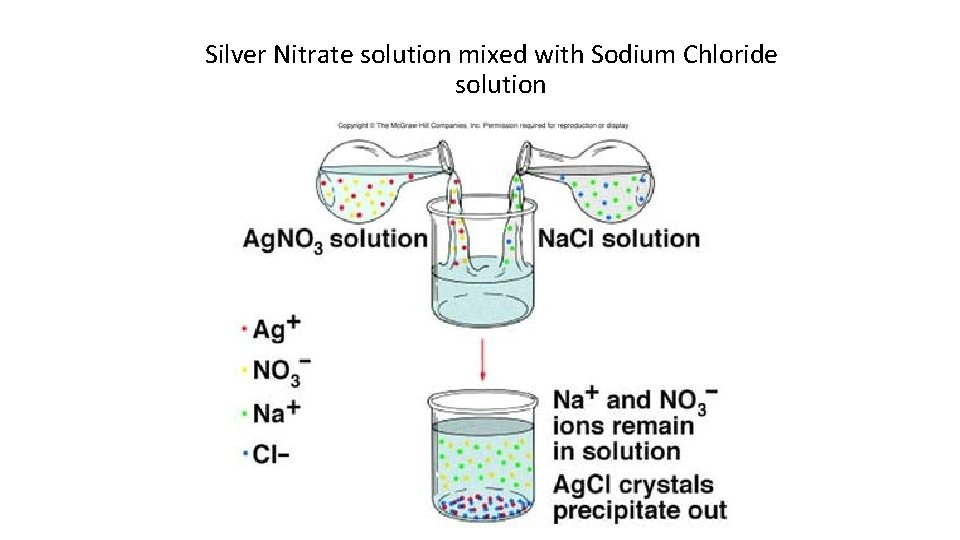
Silver Nitrate solution mixed with Sodium Chloride solution
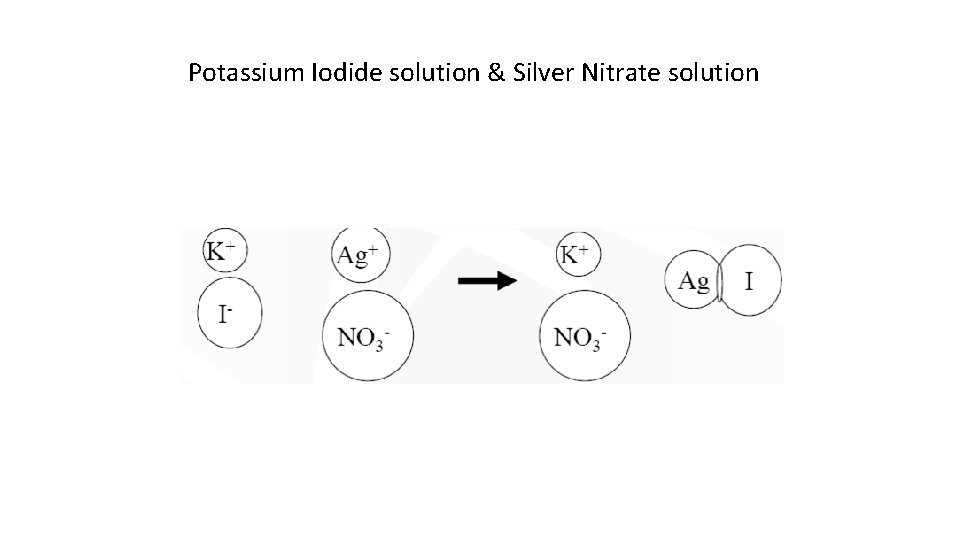
Potassium Iodide solution & Silver Nitrate solution
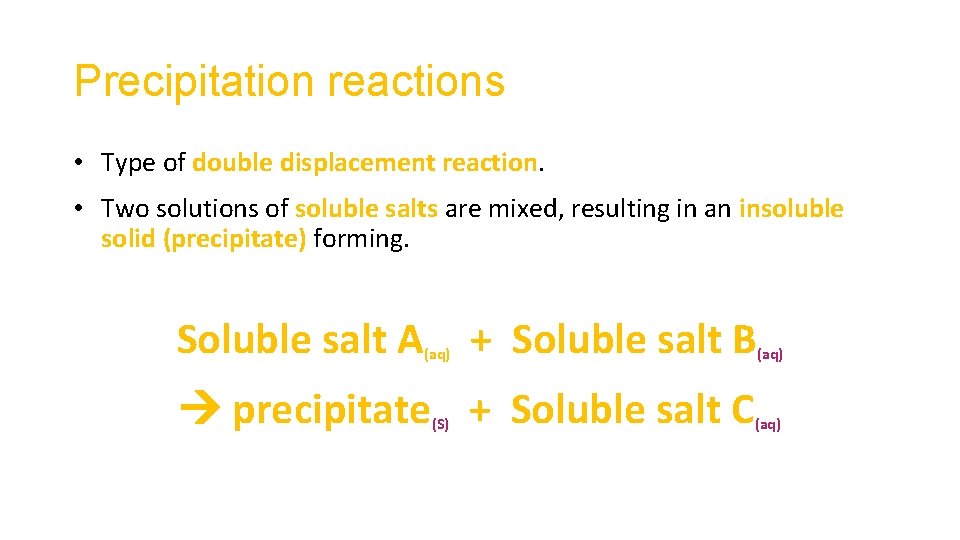
Precipitation reactions • Type of double displacement reaction. • Two solutions of soluble salts are mixed, resulting in an insoluble solid (precipitate) forming. Soluble salt A (aq) + Soluble salt B precipitate + Soluble salt C (S) (aq)
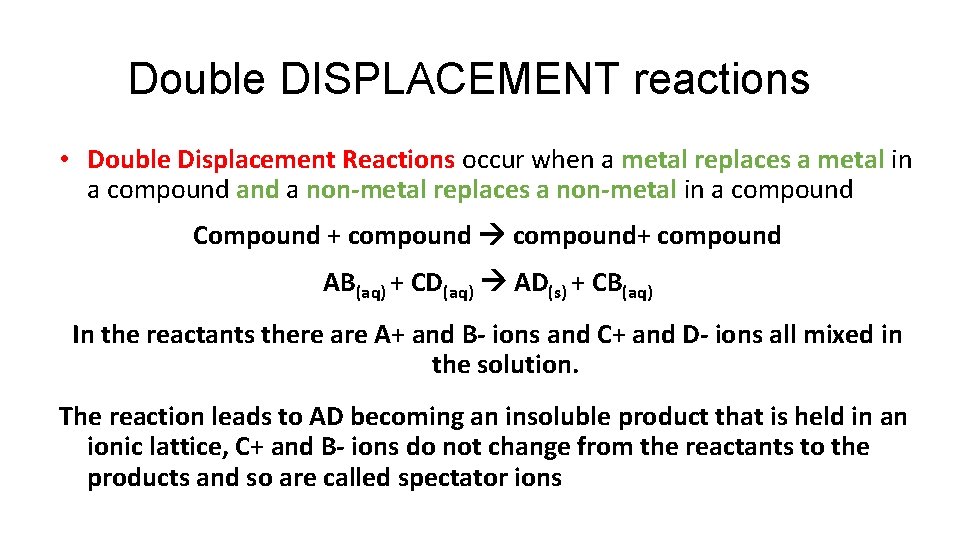
Double DISPLACEMENT reactions • Double Displacement Reactions occur when a metal replaces a metal in a compound a non-metal replaces a non-metal in a compound Compound + compound+ compound AB(aq) + CD(aq) AD(s) + CB(aq) In the reactants there are A+ and B- ions and C+ and D- ions all mixed in the solution. The reaction leads to AD becoming an insoluble product that is held in an ionic lattice, C+ and B- ions do not change from the reactants to the products and so are called spectator ions