
Chapter 13 Transportation Management Learning Objectives To learn
Chapter 13 Transportation Management

Learning Objectives • To learn about contemporary transportation management • To understand how rates are determined • To learn about modal and carrier selection • To distinguish among various transportation documents • To understand select activities associated with making and receiving shipments • To learn about transportation quality © 2008 Prentice Hall 7 -2
Transportation Management Key Terms – – – Amodal shipper Bill of lading Class rate system Commodity rate Concealed loss or damage Demurrage Density Detention Documentation Expediting FOB destination – – – – – FOB origin Freight bill Freight claims Rate Routing Guide Stowability Tracing Transportation Management Weight break 7 -3
Transportation Management • Transportation management refers to the buying and controlling of transportation service by either a shipper or consignee. Source: John J. Coyle, Edward J. Bardi, and Robert A. Novack, Transportation, 6 th ed. (Mason, OH: South-Western, 2006). • Transportation is the most costly logistics activity • Transportation managers can help: – – Marketing Manufacturing Outbound shipping Purchasing 13 -4
Rate (Pricing) Considerations • Rate Determination – Often located on carrier Web sites – Transportation rates based on three factors • Product • Weight • Distance – Three factors are defined numerically and then tied to a rate of cents per hundredweight (cwt) © Pearson Education, Inc. publishing as Prentice Hall 13 -5
Rate (Pricing) Considerations • Rate Determination – Commodity rate • One specific rate for every possible combination of product, weight, and distance – Class rate system • System to simplify rate determination • Freight classification used to simplify the number of commodities • National Motor Freight Classification (NMFC) © Pearson Education, Inc. publishing as Prentice Hall 13 -6
Rate (Pricing) Considerations • Rate Determination – Factors used for determine product’s freight classification • • Density (higher classification for low-density) Stowability (how easy to pack into a load) Ease of handling Liability to damage and theft © Pearson Education, Inc. publishing as Prentice Hall 13 -7
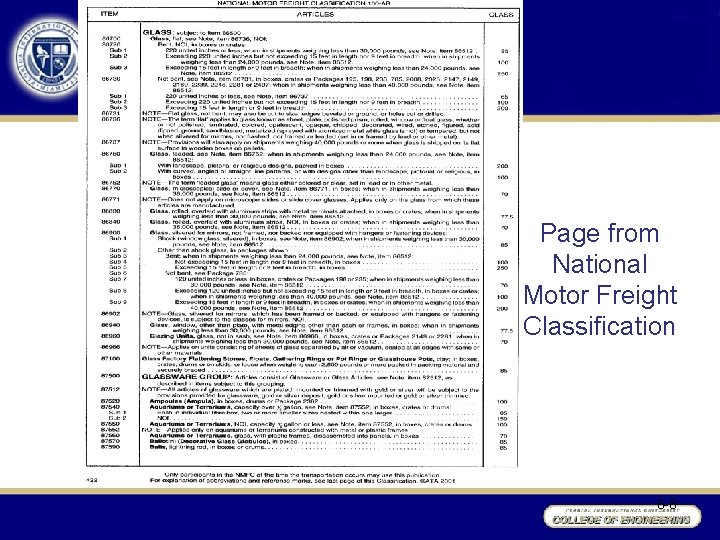
Page from National Motor Freight Classification 6 -8
National Motor Freight Classification • National Motor Freight Classification Procedures – http: //www. nmfta. org/Documents/CCSB %20 Procedures%202009. pdf • Find classification online – http: //freight 88. com/NMFC-Codes. Freight_class. html 6 -9
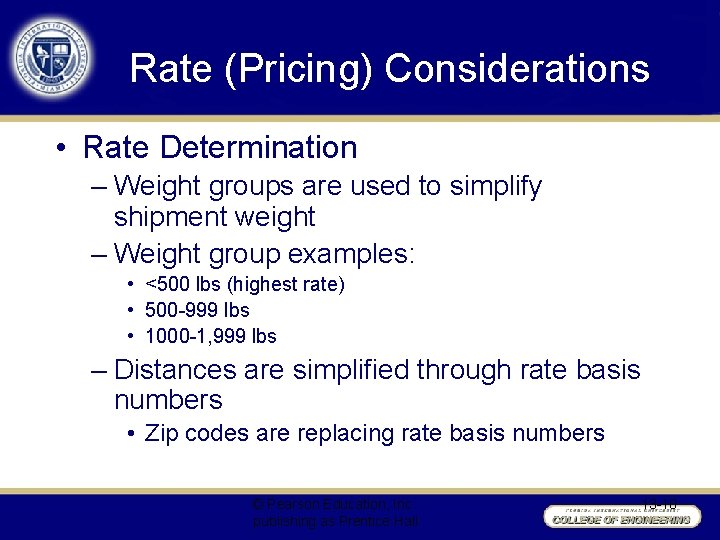
Rate (Pricing) Considerations • Rate Determination – Weight groups are used to simplify shipment weight – Weight group examples: • <500 lbs (highest rate) • 500 -999 lbs • 1000 -1, 999 lbs – Distances are simplified through rate basis numbers • Zip codes are replacing rate basis numbers © Pearson Education, Inc. publishing as Prentice Hall 13 -10
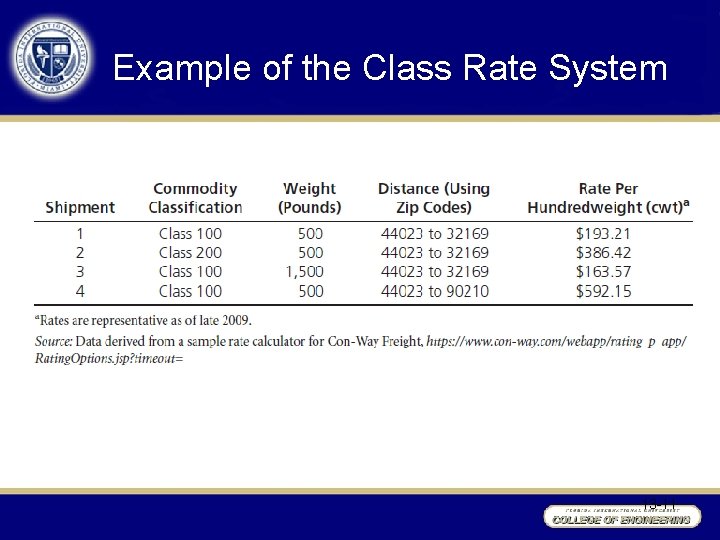
Example of the Class Rate System 13 -11
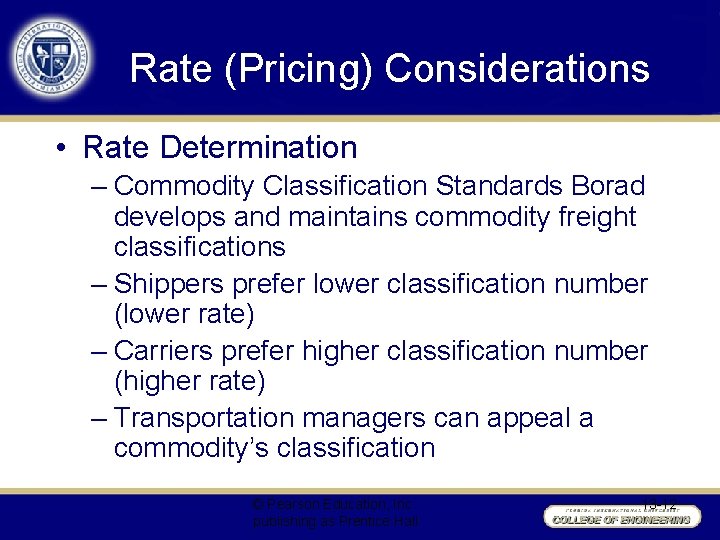
Rate (Pricing) Considerations • Rate Determination – Commodity Classification Standards Borad develops and maintains commodity freight classifications – Shippers prefer lower classification number (lower rate) – Carriers prefer higher classification number (higher rate) – Transportation managers can appeal a commodity’s classification © Pearson Education, Inc. publishing as Prentice Hall 13 -12
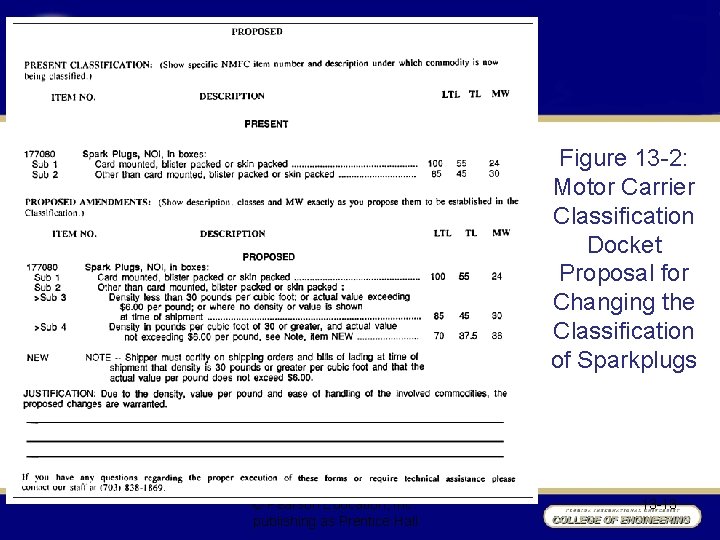
Figure 13 -2: Motor Carrier Classification Docket Proposal for Changing the Classification of Sparkplugs © Pearson Education, Inc. publishing as Prentice Hall 13 -13
Transportation Rates • To find LTL rates usually need: – Origin and destination zip codes – Weight of shipment – Classification of shipment – Supplemental services needed – Discount awarded to shipper by carrier • Rates may be on carrier Web sites © 2008 Prentice Hall 6 -14
Rate and Service Negotiations • Both rates and service levels may be negotiated • Long-term relationships are encouraged • Negotiations are subject to antitrust laws • Allows transportation managers to take advantage of trade-offs between price and service © 2008 Prentice Hall 7 -15
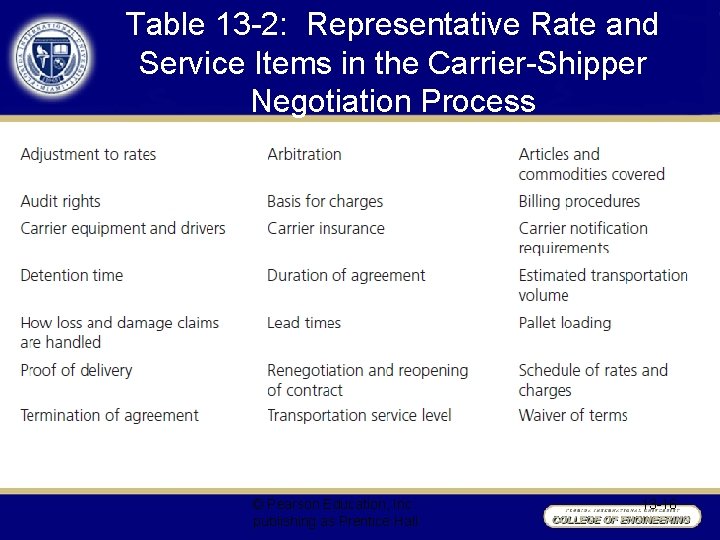
Table 13 -2: Representative Rate and Service Items in the Carrier-Shipper Negotiation Process © Pearson Education, Inc. publishing as Prentice Hall 13 -16
Modal and Carrier Selection • Two-step process – First determine appropriate mode(s) – Then select carrier(s) within the chosen mode(s) • Carrier selection is more challenging – Difficult to be aware of every possible carrier – Lack of agreement on the number of relevant factors © Pearson Education, Inc. publishing as Prentice Hall 13 -17
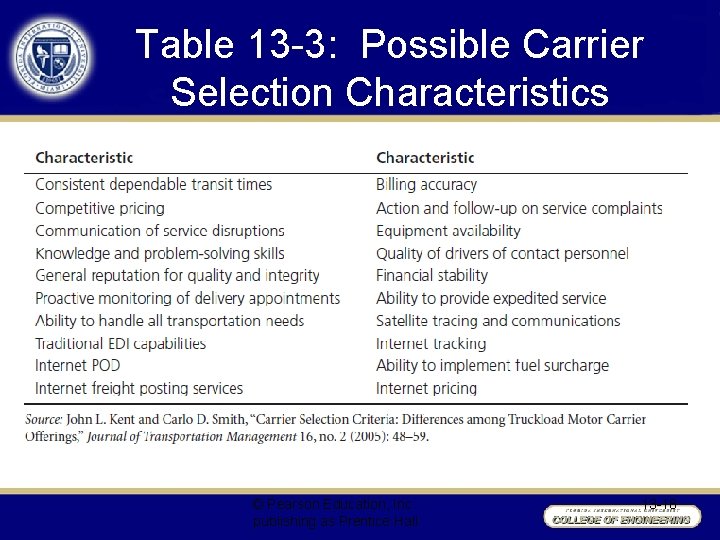
Table 13 -3: Possible Carrier Selection Characteristics © Pearson Education, Inc. publishing as Prentice Hall 13 -18
Modal and Carrier Selection • Amodal shipper refers to a transportation manager who purchases a prespecified level of transportation service and is indifferent to the mode(s) and or carrier(s) used to provide the actual transportation service. • Research indicates shippers are more interested in transportation metrics than in modes © Pearson Education, Inc. publishing as Prentice Hall 13 -19
Documentation • Documentation – Serves practical function (what, where, and how much is being transported – Potentially provides legal recourse • Bill of lading – Straight bill of lading – Order bill of lading – Long-form bill of lading – Preprinted short-form bill of lading • Freight bill • Freight claims © Pearson Education, Inc. publishing as Prentice Hall 13 -20
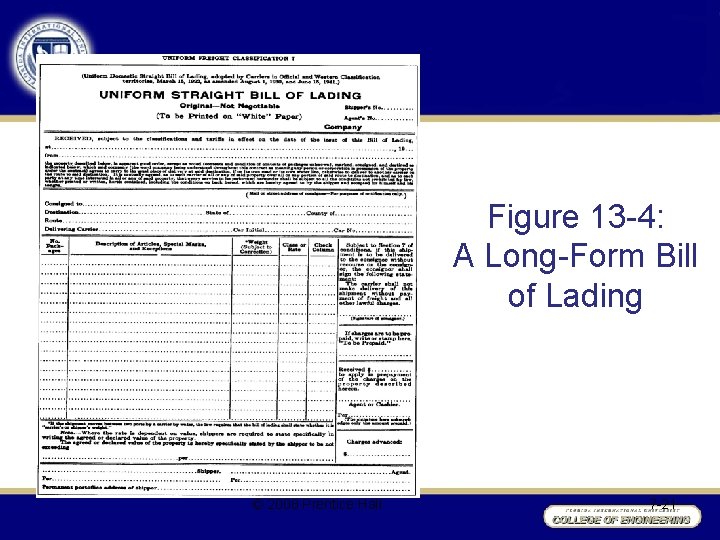
Figure 13 -4: A Long-Form Bill of Lading © 2008 Prentice Hall 7 -21
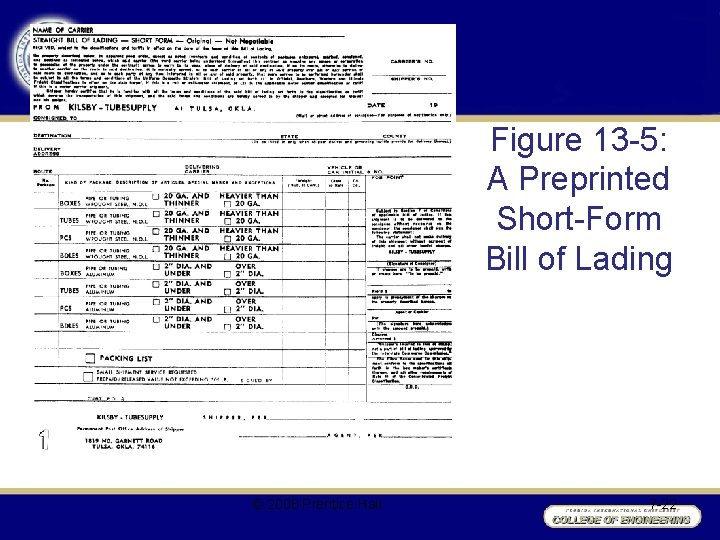
Figure 13 -5: A Preprinted Short-Form Bill of Lading © 2008 Prentice Hall 7 -22
Documentation • Freight bill – Invoice submitted by the carrier requesting to be paid – Freight bill-paying service – Internal audits – External audits • Freight claims – Refers to a document that notifies a carrier of wrong or defective deliveries, delays, or other delivery shortcomings – Concealed loss or damage is when loss or damage is not apparent until after a shipment has been unpacked and inspected © Pearson Education, Inc. publishing as Prentice Hall 13 -23
Making and Receiving Shipments • Consolidating small shipments – Shipments > 150 and < 500 pounds – To get a lower rate, shipment consolidation may occur: aggregating customer orders across time or place or both © Pearson Education, Inc. publishing as Prentice Hall 13 -24
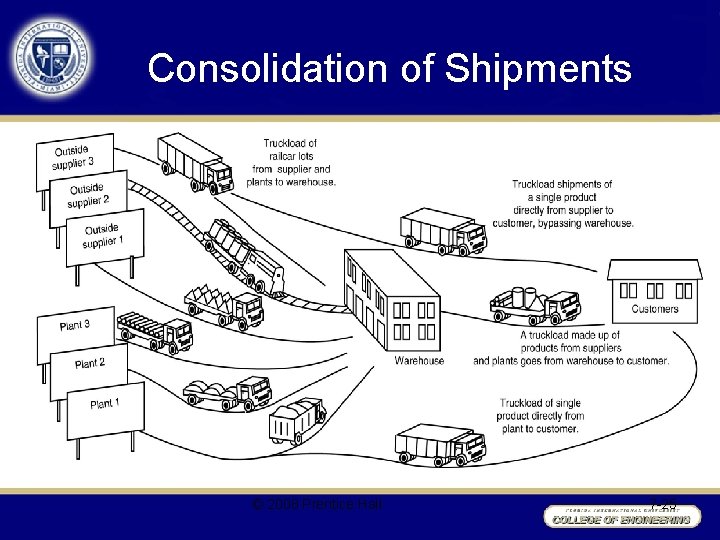
Consolidation of Shipments © 2008 Prentice Hall 7 -25
Making and Receiving Shipments • Demurrage and Detention – Demurrage is a penalty payment made to the railroad for keeping a railcar beyond the time when it should be released back to railroad – Detention is the word used in the trucking industry • Routing – Process of determining how a shipment will be moved between consignor and consignee – Hazmat routing © Pearson Education, Inc. publishing as Prentice Hall 13 -26
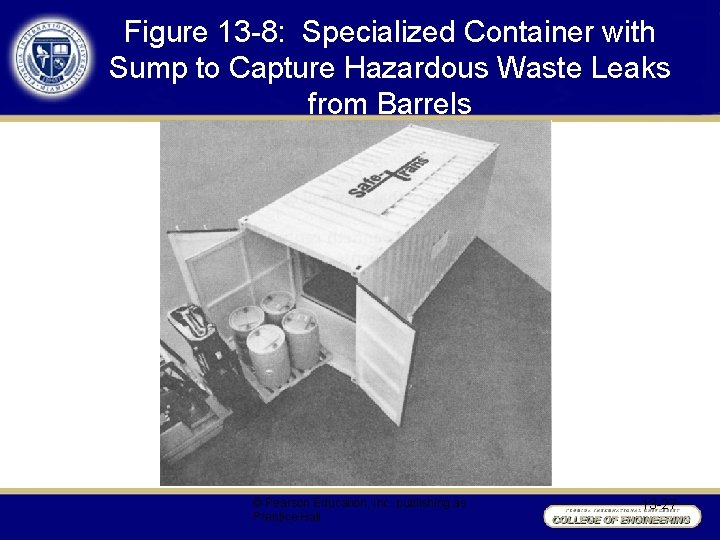
Figure 13 -8: Specialized Container with Sump to Capture Hazardous Waste Leaks from Barrels © Pearson Education, Inc. publishing as Prentice Hall 13 -27
Making and Receiving Shipments • Tracing and Expediting – Tracing is the attempt to locate lost or late shipments – Expediting is rapidly moving a shipment through a carrier’s system. © Pearson Education, Inc. publishing as Prentice Hall 13 -28
Transportation Service Quality • Macroenvironmental changes have caused organizations to demand higher levels of service quality • Economic deregulation allowed for both price and service competition resulting in a need to measure performance • Can measure performance through the use a performance scorecard © Pearson Education, Inc. publishing as Prentice Hall 13 -29
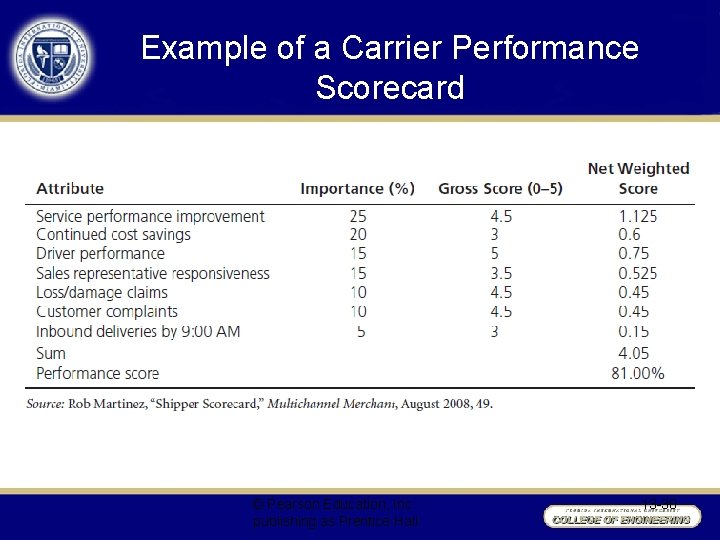
Example of a Carrier Performance Scorecard © Pearson Education, Inc. publishing as Prentice Hall 13 -30
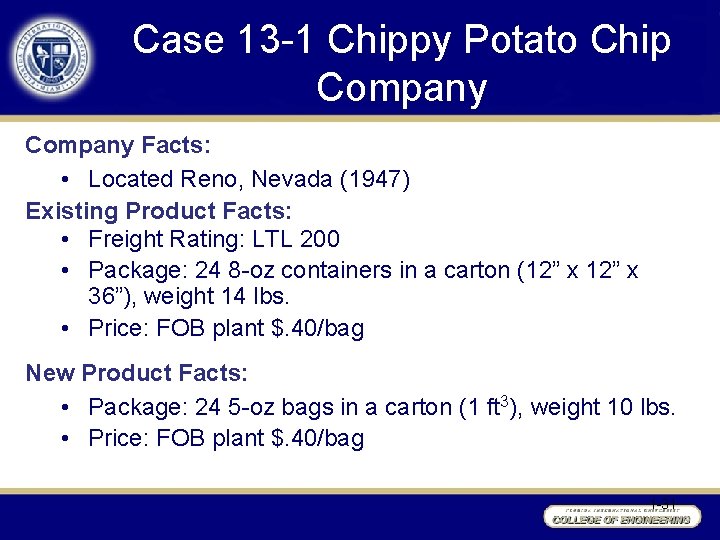
Case 13 -1 Chippy Potato Chip Company Facts: • Located Reno, Nevada (1947) Existing Product Facts: • Freight Rating: LTL 200 • Package: 24 8 -oz containers in a carton (12” x 36”), weight 14 lbs. • Price: FOB plant $. 40/bag New Product Facts: • Package: 24 5 -oz bags in a carton (1 ft 3), weight 10 lbs. • Price: FOB plant $. 40/bag 1 -31
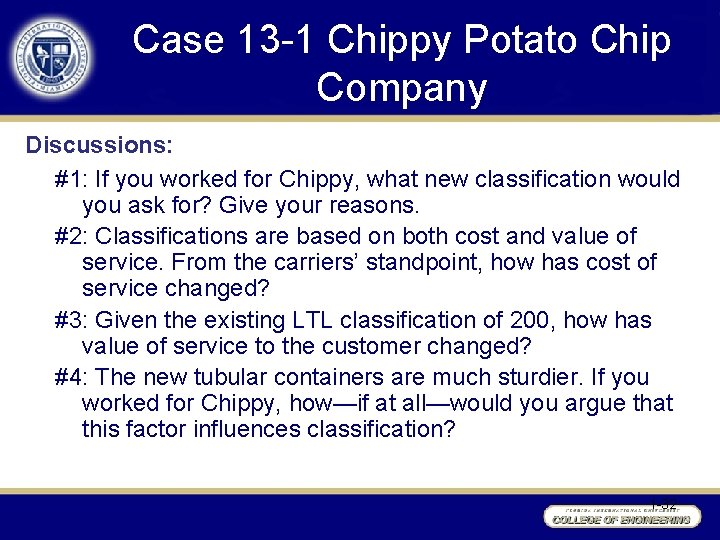
Case 13 -1 Chippy Potato Chip Company Discussions: #1: If you worked for Chippy, what new classification would you ask for? Give your reasons. #2: Classifications are based on both cost and value of service. From the carriers’ standpoint, how has cost of service changed? #3: Given the existing LTL classification of 200, how has value of service to the customer changed? #4: The new tubular containers are much sturdier. If you worked for Chippy, how—if at all—would you argue that this factor influences classification? 1 -32
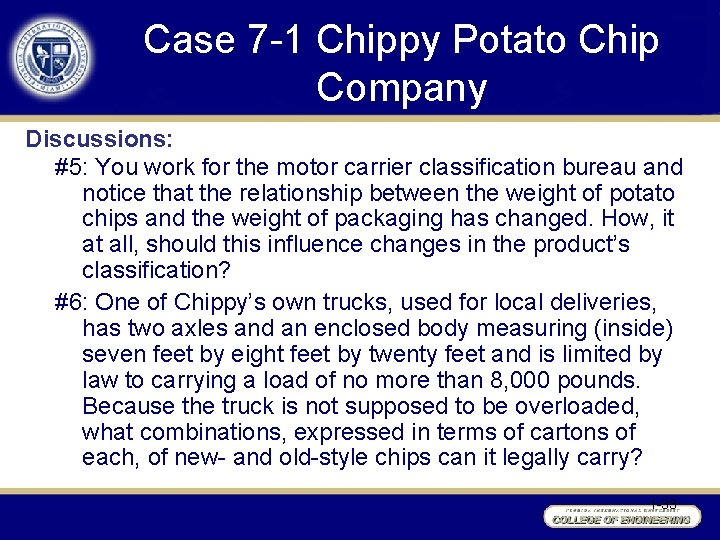
Case 7 -1 Chippy Potato Chip Company Discussions: #5: You work for the motor carrier classification bureau and notice that the relationship between the weight of potato chips and the weight of packaging has changed. How, it at all, should this influence changes in the product’s classification? #6: One of Chippy’s own trucks, used for local deliveries, has two axles and an enclosed body measuring (inside) seven feet by eight feet by twenty feet and is limited by law to carrying a load of no more than 8, 000 pounds. Because the truck is not supposed to be overloaded, what combinations, expressed in terms of cartons of each, of new- and old-style chips can it legally carry? 1 -33
- Slides: 33