
Chapter 13 The Expansion of American Industry Life
- Slides: 30
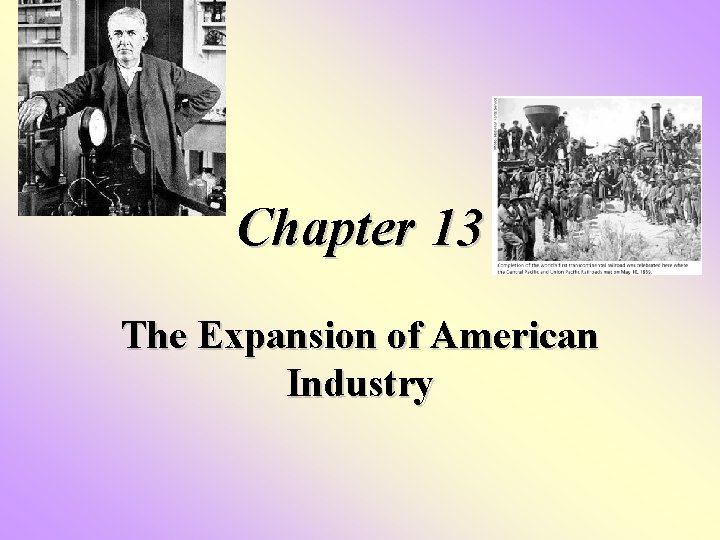
Chapter 13 The Expansion of American Industry
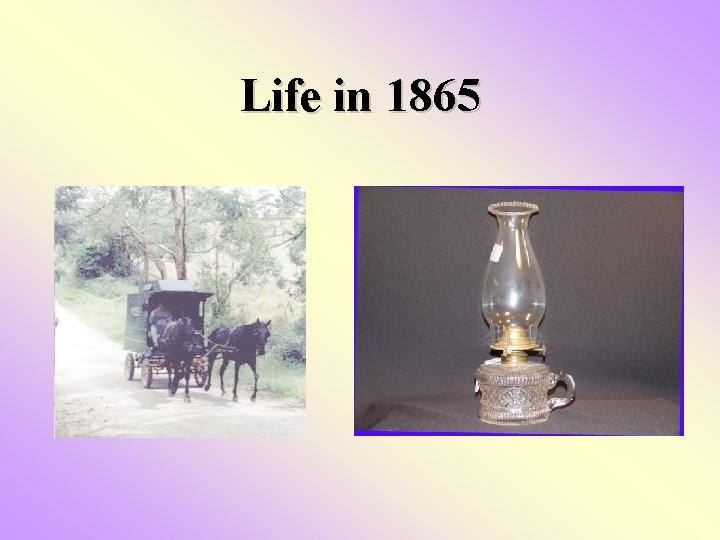
Life in 1865
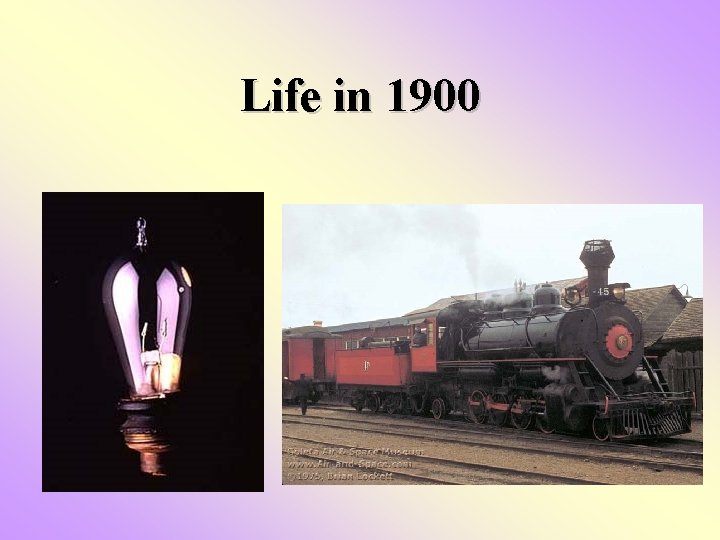
Life in 1900
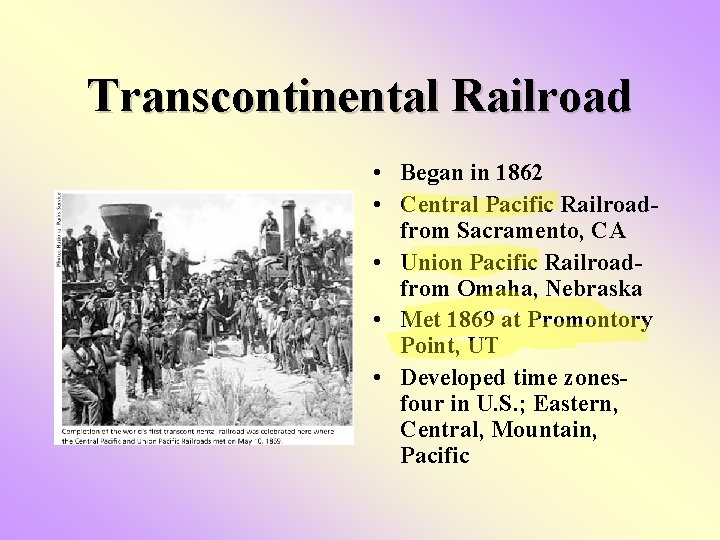
Transcontinental Railroad • Began in 1862 • Central Pacific Railroadfrom Sacramento, CA • Union Pacific Railroadfrom Omaha, Nebraska • Met 1869 at Promontory Point, UT • Developed time zonesfour in U. S. ; Eastern, Central, Mountain, Pacific
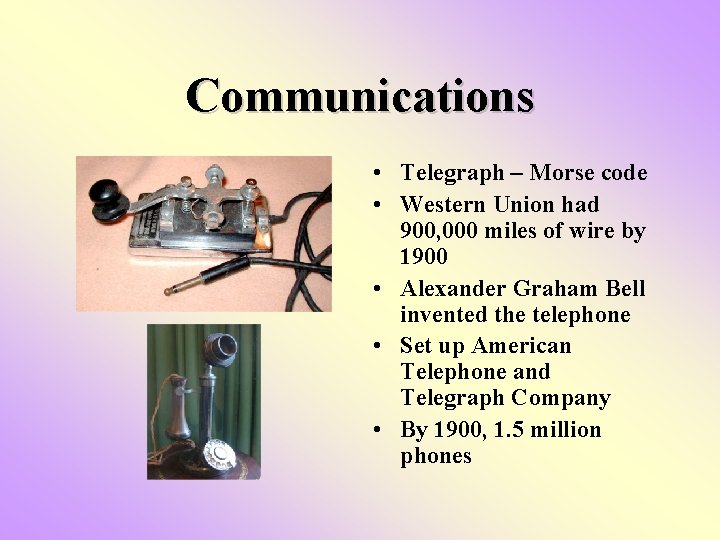
Communications • Telegraph – Morse code • Western Union had 900, 000 miles of wire by 1900 • Alexander Graham Bell invented the telephone • Set up American Telephone and Telegraph Company • By 1900, 1. 5 million phones
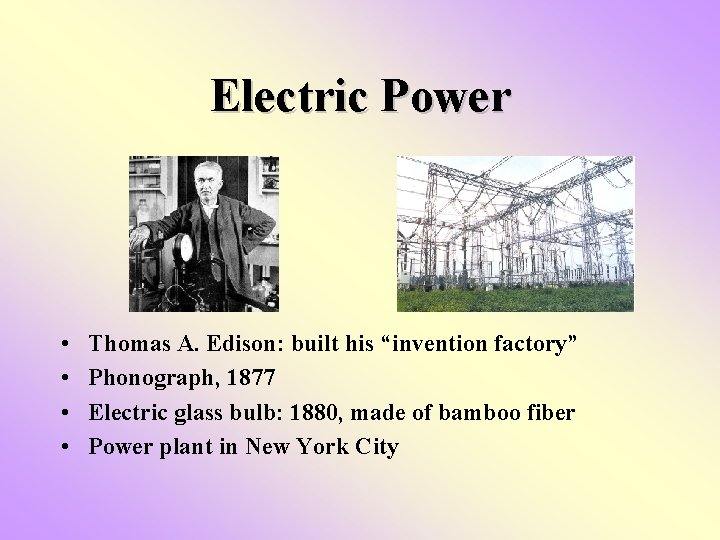
Electric Power • • Thomas A. Edison: built his “invention factory” Phonograph, 1877 Electric glass bulb: 1880, made of bamboo fiber Power plant in New York City
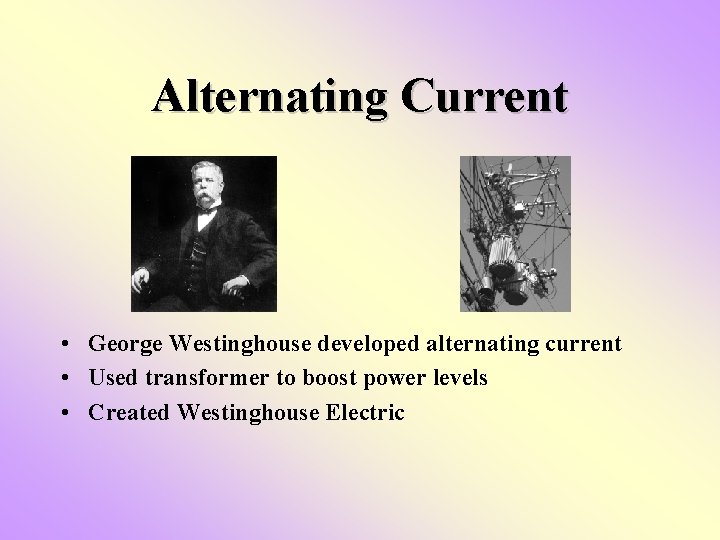
Alternating Current • George Westinghouse developed alternating current • Used transformer to boost power levels • Created Westinghouse Electric
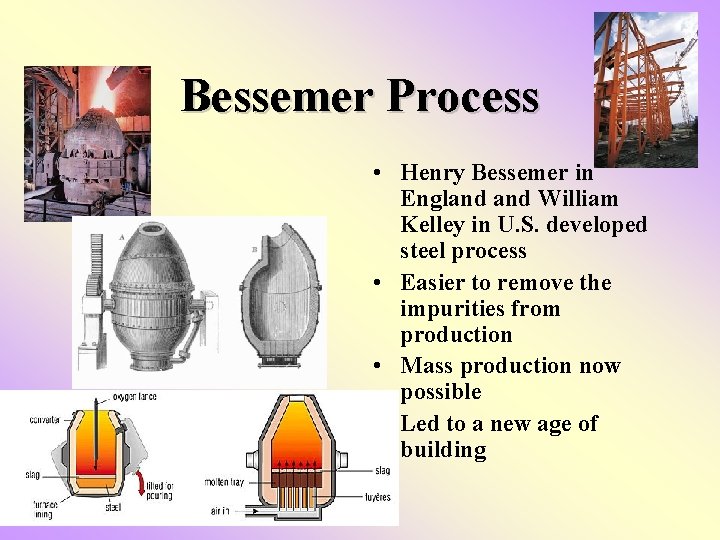
Bessemer Process • Henry Bessemer in England William Kelley in U. S. developed steel process • Easier to remove the impurities from production • Mass production now possible • Led to a new age of building
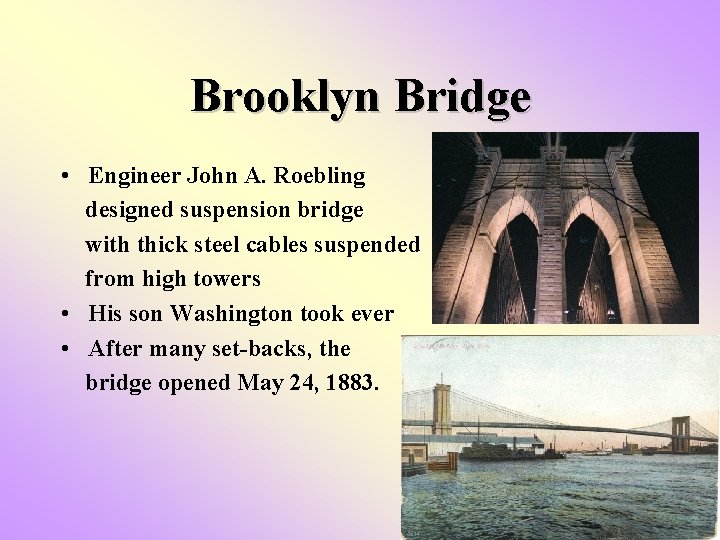
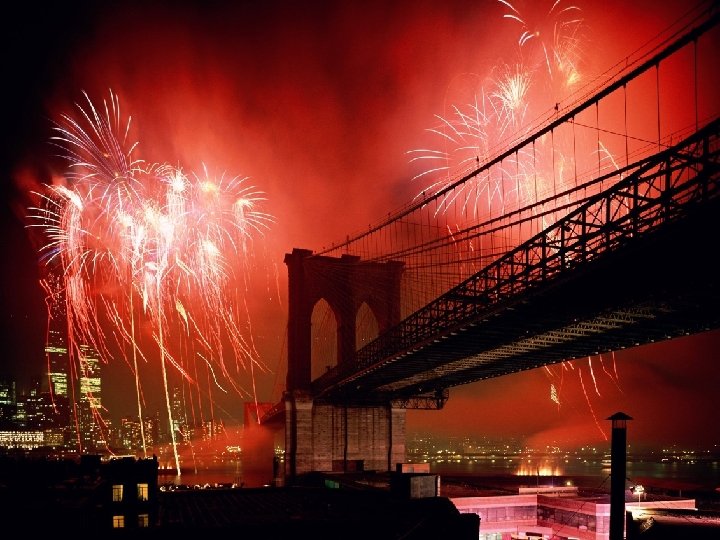
Brooklyn Bridge • Engineer John A. Roebling designed suspension bridge with thick steel cables suspended from high towers • His son Washington took ever • After many set-backs, the bridge opened May 24, 1883.
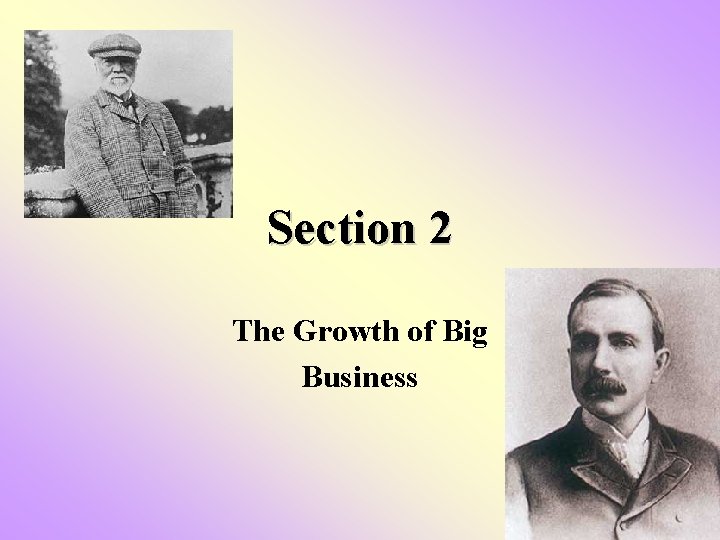
Section 2 The Growth of Big Business
Business Leaders of the Late 1800 s • • • Robber Barons? Drained the country of its natural resources Persuaded officials to interpret laws in their favor Drove competitors to ruin Paid their workers meager wages Workers forced to work in dangerous and unhealthy conditions Captains of Industry? • Increased the supply of goods by building factories • Created jobs that allowed Americans to buy their goods • Founded and funded museums, libraries, and universities
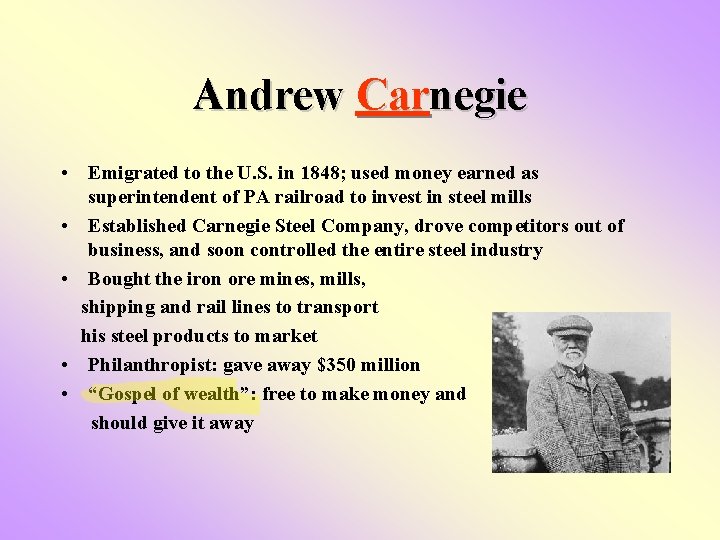
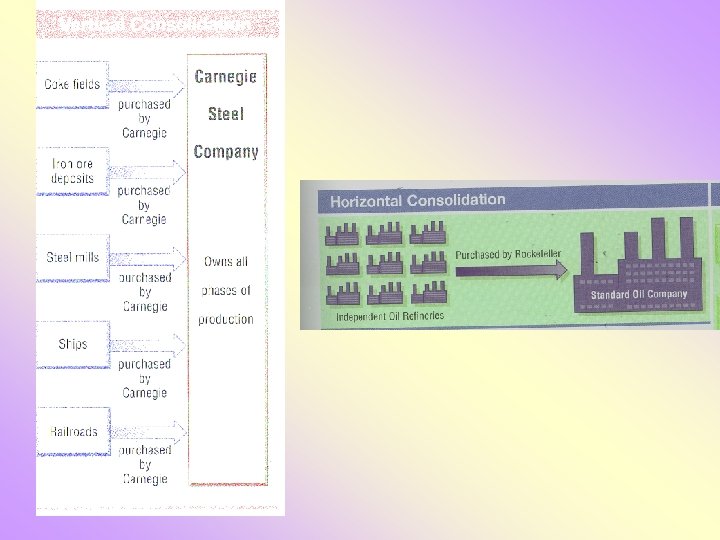
Andrew Carnegie • Emigrated to the U. S. in 1848; used money earned as superintendent of PA railroad to invest in steel mills • Established Carnegie Steel Company, drove competitors out of business, and soon controlled the entire steel industry • Bought the iron ore mines, mills, shipping and rail lines to transport his steel products to market • Philanthropist: gave away $350 million • “Gospel of wealth”: free to make money and should give it away
Social Darwinism • Darwin: all animal life had evolved by a process of “natural selection” • Social Darwinism: society should do as little as possible to interfere with people’s pursuit of success • Government should stay out of the affairs of business. • The most “fit” would become rich and society would benefit • Most Americans agreed that government should not tax business nor regulate their relations with workers.
Monopolies and Cartels • Monopoly • Cartel • Complete control of a • A loose association of product or service businesses that make the same product • A business bought its competitors or drove • Members agreed to them out of business limit the supply of their product and • Could then charge keep prices high prices
The Standard Oil Trust • • Edwin L. Drake struck oil in Titusville, PA in 1858. John D. Rockefeller set up a refinery in Ohio in 1863. He undersold his competitors and bought them out. In 1882 the owners of Standard Oil and other companies combined their operations, appointing nine trustees. Rockefeller controlled the trust • Forty companies joined the trust and controlled the nations oil, limiting competition • 1890 Congress passed the Sherman Antitrust Act, outlawing any combination of companies that restrained commerce; proved ineffective for 15 years.
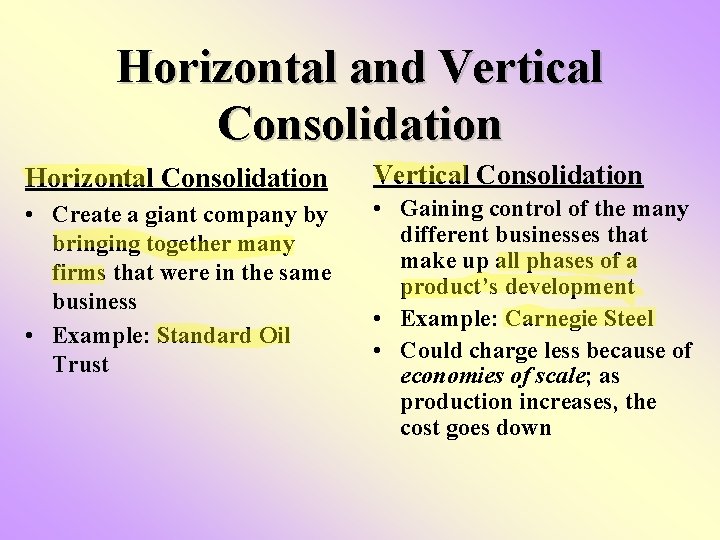
Horizontal and Vertical Consolidation Horizontal Consolidation Vertical Consolidation • Create a giant company by bringing together many firms that were in the same business • Example: Standard Oil Trust • Gaining control of the many different businesses that make up all phases of a product’s development • Example: Carnegie Steel • Could charge less because of economies of scale; as production increases, the cost goes down
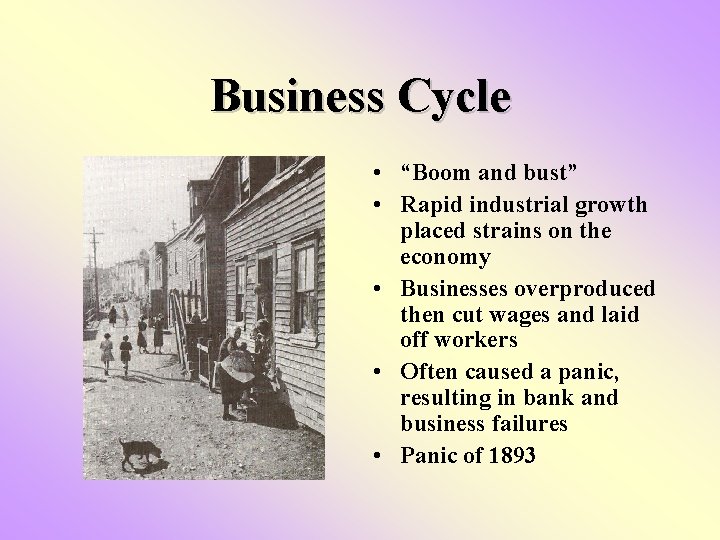
Business Cycle • “Boom and bust” • Rapid industrial growth placed strains on the economy • Businesses overproduced then cut wages and laid off workers • Often caused a panic, resulting in bank and business failures • Panic of 1893
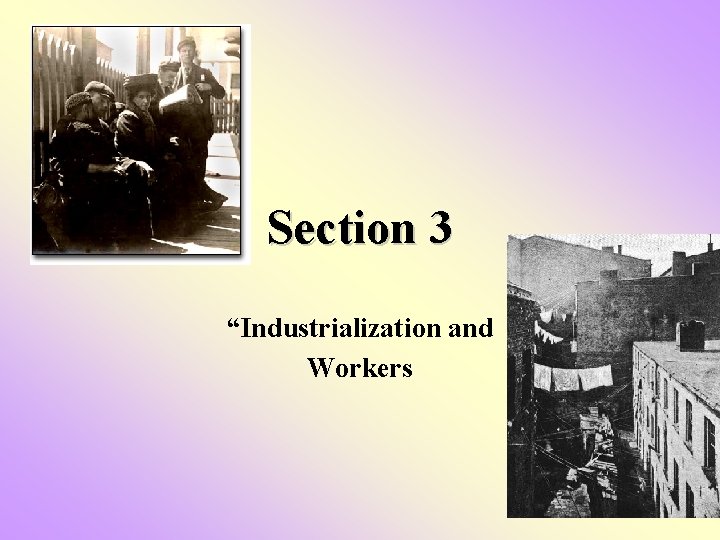
Section 3 “Industrialization and Workers
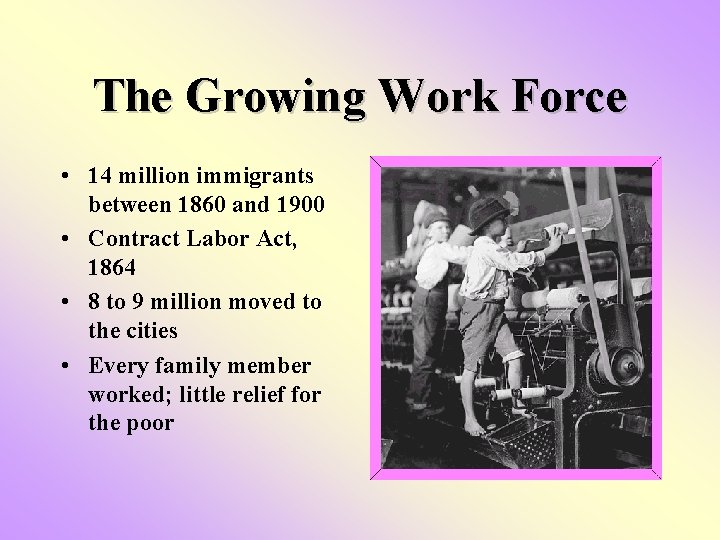
The Growing Work Force • 14 million immigrants between 1860 and 1900 • Contract Labor Act, 1864 • 8 to 9 million moved to the cities • Every family member worked; little relief for the poor
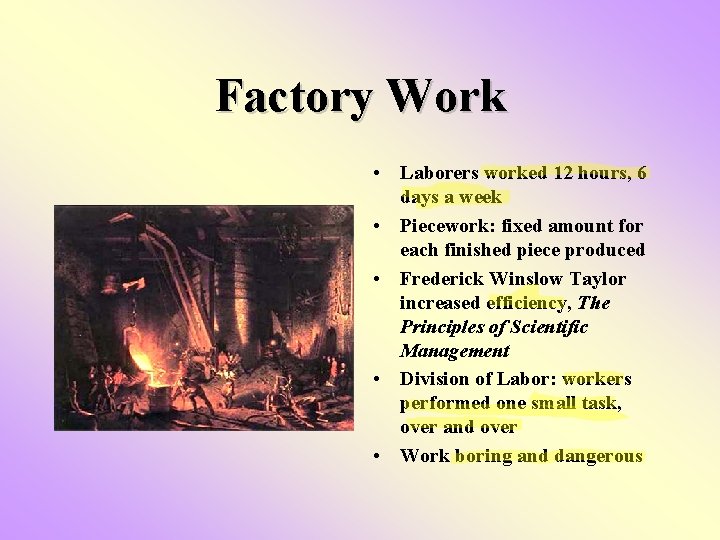
Factory Work • Laborers worked 12 hours, 6 days a week • Piecework: fixed amount for each finished piece produced • Frederick Winslow Taylor increased efficiency, The Principles of Scientific Management • Division of Labor: workers performed one small task, over and over • Work boring and dangerous
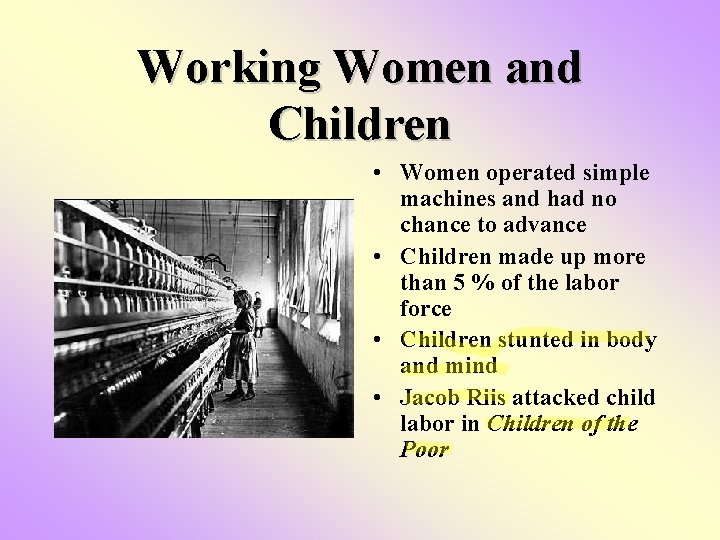
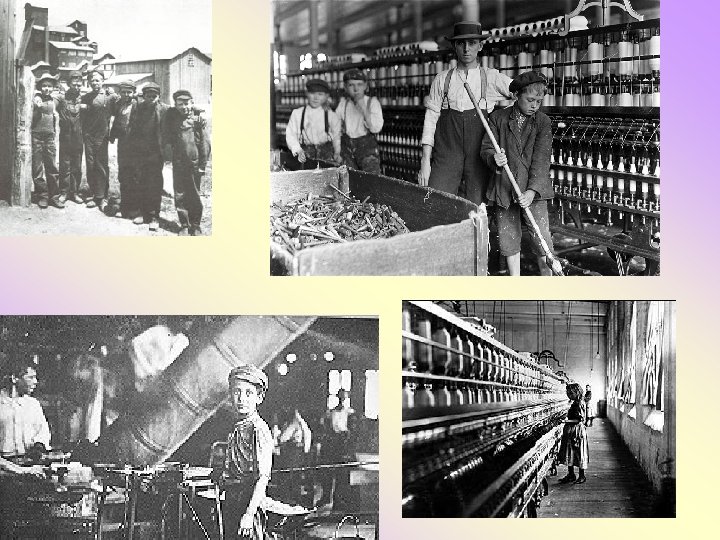
Working Women and Children • Women operated simple machines and had no chance to advance • Children made up more than 5 % of the labor force • Children stunted in body and mind • Jacob Riis attacked child labor in Children of the Poor
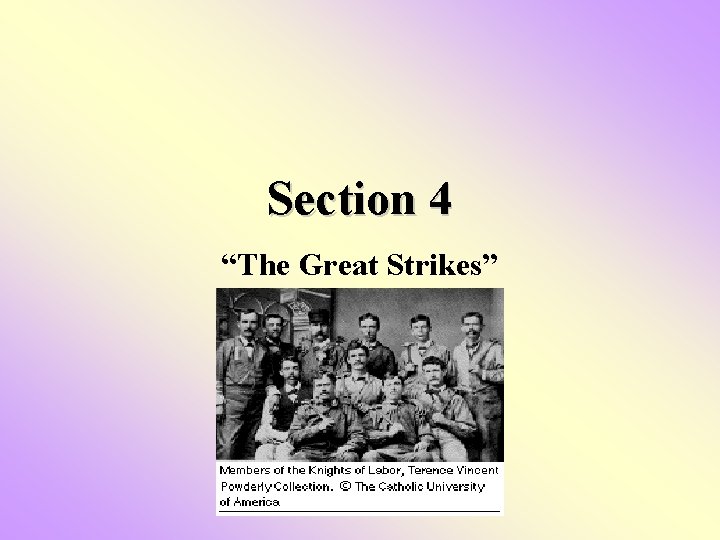
Section 4 “The Great Strikes”
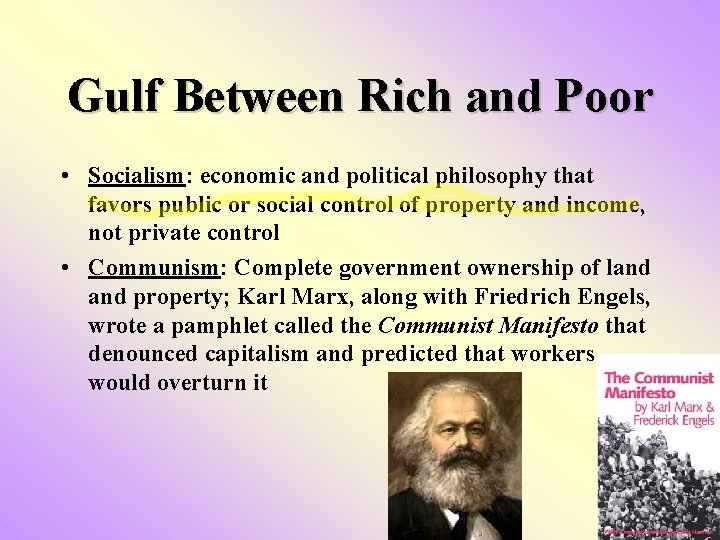
Gulf Between Rich and Poor • Socialism: economic and political philosophy that favors public or social control of property and income, not private control • Communism: Complete government ownership of land property; Karl Marx, along with Friedrich Engels, wrote a pamphlet called the Communist Manifesto that denounced capitalism and predicted that workers would overturn it
Rise of Labor Unions • National Trades Union, 1834; ended with Panic of 1837 • National Labor Union, 1866; failed during a depression • Knights of Labor, 1869; men, women, skilled and unskilled; Terence Powderly wanted equal pay, 8 hour day, end to child labor; disappeared by 1890 s • American Federation of Labor, 1886; Samuel Gompers wanted skilled workers only; supported collective bargaining, negotiation between labor and employers • The Wobblies (Industrial Workers of the World), many Socialists, radical union of unskilled workers such as miners, lumbermen, migrant farm workers, textile workers
Reaction of Employers • • Feared unions Tactics to stop unions 1. Forbade union meetings 2. Fired union organizers 3. “Yellow dog” contracts – promised never to join a union 4. Refused collective bargaining 5. Refused to recognize unions as workers’ representatives
Strikes Rock the Nation • Haymarket Riot, 1886, at Chicago’s Mc. Cormick reaper factory; bomb killed seven policemen, gunfire killed dozens. Eight anarchists, radicals who oppose all government, were tried for conspiracy to commit murder. • Homestead, 1892, Homestead, PA. Frick called in the Pinkertons. In a shootout, several died and many were wounded. • Pullman, 1894, Eugene V. Debs called for a boycott of Pullman cars. Disrupted western railroad traffic. Federal troops sent to see that mail got through. Set pattern for the employers to get court orders against unions. Government opposition limited union gains for more than 30 years