
Chapter 13 The Cell Cycle AP Biology Adapted
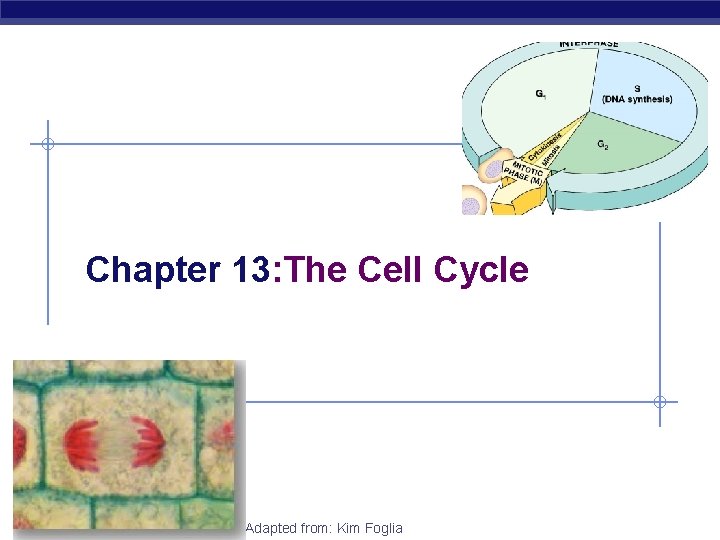
Chapter 13: The Cell Cycle AP Biology Adapted from: Kim Foglia
And now look at you… AP Biology How did you get from there to here?
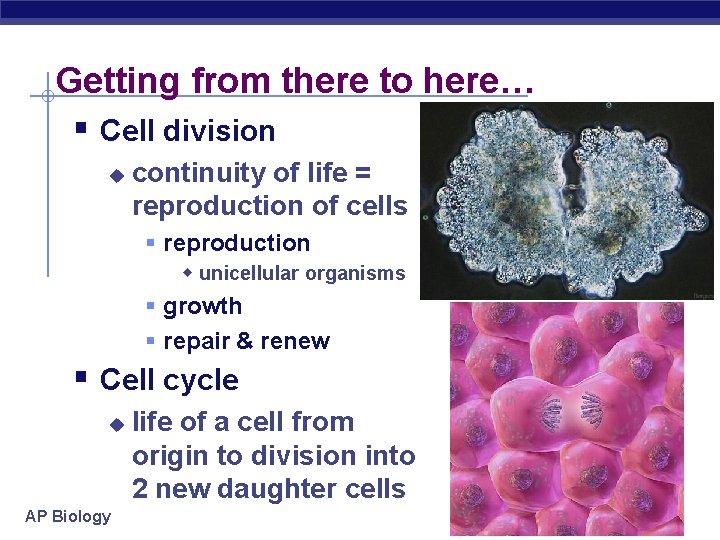
Getting from there to here… § Cell division u continuity of life = reproduction of cells § reproduction w unicellular organisms § growth § repair & renew § Cell cycle u AP Biology life of a cell from origin to division into 2 new daughter cells
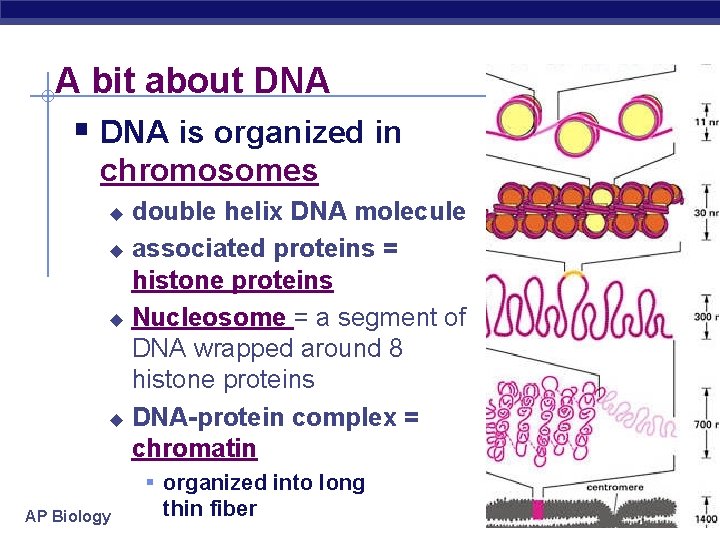
A bit about DNA § DNA is organized in chromosomes double helix DNA molecule u associated proteins = histone proteins u Nucleosome = a segment of DNA wrapped around 8 histone proteins u DNA-protein complex = chromatin u AP Biology § organized into long thin fiber
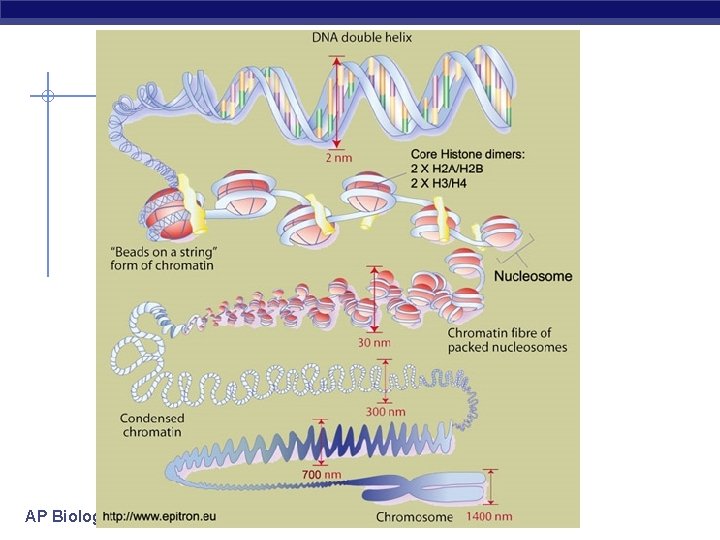
AP Biology
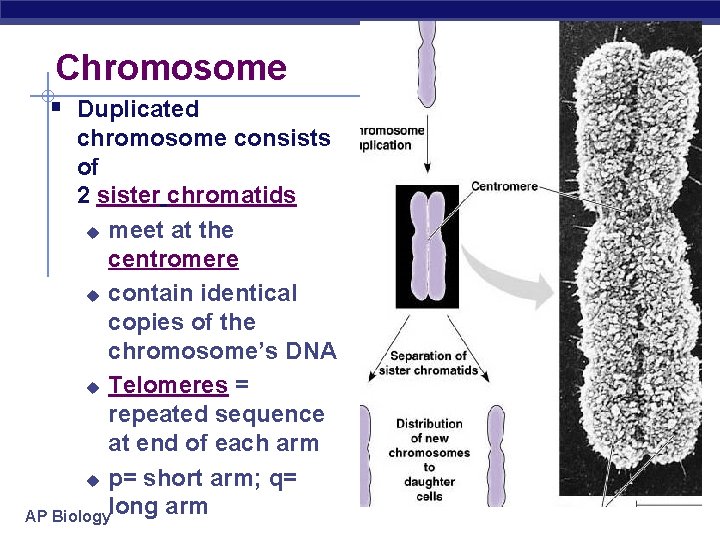
Chromosome § Duplicated chromosome consists of 2 sister chromatids u meet at the centromere u contain identical copies of the chromosome’s DNA u Telomeres = repeated sequence at end of each arm u p= short arm; q= AP Biologylong arm

AP Biology
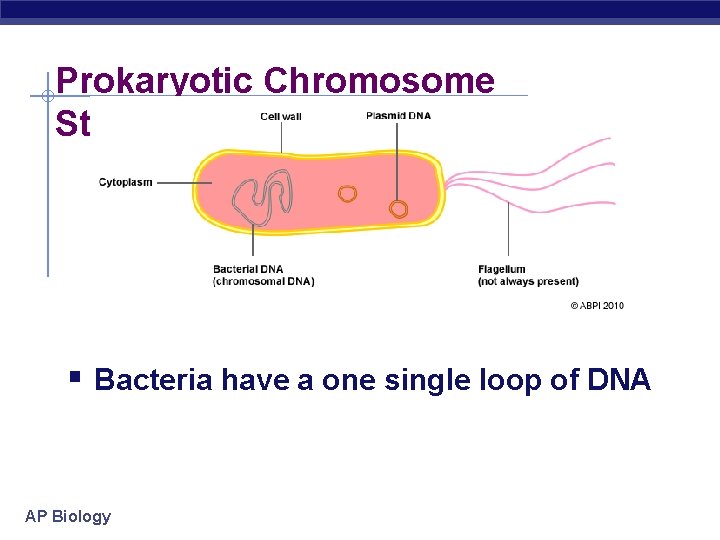
Prokaryotic Chromosome Structure § Bacteria have a one single loop of DNA AP Biology
Types of Cells & Ploidy Levels § There are two types of human cells: somatic cells and gametes. u Somatic Cells = body cells (brain, muscle, heart, liver, skin, etc) § Contain 46 chromosomes in humans § Diploid (2 n)= cell that contains two sets of homologous chromosomes w 23 PAIRS of homologous chromosomes = 46 TOTAL chromosomes u Gametes = sex cells (sperm or egg) § Contain 23 chromosomes in humans § Haploid (n)= cell that contains one set of chromosomes AP Biology
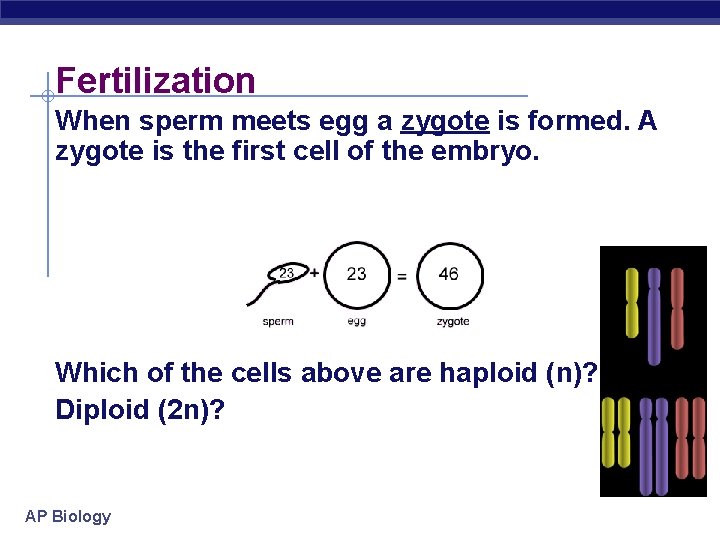
Fertilization When sperm meets egg a zygote is formed. A zygote is the first cell of the embryo. Which of the cells above are haploid (n)? Diploid (2 n)? AP Biology
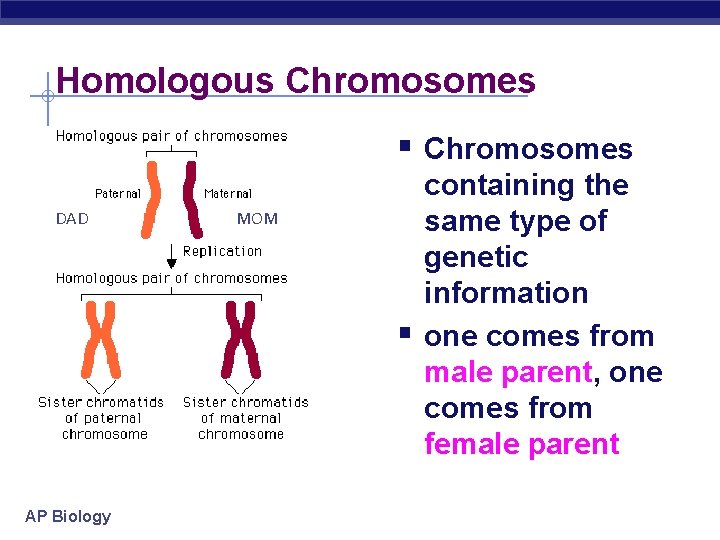
Homologous Chromosomes § Chromosomes DAD MOM § AP Biology containing the same type of genetic information one comes from male parent, one comes from female parent
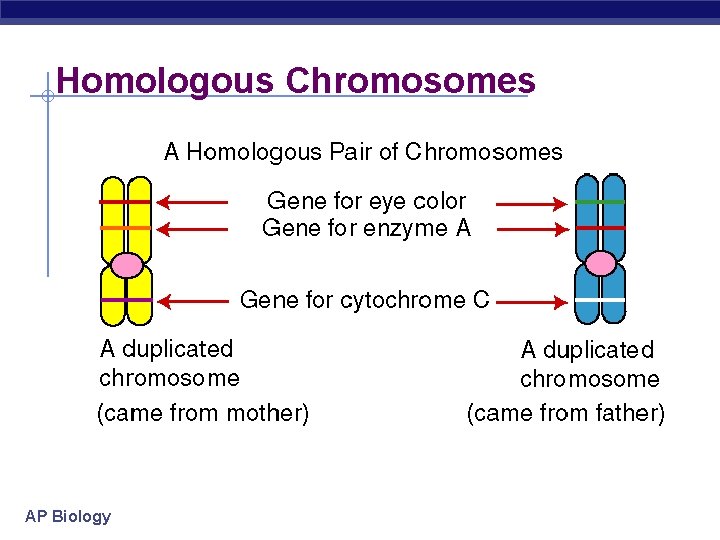
Homologous Chromosomes AP Biology
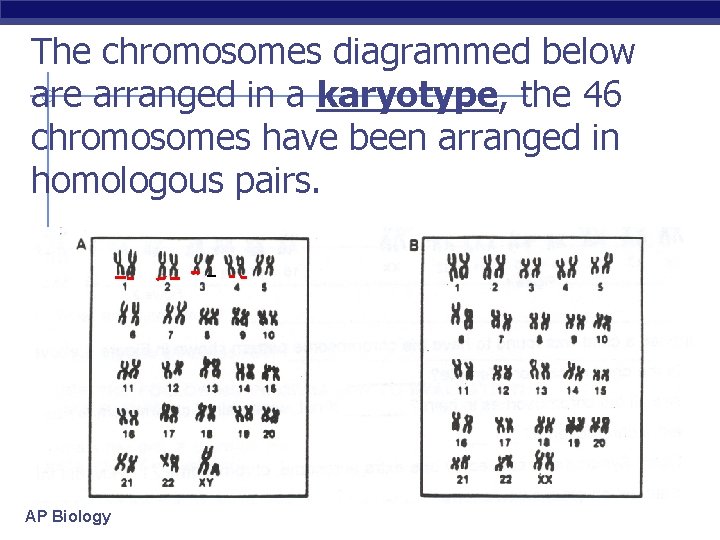
The chromosomes diagrammed below are arranged in a karyotype, the 46 chromosomes have been arranged in homologous pairs. AP Biology
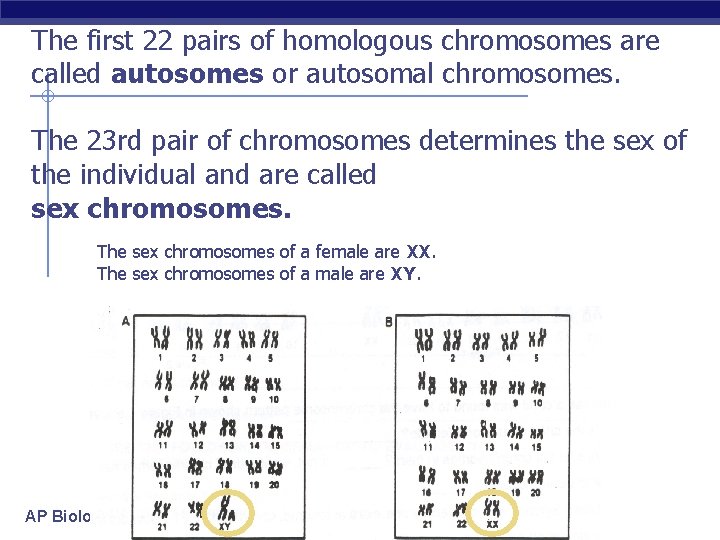
The first 22 pairs of homologous chromosomes are called autosomes or autosomal chromosomes. The 23 rd pair of chromosomes determines the sex of the individual and are called sex chromosomes. The sex chromosomes of a female are XX. The sex chromosomes of a male are XY. AP Biology
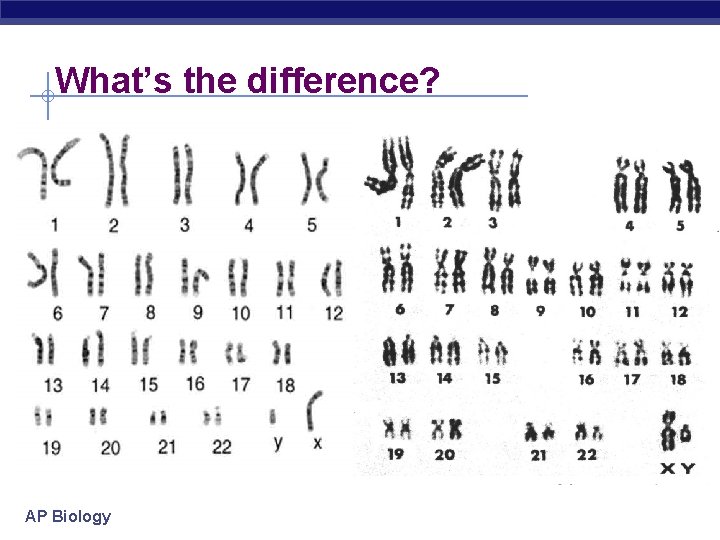
What’s the difference? AP Biology
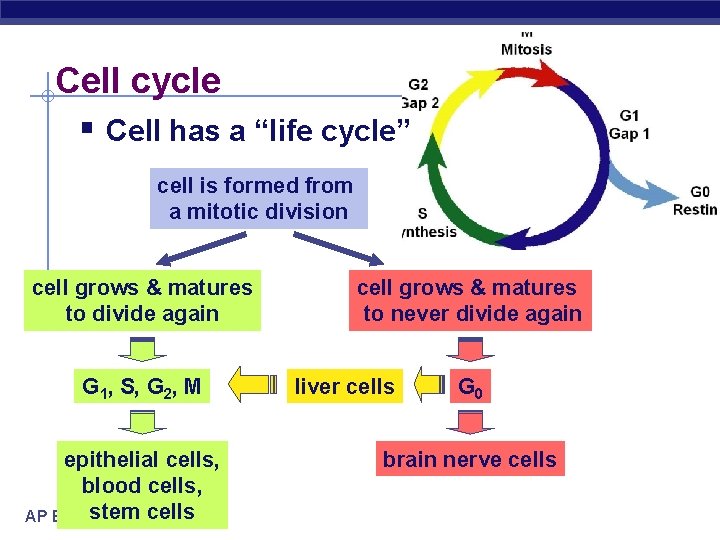
Cell cycle § Cell has a “life cycle” cell is formed from a mitotic division cell grows & matures to divide again G 1, S, G 2, M epithelial cells, blood cells, stem cells AP Biology cell grows & matures to never divide again liver cells G 0 brain nerve cells
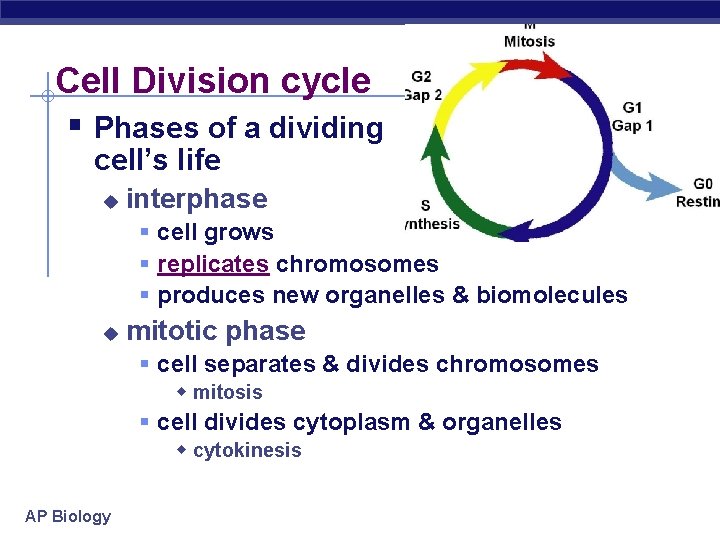
Cell Division cycle § Phases of a dividing cell’s life u interphase § cell grows § replicates chromosomes § produces new organelles & biomolecules u mitotic phase § cell separates & divides chromosomes w mitosis § cell divides cytoplasm & organelles w cytokinesis AP Biology
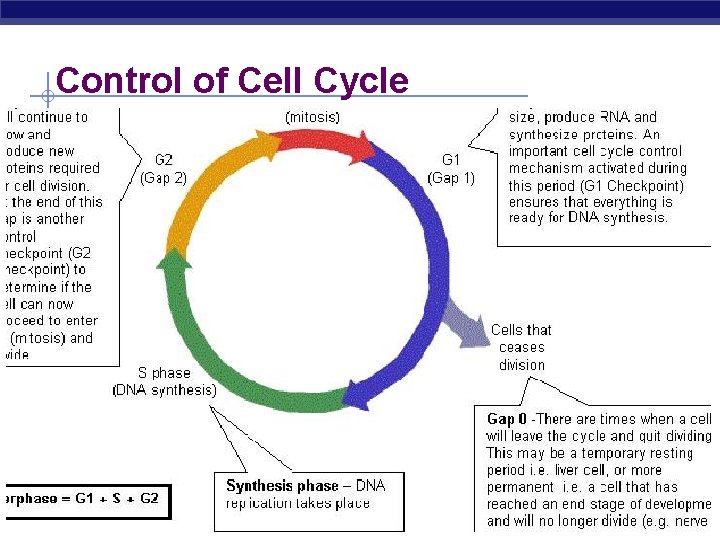
Control of Cell Cycle AP Biology
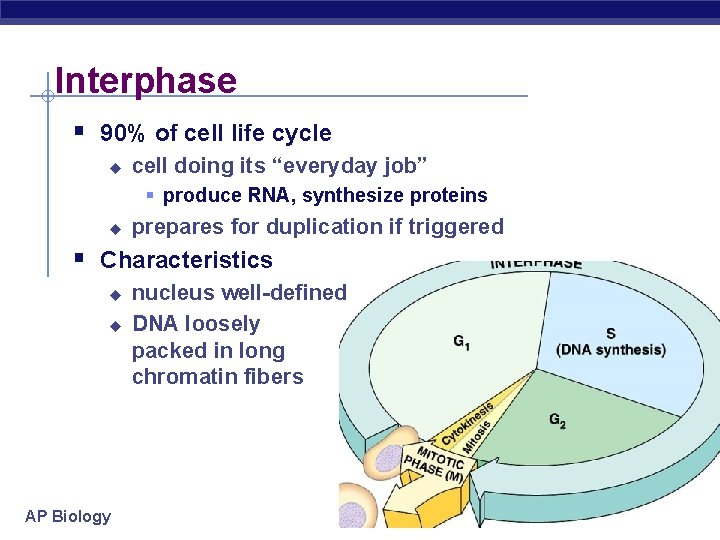
Interphase § 90% of cell life cycle u cell doing its “everyday job” § produce RNA, synthesize proteins u prepares for duplication if triggered § Characteristics u u AP Biology nucleus well-defined DNA loosely packed in long chromatin fibers
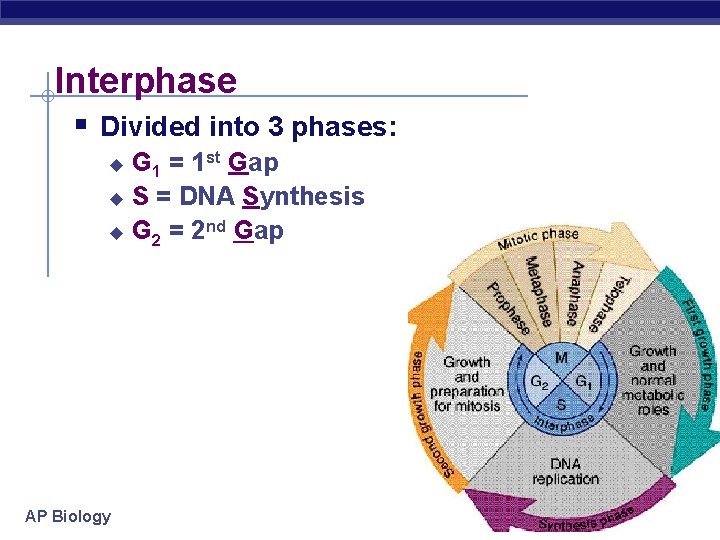
Interphase § Divided into 3 phases: G 1 = 1 st Gap u S = DNA Synthesis u G 2 = 2 nd Gap u AP Biology
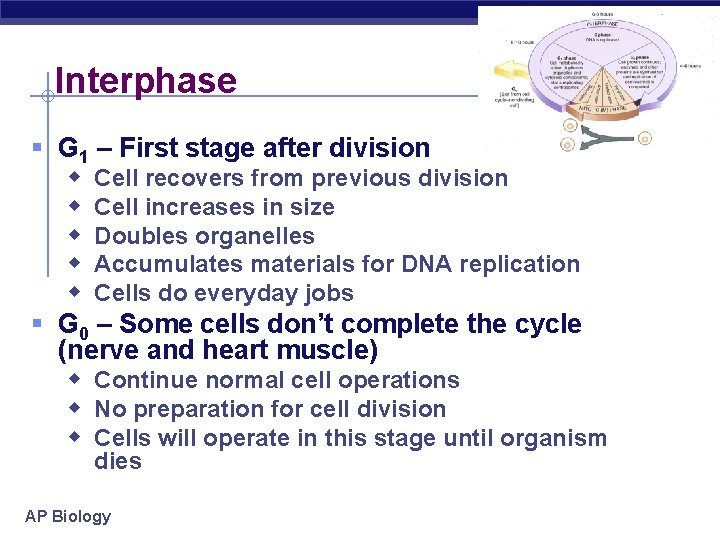
Interphase § G 1 – First stage after division w Cell recovers from previous division w Cell increases in size w Doubles organelles w Accumulates materials for DNA replication w Cells do everyday jobs § G 0 – Some cells don’t complete the cycle (nerve and heart muscle) w Continue normal cell operations w No preparation for cell division w Cells will operate in this stage until organism dies AP Biology
Interphase § S Stage – DNA synthesis occurs At the beginning it contains chromosomes containing one DNA strand u At the end each chromosome contains two identical strands of DNA u Copies chromosomes G 2 – Growth & final preparations for division u Prepares for division u Ends with mitosis u Proteins that aid in mitosis are made in this stage u § § Microtubules u u Nucleus well-defined DNA loosely packed AP Biology
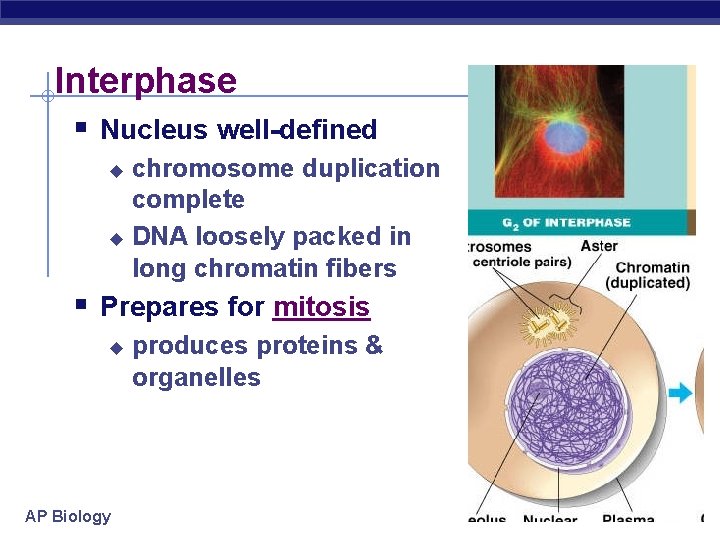
Interphase § Nucleus well-defined chromosome duplication complete u DNA loosely packed in long chromatin fibers u § Prepares for mitosis u AP Biology produces proteins & organelles
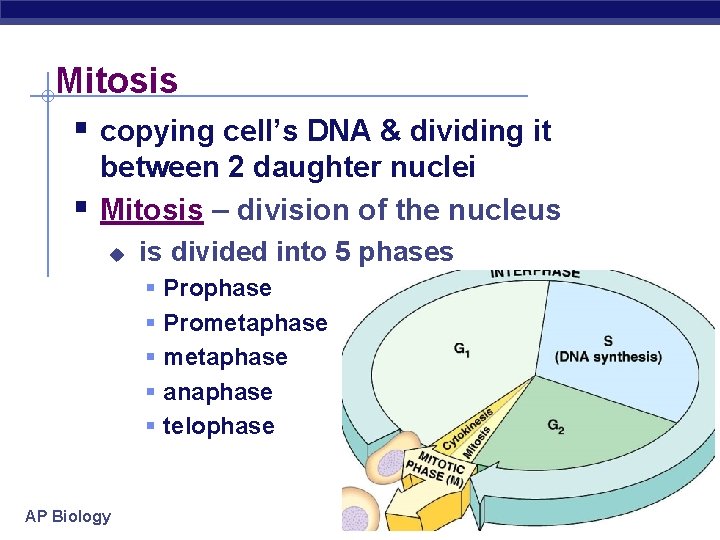
Mitosis § copying cell’s DNA & dividing it § between 2 daughter nuclei Mitosis – division of the nucleus u is divided into 5 phases § § § AP Biology Prophase Prometaphase anaphase telophase
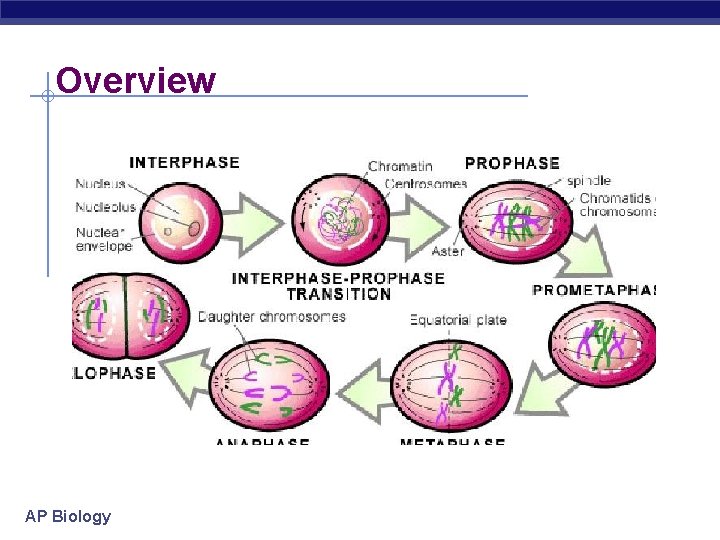
Overview AP Biology
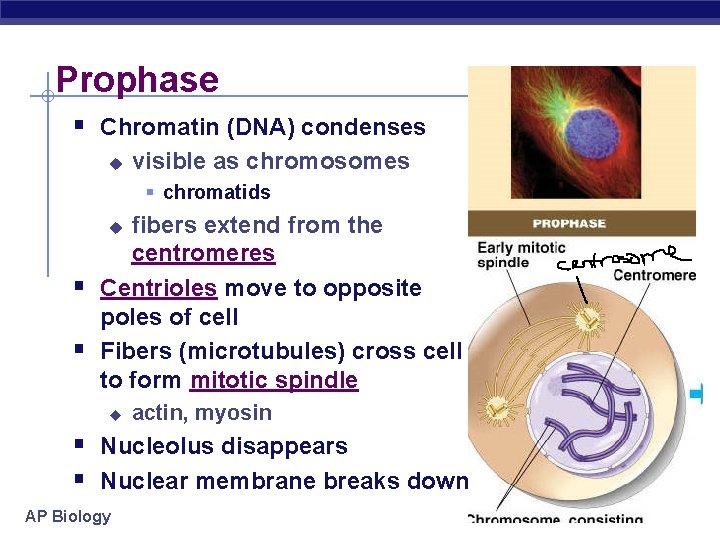
Prophase § Chromatin (DNA) condenses u visible as chromosomes § chromatids fibers extend from the centromeres Centrioles move to opposite poles of cell Fibers (microtubules) cross cell to form mitotic spindle u § § u actin, myosin § Nucleolus disappears § Nuclear membrane breaks down AP Biology
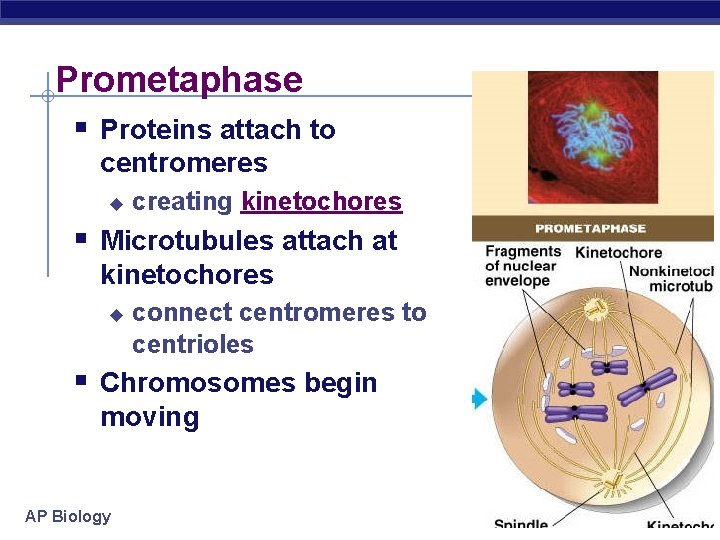
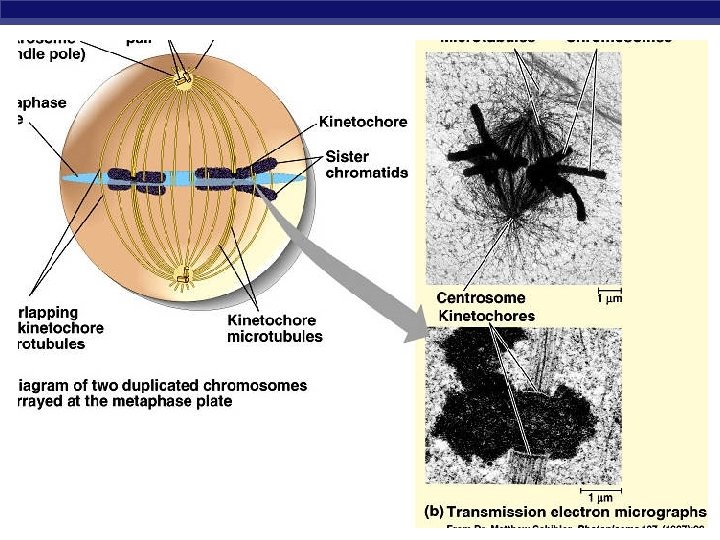
Prometaphase § Proteins attach to centromeres u creating kinetochores § Microtubules attach at kinetochores u connect centromeres to centrioles § Chromosomes begin moving AP Biology
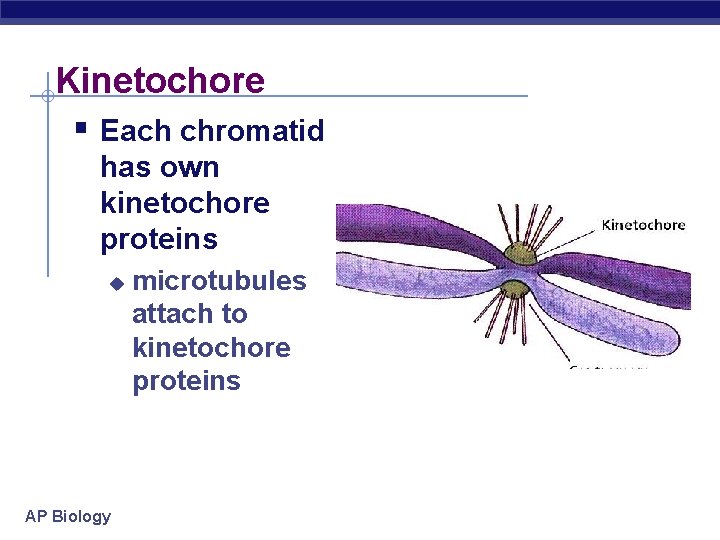
Kinetochore § Each chromatid has own kinetochore proteins u AP Biology microtubules attach to kinetochore proteins
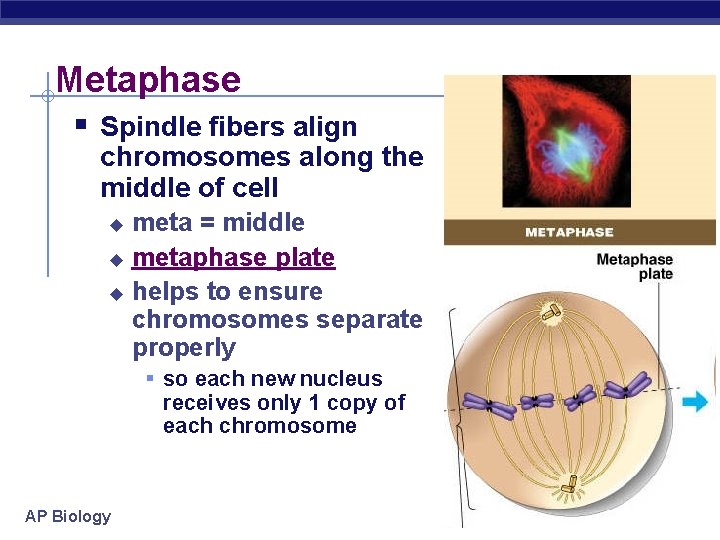
Metaphase § Spindle fibers align chromosomes along the middle of cell meta = middle u metaphase plate u helps to ensure chromosomes separate properly u § so each new nucleus receives only 1 copy of each chromosome AP Biology
AP Biology
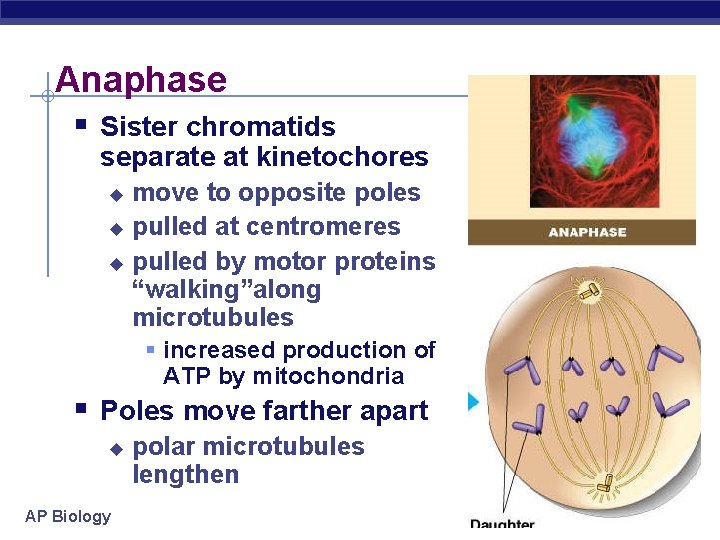
Anaphase § Sister chromatids separate at kinetochores move to opposite poles u pulled at centromeres u pulled by motor proteins “walking”along microtubules u § increased production of ATP by mitochondria § Poles move farther apart u AP Biology polar microtubules lengthen
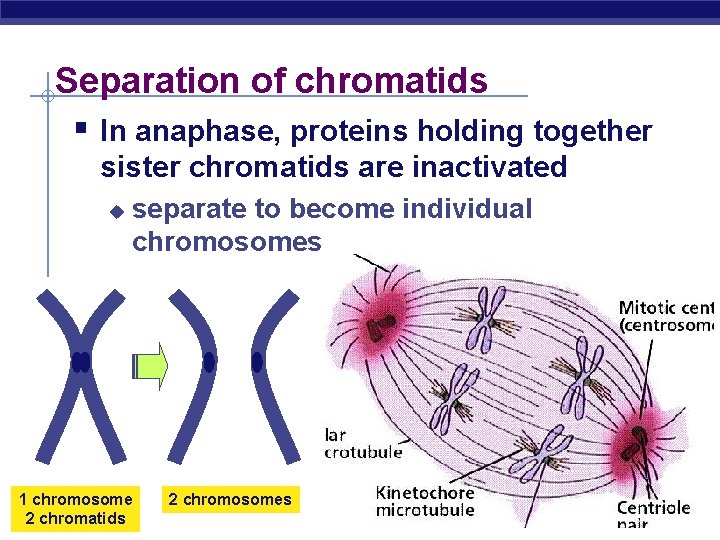
Separation of chromatids § In anaphase, proteins holding together sister chromatids are inactivated u separate to become individual chromosomes 1 chromosome AP Biology 2 chromatids 2 chromosomes
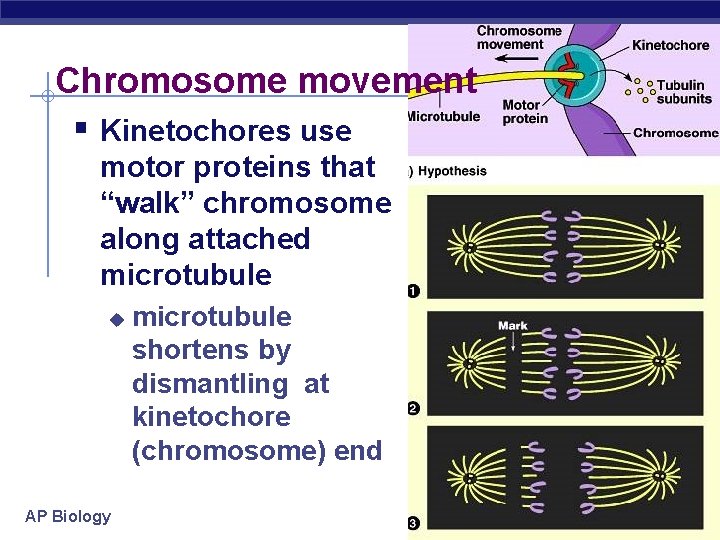
Chromosome movement § Kinetochores use motor proteins that “walk” chromosome along attached microtubule u AP Biology microtubule shortens by dismantling at kinetochore (chromosome) end
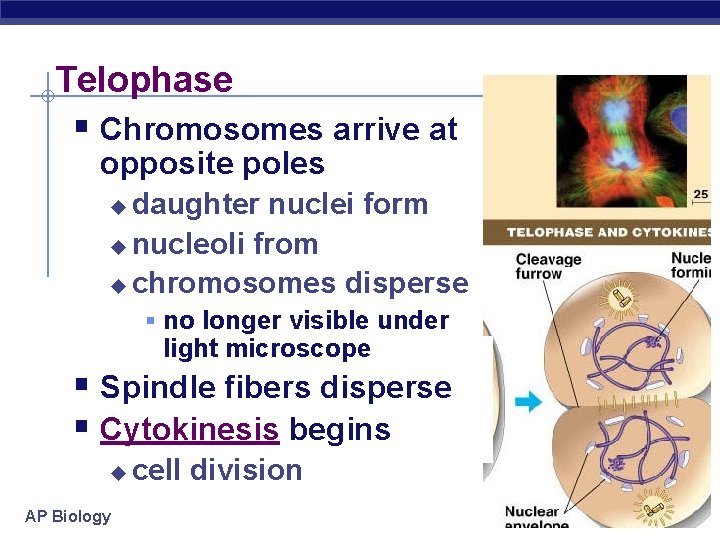
Telophase § Chromosomes arrive at opposite poles daughter nuclei form u nucleoli from u chromosomes disperse u § no longer visible under light microscope § Spindle fibers disperse § Cytokinesis begins u AP Biology cell division
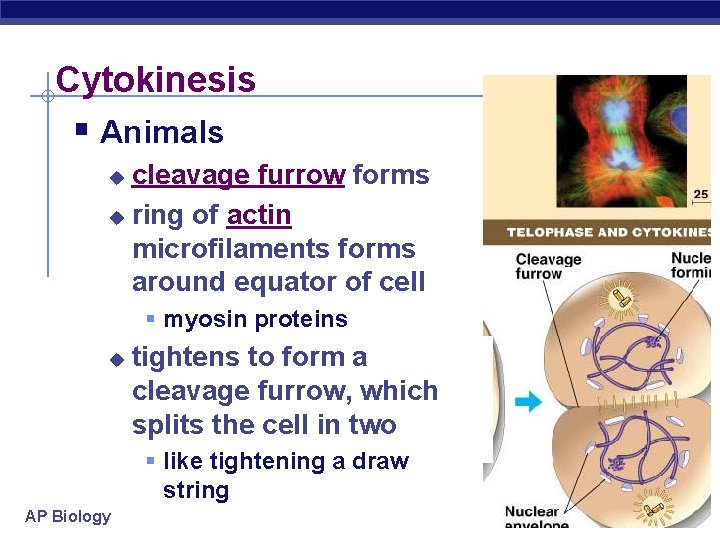
Cytokinesis § Animals cleavage furrow forms u ring of actin microfilaments forms around equator of cell u § myosin proteins u tightens to form a cleavage furrow, which splits the cell in two § like tightening a draw string AP Biology
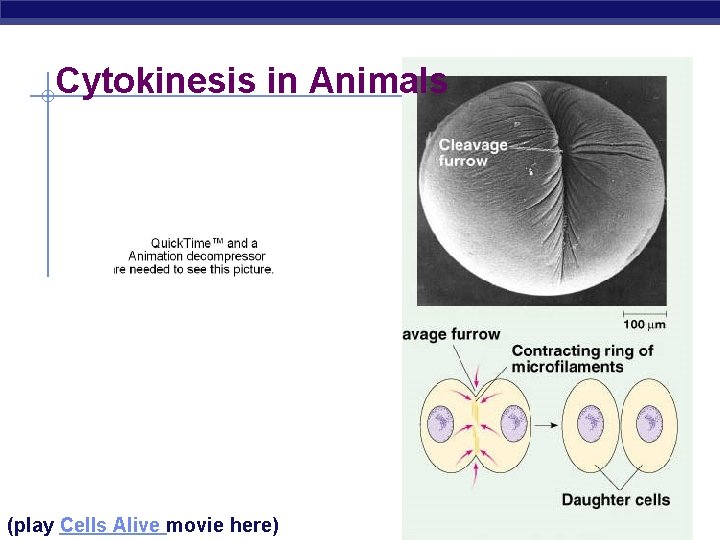
Cytokinesis in Animals AP Biology (play Cells Alive movie here)
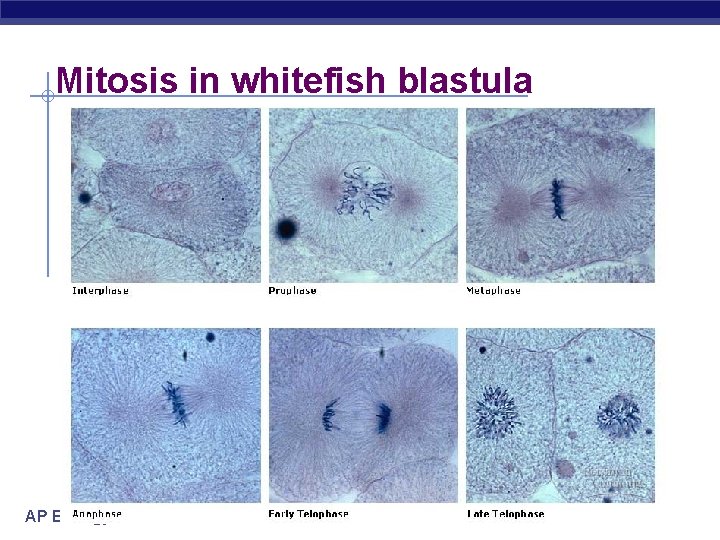
Mitosis in whitefish blastula AP Biology
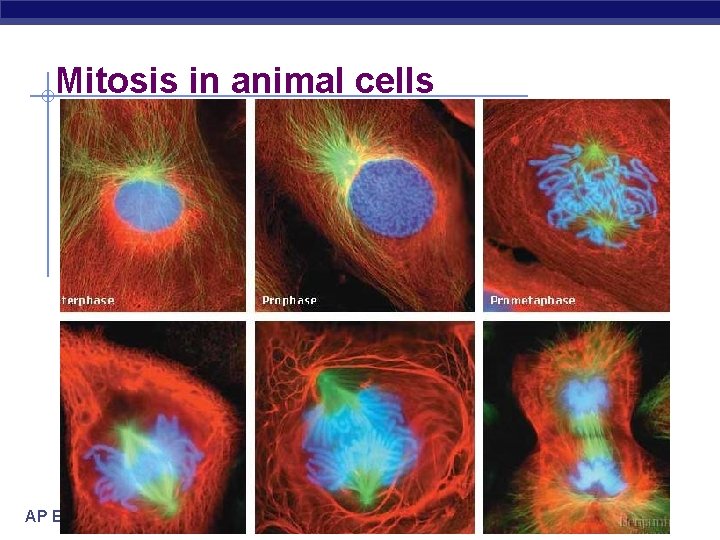
Mitosis in animal cells AP Biology
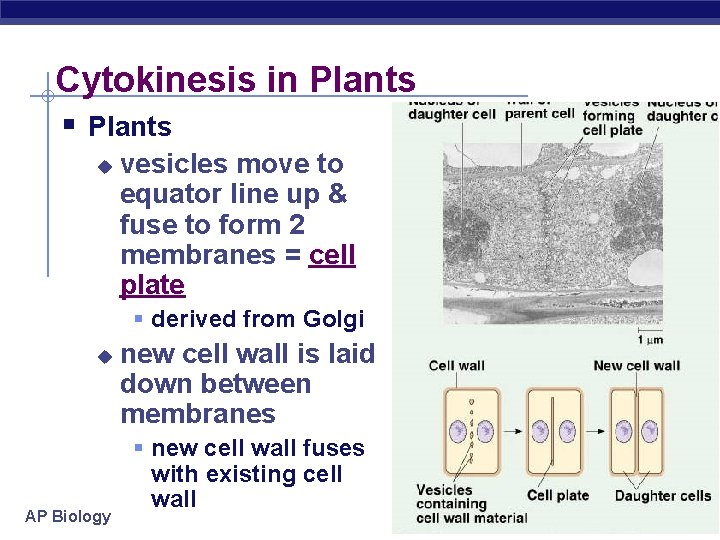
Cytokinesis in Plants § Plants u vesicles move to equator line up & fuse to form 2 membranes = cell plate § derived from Golgi u AP Biology new cell wall is laid down between membranes § new cell wall fuses with existing cell wall
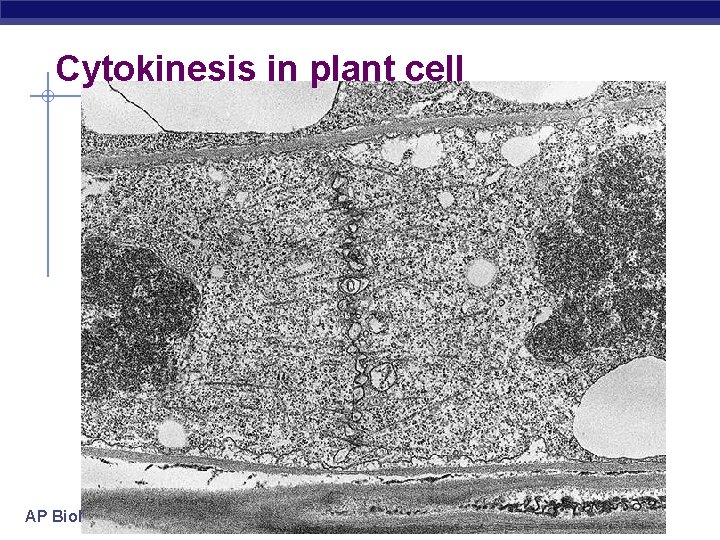
Cytokinesis in plant cell AP Biology
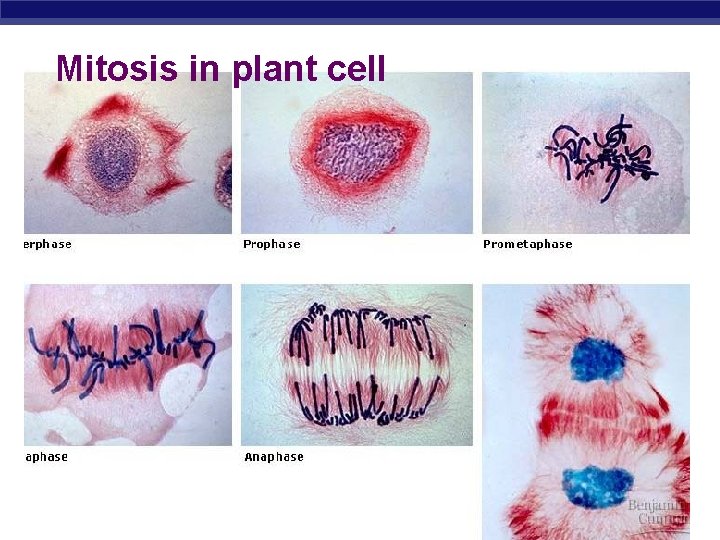
Mitosis in plant cell AP Biology
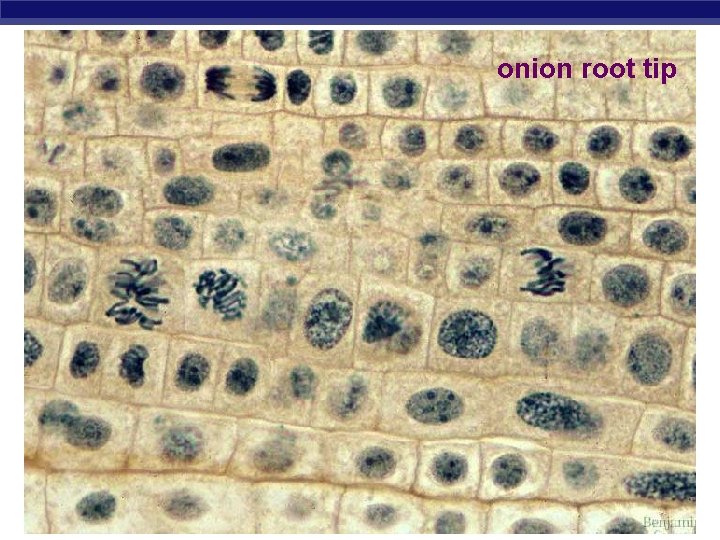
onion root tip AP Biology
- Slides: 42