
Chapter 13 Teams in Organizations Ryan Mc VayGetty
- Slides: 18
Chapter 13 Teams in Organizations Ryan Mc. Vay/Getty Images 1
Module 13. 1: Types of Teams • Reasons for increased use of teams: – Work can be performed concurrently rather than sequentially – Innovation & creativity promoted – Enable quick, effective development/delivery of products & services – Organizations learn & retain learning more effectively 2
Groups & Teams: Definitions • Groups include members who may work together or may just share some resources • Teams include members whose tasks are interdependent; Work towards a common goal & share responsibility for outcomes • Groups & Teams have too much in common for any grand distinctions 3
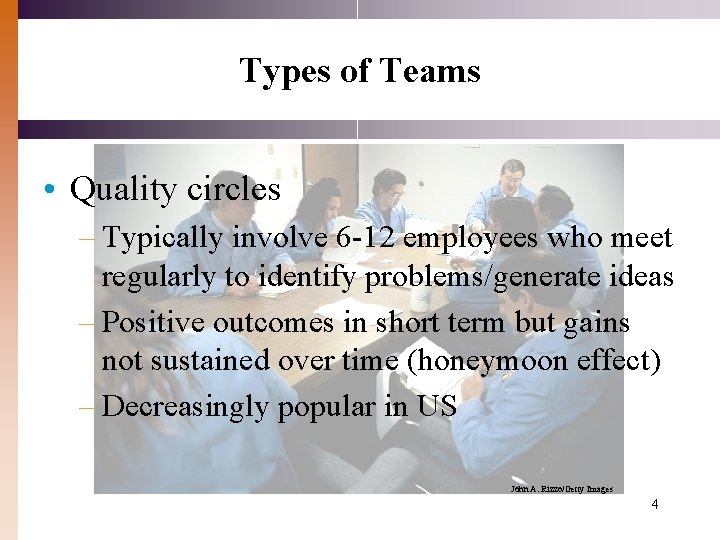
Types of Teams • Quality circles – Typically involve 6 -12 employees who meet regularly to identify problems/generate ideas – Positive outcomes in short term but gains not sustained over time (honeymoon effect) – Decreasingly popular in US John A. Rizzo/Getty Images 4
Types of Teams (cont’d) • Project teams – Created to solve particular problem – Disbanded after problem solved or project completed – Raise some organizational challenges – multiple reporting relationships. 5
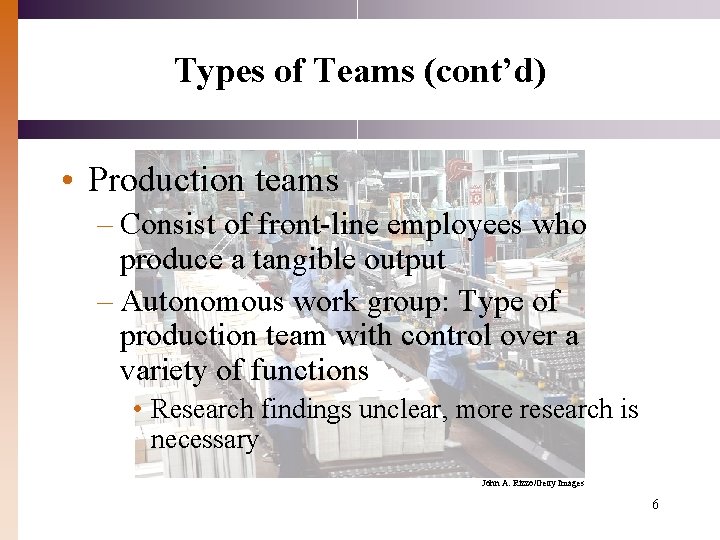
Types of Teams (cont’d) • Production teams – Consist of front-line employees who produce a tangible output – Autonomous work group: Type of production team with control over a variety of functions • Research findings unclear, more research is necessary John A. Rizzo/Getty Images 6
Virtual Teams • Composed of widely dispersed members working together toward a common goal; linked through technology • Pose several advantages to organizations • Trust is a critical concern; Increase via: – Virtual-collaboration, virtual-socialization, and virtual-communication behaviors 7
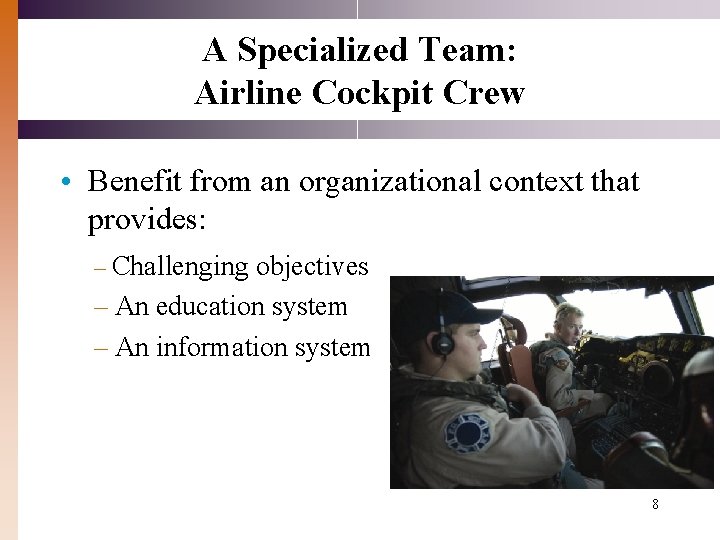
A Specialized Team: Airline Cockpit Crew • Benefit from an organizational context that provides: – Challenging objectives – An education system – An information system 8
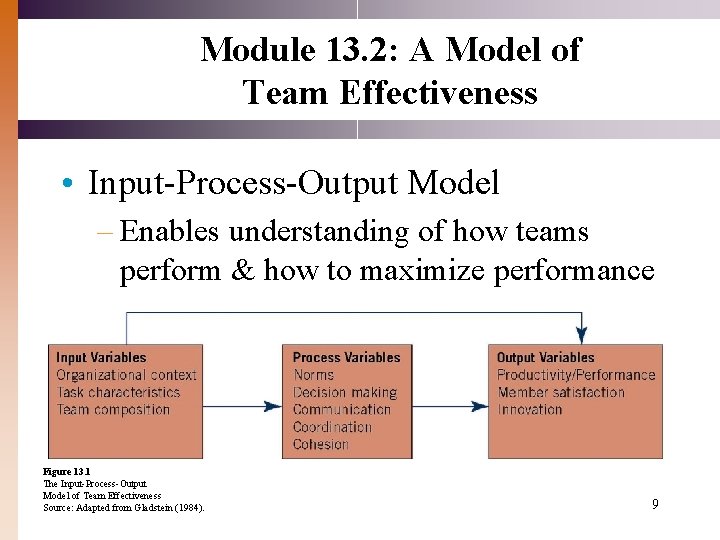
Module 13. 2: A Model of Team Effectiveness • Input-Process-Output Model – Enables understanding of how teams perform & how to maximize performance Figure 13. 1 The Input-Process-Output Model of Team Effectiveness Source: Adapted from Gladstein (1984). 9
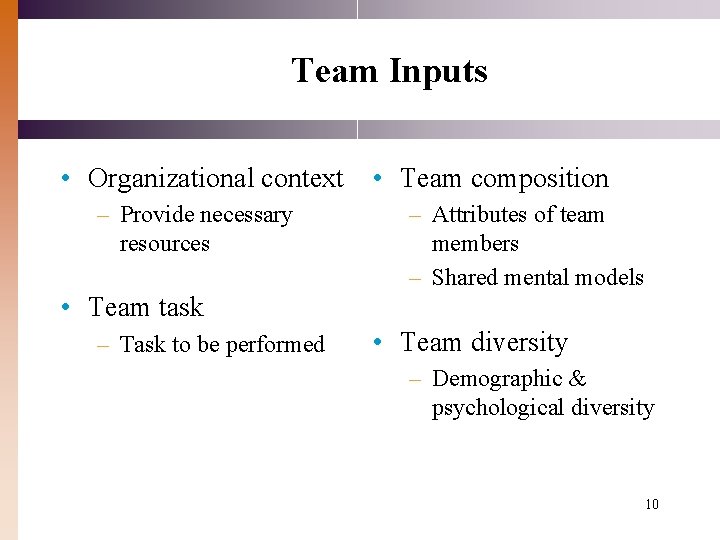
Team Inputs • Organizational context – Provide necessary resources • Team composition – Attributes of team members – Shared mental models • Team task – Task to be performed • Team diversity – Demographic & psychological diversity 10
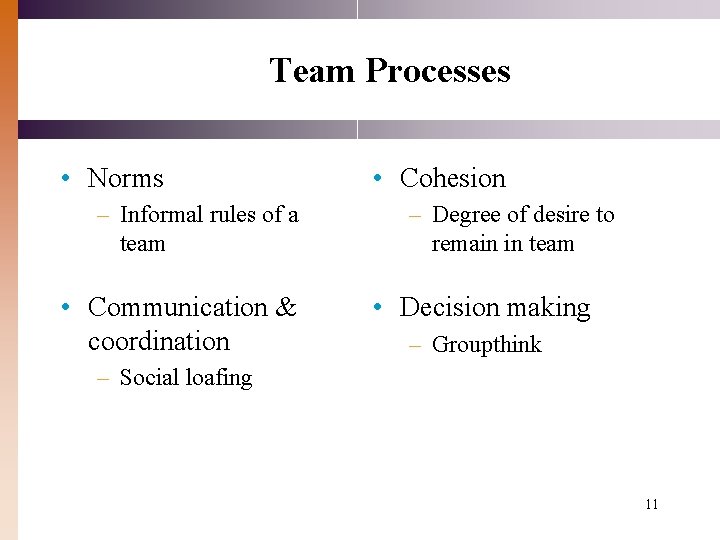
Team Processes • Norms – Informal rules of a team • Communication & coordination • Cohesion – Degree of desire to remain in team • Decision making – Groupthink – Social loafing 11
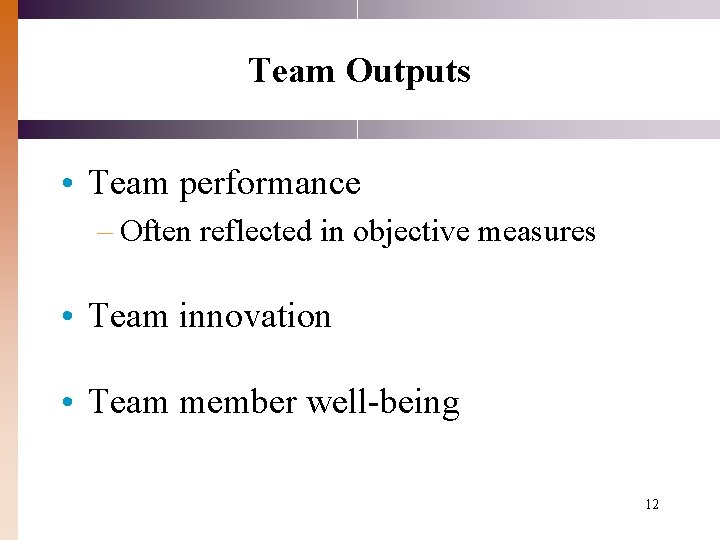
Team Outputs • Team performance – Often reflected in objective measures • Team innovation • Team member well-being 12
Module 13. 3: Special Issues in Teams • Team appraisal & feedback – Should provide team with information needed to identify team problems & further develop team capabilities – Extent to which team behaviors & outputs can be measured must be considered – Pro. MES 13
Team-role theory (Belbin, 1993) – Effective teams contain a combination of individuals capable of working in 9 team roles • Plant • Resource investigator • Coordinator • Shaper • Monitor evaluator • Team-Worker • Implementer • Completer • Specialist – Used predominantly in Europe & Australia 14
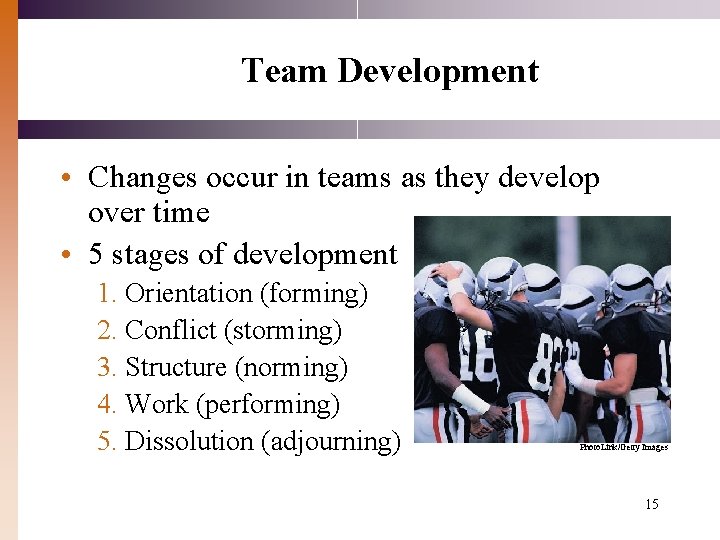
Team Development • Changes occur in teams as they develop over time • 5 stages of development 1. Orientation (forming) 2. Conflict (storming) 3. Structure (norming) 4. Work (performing) 5. Dissolution (adjourning) Photo. Link/Getty Images 15
Team Training • Involves coordinating performance of individuals who work together to achieve a common goal • 3 Strategies – Cross-training – Team coordination training – Team leader training 16
Cultural Issues in Teams • Applying Hofstede’s cultural dimensions – Implications for teams • Individualism vs. collectivism • Long-term vs. short-term orientation • Effect of cultural & national backgrounds of team members 17
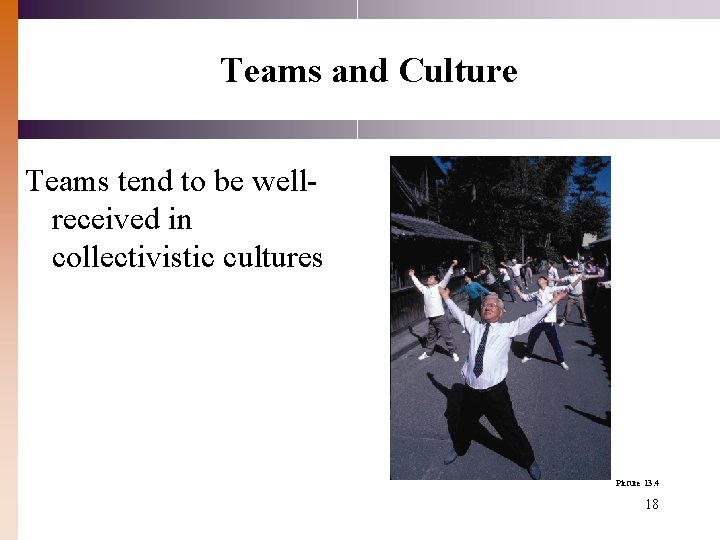
Teams and Culture Teams tend to be wellreceived in collectivistic cultures Picture 13. 4 18