
Chapter 13 Structures Objectives In this chapter you

Chapter 13: Structures
Objectives • In this chapter you will learn about: – – – – Single structures Arrays of structures Structures as function arguments Linked lists Dynamic data structure allocation Unions Common programming errors C++ for Engineers and Scientists, Fourth Edition
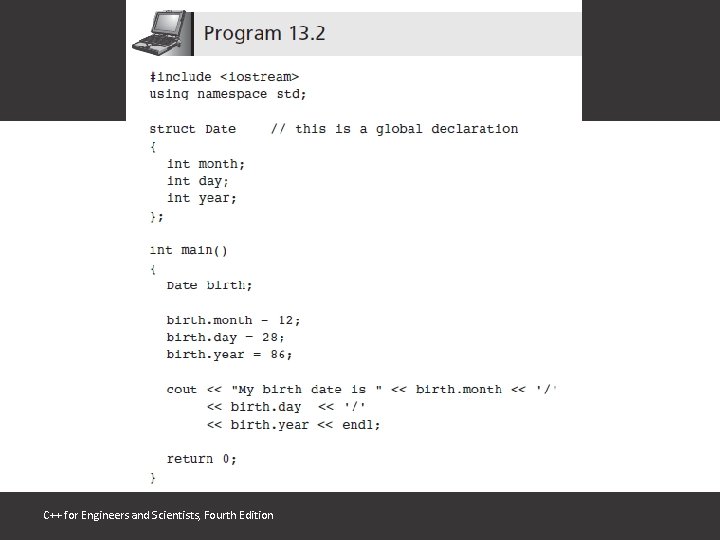
Single Structures • Creating and using a structure involves two steps – Declare record structure – Assign specific values to structure elements • Declaring a structure requires listing data types, data names, and arrangement of data items • Data items, or fields, are called members of a structure • Assigning data values to members is called populating the structure C++ for Engineers and Scientists, Fourth Edition

Single Structures (continued) • An example structure definition: C++ for Engineers and Scientists, Fourth Edition

C++ for Engineers and Scientists, Fourth Edition
C++ for Engineers and Scientists, Fourth Edition

Arrays of Structures • The real power of structures is realized when the same structure is used for lists of data Figure 13. 1 A list of employee data C++ for Engineers and Scientists, Fourth Edition

Arrays of Structures (continued) Figure 13. 2 A list of structures C++ for Engineers and Scientists, Fourth Edition
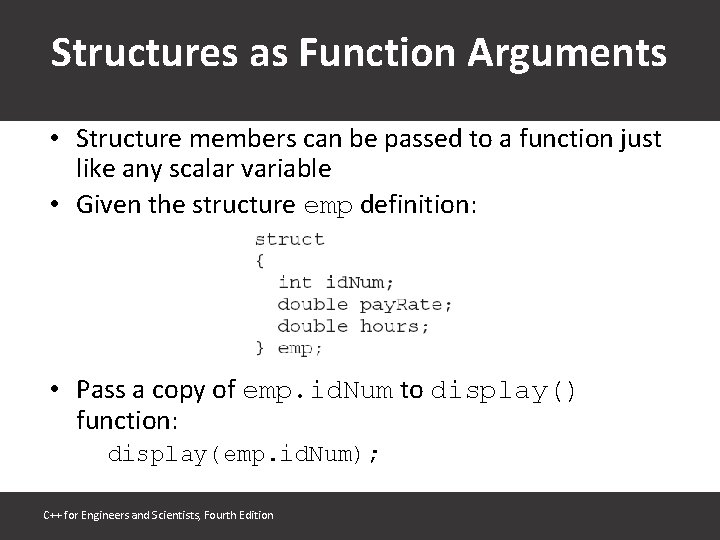
Structures as Function Arguments • Structure members can be passed to a function just like any scalar variable • Given the structure emp definition: • Pass a copy of emp. id. Num to display() function: display(emp. id. Num); C++ for Engineers and Scientists, Fourth Edition
Structures as Function Arguments (continued) • Copies of all structure members can be passed to a function by including the name of the structure as an argument to a called function – Example: calc. Net(emp) C++ for Engineers and Scientists, Fourth Edition
Passing a Pointer • Instead of passing references, pointers can be used • Function call must take the address of the structure – Example: calc. Net(&emp); • Function declaration must indicate a pointer argument – Example: calc. Net(Employee *pt) • Inside function, pt argument is used to reference members directly – Example: (*pt). id. Num C++ for Engineers and Scientists, Fourth Edition
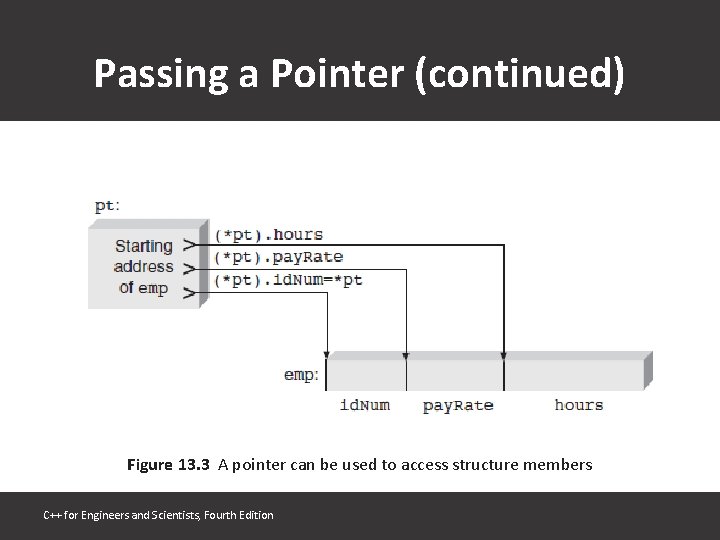
Passing a Pointer (continued) Figure 13. 3 A pointer can be used to access structure members C++ for Engineers and Scientists, Fourth Edition
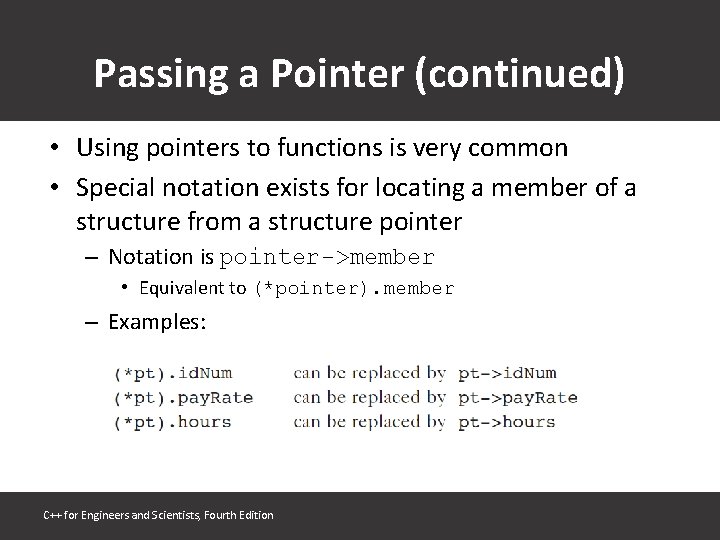
Passing a Pointer (continued) • Using pointers to functions is very common • Special notation exists for locating a member of a structure from a structure pointer – Notation is pointer->member • Equivalent to (*pointer). member – Examples: C++ for Engineers and Scientists, Fourth Edition
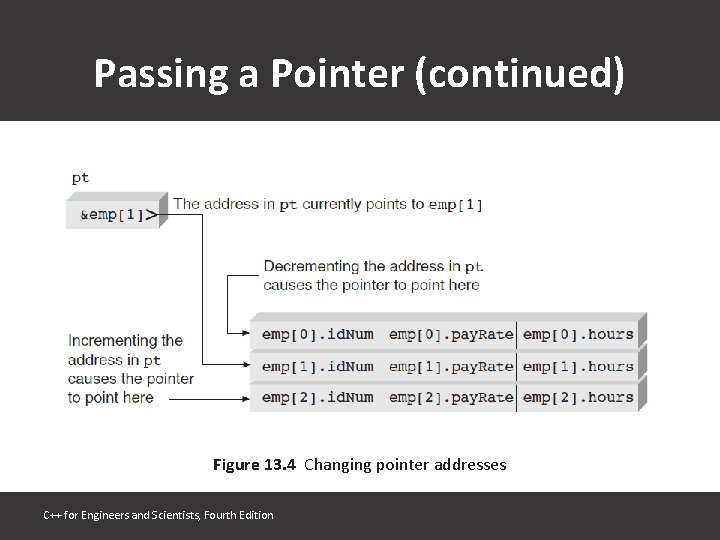
Passing a Pointer (continued) Figure 13. 4 Changing pointer addresses C++ for Engineers and Scientists, Fourth Edition
Returning Structures • In practice, most structure-handling functions get direct access to a structure by receiving a structure reference or address – Changes to a structure can be made directly from a function • To have a function return a separate structure, follow same procedure as for returning scalar values C++ for Engineers and Scientists, Fourth Edition
Linked Lists • A classic data handling problem is making additions or deletions to existing structures that are maintained in a specific order • Linked lists provide method for maintaining a constantly changing list • Linked list: Set of structures in which each structure contains at least one member whose value is the address of next logically ordered structure in list C++ for Engineers and Scientists, Fourth Edition
Linked Lists (continued) • Instead of requiring each record to be physically stored in correct order, each new structure is physically added wherever computer has free storage space • Records are “linked” by including address of next record in the record immediately preceding it • Current record contains address of next record no matter where next record is stored C++ for Engineers and Scientists, Fourth Edition
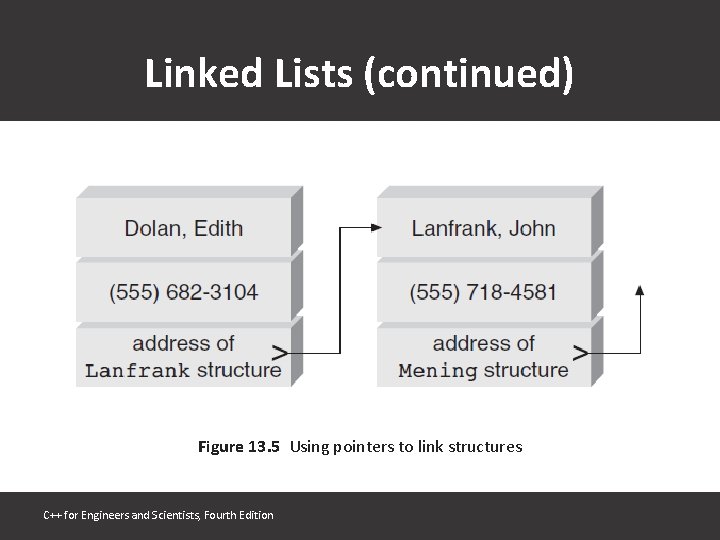
Linked Lists (continued) Figure 13. 5 Using pointers to link structures C++ for Engineers and Scientists, Fourth Edition
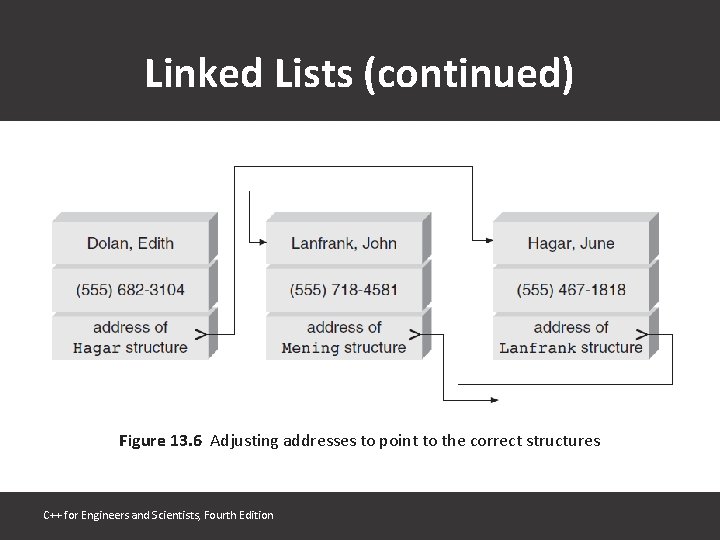
Linked Lists (continued) Figure 13. 6 Adjusting addresses to point to the correct structures C++ for Engineers and Scientists, Fourth Edition
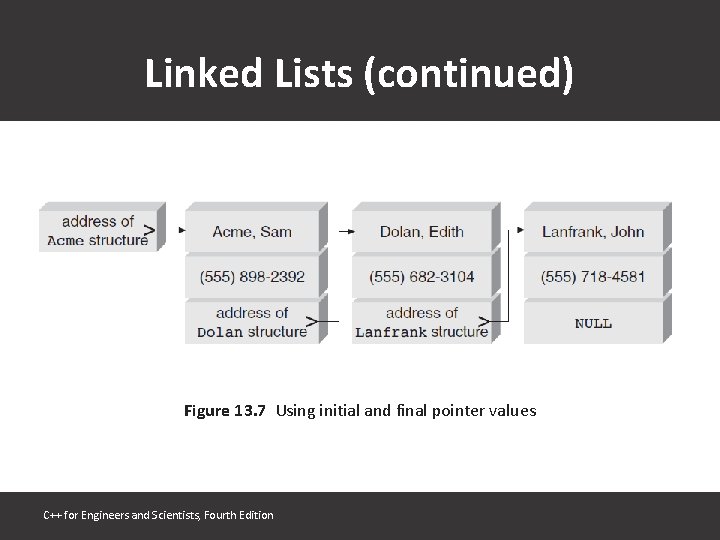
Linked Lists (continued) Figure 13. 7 Using initial and final pointer values C++ for Engineers and Scientists, Fourth Edition
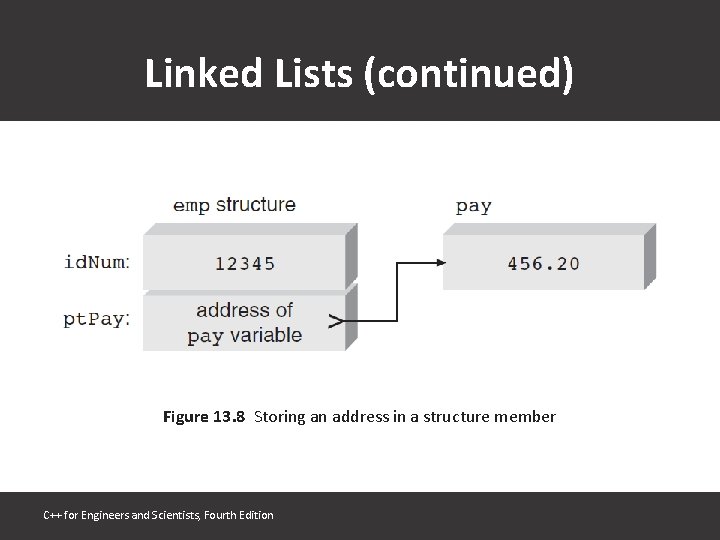
Linked Lists (continued) Figure 13. 8 Storing an address in a structure member C++ for Engineers and Scientists, Fourth Edition
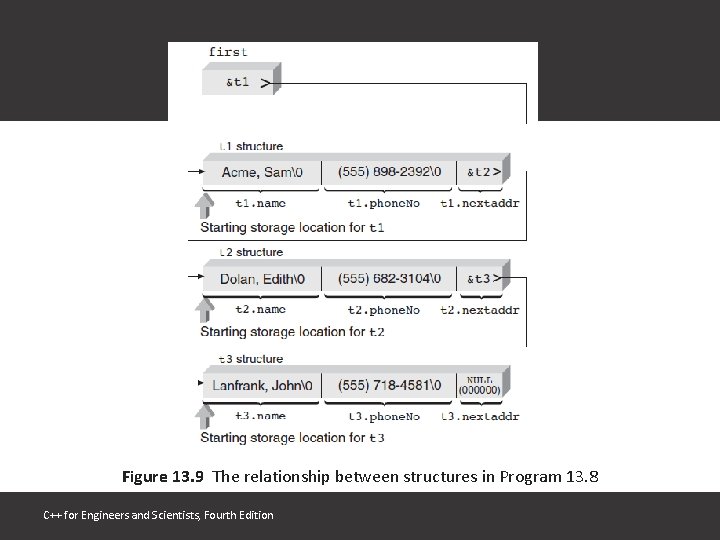
Figure 13. 9 The relationship between structures in Program 13. 8 C++ for Engineers and Scientists, Fourth Edition
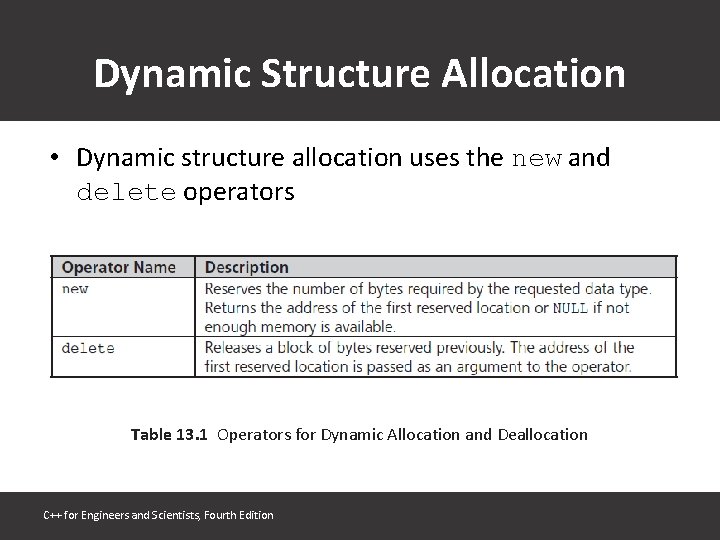
Dynamic Structure Allocation • Dynamic structure allocation uses the new and delete operators Table 13. 1 Operators for Dynamic Allocation and Deallocation C++ for Engineers and Scientists, Fourth Edition
Dynamic Structure Allocation (continued) • Dynamic structure allocation permits expanding a list as new records are added and contracting the list as records are deleted • When dynamically allocating storage, new operator must be provided with amount of space to allocate • new returns a pointer to the storage just allocated C++ for Engineers and Scientists, Fourth Edition
Unions • Union: Data type that reserves same area in memory for two or more variables that can be different data types • Definition of union has same form as structure definition – Keyword union replaces keyword struct C++ for Engineers and Scientists, Fourth Edition
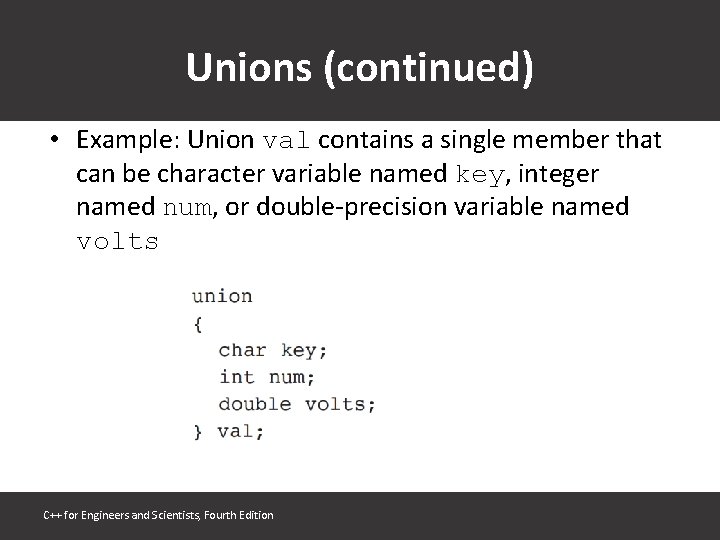
Unions (continued) • Example: Union val contains a single member that can be character variable named key, integer named num, or double-precision variable named volts C++ for Engineers and Scientists, Fourth Edition
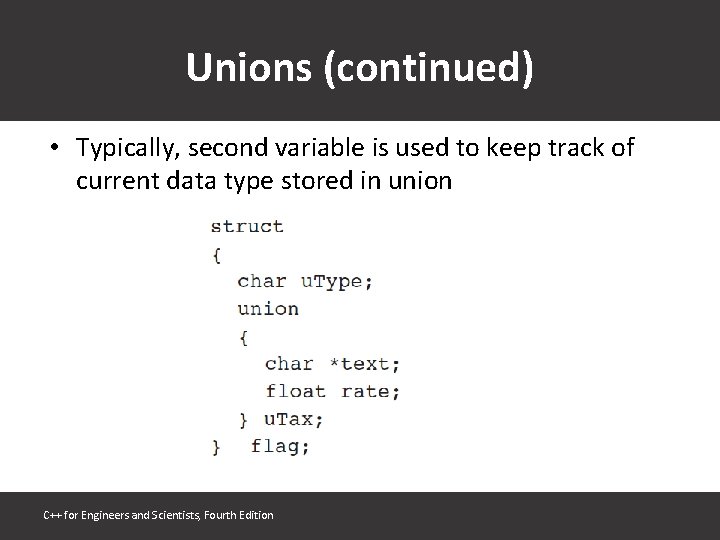
Unions (continued) • Typically, second variable is used to keep track of current data type stored in union C++ for Engineers and Scientists, Fourth Edition
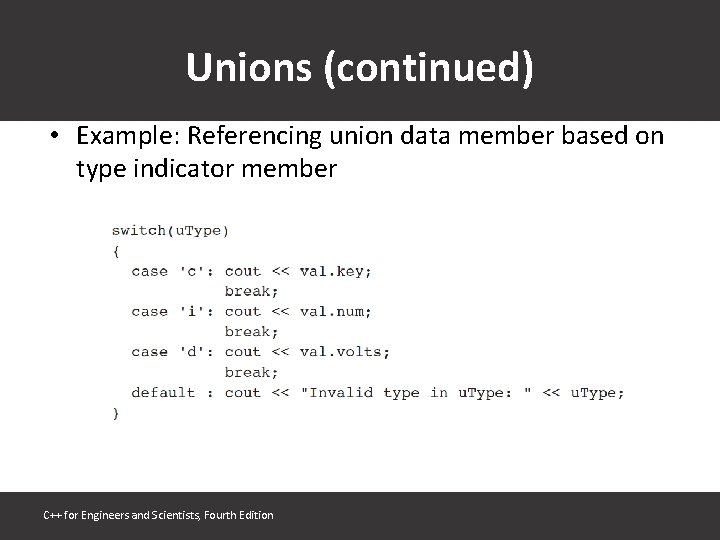
Unions (continued) • Example: Referencing union data member based on type indicator member C++ for Engineers and Scientists, Fourth Edition

Common Programming Errors • Structures or unions cannot be used in relational expressions • When pointer is used to point to a structure or a union, take care to use address in pointer to point to correct data type • Be careful to keep track of the data stored in a union – Accessing data in a union by the wrong variable name is a troublesome error to locate C++ for Engineers and Scientists, Fourth Edition
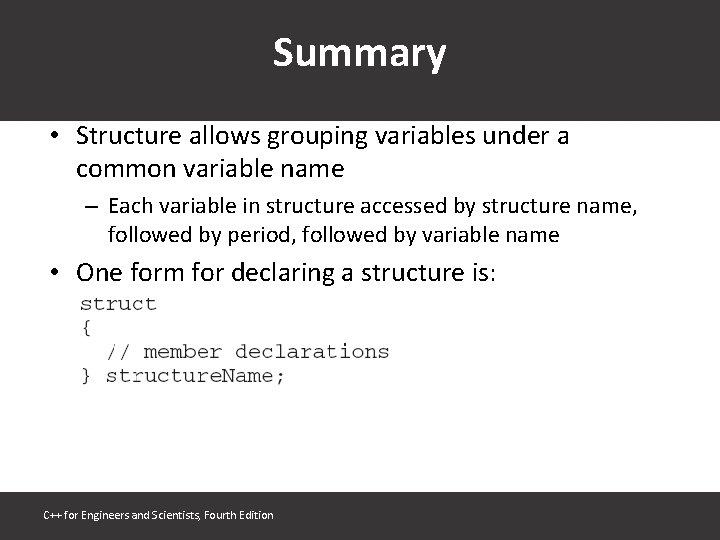
Summary • Structure allows grouping variables under a common variable name – Each variable in structure accessed by structure name, followed by period, followed by variable name • One form for declaring a structure is: C++ for Engineers and Scientists, Fourth Edition
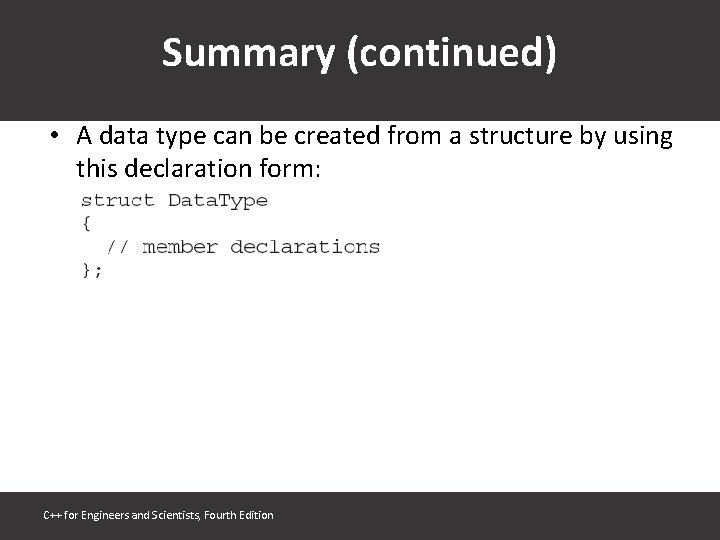
Summary (continued) • A data type can be created from a structure by using this declaration form: C++ for Engineers and Scientists, Fourth Edition

Summary (continued) • Structures are particularly useful as elements of arrays – Each structure becomes a record in a list of records • Complete structures can be used as function arguments, in which case called function receives a copy of the structure elements – Structure addresses can also be passed as a reference or a pointer – When passed as pointer or reference, function has access to change original structure member values C++ for Engineers and Scientists, Fourth Edition

Summary (continued) • Structure members can be any valid C++ data type – May be other structures, unions, arrays, or pointers • When pointer included in structure, a linked list can be created • Unions are declared in same manner as structures – Definition of union creates a memory overlay area – Each union member uses the same memory storage locations C++ for Engineers and Scientists, Fourth Edition
- Slides: 33