
CHAPTER 13 Statement of Cash Flow LEARNING OBJECTIVES
CHAPTER 13: Statement of Cash Flow LEARNING OBJECTIVES LO 1: Describe the content and format of the statement of cash flows. LO 2: Prepare the operating activities section of a statement of cash flows using the direct method. LO 3: Prepare the investing and financing activities sections and complete the statement of cash flows. LO 4: Use the statement of cash flows to evaluate a company. LO 5: NOT REQUIRED Prepare the operating activities section of a statement of cash flows using the direct method. (Appendix 13 A)
Purpose of the Statement of Cash Flows • Helps users assess: • • A company’s ability to generate cash What the company did with the cash • This is useful in determining: Company’s ability to generate future cash flows • • Investing and financing transactions during the period, and effect upon capital structure Making comparisons with other companies
Definition of Cash Classification of Cash Flows • Cash may include cash equivalents • Short-term, highly liquid held for trading investments that have insignificant risk and are readily converted to cash within a short period of time (usually within three months) • Cash receipts and payments are classified into three categories: • Operating activities • Investing activities • Financing activities
Operating Activities • Cash effects of transactions that create revenues and expenses that enter into determination of profit • Includes relevant noncash current assets and current liabilities on the statement of financial position • Where the related account is an income statement account
Investing Activities • Purchasing and disposing of: • • Long-term investments not held for trading Long-lived assets • Lending money and collecting the loans • Generally includes non-current asset items (e. g. , long-lived investments, property, plant, and equipment) on the statement of financial position
Financing Activities • Obtaining cash from issuing debt and repaying the amounts borrowed • Obtaining cash from selling common and preferred shares and paying dividends • Generally includes non-current liabilities, and shareholders’ equity items
Significant Noncash Activities • If it does not affect cash, do NOT report in statement of cash flows • Report in separate note to the financial statements • Examples: • • • Issue of shares to purchase assets or to reduce liabilities Conversion of debt into equity Exchange of property, plant, and equipment

Format of Cash Flow Statement
Preparation of the Statement of Cash Flows • • Step 1: Prepare operating activities section Step 2: Prepare investing activities section Step 3: Prepare financing activities section Step 4: Complete the statement of cash flows
Step 1: Operating Activities • Determine the net cash provided (used) by operating activities by converting net income from an accrual basis to a cash basis • Conversion may be done by either the indirect method or the direct method Both methods arrive at the same amount of net cash provided (used) by operating activities • Most companies favour the indirect method for the following reasons • • Easier to prepare Reveals less information to competitors
Prepare the operating activities section using the Indirect Method • Start with Net Income and add or deduct items not affecting cash to arrive at net cash provided (used) by operating activities + Noncash expenses such as depreciation and losses – Noncash losses and gains + Decreases in current asset accounts and increases in current liability accounts – Increases in current asset accounts and decreases in current liability accounts
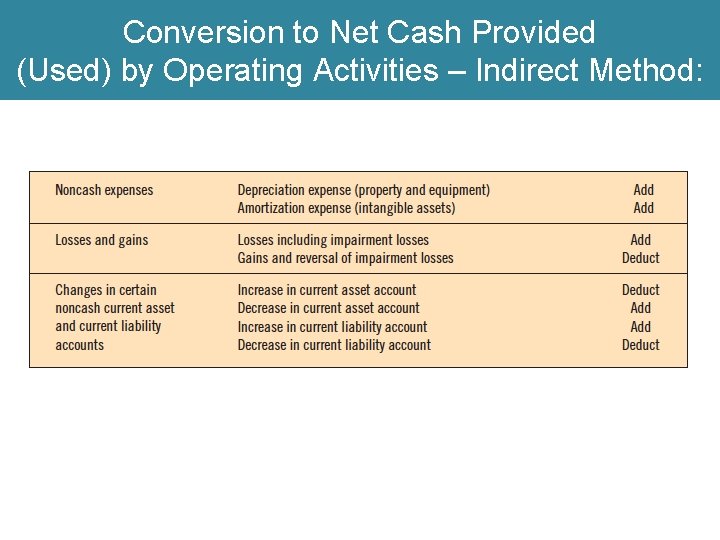
Conversion to Net Cash Provided (Used) by Operating Activities – Indirect Method:
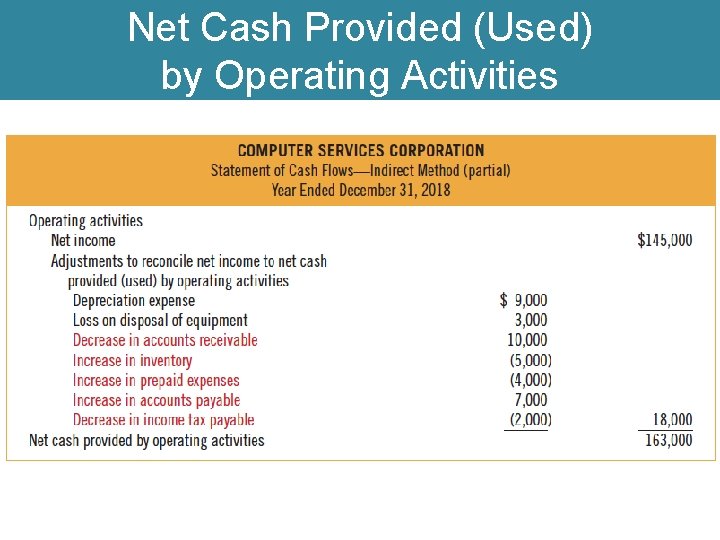
Net Cash Provided (Used) by Operating Activities
Step 2: Investing Activities • Measure cash flows relating to non-current asset accounts; long-term investments; property, plant and equipment; intangible assets • Reported the same under both direct and indirect methods • Asset acquisitions are uses of cash; disposals are sources of cash (for the proceeds of disposition) Depreciation expense is a noncash charge
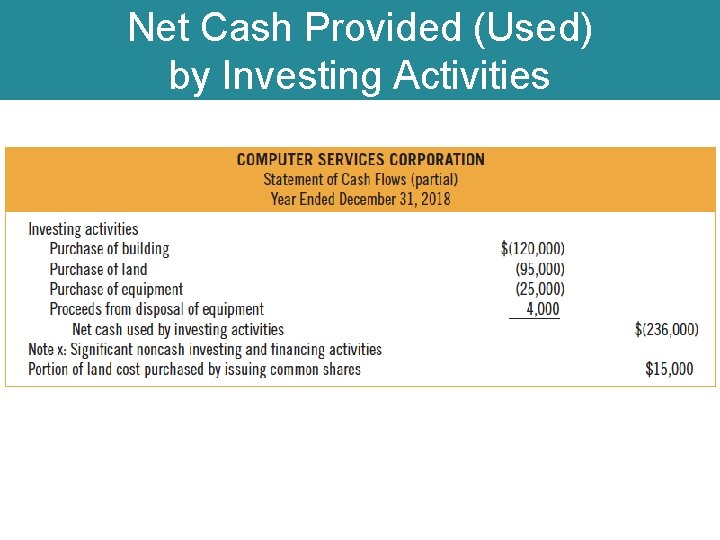
Net Cash Provided (Used) by Investing Activities
Step 3: Financing Activities • Determine the net cash provided (used) by financing activities by analyzing changes in non-current liability and equity accounts • Changes to notes, loans, and bonds payable are analyzed to determine cause of change Amortization of premium or discount (if any) are noncash charges and have no effect • Analyze share capital and retained earnings accounts for changes and their cause Profit is reported in the operating activities section
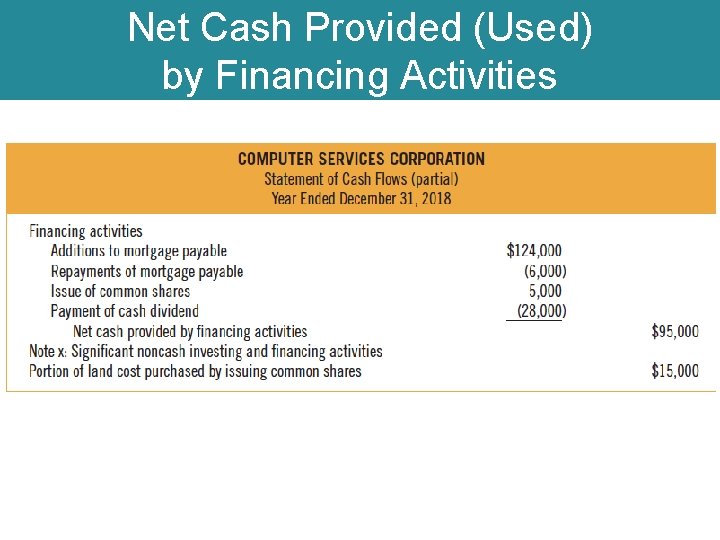
Net Cash Provided (Used) by Financing Activities
Step 4: The Statement of Cash Flows • Complete the statement of cash flows • Determine increase (decrease) in cash • Ensure ending cash balance agrees to that reported on statement of financial position • Identify any noncash disclosures
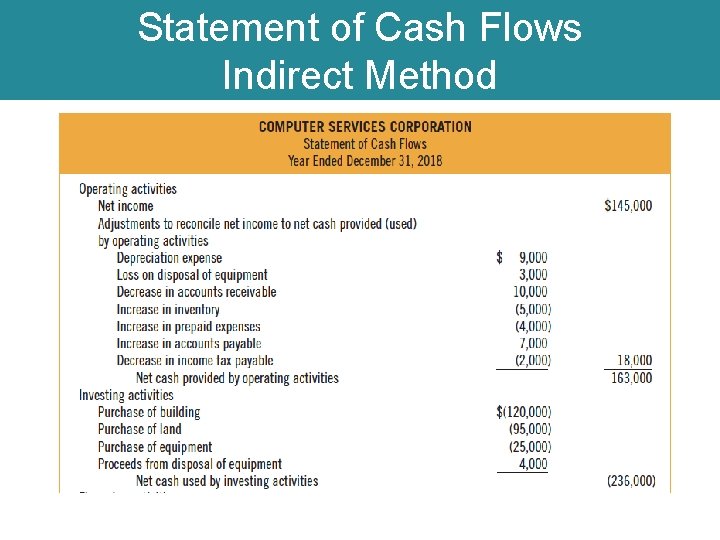
Statement of Cash Flows Indirect Method
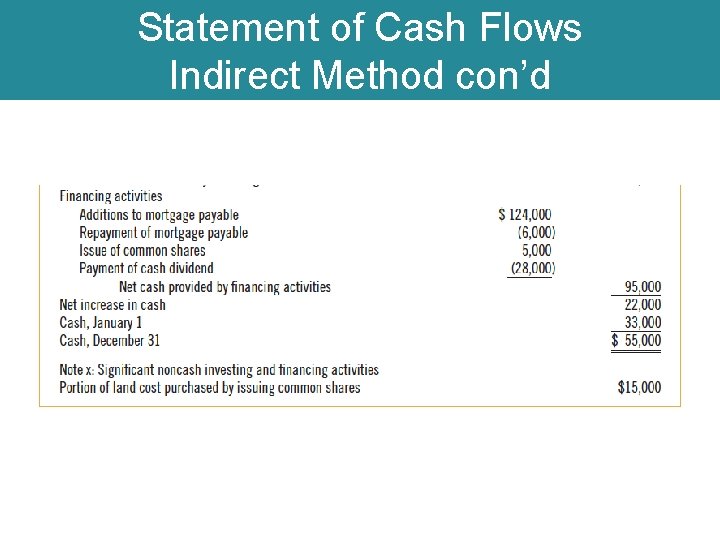
Statement of Cash Flows Indirect Method con’d
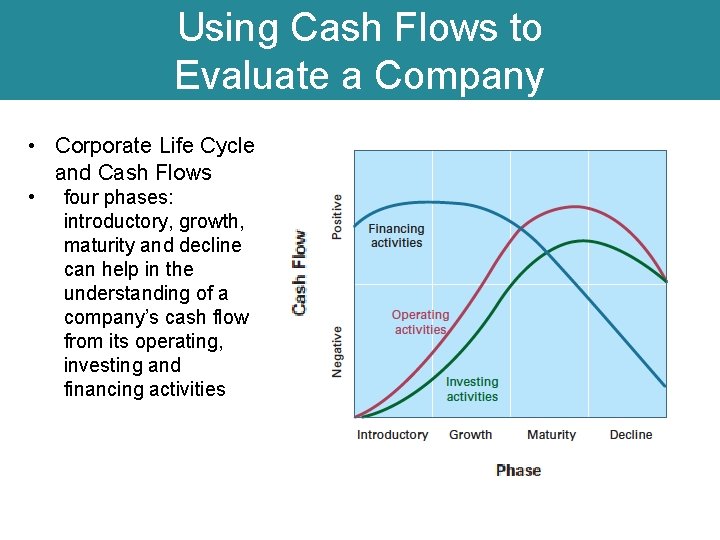
Using Cash Flows to Evaluate a Company • Corporate Life Cycle and Cash Flows • four phases: introductory, growth, maturity and decline can help in the understanding of a company’s cash flow from its operating, investing and financing activities

Free Cash Flow • Measures discretionary cash flow remaining from operating activities available to use to expand operations, reduce debt, go after new opportunities, or pay additional dividends, among other alternatives Net cash provided (used) by operating activities – net capital expenditures – dividends paid Higher is better
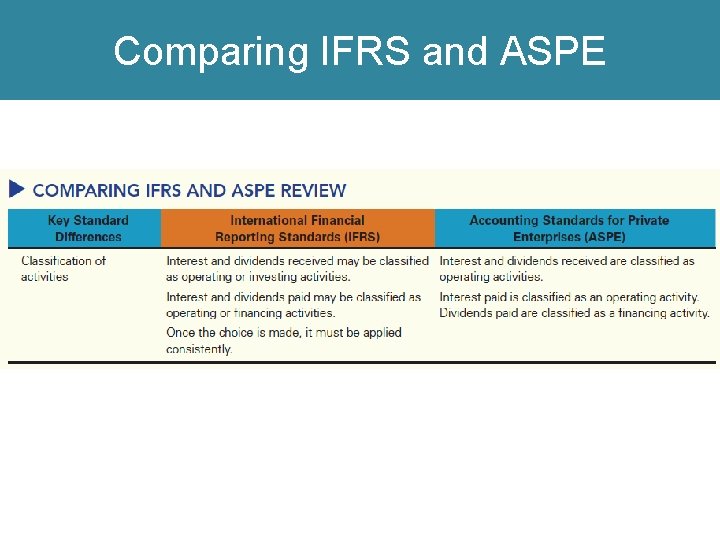
Comparing IFRS and ASPE
- Slides: 23