
Chapter 13 Sound Sound is a compressional wave

- Slides: 13
Chapter 13 Sound
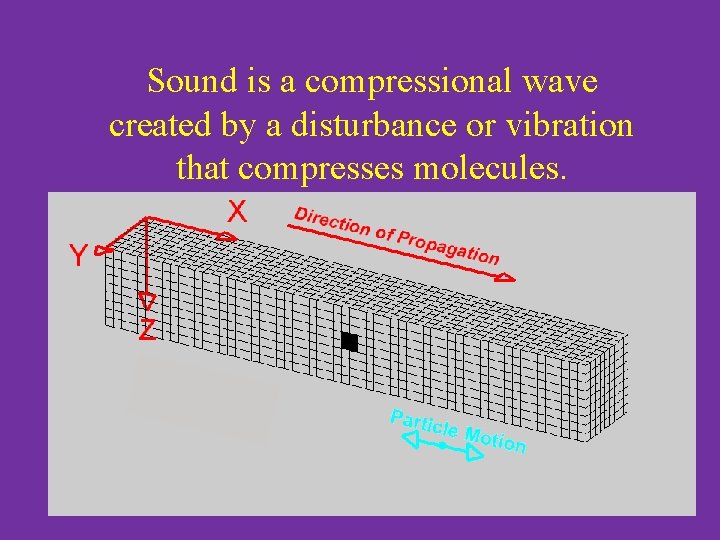
Sound is a compressional wave created by a disturbance or vibration that compresses molecules.
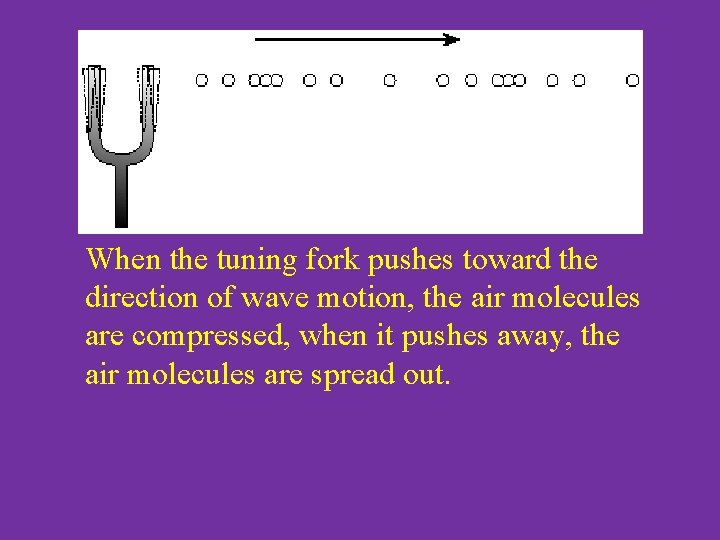
When the tuning fork pushes toward the direction of wave motion, the air molecules are compressed, when it pushes away, the air molecules are spread out.
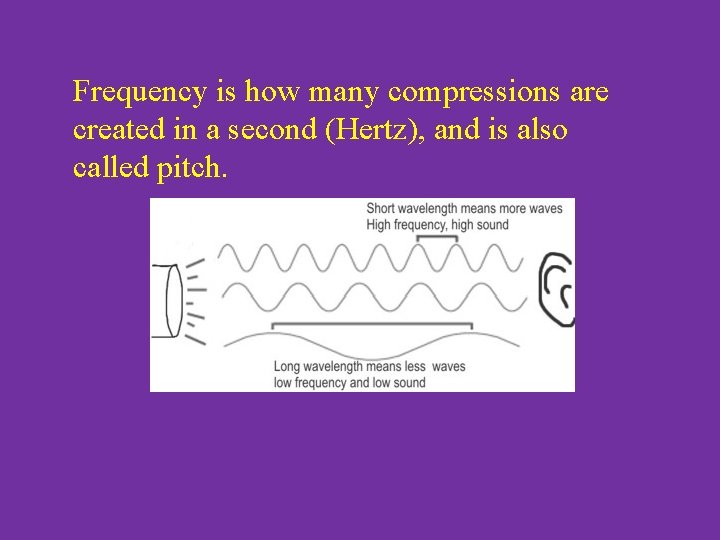
Frequency is how many compressions are created in a second (Hertz), and is also called pitch.
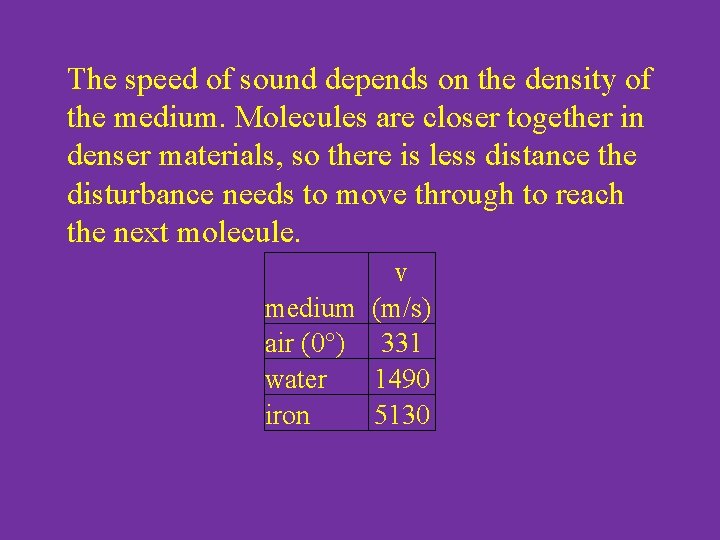
The speed of sound depends on the density of the medium. Molecules are closer together in denser materials, so there is less distance the disturbance needs to move through to reach the next molecule. medium air (0°) water iron v (m/s) 331 1490 5130
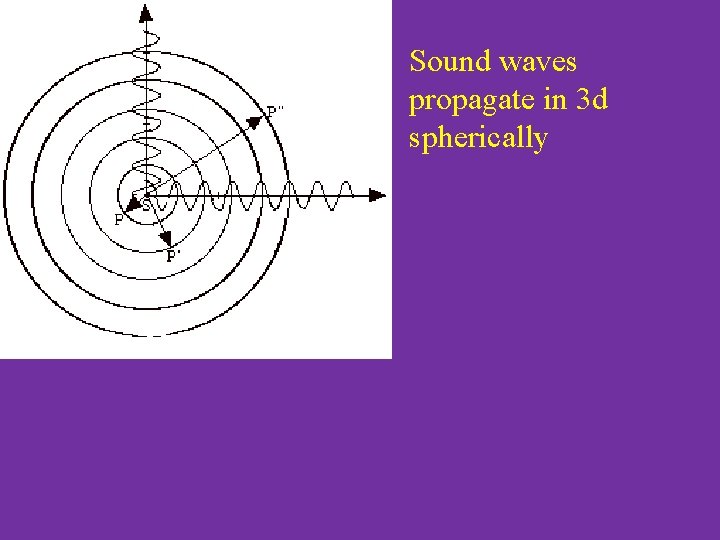
Sound waves propagate in 3 d spherically
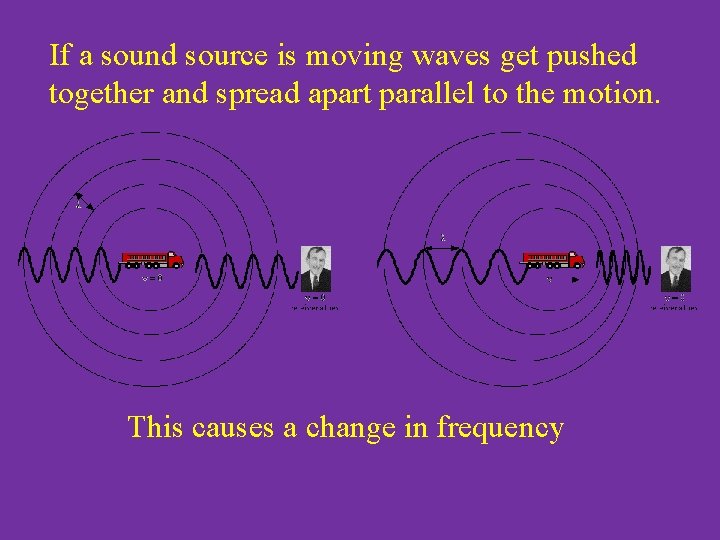
If a sound source is moving waves get pushed together and spread apart parallel to the motion. This causes a change in frequency
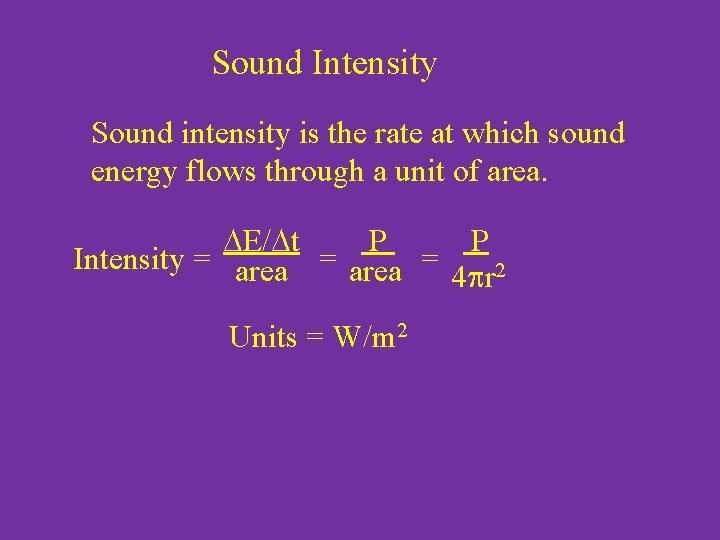
Sound Intensity Sound intensity is the rate at which sound energy flows through a unit of area. DE/Dt P P Intensity = area = 4 pr 2 Units = W/m 2
Loudness is a function of the log of the intensity. For something to sound twice as loud, it would have to be 10 x as intense. Loudness is measured in decibels (d. B), with sound being twice as loud every 10 d. B. vacuum 70 d. B alarm clock 80 d. B
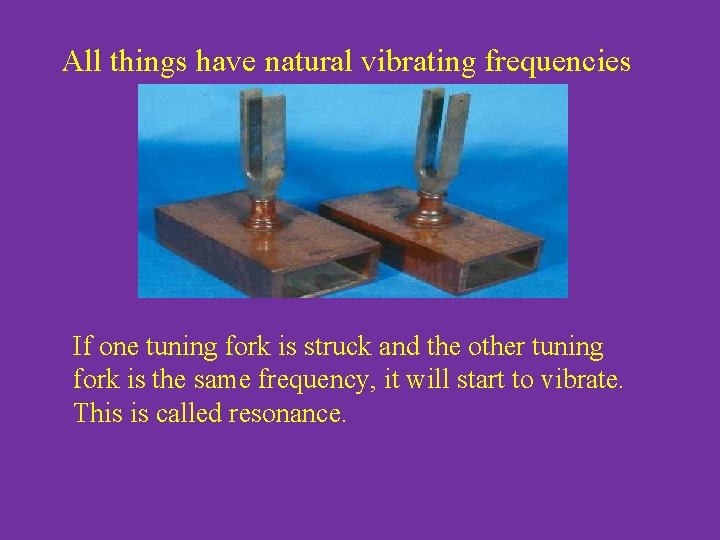
All things have natural vibrating frequencies If one tuning fork is struck and the other tuning fork is the same frequency, it will start to vibrate. This is called resonance.
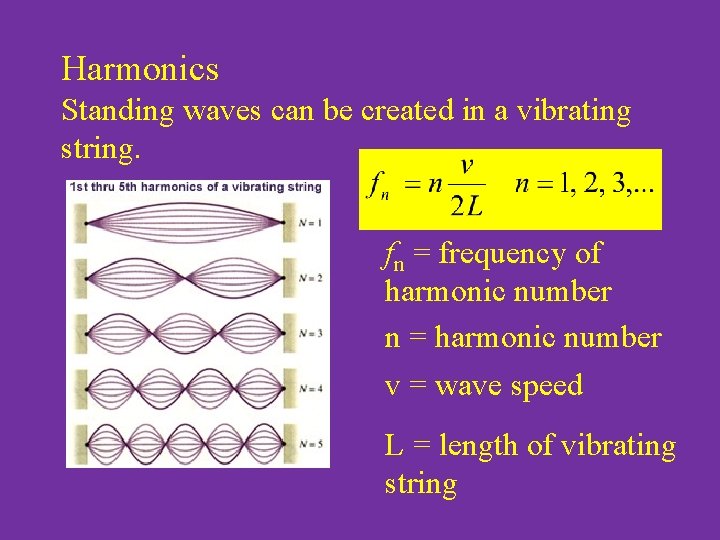
Harmonics Standing waves can be created in a vibrating string. fn = frequency of harmonic number n = harmonic number v = wave speed L = length of vibrating string
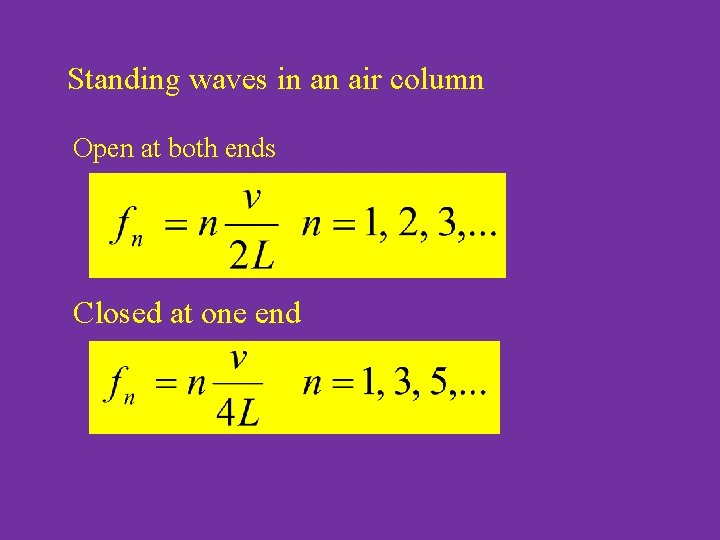
Standing waves in an air column Open at both ends Closed at one end