
Chapter 13 Soil and Its Uses Soil Conservation
- Slides: 17
Chapter 13 Soil and Its Uses
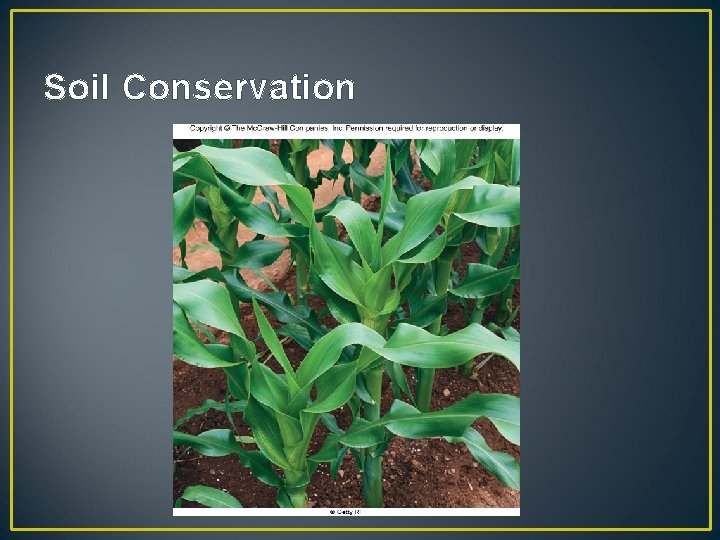
Soil Conservation
Outline • Soil Conservation Practices • Conventional Versus Conservation Tillage • Protecting Soil on Nonfarm Land
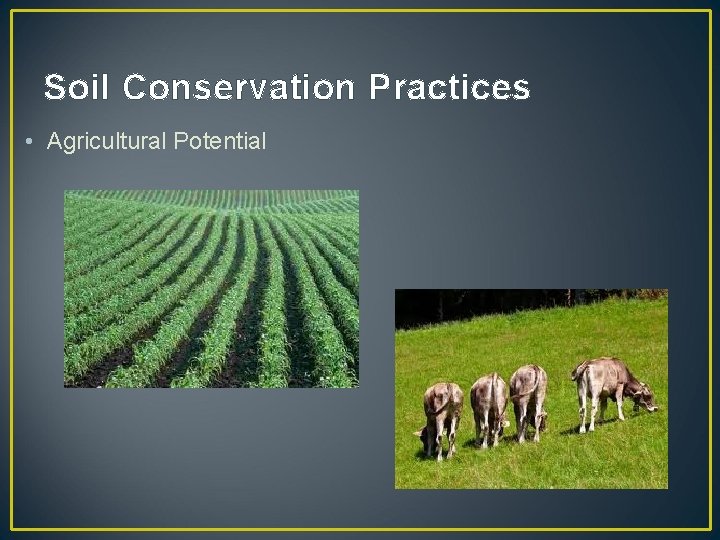
Soil Conservation Practices • Agricultural Potential
Soil Conservation Practices • Soil Quality Management Components: • • • Enhance organic matter. Avoid excessive tillage. Manage pests and nutrients efficiently. Prevent soil compaction. Keep the ground covered. Diversify cropping systems.
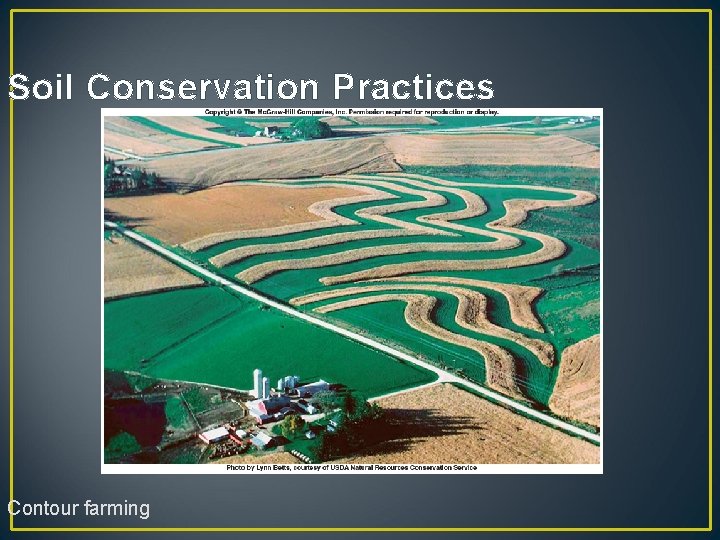
Soil Conservation Practices Contour farming
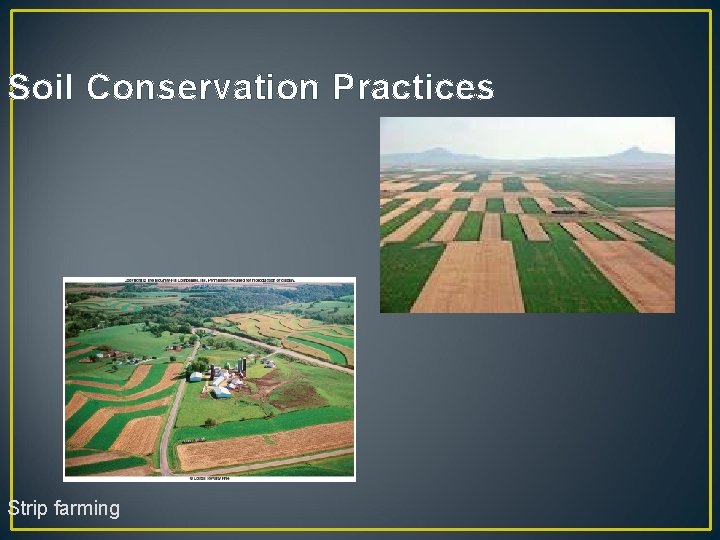
Soil Conservation Practices Strip farming
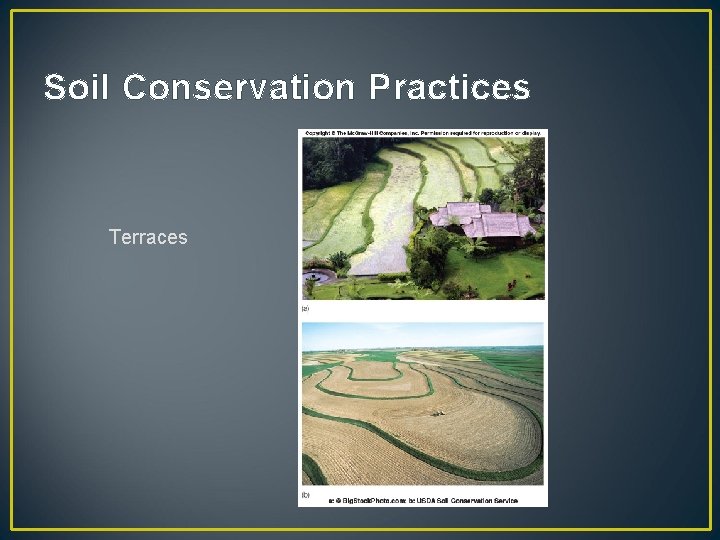
Soil Conservation Practices Terraces
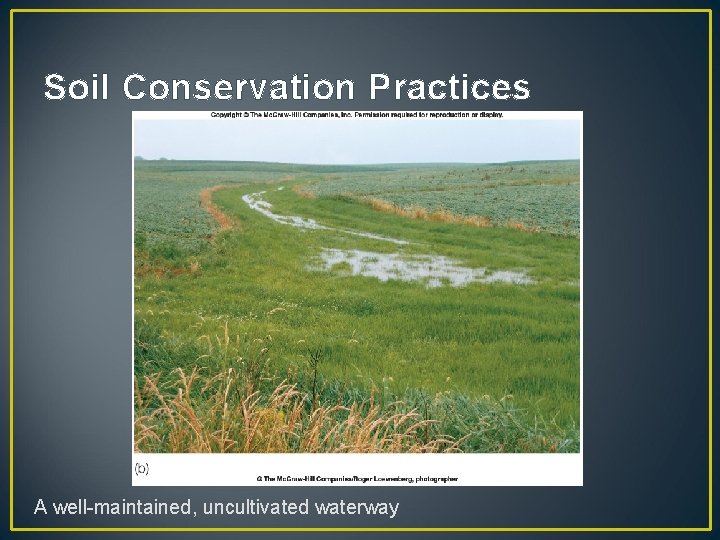
Soil Conservation Practices A well-maintained, uncultivated waterway
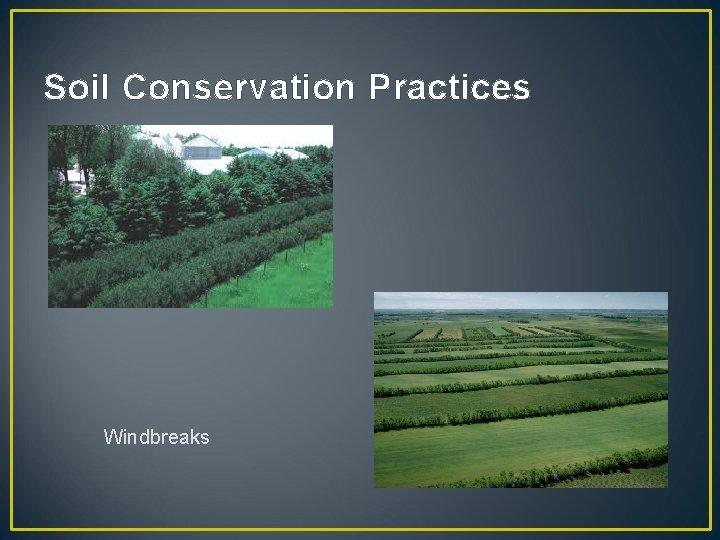
Soil Conservation Practices Windbreaks
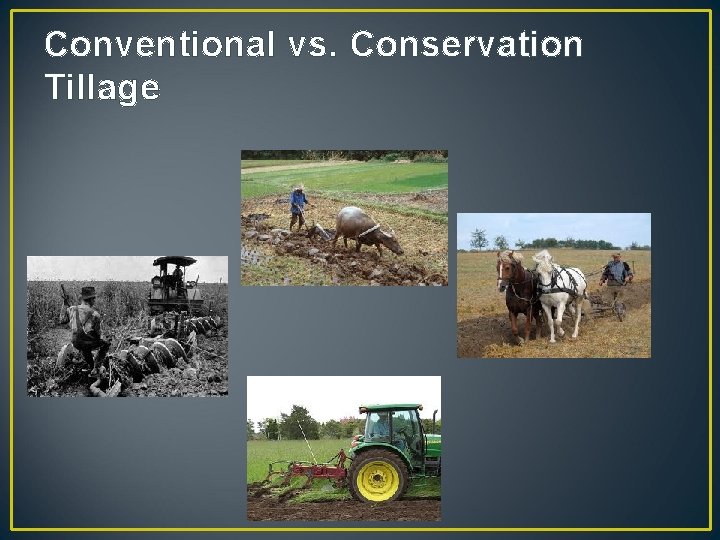
Conventional vs. Conservation Tillage
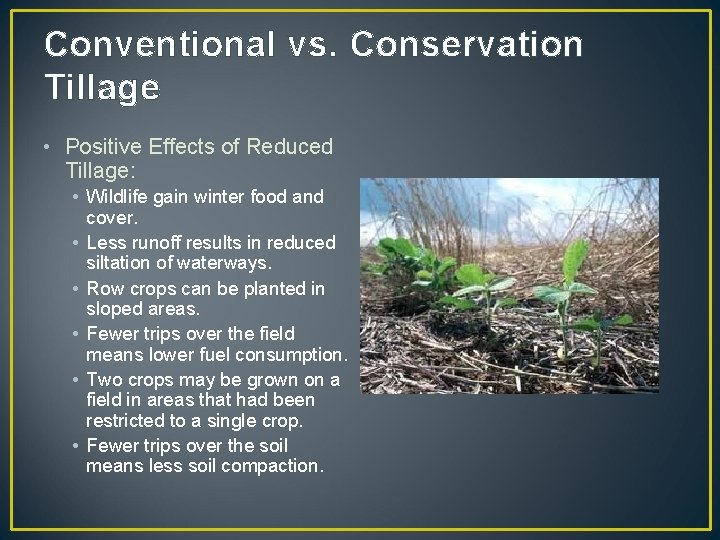
Conventional vs. Conservation Tillage • Positive Effects of Reduced Tillage: • Wildlife gain winter food and cover. • Less runoff results in reduced siltation of waterways. • Row crops can be planted in sloped areas. • Fewer trips over the field means lower fuel consumption. • Two crops may be grown on a field in areas that had been restricted to a single crop. • Fewer trips over the soil means less soil compaction.
Conventional vs. Conservation Tillage • Drawbacks of Conservation Tillage • Plant residue may delay soil warming. • Crop residue reduces evaporation and upward movement of water through the soil, which may retard the growth of plants. • Accumulation of plant residue can harbor plant pests and diseases, requiring more insecticides and fungicides.
Summary • The surface of the Earth is in constant flux. • The movement of tectonic plates results in the formation of new land as old land is worn down by erosive activity. • Soil is an organized mixture of minerals, organic material, living organisms, air, and water. • Organisms affect soil building by burrowing into and mixing the soil, releasing nutrients, and decomposing.
Summary • The ability of soil to grow crops is determined by the inorganic matter, water, and air spaces in the soil. • A soil profile typically consists of the: • • • O horizon of litter A horizon, which is rich in organic matter E horizon, from which materials have been leached B horizon, which accumulates materials leached from above C horizon, which consists of slightly altered parent material.
Summary • Soil erosion is the removal and transportation of soil by water or wind. • Proper use of conservation practices such as contour farming, strip farming, terracing, waterways, windbreaks, and conservation tillage can reduce soil erosion. • Land unsuitable for crops may be used for grazing, lumber, wildlife habitats, or recreation.
Quick Notes-Check Directions: Add the questions below to the left margins of your notes. Highlight the answers to each question in your notes. • How do fertilizers boost crop growth? • How can large amounts of fertilizer added to soil also end up in water supplies and the atmosphere? • What policies can be linked to the practice of overgrazing? • Describe the effects of overgrazing on soil. • What conditions characterize sustainable grazing practices?