
Chapter 13 Site Orientation Introduction Site orientation Placement
- Slides: 20
Chapter 13 Site Orientation
Introduction • Site orientation – Placement of a structure on the property with certain environmental and physical factors • Consider at the beginning of design process • Sometimes predetermined – Considerations • Specific occupant needs (e. g. , individual habits, perceptions, and aesthetic values) • Setback
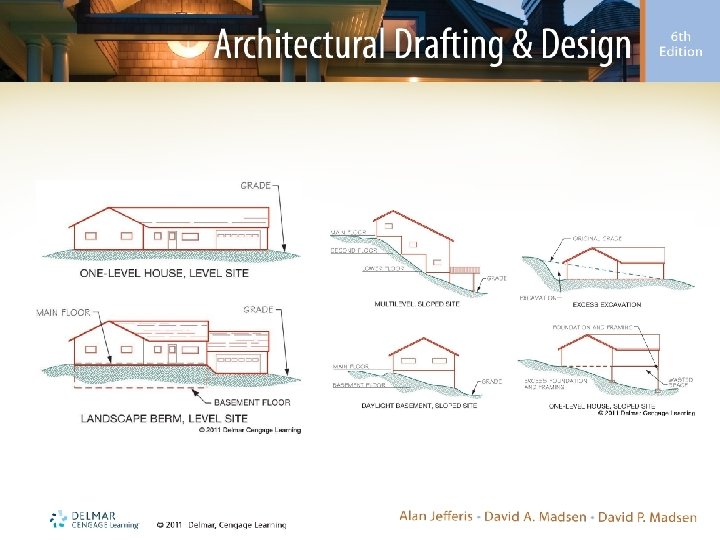
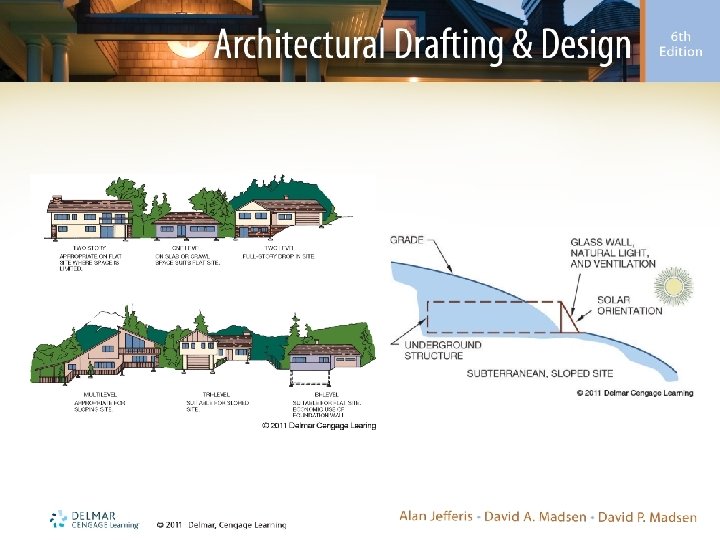
Terrain Orientation • Terrain – Characteristic of the land on which the structure will be placed – Affects structure type • Level construction site is a natural location for a single-level or two-story home • Sloped sites are a natural location for multilevel or daylight basement homes
View Orientation • Building site may be purchased before home design begins – People buy the view (e. g. , mountains, city lights, ocean, or gold course) – View sites are usually more expensive • Architect must provide a home design that optimizes view • View orientation can conflict with advantages of other orientation factors
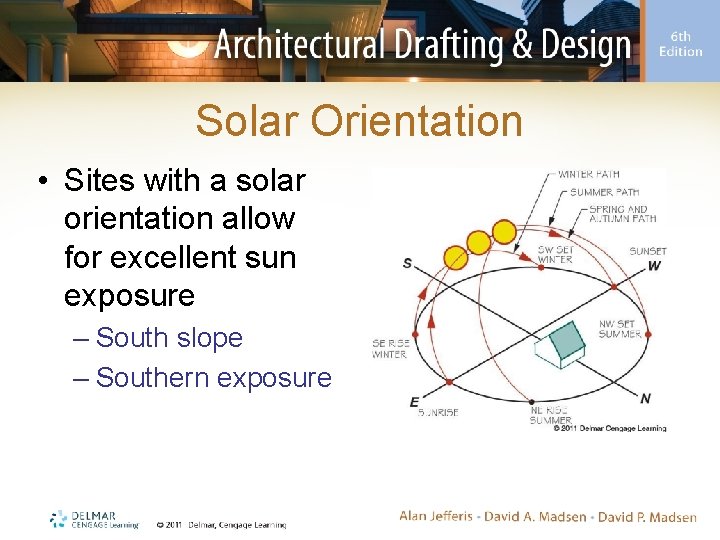
Solar Orientation • Sites with a solar orientation allow for excellent sun exposure – South slope – Southern exposure
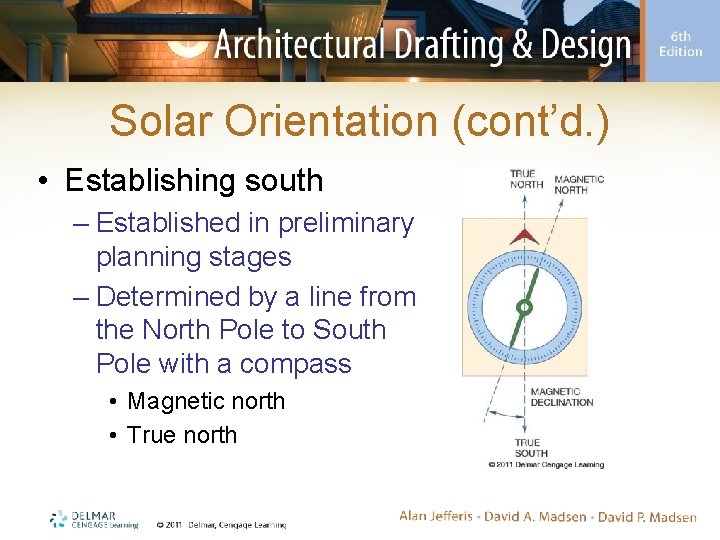
Solar Orientation (cont’d. ) • Establishing south – Established in preliminary planning stages – Determined by a line from the North Pole to South Pole with a compass • Magnetic north • True north
Solar Orientation (cont’d. ) • Solar site-planning tools – Calculate solar access – Demonstrate shading patterns for any given site throughout the year – Provide accurate readings for the entire year at any time of day, in clear or cloudy weather
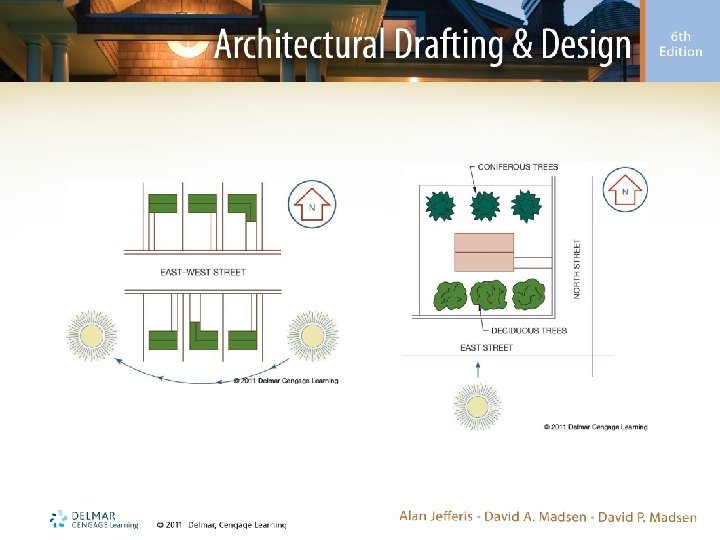
Solar Orientation (cont’d. ) • Solar site location – Rural or suburban location with plenty of space • Allows flexibility – Other factors: • Zoning restrictions with height requirements • Avoid a site with large coniferous trees • Sites with streets running east–west and lots 50' X 100' provide limited orientation potential • Adjacent homes may block the sun
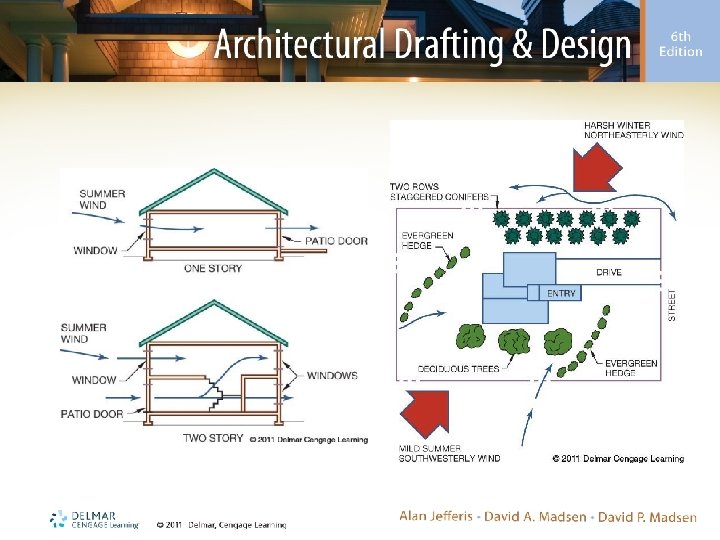
Wind Orientation • Prevailing winds – Direction the wind most frequently blows in a given area • Mountains, large bodies of water, valleys, canyons, or river basins may influence conditions • U. S. prevailing winds are from west to east
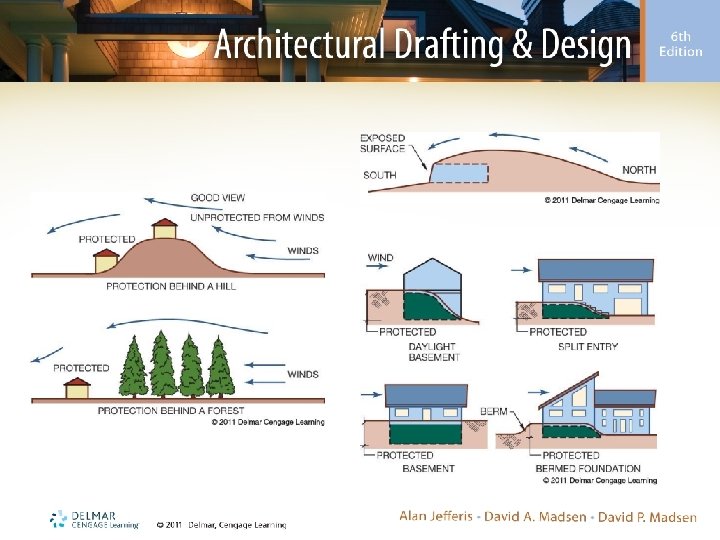
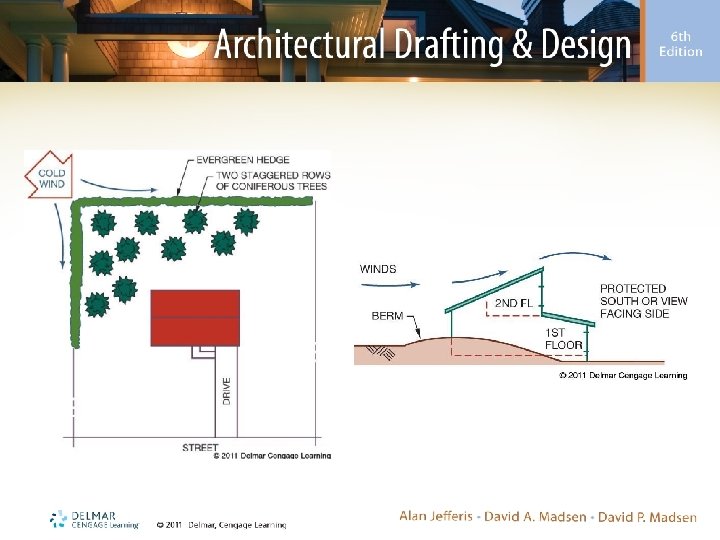
Wind Orientation (cont’d. ) • Site location – Wind conditions can be found in almanacs, in the local library, and on the Internet • Evaluate prevailing wind direction by calling the local weather bureau, discussing it with local residents, or searching the Internet • Select an area where winter winds are at a minimum or where there is protection from them
Wind Orientation (cont’d. ) • Summer cooling winds – May be mild and contribute to a more comfortable living environment – Comfort can be achieved through design for natural ventilation and landscape design
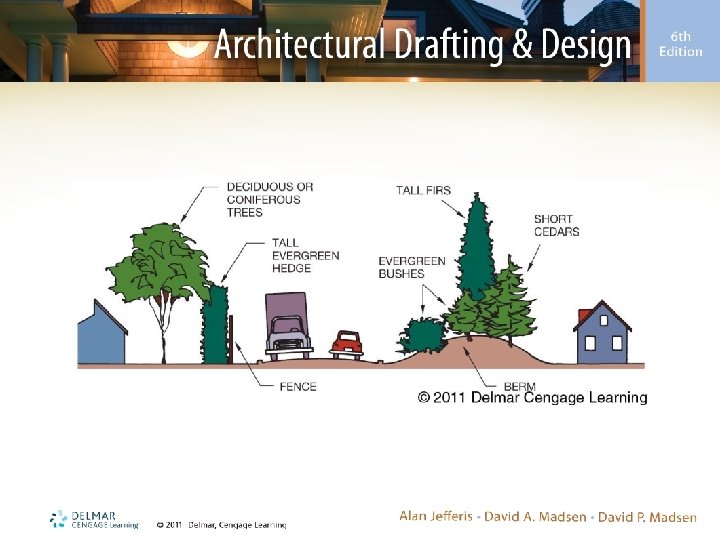
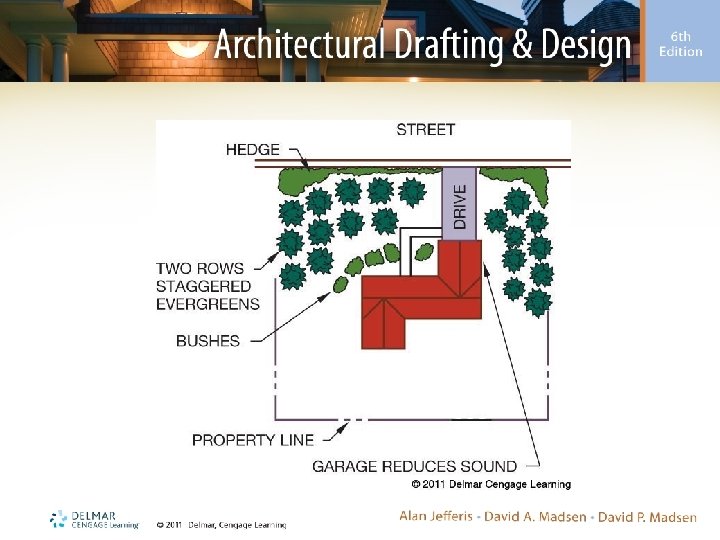
Sound Orientation • A site within a mile of a major freeway can be plagued by road noise – A site level with or slightly below a road can have less noise – Landscaping designs can also contribute to quietness