
Chapter 13 Selecting and Managing Entry Modes Prentice
- Slides: 22
Chapter 13 Selecting and Managing Entry Modes Prentice Hall 2003 1
Chapter Preview • Discuss the essential aspects of exporting • Define each form of countertrade • Explain each type of export/import financing • Describe the advantages and disadvantages of each contractual entry mode • Identify the pluses and minuses of each investment entry mode • Identify strategic factors in selecting entry modes © Prentice Hall, 2008 International Business 4 e 2
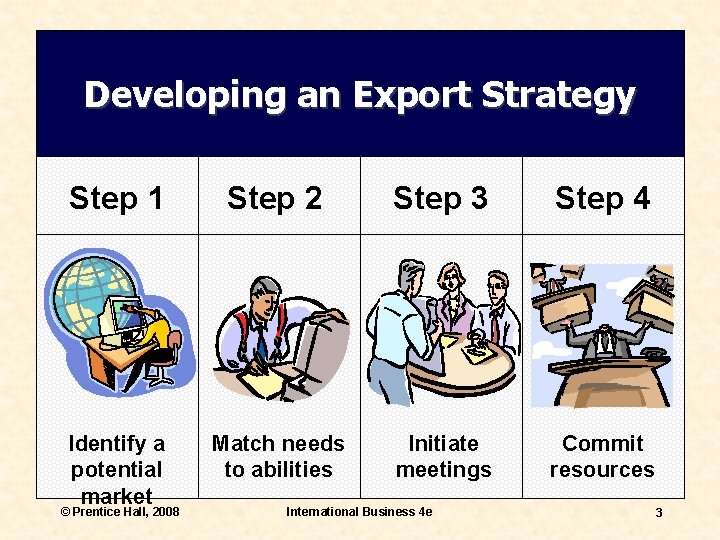
Developing an Export Strategy Step 1 Step 2 Step 3 Step 4 Identify a potential market Match needs to abilities Initiate meetings Commit resources © Prentice Hall, 2008 International Business 4 e 3
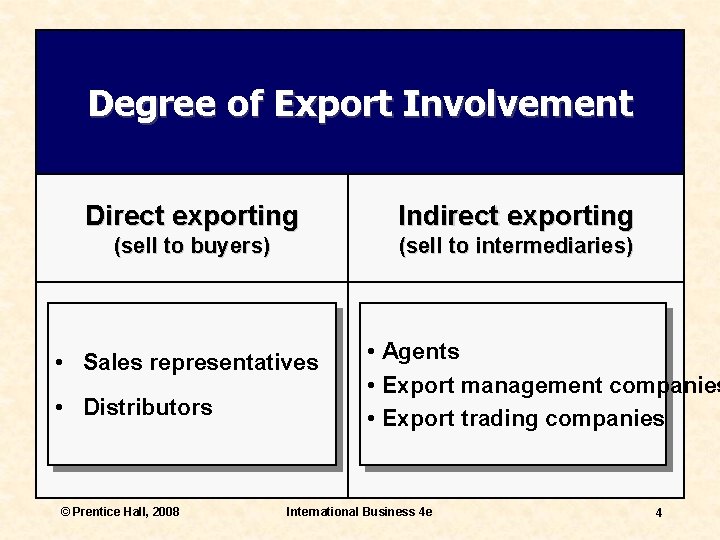
Degree of Export Involvement Direct exporting Indirect exporting (sell to buyers) (sell to intermediaries) • Sales representatives • Distributors © Prentice Hall, 2008 • Agents • Export management companies • Export trading companies International Business 4 e 4
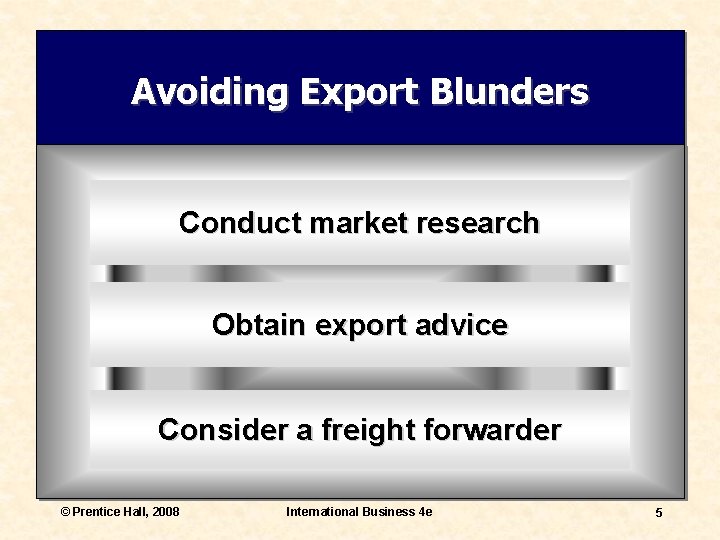
Avoiding Export Blunders Conduct market research Obtain export advice Consider a freight forwarder © Prentice Hall, 2008 International Business 4 e 5
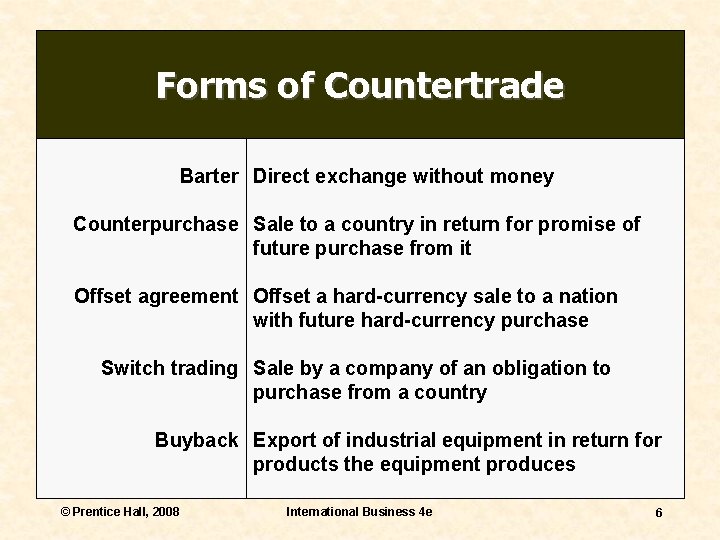
Forms of Countertrade Barter Direct exchange without money Counterpurchase Sale to a country in return for promise of future purchase from it Offset agreement Offset a hard-currency sale to a nation with future hard-currency purchase Switch trading Sale by a company of an obligation to purchase from a country Buyback Export of industrial equipment in return for products the equipment produces © Prentice Hall, 2008 International Business 4 e 6
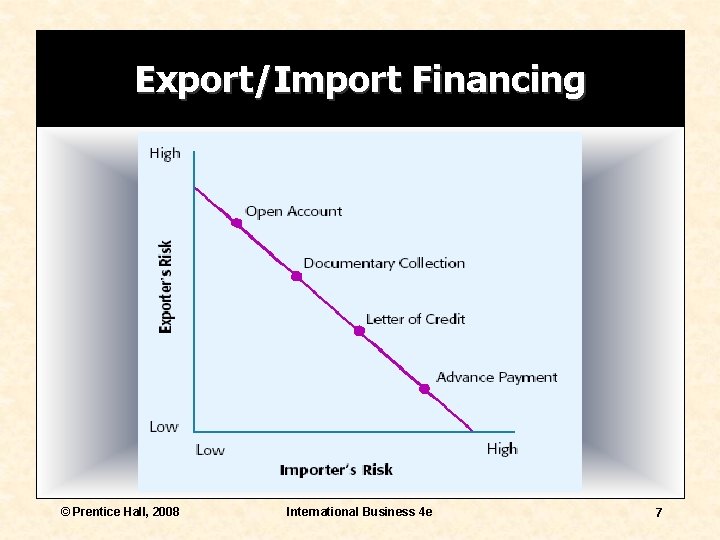
Export/Import Financing © Prentice Hall, 2008 International Business 4 e 7
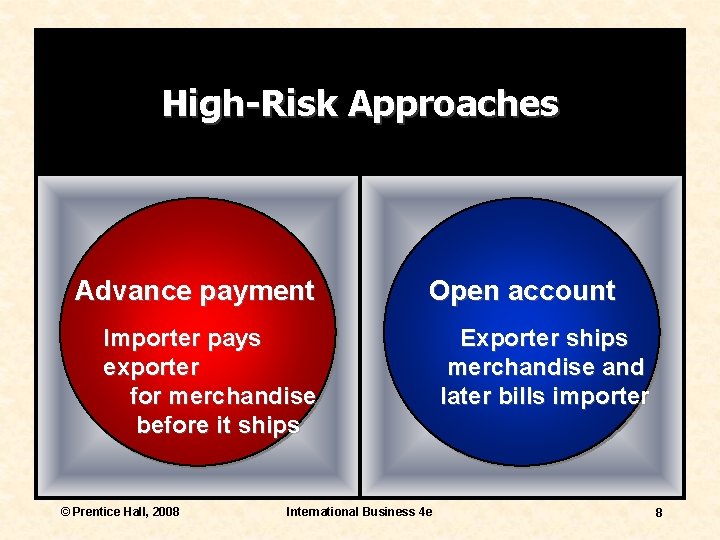
High-Risk Approaches Advance payment Open account Importer pays exporter for merchandise before it ships © Prentice Hall, 2008 International Business 4 e Exporter ships merchandise and later bills importer 8
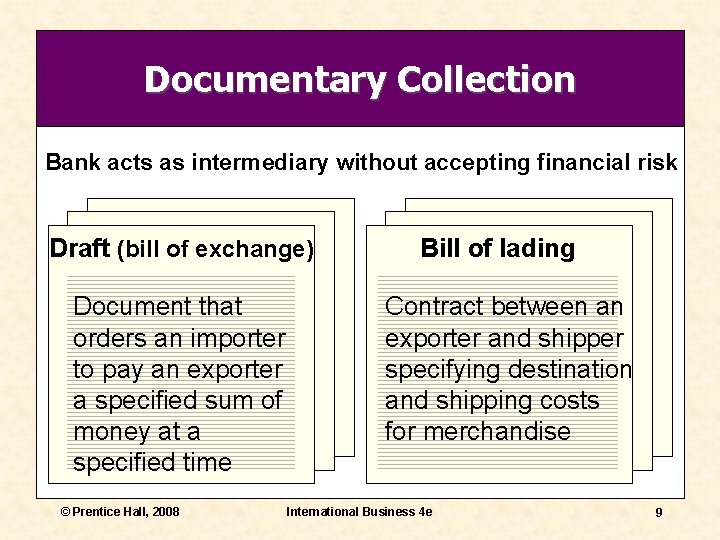
Documentary Collection Bank acts as intermediary without accepting financial risk Draft (bill of exchange) Document that orders an importer to pay an exporter a specified sum of money at a specified time © Prentice Hall, 2008 Bill of lading Contract between an exporter and shipper specifying destination and shipping costs for merchandise International Business 4 e 9
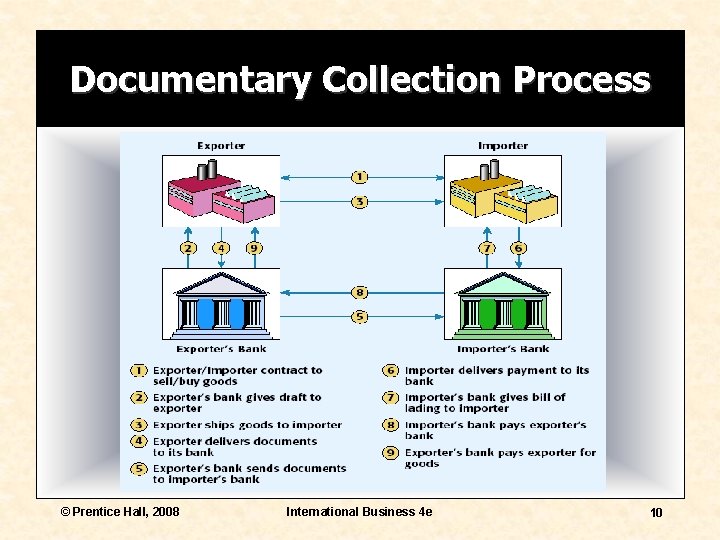
Documentary Collection Process © Prentice Hall, 2008 International Business 4 e 10
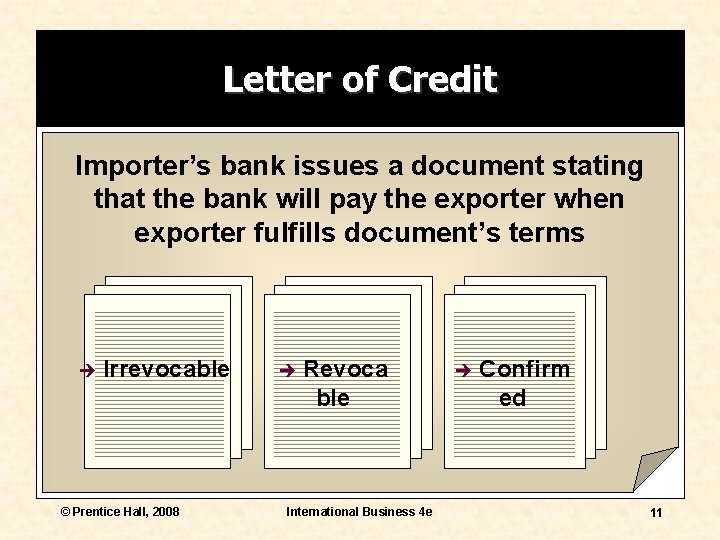
Letter of Credit Importer’s bank issues a document stating that the bank will pay the exporter when exporter fulfills document’s terms è Irrevocable © Prentice Hall, 2008 è Revoca ble International Business 4 e è Confirm ed 11
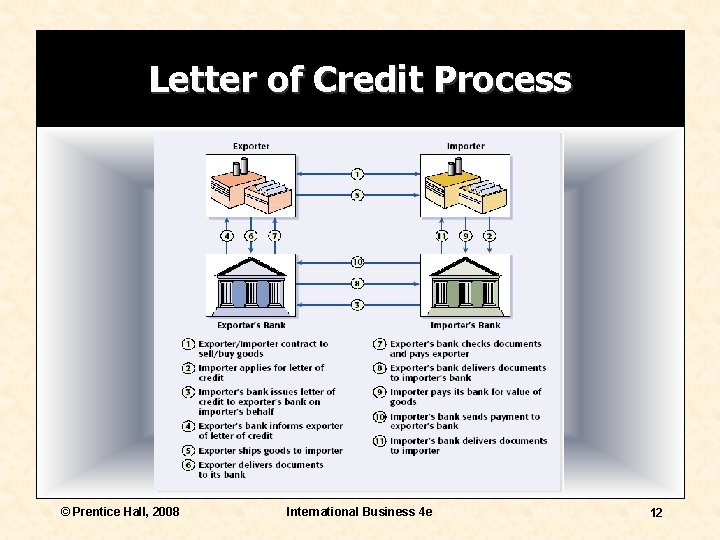
Letter of Credit Process © Prentice Hall, 2008 International Business 4 e 12
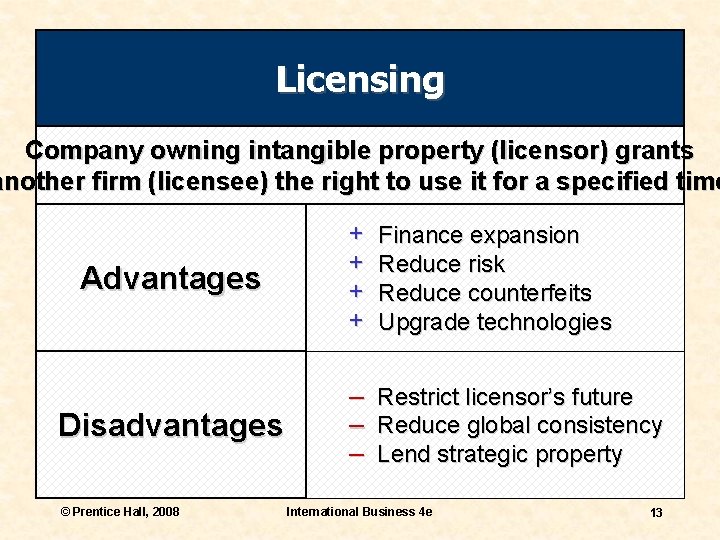
Licensing Company owning intangible property (licensor) grants another firm (licensee) the right to use it for a specified time Advantages Disadvantages © Prentice Hall, 2008 + + Finance expansion Reduce risk Reduce counterfeits Upgrade technologies – Restrict licensor’s future – Reduce global consistency – Lend strategic property International Business 4 e 13
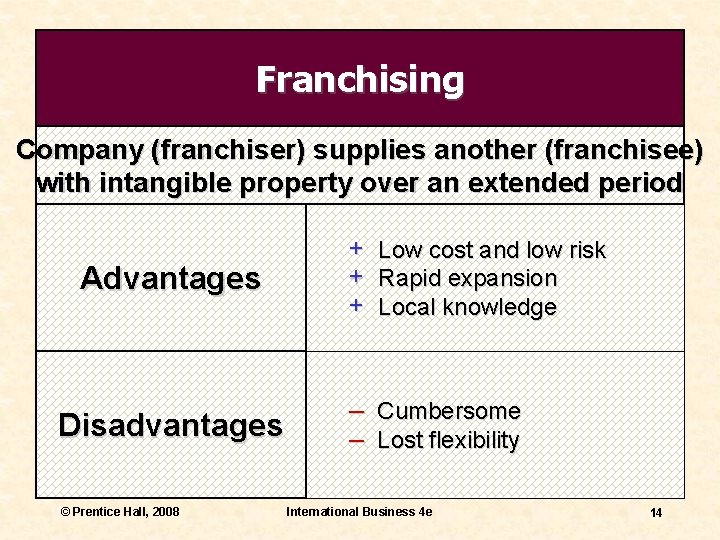
Franchising Company (franchiser) supplies another (franchisee) with intangible property over an extended period Advantages + + + Low cost and low risk Rapid expansion Local knowledge Disadvantages – – Cumbersome Lost flexibility © Prentice Hall, 2008 International Business 4 e 14
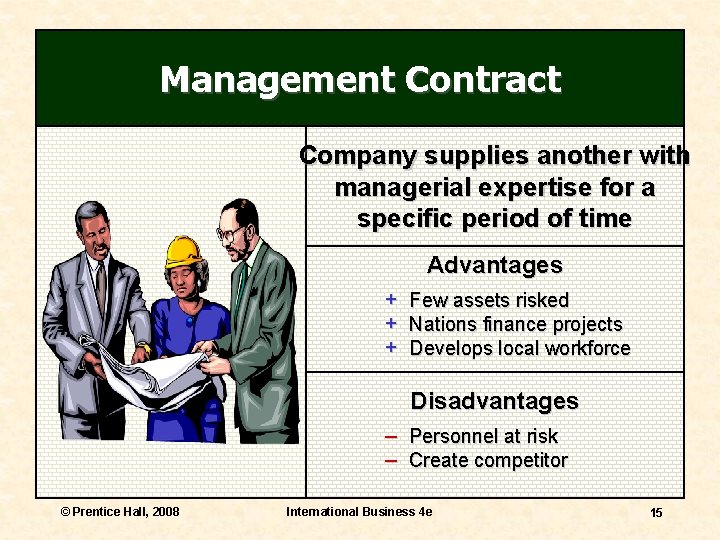
Management Contract Company supplies another with managerial expertise for a specific period of time Advantages + + + Few assets risked Nations finance projects Develops local workforce Disadvantages – Personnel at risk – Create competitor © Prentice Hall, 2008 International Business 4 e 15
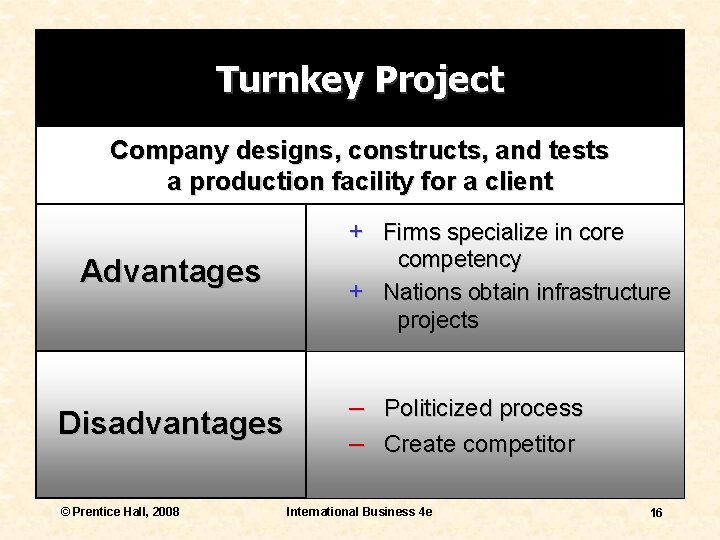
Turnkey Project Company designs, constructs, and tests a production facility for a client + Firms specialize in core Advantages Disadvantages © Prentice Hall, 2008 competency + Nations obtain infrastructure projects – Politicized process – Create competitor International Business 4 e 16
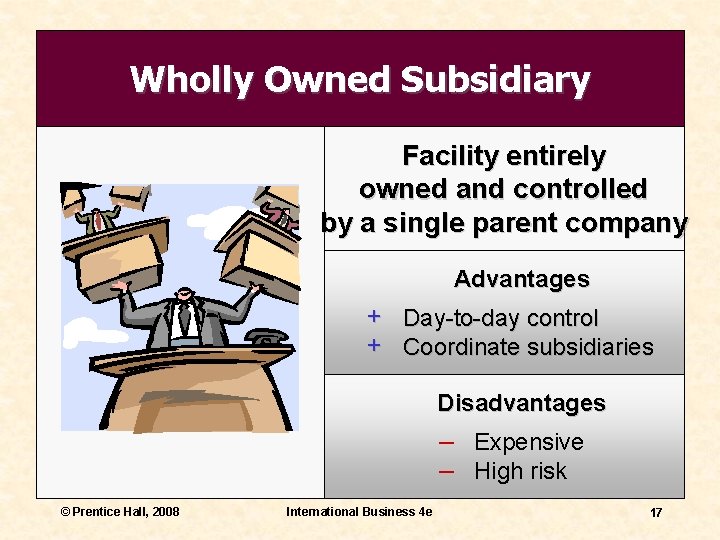
Wholly Owned Subsidiary Facility entirely owned and controlled by a single parent company Advantages + Day-to-day control + Coordinate subsidiaries Disadvantages – Expensive – High risk © Prentice Hall, 2008 International Business 4 e 17
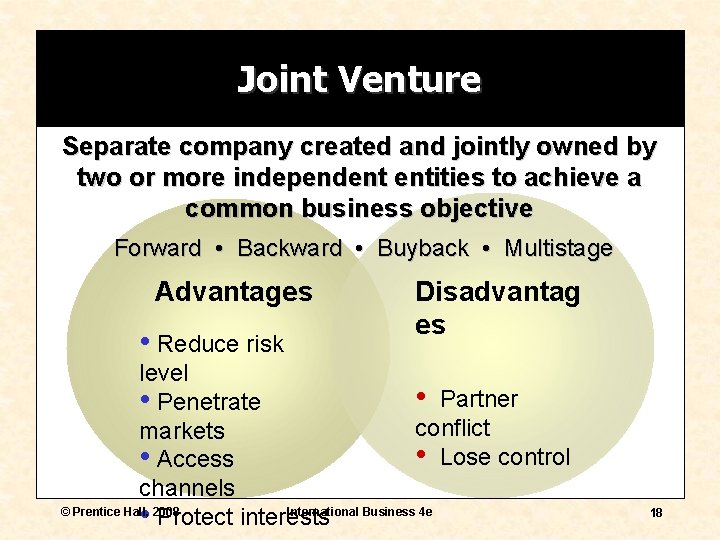
Joint Venture Separate company created and jointly owned by two or more independent entities to achieve a common business objective Forward • Backward • Buyback • Multistage Advantages • Reduce risk Disadvantag es level • Partner • Penetrate conflict markets • Lose control • Access channels © Prentice Hall, 2008 International Business 4 e • Protect interests 18
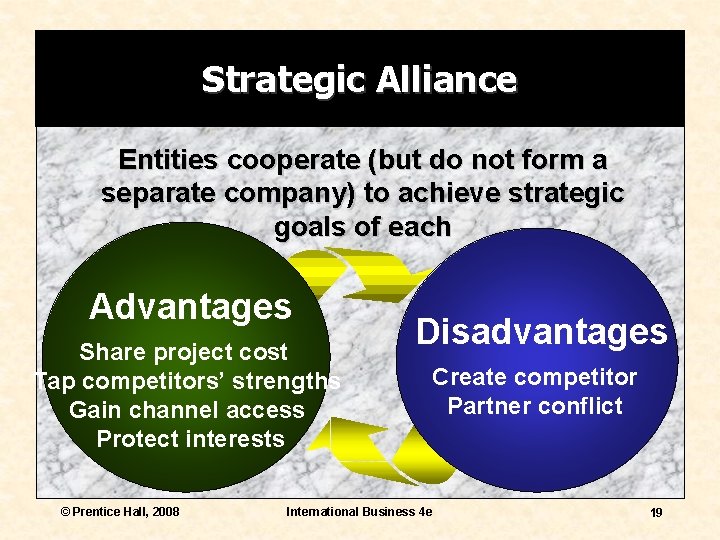
Strategic Alliance Entities cooperate (but do not form a separate company) to achieve strategic goals of each Advantages Share project cost Tap competitors’ strengths Gain channel access Protect interests © Prentice Hall, 2008 Disadvantages Create competitor Partner conflict International Business 4 e 19
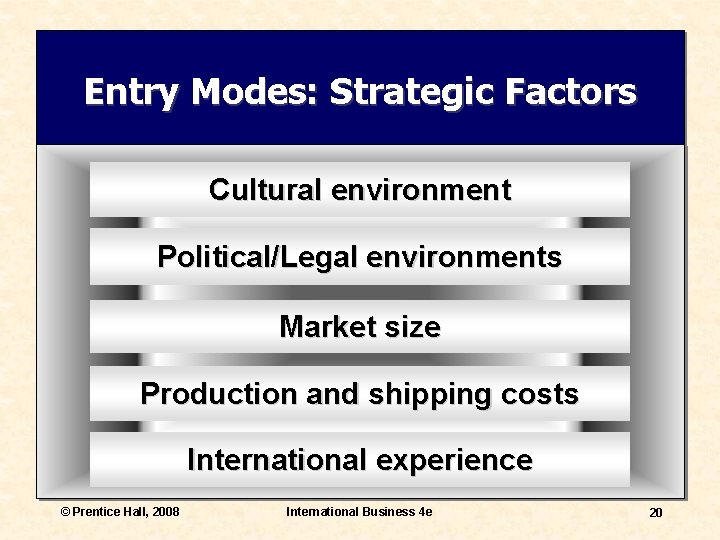
Entry Modes: Strategic Factors Cultural environment Political/Legal environments Market size Production and shipping costs International experience © Prentice Hall, 2008 International Business 4 e 20
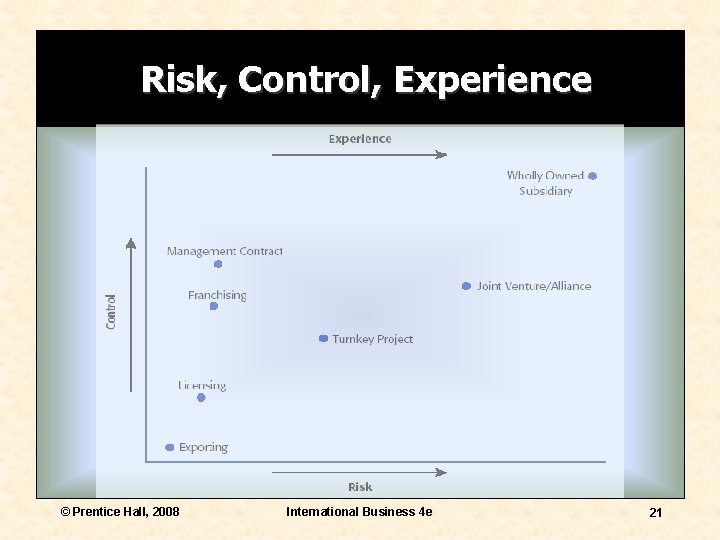
Risk, Control, Experience © Prentice Hall, 2008 International Business 4 e 21
Chapter Review • Discuss the essential aspects of exporting • Define each form of countertrade • Explain each type of export/import financing • Describe the advantages and disadvantages of each contractual entry mode • Identify the pluses and minuses of each investment entry mode • Identify strategic factors in selecting entry modes © Prentice Hall, 2008 International Business 4 e 22