
CHAPTER 13 SECTION 1 FORCES EQ What is
- Slides: 17
CHAPTER 13 SECTION 1 - FORCES EQ: What is the difference between balanced and unbalanced forces?
FORCE - a push or pull - causes an object to accelerate or change motion - examples: magnet picking up a paperclip, hand throwing a ball
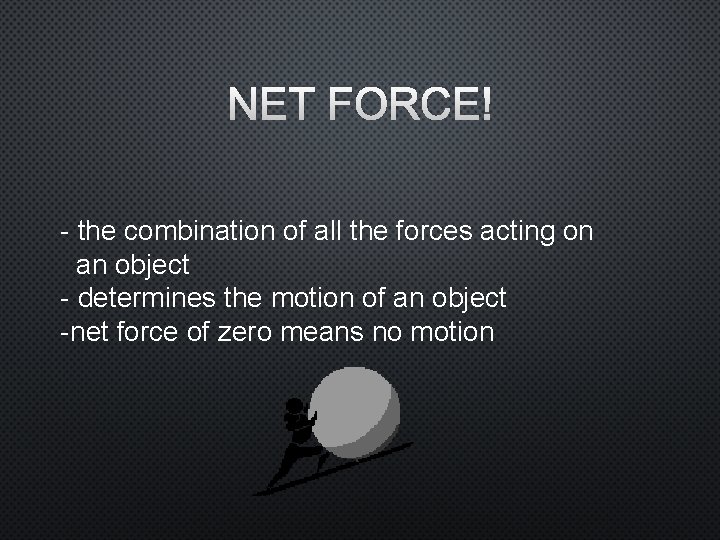
NET FORCE - the combination of all the forces acting on an object - determines the motion of an object -net force of zero means no motion
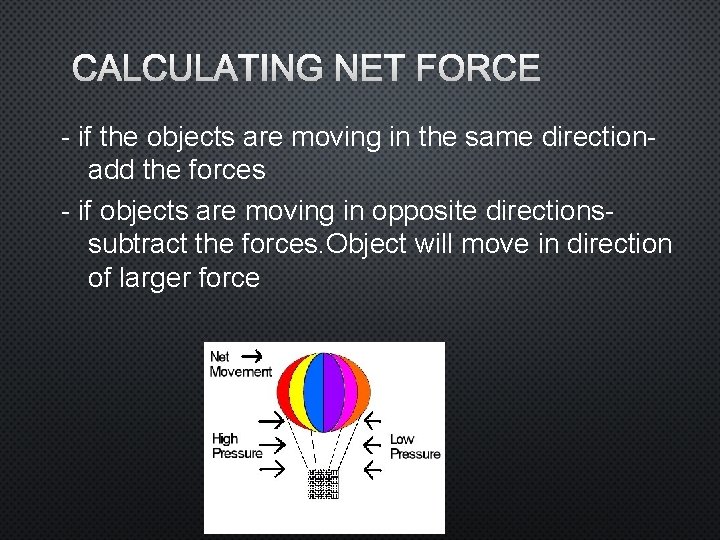
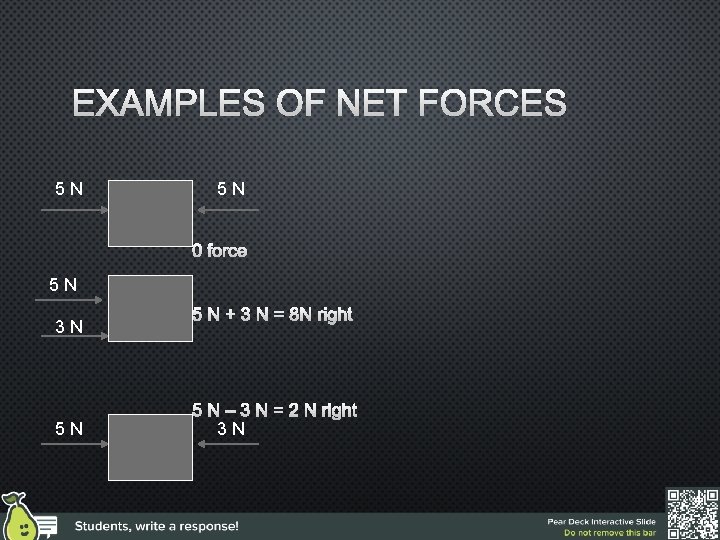
CALCULATING NET FORCE - if the objects are moving in the same directionadd the forces - if objects are moving in opposite directionssubtract the forces. Object will move in direction of larger force
EXAMPLES OF NET FORCES 5 N 5 N 0 FORCE 5 N 3 N 5 N 5 N + 3 N = 8 N RIGHT 5 N – 3 N = 2 N RIGHT 3 N
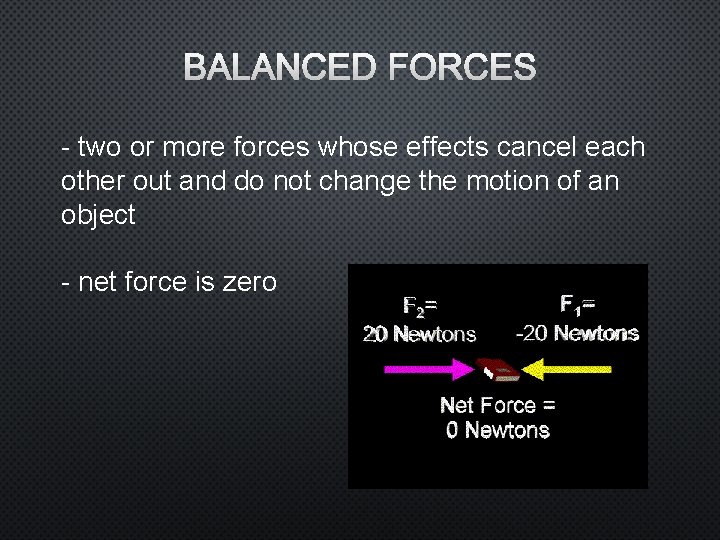
BALANCED FORCES - two or more forces whose effects cancel each other out and do not change the motion of an object - net force is zero
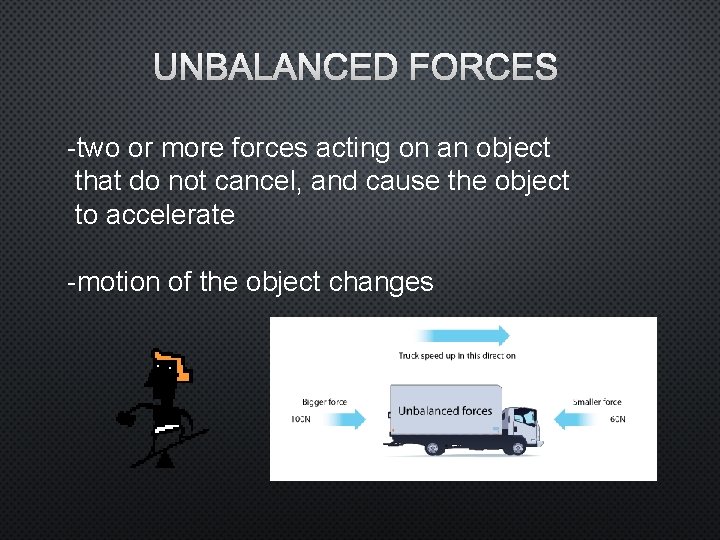
UNBALANCED FORCES -two or more forces acting on an object that do not cancel, and cause the object to accelerate -motion of the object changes
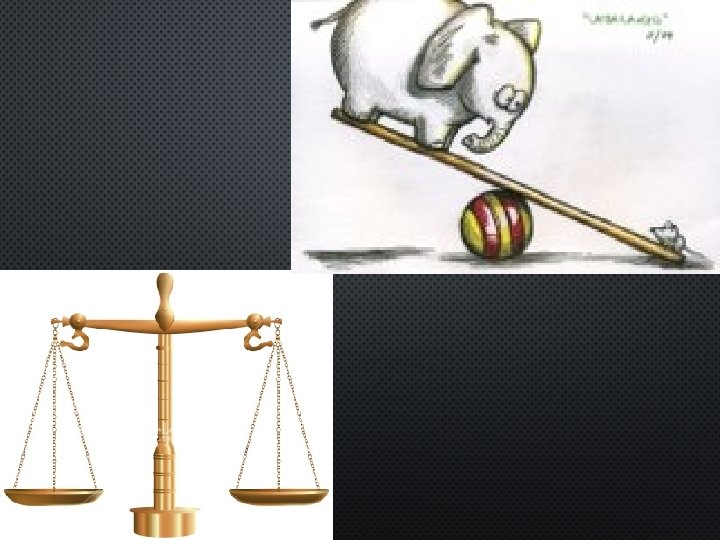
Draw a representation of unbalanced force/Balanced force
CHAPTER 13 SECTION 1 FRICTION EQ: Compare and contrast the 3 types of friction.
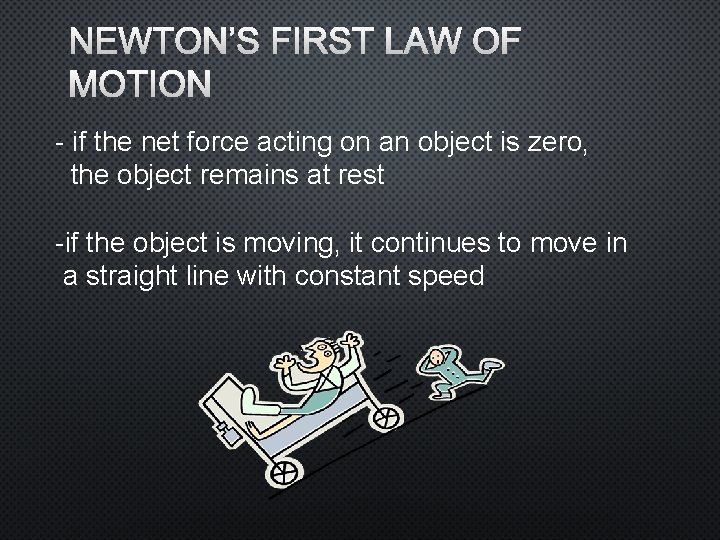
NEWTON’S FIRST LAW OF MOTION - if the net force acting on an object is zero, the object remains at rest -if the object is moving, it continues to move in a straight line with constant speed
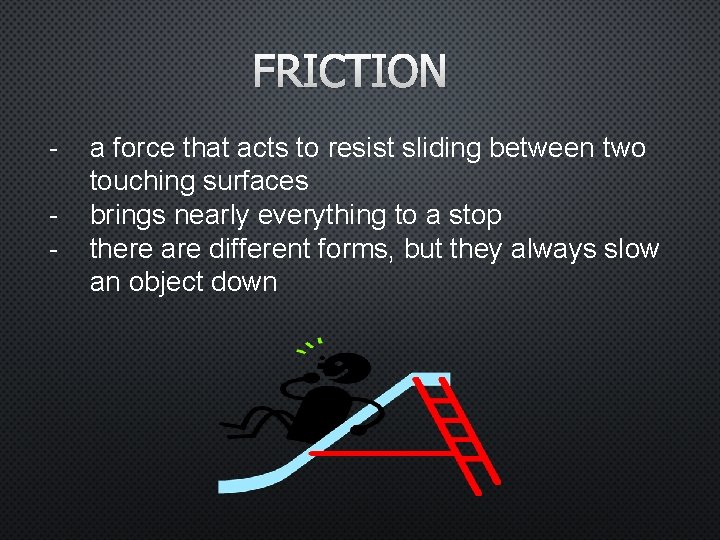
FRICTION - a force that acts to resist sliding between two touching surfaces brings nearly everything to a stop there are different forms, but they always slow an object down
WHATS AN EXAMPLE OF FRICTION YOU KNOW OF?
OLDER IDEAS ABOUT MOTION - they didn’t understand friction so they thought the natural state of objects was at rest - reality: friction stops things, if friction could be removed, an object in motion would continue in a straight line with constant speed
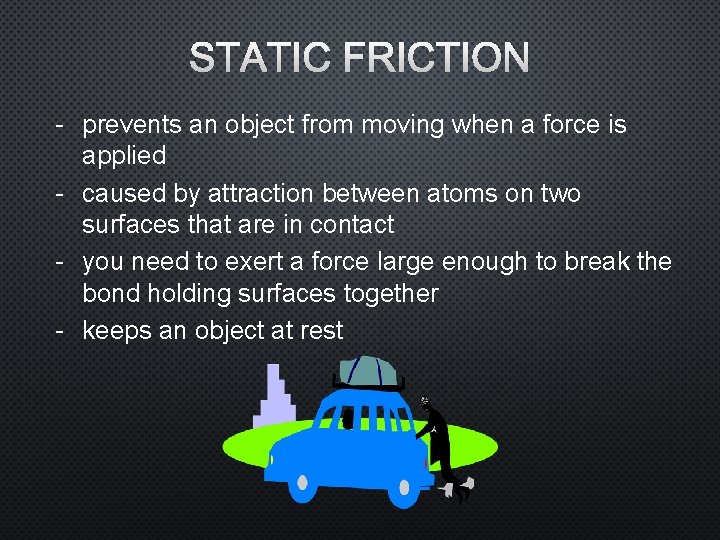
STATIC FRICTION - prevents an object from moving when a force is applied - caused by attraction between atoms on two surfaces that are in contact - you need to exert a force large enough to break the bond holding surfaces together - keeps an object at rest
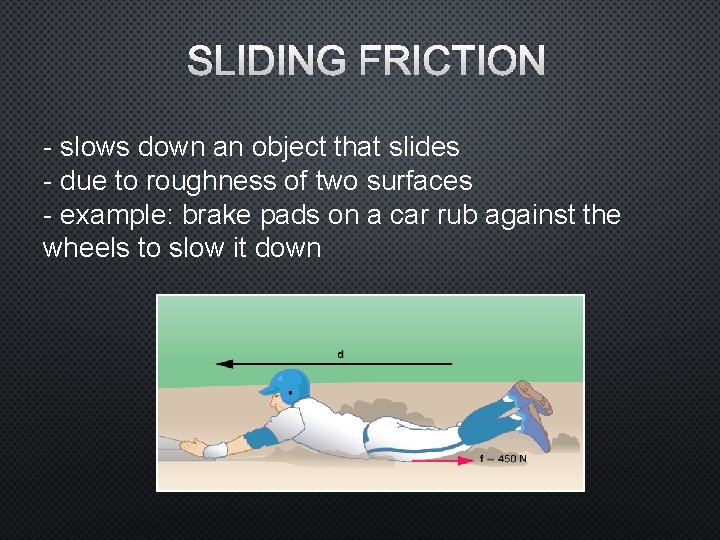
SLIDING FRICTION - slows down an object that slides - due to roughness of two surfaces - example: brake pads on a car rub against the wheels to slow it down
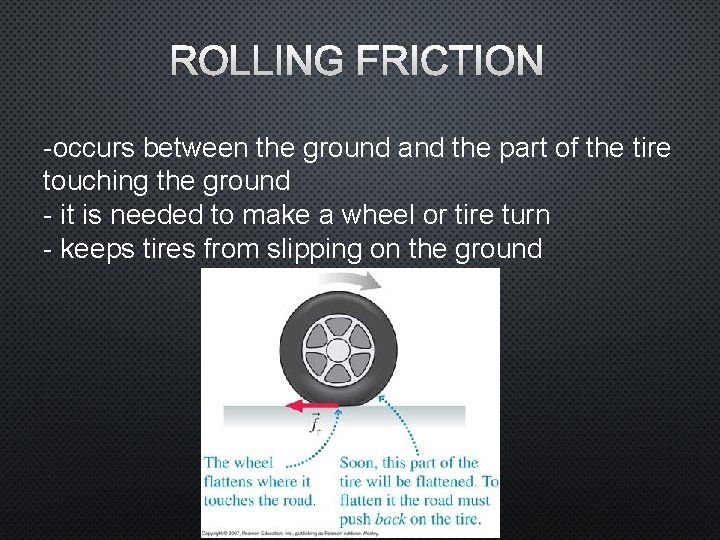
ROLLING FRICTION -occurs between the ground and the part of the tire touching the ground - it is needed to make a wheel or tire turn - keeps tires from slipping on the ground