
Chapter 13 RESPIRATORY PHYSIOLOGY Respiration Pulmonary ventilation breathing
Chapter 13 RESPIRATORY PHYSIOLOGY
Respiration � Pulmonary ventilation (breathing) �Air moving in and out of lungs so gas exchange can occur � External respiration �Gas exchange between pulmonary blood and alveoli � Respiratory gas transport �Gas transported to and from lungs and tissue cells in body � Internal respiration �At systemic capillaries, gas exchange between blood and tissue cells (cellular respiration)
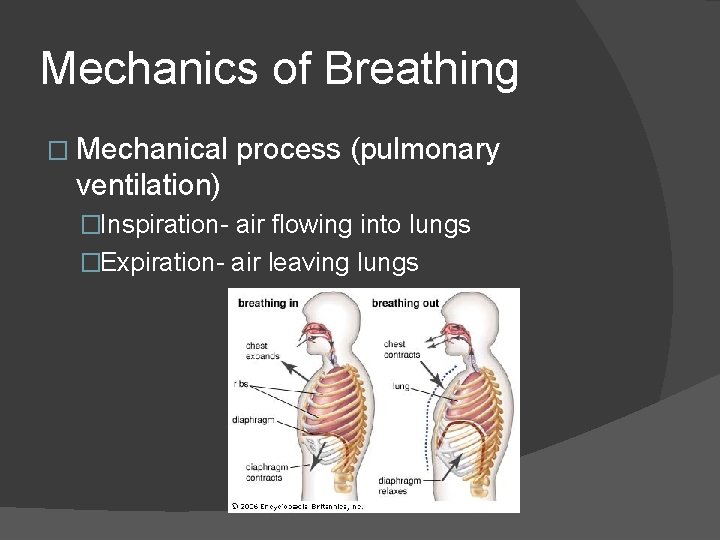
Mechanics of Breathing � Mechanical process (pulmonary ventilation) �Inspiration- air flowing into lungs �Expiration- air leaving lungs

Inspiration Diaphragm contracts (moves downward) � Inspiratory muscles contract � external intercostals contract lifting rib cage � �Both cause size of thoracic cavity to increase Since lungs adhere tightly to thorax walls due to the surface tension between pleural membranes, lungs expand � Decrease in gas pressure causes air to be sucked into lungs �
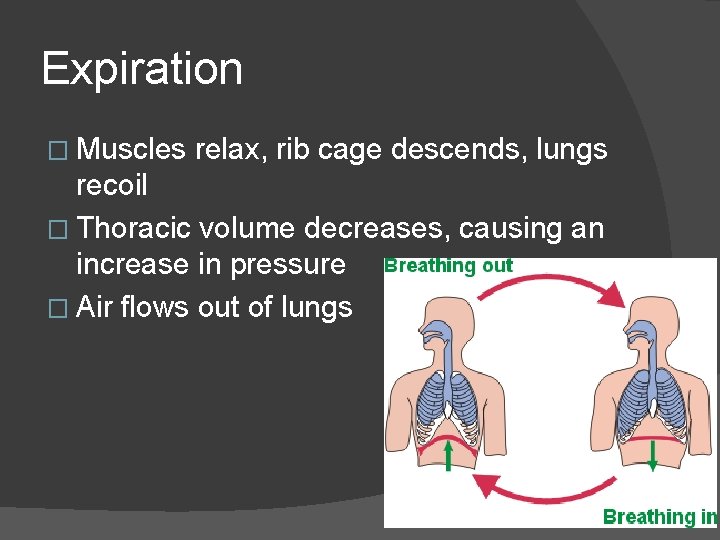
Expiration � Muscles relax, rib cage descends, lungs recoil � Thoracic volume decreases, causing an increase in pressure � Air flows out of lungs

Respiratory Volumes & Capacities � Tidal volume- normal amount of air take in and out during a breath (~500 ml) � Inspiratory reserve volume (IRV)- amount of air that can be forcible taken in above the tidal volume (~2100 – 3200 ml)

� Expiratory reserve volume (ERV)- amount of air that can be exhaled above the tidal volume (~1200 ml) � Residual volume- air that cannot be expelled, needed for gas exchange to continue in lungs in between breaths � Vital capacity (VC)- total amount of exchangeable air �= TV + IRV + ERV

Respiratory Sounds � Bronchial sounds �Air rushing through large respiratory passageways (trachea & bronchi) � Vesicular breathing sounds �Occurs as air fills alveoli �Soft and resemble muffled breeze
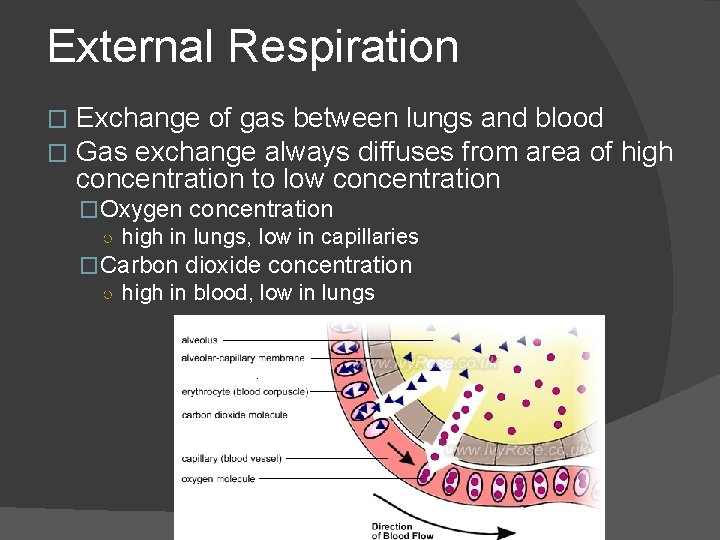
External Respiration � � Exchange of gas between lungs and blood Gas exchange always diffuses from area of high concentration to low concentration �Oxygen concentration ○ high in lungs, low in capillaries �Carbon dioxide concentration ○ high in blood, low in lungs

Internal Respiration �Exchange of gases between blood and cells ○ Oxygen concentration �High in capillaries, low in cells ○ Carbon dioxide concentration �High in cells, low in blood
- Slides: 10