
Chapter 13 Oscillatory Motion Periodic motion Periodic harmonic




- Slides: 30
Chapter 13 Oscillatory Motion
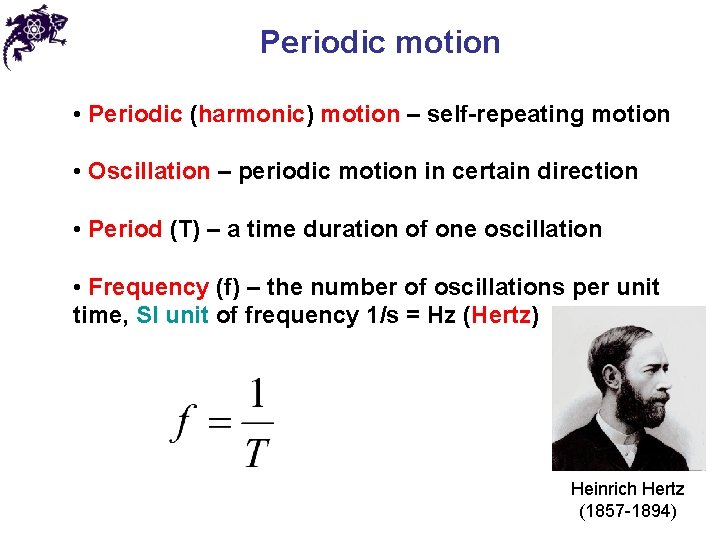
Periodic motion • Periodic (harmonic) motion – self-repeating motion • Oscillation – periodic motion in certain direction • Period (T) – a time duration of one oscillation • Frequency (f) – the number of oscillations per unit time, SI unit of frequency 1/s = Hz (Hertz) Heinrich Hertz (1857 -1894)
Simple harmonic motion • Simple harmonic motion – motion that repeats itself and the displacement is a sinusoidal function of time
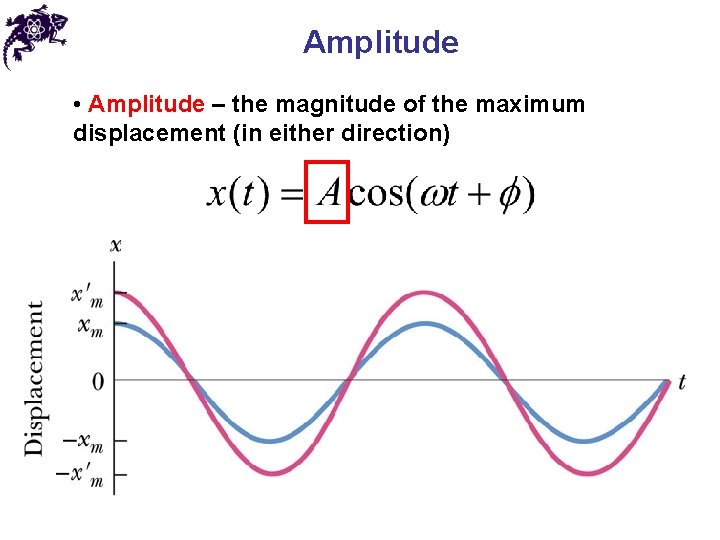
Amplitude • Amplitude – the magnitude of the maximum displacement (in either direction)
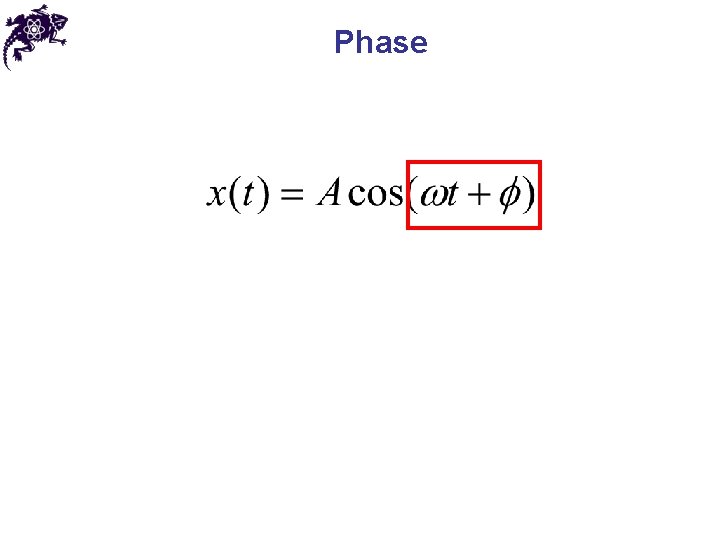
Phase
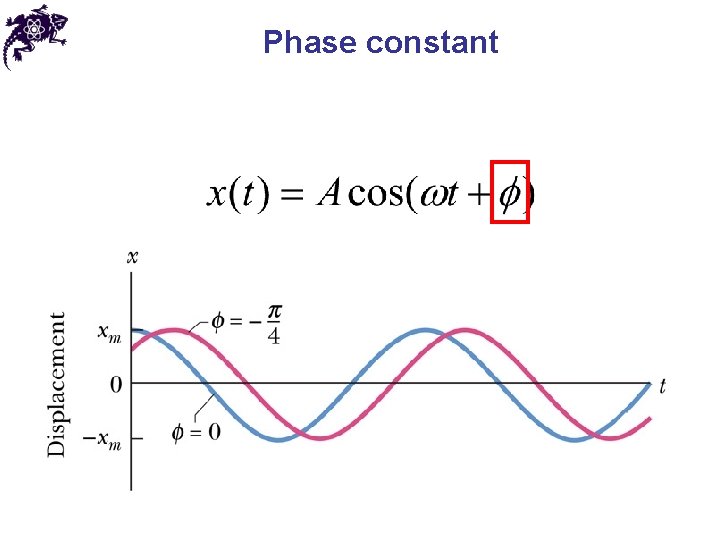
Phase constant
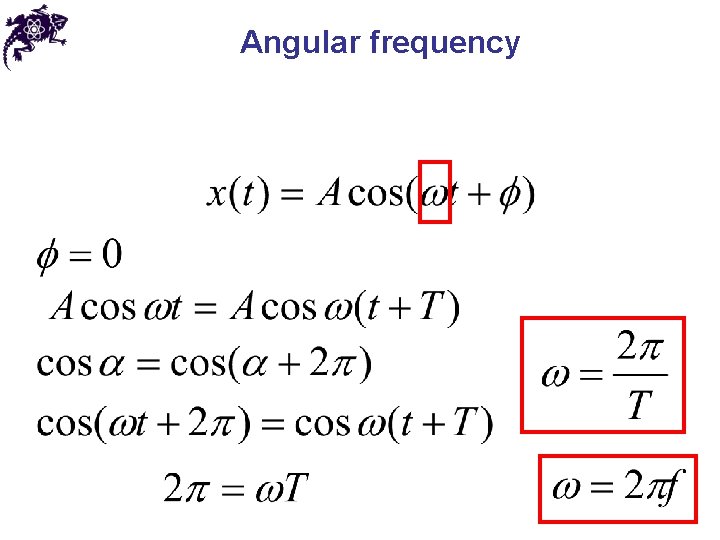
Angular frequency
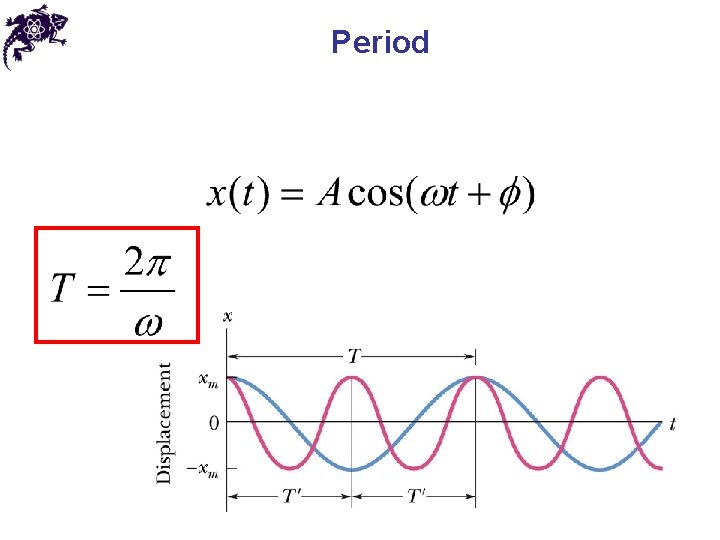
Period
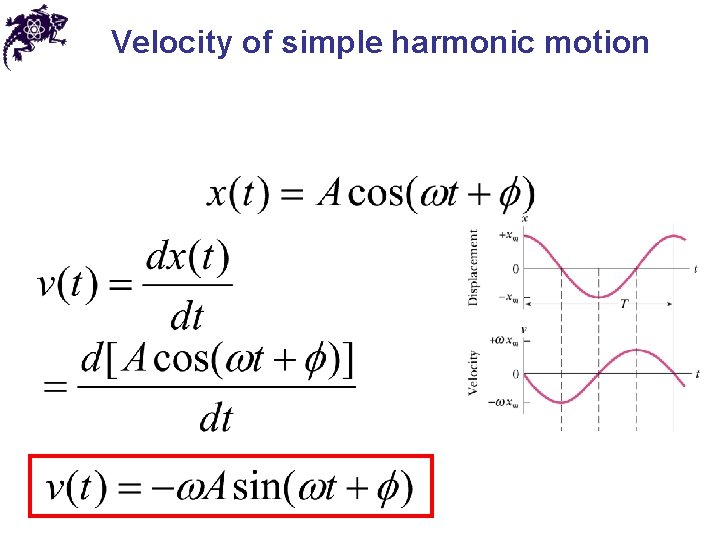
Velocity of simple harmonic motion
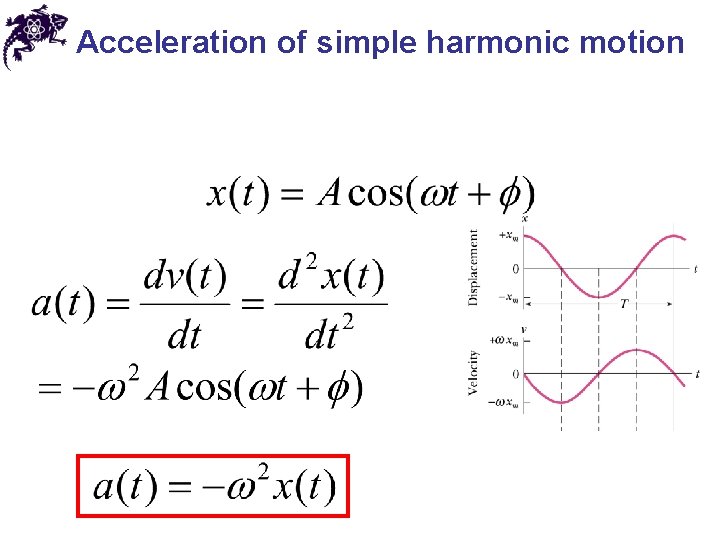
Acceleration of simple harmonic motion
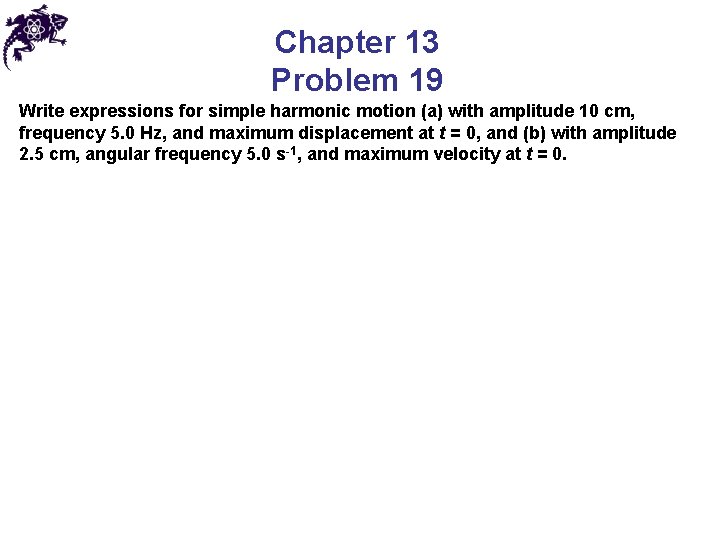
Chapter 13 Problem 19 Write expressions for simple harmonic motion (a) with amplitude 10 cm, frequency 5. 0 Hz, and maximum displacement at t = 0, and (b) with amplitude 2. 5 cm, angular frequency 5. 0 s-1, and maximum velocity at t = 0.
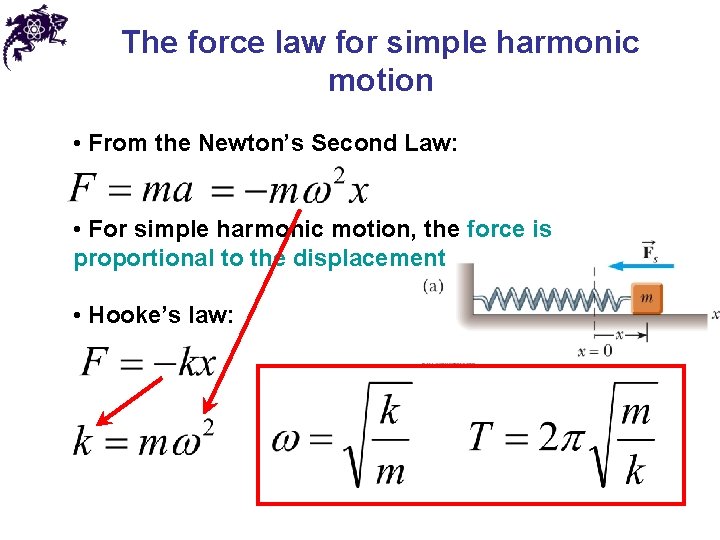
The force law for simple harmonic motion • From the Newton’s Second Law: • For simple harmonic motion, the force is proportional to the displacement • Hooke’s law:
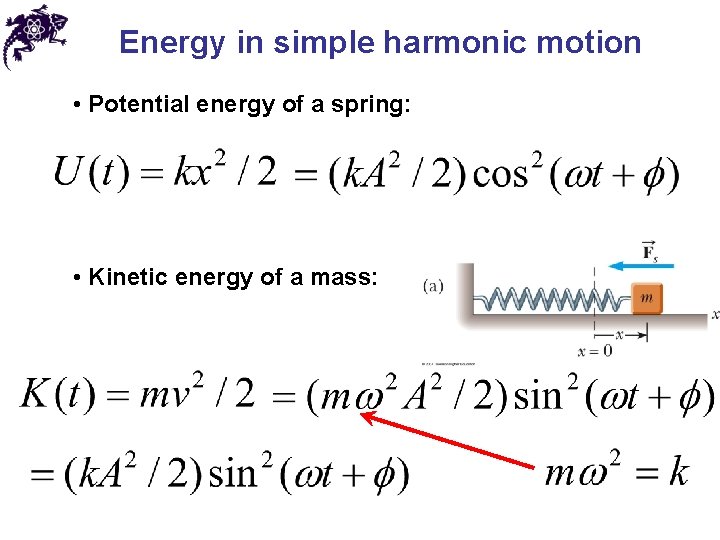
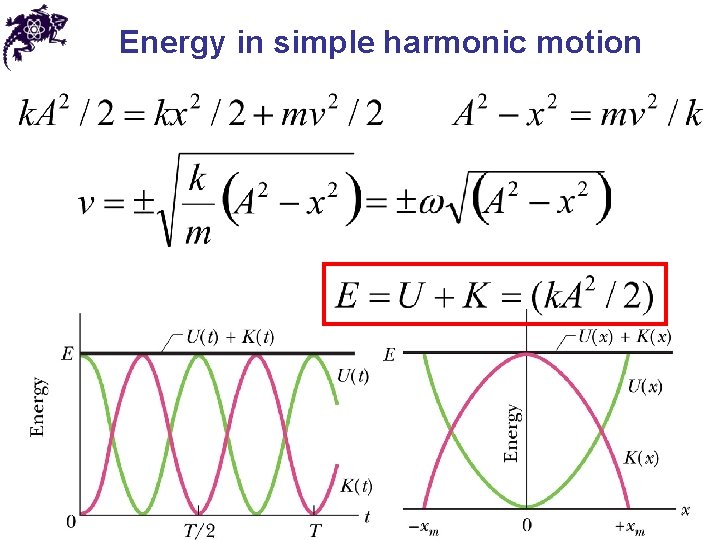
Energy in simple harmonic motion • Potential energy of a spring: • Kinetic energy of a mass:
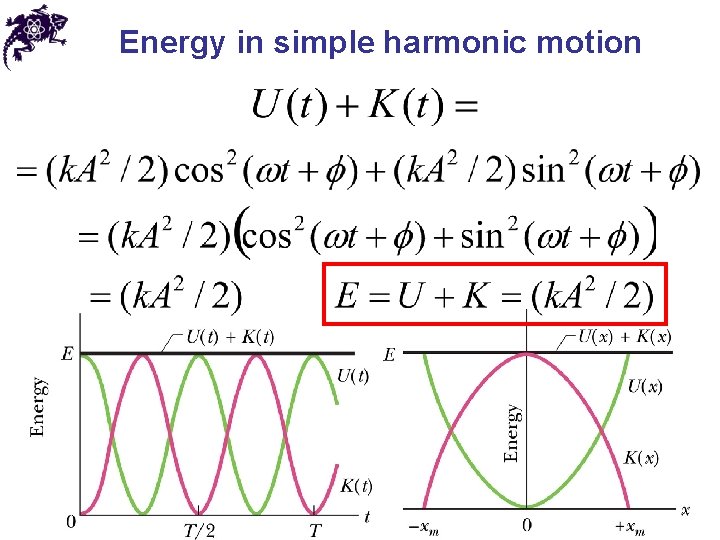
Energy in simple harmonic motion
Energy in simple harmonic motion
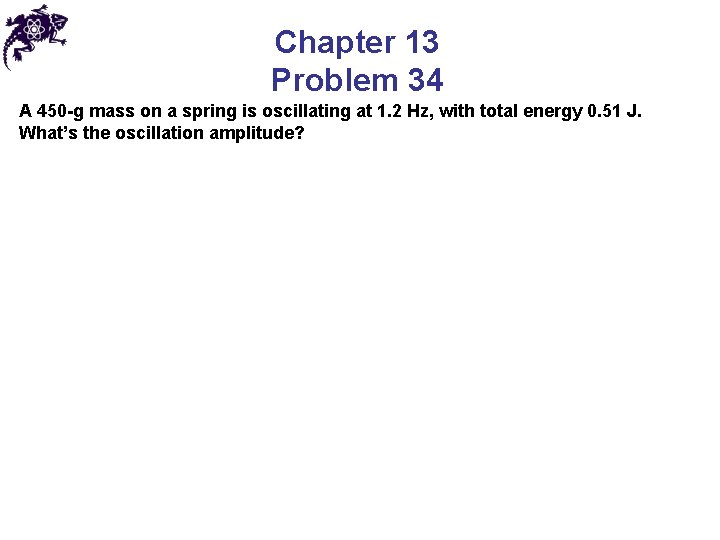
Chapter 13 Problem 34 A 450 -g mass on a spring is oscillating at 1. 2 Hz, with total energy 0. 51 J. What’s the oscillation amplitude?
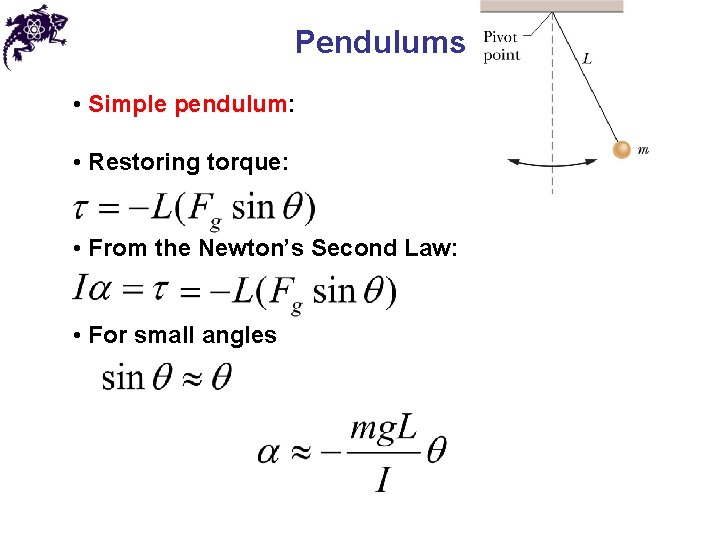
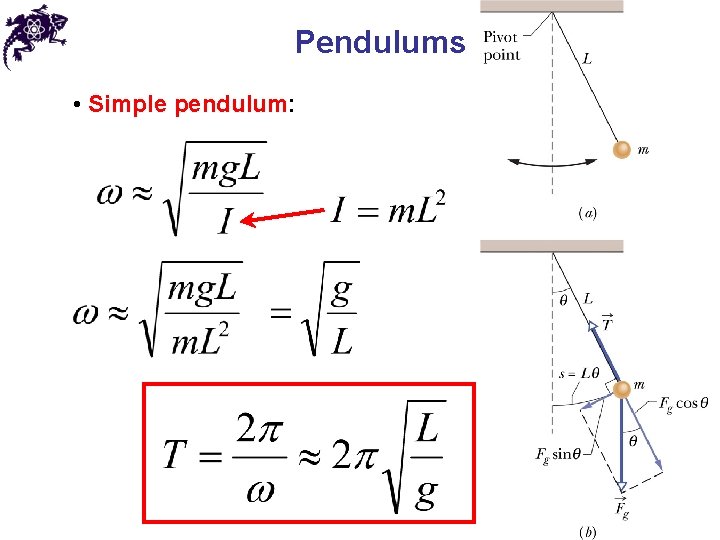
Pendulums • Simple pendulum: • Restoring torque: • From the Newton’s Second Law: • For small angles
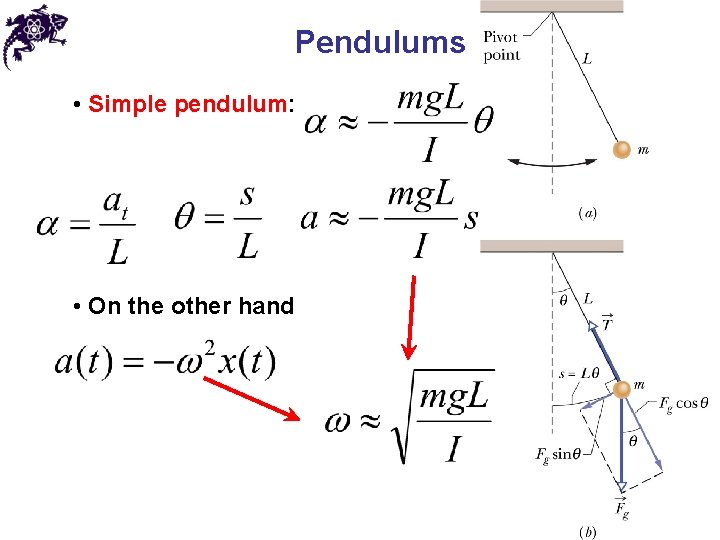
Pendulums • Simple pendulum: • On the other hand
Pendulums • Simple pendulum:
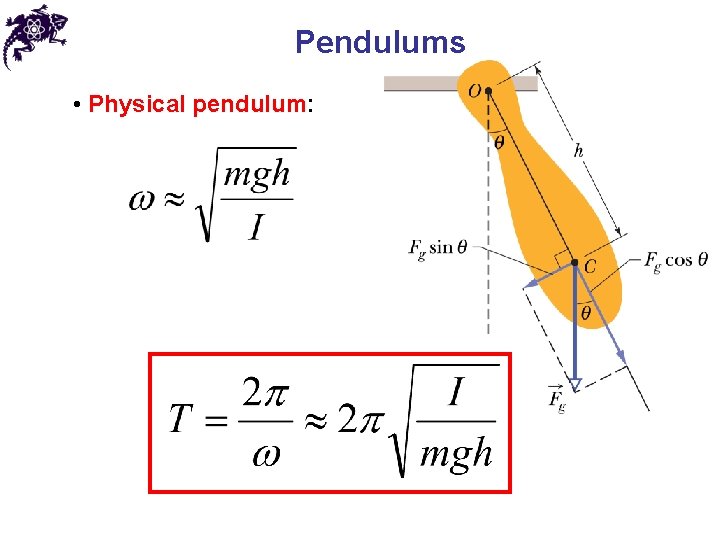
Pendulums • Physical pendulum:
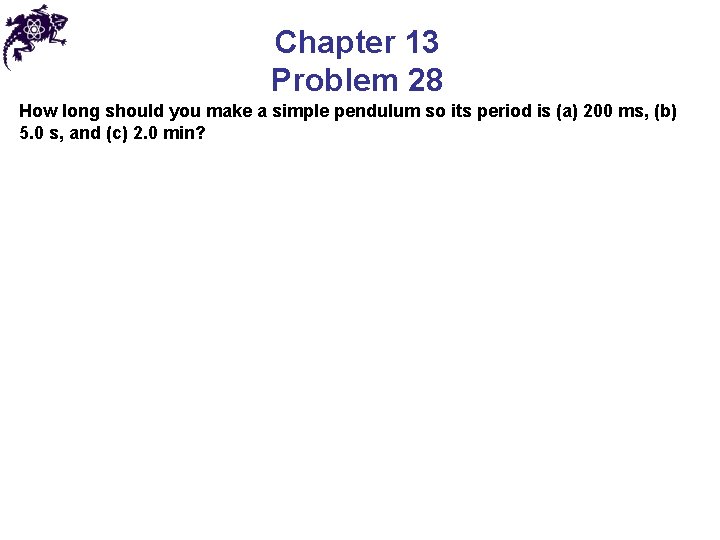
Chapter 13 Problem 28 How long should you make a simple pendulum so its period is (a) 200 ms, (b) 5. 0 s, and (c) 2. 0 min?
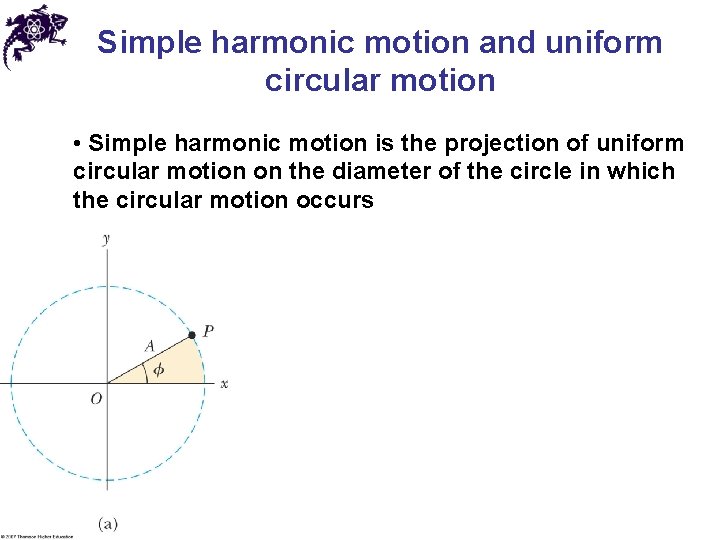
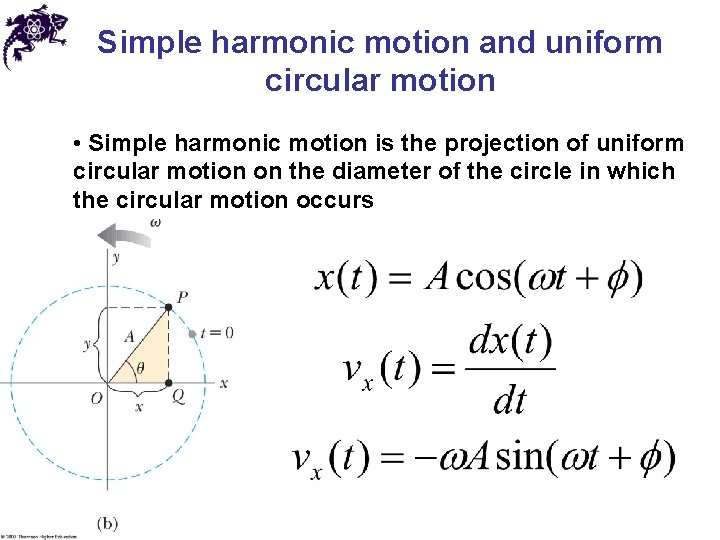
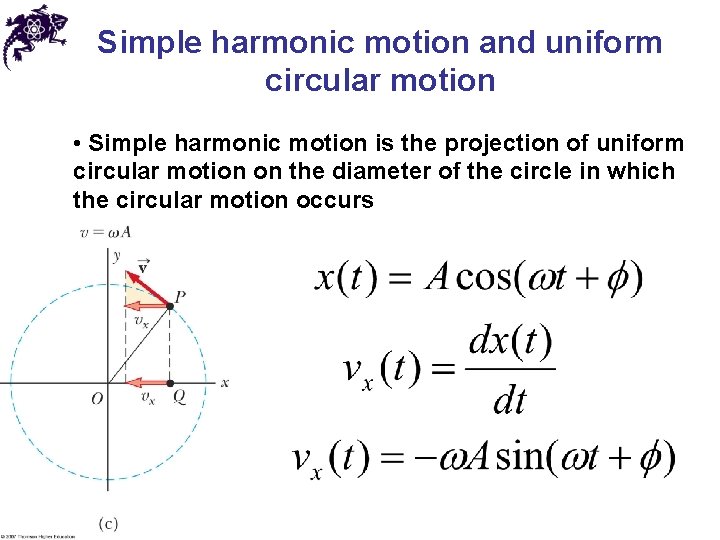
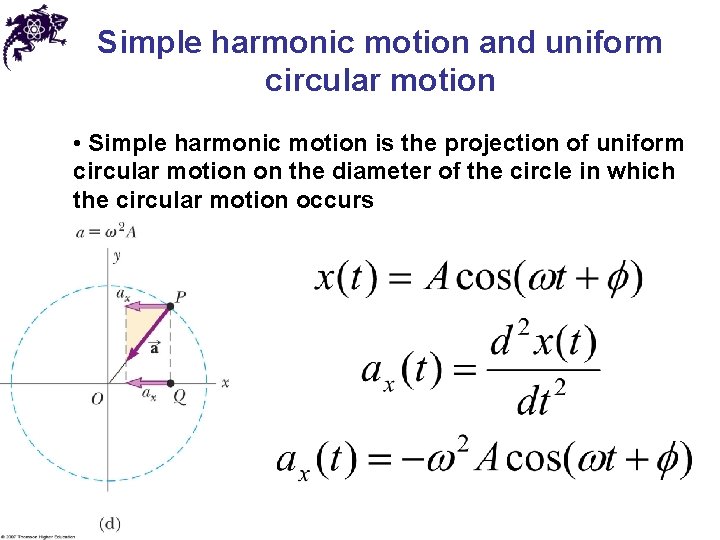
Simple harmonic motion and uniform circular motion • Simple harmonic motion is the projection of uniform circular motion on the diameter of the circle in which the circular motion occurs
Simple harmonic motion and uniform circular motion • Simple harmonic motion is the projection of uniform circular motion on the diameter of the circle in which the circular motion occurs
Simple harmonic motion and uniform circular motion • Simple harmonic motion is the projection of uniform circular motion on the diameter of the circle in which the circular motion occurs
Simple harmonic motion and uniform circular motion • Simple harmonic motion is the projection of uniform circular motion on the diameter of the circle in which the circular motion occurs
Damped simple harmonic motion Damping force Damping constant
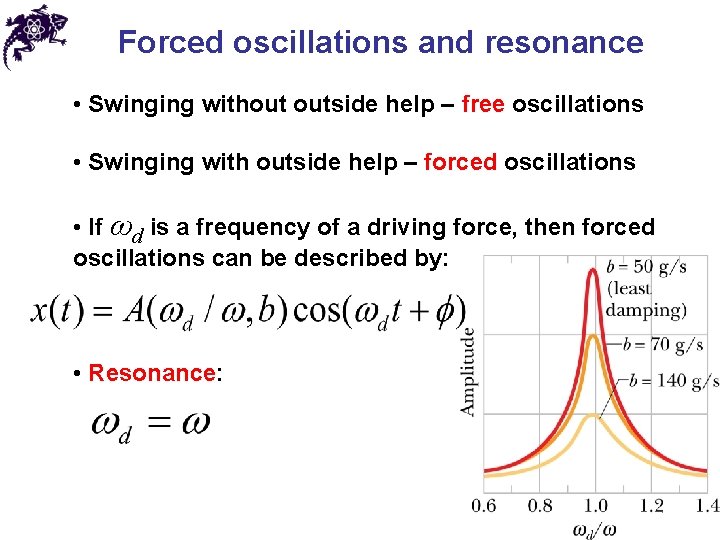
Forced oscillations and resonance • Swinging without outside help – free oscillations • Swinging with outside help – forced oscillations • If ωd is a frequency of a driving force, then forced oscillations can be described by: • Resonance:
Questions?
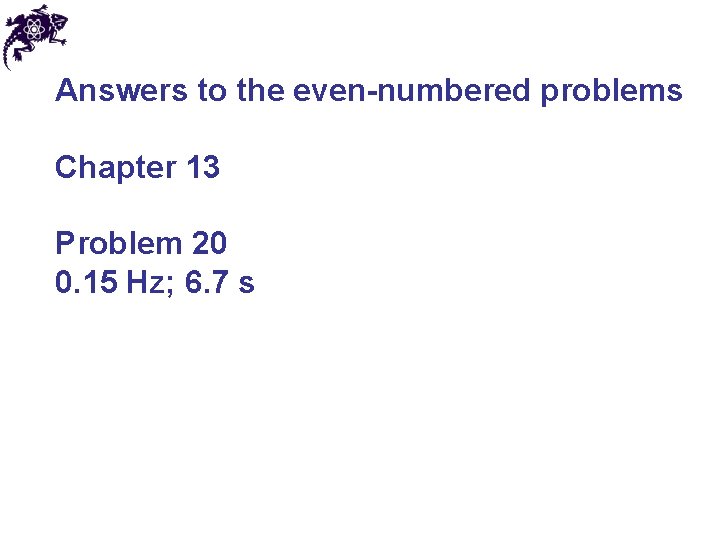
Answers to the even-numbered problems Chapter 13 Problem 20 0. 15 Hz; 6. 7 s
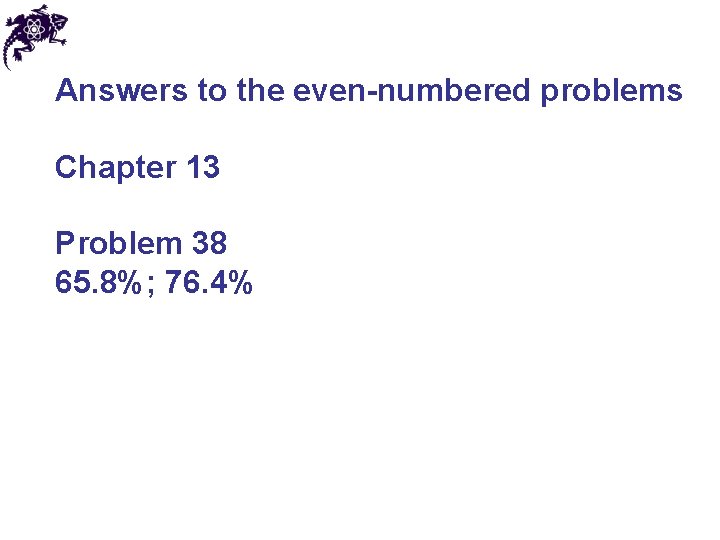
Answers to the even-numbered problems Chapter 13 Problem 38 65. 8%; 76. 4%